



Anubhav Goswami
@anubhav00.bsky.social
Grad student in computational chemistry. Into movies, food, and science.
Reposted by Anubhav Goswami
How does protein folding change inside biomolecular condensates?
Our new preprint put forwards a framework for predicting this!! 🥳🥳🥳🥳 work by the talented @nathanieldhess.bsky.social
Our new preprint put forwards a framework for predicting this!! 🥳🥳🥳🥳 work by the talented @nathanieldhess.bsky.social
I am very excited to share our pre-print that was just released on the bioRxiv entitled "Biomolecular Condensates Dictate the Folding Landscape of Proteins" doi.org/10.64898/202...
Very grateful for @jerelleaj.bsky.social and the members of the Joseph Group for their support on this project! (1/4)
Very grateful for @jerelleaj.bsky.social and the members of the Joseph Group for their support on this project! (1/4)
January 14, 2026 at 9:22 PM
How does protein folding change inside biomolecular condensates?
Our new preprint put forwards a framework for predicting this!! 🥳🥳🥳🥳 work by the talented @nathanieldhess.bsky.social
Our new preprint put forwards a framework for predicting this!! 🥳🥳🥳🥳 work by the talented @nathanieldhess.bsky.social
Reposted by Anubhav Goswami

Ever wanted to run MD simulations of entire proteins in water with DFT accuracy?
Meet AMPv3-BMS25, the latest iteration of our AMP multiscale neural network potential by
@rinikerlab.bsky.social
Read more in the preprints:
doi.org/10.26434/che...
doi.org/10.26434/che...
Meet AMPv3-BMS25, the latest iteration of our AMP multiscale neural network potential by
@rinikerlab.bsky.social
Read more in the preprints:
doi.org/10.26434/che...
doi.org/10.26434/che...

January 12, 2026 at 6:48 AM
Ever wanted to run MD simulations of entire proteins in water with DFT accuracy?
Meet AMPv3-BMS25, the latest iteration of our AMP multiscale neural network potential by
@rinikerlab.bsky.social
Read more in the preprints:
doi.org/10.26434/che...
doi.org/10.26434/che...
Meet AMPv3-BMS25, the latest iteration of our AMP multiscale neural network potential by
@rinikerlab.bsky.social
Read more in the preprints:
doi.org/10.26434/che...
doi.org/10.26434/che...
Reposted by Anubhav Goswami

Turns out bombarding 💥 HOPG with Pt clusters doesn’t just stick them: it builds weird, strong Pt–C structures that supercharge HER activity!
Read all about it (ft. cool BOMD simulations) in our new paper in @jacs.acspublications.org
👉 doi.org/10.1021/jacs.5c16035
#chemsky #compchemsky #compchem
Read all about it (ft. cool BOMD simulations) in our new paper in @jacs.acspublications.org
👉 doi.org/10.1021/jacs.5c16035
#chemsky #compchemsky #compchem

Highly Active Hydrogen Evolution Reaction (HER) Catalysts Formed by Energetic Ptn Cluster Deposition: Deposition Dynamics and the HER Mechanism
Mass-selected Ptn+ (n ≤ 7) were deposited at variable energies on highly oriented pyrolytic graphite (HOPG), creating highly active hydrogen evolution reaction (HER) electrocatalysts. HER mass activit...
doi.org
January 9, 2026 at 5:22 AM
Turns out bombarding 💥 HOPG with Pt clusters doesn’t just stick them: it builds weird, strong Pt–C structures that supercharge HER activity!
Read all about it (ft. cool BOMD simulations) in our new paper in @jacs.acspublications.org
👉 doi.org/10.1021/jacs.5c16035
#chemsky #compchemsky #compchem
Read all about it (ft. cool BOMD simulations) in our new paper in @jacs.acspublications.org
👉 doi.org/10.1021/jacs.5c16035
#chemsky #compchemsky #compchem
Reposted by Anubhav Goswami
It's new annual conference budget time! I've updated the public, filterable Chemistry Conference Database with hundreds of new conferences.
There are currently 564 conferences in the list.
supersciencegrl.co.uk/conferences #chemsky #chemchat
There are currently 564 conferences in the list.
supersciencegrl.co.uk/conferences #chemsky #chemchat

Nessa Carson: Conference Database
A researcher-endorsed database of global conferences relevant to all chemists, with particular focus on the UK and Europe.
supersciencegrl.co.uk
January 3, 2026 at 2:01 PM
It's new annual conference budget time! I've updated the public, filterable Chemistry Conference Database with hundreds of new conferences.
There are currently 564 conferences in the list.
supersciencegrl.co.uk/conferences #chemsky #chemchat
There are currently 564 conferences in the list.
supersciencegrl.co.uk/conferences #chemsky #chemchat
Reposted by Anubhav Goswami
Yo what the fuck short form videos are bad
Short-Form Videos Degrade Our Capacity to Retain Intentions
arxiv.org/pdf/2302.03714
Ht: HowTown
Short-Form Videos Degrade Our Capacity to Retain Intentions
arxiv.org/pdf/2302.03714
Ht: HowTown


December 31, 2025 at 2:40 AM
Yo what the fuck short form videos are bad
Short-Form Videos Degrade Our Capacity to Retain Intentions
arxiv.org/pdf/2302.03714
Ht: HowTown
Short-Form Videos Degrade Our Capacity to Retain Intentions
arxiv.org/pdf/2302.03714
Ht: HowTown
Reposted by Anubhav Goswami
Let's talk about this Nature piece in more detail.
I've rarely read something so anti-scientific anywhere short of the National Review.
www.nature.com/articles/d41...
I've rarely read something so anti-scientific anywhere short of the National Review.
www.nature.com/articles/d41...

Three AI-powered steps to faster, smarter peer review
Tired of spending countless hours on peer reviews? An AI-assisted workflow could help.
www.nature.com
March 6, 2025 at 5:34 AM
Let's talk about this Nature piece in more detail.
I've rarely read something so anti-scientific anywhere short of the National Review.
www.nature.com/articles/d41...
I've rarely read something so anti-scientific anywhere short of the National Review.
www.nature.com/articles/d41...
Reposted by Anubhav Goswami
Wrapping up this year with good food, lots of laughs, and even better company at our annual winter solstice party ✨
Wishing all our friends here on Bluesky a warm, restful, and happy holiday season!
#chemsky #compchemsky #chemchat
Wishing all our friends here on Bluesky a warm, restful, and happy holiday season!
#chemsky #compchemsky #chemchat

December 20, 2025 at 11:05 PM
Wrapping up this year with good food, lots of laughs, and even better company at our annual winter solstice party ✨
Wishing all our friends here on Bluesky a warm, restful, and happy holiday season!
#chemsky #compchemsky #chemchat
Wishing all our friends here on Bluesky a warm, restful, and happy holiday season!
#chemsky #compchemsky #chemchat
Reposted by Anubhav Goswami

Something a little different for this pre-holiday weekend, as we roll towards the end of the year. I did this as part of my MSc thesis, to add a little variety to my hobby of "staring at molecules." #compchem
Code is on GitHub at: github.com/amacbride/sk...
Enjoy! Have a great holiday.
Code is on GitHub at: github.com/amacbride/sk...
Enjoy! Have a great holiday.

December 20, 2025 at 3:51 PM
Something a little different for this pre-holiday weekend, as we roll towards the end of the year. I did this as part of my MSc thesis, to add a little variety to my hobby of "staring at molecules." #compchem
Code is on GitHub at: github.com/amacbride/sk...
Enjoy! Have a great holiday.
Code is on GitHub at: github.com/amacbride/sk...
Enjoy! Have a great holiday.
Reposted by Anubhav Goswami
We present an end-to-end differentiable Bayesian framework for learning the latent parameters of coarse-grained potentials for IDPs. By optimizing a likelihood objective via importance-weighted gradients, we align generative protein ensembles with experimental observables
doi.org/10.1529/biop...
doi.org/10.1529/biop...
December 18, 2025 at 8:54 PM
We present an end-to-end differentiable Bayesian framework for learning the latent parameters of coarse-grained potentials for IDPs. By optimizing a likelihood objective via importance-weighted gradients, we align generative protein ensembles with experimental observables
doi.org/10.1529/biop...
doi.org/10.1529/biop...
Reposted by Anubhav Goswami
My colleague @silviaosuna.bsky.social has two fully funded #PhD positions available:
👇🏻👇🏻👇🏻👇🏻👇🏻👇🏻👇🏻👇🏻
www.linkedin.com/posts/s%C3%A...
👇🏻👇🏻👇🏻👇🏻👇🏻👇🏻👇🏻👇🏻
www.linkedin.com/posts/s%C3%A...

Two fully funded PhD positions (MSCA Doctoral Networks, Horizon Europe) at our group at IQCC, University of Girona (Spain)
Many high-value molecules in pharma, agrochemicals, and materials rely on… |...
Two fully funded PhD positions (MSCA Doctoral Networks, Horizon Europe) at our group at IQCC, University of Girona (Spain)
Many high-value molecules in pharma, agrochemicals, and materials rely on ch...
www.linkedin.com
December 16, 2025 at 5:50 PM
My colleague @silviaosuna.bsky.social has two fully funded #PhD positions available:
👇🏻👇🏻👇🏻👇🏻👇🏻👇🏻👇🏻👇🏻
www.linkedin.com/posts/s%C3%A...
👇🏻👇🏻👇🏻👇🏻👇🏻👇🏻👇🏻👇🏻
www.linkedin.com/posts/s%C3%A...
Reposted by Anubhav Goswami

Merriam-Webster’s human editors have chosen ‘slop’ as the 2025 Word of the Year.
December 15, 2025 at 2:07 PM
Merriam-Webster’s human editors have chosen ‘slop’ as the 2025 Word of the Year.
Reposted by Anubhav Goswami

WESTPA fans: two new JCTC papers just landed! Great work from Michael Grabe and JC Gumbart. 👇
December 11, 2025 at 3:58 PM
WESTPA fans: two new JCTC papers just landed! Great work from Michael Grabe and JC Gumbart. 👇
Reposted by Anubhav Goswami

Theoretical study shows positrons can create stable bonds between neutral beryllium atoms through two distinct mechanisms – either replacing electronic bonds entirely or pushing nuclei together from the atomic periphery.

Unexpected stability theorised in positron-bound beryllium dimers
Simulations challenge conventional ideas about positronic interactions
www.chemistryworld.com
December 10, 2025 at 2:59 PM
Theoretical study shows positrons can create stable bonds between neutral beryllium atoms through two distinct mechanisms – either replacing electronic bonds entirely or pushing nuclei together from the atomic periphery.
Reposted by Anubhav Goswami
One electron C-C bond or Weak Interaction? New paper in PCCP
The compound spiro-dibenzocycloheptatriene (figure 1) made headlines a year ago by claiming that the ipso carbon atoms across the molecule were bound together by a single electron σ bond. This is truly a seductive idea: that somewhere…
The compound spiro-dibenzocycloheptatriene (figure 1) made headlines a year ago by claiming that the ipso carbon atoms across the molecule were bound together by a single electron σ bond. This is truly a seductive idea: that somewhere…

One electron C-C bond or Weak Interaction? New paper in PCCP
The compound spiro-dibenzocycloheptatriene (figure 1) made headlines a year ago by claiming that the ipso carbon atoms across the molecule were bound together by a single electron σ bond. This is truly a seductive idea: that somewhere out there, in the shadows of open-shell aromatics, carbon atoms might form a single-electron σ-bond — a unicorn of bonding, indeed. Since bold claims require bold scrutiny, we went ahead and dissected the electronic structure of the radical molecule in question with all the tools at our disposal; We also analyzed that of the neutral complex from where it was derived and also the double cation to analyze the consequences of removing the alleged electron holding such an unusual interaction, for if this C-C bond truly exists, it should alter the interaction energy between the fragments in a way consistent with a real σ bond.
joaquinbarroso.com
December 10, 2025 at 4:45 PM
One electron C-C bond or Weak Interaction? New paper in PCCP
The compound spiro-dibenzocycloheptatriene (figure 1) made headlines a year ago by claiming that the ipso carbon atoms across the molecule were bound together by a single electron σ bond. This is truly a seductive idea: that somewhere…
The compound spiro-dibenzocycloheptatriene (figure 1) made headlines a year ago by claiming that the ipso carbon atoms across the molecule were bound together by a single electron σ bond. This is truly a seductive idea: that somewhere…
Reposted by Anubhav Goswami
Our review on Integrative modelling of biomolecular dynamics 💃 is now live at COSB
We discuss approaches to integrate computational methods with time-dependent & time-resolved experiments to study protein dynamics
With @dariagusew.bsky.social & Carl G. Henning Hansen
doi.org/10.1016/j.sb...
We discuss approaches to integrate computational methods with time-dependent & time-resolved experiments to study protein dynamics
With @dariagusew.bsky.social & Carl G. Henning Hansen
doi.org/10.1016/j.sb...

December 9, 2025 at 10:13 PM
Our review on Integrative modelling of biomolecular dynamics 💃 is now live at COSB
We discuss approaches to integrate computational methods with time-dependent & time-resolved experiments to study protein dynamics
With @dariagusew.bsky.social & Carl G. Henning Hansen
doi.org/10.1016/j.sb...
We discuss approaches to integrate computational methods with time-dependent & time-resolved experiments to study protein dynamics
With @dariagusew.bsky.social & Carl G. Henning Hansen
doi.org/10.1016/j.sb...
Reposted by Anubhav Goswami
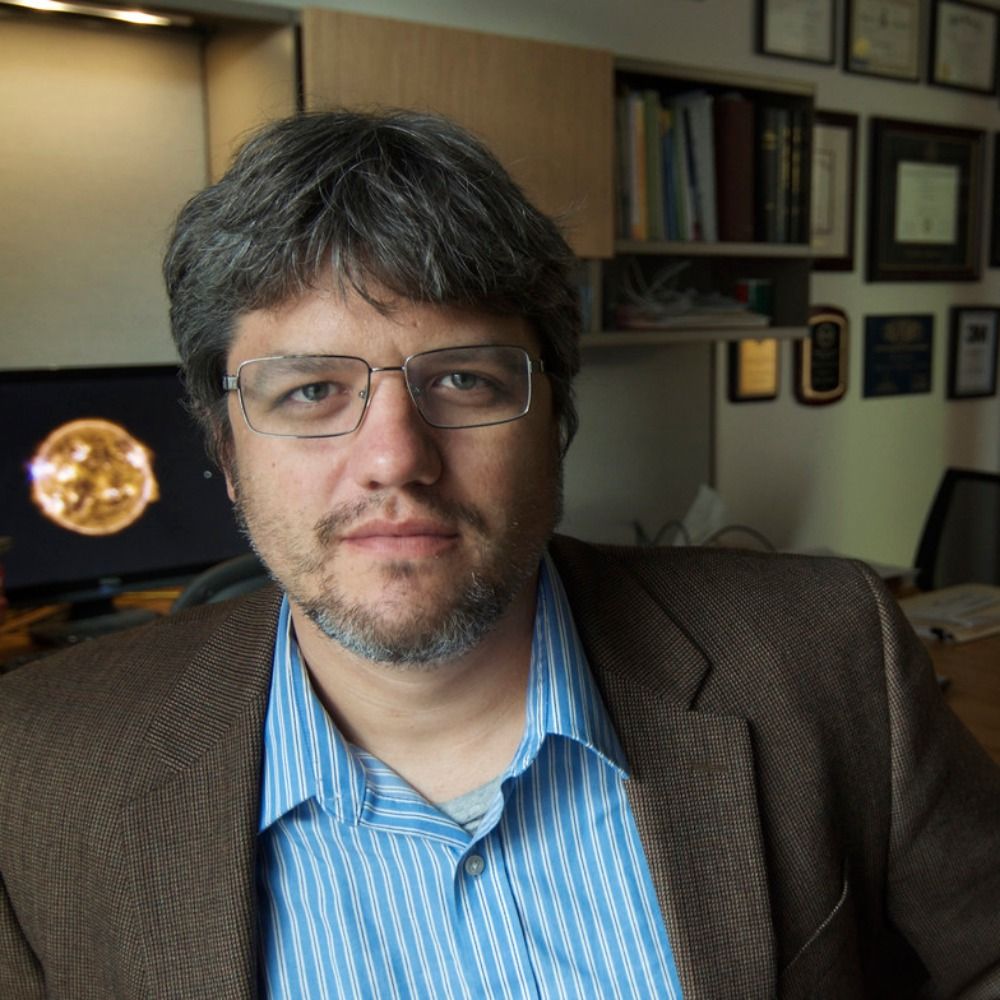
Very cool new paper from Suncat on a new mechanism for promoting dynamic catalysis....
"Unlocking Switchable Reactivity of MBene via Asymmetric Surface Adsorption"
pubs.acs.org/doi/10.1021/...
"Unlocking Switchable Reactivity of MBene via Asymmetric Surface Adsorption"
pubs.acs.org/doi/10.1021/...

December 4, 2025 at 3:59 PM
Very cool new paper from Suncat on a new mechanism for promoting dynamic catalysis....
"Unlocking Switchable Reactivity of MBene via Asymmetric Surface Adsorption"
pubs.acs.org/doi/10.1021/...
"Unlocking Switchable Reactivity of MBene via Asymmetric Surface Adsorption"
pubs.acs.org/doi/10.1021/...
Reposted by Anubhav Goswami
How does temperature affect the adsorbate-induced roughening of Cu in electrochemical CO2 reduction? Check out our latest paper in JPC Letters @pubs.acs.org!
👉 doi.org/10.1021/acs.jpclett.5c03061
#chemsky #compchem #compchemsky
👉 doi.org/10.1021/acs.jpclett.5c03061
#chemsky #compchem #compchemsky

Temperature-Dependent Adsorbate-Induced Surface Roughening Onset in Electrochemical CO2 Reduction on Copper
The dynamic restructuring of Cu surfaces under electrochemical CO2 reduction conditions is crucial for determining their catalytic performance, particularly for multicarbon products such as ethylene a...
doi.org
November 27, 2025 at 6:31 PM
How does temperature affect the adsorbate-induced roughening of Cu in electrochemical CO2 reduction? Check out our latest paper in JPC Letters @pubs.acs.org!
👉 doi.org/10.1021/acs.jpclett.5c03061
#chemsky #compchem #compchemsky
👉 doi.org/10.1021/acs.jpclett.5c03061
#chemsky #compchem #compchemsky
Reposted by Anubhav Goswami
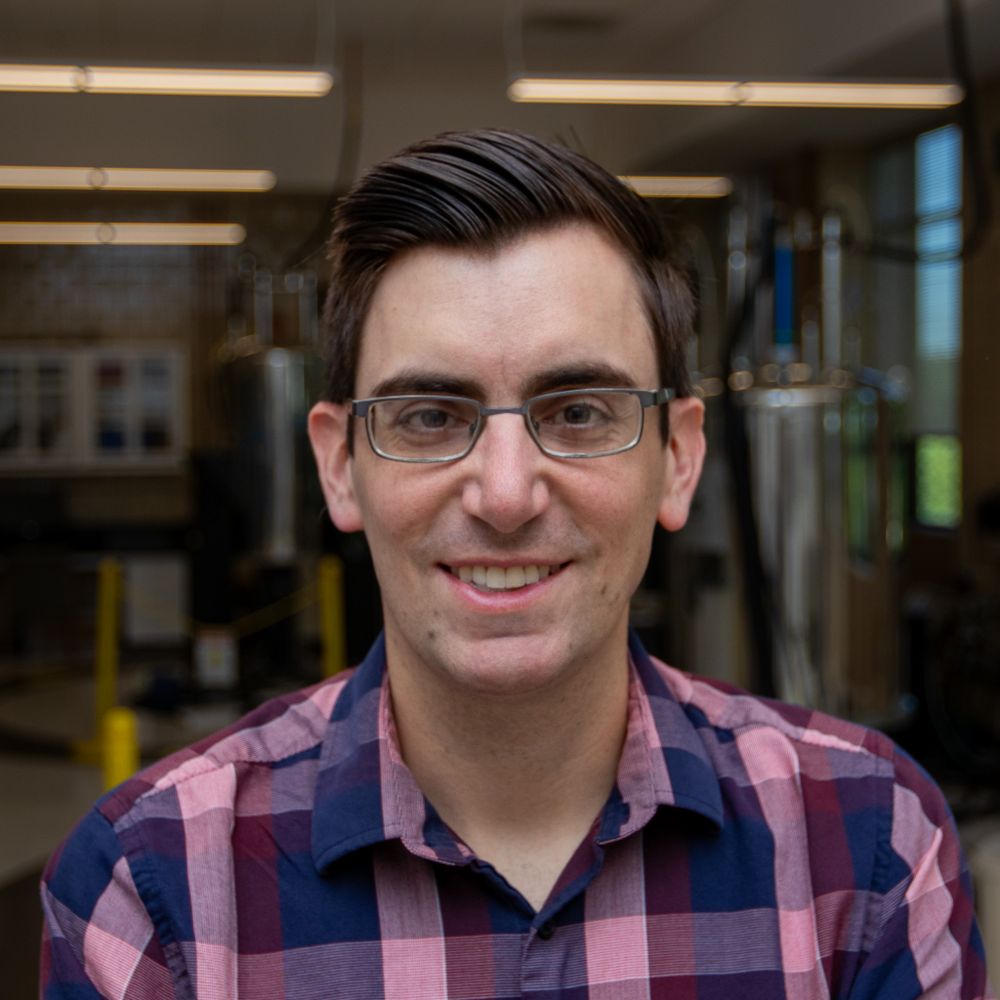
Josef Zwanziger, @aaronrossini.bsky.social, and I published a rebuttal of a recent Nature Commun. paper claiming that enantiomers produce large differences in J coupling constants.
doi.org/10.1038/s414...
doi.org/10.1038/s414...

DFT calculations and theory do not support enantiospecificity in NMR J-coupling constants - Nature Communications
Nature Communications - DFT calculations and theory do not support enantiospecificity in NMR J-coupling constants
doi.org
November 14, 2025 at 5:13 PM
Josef Zwanziger, @aaronrossini.bsky.social, and I published a rebuttal of a recent Nature Commun. paper claiming that enantiomers produce large differences in J coupling constants.
doi.org/10.1038/s414...
doi.org/10.1038/s414...
Reposted by Anubhav Goswami

Finally our paper on copper corroles is out in Inorganic Chemistry @pubs.acs.org!
#chemsky #realtimechem #science #comp_chem
1/n
Electronic Structure and Hypercorrole Features of Deprotonated Free-Base and Reduced Copper Corroles | Inorganic Chemistry pubs.acs.org/doi/10.1021/...
#chemsky #realtimechem #science #comp_chem
1/n
Electronic Structure and Hypercorrole Features of Deprotonated Free-Base and Reduced Copper Corroles | Inorganic Chemistry pubs.acs.org/doi/10.1021/...

Electronic Structure and Hypercorrole Features of Deprotonated Free-Base and Reduced Copper Corroles
We report the synthesis, crystal structure, and spectroscopic and computational electronic-structural characterization of two copper corroles, [Cu(5,15-bis(4-methylcarboxyphenyl)-10-(2-methylcarboxyphenyl)corrole)] (1Cu) and [Cu(5,15-bis(4-nitrophenyl)-10-(2-methylcarboxyphenyl)corrole)] (2Cu), as well as spectroscopic and computational studies on the corrole ligands (H3L1 and H3L2) in their neutral and anionic forms. We have found that the anionic corroles containing the 4-nitrophenyl substituents in positions 5 and 15 of the corrole ring show hypercorrole behavior, where the Q-bands are considerably more intense and red-shifted compared to those in the 4-methylcarboxyphenyl-substituted corroles. Electronic structure calculations using wave function methods (CASSCF/NEVPT2) reveal that the intense Q-bands, which extend slightly into the NIR region, are charge-transfer bands from the anionic corrole core to the strongly electron-withdrawing 4-nitrophenyl substituents. We further show that 2Cu can be reduced indirectly in the presence of excess F– or OH–, and the Q-band shifts toward the red in the polar environment containing the corresponding salts. Our study provides examples of easy-to-prepare anionic corroles, metalated and unmetalated, that show hypercorrole behavior and NIR absorption, and thus could find use in hyperthermal processes.
pubs.acs.org
November 7, 2025 at 11:54 AM
Finally our paper on copper corroles is out in Inorganic Chemistry @pubs.acs.org!
#chemsky #realtimechem #science #comp_chem
1/n
Electronic Structure and Hypercorrole Features of Deprotonated Free-Base and Reduced Copper Corroles | Inorganic Chemistry pubs.acs.org/doi/10.1021/...
#chemsky #realtimechem #science #comp_chem
1/n
Electronic Structure and Hypercorrole Features of Deprotonated Free-Base and Reduced Copper Corroles | Inorganic Chemistry pubs.acs.org/doi/10.1021/...
Reposted by Anubhav Goswami
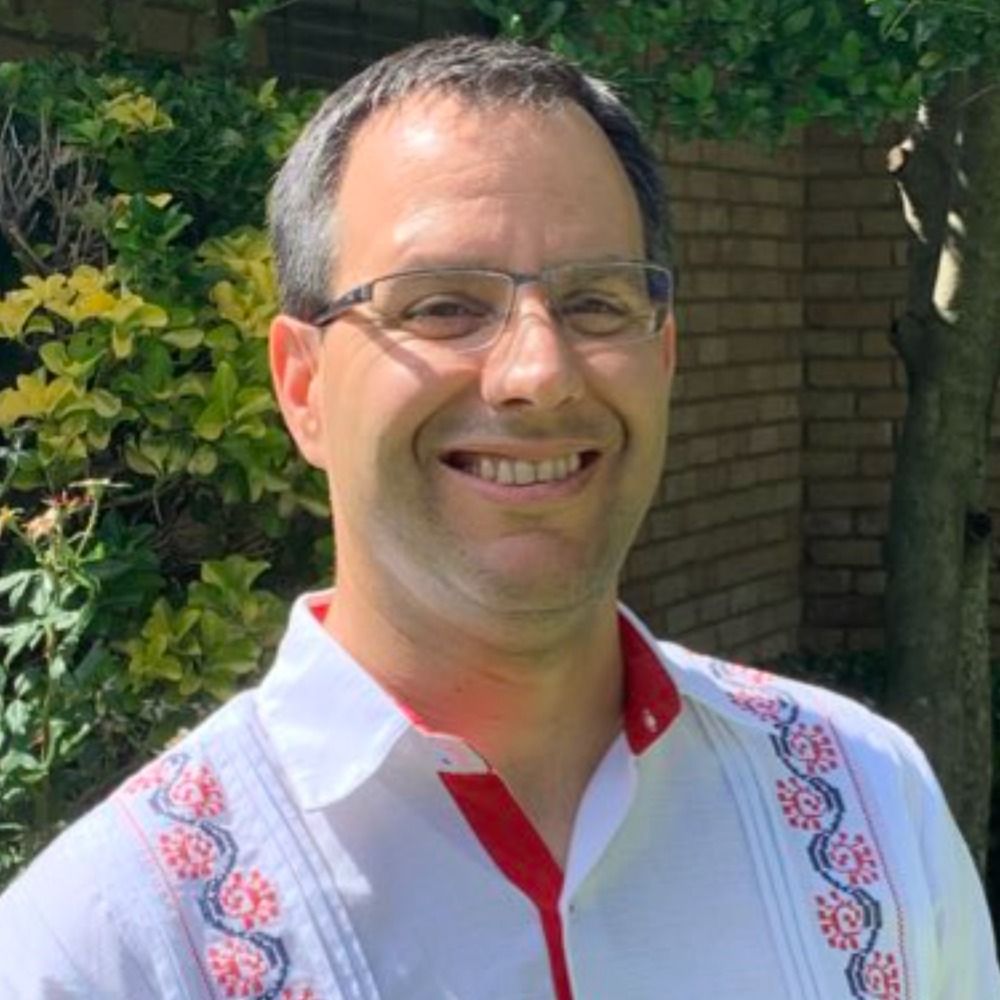
Latest publication from our group, by Arkanil Roy, @arkanil.bsky.social now out in J. Chem. Phys.
doi.org/10.1063/5.02...
doi.org/10.1063/5.02...

Improvement of the density fitting approach for the Gaussian electrostatic model via the use of the discrete Picard condition in Tychonov regularization
The Gaussian Electrostatic Model (GEM) is a density-based force field that employs Hermite Gaussian auxiliary basis sets (ABSs) to represent molecular electroni
doi.org
November 7, 2025 at 9:44 PM
Latest publication from our group, by Arkanil Roy, @arkanil.bsky.social now out in J. Chem. Phys.
doi.org/10.1063/5.02...
doi.org/10.1063/5.02...
Reposted by Anubhav Goswami

Professor Emeritus Axel D. Becke @dalhousieu.bsky.social has passed away at age 72.
October 26, 2025 at 2:46 PM
Professor Emeritus Axel D. Becke @dalhousieu.bsky.social has passed away at age 72.
Reposted by Anubhav Goswami
Wondering what the true active sites for Ni-SACs look like during CO₂ reduction?
Take a look at our new paper in @jacs.acspublications.org
👉 doi.org/10.1021/jacs...
#compchem #chemsky #compchemsky
Take a look at our new paper in @jacs.acspublications.org
👉 doi.org/10.1021/jacs...
#compchem #chemsky #compchemsky

Uncovering the True Active Sites in Ni–N–C Catalysts for CO2 Electroreduction
Understanding and designing active sites in single-atom catalysts (SACs) requires going beyond static models to capture their dynamic evolution under realistic electrochemical conditions. Here, we dev...
doi.org
October 21, 2025 at 1:48 AM
Wondering what the true active sites for Ni-SACs look like during CO₂ reduction?
Take a look at our new paper in @jacs.acspublications.org
👉 doi.org/10.1021/jacs...
#compchem #chemsky #compchemsky
Take a look at our new paper in @jacs.acspublications.org
👉 doi.org/10.1021/jacs...
#compchem #chemsky #compchemsky
Reposted by Anubhav Goswami
🚨New Paper Alert 🚨
pubs.acs.org/doi/10.1021/...
Congratulations to authors Nicholas Casetti, Dylan Anstine, @olexandr.bsky.social , and Connor Coley!
#ccas #nsf #chemistry #computerscience #chemsky #datachemistry
pubs.acs.org/doi/10.1021/...
Congratulations to authors Nicholas Casetti, Dylan Anstine, @olexandr.bsky.social , and Connor Coley!
#ccas #nsf #chemistry #computerscience #chemsky #datachemistry

Anticipating the Selectivity of Intramolecular Cyclization Reaction Pathways with Neural Network Potentials
Reaction mechanism search tools have demonstrated the ability to provide insights into likely products and rate-limiting steps of reacting systems. However, reactions involving several concerted bond changes─as can be found in many key steps of natural product syntheses─can complicate the search process. To mitigate these complications, we present a mechanism search strategy particularly suited to help expedite exploration of an exemplary family of such complex reactions, cyclizations. We provide a cost-effective strategy for identifying relevant elementary reaction steps by combining graph-based enumeration schemes and machine learning techniques for intermediate filtering. Key to this approach is our use of a neural network potential (NNP), AIMNet2-rxn, for computational evaluation of each candidate reaction pathway. In this article, we evaluate the NNP’s ability to estimate activation energies, demonstrate the correct anticipation of stereoselectivity, and recapitulate complex enabling steps in natural product synthesis.
pubs.acs.org
October 16, 2025 at 8:05 PM
🚨New Paper Alert 🚨
pubs.acs.org/doi/10.1021/...
Congratulations to authors Nicholas Casetti, Dylan Anstine, @olexandr.bsky.social , and Connor Coley!
#ccas #nsf #chemistry #computerscience #chemsky #datachemistry
pubs.acs.org/doi/10.1021/...
Congratulations to authors Nicholas Casetti, Dylan Anstine, @olexandr.bsky.social , and Connor Coley!
#ccas #nsf #chemistry #computerscience #chemsky #datachemistry
Reposted by Anubhav Goswami
Check out our new paper on making cooler and bigger qubits in @natchem.nature.com!
👉https://rdcu.be/eKdGn
#compchem #chemsky #compchemsky
👉https://rdcu.be/eKdGn
#compchem #chemsky #compchemsky
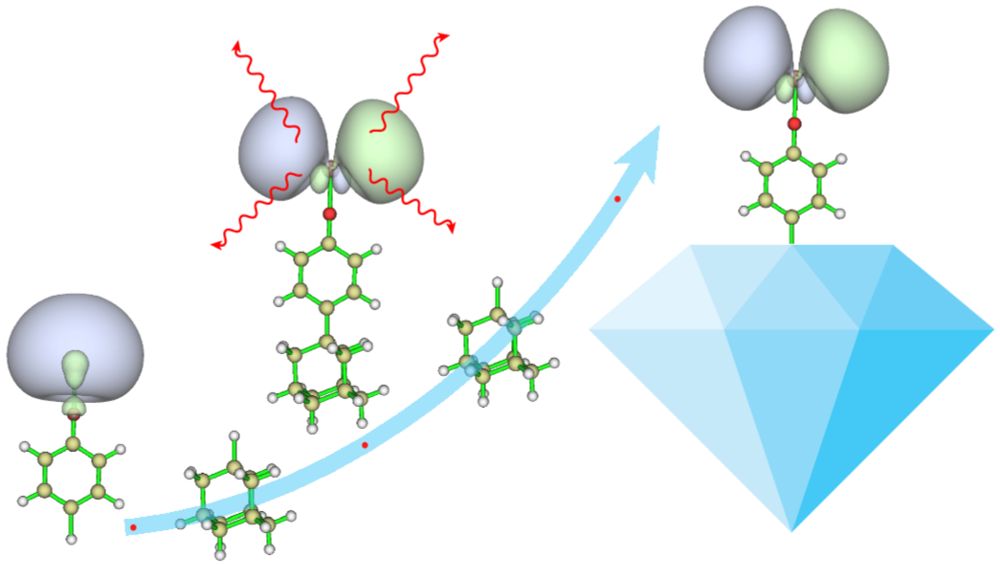
Bottom-up approach to making larger hydrocarbon molecules capable of optical cycling
Nature Chemistry - Alkaline-earth phenoxides show promise as optical cycling centres; however, their properties when connected to larger structures is unclear. Now it has been shown that their...
rdcu.be
October 9, 2025 at 6:31 PM
Check out our new paper on making cooler and bigger qubits in @natchem.nature.com!
👉https://rdcu.be/eKdGn
#compchem #chemsky #compchemsky
👉https://rdcu.be/eKdGn
#compchem #chemsky #compchemsky
Reposted by Anubhav Goswami
✨Exciting news - the Alexandrova Group is now on Bluesky!✨
Hello, friends on #chemsky and #compchemsky. We're glad to be here! Stay tuned for the latest #compchem 💻 research and news from the lab!
Hello, friends on #chemsky and #compchemsky. We're glad to be here! Stay tuned for the latest #compchem 💻 research and news from the lab!
October 3, 2025 at 10:45 PM
✨Exciting news - the Alexandrova Group is now on Bluesky!✨
Hello, friends on #chemsky and #compchemsky. We're glad to be here! Stay tuned for the latest #compchem 💻 research and news from the lab!
Hello, friends on #chemsky and #compchemsky. We're glad to be here! Stay tuned for the latest #compchem 💻 research and news from the lab!