



🕯️Doye K
@doyeyeh.bsky.social
Reposted by 🕯️Doye K

Now out in JEP: General, "How working memory and reinforcement learning interact when avoiding punishment and pursuing reward concurrently"
psycnet.apa.org/record/2026-...
Preprint with final version: osf.io/preprints/ps...
1/n
psycnet.apa.org/record/2026-...
Preprint with final version: osf.io/preprints/ps...
1/n

September 13, 2025 at 9:17 PM
Now out in JEP: General, "How working memory and reinforcement learning interact when avoiding punishment and pursuing reward concurrently"
psycnet.apa.org/record/2026-...
Preprint with final version: osf.io/preprints/ps...
1/n
psycnet.apa.org/record/2026-...
Preprint with final version: osf.io/preprints/ps...
1/n
Reposted by 🕯️Doye K

New paper & a thread on the results 👇
‘Reward-specific learning parameters change across normative adolescent development and are blunted in youth with high risk for depression’
acamh-onlinelibrary-wiley-com.ezp3.lib.umn.edu/doi/full/10....
‘Reward-specific learning parameters change across normative adolescent development and are blunted in youth with high risk for depression’
acamh-onlinelibrary-wiley-com.ezp3.lib.umn.edu/doi/full/10....

January 7, 2026 at 7:50 PM
New paper & a thread on the results 👇
‘Reward-specific learning parameters change across normative adolescent development and are blunted in youth with high risk for depression’
acamh-onlinelibrary-wiley-com.ezp3.lib.umn.edu/doi/full/10....
‘Reward-specific learning parameters change across normative adolescent development and are blunted in youth with high risk for depression’
acamh-onlinelibrary-wiley-com.ezp3.lib.umn.edu/doi/full/10....
Reposted by 🕯️Doye K

Project Implicit is facing an existential threat. After almost 30 years, 60 million visitors, and hundreds of published papers, funding for our work has disappeared.
We’ve never held a fundraising drive before, but we need your support to keep our site running. Please consider donating! 🙏
We’ve never held a fundraising drive before, but we need your support to keep our site running. Please consider donating! 🙏

Project Implicit is a research nonprofit behind tools millions use to understand bias. Like many public science orgs, sustaining this work has become increasingly difficult. We are at risk of closing without additional support.
Help protect this impt work by donating here: 4agc.com/donate/impli...
Help protect this impt work by donating here: 4agc.com/donate/impli...
January 8, 2026 at 6:10 PM
Project Implicit is facing an existential threat. After almost 30 years, 60 million visitors, and hundreds of published papers, funding for our work has disappeared.
We’ve never held a fundraising drive before, but we need your support to keep our site running. Please consider donating! 🙏
We’ve never held a fundraising drive before, but we need your support to keep our site running. Please consider donating! 🙏
Reposted by 🕯️Doye K
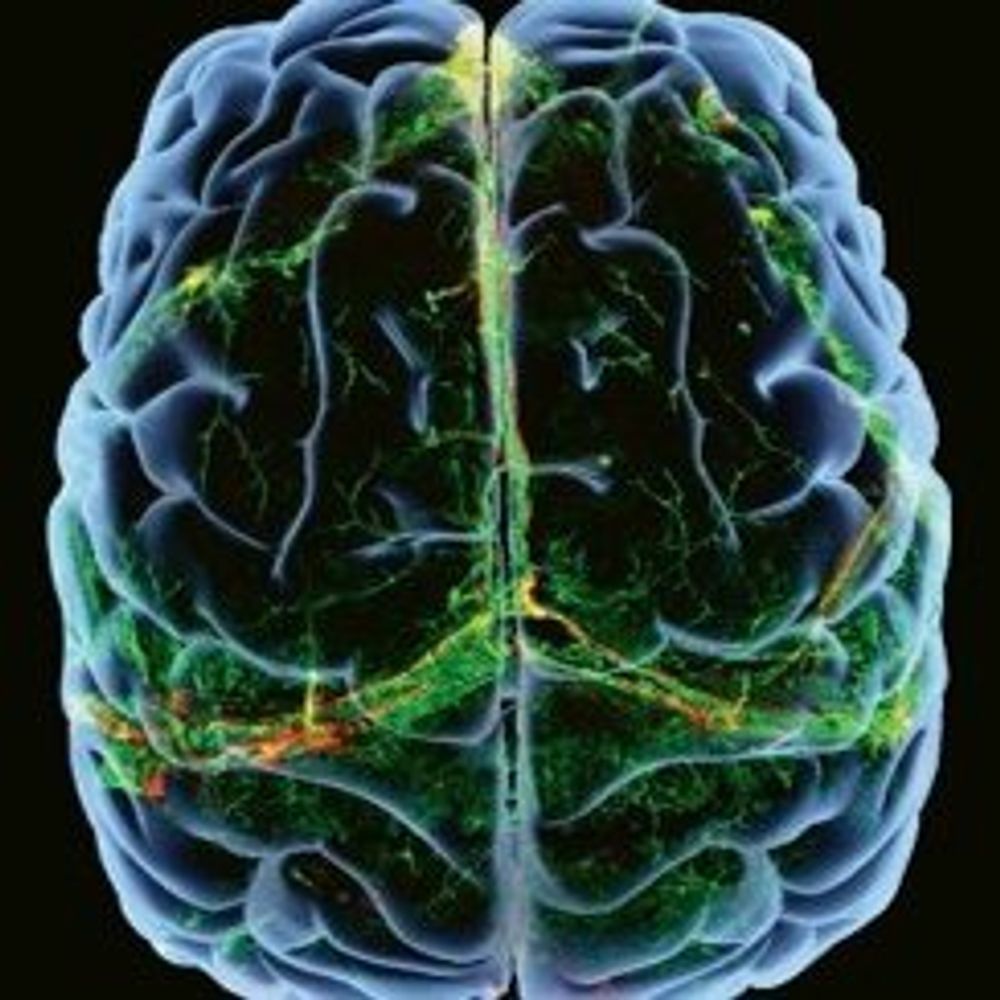
Interactions between striatal–prefrontal & hippocampal–prefrontal systems shape value-based learning & goal-directed behavior during adolescence; asynchronous maturation of these circuits may contribute to vulnerability to mental health disorders

Striatal and hippocampal contributions to value-based learning in adolescence
Neuropsychopharmacology - Striatal and hippocampal contributions to value-based learning in adolescence
www.nature.com
January 6, 2026 at 4:31 PM
Interactions between striatal–prefrontal & hippocampal–prefrontal systems shape value-based learning & goal-directed behavior during adolescence; asynchronous maturation of these circuits may contribute to vulnerability to mental health disorders
Reposted by 🕯️Doye K

What if we could tell you how well you’ll remember your next visit to your local coffee shop? ☕️
In our new Nature Human Behaviour paper, we show that the 𝗾𝘂𝗮𝗹𝗶𝘁𝘆 𝗼𝗳 𝗮 𝘀𝗽𝗮𝘁𝗶𝗮𝗹 𝗿𝗲𝗽𝗿𝗲𝘀𝗲𝗻𝘁𝗮𝘁𝗶𝗼𝗻 can be measured with neuroimaging – and 𝘁𝗵𝗮𝘁 𝘀𝗰𝗼𝗿𝗲 𝗽𝗿𝗲𝗱𝗶𝗰𝘁𝘀 𝗵𝗼𝘄 𝘄𝗲𝗹𝗹 𝗻𝗲𝘄 𝗲𝘅𝗽𝗲𝗿𝗶𝗲𝗻𝗰𝗲𝘀 𝘄𝗶𝗹𝗹 𝘀𝘁𝗶𝗰𝗸.
In our new Nature Human Behaviour paper, we show that the 𝗾𝘂𝗮𝗹𝗶𝘁𝘆 𝗼𝗳 𝗮 𝘀𝗽𝗮𝘁𝗶𝗮𝗹 𝗿𝗲𝗽𝗿𝗲𝘀𝗲𝗻𝘁𝗮𝘁𝗶𝗼𝗻 can be measured with neuroimaging – and 𝘁𝗵𝗮𝘁 𝘀𝗰𝗼𝗿𝗲 𝗽𝗿𝗲𝗱𝗶𝗰𝘁𝘀 𝗵𝗼𝘄 𝘄𝗲𝗹𝗹 𝗻𝗲𝘄 𝗲𝘅𝗽𝗲𝗿𝗶𝗲𝗻𝗰𝗲𝘀 𝘄𝗶𝗹𝗹 𝘀𝘁𝗶𝗰𝗸.

New study by @xrmasiso.bsky.social et al shows that spatial contexts with more reliable brain representations better support memory for future experiences within them, revealing how stable neural maps help the brain organize and recall life events.

Spatial contexts with reliable neural representations support reinstatement of subsequently placed objects - Nature Human Behaviour
This study shows that spatial contexts with more reliable brain representations better support memory for future experiences within them, revealing how stable neural maps help the brain organize and recall life events.
www.nature.com
January 5, 2026 at 6:43 PM
What if we could tell you how well you’ll remember your next visit to your local coffee shop? ☕️
In our new Nature Human Behaviour paper, we show that the 𝗾𝘂𝗮𝗹𝗶𝘁𝘆 𝗼𝗳 𝗮 𝘀𝗽𝗮𝘁𝗶𝗮𝗹 𝗿𝗲𝗽𝗿𝗲𝘀𝗲𝗻𝘁𝗮𝘁𝗶𝗼𝗻 can be measured with neuroimaging – and 𝘁𝗵𝗮𝘁 𝘀𝗰𝗼𝗿𝗲 𝗽𝗿𝗲𝗱𝗶𝗰𝘁𝘀 𝗵𝗼𝘄 𝘄𝗲𝗹𝗹 𝗻𝗲𝘄 𝗲𝘅𝗽𝗲𝗿𝗶𝗲𝗻𝗰𝗲𝘀 𝘄𝗶𝗹𝗹 𝘀𝘁𝗶𝗰𝗸.
In our new Nature Human Behaviour paper, we show that the 𝗾𝘂𝗮𝗹𝗶𝘁𝘆 𝗼𝗳 𝗮 𝘀𝗽𝗮𝘁𝗶𝗮𝗹 𝗿𝗲𝗽𝗿𝗲𝘀𝗲𝗻𝘁𝗮𝘁𝗶𝗼𝗻 can be measured with neuroimaging – and 𝘁𝗵𝗮𝘁 𝘀𝗰𝗼𝗿𝗲 𝗽𝗿𝗲𝗱𝗶𝗰𝘁𝘀 𝗵𝗼𝘄 𝘄𝗲𝗹𝗹 𝗻𝗲𝘄 𝗲𝘅𝗽𝗲𝗿𝗶𝗲𝗻𝗰𝗲𝘀 𝘄𝗶𝗹𝗹 𝘀𝘁𝗶𝗰𝗸.
Reposted by 🕯️Doye K
This review describes how early adversity across prenatal to adolescent stages increases psychosis risk & emphasizes a developmental, multidimensional framework considering both risk & resilience pathways to improve prevention & intervention strategies

Synergistic pathways to psychosis: understanding developmental risk and resilience factors
Neuropsychopharmacology - Synergistic pathways to psychosis: understanding developmental risk and resilience factors
www.nature.com
January 2, 2026 at 5:28 PM
This review describes how early adversity across prenatal to adolescent stages increases psychosis risk & emphasizes a developmental, multidimensional framework considering both risk & resilience pathways to improve prevention & intervention strategies
Reposted by 🕯️Doye K
Excited to announce a new book telling the story of mathematical approaches to studying the mind, from the origins of cognitive science to modern AI! The Laws of Thought will be published in February and is available for pre-order now.

December 18, 2025 at 3:59 PM
Excited to announce a new book telling the story of mathematical approaches to studying the mind, from the origins of cognitive science to modern AI! The Laws of Thought will be published in February and is available for pre-order now.
Reposted by 🕯️Doye K
This recent review highlights behavioral inhibition (BI) & maternal anxiety in infancy as anxiety risk factors; infants w/ BI or maternal stress exposure have altered patterns in attention & control systems, predicting greater anxiety in adolescence

Early-life neural correlates of behavioral inhibition and anxiety risk
Neuropsychopharmacology - Early-life neural correlates of behavioral inhibition and anxiety risk
www.nature.com
December 19, 2025 at 5:28 PM
This recent review highlights behavioral inhibition (BI) & maternal anxiety in infancy as anxiety risk factors; infants w/ BI or maternal stress exposure have altered patterns in attention & control systems, predicting greater anxiety in adolescence
Reposted by 🕯️Doye K

We put out this preprint a couple months ago, but I really wanted to replicate our findings before we went to publication.
At first, what we found was very confusing!
But when we dug in, it revealed a fascinating neural strategy for how we switch between tasks
doi.org/10.1101/2024.09.29.615736
🧵
At first, what we found was very confusing!
But when we dug in, it revealed a fascinating neural strategy for how we switch between tasks
doi.org/10.1101/2024.09.29.615736
🧵
July 27, 2025 at 9:31 PM
We put out this preprint a couple months ago, but I really wanted to replicate our findings before we went to publication.
At first, what we found was very confusing!
But when we dug in, it revealed a fascinating neural strategy for how we switch between tasks
doi.org/10.1101/2024.09.29.615736
🧵
At first, what we found was very confusing!
But when we dug in, it revealed a fascinating neural strategy for how we switch between tasks
doi.org/10.1101/2024.09.29.615736
🧵
Reposted by 🕯️Doye K

Officially out! In this review, Aaron Chuey and I discuss how existing work on ToM mostly focused on a single individual’s mental states (e.g., what Sally thinks). Extending ToM, we argue for ToMS—an understanding of how multiple individuals communicate and influence each others’ minds. t.ly/u4rtb

Theory of Minds: Early Understanding of Interacting Minds
The idea that we understand others’ actions in terms of their underlying mental states has shaped decades of developmental research on social cognition. Existing work, however, has primarily focused o...
www.annualreviews.org
December 10, 2025 at 11:30 PM
Officially out! In this review, Aaron Chuey and I discuss how existing work on ToM mostly focused on a single individual’s mental states (e.g., what Sally thinks). Extending ToM, we argue for ToMS—an understanding of how multiple individuals communicate and influence each others’ minds. t.ly/u4rtb
Reposted by 🕯️Doye K

New preprint in advance of a Phil Trans paper. Outlining a theoretical argument bridging Bayesian causal learning and empowerment in reinforcement learning. And empirical data that kids do too!
arxiv.org/abs/2512.08230
arxiv.org/abs/2512.08230

Empowerment Gain and Causal Model Construction: Children and adults are sensitive to controllability and variability in their causal interventions
Learning about the causal structure of the world is a fundamental problem for human cognition. Causal models and especially causal learning have proved to be difficult for large pretrained models usin...
arxiv.org
December 10, 2025 at 4:26 PM
New preprint in advance of a Phil Trans paper. Outlining a theoretical argument bridging Bayesian causal learning and empowerment in reinforcement learning. And empirical data that kids do too!
arxiv.org/abs/2512.08230
arxiv.org/abs/2512.08230
Reposted by 🕯️Doye K

My latest — a survey of fMRI methods for affective scientists

Functional Magnetic Resonance Methods for Mapping for the Neural Underpinnings of Emotion: https://osf.io/u7dvp
November 17, 2025 at 5:40 PM
My latest — a survey of fMRI methods for affective scientists
Reposted by 🕯️Doye K

New preprint alert! (1/5)🌟
I’m thrilled to share the preprint of my first first-authored PhD paper! We test whether shared reinforcement functions help explain why adolescents who engage in one self-destructive behavior often engage in others.
Summary⬇
osf.io/preprints/ps...
I’m thrilled to share the preprint of my first first-authored PhD paper! We test whether shared reinforcement functions help explain why adolescents who engage in one self-destructive behavior often engage in others.
Summary⬇
osf.io/preprints/ps...

December 1, 2025 at 4:16 AM
New preprint alert! (1/5)🌟
I’m thrilled to share the preprint of my first first-authored PhD paper! We test whether shared reinforcement functions help explain why adolescents who engage in one self-destructive behavior often engage in others.
Summary⬇
osf.io/preprints/ps...
I’m thrilled to share the preprint of my first first-authored PhD paper! We test whether shared reinforcement functions help explain why adolescents who engage in one self-destructive behavior often engage in others.
Summary⬇
osf.io/preprints/ps...
Reposted by 🕯️Doye K

Computational modelling reveals that people flexibly regulate their emotion expressions by balancing their value as a communicative signal against the potential social costs they incur.
@yyangteoh.bsky.social
@cendripetalfrce.bsky.social
www.nature.com/articles/s44...
@yyangteoh.bsky.social
@cendripetalfrce.bsky.social
www.nature.com/articles/s44...

Value computations underpin flexible emotion expression - Communications Psychology
People do not always express the emotions they feel truthfully. Computational modelling reveals that people flexibly regulate their emotion expressions by balancing their value as a communicative sign...
www.nature.com
November 28, 2025 at 2:10 AM
Computational modelling reveals that people flexibly regulate their emotion expressions by balancing their value as a communicative signal against the potential social costs they incur.
@yyangteoh.bsky.social
@cendripetalfrce.bsky.social
www.nature.com/articles/s44...
@yyangteoh.bsky.social
@cendripetalfrce.bsky.social
www.nature.com/articles/s44...
Reposted by 🕯️Doye K

Online Now: Mapping interactions between adversity and neuroplasticity across development

Mapping interactions between adversity and neuroplasticity across development
The human brain undergoes a protracted course of development that provides prolonged opportunities to be sculpted by experience. Yet, persistent definitional and measurement challenges have complicated efforts to understand how experience interacts with neuroplasticity during human development. Here, we synthesize previously siloed perspectives to propose an integrative framework defining key dimensions along which adversity interacts with neuroplasticity. We discuss how the state of neuroplasticity during the timing of exposure may modulate how adversity shapes brain development. We also outline how adversity may accelerate or delay the timing of neuroplasticity and amplify or dampen its magnitude. Identifying how, where, and when experience calibrates the brain’s capacity for change may inform how neuroplasticity dynamics can be harnessed to promote healthy development.
dlvr.it
November 28, 2025 at 1:41 PM
Online Now: Mapping interactions between adversity and neuroplasticity across development
Reposted by 🕯️Doye K
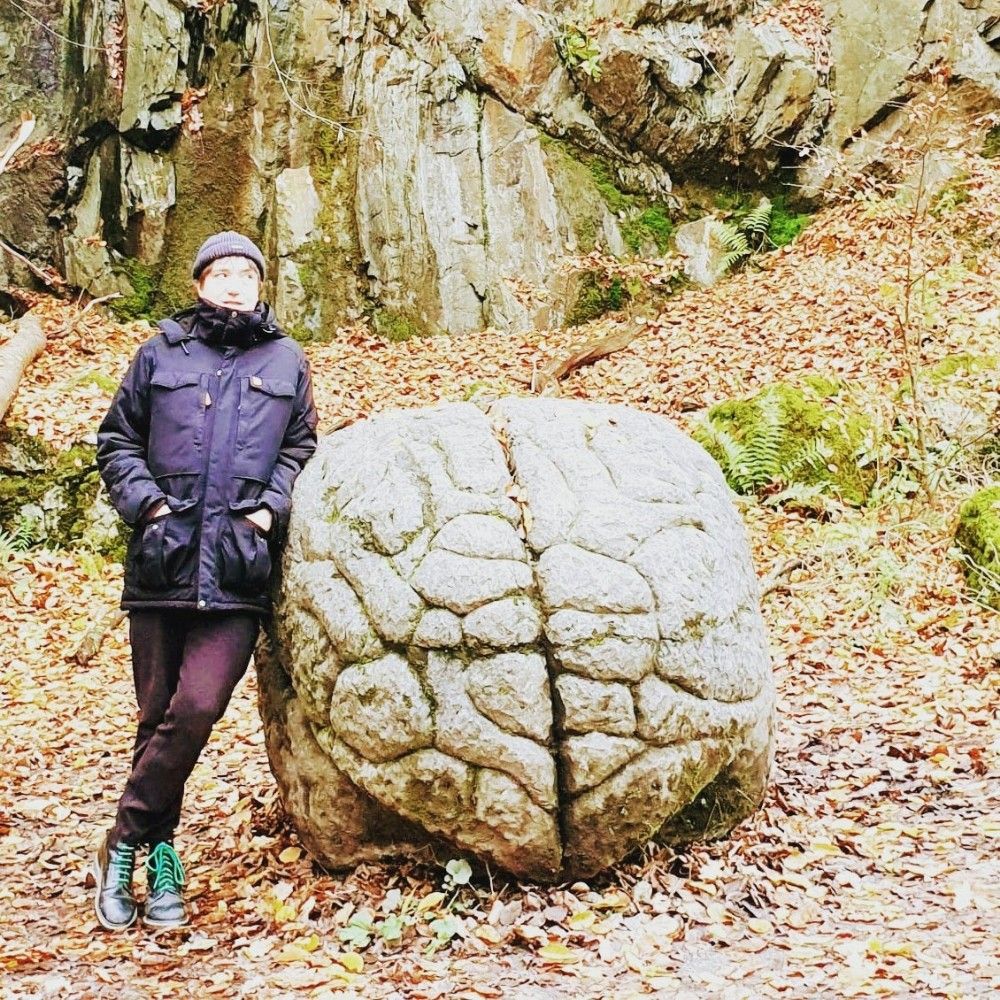
Very happy that this is out www.nature.com/articles/s44.... Together with @stefankiebel.bsky.social we show that decision biases in context-dependent decision making, previously attributed to different forms of value normalization, are very well explained by habit-like action repetition.

Action repetition biases choice in context-dependent decision-making - Communications Psychology
This study shows that decision biases previously attributed to value normalization (e.g. relative value learning or range normalization) are better explained by action repetition. Repeating an action ...
www.nature.com
November 27, 2025 at 6:43 PM
Very happy that this is out www.nature.com/articles/s44.... Together with @stefankiebel.bsky.social we show that decision biases in context-dependent decision making, previously attributed to different forms of value normalization, are very well explained by habit-like action repetition.
Reposted by 🕯️Doye K

New perspective paper (w/ @sedaakbiyik.bsky.social, Joseph Outa, & @minjaek.bsky.social ) in @natrevpsychol.nature.com ⚽💭🧠👶 : www.nature.com/articles/s44...

How physical information is used to make sense of the psychological world - Nature Reviews Psychology
Reasoning about minds and reasoning about physical objects are governed by two distinct systems. In this Perspective, Liu et al. review research from developmental psychology and cognitive neuroscienc...
www.nature.com
November 24, 2025 at 11:14 PM
New perspective paper (w/ @sedaakbiyik.bsky.social, Joseph Outa, & @minjaek.bsky.social ) in @natrevpsychol.nature.com ⚽💭🧠👶 : www.nature.com/articles/s44...
Reposted by 🕯️Doye K

Excited to share our manuscript about BrainEffeX, a tool for exploring fMRI effect sizes. Includes why we made it, how to use it + contribute, and how we made it.
@sneuroble.bsky.social @psychonetrics.bsky.social
@alexkfischbach.bsky.social
@nichols.bsky.social
@dscheinost.bsky.social & MINDS Lab
@sneuroble.bsky.social @psychonetrics.bsky.social
@alexkfischbach.bsky.social
@nichols.bsky.social
@dscheinost.bsky.social & MINDS Lab

Shearer et al. introduce an interactive web application for exploring fMRI effect maps:
doi.org/10.52294/001...
@halleeshearer.bsky.social @sneuroble.bsky.social @ohbmossig.bsky.social
#OpenDatasets #SpecialIssue
doi.org/10.52294/001...
@halleeshearer.bsky.social @sneuroble.bsky.social @ohbmossig.bsky.social
#OpenDatasets #SpecialIssue

November 12, 2025 at 7:46 PM
Excited to share our manuscript about BrainEffeX, a tool for exploring fMRI effect sizes. Includes why we made it, how to use it + contribute, and how we made it.
@sneuroble.bsky.social @psychonetrics.bsky.social
@alexkfischbach.bsky.social
@nichols.bsky.social
@dscheinost.bsky.social & MINDS Lab
@sneuroble.bsky.social @psychonetrics.bsky.social
@alexkfischbach.bsky.social
@nichols.bsky.social
@dscheinost.bsky.social & MINDS Lab
Reposted by 🕯️Doye K

@andrewpapale.bsky.social 's new explore/exploit paper in JNeurosci with @vanessabrown.bsky.social @drangelaianni.bsky.social Michael Hallquist & Bea Luna: www.jneurosci.org/content/earl...
PFC-DMN and hippocampus encode value maxima in exploitation, but their synchronization peaks in exploration.
PFC-DMN and hippocampus encode value maxima in exploitation, but their synchronization peaks in exploration.

Prefrontal default-mode network interactions with posterior hippocampus during exploration
Hippocampal maps and ventral prefrontal cortex (vPFC) value and goal representations support foraging in continuous spaces. How might hippocampal-vPFC interactions control the balance between behavior...
www.jneurosci.org
November 17, 2025 at 2:45 PM
@andrewpapale.bsky.social 's new explore/exploit paper in JNeurosci with @vanessabrown.bsky.social @drangelaianni.bsky.social Michael Hallquist & Bea Luna: www.jneurosci.org/content/earl...
PFC-DMN and hippocampus encode value maxima in exploitation, but their synchronization peaks in exploration.
PFC-DMN and hippocampus encode value maxima in exploitation, but their synchronization peaks in exploration.
Reposted by 🕯️Doye K

You'll find the fascinating paper here 👉https://www.nature.com/articles/s41562-025-02269-4
As always, feel free to reach out to me on here or @joebarnby.com via email for a link! We are looking forward to seeing many of you next Thursday :)
As always, feel free to reach out to me on here or @joebarnby.com via email for a link! We are looking forward to seeing many of you next Thursday :)

Feature-based reward learning shapes human social learning strategies - Nature Human Behaviour
This research advances a mechanistic reward learning account of social learning strategies. Through experiments and simulations, it shows how individuals learn to learn from others, dynamically shapin...
www.nature.com
November 5, 2025 at 3:45 PM
You'll find the fascinating paper here 👉https://www.nature.com/articles/s41562-025-02269-4
As always, feel free to reach out to me on here or @joebarnby.com via email for a link! We are looking forward to seeing many of you next Thursday :)
As always, feel free to reach out to me on here or @joebarnby.com via email for a link! We are looking forward to seeing many of you next Thursday :)
Reposted by 🕯️Doye K

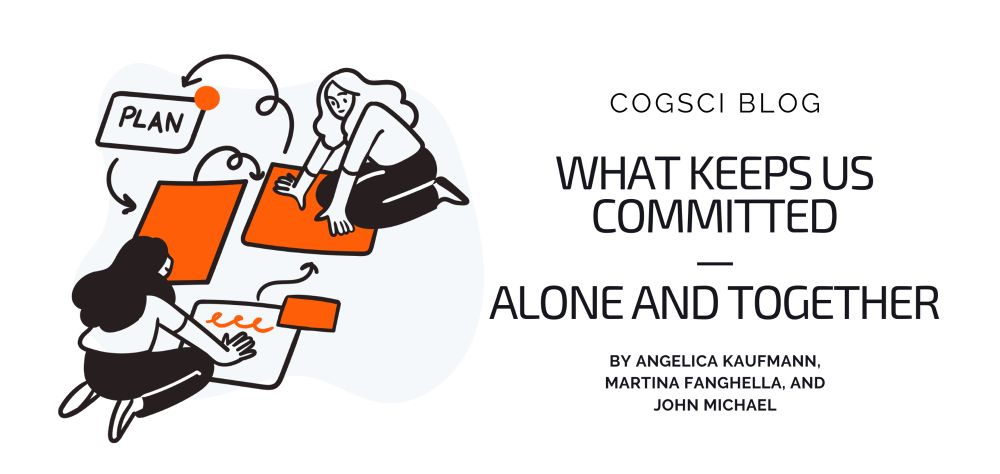
What helps us stick to our goals and stay in sync with others?
In this post from the CogSci Unpacked series, Andrea Kaufmann, Martina Fanghella, and John Mitchel distill key ideas from their recently published paper on commitment, control, and motivation.
cognitivesciencesociety.org/what-keeps-u...
In this post from the CogSci Unpacked series, Andrea Kaufmann, Martina Fanghella, and John Mitchel distill key ideas from their recently published paper on commitment, control, and motivation.
cognitivesciencesociety.org/what-keeps-u...
What Keeps Us Committed—Alone and Together - Cognitive Science Society
Welcome to CogSci Unpacked, an exciting blog series dedicated to summarizing academic papers from the Cognitive Science, a CSS Journal. Our goal is to bridge the gap between academia and the broader p...
cognitivesciencesociety.org
November 6, 2025 at 6:35 PM
What helps us stick to our goals and stay in sync with others?
In this post from the CogSci Unpacked series, Andrea Kaufmann, Martina Fanghella, and John Mitchel distill key ideas from their recently published paper on commitment, control, and motivation.
cognitivesciencesociety.org/what-keeps-u...
In this post from the CogSci Unpacked series, Andrea Kaufmann, Martina Fanghella, and John Mitchel distill key ideas from their recently published paper on commitment, control, and motivation.
cognitivesciencesociety.org/what-keeps-u...
Reposted by 🕯️Doye K

Thrilled to share a new paper in @jamapsychiatry.com on path asymmetry in complex dynamic systems of psychopathology! jamanetwork.com/journals/jam...
With amazing collaborators @tfblanken.bsky.social, Han van der Maas, & Denny Borsboom 🥳
With amazing collaborators @tfblanken.bsky.social, Han van der Maas, & Denny Borsboom 🥳
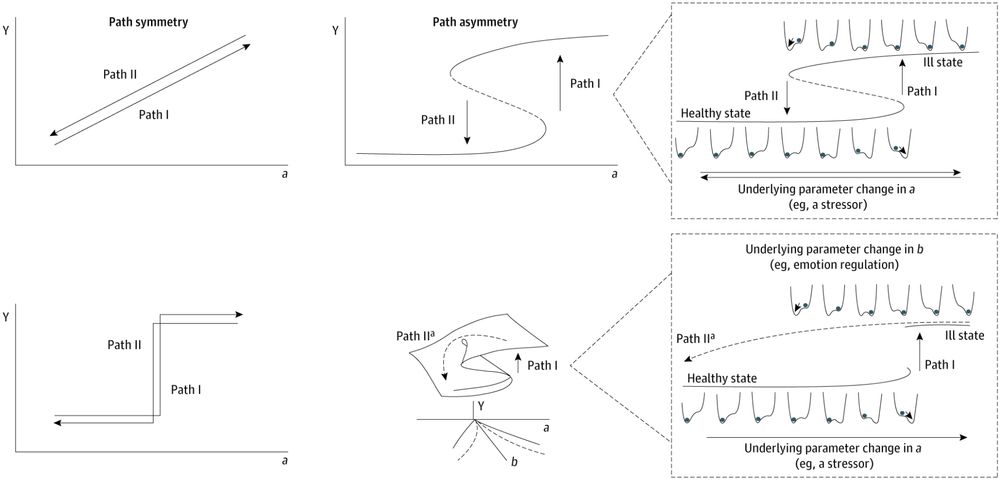
Path Asymmetry in Complex Dynamic Systems of Psychopathology
This article illustrates the assumption of path symmetry in current theories of psychopathology and calls for the development of dynamical systems of mental illness that incorporate asymmetry.
jamanetwork.com
October 29, 2025 at 8:42 PM
Thrilled to share a new paper in @jamapsychiatry.com on path asymmetry in complex dynamic systems of psychopathology! jamanetwork.com/journals/jam...
With amazing collaborators @tfblanken.bsky.social, Han van der Maas, & Denny Borsboom 🥳
With amazing collaborators @tfblanken.bsky.social, Han van der Maas, & Denny Borsboom 🥳
Reposted by 🕯️Doye K
Online Now: The adaptive value of stubborn goals

The adaptive value of stubborn goals
Humans exhibit a striking tendency to persist with chosen goals. This strong attachment to goals can often appear irrational – a perspective captured by terms such as perseverance or sunk-cost biases. In this review, we explore how goal commitment could stem from several adaptive mechanisms, including those that optimise cognitive resources, shield decisions from interference, and scaffold motivation in the absence of accessible reward signals. We propose that these computational considerations have important implications for algorithmic architectures supporting decision making, including separate algorithms for goal selection and implementation, and for monitoring ongoing goals versus alternative sources of reward. Finally, we discuss how a variety of mechanisms supporting goal commitment and abandonment could relate to dimensions affected in mental health.
dlvr.it
October 29, 2025 at 12:40 PM
Online Now: The adaptive value of stubborn goals
Reposted by 🕯️Doye K

If you use the Monetary Incentive Delay task or any task with complex events in fMRI, you should read this. We demonstrate that common modeling approaches can result in bias due to omitted variables. By @jeanette-mumford.bsky.social & the ABCD task fMRI team. direct.mit.edu/imag/article...

Unintended bias in the pursuit of collinearity solutions in fMRI analysis
Abstract. In task functional magnetic resonance imaging (fMRI), collinearity between task regressors in time series models may impact power. When collinearity is identified after data collection, rese...
direct.mit.edu
October 29, 2025 at 1:23 PM
If you use the Monetary Incentive Delay task or any task with complex events in fMRI, you should read this. We demonstrate that common modeling approaches can result in bias due to omitted variables. By @jeanette-mumford.bsky.social & the ABCD task fMRI team. direct.mit.edu/imag/article...