




Missy_jin
@jinmissy.bsky.social
Phd student in NZ
Research interests: corporate sustainability ,carbon performance, carbon management accounting, corporate responsibility
Research interests: corporate sustainability ,carbon performance, carbon management accounting, corporate responsibility
Reposted by Missy_jin

That's why, in my opinion, if you wear a polo, it has to have a little something: a bit of texture or a skipper collar. Or it can be worn underneath a tailored jacket (good tailoring is always good). It can't be that "slim fit chino, golf polo, dress sneaker, fancy sports watch" look.


September 10, 2025 at 12:28 AM
That's why, in my opinion, if you wear a polo, it has to have a little something: a bit of texture or a skipper collar. Or it can be worn underneath a tailored jacket (good tailoring is always good). It can't be that "slim fit chino, golf polo, dress sneaker, fancy sports watch" look.
Reposted by Missy_jin

1/This is Transatlantic leadership! In historic move, German Chancellor Merz calls out US: “democracy is under pressure, freedom of expression is being questioned, and the independence of the judiciary is being repressed“.
www.reuters.com/technology/g...
www.reuters.com/technology/g...

Germany's Merz criticises US' fundamental shift from following rules
German Chancellor Friedrich Merz criticised the United States on Friday for no longer following the rules, part of what he called a fundamental shift in Europe's transatlantic partner.
www.reuters.com
September 27, 2025 at 12:06 PM
1/This is Transatlantic leadership! In historic move, German Chancellor Merz calls out US: “democracy is under pressure, freedom of expression is being questioned, and the independence of the judiciary is being repressed“.
www.reuters.com/technology/g...
www.reuters.com/technology/g...
Reposted by Missy_jin

5/7
But because involution is a consequence of the surge in manufacturing that was itself a response to the post-2021-22 decline in property investment, if this is true, it simply shifts the problem forward, as I explain in a recent CRI piece.
carnegieendowment.org/posts/2025/0...
But because involution is a consequence of the surge in manufacturing that was itself a response to the post-2021-22 decline in property investment, if this is true, it simply shifts the problem forward, as I explain in a recent CRI piece.
carnegieendowment.org/posts/2025/0...

What’s New about Involution?
“Involution” is a new word for an old problem, and without a very different set of policies to rein it in, it is a problem that is likely to persist.
carnegieendowment.org
September 15, 2025 at 5:49 AM
5/7
But because involution is a consequence of the surge in manufacturing that was itself a response to the post-2021-22 decline in property investment, if this is true, it simply shifts the problem forward, as I explain in a recent CRI piece.
carnegieendowment.org/posts/2025/0...
But because involution is a consequence of the surge in manufacturing that was itself a response to the post-2021-22 decline in property investment, if this is true, it simply shifts the problem forward, as I explain in a recent CRI piece.
carnegieendowment.org/posts/2025/0...
Reposted by Missy_jin
6/8
imbalances in countries that choose not to. To put it another way, this is an example of how one country's industrial policies can also become the industrial policies (in reverse) of another country, whether that benefits or harms the latter.
carnegieendowment.org/china-financ...
imbalances in countries that choose not to. To put it another way, this is an example of how one country's industrial policies can also become the industrial policies (in reverse) of another country, whether that benefits or harms the latter.
carnegieendowment.org/china-financ...

Which Country Should Design U.S. Industrial Policy?
The decision Americans must make about industrial policy is whether policies that drive the nature and direction of the U.S. economy should be designed at home or abroad by its trade partners. In a hy...
carnegieendowment.org
July 30, 2025 at 11:58 AM
6/8
imbalances in countries that choose not to. To put it another way, this is an example of how one country's industrial policies can also become the industrial policies (in reverse) of another country, whether that benefits or harms the latter.
carnegieendowment.org/china-financ...
imbalances in countries that choose not to. To put it another way, this is an example of how one country's industrial policies can also become the industrial policies (in reverse) of another country, whether that benefits or harms the latter.
carnegieendowment.org/china-financ...
Reposted by Missy_jin
10/10
In the end, you cannot solve a structural problem through accounting or administrative measures. What we are instead likely to see is greater trade surpluses and rising inventories, with the former being the main way to limit the latter.
In the end, you cannot solve a structural problem through accounting or administrative measures. What we are instead likely to see is greater trade surpluses and rising inventories, with the former being the main way to limit the latter.
July 27, 2025 at 6:26 AM
10/10
In the end, you cannot solve a structural problem through accounting or administrative measures. What we are instead likely to see is greater trade surpluses and rising inventories, with the former being the main way to limit the latter.
In the end, you cannot solve a structural problem through accounting or administrative measures. What we are instead likely to see is greater trade surpluses and rising inventories, with the former being the main way to limit the latter.
Poutine & eggplant - back to Canada series 🍁

July 26, 2025 at 2:43 AM
Poutine & eggplant - back to Canada series 🍁


July 15, 2025 at 12:05 PM
Reposted by Missy_jin
Important article. As more and more economists and policymakers begin to realize that large, persistent trade imbalances are indeed a problem for the global economy, Martin Wolf calls for a tax on capital inflows. www.ft.com/content/e2c8...

Why global imbalances do matter
If the US wants to accelerate a worldwide discussion with a policy intervention, the obvious one would be a tax on capital inflows
www.ft.com
June 24, 2025 at 4:33 AM
Important article. As more and more economists and policymakers begin to realize that large, persistent trade imbalances are indeed a problem for the global economy, Martin Wolf calls for a tax on capital inflows. www.ft.com/content/e2c8...
Reposted by Missy_jin
7/8
Manufacturing represents 27-28% of the Chinese economy, even more than the property sector. This means that anything that hurts manufacturing will be very hard for the rest of the economy to absorb.
Manufacturing represents 27-28% of the Chinese economy, even more than the property sector. This means that anything that hurts manufacturing will be very hard for the rest of the economy to absorb.
May 7, 2025 at 4:31 AM
7/8
Manufacturing represents 27-28% of the Chinese economy, even more than the property sector. This means that anything that hurts manufacturing will be very hard for the rest of the economy to absorb.
Manufacturing represents 27-28% of the Chinese economy, even more than the property sector. This means that anything that hurts manufacturing will be very hard for the rest of the economy to absorb.
Reposted by Missy_jin
8/9
My friends in manufacturing tell me that they are under huge pressure to reduce wages and fire workers, but they're also under a lot of pressure by local governments to show higher growth numbers, and this partly explains why exports continue to rise much faster than imports.
My friends in manufacturing tell me that they are under huge pressure to reduce wages and fire workers, but they're also under a lot of pressure by local governments to show higher growth numbers, and this partly explains why exports continue to rise much faster than imports.
May 9, 2025 at 5:17 AM
8/9
My friends in manufacturing tell me that they are under huge pressure to reduce wages and fire workers, but they're also under a lot of pressure by local governments to show higher growth numbers, and this partly explains why exports continue to rise much faster than imports.
My friends in manufacturing tell me that they are under huge pressure to reduce wages and fire workers, but they're also under a lot of pressure by local governments to show higher growth numbers, and this partly explains why exports continue to rise much faster than imports.
Reposted by Missy_jin
4/4
What is more, the growth in median household income was only 5.0%, which suggests that the poor, who are most likely than the rich to convert income into consumption, received a disproportionately low share of that increase.
www.stats.gov.cn/english/Pres...
What is more, the growth in median household income was only 5.0%, which suggests that the poor, who are most likely than the rich to convert income into consumption, received a disproportionately low share of that increase.
www.stats.gov.cn/english/Pres...
www.stats.gov.cn
April 16, 2025 at 6:21 AM
4/4
What is more, the growth in median household income was only 5.0%, which suggests that the poor, who are most likely than the rich to convert income into consumption, received a disproportionately low share of that increase.
www.stats.gov.cn/english/Pres...
What is more, the growth in median household income was only 5.0%, which suggests that the poor, who are most likely than the rich to convert income into consumption, received a disproportionately low share of that increase.
www.stats.gov.cn/english/Pres...
Reposted by Missy_jin

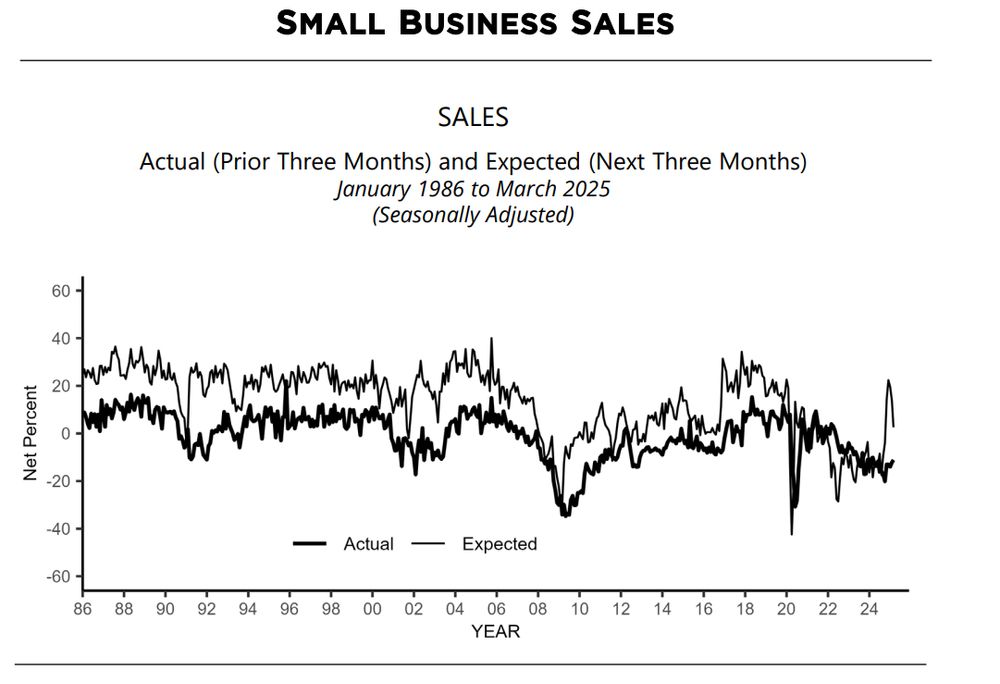
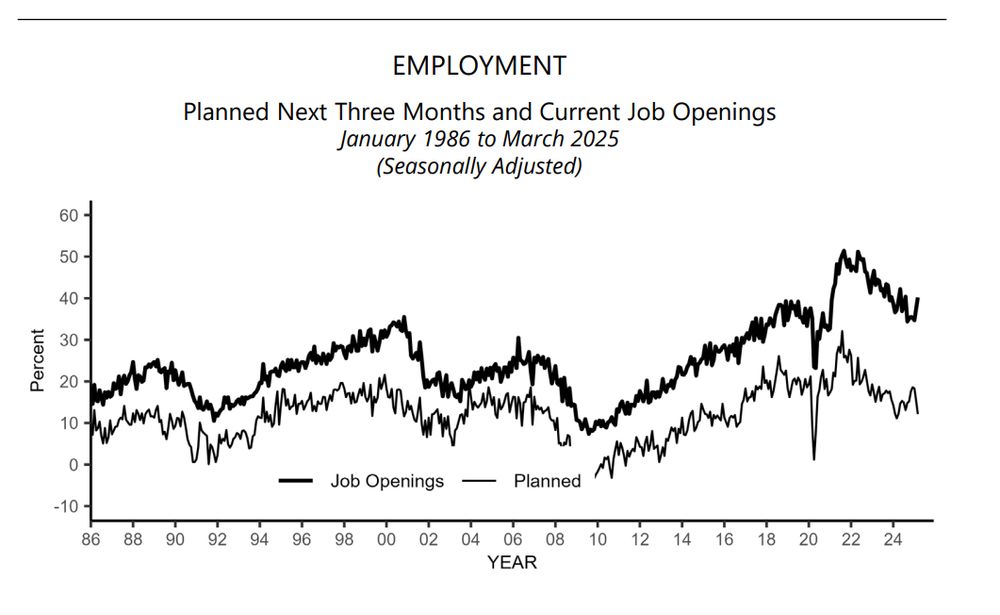
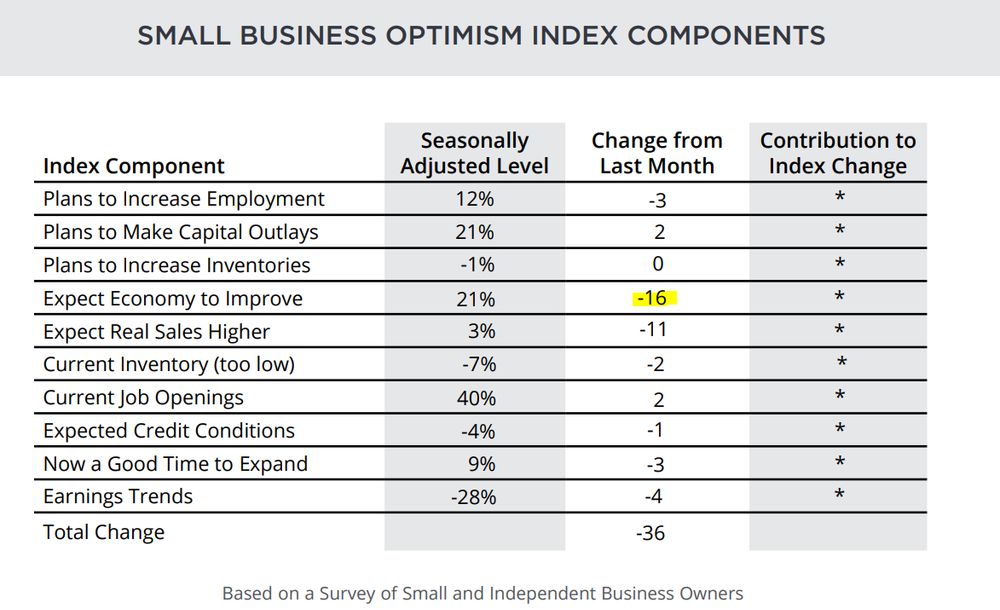
Small biz owners are probably the most conservative members of the business world.
Today they say they're seeing declining optimism, expecting lower sales and hiring, and a significantly worsening picture for the overall economy.
www.nfib.com/wp-content/u...
Today they say they're seeing declining optimism, expecting lower sales and hiring, and a significantly worsening picture for the overall economy.
www.nfib.com/wp-content/u...

April 8, 2025 at 10:48 AM
Small biz owners are probably the most conservative members of the business world.
Today they say they're seeing declining optimism, expecting lower sales and hiring, and a significantly worsening picture for the overall economy.
www.nfib.com/wp-content/u...
Today they say they're seeing declining optimism, expecting lower sales and hiring, and a significantly worsening picture for the overall economy.
www.nfib.com/wp-content/u...
Reposted by Missy_jin
3/4
The point is that what had seemed like a stable global trading regime was in fact based on an unsustainable dependence of the rest of the world on the willingness of the US (along with the UK and Canada) to exchange ownership of domestic assets for large trade deficits.
The point is that what had seemed like a stable global trading regime was in fact based on an unsustainable dependence of the rest of the world on the willingness of the US (along with the UK and Canada) to exchange ownership of domestic assets for large trade deficits.
April 5, 2025 at 3:17 AM
3/4
The point is that what had seemed like a stable global trading regime was in fact based on an unsustainable dependence of the rest of the world on the willingness of the US (along with the UK and Canada) to exchange ownership of domestic assets for large trade deficits.
The point is that what had seemed like a stable global trading regime was in fact based on an unsustainable dependence of the rest of the world on the willingness of the US (along with the UK and Canada) to exchange ownership of domestic assets for large trade deficits.
Reposted by Missy_jin
Matthew Klein on tariffs, with a great – and very relevant – quote from Keynes.
theovershoot.co/p/how-to-thi...
theovershoot.co/p/how-to-thi...

How to Think About the Tariffs
This is bad policy, executed thoughtlessly. But it is worth thinking through exactly *why* it is bad.
theovershoot.co
April 4, 2025 at 1:16 PM
Matthew Klein on tariffs, with a great – and very relevant – quote from Keynes.
theovershoot.co/p/how-to-thi...
theovershoot.co/p/how-to-thi...
Reposted by Missy_jin
7/14
To make matters worse, the new tariffs don't really address the real US problem. One obvious reason is that the tariffs are largely bilateral, and while bilateral imbalances may impress those who don't understand trade and capital flows, they are in fact pretty useless.
To make matters worse, the new tariffs don't really address the real US problem. One obvious reason is that the tariffs are largely bilateral, and while bilateral imbalances may impress those who don't understand trade and capital flows, they are in fact pretty useless.
April 3, 2025 at 3:01 AM
7/14
To make matters worse, the new tariffs don't really address the real US problem. One obvious reason is that the tariffs are largely bilateral, and while bilateral imbalances may impress those who don't understand trade and capital flows, they are in fact pretty useless.
To make matters worse, the new tariffs don't really address the real US problem. One obvious reason is that the tariffs are largely bilateral, and while bilateral imbalances may impress those who don't understand trade and capital flows, they are in fact pretty useless.
Reposted by Missy_jin

One thing important to understand about the CA/MX tariffs is that while overall impact is likely to be modest in terms of inflation and output, they’ll have extremely concentrated negative effects in specific sectors. Autos are the best example given how many times parts cross those borders.
February 1, 2025 at 3:26 PM
One thing important to understand about the CA/MX tariffs is that while overall impact is likely to be modest in terms of inflation and output, they’ll have extremely concentrated negative effects in specific sectors. Autos are the best example given how many times parts cross those borders.
Reposted by Missy_jin

"It's difficult to win an argument against an intelligent person. It's impossible to win one against an idiot."
March 5, 2025 at 9:29 PM
"It's difficult to win an argument against an intelligent person. It's impossible to win one against an idiot."
Reposted by Missy_jin

I knew this would happen, but it's still surreal to hear another nation's leader talk to us in a televised address the way US presidents have historically spoken to the citizens of countries led by dictators and despots.
Trudeau: "I want to speak first directly to the American people. We don't want this. We want to work with you as a friend and ally. We don't want to see you hurt either. But your government has chosen to do this to you. As of this morning, markets are down and inflation is set to rise dramatically."
March 4, 2025 at 4:58 PM
I knew this would happen, but it's still surreal to hear another nation's leader talk to us in a televised address the way US presidents have historically spoken to the citizens of countries led by dictators and despots.
Reposted by Missy_jin
8/8
The global trading system is changing, in ways that may be as dramatic as in the 1930s and the 1970s. The temptation to go back to what used to work in the past may be a strong one, but it's not a sustainable one.
The global trading system is changing, in ways that may be as dramatic as in the 1930s and the 1970s. The temptation to go back to what used to work in the past may be a strong one, but it's not a sustainable one.
February 25, 2025 at 4:40 AM
8/8
The global trading system is changing, in ways that may be as dramatic as in the 1930s and the 1970s. The temptation to go back to what used to work in the past may be a strong one, but it's not a sustainable one.
The global trading system is changing, in ways that may be as dramatic as in the 1930s and the 1970s. The temptation to go back to what used to work in the past may be a strong one, but it's not a sustainable one.
Reposted by Missy_jin
You can ignore all rules, of course, but then you will wind up with a nonsensical outfit that looks confusing. People who say they don't care about "rules" still seem to follow them when communicating in written form. This is because shared language has rules; they help, not hinder, expression.
December 31, 2024 at 9:53 PM
You can ignore all rules, of course, but then you will wind up with a nonsensical outfit that looks confusing. People who say they don't care about "rules" still seem to follow them when communicating in written form. This is because shared language has rules; they help, not hinder, expression.
Reposted by Missy_jin

Macron, with Trump scowling next to him, says "the aggressor is Russia"
February 24, 2025 at 6:47 PM
Macron, with Trump scowling next to him, says "the aggressor is Russia"


Reposted by Missy_jin
2/5
the US economy and worsen US trade imbalances, the tax subsidy to foreigners should be removed. I not only agree that the subsidies should be removed, but I'd further argue that foreign inflows should also be taxed.
carnegieendowment.org/china-financ...
the US economy and worsen US trade imbalances, the tax subsidy to foreigners should be removed. I not only agree that the subsidies should be removed, but I'd further argue that foreign inflows should also be taxed.
carnegieendowment.org/china-financ...

Washington Should Tax Capital Inflows
Taxing capital inflows is a far better way to balance trade than imposing tariffs. This would address the root causes of trade imbalances, improve the productive investment process, and shift most of ...
carnegieendowment.org
February 20, 2025 at 4:13 AM
2/5
the US economy and worsen US trade imbalances, the tax subsidy to foreigners should be removed. I not only agree that the subsidies should be removed, but I'd further argue that foreign inflows should also be taxed.
carnegieendowment.org/china-financ...
the US economy and worsen US trade imbalances, the tax subsidy to foreigners should be removed. I not only agree that the subsidies should be removed, but I'd further argue that foreign inflows should also be taxed.
carnegieendowment.org/china-financ...