



Narayani Srivastava
@narayanisri.bsky.social
Cognitive Psychology Researcher
Interested in Working Memory, Cognitive Control, Mind Wandering and Selective Attention
Actively looking for the research opportunities in the above mention fields and their intersection
Interested in Working Memory, Cognitive Control, Mind Wandering and Selective Attention
Actively looking for the research opportunities in the above mention fields and their intersection
Reposted by Narayani Srivastava

Just published my review of neuroscience in 2025, on The Spike.
The 10th of these, would you believe?
This year we have foundation models, breakthroughs in using light to understand the brain, a gene therapy, and more
Enjoy!
medium.com/the-spike/20...
The 10th of these, would you believe?
This year we have foundation models, breakthroughs in using light to understand the brain, a gene therapy, and more
Enjoy!
medium.com/the-spike/20...

2025: A Review of the Year in Neuroscience
Enlightening the brain
medium.com
December 30, 2025 at 3:52 PM
Just published my review of neuroscience in 2025, on The Spike.
The 10th of these, would you believe?
This year we have foundation models, breakthroughs in using light to understand the brain, a gene therapy, and more
Enjoy!
medium.com/the-spike/20...
The 10th of these, would you believe?
This year we have foundation models, breakthroughs in using light to understand the brain, a gene therapy, and more
Enjoy!
medium.com/the-spike/20...
Reposted by Narayani Srivastava

I also want to share some resources that were created for the community based on AMPPS papers. First, there is a new article out in the APS Observer that puts together 9 practical guides for research methods including papers and tutorials www.psychologicalscience.org/publications...

Nine Practical Guides to Support Your Research in 2026
The Observer has compiled a list of 2025 guides, tutorials, and manuals designed to support psychological scientists as they expand their toolboxes of research practices and methods.
www.psychologicalscience.org
December 18, 2025 at 3:42 PM
I also want to share some resources that were created for the community based on AMPPS papers. First, there is a new article out in the APS Observer that puts together 9 practical guides for research methods including papers and tutorials www.psychologicalscience.org/publications...
Reposted by Narayani Srivastava

Is attentional control truly what we think it is? Check out the eye-opening results in the #psynomPBR paper by Alodie Rey-Mermet, Henrik Singmann, and Klaus Oberauer. Post by @brettrmyers.

How attentional control got too much attention — and how we can rethink latent constructs
If attention were a muscle, most of us would swear ours had been skipping leg day. One minute you’re reading an email, the next you’re three tabs deep into a recipe for a croquembouche that looks l…
wp.me
December 19, 2025 at 9:03 PM
Is attentional control truly what we think it is? Check out the eye-opening results in the #psynomPBR paper by Alodie Rey-Mermet, Henrik Singmann, and Klaus Oberauer. Post by @brettrmyers.
Reposted by Narayani Srivastava
1/ Here are some (ok, most) of the books I read and listened to this past year, mostly in order. Some real gems, as always. “A life without books is a life not lived” Jay Kristoff.
December 20, 2025 at 6:26 PM
1/ Here are some (ok, most) of the books I read and listened to this past year, mostly in order. Some real gems, as always. “A life without books is a life not lived” Jay Kristoff.
Reposted by Narayani Srivastava

New writeup on interoception in Scientific American focusing on its role in mental health:
www.scientificamerican.com/article/inte...
www.scientificamerican.com/article/inte...

Disruptions in This Sixth Sense May Drive Mental Illness
Disruptions in interoception may underlie anxiety, eating disorders, and other mental health ailments
www.scientificamerican.com
December 16, 2025 at 8:59 PM
New writeup on interoception in Scientific American focusing on its role in mental health:
www.scientificamerican.com/article/inte...
www.scientificamerican.com/article/inte...
Reposted by Narayani Srivastava

Online Now: Adaptive habits: understanding executive function and its development

Adaptive habits: understanding executive function and its development
Executive functions (EFs) develop dramatically across childhood and predict important outcomes, including academic achievement. These links are often attributed to individual differences in EF capacities. However, individual difference accounts underemphasize contextual influences on EF. We propose a complementary perspective, the adaptive habits framework, which emphasizes how contextual factors support or hinder EF engagement in children. Contexts that support repeated EF engagement establish habits for engaging EF in similar contexts and in similar ways. Such habits, in turn, reduce the effort associated with engaging EF and thus increase the likelihood of deciding to engage EF in the future. We interpret empirical findings through the lens of adaptive habits, discuss the implications of this framework, and propose novel research approaches and interventions to support EF in children.
dlvr.it
December 17, 2025 at 1:40 PM
Online Now: Adaptive habits: understanding executive function and its development
Reposted by Narayani Srivastava

Out now in @ebiomedicine.bsky.social 🚨.
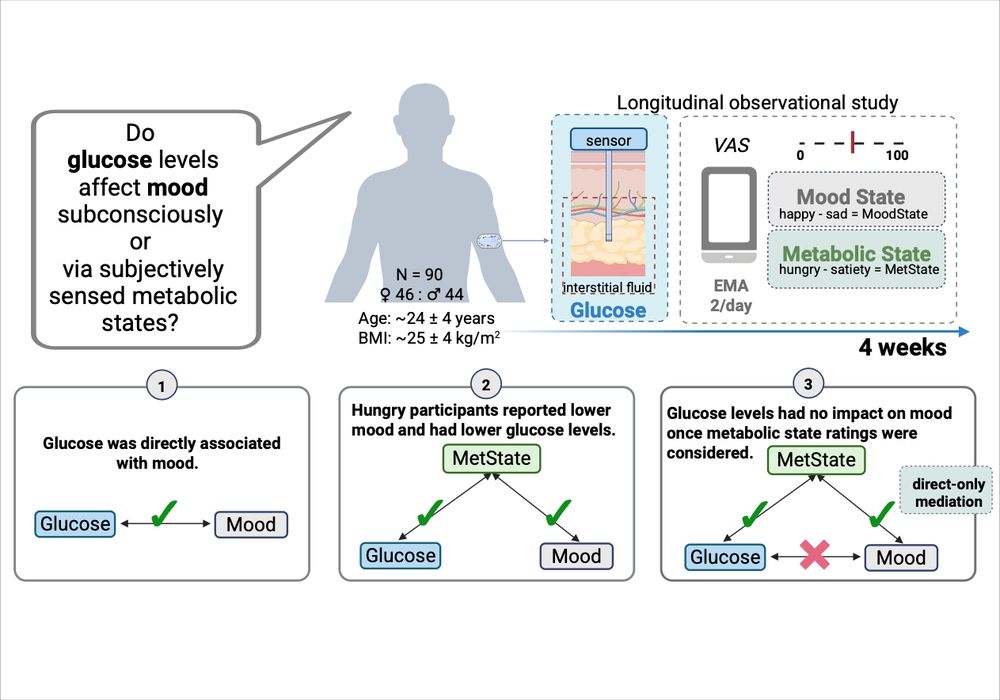
Hunger often affects our mood, but is this a conscious or a subconscious process? Using continuous glucose monitoring, we show that differences in mood are driven by hunger ratings, not just glucose. #neuroskyence 🩺
www.thelancet.com/journals/EBI...
Hunger often affects our mood, but is this a conscious or a subconscious process? Using continuous glucose monitoring, we show that differences in mood are driven by hunger ratings, not just glucose. #neuroskyence 🩺
www.thelancet.com/journals/EBI...
December 8, 2025 at 1:33 PM
Out now in @ebiomedicine.bsky.social 🚨.
Hunger often affects our mood, but is this a conscious or a subconscious process? Using continuous glucose monitoring, we show that differences in mood are driven by hunger ratings, not just glucose. #neuroskyence 🩺
www.thelancet.com/journals/EBI...
Hunger often affects our mood, but is this a conscious or a subconscious process? Using continuous glucose monitoring, we show that differences in mood are driven by hunger ratings, not just glucose. #neuroskyence 🩺
www.thelancet.com/journals/EBI...
Reposted by Narayani Srivastava
What started as a spinoff project for Madeleine's PhD became one of the most striking indications that glucose levels play an important role in regulating everyday stress responses. This shows the potential of biosensors to evaluate whether metabolism alters stress reactivity #neuroskyence 🩺

📣I’m excited to share our new preprint on how our body’s energy supply shapes everyday stress experiences:
📄𝐇𝐢𝐠𝐡𝐞𝐫 𝐠𝐥𝐮𝐜𝐨𝐬𝐞 𝐥𝐞𝐯𝐞𝐥𝐬 𝐛𝐮𝐟𝐟𝐞𝐫 𝐚𝐠𝐚𝐢𝐧𝐬𝐭 𝐞𝐯𝐞𝐫𝐲𝐝𝐚𝐲 𝐬𝐭𝐫𝐞𝐬𝐬 𝐥𝐨𝐚𝐝
www.biorxiv.org/content/10.6...
📄𝐇𝐢𝐠𝐡𝐞𝐫 𝐠𝐥𝐮𝐜𝐨𝐬𝐞 𝐥𝐞𝐯𝐞𝐥𝐬 𝐛𝐮𝐟𝐟𝐞𝐫 𝐚𝐠𝐚𝐢𝐧𝐬𝐭 𝐞𝐯𝐞𝐫𝐲𝐝𝐚𝐲 𝐬𝐭𝐫𝐞𝐬𝐬 𝐥𝐨𝐚𝐝
www.biorxiv.org/content/10.6...

Higher glucose levels buffer against everyday stress load
Adaptive stress responses are dependent on the availability of energy and the body's effectiveness in metabolizing glucose as fuel. However, it is not well understood if glucose levels contribute to t...
www.biorxiv.org
December 10, 2025 at 6:23 PM
What started as a spinoff project for Madeleine's PhD became one of the most striking indications that glucose levels play an important role in regulating everyday stress responses. This shows the potential of biosensors to evaluate whether metabolism alters stress reactivity #neuroskyence 🩺
Reposted by Narayani Srivastava

Our latest is now out at JEP:General, “Quiet Eyes: Visual gaze stability predicts intra- and interindividual variability in attention control.” psycnet.apa.org/doi/10.1037/... (Abstract below)

December 4, 2025 at 6:57 PM
Our latest is now out at JEP:General, “Quiet Eyes: Visual gaze stability predicts intra- and interindividual variability in attention control.” psycnet.apa.org/doi/10.1037/... (Abstract below)
Reposted by Narayani Srivastava

I hope to have time soon to write a little thread on this, but for now here's the PsyArXiv link to a new preprint from our lab on the construct validity of probed mind-blanking reports. Chandni Lal will be presenting this work as a poster at the upcoming Psychonomics meeting.

What Is a "Blank" Mind? Testing the Meaning and Construct Validity of Mind-Blanking Reports to Thought Probes: https://osf.io/ubwae
November 17, 2025 at 8:52 PM
I hope to have time soon to write a little thread on this, but for now here's the PsyArXiv link to a new preprint from our lab on the construct validity of probed mind-blanking reports. Chandni Lal will be presenting this work as a poster at the upcoming Psychonomics meeting.
Reposted by Narayani Srivastava
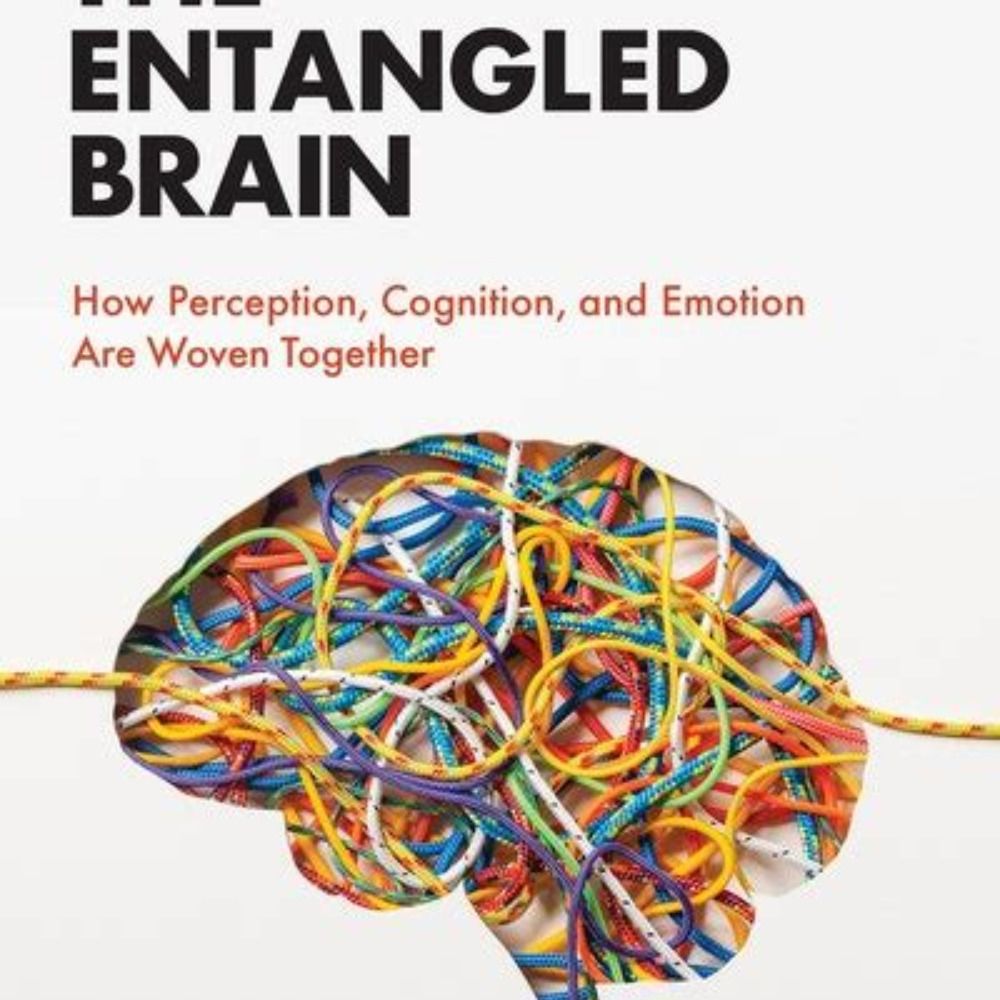
𝗛𝗼𝘄 𝗱𝗼𝗲𝘀 𝘁𝗵𝗲 𝗯𝗿𝗮𝗶𝗻 𝗶𝗺𝗽𝗹𝗲𝗺𝗲𝗻𝘁 𝗱𝗲𝗰𝗶𝘀𝗶𝗼𝗻𝘀 𝗶𝗳 𝘁𝗵𝗲𝗿𝗲 𝗶𝘀 𝗻𝗼 "𝗰𝗲𝗻𝘁𝗿𝗮𝗹 𝗲𝘅𝗲𝗰𝘂𝘁𝗶𝘃𝗲" (𝗮𝗸𝗮 𝗵𝗼𝗺𝘂𝗻𝗰𝘂𝗹𝘂𝘀)?
Via Decision Formation Through Multi-Area Population Dynamics
Excellent short review.
doi.org/10.1523/JNEU...
#neuroskyence
Via Decision Formation Through Multi-Area Population Dynamics
Excellent short review.
doi.org/10.1523/JNEU...
#neuroskyence

November 20, 2025 at 8:37 PM
𝗛𝗼𝘄 𝗱𝗼𝗲𝘀 𝘁𝗵𝗲 𝗯𝗿𝗮𝗶𝗻 𝗶𝗺𝗽𝗹𝗲𝗺𝗲𝗻𝘁 𝗱𝗲𝗰𝗶𝘀𝗶𝗼𝗻𝘀 𝗶𝗳 𝘁𝗵𝗲𝗿𝗲 𝗶𝘀 𝗻𝗼 "𝗰𝗲𝗻𝘁𝗿𝗮𝗹 𝗲𝘅𝗲𝗰𝘂𝘁𝗶𝘃𝗲" (𝗮𝗸𝗮 𝗵𝗼𝗺𝘂𝗻𝗰𝘂𝗹𝘂𝘀)?
Via Decision Formation Through Multi-Area Population Dynamics
Excellent short review.
doi.org/10.1523/JNEU...
#neuroskyence
Via Decision Formation Through Multi-Area Population Dynamics
Excellent short review.
doi.org/10.1523/JNEU...
#neuroskyence
Reposted by Narayani Srivastava
PS is excited to announce the launch of "Individual Differences in Cognition” (IDIC), an open-access journal on research in cognitive psychology, science, and neuroscience. Co-Editors-in-Chief are Andrew R.A. Conway & Michael J. Kane. Manuscripts accepted this spring. More information coming soon!


November 22, 2025 at 10:09 PM
PS is excited to announce the launch of "Individual Differences in Cognition” (IDIC), an open-access journal on research in cognitive psychology, science, and neuroscience. Co-Editors-in-Chief are Andrew R.A. Conway & Michael J. Kane. Manuscripts accepted this spring. More information coming soon!
Reposted by Narayani Srivastava
Multimodal analysis of spontaneous attentional state dynamics during sustained task performance reveals distinctive profiles of brain-heart interaction in mind-wandering and mind-blanking.
www.nature.com/articles/s42...
www.nature.com/articles/s42...

When your heart isn’t in it anymore: cardiac correlates of task disengagement - Communications Biology
Multimodal analysis of spontaneous attentional state dynamics during sustained task performance reveals distinctive profiles of brain–heart interaction in mind-wandering and mind-blanking.
www.nature.com
November 24, 2025 at 6:38 PM
Multimodal analysis of spontaneous attentional state dynamics during sustained task performance reveals distinctive profiles of brain-heart interaction in mind-wandering and mind-blanking.
www.nature.com/articles/s42...
www.nature.com/articles/s42...
Reposted by Narayani Srivastava

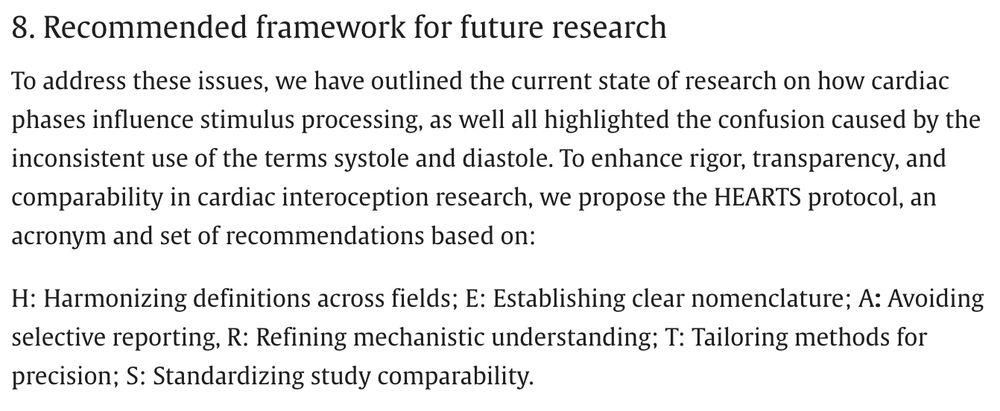
🚨 New paper out!
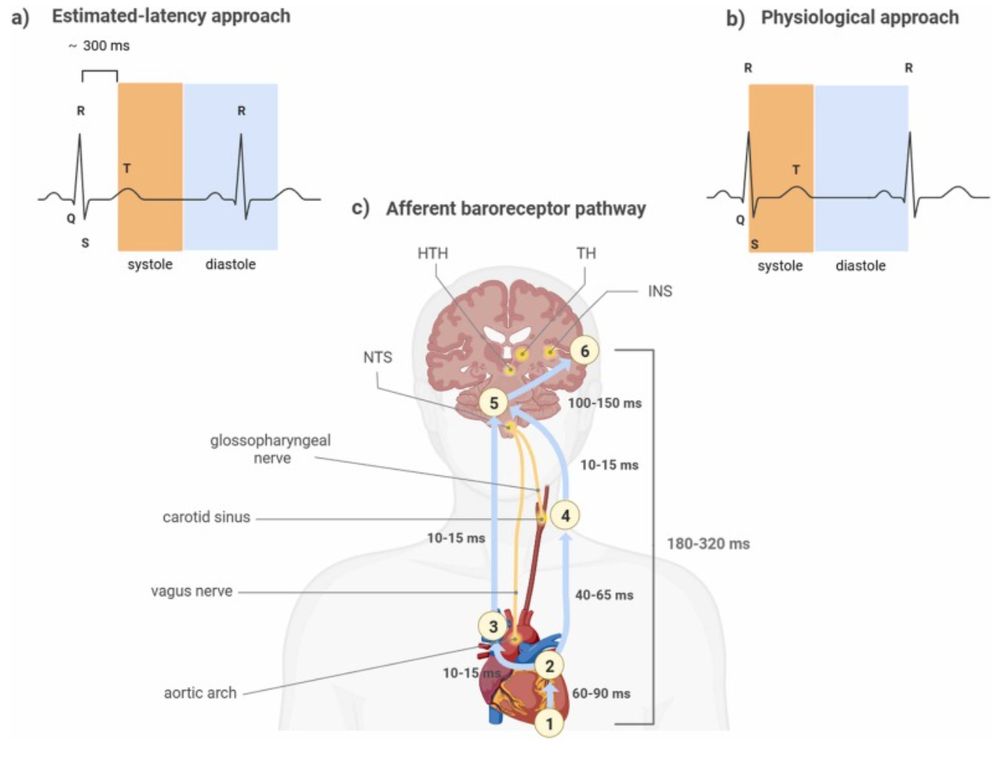
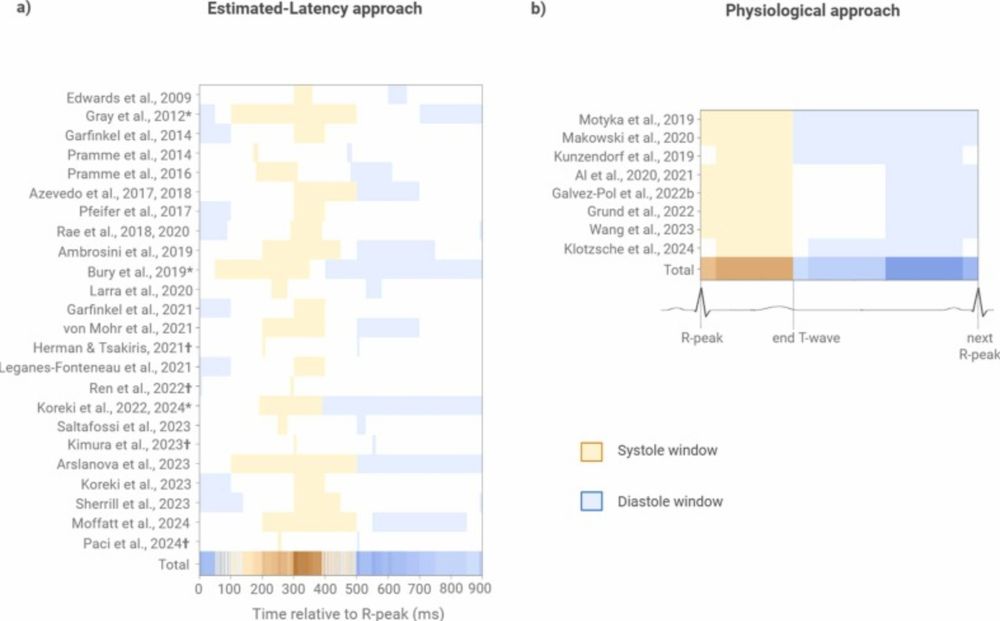
Phase confusion: How inconsistent cardiac labeling obscures interoception research 🫀🧠
We unpack methodological incosistencies and propose a way forward with the HEARTS framework.
In Biol. Psychol. - Open Access:
🔗 shorturl.at/YJhyn
1st paper of great @angeliacaparco.bsky.social!
Phase confusion: How inconsistent cardiac labeling obscures interoception research 🫀🧠
We unpack methodological incosistencies and propose a way forward with the HEARTS framework.
In Biol. Psychol. - Open Access:
🔗 shorturl.at/YJhyn
1st paper of great @angeliacaparco.bsky.social!
July 4, 2025 at 9:11 AM
🚨 New paper out!
Phase confusion: How inconsistent cardiac labeling obscures interoception research 🫀🧠
We unpack methodological incosistencies and propose a way forward with the HEARTS framework.
In Biol. Psychol. - Open Access:
🔗 shorturl.at/YJhyn
1st paper of great @angeliacaparco.bsky.social!
Phase confusion: How inconsistent cardiac labeling obscures interoception research 🫀🧠
We unpack methodological incosistencies and propose a way forward with the HEARTS framework.
In Biol. Psychol. - Open Access:
🔗 shorturl.at/YJhyn
1st paper of great @angeliacaparco.bsky.social!
Reposted by Narayani Srivastava

Excellent work here on brain body interaction, metabolism, and mental health.

What drives the bidirectional relationship between metabolic and mental ill-health?
Read our new metabolic psychiatry paper, “An interoceptive model of energy allostasis linking metabolic and mental health” www.science.org/doi/10.1126/... led by @saramehrhof.bsky.social @hugofleming.bsky.social
Read our new metabolic psychiatry paper, “An interoceptive model of energy allostasis linking metabolic and mental health” www.science.org/doi/10.1126/... led by @saramehrhof.bsky.social @hugofleming.bsky.social

An interoceptive model of energy allostasis linking metabolic and mental health
Interactions between metabolic interoception and regulation may drive comorbidity between mental and metabolic ill-health.
www.science.org
September 25, 2025 at 9:51 AM
Excellent work here on brain body interaction, metabolism, and mental health.
Reposted by Narayani Srivastava

We argue that moral expressions—that signal one’s sense of right and wrong—are highly sensitive to social norms. These norms can amplify moral expressions (eg social media) or restrain them (eg work settings)
See our new paper on How Social Influence Shapes Moral Expression:
osf.io/preprints/ps...
See our new paper on How Social Influence Shapes Moral Expression:
osf.io/preprints/ps...

September 24, 2025 at 2:03 PM
We argue that moral expressions—that signal one’s sense of right and wrong—are highly sensitive to social norms. These norms can amplify moral expressions (eg social media) or restrain them (eg work settings)
See our new paper on How Social Influence Shapes Moral Expression:
osf.io/preprints/ps...
See our new paper on How Social Influence Shapes Moral Expression:
osf.io/preprints/ps...
Reposted by Narayani Srivastava
🚨 New preprint! Impact of Task Similarity and Training Regimes on Cognitive Transfer and Interference 🧠
We compare humans and neural networks in a learning task, showing how training regime and task similarity interact to drive transfer or interference.
www.biorxiv.org/content/10.1...
We compare humans and neural networks in a learning task, showing how training regime and task similarity interact to drive transfer or interference.
www.biorxiv.org/content/10.1...

Impact of Task Similarity and Training Regimes on Cognitive Transfer and Interference
Learning depends not only on the content of what we learn, but also on how we learn and on how experiences are structured over time. To investigate how task similarity and training regime interact dur...
www.biorxiv.org
September 23, 2025 at 11:58 AM
🚨 New preprint! Impact of Task Similarity and Training Regimes on Cognitive Transfer and Interference 🧠
We compare humans and neural networks in a learning task, showing how training regime and task similarity interact to drive transfer or interference.
www.biorxiv.org/content/10.1...
We compare humans and neural networks in a learning task, showing how training regime and task similarity interact to drive transfer or interference.
www.biorxiv.org/content/10.1...
Reposted by Narayani Srivastava

AffectTracker allows users to continuously rate their valence and arousal during VR experiences. It features customizable feedback options, including a simplified affect grid and a novel abstract shape ("Flubber"), designed to be intuitive and minimally interfering.
September 23, 2025 at 10:20 AM
AffectTracker allows users to continuously rate their valence and arousal during VR experiences. It features customizable feedback options, including a simplified affect grid and a novel abstract shape ("Flubber"), designed to be intuitive and minimally interfering.
Reposted by Narayani Srivastava
What we found:
AN individuals missed more gut signals despite intact brain/body responses. ❌
Computational models showed biased expectations & reduced precision 🧠
Capsule stimulation also triggered greater hunger increases in AN 🍽
AN individuals missed more gut signals despite intact brain/body responses. ❌
Computational models showed biased expectations & reduced precision 🧠
Capsule stimulation also triggered greater hunger increases in AN 🍽

September 22, 2025 at 8:14 PM
What we found:
AN individuals missed more gut signals despite intact brain/body responses. ❌
Computational models showed biased expectations & reduced precision 🧠
Capsule stimulation also triggered greater hunger increases in AN 🍽
AN individuals missed more gut signals despite intact brain/body responses. ❌
Computational models showed biased expectations & reduced precision 🧠
Capsule stimulation also triggered greater hunger increases in AN 🍽
Reposted by Narayani Srivastava
Even after recovery, relapse is heartbreakingly common in anorexia nervosa. Could the answer lie in the gut’s hidden signals? 🧵

September 22, 2025 at 8:14 PM
Even after recovery, relapse is heartbreakingly common in anorexia nervosa. Could the answer lie in the gut’s hidden signals? 🧵
Reposted by Narayani Srivastava

New pre-print day! Distributed and drifting signals for working memory load in human cortex 🧠 (with Ed Awh & @serences.bsky.social)
www.biorxiv.org/content/10.1...
www.biorxiv.org/content/10.1...

Distributed and drifting signals for working memory load in human cortex
Increasing working memory (WM) load incurs behavioral costs, and whether the neural constraints on behavioral costs are localized (i.e., emanating from the intraparietal sulcus) or distributed across ...
www.biorxiv.org
September 16, 2025 at 1:18 PM
New pre-print day! Distributed and drifting signals for working memory load in human cortex 🧠 (with Ed Awh & @serences.bsky.social)
www.biorxiv.org/content/10.1...
www.biorxiv.org/content/10.1...
Reposted by Narayani Srivastava

1/4 I’m really excited to share that my first PhD manuscript has been accepted for publication in the Journal of Neuroscience 🎉! Until it becomes available, don’t forget to check out our updated preprint (with some additional insights) #JNeurosci
Preprint Alert!!
In our latest study, we describe a novel relationship between action planning and working memory. Our results show that action-item associations affect how working memory maintains the fidelity of sensory information during a task.
Check it out: www.biorxiv.org/content/10.1...
In our latest study, we describe a novel relationship between action planning and working memory. Our results show that action-item associations affect how working memory maintains the fidelity of sensory information during a task.
Check it out: www.biorxiv.org/content/10.1...

Motor control processes moderate visual working memory gating
Gating processes that regulate sensory input into visual working memory (WM) and the execution of planned actions share neural mechanisms, suggesting a mutual interaction. In a preregistered study (OS...
www.biorxiv.org
September 15, 2025 at 10:32 AM
1/4 I’m really excited to share that my first PhD manuscript has been accepted for publication in the Journal of Neuroscience 🎉! Until it becomes available, don’t forget to check out our updated preprint (with some additional insights) #JNeurosci
Reposted by Narayani Srivastava

Thrilled that our new review "Motor Working Memory" is now in press at TiCS!
@cp-trendscognsci.bsky.social
@cellpress.bsky.social
By me +
Hanna Hillman
We argue that a dedicated research program on 'working memory for movements' is long overdue
Link: authors.elsevier.com/a/1lmMX4sIRv...
@cp-trendscognsci.bsky.social
@cellpress.bsky.social
By me +
Hanna Hillman
We argue that a dedicated research program on 'working memory for movements' is long overdue
Link: authors.elsevier.com/a/1lmMX4sIRv...

September 15, 2025 at 12:56 PM
Thrilled that our new review "Motor Working Memory" is now in press at TiCS!
@cp-trendscognsci.bsky.social
@cellpress.bsky.social
By me +
Hanna Hillman
We argue that a dedicated research program on 'working memory for movements' is long overdue
Link: authors.elsevier.com/a/1lmMX4sIRv...
@cp-trendscognsci.bsky.social
@cellpress.bsky.social
By me +
Hanna Hillman
We argue that a dedicated research program on 'working memory for movements' is long overdue
Link: authors.elsevier.com/a/1lmMX4sIRv...
Reposted by Narayani Srivastava
Online Now: Confronting the connectivity crisis in human M/EEG research

Confronting the connectivity crisis in human M/EEG research
The cognitive neuroscience community using M/EEG has not converged on measures of task-related inter-regional brain connectivity that generalize across tasks and laboratories. We call for community-driven efforts to systematically test and validate connectivity metrics using shared datasets and protocols, aiming to establish robust, replicable frameworks for cognitive and clinical applications.
dlvr.it
September 18, 2025 at 12:40 PM
Online Now: Confronting the connectivity crisis in human M/EEG research
Reposted by Narayani Srivastava

I often see papers using GPower for power analysis in repeated measures factorial ANOVA designs. I don’t know what it’s doing, but it’s definitely giving wrong answers: substantially underestimates required sample size. MorePower seems like a much better alternative github.com/LewisPeacock...
GitHub - LewisPeacockLab/MorePower: Installer for MorePower 6.0 (windows)
Installer for MorePower 6.0 (windows). Contribute to LewisPeacockLab/MorePower development by creating an account on GitHub.
github.com
September 19, 2025 at 5:10 AM
I often see papers using GPower for power analysis in repeated measures factorial ANOVA designs. I don’t know what it’s doing, but it’s definitely giving wrong answers: substantially underestimates required sample size. MorePower seems like a much better alternative github.com/LewisPeacock...