



Reposted by nogueira


Reposted by nogueira

The English words 'no' and 'no' don't have the same origin.
'No', the opposite of 'yes', comes from West-Germanic *naiw ("never").
'No' as in 'no pain, no gain' arose as a variant of 'none' and stems from *nain ("not any").
They only share the n-, from *ne ("not").
Click to learn more:
1/
'No', the opposite of 'yes', comes from West-Germanic *naiw ("never").
'No' as in 'no pain, no gain' arose as a variant of 'none' and stems from *nain ("not any").
They only share the n-, from *ne ("not").
Click to learn more:
1/

January 15, 2025 at 5:59 PM
The English words 'no' and 'no' don't have the same origin.
'No', the opposite of 'yes', comes from West-Germanic *naiw ("never").
'No' as in 'no pain, no gain' arose as a variant of 'none' and stems from *nain ("not any").
They only share the n-, from *ne ("not").
Click to learn more:
1/
'No', the opposite of 'yes', comes from West-Germanic *naiw ("never").
'No' as in 'no pain, no gain' arose as a variant of 'none' and stems from *nain ("not any").
They only share the n-, from *ne ("not").
Click to learn more:
1/
Reposted by nogueira

primos querem derrubar 10mil arvores em São Matheus, assinem e se puderem compareçam na assembleia aberta q vai ter segunda feira... quem puder me da um toque www.change.org/p/pela-inves...

Assine o Abaixo-assinado
Pela investigação do processo do PL 799/2024, que pretende suprimir 10 mil árvores em SP
www.change.org
November 28, 2024 at 5:05 PM
primos querem derrubar 10mil arvores em São Matheus, assinem e se puderem compareçam na assembleia aberta q vai ter segunda feira... quem puder me da um toque www.change.org/p/pela-inves...
Reposted by nogueira

Doing some high grade premium cocaine leftistly
November 19, 2024 at 8:12 PM
Doing some high grade premium cocaine leftistly
Reposted by nogueira

"ah mas você caiu no bait" desculpa por acreditar no coração das pessoas .
November 15, 2024 at 3:09 AM
"ah mas você caiu no bait" desculpa por acreditar no coração das pessoas .
Reposted by nogueira

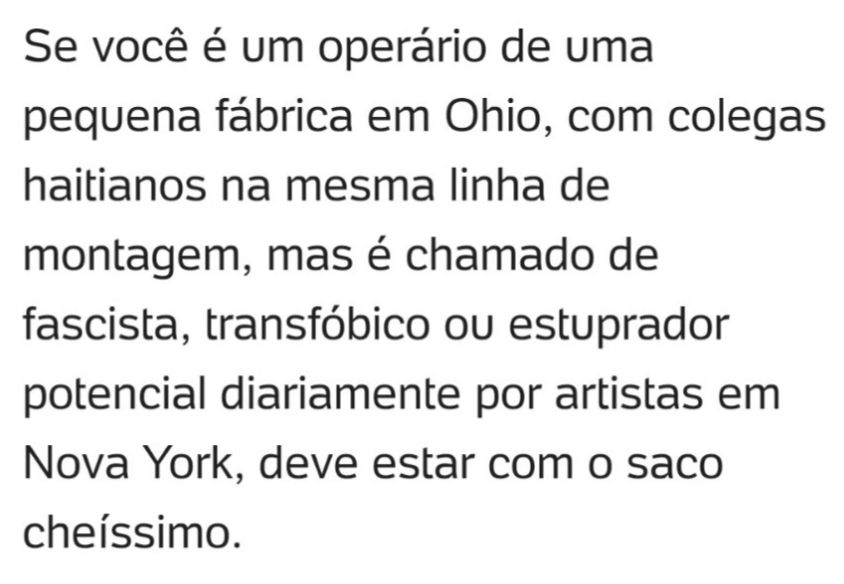
Eu tô desde ontem rindo deste novo pobre imaginário altamente específico inventado ontem
November 8, 2024 at 3:30 PM
Eu tô desde ontem rindo deste novo pobre imaginário altamente específico inventado ontem
Reposted by nogueira
Queridos de merdaulo

November 9, 2024 at 11:39 AM
Queridos de merdaulo
Reposted by nogueira

Fun fact: the tilde (~) was initially a small N over the vowel
an -> ã, on -> õ, ...
to save space while writing, at some point, it became a sign as we know today that marks that nasal sound
an -> ã, on -> õ, ...
to save space while writing, at some point, it became a sign as we know today that marks that nasal sound
Portuguese lacks a lot of n's.
For example, whereas Spanish has 'luna' (moon), in Portuguese it's 'lua'.
This n was lost in the Middle Ages.
Initially, it made the preceding vowel nasal, but this nasality was lost in many words after 1500.
Click the video to hear how it went:
For example, whereas Spanish has 'luna' (moon), in Portuguese it's 'lua'.
This n was lost in the Middle Ages.
Initially, it made the preceding vowel nasal, but this nasality was lost in many words after 1500.
Click the video to hear how it went:
November 6, 2024 at 10:50 AM
Fun fact: the tilde (~) was initially a small N over the vowel
an -> ã, on -> õ, ...
to save space while writing, at some point, it became a sign as we know today that marks that nasal sound
an -> ã, on -> õ, ...
to save space while writing, at some point, it became a sign as we know today that marks that nasal sound
Reposted by nogueira
Portuguese lacks a lot of n's.
For example, whereas Spanish has 'luna' (moon), in Portuguese it's 'lua'.
This n was lost in the Middle Ages.
Initially, it made the preceding vowel nasal, but this nasality was lost in many words after 1500.
Click the video to hear how it went:
For example, whereas Spanish has 'luna' (moon), in Portuguese it's 'lua'.
This n was lost in the Middle Ages.
Initially, it made the preceding vowel nasal, but this nasality was lost in many words after 1500.
Click the video to hear how it went:
November 5, 2024 at 3:49 PM
Portuguese lacks a lot of n's.
For example, whereas Spanish has 'luna' (moon), in Portuguese it's 'lua'.
This n was lost in the Middle Ages.
Initially, it made the preceding vowel nasal, but this nasality was lost in many words after 1500.
Click the video to hear how it went:
For example, whereas Spanish has 'luna' (moon), in Portuguese it's 'lua'.
This n was lost in the Middle Ages.
Initially, it made the preceding vowel nasal, but this nasality was lost in many words after 1500.
Click the video to hear how it went:
Reposted by nogueira

cabe a esquerda americana voltar a base e ouvir o trabalhador rural do texas que transa no pelo com a prima
November 6, 2024 at 11:52 AM
cabe a esquerda americana voltar a base e ouvir o trabalhador rural do texas que transa no pelo com a prima
Reposted by nogueira

boulos chamando os webcomunas de playboy

November 5, 2024 at 7:06 PM
boulos chamando os webcomunas de playboy
Reposted by nogueira
'favor não chegar atrasada' meu tempo é o da natureza não o dos homens tlgd
November 5, 2024 at 10:16 AM
'favor não chegar atrasada' meu tempo é o da natureza não o dos homens tlgd
Reposted by nogueira
eu queria fazer sexo numa plataforma offshore

Desculpe, mas eu tenho contato direto com as principais petrolíferas do mundo, como a Shell e a ExxonMobil. conheço bem o que fazem na área de renováveis. Não acho essa abordagem construtiva.
October 31, 2024 at 7:25 PM
eu queria fazer sexo numa plataforma offshore
Reposted by nogueira

queria estar "entrando" em "contato direto" com a "Shell" e a "ExxonMobil" dela agora...
November 1, 2024 at 4:51 PM
queria estar "entrando" em "contato direto" com a "Shell" e a "ExxonMobil" dela agora...
Reposted by nogueira


Reposted by nogueira

vcs: odeiam o povo de um jeito burro e mesquinho
eu: odeio o povo de um jeito hermenêutico e espiritualmente elevado
eu: odeio o povo de um jeito hermenêutico e espiritualmente elevado
October 28, 2024 at 12:18 PM
vcs: odeiam o povo de um jeito burro e mesquinho
eu: odeio o povo de um jeito hermenêutico e espiritualmente elevado
eu: odeio o povo de um jeito hermenêutico e espiritualmente elevado
Reposted by nogueira
Tudo tranquilo, inclusive o GOVERNADOR DO ESTADO DE SÃO PAULO fazendo acusações mentirosas sem apresentar provas na maior tranquilidade.

2º turno das eleições transcorrem com tranquilidade e sem 'intercorrências', diz Cármen Lúcia glo.bo/4fcdova #g1 #g1eleições2024

2º turno das eleições transcorrem com tranquilidade e sem 'intercorrências', diz Cármen Lúcia
Presidente do TSE visitou Centro de Divulgação das Eleições (CDE) na sede da Corte Eleitoral.
glo.bo
October 27, 2024 at 4:26 PM
Tudo tranquilo, inclusive o GOVERNADOR DO ESTADO DE SÃO PAULO fazendo acusações mentirosas sem apresentar provas na maior tranquilidade.
Reposted by nogueira
Nao sei explicar mas tudo isso eh de alguma forma culpa daquele tiagson


October 26, 2024 at 8:05 PM
Nao sei explicar mas tudo isso eh de alguma forma culpa daquele tiagson
Reposted by nogueira

Obsessão com QI é o horóscopo dos racistas.
October 25, 2024 at 1:25 PM
Obsessão com QI é o horóscopo dos racistas.
Reposted by nogueira

Sujeito literalmente deu espaço para o Boulos elogiar Jesus e desfazer a imagem de anticristo.
Enfim...
Ainda bem que o Boulos foi. Ainda bem que a linha política da campanha não é essa das redes sociais.
Enfim...
Ainda bem que o Boulos foi. Ainda bem que a linha política da campanha não é essa das redes sociais.
October 25, 2024 at 6:32 PM
Sujeito literalmente deu espaço para o Boulos elogiar Jesus e desfazer a imagem de anticristo.
Enfim...
Ainda bem que o Boulos foi. Ainda bem que a linha política da campanha não é essa das redes sociais.
Enfim...
Ainda bem que o Boulos foi. Ainda bem que a linha política da campanha não é essa das redes sociais.