


Sherif khodeer
@sherifkhodeer.bsky.social
Postdoctoral Fellow @Vincent Pasque lab. KU Leuven.
Epigenetics , Early human embryonic development, Stem Cell.
Epigenetics , Early human embryonic development, Stem Cell.
Reposted by Sherif khodeer
📣Excited to announce a new pre-print from the lab 📣
Led by my student @storiesofisobel.bsky.social in collab with Hemali Phatnani @nygenome.org
We discovered a novel class of TDP-43 dependent cryptic gene-TE spliced transcripts: crypTEs
#TEsky #RNAsky #ALS
doi.org/10.64898/2026.01.09.698641
Led by my student @storiesofisobel.bsky.social in collab with Hemali Phatnani @nygenome.org
We discovered a novel class of TDP-43 dependent cryptic gene-TE spliced transcripts: crypTEs
#TEsky #RNAsky #ALS
doi.org/10.64898/2026.01.09.698641

TDP-43 dysfunction leads to the accumulation of cryptic transposable element-derived exons, crypTEs, in iPSC derived neurons and ALS/FTD patient tissues
TDP-43 is an RNA and DNA binding protein that plays major roles in regulating RNA processing. In particular, TDP-43 dysfunction leads to the accumulation of cryptic splice isoforms that result from im...
doi.org
January 10, 2026 at 5:52 PM
📣Excited to announce a new pre-print from the lab 📣
Led by my student @storiesofisobel.bsky.social in collab with Hemali Phatnani @nygenome.org
We discovered a novel class of TDP-43 dependent cryptic gene-TE spliced transcripts: crypTEs
#TEsky #RNAsky #ALS
doi.org/10.64898/2026.01.09.698641
Led by my student @storiesofisobel.bsky.social in collab with Hemali Phatnani @nygenome.org
We discovered a novel class of TDP-43 dependent cryptic gene-TE spliced transcripts: crypTEs
#TEsky #RNAsky #ALS
doi.org/10.64898/2026.01.09.698641
Reposted by Sherif khodeer
Our paper on the newest version of the Registry of candidate cis-Regulatory Elements (cCREs) is out 🧬
Huge thanks to the many collaborators, experimentalists, analysts and software developers who made this work possible — truly a team effort!
A "meme-torial" of the science is coming soon 👀
Huge thanks to the many collaborators, experimentalists, analysts and software developers who made this work possible — truly a team effort!
A "meme-torial" of the science is coming soon 👀

An expanded registry of candidate cis-regulatory elements - Nature
The existing ENCODE registry of candidate human and mouse cis-regulatory elements is expanded with the addition of new ENCODE data, integrating new functional data as well as new cell and tissue types...
www.nature.com
January 7, 2026 at 6:47 PM
Our paper on the newest version of the Registry of candidate cis-Regulatory Elements (cCREs) is out 🧬
Huge thanks to the many collaborators, experimentalists, analysts and software developers who made this work possible — truly a team effort!
A "meme-torial" of the science is coming soon 👀
Huge thanks to the many collaborators, experimentalists, analysts and software developers who made this work possible — truly a team effort!
A "meme-torial" of the science is coming soon 👀
Reposted by Sherif khodeer
Great work Alex and team! Look forward to digging into the details. Such an important set of discoveries
Activator-promoter compatibility in mammals - Hcfc1 is a key and intrinsically CGI-promoter-specific co-activator that cannot activate non-CGI promoters. Lead by @nemcko.bsky.social & Kevin Sabath in collab. with @plaschkalab.bsky.social @impvienna.bsky.social www.biorxiv.org/content/10.6... (1/2)

Activator-promoter compatibility in mammals: a CpG-Island-specific co-activator directly bridges transcription factors to TFIID
Transcription from CpG island (CGI) promoters controls the expression of two-thirds of mammalian genes, yet despite their prevalence, it remains unknown whether CGI-specific co-activators with intrins...
www.biorxiv.org
December 30, 2025 at 9:03 AM
Great work Alex and team! Look forward to digging into the details. Such an important set of discoveries
Reposted by Sherif khodeer

Now online! A 3D in vitro model for studying human implantation and implantation failure

A 3D in vitro model for studying human implantation and implantation failure
A 3D in-chip implantation model is developed using a bioengineered human endometrioid and human blastoids or blastocysts and used to identify candidate compounds that can enhance implantation rates in endometrioids derived from patients experiencing recurrent implantation failure.
dlvr.it
December 23, 2025 at 4:00 PM
Now online! A 3D in vitro model for studying human implantation and implantation failure
Reposted by Sherif khodeer
Now online! Modeling human embryo implantation in vitro

Modeling human embryo implantation in vitro
Building an in vitro model of receptive endometrium allows investigation of human embryo implantation and early post-implantation development and recapitulates the earliest stages in establishing the human placenta and formation of the embryo-endometrial interface.
dlvr.it
December 23, 2025 at 7:52 PM
Now online! Modeling human embryo implantation in vitro
Reposted by Sherif khodeer

Our preprint "Predictive design of tissue-specific mammalian enhancers that function in vivo in the mouse embryo" is on bioRxiv: www.biorxiv.org/content/10.6... . Amazing collaboration by @shenzhichen1999.bsky.social, Vincent Loubiere (@impvienna.bsky.social,@viennabiocenter.bsky.social),... (1/2)
Predictive design of tissue-specific mammalian enhancers that function in vivo in the mouse embryo
Enhancers control tissue-specific gene expression across metazoans. Although deep learning has enabled enhancer prediction and design in mammalian cell lines and invertebrate systems, it remains uncle...
www.biorxiv.org
December 24, 2025 at 3:06 PM
Our preprint "Predictive design of tissue-specific mammalian enhancers that function in vivo in the mouse embryo" is on bioRxiv: www.biorxiv.org/content/10.6... . Amazing collaboration by @shenzhichen1999.bsky.social, Vincent Loubiere (@impvienna.bsky.social,@viennabiocenter.bsky.social),... (1/2)
Reposted by Sherif khodeer

🚨Our story is published! Same bones but + dissection of MERVL’s role integrating signals from #ZGA factors, & + about pathological DUX4 activation of NOXA #TEsky. Thanks to all revs for their helpful comments improving the ms. Even #rev3 - until they ghosted us 😜
www.science.org/doi/epdf/10....
www.science.org/doi/epdf/10....
December 22, 2025 at 12:32 PM
🚨Our story is published! Same bones but + dissection of MERVL’s role integrating signals from #ZGA factors, & + about pathological DUX4 activation of NOXA #TEsky. Thanks to all revs for their helpful comments improving the ms. Even #rev3 - until they ghosted us 😜
www.science.org/doi/epdf/10....
www.science.org/doi/epdf/10....
Reposted by Sherif khodeer
🚨 New paper out!
A human epiblast model reveals how dynamic TGF‑β signalling controls epithelial identity in early mammalian development
Here is the full paper: rdcu.be/eSWEs
🧵 A twittorial:
THREAD
A human epiblast model reveals how dynamic TGF‑β signalling controls epithelial identity in early mammalian development
Here is the full paper: rdcu.be/eSWEs
🧵 A twittorial:
THREAD

A human epiblast model reveals dynamic TGFβ-mediated control of epithelial identity during mammalian epiblast development
Nature Cell Biology - The authors optimize an in vitro human epiblast model, which they utilize to show that early TGFβ family inhibition prevents epithelial identity, whereas it is...
rdcu.be
December 11, 2025 at 1:32 PM
🚨 New paper out!
A human epiblast model reveals how dynamic TGF‑β signalling controls epithelial identity in early mammalian development
Here is the full paper: rdcu.be/eSWEs
🧵 A twittorial:
THREAD
A human epiblast model reveals how dynamic TGF‑β signalling controls epithelial identity in early mammalian development
Here is the full paper: rdcu.be/eSWEs
🧵 A twittorial:
THREAD
Reposted by Sherif khodeer

In vivo gene editing of human hematopoietic stem and progenitor cells using envelope-engineered virus-like particles - @uclpophealthsci.bsky.social go.nature.com/4a39S6X

In vivo gene editing of human hematopoietic stem and progenitor cells using envelope-engineered virus-like particles - Nature Biotechnology
Virus-like particles are engineered to edit human hematopoietic cells in vivo.
go.nature.com
December 8, 2025 at 6:53 PM
In vivo gene editing of human hematopoietic stem and progenitor cells using envelope-engineered virus-like particles - @uclpophealthsci.bsky.social go.nature.com/4a39S6X
Reposted by Sherif khodeer

☕Lu, Wang et al. profile H3K36me2 throughout #oocyte -to- #embryo transition, pre-implantation and early post-implantation development and report a role for H3K36me2 in post-implantation embryos to re-establish lineage-specific #DNAmethylation.
👉https://rdcu.be/eR6N1
bit.ly/4py2wwz
👉https://rdcu.be/eR6N1
bit.ly/4py2wwz
Reprogramming of H3K36me2 guides lineage-specific post-implantation de novo DNA methylation - Nature Cell Biology
Lu, Wang et al. profile H3K36me2 throughout oocyte-to-embryo transition, pre-implantation and early post-implantation development and report a role for H3K36me2 in post-implantation embryos to re-esta...
bit.ly
November 27, 2025 at 4:08 PM
☕Lu, Wang et al. profile H3K36me2 throughout #oocyte -to- #embryo transition, pre-implantation and early post-implantation development and report a role for H3K36me2 in post-implantation embryos to re-establish lineage-specific #DNAmethylation.
👉https://rdcu.be/eR6N1
bit.ly/4py2wwz
👉https://rdcu.be/eR6N1
bit.ly/4py2wwz
Reposted by Sherif khodeer

We are excited to share our new preprint:
SMARCA2/4-Dependent Chromatin Remodelling Establishes Gene Regulatory Programs in Early Human Embryos and Blastoids.
www.biorxiv.org/content/10.64898/2025.12.01.691499v1
SMARCA2/4-Dependent Chromatin Remodelling Establishes Gene Regulatory Programs in Early Human Embryos and Blastoids.
www.biorxiv.org/content/10.64898/2025.12.01.691499v1

December 3, 2025 at 6:53 PM
We are excited to share our new preprint:
SMARCA2/4-Dependent Chromatin Remodelling Establishes Gene Regulatory Programs in Early Human Embryos and Blastoids.
www.biorxiv.org/content/10.64898/2025.12.01.691499v1
SMARCA2/4-Dependent Chromatin Remodelling Establishes Gene Regulatory Programs in Early Human Embryos and Blastoids.
www.biorxiv.org/content/10.64898/2025.12.01.691499v1
Reposted by Sherif khodeer
Very excited to be part of this prestigious programme, thank you @embo.org !

Congratulations to LMS group head @mpercharde.bsky.social
who has been selected as one of this year’s EMBO Young Investigators! 🌟
The prestigious EMBO Young Investigator Programme supports exceptionally talented life scientists who represent innovation and excellence in their fields.
@embo.org
who has been selected as one of this year’s EMBO Young Investigators! 🌟
The prestigious EMBO Young Investigator Programme supports exceptionally talented life scientists who represent innovation and excellence in their fields.
@embo.org

LMS group head Michelle Percharde joins EMBO Young Investigator Programme
We’re delighted to announce that Michelle Percharde, Head of the Chromatin & Development Group at the MRC Laboratory of Medical Sciences (LMS) has been selected as one of this year’s EMBO Young Invest...
lms.mrc.ac.uk
December 2, 2025 at 2:15 PM
Very excited to be part of this prestigious programme, thank you @embo.org !
Reposted by Sherif khodeer

Fitness influencers promote super-high-protein diets, but studies show there’s only so much the body can use
go.nature.com/4ocYOHT
go.nature.com/4ocYOHT

How much protein do you really need? What the science says
Nature - Fitness influencers promote super-high-protein diets, but studies show there’s only so much the body can use.
go.nature.com
November 15, 2025 at 2:37 PM
Fitness influencers promote super-high-protein diets, but studies show there’s only so much the body can use
go.nature.com/4ocYOHT
go.nature.com/4ocYOHT
Reposted by Sherif khodeer
An Interview with Azim Surani
Ashley Moffett and @geraldinejowett.bsky.social spoke to Azim, recipient of both the 2025 Kyoto Prize and 2026 Paul Ehrlich and Ludwig Darmstaedter Prize, about his non-traditional and inspirational route into academia:
journals.biologists.com/dev/article/...
Ashley Moffett and @geraldinejowett.bsky.social spoke to Azim, recipient of both the 2025 Kyoto Prize and 2026 Paul Ehrlich and Ludwig Darmstaedter Prize, about his non-traditional and inspirational route into academia:
journals.biologists.com/dev/article/...

October 9, 2025 at 5:05 PM
An Interview with Azim Surani
Ashley Moffett and @geraldinejowett.bsky.social spoke to Azim, recipient of both the 2025 Kyoto Prize and 2026 Paul Ehrlich and Ludwig Darmstaedter Prize, about his non-traditional and inspirational route into academia:
journals.biologists.com/dev/article/...
Ashley Moffett and @geraldinejowett.bsky.social spoke to Azim, recipient of both the 2025 Kyoto Prize and 2026 Paul Ehrlich and Ludwig Darmstaedter Prize, about his non-traditional and inspirational route into academia:
journals.biologists.com/dev/article/...
Reposted by Sherif khodeer
It is with profound sadness that I have learned of the passing of my beloved PhD supervisor, John Gurdon. We have lost a true giant, an incredible mentor, kind and generous, whose contributions to science will inspire generations. He changed my life, and the lives of so many others.

October 8, 2025 at 8:40 AM
It is with profound sadness that I have learned of the passing of my beloved PhD supervisor, John Gurdon. We have lost a true giant, an incredible mentor, kind and generous, whose contributions to science will inspire generations. He changed my life, and the lives of so many others.
Reposted by Sherif khodeer
John Gurdon was a true giant:
- founder of cell reprogramming;
- founder of molecular embryology;
- unabashed advocate for basic research;
- advisor to numerous successful trainees/PIs;
- gentle human that touched so many.
In dark times with science under attack, let his vision be a guiding light.
- founder of cell reprogramming;
- founder of molecular embryology;
- unabashed advocate for basic research;
- advisor to numerous successful trainees/PIs;
- gentle human that touched so many.
In dark times with science under attack, let his vision be a guiding light.

Very saddened to hear of John Gurdon’s passing. I’ve been lucky enough to interact with him at multiple points through my career - from undergrad lectures, through his position as former Chair of @biologists.bsky.social’s Board of Directors, and as an author at @dev-journal.bsky.social.

Nobel Laureate Professor Sir John Gurdon dies aged 92
It is with great sadness that the University shares the news of the death of Professor Sir John Gurdon, founder of the Gurdon Institute.
www.cam.ac.uk
October 7, 2025 at 7:57 PM
John Gurdon was a true giant:
- founder of cell reprogramming;
- founder of molecular embryology;
- unabashed advocate for basic research;
- advisor to numerous successful trainees/PIs;
- gentle human that touched so many.
In dark times with science under attack, let his vision be a guiding light.
- founder of cell reprogramming;
- founder of molecular embryology;
- unabashed advocate for basic research;
- advisor to numerous successful trainees/PIs;
- gentle human that touched so many.
In dark times with science under attack, let his vision be a guiding light.
Reposted by Sherif khodeer
⚠️ Paper alert: Using a novel CRISPR screening approach, we mapped the entire regulatory network controlling Xist—key for X-chromosome inactivation.
👉 We discover how sex and development signals are decoded at a single gene locus.
www.nature.com/articles/s41...
👇 Bluetorial
👉 We discover how sex and development signals are decoded at a single gene locus.
www.nature.com/articles/s41...
👇 Bluetorial

Reporter CRISPR screens decipher cis-regulatory and trans-regulatory principles at the Xist locus - Nature Structural & Molecular Biology
Here Schwämmle et al. develop CRISPR reporter screens to map transcription-factor-regulatory element interactions at the Xist locus, revealing a two-step mechanism integrating developmental and X-dosage signals to initiate X-chromosome inactivation.
www.nature.com
October 6, 2025 at 1:02 PM
⚠️ Paper alert: Using a novel CRISPR screening approach, we mapped the entire regulatory network controlling Xist—key for X-chromosome inactivation.
👉 We discover how sex and development signals are decoded at a single gene locus.
www.nature.com/articles/s41...
👇 Bluetorial
👉 We discover how sex and development signals are decoded at a single gene locus.
www.nature.com/articles/s41...
👇 Bluetorial
Reposted by Sherif khodeer
Today in @nature.com, we present our work leveraging functional genomics and human blastoids to uncover a human-specific mechanism in preimplantation development driven by the endogenous retrovirus HERVK.
Special thanks to the reviewers whose comments improved our manuscript a lot! rdcu.be/eI3tD
Special thanks to the reviewers whose comments improved our manuscript a lot! rdcu.be/eI3tD

A human-specific regulatory mechanism revealed in a pre-implantation model
Nature - Genetic manipulation of blastoids reveals the role of recently emerged transposable elements and genes in human development.
rdcu.be
October 1, 2025 at 6:08 PM
Today in @nature.com, we present our work leveraging functional genomics and human blastoids to uncover a human-specific mechanism in preimplantation development driven by the endogenous retrovirus HERVK.
Special thanks to the reviewers whose comments improved our manuscript a lot! rdcu.be/eI3tD
Special thanks to the reviewers whose comments improved our manuscript a lot! rdcu.be/eI3tD
Reposted by Sherif khodeer
Excited to share our latest News & Views published in Nature! @nature.com
rdcu.be/eI2NJ
Sherif Khodeer and I discuss how stem cell-based embryo models provide evidence that viral DNA sequences that entered the human genome in the past were repurposed to aid early stages of embryonic development.
rdcu.be/eI2NJ
Sherif Khodeer and I discuss how stem cell-based embryo models provide evidence that viral DNA sequences that entered the human genome in the past were repurposed to aid early stages of embryonic development.

October 1, 2025 at 3:37 PM
Excited to share our latest News & Views published in Nature! @nature.com
rdcu.be/eI2NJ
Sherif Khodeer and I discuss how stem cell-based embryo models provide evidence that viral DNA sequences that entered the human genome in the past were repurposed to aid early stages of embryonic development.
rdcu.be/eI2NJ
Sherif Khodeer and I discuss how stem cell-based embryo models provide evidence that viral DNA sequences that entered the human genome in the past were repurposed to aid early stages of embryonic development.
Reposted by Sherif khodeer
New preprint from the lab: Dr. Daniela James led an effort to improve the ChIP-exo protocol for high-res protein-DNA interactions. Particularly focused on optimizing for use in mammalian cells and making the protocol compatible with newer Illumina sequencers.
www.biorxiv.org/content/10.1...
www.biorxiv.org/content/10.1...

Optimized ChIP-exo for mammalian cells and patterned sequencing flow cells
By combining chromatin immunoprecipitation (ChIP) with an exonuclease digestion of protein-bound DNA fragments, ChIP-exo characterizes genome-wide protein-DNA interactions at near base-pair resolution...
www.biorxiv.org
August 23, 2025 at 7:16 PM
New preprint from the lab: Dr. Daniela James led an effort to improve the ChIP-exo protocol for high-res protein-DNA interactions. Particularly focused on optimizing for use in mammalian cells and making the protocol compatible with newer Illumina sequencers.
www.biorxiv.org/content/10.1...
www.biorxiv.org/content/10.1...
Reposted by Sherif khodeer

New paper from our lab! We found that LINE-1 transposons contribute to early human brain development.
Funded by @asapresearch.parkinsonsroadmap.org
www.cell.com/cell-genomic...
Funded by @asapresearch.parkinsonsroadmap.org
www.cell.com/cell-genomic...
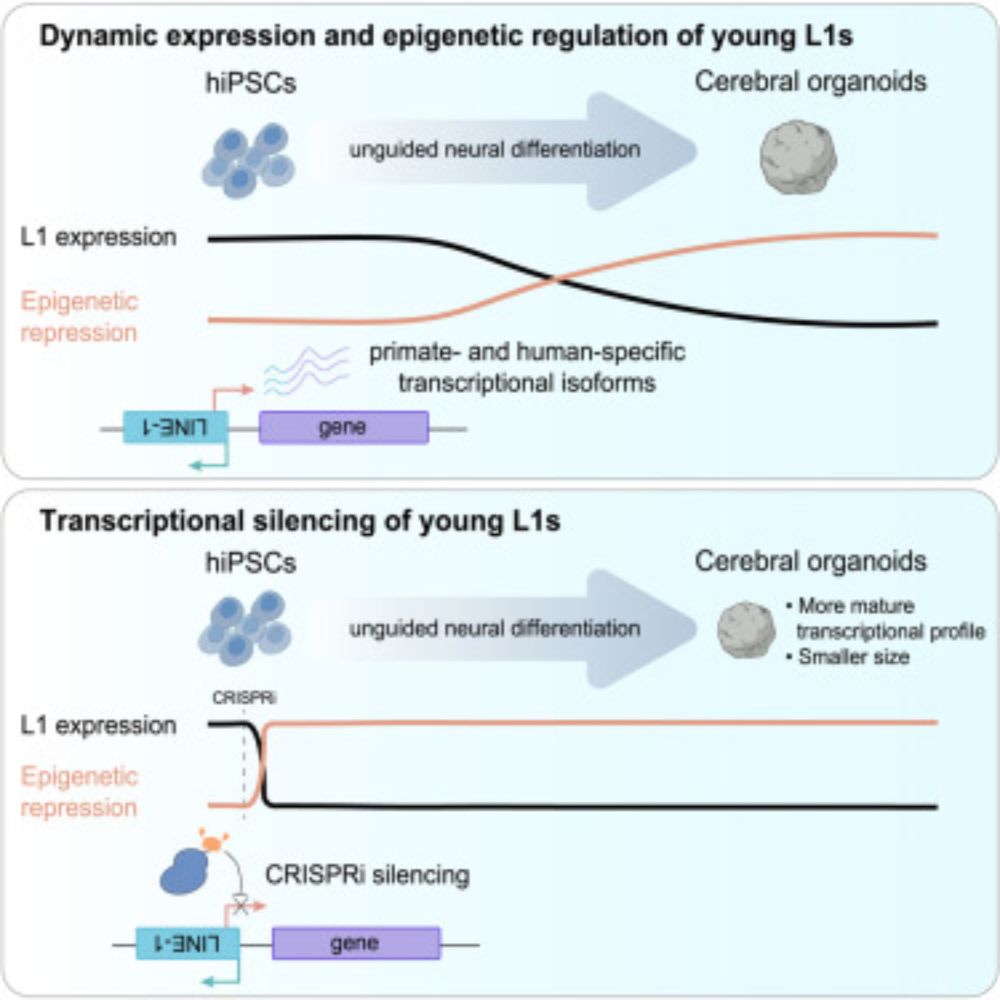
LINE-1 retrotransposons mediate cis-acting transcriptional control in human pluripotent stem cells and regulate early brain development
Adami et al. demonstrate that evolutionarily young L1s are expressed in human pluripotent
stem cells and are dynamically regulated throughout neural differentiation. The study
examines the role of L1s...
www.cell.com
August 23, 2025 at 9:47 AM
New paper from our lab! We found that LINE-1 transposons contribute to early human brain development.
Funded by @asapresearch.parkinsonsroadmap.org
www.cell.com/cell-genomic...
Funded by @asapresearch.parkinsonsroadmap.org
www.cell.com/cell-genomic...
Reposted by Sherif khodeer

1/n Fun journey continues: Our new @cp-cellstemcell.bsky.social paper out on how the Inherent & Dormant Plasticity of Mouse Naive PSCs can be "Exaggerated" to Directly form ~E8.5 Transgene-Free (TF) Mouse SEMs & WITHOUT inducing 8-16-Morula-like "Embryo Founder Cells".
www.cell.com/cell-stem-ce...
www.cell.com/cell-stem-ce...
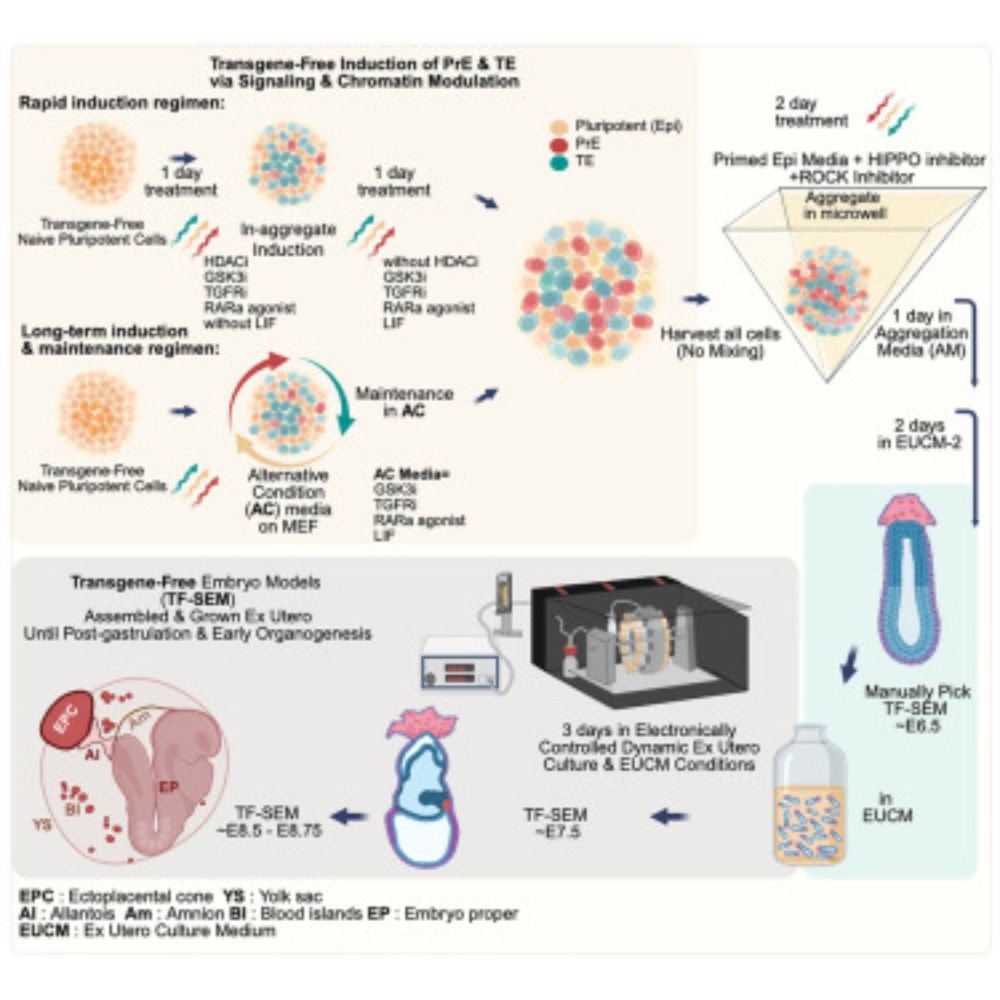
Transgene-free generation of mouse post-gastrulation whole embryo models solely from naive ESCs and iPSCs
Hanna and colleagues show that signaling pathway modulation amplifies the inherent
flexibility of genetically unmodified mouse naive PSCs to adopt extra-embryonic cell
fate potential. This endows them...
www.cell.com
August 7, 2025 at 3:29 PM
1/n Fun journey continues: Our new @cp-cellstemcell.bsky.social paper out on how the Inherent & Dormant Plasticity of Mouse Naive PSCs can be "Exaggerated" to Directly form ~E8.5 Transgene-Free (TF) Mouse SEMs & WITHOUT inducing 8-16-Morula-like "Embryo Founder Cells".
www.cell.com/cell-stem-ce...
www.cell.com/cell-stem-ce...
Reposted by Sherif khodeer
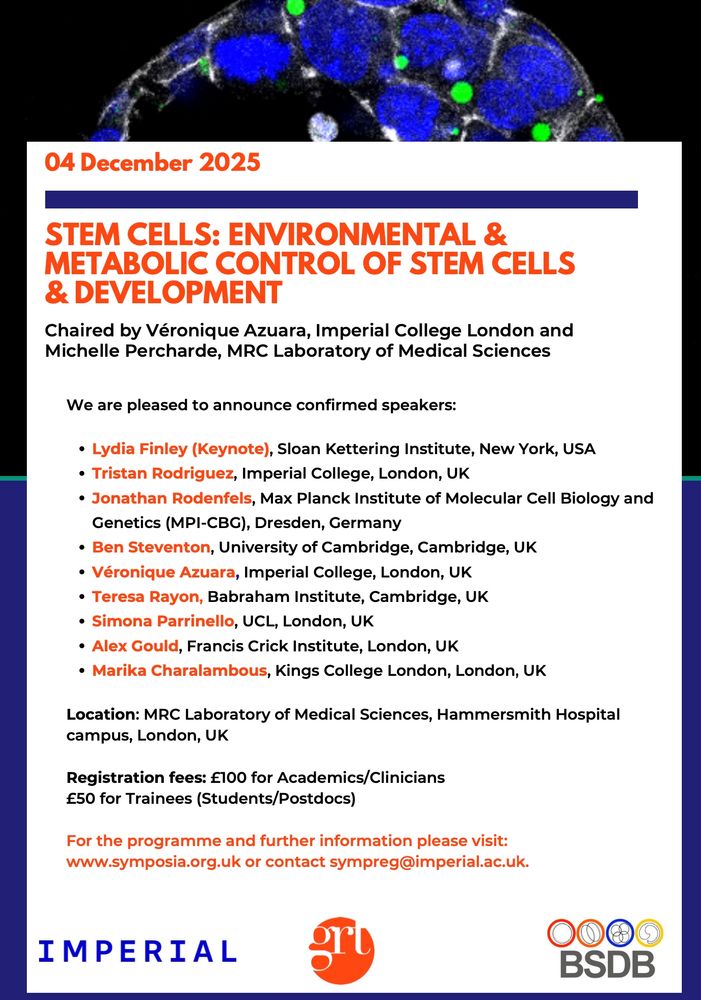
🚨Symposium alert! 🚨 Next edition of our biennial stem cell symposium is 4th Dec 2025 - focus on metabolism and development. Sponsored by @bsdb.bsky.social. Great lineup of speakers, hosted @mrc-lms.bsky.social in London. Registration is open.
www.symposia.org.uk/courses/stem...
www.symposia.org.uk/courses/stem...
July 8, 2025 at 11:01 AM
🚨Symposium alert! 🚨 Next edition of our biennial stem cell symposium is 4th Dec 2025 - focus on metabolism and development. Sponsored by @bsdb.bsky.social. Great lineup of speakers, hosted @mrc-lms.bsky.social in London. Registration is open.
www.symposia.org.uk/courses/stem...
www.symposia.org.uk/courses/stem...
Reposted by Sherif khodeer

Sorcery. That's my only explanation for Mitinori Saitou's research program www.cell.com/developmenta...
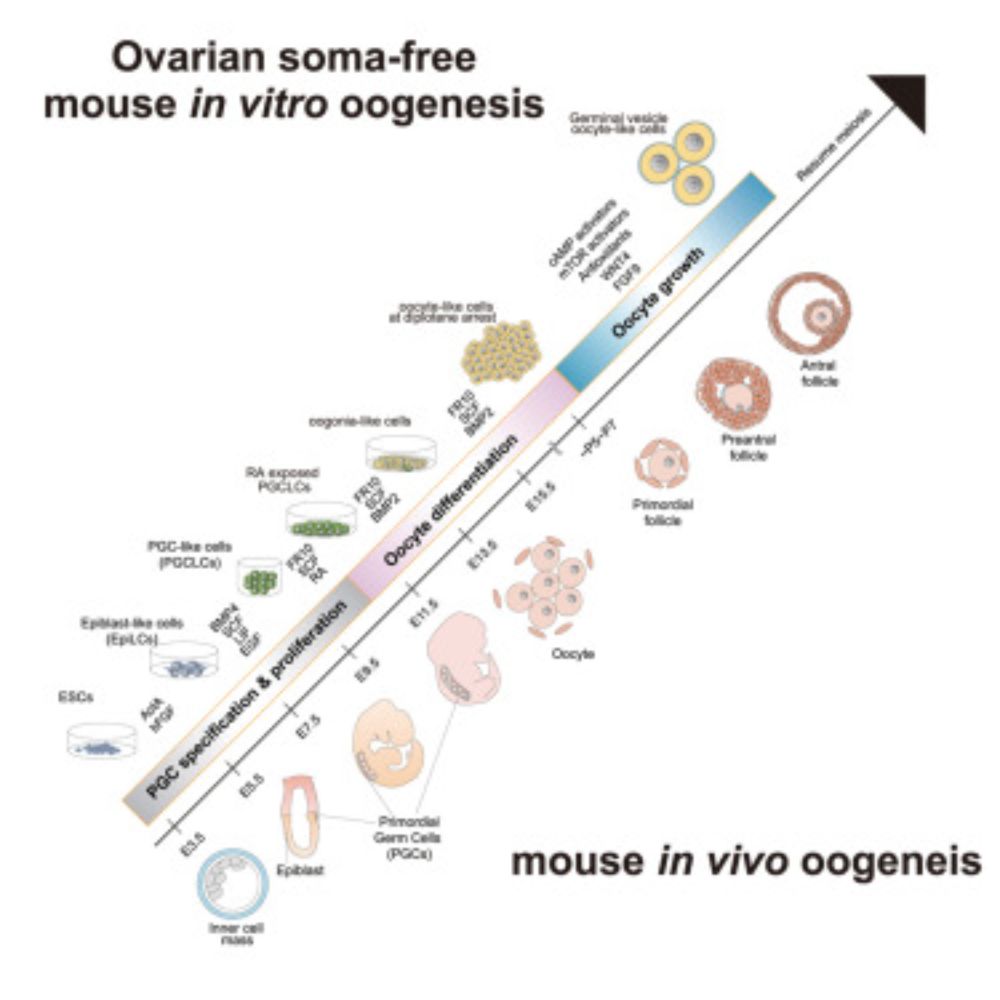
Generation of germinal-vesicle oocytes from mouse embryonic stem cells under an ovarian soma-free condition
Using mouse pluripotent stem cells, Nosaka et al. created an ovarian somatic cell
(OSC)-free system to induce an abundant number of oocyte-like cells at diplotene arrest,
followed by their growth into...
www.cell.com
July 4, 2025 at 12:38 PM
Sorcery. That's my only explanation for Mitinori Saitou's research program www.cell.com/developmenta...
Reposted by Sherif khodeer
The decades-old limit on how long human embryos can be grown in culture is under debate
https://go.nature.com/3GnRpWg
https://go.nature.com/3GnRpWg
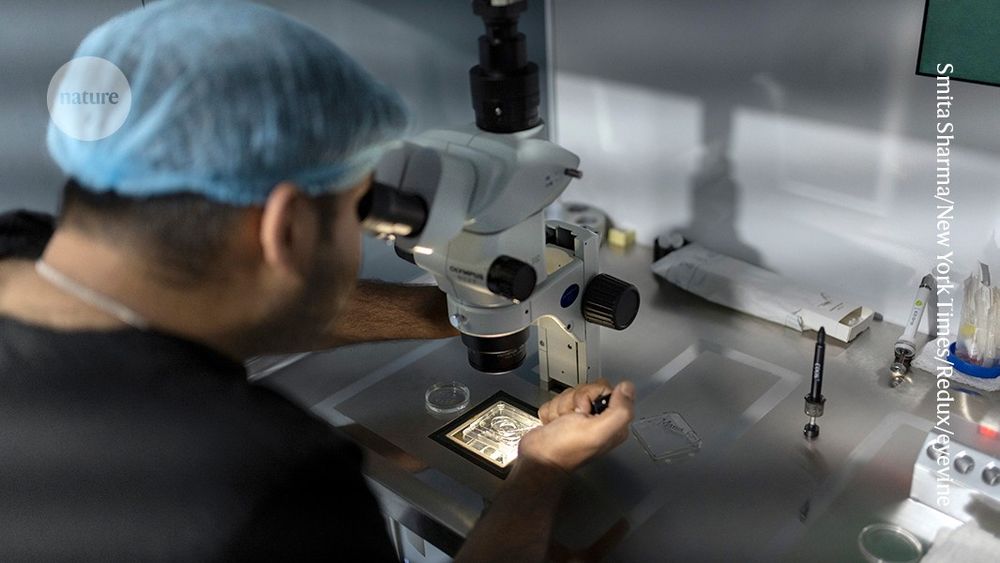
Human embryo research: how to move towards a 28-day limit
Nature - The decades-old limit on how long human embryos can be grown in culture is under debate. A new road map outlines how to extend the length of culture responsibly.
go.nature.com
July 6, 2025 at 9:38 AM
The decades-old limit on how long human embryos can be grown in culture is under debate
https://go.nature.com/3GnRpWg
https://go.nature.com/3GnRpWg