



1) A large genetic study of anxiety disorder found 58 independent risk variants. Two of the signals were similar to those of DecodeME in ME/CFS:
- Neuronal growth regulator 1 (NEGR1) on chromosome 1
- BTN3A2 of the butyrophilin family of genes on chromosome 6
- Neuronal growth regulator 1 (NEGR1) on chromosome 1
- BTN3A2 of the butyrophilin family of genes on chromosome 6

February 8, 2026 at 3:16 PM
1) A large genetic study of anxiety disorder found 58 independent risk variants. Two of the signals were similar to those of DecodeME in ME/CFS:
- Neuronal growth regulator 1 (NEGR1) on chromosome 1
- BTN3A2 of the butyrophilin family of genes on chromosome 6
- Neuronal growth regulator 1 (NEGR1) on chromosome 1
- BTN3A2 of the butyrophilin family of genes on chromosome 6

1/4 Hope 4 ME Fibro, NI: Shaping the Future for M.E. & Long Covid: Collaboration for Change
Information on UK expert speakers:
-Professor Chris Ponting – Professor of Medical Bioinformatics, University of Edinburgh; Principal Investigator of DecodeME (genetics of M.E.)
Information on UK expert speakers:
-Professor Chris Ponting – Professor of Medical Bioinformatics, University of Edinburgh; Principal Investigator of DecodeME (genetics of M.E.)
February 5, 2026 at 4:32 PM
1/4 Hope 4 ME Fibro, NI: Shaping the Future for M.E. & Long Covid: Collaboration for Change
Information on UK expert speakers:
-Professor Chris Ponting – Professor of Medical Bioinformatics, University of Edinburgh; Principal Investigator of DecodeME (genetics of M.E.)
Information on UK expert speakers:
-Professor Chris Ponting – Professor of Medical Bioinformatics, University of Edinburgh; Principal Investigator of DecodeME (genetics of M.E.)
6) It's often hard to predict what biological effect a different DNA letter at a certain position has.
When analysing the DecodeME results of ME/CFS patients, one of the biggest challenges was interpreting what the DNA differences mean, which biological process they influence.
When analysing the DecodeME results of ME/CFS patients, one of the biggest challenges was interpreting what the DNA differences mean, which biological process they influence.
February 4, 2026 at 9:13 AM
6) It's often hard to predict what biological effect a different DNA letter at a certain position has.
When analysing the DecodeME results of ME/CFS patients, one of the biggest challenges was interpreting what the DNA differences mean, which biological process they influence.
When analysing the DecodeME results of ME/CFS patients, one of the biggest challenges was interpreting what the DNA differences mean, which biological process they influence.
1) Top AI researchers have developed a new model called 'AlphaGenome' that helps us understand how DNA works and how instructions translate into proteins and biological differences.
This might be useful in understanding the DNA results of DecodeME and the pathology of ME/CFS.
This might be useful in understanding the DNA results of DecodeME and the pathology of ME/CFS.

February 4, 2026 at 9:12 AM
1) Top AI researchers have developed a new model called 'AlphaGenome' that helps us understand how DNA works and how instructions translate into proteins and biological differences.
This might be useful in understanding the DNA results of DecodeME and the pathology of ME/CFS.
This might be useful in understanding the DNA results of DecodeME and the pathology of ME/CFS.

Another biomedical study! I'm pleased to see it's working in collaboration with the Biobank and DecodeME. All too late for me but I hope these youngsters one day will live again. ME isn't called the living death for no reason.
#MECFS #LONGCOVID #NEISVOID
www.bbc.co.uk/news/article...
#MECFS #LONGCOVID #NEISVOID
www.bbc.co.uk/news/article...

Long Covid and ME patients 'hopeful' about Rosetta Stone study
The £1.1m Rosetta Stone study hopes to make a breakthrough by comparing both conditions.
www.bbc.co.uk
February 2, 2026 at 12:53 PM
Another biomedical study! I'm pleased to see it's working in collaboration with the Biobank and DecodeME. All too late for me but I hope these youngsters one day will live again. ME isn't called the living death for no reason.
#MECFS #LONGCOVID #NEISVOID
www.bbc.co.uk/news/article...
#MECFS #LONGCOVID #NEISVOID
www.bbc.co.uk/news/article...
Yes, the DecodeME study also found gene enrichment mainly in the nervous system (including the brain), and the immune system. Similar findings are seen for depression, and there seems to be an overlap in the gene enrichment findings between ME and depression, according to unpublished data.
January 31, 2026 at 12:40 AM
Yes, the DecodeME study also found gene enrichment mainly in the nervous system (including the brain), and the immune system. Similar findings are seen for depression, and there seems to be an overlap in the gene enrichment findings between ME and depression, according to unpublished data.

Hi! Yes, we’ve applied the DecodeME criteria which requires PEM.
January 24, 2026 at 10:51 AM
Hi! Yes, we’ve applied the DecodeME criteria which requires PEM.

Sources (DecodeME initial findings): www.medrxiv.org/content/10.1...
January 22, 2026 at 2:09 PM
Sources (DecodeME initial findings): www.medrxiv.org/content/10.1...
Where research is going: bigger cohorts, deep phenotyping, and multi-omics to identify subtypes and mechanisms.
Examples: NIH deep-phenotyping studies, and large genetics efforts like DecodeME reporting risk loci tied to immune and nervous system pathways.
Examples: NIH deep-phenotyping studies, and large genetics efforts like DecodeME reporting risk loci tied to immune and nervous system pathways.
January 22, 2026 at 2:09 PM
Where research is going: bigger cohorts, deep phenotyping, and multi-omics to identify subtypes and mechanisms.
Examples: NIH deep-phenotyping studies, and large genetics efforts like DecodeME reporting risk loci tied to immune and nervous system pathways.
Examples: NIH deep-phenotyping studies, and large genetics efforts like DecodeME reporting risk loci tied to immune and nervous system pathways.

Onderzoekers werkten aan grote genetische studies zoals DecodeME, die laten zien dat genen een rol spelen bij ME/cvs en ons meer vertellen over de betrokken biologische processen.
January 15, 2026 at 6:00 PM
Onderzoekers werkten aan grote genetische studies zoals DecodeME, die laten zien dat genen een rol spelen bij ME/cvs en ons meer vertellen over de betrokken biologische processen.

Wondering if any of the genes highlighted in DecodeME are also seen in MS patients? Shonky immune responses seem the common factor.
January 15, 2026 at 9:32 AM
Wondering if any of the genes highlighted in DecodeME are also seen in MS patients? Shonky immune responses seem the common factor.
Dr Jarred Younger discusses a study using the #DecodeME data to look at genetic disease signatures in ME/CFS. He concludes that altered genes alone don't cause ME, there are at least 4 subgroups & there will never be 1 single cure for ME.[16 mins] +Transcript
tinyurl.com/552ws59e
tinyurl.com/552ws59e

082 - How many roads lead to ME/CFS?
Here is a new paper looking at genetic disease signatures in myalgic encephalomyelitis/chronic fatigue syndrome (ME/CFS). The preprint is open-access and can be found here: https://www.medrxiv.org/content/10.64898/2025.12.01.25341362v2 - Jarred Younger
tinyurl.com
January 13, 2026 at 10:16 AM
Dr Jarred Younger discusses a study using the #DecodeME data to look at genetic disease signatures in ME/CFS. He concludes that altered genes alone don't cause ME, there are at least 4 subgroups & there will never be 1 single cure for ME.[16 mins] +Transcript
tinyurl.com/552ws59e
tinyurl.com/552ws59e
7) Lastly, DecodeME will re-analyze the HLA-region which helps the immune system differentiate your own cells from foreign invaders. Pretty much all autoimmune diseases – multiple sclerosis, type 1 diabetes, psoriasis, Hashimoto’s, etc. – show an association with HLA-variants.
January 13, 2026 at 8:48 AM
7) Lastly, DecodeME will re-analyze the HLA-region which helps the immune system differentiate your own cells from foreign invaders. Pretty much all autoimmune diseases – multiple sclerosis, type 1 diabetes, psoriasis, Hashimoto’s, etc. – show an association with HLA-variants.
1) In the coming years, we will likely get an answer to a frequently asked question: Is ME/CFS caused by auto-antibodies?
Looking forward to the HLA-results from DecodeME, the Norwegian daratumumab study and sham-controlled trials on immunoadsorption.
Looking forward to the HLA-results from DecodeME, the Norwegian daratumumab study and sham-controlled trials on immunoadsorption.

January 13, 2026 at 8:48 AM
1) In the coming years, we will likely get an answer to a frequently asked question: Is ME/CFS caused by auto-antibodies?
Looking forward to the HLA-results from DecodeME, the Norwegian daratumumab study and sham-controlled trials on immunoadsorption.
Looking forward to the HLA-results from DecodeME, the Norwegian daratumumab study and sham-controlled trials on immunoadsorption.

Thank you for making the time Wendy! How do you think we can get the government to fund Chris Ponting's next step - SequenceME? DecodeME proved that MECFS is a serious biological illness but funding is needed for SequenceME to find treatments to help the hundreds of thousands ME patients.
January 12, 2026 at 11:56 AM
Thank you for making the time Wendy! How do you think we can get the government to fund Chris Ponting's next step - SequenceME? DecodeME proved that MECFS is a serious biological illness but funding is needed for SequenceME to find treatments to help the hundreds of thousands ME patients.
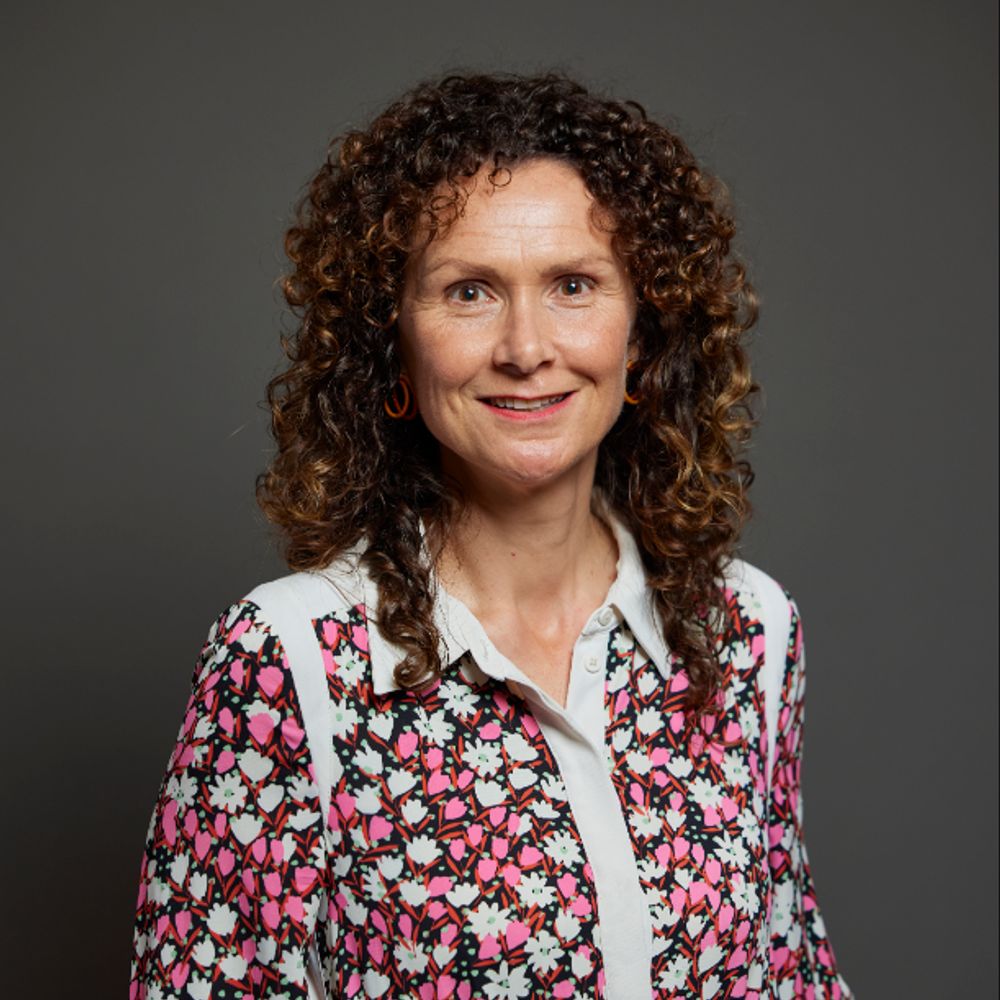
It was great visiting the University of Edinburgh today to learn more about their DecodeME and PRIME projects. It was fantastic meeting so many researchers and specialists in the ME field too.

January 9, 2026 at 4:38 PM
It was great visiting the University of Edinburgh today to learn more about their DecodeME and PRIME projects. It was fantastic meeting so many researchers and specialists in the ME field too.
Recent DecodeME study reveals the genetic roots of ME/CFS & its link to Long COVID. Thousands of small DNA variations influence risk, involving 2,311 genes. 76 genes overlap with Long COVID. Preprint: www.medrxiv.org/content/10.6...

Identification of Novel Reproducible Combinatorial Genetic Risk Factors for Myalgic Encephalomyelitis in the DecodeME Patient Cohort and Commonalities with Long COVID
Background Myalgic encephalomyelitis (also known as ME/CFS or simply ME) has severely impacted the lives of tens of millions of people globally, but the disease currently has no accurate diagnostic to...
www.medrxiv.org
January 8, 2026 at 7:58 AM
Recent DecodeME study reveals the genetic roots of ME/CFS & its link to Long COVID. Thousands of small DNA variations influence risk, involving 2,311 genes. 76 genes overlap with Long COVID. Preprint: www.medrxiv.org/content/10.6...
4/
"Let’s make this the decade we finally develop treatments for this condition, writes Sonya Chowdhury. For too long, those living with [ME/CFS] have had to live with disbelief."
www.lbc.co.uk/article/trea...
Screenshot from latest Science for ME weekly update
#MEcfs #PwME
"Let’s make this the decade we finally develop treatments for this condition, writes Sonya Chowdhury. For too long, those living with [ME/CFS] have had to live with disbelief."
www.lbc.co.uk/article/trea...
Screenshot from latest Science for ME weekly update
#MEcfs #PwME
![UK LBC Treatment for ME has turned a corner - the UK must not leave patients waiting
"Let’s make this the decade we finally develop treatments for this condition, writes Sonya Chowdhury. For too long, those living with [ME/CFS] have had to live with disbelief." Chowdhury highlights the DecodeME results and the need for further research funding. "Action for ME is calling for the creation of a Strategic Research Hub for ME, to ensure that recent scientific progress translates into meaningful treatments."](https://cdn.bsky.app/img/feed_thumbnail/plain/did:plc:43rudsv62fuwsmnk7oppgtdy/bafkreihuaspumwvhqgxemenbfrue7n734du472igooatrpsb6ldcxjgrqu@jpeg)
January 6, 2026 at 1:37 AM
4/
"Let’s make this the decade we finally develop treatments for this condition, writes Sonya Chowdhury. For too long, those living with [ME/CFS] have had to live with disbelief."
www.lbc.co.uk/article/trea...
Screenshot from latest Science for ME weekly update
#MEcfs #PwME
"Let’s make this the decade we finally develop treatments for this condition, writes Sonya Chowdhury. For too long, those living with [ME/CFS] have had to live with disbelief."
www.lbc.co.uk/article/trea...
Screenshot from latest Science for ME weekly update
#MEcfs #PwME
ME/CFS Science Blog reviews the most interesting ME/CFS studies in 2025, including DecodeME, the daratumumab trial, autopsy findings from the Netherlands, and the most extensive study on antibodies in ME/CFS to date.
tinyurl.com/25wjuc3m
tinyurl.com/25wjuc3m

2025: looking back on a year of ME/CFS research - ME/CFS Science
In 2025, scientists made a significant step towards understanding the pathophysiology of ME/CFS. It mayContinue reading2025: looking back on a year of ME/CFS research
tinyurl.com
January 5, 2026 at 12:25 PM
ME/CFS Science Blog reviews the most interesting ME/CFS studies in 2025, including DecodeME, the daratumumab trial, autopsy findings from the Netherlands, and the most extensive study on antibodies in ME/CFS to date.
tinyurl.com/25wjuc3m
tinyurl.com/25wjuc3m
Description from Science for ME update:
“ME/CFS Science Blog has published a review of the most interesting ME/CFS studies in 2025, including DecodeME, the daratumumab trial, autopsy findings from the Netherlands, & most extensive study on antibodies in ME/CFS to date”
#MEcfs #CFS #PwME
“ME/CFS Science Blog has published a review of the most interesting ME/CFS studies in 2025, including DecodeME, the daratumumab trial, autopsy findings from the Netherlands, & most extensive study on antibodies in ME/CFS to date”
#MEcfs #CFS #PwME
1) We’ve just published our review of the most interesting ME/CFS studies of 2025.
It feels like this year, we’ve made a significant step towards understanding the pathophysiology of ME/CFS.
A brief overview of the studies that caught our eye.
It feels like this year, we’ve made a significant step towards understanding the pathophysiology of ME/CFS.
A brief overview of the studies that caught our eye.

January 4, 2026 at 1:50 PM
New article by Action for ME's CEO.
Briefly discusses DecodeME, LOCOME before arguing that ME/CFS research is underfunded in the UK & calls for more funding & the creation of a Strategic Research Hub for ME
www.lbc.co.uk/article/trea...
#MEcfs #PwME
1/
Briefly discusses DecodeME, LOCOME before arguing that ME/CFS research is underfunded in the UK & calls for more funding & the creation of a Strategic Research Hub for ME
www.lbc.co.uk/article/trea...
#MEcfs #PwME
1/

December 31, 2025 at 4:56 PM
New article by Action for ME's CEO.
Briefly discusses DecodeME, LOCOME before arguing that ME/CFS research is underfunded in the UK & calls for more funding & the creation of a Strategic Research Hub for ME
www.lbc.co.uk/article/trea...
#MEcfs #PwME
1/
Briefly discusses DecodeME, LOCOME before arguing that ME/CFS research is underfunded in the UK & calls for more funding & the creation of a Strategic Research Hub for ME
www.lbc.co.uk/article/trea...
#MEcfs #PwME
1/
A brilliant review of a big year for ME/CFS research from this extraordinary blogging team. DecodeME results and lots more, including areas with less promising results eg antibodies & viral persistence. Plus the positive clinical trial pilot for daratumumab.
1) We’ve just published our review of the most interesting ME/CFS studies of 2025.
It feels like this year, we’ve made a significant step towards understanding the pathophysiology of ME/CFS.
A brief overview of the studies that caught our eye.
It feels like this year, we’ve made a significant step towards understanding the pathophysiology of ME/CFS.
A brief overview of the studies that caught our eye.
December 31, 2025 at 1:38 PM
A brilliant review of a big year for ME/CFS research from this extraordinary blogging team. DecodeME results and lots more, including areas with less promising results eg antibodies & viral persistence. Plus the positive clinical trial pilot for daratumumab.

12/1 bleiben stabil, sobald sie auf mehreren Jahrzehnten von Studien basieren, selbst wenn neue Teilaspekte hinzukommen.
Wichtige neue/weiterführende Studien und Forschung seit 2024:
Genetische Befunde – DecodeME (weltweit größte ME/CFS-Genetikstudie):
Wichtige neue/weiterführende Studien und Forschung seit 2024:
Genetische Befunde – DecodeME (weltweit größte ME/CFS-Genetikstudie):
December 30, 2025 at 11:45 AM
12/1 bleiben stabil, sobald sie auf mehreren Jahrzehnten von Studien basieren, selbst wenn neue Teilaspekte hinzukommen.
Wichtige neue/weiterführende Studien und Forschung seit 2024:
Genetische Befunde – DecodeME (weltweit größte ME/CFS-Genetikstudie):
Wichtige neue/weiterführende Studien und Forschung seit 2024:
Genetische Befunde – DecodeME (weltweit größte ME/CFS-Genetikstudie):
2) The biggest piece of the puzzle comes from DecodeME and the genetics study by Mark Snyder’s team at Stanford. Both pointed to the brain and neuronal communication.
December 30, 2025 at 11:02 AM
2) The biggest piece of the puzzle comes from DecodeME and the genetics study by Mark Snyder’s team at Stanford. Both pointed to the brain and neuronal communication.