



Paraphyly is the one that I'm being annoying about here
"There's no such thing as a tree" is a whole other discussion
"There's no such thing as a tree" is a whole other discussion
December 8, 2025 at 10:57 PM
Paraphyly is the one that I'm being annoying about here
"There's no such thing as a tree" is a whole other discussion
"There's no such thing as a tree" is a whole other discussion
This story works best with "monophyletic" categories where EVERY member has a shared ancestor & ALL descendants AND their shared ancestor are members.
But many 'common names' fail this rule.
They're "polyphyletic" or "paraphyletic," with excluded relations or included non-relations.
But many 'common names' fail this rule.
They're "polyphyletic" or "paraphyletic," with excluded relations or included non-relations.

November 23, 2025 at 3:12 PM
This story works best with "monophyletic" categories where EVERY member has a shared ancestor & ALL descendants AND their shared ancestor are members.
But many 'common names' fail this rule.
They're "polyphyletic" or "paraphyletic," with excluded relations or included non-relations.
But many 'common names' fail this rule.
They're "polyphyletic" or "paraphyletic," with excluded relations or included non-relations.
A paraphyly is a taxonomic group that includes a common ancestor but not all of its descendants. After genetic research showed this applied to the old Striated taxonomy this has now been "tidied up" by leaving Striated in its own monophyly group and moving all the others to Little

October 30, 2025 at 1:46 PM
A paraphyly is a taxonomic group that includes a common ancestor but not all of its descendants. After genetic research showed this applied to the old Striated taxonomy this has now been "tidied up" by leaving Striated in its own monophyly group and moving all the others to Little

I'm not agreeing with the argument, just saying it's one I've heard.
It seems more logical than the paraphyly of microbes argument.
It seems more logical than the paraphyly of microbes argument.
February 29, 2024 at 2:45 AM
I'm not agreeing with the argument, just saying it's one I've heard.
It seems more logical than the paraphyly of microbes argument.
It seems more logical than the paraphyly of microbes argument.

I'm denying paraphyly lol
November 2, 2024 at 11:39 AM
I'm denying paraphyly lol

I'll tolerate a lot of abuse from you, Pete, but this baseless and knavish allegation of paraphyly is over the line and cannot stand. Pistols at dawn. Dunkleosteus will be my second.
October 28, 2025 at 9:10 PM
I'll tolerate a lot of abuse from you, Pete, but this baseless and knavish allegation of paraphyly is over the line and cannot stand. Pistols at dawn. Dunkleosteus will be my second.

"Paraphyly," my bad. I'm not sure I've used that word in ten years.
December 10, 2025 at 1:47 AM
"Paraphyly," my bad. I'm not sure I've used that word in ten years.

Preserving the Biologically Coherent Generic Concept of Phytophthora, “Plant Destroyer”: “We can see no reason why a Darwinian should adopt the concept of paraphyly” (Ernst Mayr and Walter Bock 2002): Phytopathology®: Vol 115, No 6 apsjournals.apsnet.org/doi/10.1094/...

Preserving the Biologically Coherent Generic Concept of Phytophthora, “Plant Destroyer”: “We can see no reason why a Darwinian should adopt the concept of paraphyly” (Ernst Mayr and Walter Bock 2002): Phytopathology®: Vol 115, No 6
Phytophthora is a long-established, well-known, and globally important genus of plant pathogens. Phylogenetic evidence has shown that the biologically distinct, obligate biotrophic downy mildews evolved from Phytophthora at least twice. Because, cladistically, this renders Phytophthora “paraphyletic,” it has been proposed that Phytophthora evolutionary clades be split into multiple genera (Crous et al. 2021; Runge et al. 2011; Thines 2023, 2024). In this letter, we review arguments for the retention of the generic name Phytophthora with a broad circumscription made by Brasier et al. (2022) and by many delegates at an open workshop organized by The American Phytopathological Society. We present our well-considered responses to the genus splitting proposals, both in general terms and in terms of the specific proposals for new genera, alongside new information regarding the biological properties and mode of origin of the Phytophthora clades. We consider that the proposals are mostly non-rigorous and not supported by the scientific evidence. Further, given (i) the apparent lack of any distinguishing biological characteristics (synapomorphies) between the Phytophthora clades; (ii) the fundamental monophyly of Phytophthora in the original Haeckelian sense (Haeckel 1877); (iii) the fact that paraphyly is not a justification for taxonomic splitting; and (iv) the considerable likely damage to effective scientific communication and disease management from an unnecessary breakup of the genus, we report that workshop delegates voted unanimously in favor of preserving the current generic concept and for seeking endorsement of this view by a working group of the International Commission on the Taxonomy of Fungi. Copyright © 2025 The Author(s). This is an open access article distributed under the CC BY-NC-ND 4.0 International license.
apsjournals.apsnet.org
July 1, 2025 at 2:10 PM
Preserving the Biologically Coherent Generic Concept of Phytophthora, “Plant Destroyer”: “We can see no reason why a Darwinian should adopt the concept of paraphyly” (Ernst Mayr and Walter Bock 2002): Phytopathology®: Vol 115, No 6 apsjournals.apsnet.org/doi/10.1094/...

ICYMI: Independent lineages from five zoogeographic realms: the mitochondrial genome of Ornithodoros (Pavlovskyella) gurneyi Warburton, 1926 (Acari: Argasidae) confirms paraphyly of the subgenus Pavlovskyella Pospelova-Shtrom, 1950 Zootaxa

Independent lineages from five zoogeographic realms: the mitochondrial genome of Ornithodoros (Pavlovskyella) gurneyi Warburton, 1926 (Acari: Argasidae) confirms paraphyly of the subgenus Pavlovskyella Pospelova-Shtrom, 1950
Mitochondrial (mt) genomes have played a major role in elucidating evolutionary relationships in ticks (Ixodida), especially in soft ticks (Argasidae). Mitochondrial genomes have been sequenced for representatives of most of the genera and other major lineages. This includes members of the Afrotropical, Nearctic, Neotropical and Palearctic Pavlovskyella Pospelova-Shtrom, 1950, which is a subgenus of Ornithodoros Koch, 1844. These continent-associated lineages do not form a monophyletic group: rather, the subgenus Pavlovskyella is paraphyletic. The only zoogeographic region for which mt genomes are not available is the Australasian region. Here we report the first mt genome of an Australasian Pavlovskyella: Ornithodoros (Pavlovskyella) gurneyi Warburton, 1926, the kangaroo soft tick. [The companion paper to the present work, Barker et al. (2025), presents the mt genome, 18S and 28S rRNA of the only other known Australasian Pavlovskyella, McMillan’s Australian tree-hollow argasid, Ornithodoros (Pavlovskyella) macmillani Hoogstraal & Kohls, 1966.] Our phylogenetic trees reveal that the two Australasian Pavlovskyella have their own clade (i.e. are sister-taxa) which does not have a sister-group relationship with species of Pavlovskyella from any of the four other zoogeographic regions. We propose that the Pavlovskyella from the Afrotropical, Australasian, Nearctic, Neotropical and Palearctic zoogeographic regions have independent evolutionary histories and thus are best considered different genera. Molecular dating leads us to propose that continental drift may have caused the evolution of five different lineages of Pavlovskyella, each in a different zoogeographic region of the world.
dlvr.it
July 24, 2025 at 4:26 PM
ICYMI: Independent lineages from five zoogeographic realms: the mitochondrial genome of Ornithodoros (Pavlovskyella) gurneyi Warburton, 1926 (Acari: Argasidae) confirms paraphyly of the subgenus Pavlovskyella Pospelova-Shtrom, 1950 Zootaxa

Counterpoint: the authors are overstating "very strong support for paraphyly" when in the paper they themselves say that they mostly find support for deuterostome monophyly but there are a handful of analyses that cannot distinguish between monophyly and paraphyly using log likelihood
July 14, 2025 at 3:23 PM
Counterpoint: the authors are overstating "very strong support for paraphyly" when in the paper they themselves say that they mostly find support for deuterostome monophyly but there are a handful of analyses that cannot distinguish between monophyly and paraphyly using log likelihood

Just out, First Look version:
Preserving the Biologically Coherent Generic Concept of #Phytophthora, ‘Plant Destroyer’ | #PhytoPathology
apsjournals.apsnet.org/doi/10.1094/...
#Oomycetes #Taxonomy #Phylogeny #Cladistics #Paraphyly #PlantBiosecurity #ScientificCommunication #PlantDiseaseManagement
Preserving the Biologically Coherent Generic Concept of #Phytophthora, ‘Plant Destroyer’ | #PhytoPathology
apsjournals.apsnet.org/doi/10.1094/...
#Oomycetes #Taxonomy #Phylogeny #Cladistics #Paraphyly #PlantBiosecurity #ScientificCommunication #PlantDiseaseManagement

Preserving the Biologically Coherent Generic Concept of Phytophthora, ‘Plant Destroyer’ | Phytopathology®
Phytophthora is a long-established, well known and globally important genus of plant pathogens. Phylogenetic evidence has shown that the biologically distinct, obligate biotrophic downy mildews evolve...
apsjournals.apsnet.org
March 12, 2025 at 4:40 PM
Just out, First Look version:
Preserving the Biologically Coherent Generic Concept of #Phytophthora, ‘Plant Destroyer’ | #PhytoPathology
apsjournals.apsnet.org/doi/10.1094/...
#Oomycetes #Taxonomy #Phylogeny #Cladistics #Paraphyly #PlantBiosecurity #ScientificCommunication #PlantDiseaseManagement
Preserving the Biologically Coherent Generic Concept of #Phytophthora, ‘Plant Destroyer’ | #PhytoPathology
apsjournals.apsnet.org/doi/10.1094/...
#Oomycetes #Taxonomy #Phylogeny #Cladistics #Paraphyly #PlantBiosecurity #ScientificCommunication #PlantDiseaseManagement
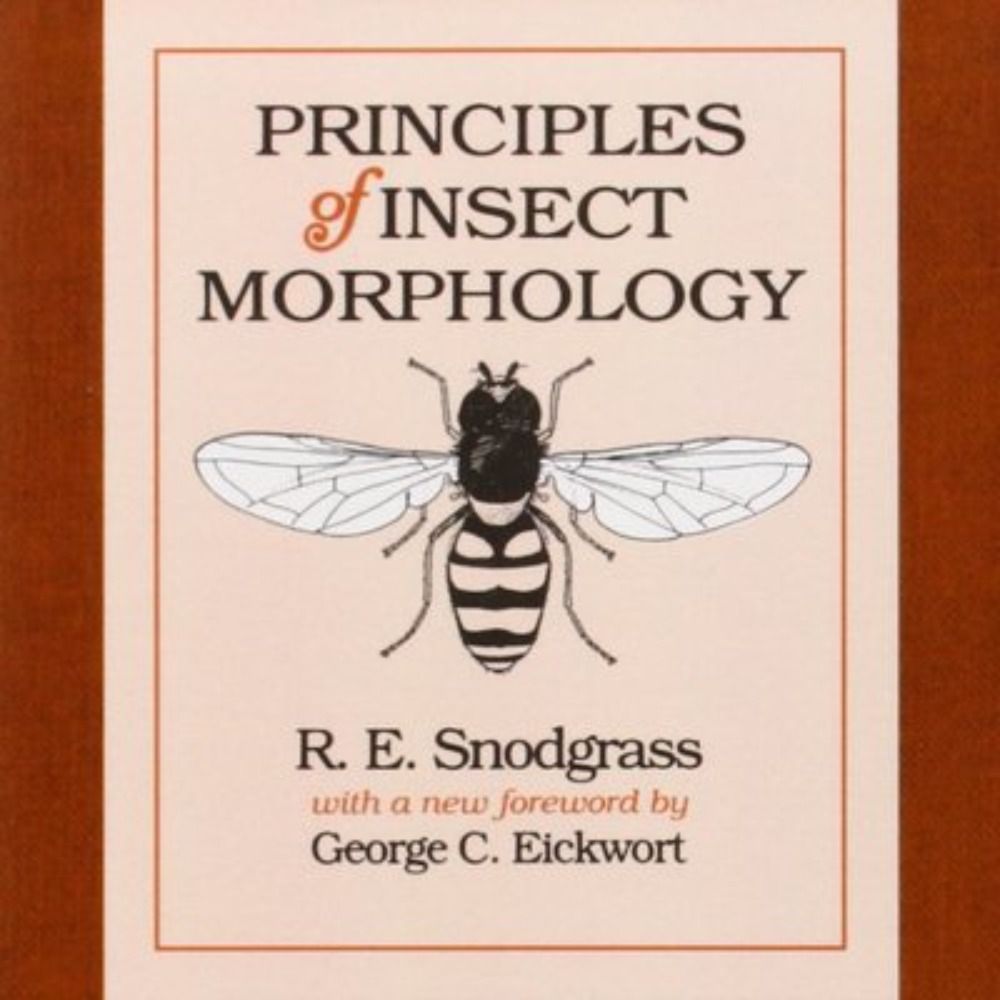
翅の基部構造から蝶の高次系統を議論した論文が出ました.ゲノムから示唆されていた,アゲハチョウ科がセセリチョウ科を含むその他の蝶の外側に来るという系統関係が支持されました
Wing base morphology supports paraphyly of Papilionoidea s.s. (Lepidoptera). Entomological Science doi.org/10.1111/ens....
Wing base morphology supports paraphyly of Papilionoidea s.s. (Lepidoptera). Entomological Science doi.org/10.1111/ens....
doi.org
August 6, 2025 at 9:45 AM
翅の基部構造から蝶の高次系統を議論した論文が出ました.ゲノムから示唆されていた,アゲハチョウ科がセセリチョウ科を含むその他の蝶の外側に来るという系統関係が支持されました
Wing base morphology supports paraphyly of Papilionoidea s.s. (Lepidoptera). Entomological Science doi.org/10.1111/ens....
Wing base morphology supports paraphyly of Papilionoidea s.s. (Lepidoptera). Entomological Science doi.org/10.1111/ens....

Ah yes, I recall reading this a while back.
Of course you did comment results do not definitively prove deuterostome paraphyly.
In any case, you realise this was in jest.
However, if you do know of a nicer way to comment that most people are indeed assholes, I would love to hear it 🥸
Of course you did comment results do not definitively prove deuterostome paraphyly.
In any case, you realise this was in jest.
However, if you do know of a nicer way to comment that most people are indeed assholes, I would love to hear it 🥸
January 14, 2025 at 10:35 AM
Ah yes, I recall reading this a while back.
Of course you did comment results do not definitively prove deuterostome paraphyly.
In any case, you realise this was in jest.
However, if you do know of a nicer way to comment that most people are indeed assholes, I would love to hear it 🥸
Of course you did comment results do not definitively prove deuterostome paraphyly.
In any case, you realise this was in jest.
However, if you do know of a nicer way to comment that most people are indeed assholes, I would love to hear it 🥸
Just published, #Phytopathology, Letter to the Editor:
Preserving the Biologically Coherent Generic Concept of #Phytophthora, “Plant Destroyer”.
#DownyMildews
#Oomycetes
#Taxonomy
#Systematics
#Paraphyly
#Phylogeny
#Cladistics
#PlantBiosecurity
#ScientificCommunication
#PlantDiseaseManagement
Preserving the Biologically Coherent Generic Concept of #Phytophthora, “Plant Destroyer”.
#DownyMildews
#Oomycetes
#Taxonomy
#Systematics
#Paraphyly
#Phylogeny
#Cladistics
#PlantBiosecurity
#ScientificCommunication
#PlantDiseaseManagement

Preserving the Biologically Coherent Generic Concept of Phytophthora, “Plant Destroyer”: “We can see no reason why a Darwinian should adopt the concept of paraphyly” (Ernst Mayr and Walter Bock 2002): Phytopathology®: Vol 0, No 0
Phytophthora is a long-established, well-known, and globally important genus of plant pathogens. Phylogenetic evidence has shown that the biologically distinct, obligate biotrophic downy mildews evolved from Phytophthora at least twice. Because, cladistically, this renders Phytophthora “paraphyletic,” it has been proposed that Phytophthora evolutionary clades be split into multiple genera (Crous et al. 2021; Runge et al. 2011; Thines 2023, 2024). In this letter, we review arguments for the retention of the generic name Phytophthora with a broad circumscription made by Brasier et al. (2022) and by many delegates at an open workshop organized by The American Phytopathological Society. We present our well-considered responses to the genus splitting proposals, both in general terms and in terms of the specific proposals for new genera, alongside new information regarding the biological properties and mode of origin of the Phytophthora clades. We consider that the proposals are mostly non-rigorous and not supported by the scientific evidence. Further, given (i) the apparent lack of any distinguishing biological characteristics (synapomorphies) between the Phytophthora clades; (ii) the fundamental monophyly of Phytophthora in the original Haeckelian sense (Haeckel 1877); (iii) the fact that paraphyly is not a justification for taxonomic splitting; and (iv) the considerable likely damage to effective scientific communication and disease management from an unnecessary breakup of the genus, we report that workshop delegates voted unanimously in favor of preserving the current generic concept and for seeking endorsement of this view by a working group of the International Commission on the Taxonomy of Fungi. Copyright © 2025 The Author(s). This is an open access article distributed under the CC BY-NC-ND 4.0 International license.
apsjournals.apsnet.org
June 21, 2025 at 5:33 PM
Just published, #Phytopathology, Letter to the Editor:
Preserving the Biologically Coherent Generic Concept of #Phytophthora, “Plant Destroyer”.
#DownyMildews
#Oomycetes
#Taxonomy
#Systematics
#Paraphyly
#Phylogeny
#Cladistics
#PlantBiosecurity
#ScientificCommunication
#PlantDiseaseManagement
Preserving the Biologically Coherent Generic Concept of #Phytophthora, “Plant Destroyer”.
#DownyMildews
#Oomycetes
#Taxonomy
#Systematics
#Paraphyly
#Phylogeny
#Cladistics
#PlantBiosecurity
#ScientificCommunication
#PlantDiseaseManagement

Complete mitochondrial genome of yellowfin tuna & blackfin tuna: notes on mtDNA introgression and paraphyly on tunas
https://link.springer.com/article/10.1007/s12686-017-0904-0
https://link.springer.com/article/10.1007/s12686-017-0904-0

Complete mitochondrial genome of the yellowfin tuna (Thun...
The genus Thunnus is composed of eight species, which are...
link.springer.com
February 22, 2025 at 9:57 PM
Complete mitochondrial genome of yellowfin tuna & blackfin tuna: notes on mtDNA introgression and paraphyly on tunas
https://link.springer.com/article/10.1007/s12686-017-0904-0
https://link.springer.com/article/10.1007/s12686-017-0904-0

Looking at a random YouTube comment thread and it seems people have been effectively taught that birds are dinosaurs but they often miss that birds (and dinosaurs) are reptiles. It's paraphyly all the way down baby!
May 18, 2025 at 1:57 PM
Looking at a random YouTube comment thread and it seems people have been effectively taught that birds are dinosaurs but they often miss that birds (and dinosaurs) are reptiles. It's paraphyly all the way down baby!

いま気づいたが「側系統」の使い方がおかしい。わりとよく見かける誤解ではあるけど。
> We also do not recover a monophyletic Haptista or Amorphea (Amoebozoa + Obazoa), although paraphyly of the latter is not well supported.
Williamson et al. (2025) https://doi.org/10.1038/s41586-025-08709-5
> We also do not recover a monophyletic Haptista or Amorphea (Amoebozoa + Obazoa), although paraphyly of the latter is not well supported.
Williamson et al. (2025) https://doi.org/10.1038/s41586-025-08709-5

A robustly rooted tree of eukaryotes reveals their excavate ancestry | Nature
The root of the eukaryote Tree of Life is estimated from a new, larger dataset of mitochondrial proteins including all known eukaryotic supergroups, showing it lies between two multi-supergroup assemblages.
doi.org
April 28, 2025 at 1:53 PM
いま気づいたが「側系統」の使い方がおかしい。わりとよく見かける誤解ではあるけど。
> We also do not recover a monophyletic Haptista or Amorphea (Amoebozoa + Obazoa), although paraphyly of the latter is not well supported.
Williamson et al. (2025) https://doi.org/10.1038/s41586-025-08709-5
> We also do not recover a monophyletic Haptista or Amorphea (Amoebozoa + Obazoa), although paraphyly of the latter is not well supported.
Williamson et al. (2025) https://doi.org/10.1038/s41586-025-08709-5

‘Birds’ of two feathers: Avicranium renestoi and the paraphyly of bird-headed reptiles (Diapsida: ‘Avicephala’)
https://academic.oup.com/zoolinnean/advance-article/doi/10.1093/zoolinnean/zlae050/7670585
https://academic.oup.com/zoolinnean/advance-article/doi/10.1093/zoolinnean/zlae050/7670585

‘Birds’ of two feathers: Avicranium renestoi and the paraphyly of bird-headed reptiles (Diapsida: ‘Avicephala’)
Abstract. The anatomy of Late Triassic drepanosauromorphs is re-examined, with a focus on the previously published surface models of the holotype of Avicra
academic.oup.com
May 13, 2024 at 1:15 AM
‘Birds’ of two feathers: Avicranium renestoi and the paraphyly of bird-headed reptiles (Diapsida: ‘Avicephala’)
https://academic.oup.com/zoolinnean/advance-article/doi/10.1093/zoolinnean/zlae050/7670585
https://academic.oup.com/zoolinnean/advance-article/doi/10.1093/zoolinnean/zlae050/7670585
To be fair, Crustacean paraphyly was well established long before, e.g. academic.oup.com/mbe/article/...

Molecular phylogeny of the major arthropod groups indicates polyphyly of crustaceans and a new hypothesis for the origin of hexapods.
Abstract. A phylogeny of the arthropods was inferred from analyses of amino acid sequences derived from the nuclear genes encoding elongation factor-1 alph
academic.oup.com
September 20, 2024 at 5:15 PM
To be fair, Crustacean paraphyly was well established long before, e.g. academic.oup.com/mbe/article/...
The main thing is though that Zrzavy papers didn't yet support paraphyly. So they were onto a sister group of Crustacea + Hexapoda but not yet sure that bugs were shrimps.
December 23, 2024 at 4:43 PM
The main thing is though that Zrzavy papers didn't yet support paraphyly. So they were onto a sister group of Crustacea + Hexapoda but not yet sure that bugs were shrimps.
The DNA barcoding of Mediterranean combtooth blennies suggests the paraphyly of some taxa (Perciformes, Blenniidae)
https://onlinelibrary.wiley.com/doi/10.1111/jfb.13897
https://onlinelibrary.wiley.com/doi/10.1111/jfb.13897

February 19, 2025 at 6:22 AM
The DNA barcoding of Mediterranean combtooth blennies suggests the paraphyly of some taxa (Perciformes, Blenniidae)
https://onlinelibrary.wiley.com/doi/10.1111/jfb.13897
https://onlinelibrary.wiley.com/doi/10.1111/jfb.13897

The name is going to be a problem though. If every documentary starts with an explanation about monophyly versus paraphyly, and how "dinosaurs" are technically not a monophyletic group..
We'll lose the audience for sure. Some new snazzy name like "Diapsoid non-avians" would help.
We'll lose the audience for sure. Some new snazzy name like "Diapsoid non-avians" would help.
September 11, 2024 at 4:16 AM
The name is going to be a problem though. If every documentary starts with an explanation about monophyly versus paraphyly, and how "dinosaurs" are technically not a monophyletic group..
We'll lose the audience for sure. Some new snazzy name like "Diapsoid non-avians" would help.
We'll lose the audience for sure. Some new snazzy name like "Diapsoid non-avians" would help.

Paraphyly = victory in macroevolution.
January 19, 2025 at 1:29 AM
Paraphyly = victory in macroevolution.

Polyphyly:
(🐢🐧),🐊 Beaked animals
Paraphyly:
(🐊🐢),🐧 Reptiles
Monophyly:
(🐊🐧),🐢 Archosaurs
Single filey:
🐧🐧🐧🐧🐧🐧🐧🐧🐧🐧🐧
(🐢🐧),🐊 Beaked animals
Paraphyly:
(🐊🐢),🐧 Reptiles
Monophyly:
(🐊🐧),🐢 Archosaurs
Single filey:
🐧🐧🐧🐧🐧🐧🐧🐧🐧🐧🐧
December 8, 2025 at 9:50 PM
Polyphyly:
(🐢🐧),🐊 Beaked animals
Paraphyly:
(🐊🐢),🐧 Reptiles
Monophyly:
(🐊🐧),🐢 Archosaurs
Single filey:
🐧🐧🐧🐧🐧🐧🐧🐧🐧🐧🐧
(🐢🐧),🐊 Beaked animals
Paraphyly:
(🐊🐢),🐧 Reptiles
Monophyly:
(🐊🐧),🐢 Archosaurs
Single filey:
🐧🐧🐧🐧🐧🐧🐧🐧🐧🐧🐧

Thinking about arachnid paraphyly
⚒️🧪
⚒️🧪

March 29, 2025 at 3:02 PM
Thinking about arachnid paraphyly
⚒️🧪
⚒️🧪