



Integration of Photoresponsive Single-Molecule Bithermoelectric Devices
JACS
pubs.acs.org/doi/10.1021/...
JACS
pubs.acs.org/doi/10.1021/...

Integration of Photoresponsive Single-Molecule Bithermoelectric Devices
Organic thermoelectric materials capable of converting heat into electricity become important for sustainable energy conversion. Single-molecule thermoelectric devices present a promising opportunity for high-efficiency thermopower conversion by precisely controlling molecular energy levels, which induces energy-dependent transport asymmetry and consequently enhances the Seebeck coefficient. However, scalable thermopower output remains constrained by the challenges of assembling heteromolecular thermoelectric units with opposite polarities, whereas dynamic in situ control over the polarity of the Seebeck coefficient offers a feasible strategy for overcoming this limitation. Here, we report a photoresponsive single-molecule bithermoelectric device based on dithienylethene (DTE) derivatives using the scanning tunneling microscope break-junction (STM-BJ) technique with a thermoelectric module. The Seebeck coefficient could be reversibly switched between positive (P-type) and negative (N-type) values upon respective UV and visible light irradiation, as confirmed by thermoelectric measurements and density functional theory (DFT) calculations. By assembling an array of DTE monolayer with an optical mask to partially trigger the photoisomerization, we experimentally realized alternating P-type and N-type DTE molecular junctions connected through interleaved top and bottom electrodes, yielding a series-integrated molecular thermoelectric device with an amplified thermopower output over 9000 μV under a temperature gradient of 30 K. This study presents a viable strategy for realizing programmable and scalable molecular thermoelectrics by utilizing photoswitchable bithermoelectric molecular devices.
pubs.acs.org
January 14, 2026 at 7:06 PM
Integration of Photoresponsive Single-Molecule Bithermoelectric Devices
JACS
pubs.acs.org/doi/10.1021/...
JACS
pubs.acs.org/doi/10.1021/...

Probing Critical Injury Thresholds for Maladaptive Epithelial Injury and Repair Processes with Photoresponsive Bioinspired Synthetic Basement Membrane https://www.biorxiv.org/content/10.64898/2025.12.24.695213v1
December 26, 2025 at 12:45 PM
Probing Critical Injury Thresholds for Maladaptive Epithelial Injury and Repair Processes with Photoresponsive Bioinspired Synthetic Basement Membrane https://www.biorxiv.org/content/10.64898/2025.12.24.695213v1

Probing Critical Injury Thresholds for Maladaptive Epithelial Injury and Repair Processes with Photoresponsive Bioinspired Synthetic Basement Membrane https://www.biorxiv.org/content/10.64898/2025.12.24.695213v1
December 26, 2025 at 12:45 PM
Probing Critical Injury Thresholds for Maladaptive Epithelial Injury and Repair Processes with Photoresponsive Bioinspired Synthetic Basement Membrane https://www.biorxiv.org/content/10.64898/2025.12.24.695213v1

A #photoresponsive Nano‑PROTAC that reprograms #TumorMetabolism via HK2 degradation, enhances #AntitumorImmunity, achieves complete regression in #TNBC, and prevents #metastasis and recurrence through durable #photoimmunotherapy.
#OpenAccess in #STTT: doi.org/10.1038/s413...
#OpenAccess in #STTT: doi.org/10.1038/s413...

December 17, 2025 at 1:01 PM
A #photoresponsive Nano‑PROTAC that reprograms #TumorMetabolism via HK2 degradation, enhances #AntitumorImmunity, achieves complete regression in #TNBC, and prevents #metastasis and recurrence through durable #photoimmunotherapy.
#OpenAccess in #STTT: doi.org/10.1038/s413...
#OpenAccess in #STTT: doi.org/10.1038/s413...

✅ Today, on Monday 15th December 2025, at 9:30 am Zhenghan Feng defended her PhD entitled:
“Dynamic photoactive metallopolymers: synthesis, characterization and photoresponsive gels”
👋Congratulations Zhenghan!
“Dynamic photoactive metallopolymers: synthesis, characterization and photoresponsive gels”
👋Congratulations Zhenghan!

December 15, 2025 at 4:14 PM
✅ Today, on Monday 15th December 2025, at 9:30 am Zhenghan Feng defended her PhD entitled:
“Dynamic photoactive metallopolymers: synthesis, characterization and photoresponsive gels”
👋Congratulations Zhenghan!
“Dynamic photoactive metallopolymers: synthesis, characterization and photoresponsive gels”
👋Congratulations Zhenghan!
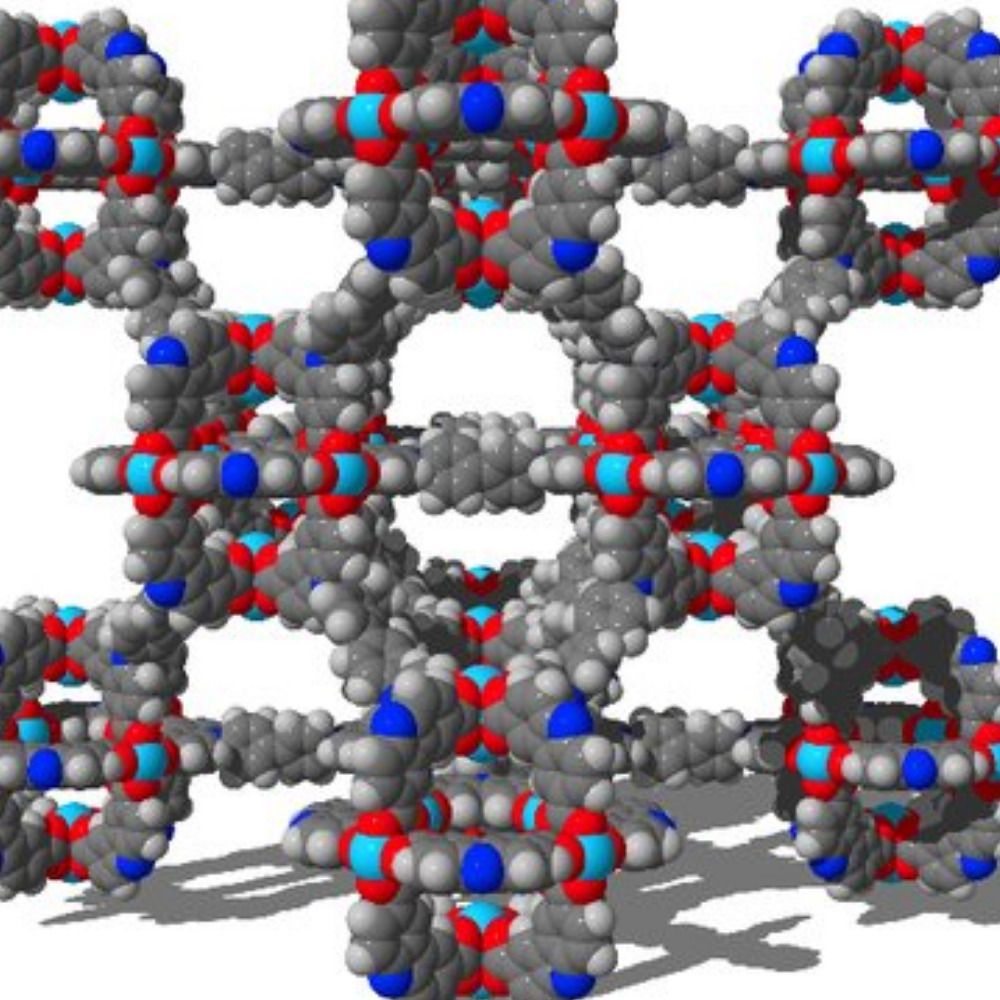
Nesting Charge Traps in Nanoporous Photoresponsive Thin Film Enables Molecular Recognition https://dx.doi.org/10.26434/chemrxiv-2025-b9szv?rft_dat=source%3Ddrss
December 7, 2025 at 12:13 PM
Nesting Charge Traps in Nanoporous Photoresponsive Thin Film Enables Molecular Recognition https://dx.doi.org/10.26434/chemrxiv-2025-b9szv?rft_dat=source%3Ddrss

## Accurate Prediction of Dynamic Surface Plasmon Resonance Shifts in Photoresponsive Molecules via Deep Neural Network Regression (DSPR-DNN)
**Abstract:** This paper proposes Deep Surface Plasmon Resonance (DSPR)-DNN, a novel approach for accurately predicting dynamic shifts in surface plasmon…
**Abstract:** This paper proposes Deep Surface Plasmon Resonance (DSPR)-DNN, a novel approach for accurately predicting dynamic shifts in surface plasmon…
## Accurate Prediction of Dynamic Surface Plasmon Resonance Shifts in Photoresponsive Molecules via Deep Neural Network Regression (DSPR-DNN)
**Abstract:** This paper proposes Deep Surface Plasmon Resonance (DSPR)-DNN, a novel approach for accurately predicting dynamic shifts in surface plasmon resonance (SPR) spectra exhibited by photoresponsive molecules adsorbed on metallic surfaces. Current analytical models for SPR data often struggle to account for complex interactions, temperature drift, and transient phenomena. DSPR-DNN leverages a deep neural network regression architecture, trained on a comprehensive dataset of simulated and experimentally acquired SPR data, to achieve significantly improved predictive accuracy and real-time monitoring capabilities, facilitating advancements in photo-switchable materials and optoelectronic devices.
freederia.com
November 28, 2025 at 6:22 AM
## Accurate Prediction of Dynamic Surface Plasmon Resonance Shifts in Photoresponsive Molecules via Deep Neural Network Regression (DSPR-DNN)
**Abstract:** This paper proposes Deep Surface Plasmon Resonance (DSPR)-DNN, a novel approach for accurately predicting dynamic shifts in surface plasmon…
**Abstract:** This paper proposes Deep Surface Plasmon Resonance (DSPR)-DNN, a novel approach for accurately predicting dynamic shifts in surface plasmon…

#RSCChemBio Issue 12 is now online and #openaccess!
In this issue: photoresponsive molecular tweezers, probing the role of LytG in cell wall metabolism, peroxidase-based proximal protein labelling, and much more!
📰Read the full issue here: pubs.rsc.org/en/journals/...
In this issue: photoresponsive molecular tweezers, probing the role of LytG in cell wall metabolism, peroxidase-based proximal protein labelling, and much more!
📰Read the full issue here: pubs.rsc.org/en/journals/...


November 27, 2025 at 11:16 AM
#RSCChemBio Issue 12 is now online and #openaccess!
In this issue: photoresponsive molecular tweezers, probing the role of LytG in cell wall metabolism, peroxidase-based proximal protein labelling, and much more!
📰Read the full issue here: pubs.rsc.org/en/journals/...
In this issue: photoresponsive molecular tweezers, probing the role of LytG in cell wall metabolism, peroxidase-based proximal protein labelling, and much more!
📰Read the full issue here: pubs.rsc.org/en/journals/...

Just published✨
An intriguing work from Rikuto Kanno @rikutokanno.bsky.social, Makoto Ouchi and Takaya Terashima at Kyoto U @univkyoto.bsky.social
Self-sorting systems of photoresponsive polymer micelles: isomerization drives reversible and switchable self-assembly
👉 pubs.rsc.org/en/content/a...
An intriguing work from Rikuto Kanno @rikutokanno.bsky.social, Makoto Ouchi and Takaya Terashima at Kyoto U @univkyoto.bsky.social
Self-sorting systems of photoresponsive polymer micelles: isomerization drives reversible and switchable self-assembly
👉 pubs.rsc.org/en/content/a...

November 27, 2025 at 7:53 AM
Just published✨
An intriguing work from Rikuto Kanno @rikutokanno.bsky.social, Makoto Ouchi and Takaya Terashima at Kyoto U @univkyoto.bsky.social
Self-sorting systems of photoresponsive polymer micelles: isomerization drives reversible and switchable self-assembly
👉 pubs.rsc.org/en/content/a...
An intriguing work from Rikuto Kanno @rikutokanno.bsky.social, Makoto Ouchi and Takaya Terashima at Kyoto U @univkyoto.bsky.social
Self-sorting systems of photoresponsive polymer micelles: isomerization drives reversible and switchable self-assembly
👉 pubs.rsc.org/en/content/a...
## 표면에서의 광화학적 데이터 저장: 다중 광응답 물질을 활용한 삼차원 패턴 읽기 및 오류 수정 코드 구현 연구
**초록:** 본 연구는 표면에서의 광화학적 데이터 저장 기술의 한계를 극복하고 고밀도 데이터 저장 가능성을 높이기 위해, 다중 광응답 물질(Multi-Photoresponsive Materials, MPRM)을 활용한 삼차원 패턴 구현 및 읽기 방법을 제시한다. 특히, NLO(Nonlinear Optics) 효과를 이용한 복잡한 삼차원 패턴 형성을 제어하고, 광학적 오류 발생 가능성을 최소화하기 위한 데이터 코딩…
**초록:** 본 연구는 표면에서의 광화학적 데이터 저장 기술의 한계를 극복하고 고밀도 데이터 저장 가능성을 높이기 위해, 다중 광응답 물질(Multi-Photoresponsive Materials, MPRM)을 활용한 삼차원 패턴 구현 및 읽기 방법을 제시한다. 특히, NLO(Nonlinear Optics) 효과를 이용한 복잡한 삼차원 패턴 형성을 제어하고, 광학적 오류 발생 가능성을 최소화하기 위한 데이터 코딩…
## 표면에서의 광화학적 데이터 저장: 다중 광응답 물질을 활용한 삼차원 패턴 읽기 및 오류 수정 코드 구현 연구
**초록:** 본 연구는 표면에서의 광화학적 데이터 저장 기술의 한계를 극복하고 고밀도 데이터 저장 가능성을 높이기 위해, 다중 광응답 물질(Multi-Photoresponsive Materials, MPRM)을 활용한 삼차원 패턴 구현 및 읽기 방법을 제시한다. 특히, NLO(Nonlinear Optics) 효과를 이용한 복잡한 삼차원 패턴 형성을 제어하고, 광학적 오류 발생 가능성을 최소화하기 위한 데이터 코딩 및 오류 수정 코드 식별 알고리즘을 개발한다. 제안 모델은 기존 광화학적 저장 방식에 비해 데이터 밀도와 안정성 측면에서 괄목할 만한 성능 향상을 가져올 것으로 기대된다.
freederia.com
November 27, 2025 at 3:57 AM
## 표면에서의 광화학적 데이터 저장: 다중 광응답 물질을 활용한 삼차원 패턴 읽기 및 오류 수정 코드 구현 연구
**초록:** 본 연구는 표면에서의 광화학적 데이터 저장 기술의 한계를 극복하고 고밀도 데이터 저장 가능성을 높이기 위해, 다중 광응답 물질(Multi-Photoresponsive Materials, MPRM)을 활용한 삼차원 패턴 구현 및 읽기 방법을 제시한다. 특히, NLO(Nonlinear Optics) 효과를 이용한 복잡한 삼차원 패턴 형성을 제어하고, 광학적 오류 발생 가능성을 최소화하기 위한 데이터 코딩…
**초록:** 본 연구는 표면에서의 광화학적 데이터 저장 기술의 한계를 극복하고 고밀도 데이터 저장 가능성을 높이기 위해, 다중 광응답 물질(Multi-Photoresponsive Materials, MPRM)을 활용한 삼차원 패턴 구현 및 읽기 방법을 제시한다. 특히, NLO(Nonlinear Optics) 효과를 이용한 복잡한 삼차원 패턴 형성을 제어하고, 광학적 오류 발생 가능성을 최소화하기 위한 데이터 코딩…
## 표면에서의 광감응성 단분자막 기반 고감도 바이오 센서 개발: 실시간 세포 신호 분석을 위한 다층 기능화 전략
**서론** 표면에서의 광감응성 단분자막은 빛의 에너지와 단분자 층의 특성을 결합하여 다양한 기능적 응용 가능성을 제공한다. 특히, 바이오 센서 분야에서 광감응성 물질의 뛰어난 감도와 선택성은 실시간 세포 신호 분석 및 질병 진단에 혁신적인 변화를 가져올 수 있다. 본 연구는 표면 플라즈몬 공명(SPR) 기술과 광감응성 단분자막(Photoresponsive SAM, pSAM)을 결합하여 고감도 바이오 센서를…
**서론** 표면에서의 광감응성 단분자막은 빛의 에너지와 단분자 층의 특성을 결합하여 다양한 기능적 응용 가능성을 제공한다. 특히, 바이오 센서 분야에서 광감응성 물질의 뛰어난 감도와 선택성은 실시간 세포 신호 분석 및 질병 진단에 혁신적인 변화를 가져올 수 있다. 본 연구는 표면 플라즈몬 공명(SPR) 기술과 광감응성 단분자막(Photoresponsive SAM, pSAM)을 결합하여 고감도 바이오 센서를…
## 표면에서의 광감응성 단분자막 기반 고감도 바이오 센서 개발: 실시간 세포 신호 분석을 위한 다층 기능화 전략
**서론** 표면에서의 광감응성 단분자막은 빛의 에너지와 단분자 층의 특성을 결합하여 다양한 기능적 응용 가능성을 제공한다. 특히, 바이오 센서 분야에서 광감응성 물질의 뛰어난 감도와 선택성은 실시간 세포 신호 분석 및 질병 진단에 혁신적인 변화를 가져올 수 있다. 본 연구는 표면 플라즈몬 공명(SPR) 기술과 광감응성 단분자막(Photoresponsive SAM, pSAM)을 결합하여 고감도 바이오 센서를 개발하고, 실시간 세포 신호 분석을 위한 다층 기능화 전략을 제시한다. 특히, 기존 연구의 한계점을 극복하기 위해 단분자막의 광유도 구조 변화, 세포와의 상호작용, 신호 증폭 메커니즘을 정량적으로 모델링하고 최적화하여, 현저히 향상된 바이오 센서 성능을 달성한다.
freederia.com
November 23, 2025 at 4:46 PM
## 표면에서의 광감응성 단분자막 기반 고감도 바이오 센서 개발: 실시간 세포 신호 분석을 위한 다층 기능화 전략
**서론** 표면에서의 광감응성 단분자막은 빛의 에너지와 단분자 층의 특성을 결합하여 다양한 기능적 응용 가능성을 제공한다. 특히, 바이오 센서 분야에서 광감응성 물질의 뛰어난 감도와 선택성은 실시간 세포 신호 분석 및 질병 진단에 혁신적인 변화를 가져올 수 있다. 본 연구는 표면 플라즈몬 공명(SPR) 기술과 광감응성 단분자막(Photoresponsive SAM, pSAM)을 결합하여 고감도 바이오 센서를…
**서론** 표면에서의 광감응성 단분자막은 빛의 에너지와 단분자 층의 특성을 결합하여 다양한 기능적 응용 가능성을 제공한다. 특히, 바이오 센서 분야에서 광감응성 물질의 뛰어난 감도와 선택성은 실시간 세포 신호 분석 및 질병 진단에 혁신적인 변화를 가져올 수 있다. 본 연구는 표면 플라즈몬 공명(SPR) 기술과 광감응성 단분자막(Photoresponsive SAM, pSAM)을 결합하여 고감도 바이오 센서를…

This study presents BCCe6, a multifunctional colloidal self-assembled crystal that integrates photodynamic and immunomodulatory functions as a novel platform for antibacterial therapy and tissue repair.
doi.org/10.59717/j.x...
#LifeSciences #photoresponsive #immunomodulation
doi.org/10.59717/j.x...
#LifeSciences #photoresponsive #immunomodulation

November 21, 2025 at 7:31 AM
This study presents BCCe6, a multifunctional colloidal self-assembled crystal that integrates photodynamic and immunomodulatory functions as a novel platform for antibacterial therapy and tissue repair.
doi.org/10.59717/j.x...
#LifeSciences #photoresponsive #immunomodulation
doi.org/10.59717/j.x...
#LifeSciences #photoresponsive #immunomodulation

A functionally complete logic gate in a soft photoresponsive hydrogel

A functionally complete logic gate in a soft photoresponsive hydrogel - Nature Communications
Photoresponsive hydrogels are of interest as candidates for materials that compute. Here the authors design a NAND logic gate based on the interactions of self-trapped laser beams in a hydrogel system...
www.nature.com
November 16, 2025 at 8:36 AM
A functionally complete logic gate in a soft photoresponsive hydrogel
Latest issue of curated #engineeredlivingmaterials feed:
biomed.news/bims-enlima/... #ELMs
via @biomednews.bsky.social #livingmaterials
includes research on: molecularly impermeable polymer, , soft photoresponsive hydrogel, pollen-inspired biopolymer-based multifunctional films, & more 🧪
biomed.news/bims-enlima/... #ELMs
via @biomednews.bsky.social #livingmaterials
includes research on: molecularly impermeable polymer, , soft photoresponsive hydrogel, pollen-inspired biopolymer-based multifunctional films, & more 🧪

A molecularly impermeable polymer from two-dimensional polyaramids - Nature
Two-dimensional polyaramid polymers are synthesized to form nanofilms that exhibit the lowest gas permeability of any polymer by orders of magnitude, despite lacking crystallinity, enabling molec...
www.nature.com
November 16, 2025 at 8:36 AM
Latest issue of curated #engineeredlivingmaterials feed:
biomed.news/bims-enlima/... #ELMs
via @biomednews.bsky.social #livingmaterials
includes research on: molecularly impermeable polymer, , soft photoresponsive hydrogel, pollen-inspired biopolymer-based multifunctional films, & more 🧪
biomed.news/bims-enlima/... #ELMs
via @biomednews.bsky.social #livingmaterials
includes research on: molecularly impermeable polymer, , soft photoresponsive hydrogel, pollen-inspired biopolymer-based multifunctional films, & more 🧪

The #OpenAccess paper providing the front cover is by Keiji Murayama, Hiroyuki Asanuma & co. from Nagoya University developing new photoresponsive nucleic acid-based nanomachines by the reversible photocycloaddition of 8-pyrenylvinylguanine to serinol nucleic acid
pubs.rsc.org/en/content/a...
pubs.rsc.org/en/content/a...
Reversible photocycloaddition of 8-pyrenylvinylguanine for photoreactive serinol nucleic acid (SNA)
Photoresponsive nanomachines are attractive components of functional nanodevices and nanosystems. To develop new photoresponsive nucleic acid-based nanomachines, we conjugated 8-pyrenylvinylguanine…
pubs.rsc.org
November 5, 2025 at 10:30 AM
The #OpenAccess paper providing the front cover is by Keiji Murayama, Hiroyuki Asanuma & co. from Nagoya University developing new photoresponsive nucleic acid-based nanomachines by the reversible photocycloaddition of 8-pyrenylvinylguanine to serinol nucleic acid
pubs.rsc.org/en/content/a...
pubs.rsc.org/en/content/a...

Collaborator René Steinbrecher et al. in Macromolecules: "Toward Fully #Photoresponsive #Amphiphilic #Polymers via #Azopyrazole-Functionalized #Polyacrylamides:
Macromolecules 2025, 58, 20, 11088–11098
doi.org/10.1021/acs....
Macromolecules 2025, 58, 20, 11088–11098
doi.org/10.1021/acs....

November 1, 2025 at 2:06 PM
Collaborator René Steinbrecher et al. in Macromolecules: "Toward Fully #Photoresponsive #Amphiphilic #Polymers via #Azopyrazole-Functionalized #Polyacrylamides:
Macromolecules 2025, 58, 20, 11088–11098
doi.org/10.1021/acs....
Macromolecules 2025, 58, 20, 11088–11098
doi.org/10.1021/acs....
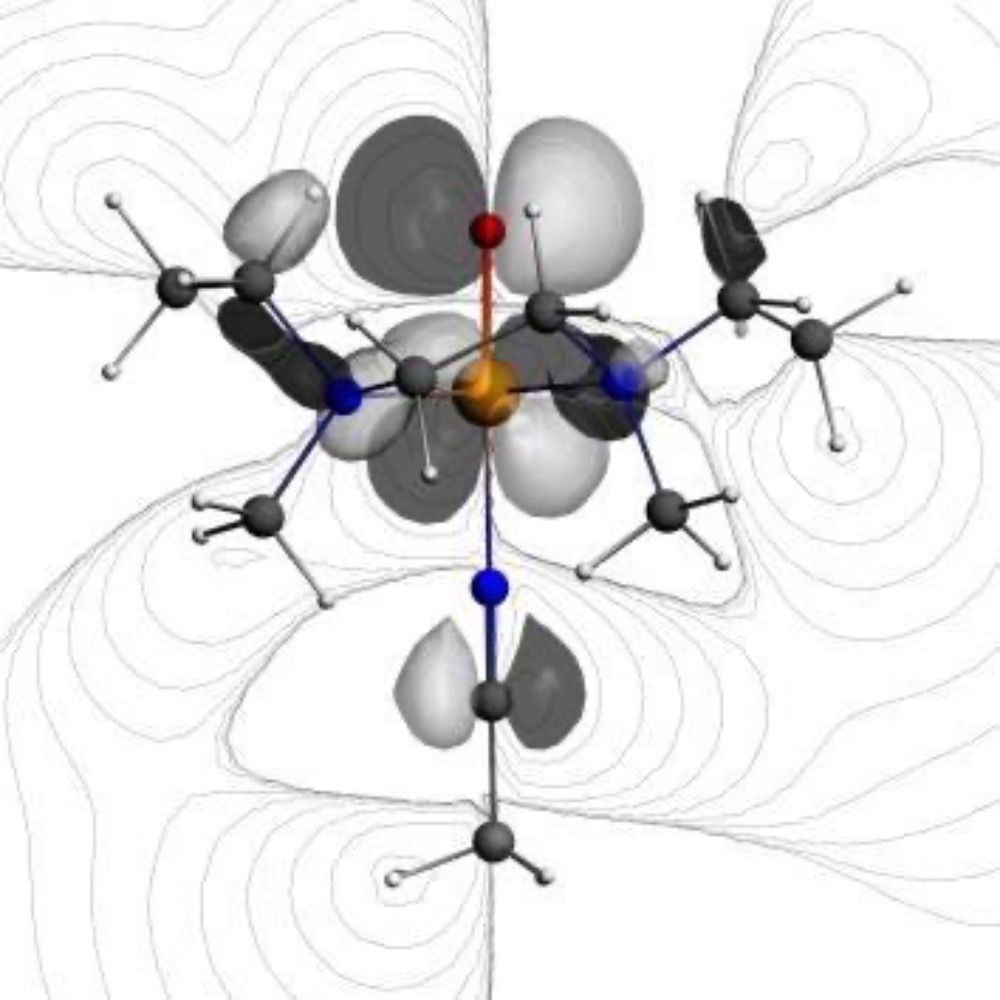
Engineering Magnetic Bistability: Solvent-Driven Photoresponsive Single-Chain Magnet Behavior in Fe2Co Coordination Polymer

Engineering Magnetic Bistability: Solvent-Driven Photoresponsive Single-Chain Magnet Behavior in Fe2Co Coordination Polymer - PubMed
Single-chain magnets (SCMs), characterized by slow magnetic relaxation, hold immense promise for future data storage and advanced materials. Integrating photoswitchable electron transfer coupled spin...
ift.tt
November 1, 2025 at 8:35 AM
Engineering Magnetic Bistability: Solvent-Driven Photoresponsive Single-Chain Magnet Behavior in Fe2Co Coordination Polymer

Inspired by the adaptability of the human eye, Georgia Tech biomedical engineers have created a soft lens that uses light-activated artificial muscles to adjust focus & make precise optical adjustments without electronics or batteries. b.gatech.edu/4nsPG1i

October 29, 2025 at 7:18 PM
Inspired by the adaptability of the human eye, Georgia Tech biomedical engineers have created a soft lens that uses light-activated artificial muscles to adjust focus & make precise optical adjustments without electronics or batteries. b.gatech.edu/4nsPG1i

This study developed a novel strategy to create photoresponsive block copolymer (BCP) assemblies using polystyrene-b-poly(4-vinylpyridine) (PS-b-P4VP) and azobenzene (Azo)-based additives under emulsion droplets.
October 27, 2025 at 12:53 PM
This study developed a novel strategy to create photoresponsive block copolymer (BCP) assemblies using polystyrene-b-poly(4-vinylpyridine) (PS-b-P4VP) and azobenzene (Azo)-based additives under emulsion droplets.

“Light them up: photoresponsive imine-containing systems” by Jiarong Wu and Jake L. Greenfield (doi.org/10.1039/D5SC...)

Light them up: photoresponsive imine-containing systems
The reversible covalent bond formation that underpins dynamic covalent chemistry (DCC) enables the construction of stimuli-responsive systems and the efficient assembly of complex architectures. While most DCC studies have focused on systems at thermodynamic equilibrium, there is growing interest in systems
doi.org
October 14, 2025 at 11:11 AM
“Light them up: photoresponsive imine-containing systems” by Jiarong Wu and Jake L. Greenfield (doi.org/10.1039/D5SC...)

🔦 Light Switch for Proteases💡
Controlling proteins with a light dimmer: This allows protein functions to be precisely modulated. Read more here 👉 doi.org/10.1039/D5CB00069F #Photoswitch #Photoresponsive #Taspase1 #ProteinManipulation
Controlling proteins with a light dimmer: This allows protein functions to be precisely modulated. Read more here 👉 doi.org/10.1039/D5CB00069F #Photoswitch #Photoresponsive #Taspase1 #ProteinManipulation

Photoresponsive molecular tweezers modulate Taspase 1 activity
Light serves as an exceptional stimulus for the precise spatiotemporal regulation of protein activity and protein–protein interactions. Here, we introduce a light-responsive supramolecular ligand syst...
doi.org
October 8, 2025 at 10:40 AM
🔦 Light Switch for Proteases💡
Controlling proteins with a light dimmer: This allows protein functions to be precisely modulated. Read more here 👉 doi.org/10.1039/D5CB00069F #Photoswitch #Photoresponsive #Taspase1 #ProteinManipulation
Controlling proteins with a light dimmer: This allows protein functions to be precisely modulated. Read more here 👉 doi.org/10.1039/D5CB00069F #Photoswitch #Photoresponsive #Taspase1 #ProteinManipulation
Check out this new Perspective in Chemical Science from @jiarongwu.bsky.social and @jakeylg.bsky.social (Universitat Würzburg, Germany)!
'Light them up: photoresponsive imine-containing systems'
Read it here for free: doi.org/10.1039/D5SC...
#ChemSciHOT #ChemSky
'Light them up: photoresponsive imine-containing systems'
Read it here for free: doi.org/10.1039/D5SC...
#ChemSciHOT #ChemSky

October 3, 2025 at 2:33 PM
Check out this new Perspective in Chemical Science from @jiarongwu.bsky.social and @jakeylg.bsky.social (Universitat Würzburg, Germany)!
'Light them up: photoresponsive imine-containing systems'
Read it here for free: doi.org/10.1039/D5SC...
#ChemSciHOT #ChemSky
'Light them up: photoresponsive imine-containing systems'
Read it here for free: doi.org/10.1039/D5SC...
#ChemSciHOT #ChemSky
NanoTAC is a #photoresponsive #nanomedicine integrating #PhotodynamicTherapy and PROTACs to silence HK2, reprogram #tumor metabolism, and achieve complete regression with lasting protection in #TNBC. #medsky
Read more in #STTT #OpenAccess: doi.org/10.1038/s413...
Read more in #STTT #OpenAccess: doi.org/10.1038/s413...
October 3, 2025 at 8:30 AM
NanoTAC is a #photoresponsive #nanomedicine integrating #PhotodynamicTherapy and PROTACs to silence HK2, reprogram #tumor metabolism, and achieve complete regression with lasting protection in #TNBC. #medsky
Read more in #STTT #OpenAccess: doi.org/10.1038/s413...
Read more in #STTT #OpenAccess: doi.org/10.1038/s413...
This research presents a novel photoresponsive hybrid system combining the M13 bacteriophage virus and a self-assembling peptide (A2Az).
September 30, 2025 at 3:01 PM
This research presents a novel photoresponsive hybrid system combining the M13 bacteriophage virus and a self-assembling peptide (A2Az).
Photoresponsive leaf-like structured two-dimensional metal-organic framework/nanocellulose crystal composites for efficient and rapid adsorption of pollutants from wastewater https://www.sciencedirect.com/science/article/pii/S1385894725095488
September 26, 2025 at 12:15 PM
Photoresponsive leaf-like structured two-dimensional metal-organic framework/nanocellulose crystal composites for efficient and rapid adsorption of pollutants from wastewater https://www.sciencedirect.com/science/article/pii/S1385894725095488