



Maxing out every “square inch” might well be great if you want to bring more platyhelminthes on your trip.
But if it’s maximizing volume for more stuff, then “cubic inches” would be the correct headline word.
apple.news/AvMIuWNYFSiy...
But if it’s maximizing volume for more stuff, then “cubic inches” would be the correct headline word.
apple.news/AvMIuWNYFSiy...

Max Out Every Square Inch of Your Suitcase With These Space-Saving Travel Hacks — Real Simple
We found packing solutions for hot hair tools, charging cables, jewelry, and more.
apple.news
January 18, 2026 at 2:51 PM
Maxing out every “square inch” might well be great if you want to bring more platyhelminthes on your trip.
But if it’s maximizing volume for more stuff, then “cubic inches” would be the correct headline word.
apple.news/AvMIuWNYFSiy...
But if it’s maximizing volume for more stuff, then “cubic inches” would be the correct headline word.
apple.news/AvMIuWNYFSiy...

oh shoot! it’s the platyhelminthes
January 18, 2026 at 5:57 AM
oh shoot! it’s the platyhelminthes

Pseudogeoplana sp. A terrestrial planarian we saw at night in the cloud forests of Monteverde, Costa Rica. At first, I thought it was a type of leach, but...it's my first Platyhelminthes! This genus has had very little work, so no species ID seems possible. It feeds on small #invertebrates.


January 12, 2026 at 8:20 PM
Pseudogeoplana sp. A terrestrial planarian we saw at night in the cloud forests of Monteverde, Costa Rica. At first, I thought it was a type of leach, but...it's my first Platyhelminthes! This genus has had very little work, so no species ID seems possible. It feeds on small #invertebrates.
Decoding the first mitogenomes of Polycelis (Platyhelminthes, Tricladida, Planariidae): genomic architecture, evolutionary dynamics, and phylogenomic implication https://pubmed.ncbi.nlm.nih.gov/41491790/
January 8, 2026 at 3:53 AM
Decoding the first mitogenomes of Polycelis (Platyhelminthes, Tricladida, Planariidae): genomic architecture, evolutionary dynamics, and phylogenomic implication https://pubmed.ncbi.nlm.nih.gov/41491790/
Decoding the first mitogenomes of Polycelis (Platyhelminthes, Tricladida, Planariidae): genomic architecture, evolutionary dynamics, and phylogenomic implication https://pubmed.ncbi.nlm.nih.gov/41491790/
January 7, 2026 at 4:49 AM
Decoding the first mitogenomes of Polycelis (Platyhelminthes, Tricladida, Planariidae): genomic architecture, evolutionary dynamics, and phylogenomic implication https://pubmed.ncbi.nlm.nih.gov/41491790/

Y’all ever just get the word platyhelminthes stuck in your brain
January 6, 2026 at 10:56 PM
Y’all ever just get the word platyhelminthes stuck in your brain

wriggling In we have Family Platyhelminthes, aka The Flatworms. specimens such as Glorious Worms, Tape Worms, Hammerhead worms and Ribbon Worms. more infamous but still apart of our world. #SonicThehedgehog #SonicOcs #Sonic_Elements_Species_Safari #AJTheElementalgod #Flatworms

January 6, 2026 at 5:32 PM
wriggling In we have Family Platyhelminthes, aka The Flatworms. specimens such as Glorious Worms, Tape Worms, Hammerhead worms and Ribbon Worms. more infamous but still apart of our world. #SonicThehedgehog #SonicOcs #Sonic_Elements_Species_Safari #AJTheElementalgod #Flatworms

I always thought of them a "Attack Blanket Platyhelminthes". I'm glad they got their own phylum.
December 22, 2025 at 12:50 AM
I always thought of them a "Attack Blanket Platyhelminthes". I'm glad they got their own phylum.
Hidden but not Forgotten: Molecular Diversity and Species Delimitation of Proseriata (Platyhelminthes: Rhabditophora) across the Brazilian Coastline, with Focus on Genus Kata https://pubmed.ncbi.nlm.nih.gov/41415002/
December 21, 2025 at 4:58 AM
Hidden but not Forgotten: Molecular Diversity and Species Delimitation of Proseriata (Platyhelminthes: Rhabditophora) across the Brazilian Coastline, with Focus on Genus Kata https://pubmed.ncbi.nlm.nih.gov/41415002/
Hidden but not Forgotten: Molecular Diversity and Species Delimitation of Proseriata (Platyhelminthes: Rhabditophora) across the Brazilian Coastline, with Focus on Genus Kata https://pubmed.ncbi.nlm.nih.gov/41415002/
December 20, 2025 at 4:58 AM
Hidden but not Forgotten: Molecular Diversity and Species Delimitation of Proseriata (Platyhelminthes: Rhabditophora) across the Brazilian Coastline, with Focus on Genus Kata https://pubmed.ncbi.nlm.nih.gov/41415002/

Platyhelminthes if they locked tf in

December 18, 2025 at 9:49 PM
Platyhelminthes if they locked tf in
A cutie of a flatworm (Platyhelminthes).
#marineplankton 🦑
#marineplankton 🦑
December 10, 2025 at 8:10 PM
A cutie of a flatworm (Platyhelminthes).
#marineplankton 🦑
#marineplankton 🦑

tag yourself! I’m A - “Dalyella sp. (Platyhelminthes) from a cave in Toscana (Italy), 250 µm”
it’s so rooooound! 😍
it’s so rooooound! 😍

It’s #MeiofaunaMonday! “Meiofauna” are microbial eukaryotes with a body size <1 mm (these animals and protists are as small as specks of dust you might see on a glass coffee table). Almost all of the 38 major animal groups have at least some small-bodied meiofauna species.

December 1, 2025 at 3:37 PM
tag yourself! I’m A - “Dalyella sp. (Platyhelminthes) from a cave in Toscana (Italy), 250 µm”
it’s so rooooound! 😍
it’s so rooooound! 😍


An adorable Platyhelminthes! I see that the classification has changed, so this is now subphylum Rhabditophora? Anyhoo, a real cutie!
#marineplankton 🦑
#marineplankton 🦑
November 28, 2025 at 8:25 PM
An adorable Platyhelminthes! I see that the classification has changed, so this is now subphylum Rhabditophora? Anyhoo, a real cutie!
#marineplankton 🦑
#marineplankton 🦑

Members of the phylum Platyhelminthes--also known as the flatworms--have more advanced nervous systems than do all those who are MAGA
November 28, 2025 at 12:13 AM
Members of the phylum Platyhelminthes--also known as the flatworms--have more advanced nervous systems than do all those who are MAGA

Agreed, and People of flexible values for influence accumulation really need their own word. Not personally a fan of platyhelminthes nor nematodes so much (annelids are pretty cool) but they all serve a fundamental purpose. Maher and his ilk do not
November 16, 2025 at 10:03 PM
Agreed, and People of flexible values for influence accumulation really need their own word. Not personally a fan of platyhelminthes nor nematodes so much (annelids are pretty cool) but they all serve a fundamental purpose. Maher and his ilk do not

Australian Flatworms | The Diverse World of Platyhelminthes in Australia
November 15, 2025 at 8:00 PM
Australian Flatworms | The Diverse World of Platyhelminthes in Australia

ICYMI: Recruitment and induction of settlement of planktonic juveniles of the oyster flatworm stylochus orientalis bock platyhelminthes polycladida

Recruitment and induction of settlement of planktonic juveniles of the oyster flatworm stylochus orientalis bock platyhelminthes polycladida
The planktonic juveniles of the oyster flatworm, Stylochus orientalis are induced to settle by its prey species, the Pacific oyster, Crassostrea gigas. The two major periods of the settlement of the planktonic juveniles are fall and early s...
eurekamag.com
November 14, 2025 at 9:28 AM
ICYMI: Recruitment and induction of settlement of planktonic juveniles of the oyster flatworm stylochus orientalis bock platyhelminthes polycladida
Recruitment and induction of settlement of planktonic juveniles of the oyster flatworm stylochus orientalis bock platyhelminthes polycladida
Recruitment and induction of settlement of planktonic juveniles of the oyster flatworm stylochus orientalis bock platyhelminthes polycladida
The planktonic juveniles of the oyster flatworm, Stylochus orientalis are induced to settle by its prey species, the Pacific oyster, Crassostrea gigas. The two major periods of the settlement of the planktonic juveniles are fall and early s...
eurekamag.com
November 13, 2025 at 9:27 AM
Recruitment and induction of settlement of planktonic juveniles of the oyster flatworm stylochus orientalis bock platyhelminthes polycladida

In @biolinvasions.bsky.social 27(10)
"Co-occurrence patterns of introduced terrestrial flatworms in metropolitan France revealed by citizen science"
Fourcade,Y., @jean-lou-justine.bsky.social @isyeb.mnhn.fr
et al.
#Platyhelminthes
#Citizen_science
#Invasion
#Soil_ecosystems
🪱 doi.org/10.1007/s105...
"Co-occurrence patterns of introduced terrestrial flatworms in metropolitan France revealed by citizen science"
Fourcade,Y., @jean-lou-justine.bsky.social @isyeb.mnhn.fr
et al.
#Platyhelminthes
#Citizen_science
#Invasion
#Soil_ecosystems
🪱 doi.org/10.1007/s105...

Co-occurrence patterns of introduced terrestrial flatworms in metropolitan France revealed by citizen science - Biological Invasions
Terrestrial flatworms are a group of successful carnivorous invaders that have been introduced to many regions outside their native range. In France, six different species have been recorded in signif...
doi.org
October 20, 2025 at 7:49 AM
In @biolinvasions.bsky.social 27(10)
"Co-occurrence patterns of introduced terrestrial flatworms in metropolitan France revealed by citizen science"
Fourcade,Y., @jean-lou-justine.bsky.social @isyeb.mnhn.fr
et al.
#Platyhelminthes
#Citizen_science
#Invasion
#Soil_ecosystems
🪱 doi.org/10.1007/s105...
"Co-occurrence patterns of introduced terrestrial flatworms in metropolitan France revealed by citizen science"
Fourcade,Y., @jean-lou-justine.bsky.social @isyeb.mnhn.fr
et al.
#Platyhelminthes
#Citizen_science
#Invasion
#Soil_ecosystems
🪱 doi.org/10.1007/s105...

Here’s a fun word you can just say whenever you feel like it:
“Platyhelminthes”
“Platyhelminthes”
October 19, 2025 at 3:30 AM
Here’s a fun word you can just say whenever you feel like it:
“Platyhelminthes”
“Platyhelminthes”
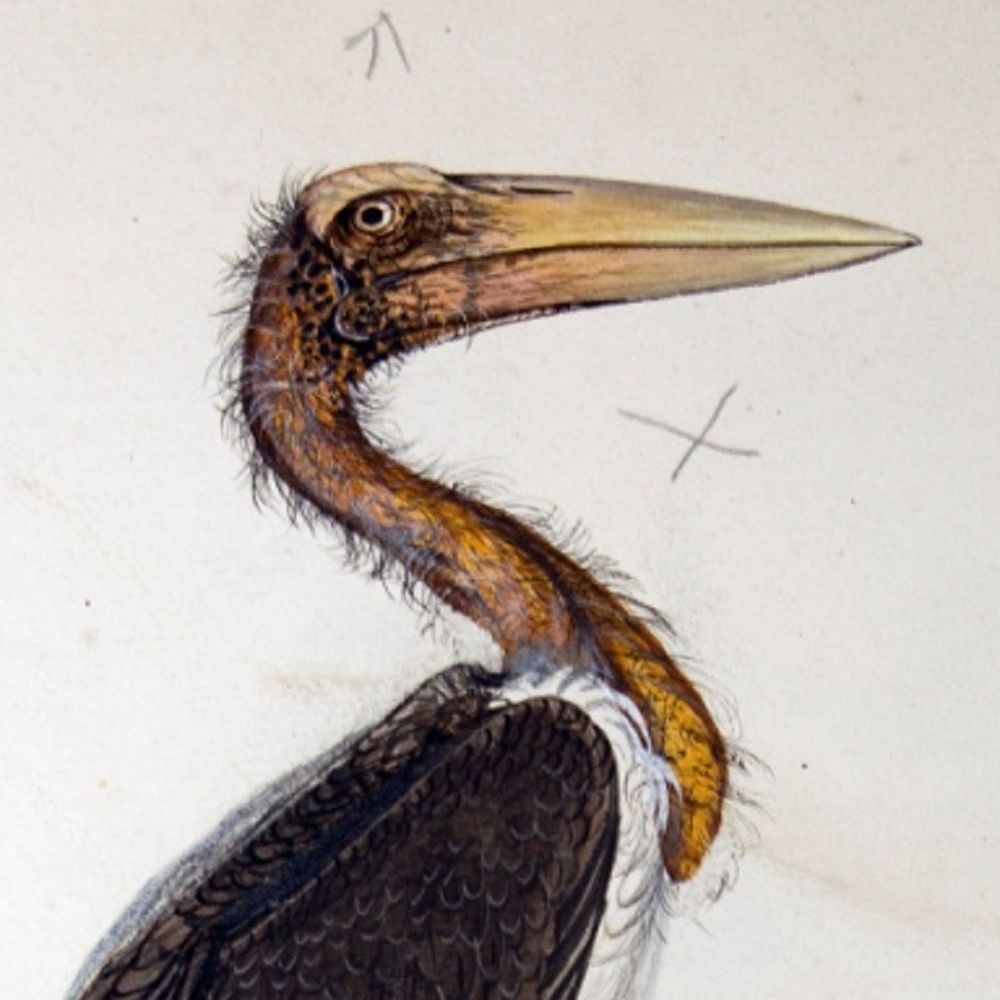
Differences in gonadal sex allocation in a simultaneous #hermaphrodite commensal #flatworm under field conditions zslpublications.onlinelibrary.wiley.com/doi/10.1111/... #Platyhelminthes

October 15, 2025 at 3:50 PM
Differences in gonadal sex allocation in a simultaneous #hermaphrodite commensal #flatworm under field conditions zslpublications.onlinelibrary.wiley.com/doi/10.1111/... #Platyhelminthes
@biolinvasions.bsky.social 27(10)
"Co-occurrence patterns of introduced terrestrial flatworms in metropolitan France revealed by citizen science"
#Platyhelminthes #Citizen_science #invasive_species
Fourcade, Y., @jean-lou-justine.bsky.social @isyeb.mnhn.fr et al.
🪱 link.springer.com/article/10.1...
"Co-occurrence patterns of introduced terrestrial flatworms in metropolitan France revealed by citizen science"
#Platyhelminthes #Citizen_science #invasive_species
Fourcade, Y., @jean-lou-justine.bsky.social @isyeb.mnhn.fr et al.
🪱 link.springer.com/article/10.1...
Co-occurrence patterns of introduced terrestrial flatworms in metropolitan France revealed by citizen science - Biological Invasions
Terrestrial flatworms are a group of successful carnivorous invaders that have been introduced to many regions outside their native range. In France, six different species have been recorded in significant numbers over the past 20 years, with a recent increase in observations. These include predators of earthworms, gastropods and soil arthropods. Their presence raises concerns about their potential to disturb communities of soil-dwelling organisms. Here, we aimed to describe patterns of co-occurrence between these species in France, using a national inventory of alien flatworms coupled with estimates of potential co-occurrence derived from ecological niche models trained at the global scale. We showed that, although alien predatory flatworms are relatively widespread in France, they co-occur less frequently than expected simply based on each species’ respective environmental suitability, i.e., they tend to be found alone and not in association with other alien flatworm species. However, ecological niche models indicate a high potential for more frequent co-occurrences in the future. We hypothesize that their limited dispersal ability and their relatively recent introduction has confined most species close to their introduction sites. However, if they eventually fill out their potential range, predators of different taxonomic groups will co-occur more frequently, leading to greater predation pressure in invaded ecosystems. Our conclusions shed light on the current and future co-occurrence patterns of alien predatory flatworms in France. Understanding how they translate in the field in terms of predation and competitive interactions will be crucial for predicting the impact of flatworm invasion on soil ecosystems.
link.springer.com
October 9, 2025 at 11:11 AM
@biolinvasions.bsky.social 27(10)
"Co-occurrence patterns of introduced terrestrial flatworms in metropolitan France revealed by citizen science"
#Platyhelminthes #Citizen_science #invasive_species
Fourcade, Y., @jean-lou-justine.bsky.social @isyeb.mnhn.fr et al.
🪱 link.springer.com/article/10.1...
"Co-occurrence patterns of introduced terrestrial flatworms in metropolitan France revealed by citizen science"
#Platyhelminthes #Citizen_science #invasive_species
Fourcade, Y., @jean-lou-justine.bsky.social @isyeb.mnhn.fr et al.
🪱 link.springer.com/article/10.1...
This little müller’s larva (a Platyhelminthes) is stuck in a copepod moult! I wonder if it’s dizzy? Sound on!
#marineplankton 🦑
#marineplankton 🦑
October 6, 2025 at 6:38 PM
This little müller’s larva (a Platyhelminthes) is stuck in a copepod moult! I wonder if it’s dizzy? Sound on!
#marineplankton 🦑
#marineplankton 🦑