



Genomes of the Key Vectors of West Nile Virus in the Mediterranean Basin #mosquito 🦟 academic.oup.com/gbe/article/... @ergabiodiv.bsky.social @biogeneurope.bsky.social @ebpgenome.bsky.social #biodiversity #genomics

ERGA-BGE Genomes of Culex laticinctus, Culex modestus, Culex perexiguus, and Culex theileri: Unveiling the Genomes of the Key Vectors of West Nile Virus in the Mediterranean Basin
Abstract. The reference genomes of Culex laticinctus, Culex modestus, Culex perexiguus, and Culex theileri offer crucial resources for exploring the geneti
academic.oup.com
February 7, 2026 at 12:01 PM
Genomes of the Key Vectors of West Nile Virus in the Mediterranean Basin #mosquito 🦟 academic.oup.com/gbe/article/... @ergabiodiv.bsky.social @biogeneurope.bsky.social @ebpgenome.bsky.social #biodiversity #genomics

Hennepin County faced a record year for West Nile virus in 2025, prompting the Metropolitan Mosquito Control District to implement game-changing strategies to combat this deadly disease.
Get the details
#HennepinCounty #MN #DiseasePrevention #PublicHealth #CitizenPortal #CommunityOutreach
Get the details
#HennepinCounty #MN #DiseasePrevention #PublicHealth #CitizenPortal #CommunityOutreach

Metropolitan Mosquito Control District warns of record West Nile year; shifts tire pickup to drop-off events
At a Feb. 5 Hennepin County committee meeting, the Metropolitan Mosquito Control District reported a record West Nile year in the district and outlined program changes including expanded drone use, large-scale larval control and a shift to community tire drop-off events to reduce staff burden.
citizenportal.ai
February 7, 2026 at 9:27 AM
Hennepin County faced a record year for West Nile virus in 2025, prompting the Metropolitan Mosquito Control District to implement game-changing strategies to combat this deadly disease.
Get the details
#HennepinCounty #MN #DiseasePrevention #PublicHealth #CitizenPortal #CommunityOutreach
Get the details
#HennepinCounty #MN #DiseasePrevention #PublicHealth #CitizenPortal #CommunityOutreach

In the context of viral encephalitis, microglia can have both protective and detrimental roles, mediating synaptic loss (as seen in West Nile Virus infection) or contributing to neuroinflammation and neuronal damage (as in HIV-associated neurocognitive disorders and Japanese encephalitis)
February 7, 2026 at 9:03 AM
In the context of viral encephalitis, microglia can have both protective and detrimental roles, mediating synaptic loss (as seen in West Nile Virus infection) or contributing to neuroinflammation and neuronal damage (as in HIV-associated neurocognitive disorders and Japanese encephalitis)

🦟🏔️ West Nile virus has reached Switzerland.
In late 2025, Ticino confirmed its first locally acquired human case after the virus was found in local mosquitoes and birds—another sign that climate‑driven vector diseases are now Europe’s business too.
In late 2025, Ticino confirmed its first locally acquired human case after the virus was found in local mosquitoes and birds—another sign that climate‑driven vector diseases are now Europe’s business too.
February 6, 2026 at 3:40 PM
🦟🏔️ West Nile virus has reached Switzerland.
In late 2025, Ticino confirmed its first locally acquired human case after the virus was found in local mosquitoes and birds—another sign that climate‑driven vector diseases are now Europe’s business too.
In late 2025, Ticino confirmed its first locally acquired human case after the virus was found in local mosquitoes and birds—another sign that climate‑driven vector diseases are now Europe’s business too.

📊 WWSCAN Weekly Data:
Rare pathogens overview: Measles, Candida auris, Hepatitis A had at least one detection in the 424 samples collected in the past 10 days. Our other rare pathogens (H5 influenza marker, Mpox Clade Ib, Mpox clade II, and West Nile Virus) did not.🛟😷🧪
Rare pathogens overview: Measles, Candida auris, Hepatitis A had at least one detection in the 424 samples collected in the past 10 days. Our other rare pathogens (H5 influenza marker, Mpox Clade Ib, Mpox clade II, and West Nile Virus) did not.🛟😷🧪

February 5, 2026 at 6:03 PM
📊 WWSCAN Weekly Data:
Rare pathogens overview: Measles, Candida auris, Hepatitis A had at least one detection in the 424 samples collected in the past 10 days. Our other rare pathogens (H5 influenza marker, Mpox Clade Ib, Mpox clade II, and West Nile Virus) did not.🛟😷🧪
Rare pathogens overview: Measles, Candida auris, Hepatitis A had at least one detection in the 424 samples collected in the past 10 days. Our other rare pathogens (H5 influenza marker, Mpox Clade Ib, Mpox clade II, and West Nile Virus) did not.🛟😷🧪

Not all West Nile virus lineages behave alike: vector competence and minimum infectious dose differences between lineages 1 and 2 bioRxivpreprint

Not all West Nile virus lineages behave alike: vector competence and minimum infectious dose differences between lineages 1 and 2
The globally distributed arbovirus West Nile virus (WNV) continues to expand across Europe, with rising numbers of human cases and an increasingly broad geographic distribution. WNV is primarily transmitted by mosquitoes of the genus Culex. Out of nine WNV lineages, human pathogenicity has been clearly established for lineages 1 and 2, but differences in their transmission dynamics, such as minimal infectious dose and transmission efficiency, remain poorly understood. In this study, we investigated how viral lineage, mosquito species, and blood meal titer influence the vector competence of two primary WNV vectors from Europe, Cx. pipiens biotype pipiens and Cx. torrentium, as well as the invasive mosquito species Aedes albopictus. Female mosquitoes were fed with increasing blood meal titers containing either of the WNV lineages. After an incubation period of 14 days at a mean temperature of 24{degrees}C, mosquito body titers were quantified, and the presence of infectious viral particles in the saliva was assessed. Our results revealed a clear difference between the two lineages. Lineage 2 resulted in higher transmission efficiencies across all three species and required lower infectious doses to cause transmission. Among the tested species, Cx. torrentium proved to be a highly competent vector (max. transmission efficiency = 30%, minimum infectious dose = 105 TCID50/mL), despite its underrepresentation in research. These findings provide detailed insights into how viral lineage, mosquito species, and blood meal titer might shape WNV transmission, informing future risk assessments and efforts to mitigate WNV transmission in Europe.
dlvr.it
February 5, 2026 at 10:23 AM
Not all West Nile virus lineages behave alike: vector competence and minimum infectious dose differences between lineages 1 and 2 bioRxivpreprint
Not all West Nile virus lineages behave alike: vector competence and minimum infectious dose differences between lineages 1 and 2 bioRxivpreprint
Not all West Nile virus lineages behave alike: vector competence and minimum infectious dose differences between lineages 1 and 2
The globally distributed arbovirus West Nile virus (WNV) continues to expand across Europe, with rising numbers of human cases and an increasingly broad geographic distribution. WNV is primarily transmitted by mosquitoes of the genus Culex. Out of nine WNV lineages, human pathogenicity has been clearly established for lineages 1 and 2, but differences in their transmission dynamics, such as minimal infectious dose and transmission efficiency, remain poorly understood. In this study, we investigated how viral lineage, mosquito species, and blood meal titer influence the vector competence of two primary WNV vectors from Europe, Cx. pipiens biotype pipiens and Cx. torrentium, as well as the invasive mosquito species Aedes albopictus. Female mosquitoes were fed with increasing blood meal titers containing either of the WNV lineages. After an incubation period of 14 days at a mean temperature of 24{degrees}C, mosquito body titers were quantified, and the presence of infectious viral particles in the saliva was assessed. Our results revealed a clear difference between the two lineages. Lineage 2 resulted in higher transmission efficiencies across all three species and required lower infectious doses to cause transmission. Among the tested species, Cx. torrentium proved to be a highly competent vector (max. transmission efficiency = 30%, minimum infectious dose = 105 TCID50/mL), despite its underrepresentation in research. These findings provide detailed insights into how viral lineage, mosquito species, and blood meal titer might shape WNV transmission, informing future risk assessments and efforts to mitigate WNV transmission in Europe.
dlvr.it
February 4, 2026 at 3:22 AM
Not all West Nile virus lineages behave alike: vector competence and minimum infectious dose differences between lineages 1 and 2 bioRxivpreprint

Not all West Nile virus lineages behave alike: vector competence and minimum infectious dose differences between lineages 1 and 2 https://www.biorxiv.org/content/10.64898/2026.02.03.700853v1
February 4, 2026 at 3:16 AM
Not all West Nile virus lineages behave alike: vector competence and minimum infectious dose differences between lineages 1 and 2 https://www.biorxiv.org/content/10.64898/2026.02.03.700853v1

Not all West Nile virus lineages behave alike: vector competence and minimum infectious dose differences between lineages 1 and 2 https://www.biorxiv.org/content/10.64898/2026.02.03.700853v1
February 4, 2026 at 3:16 AM
Not all West Nile virus lineages behave alike: vector competence and minimum infectious dose differences between lineages 1 and 2 https://www.biorxiv.org/content/10.64898/2026.02.03.700853v1

MyD88 signaling in myeloid cells induces gastrointestinal tract injury and systemic inflammation after West Nile virus infection

MyD88 signaling in myeloid cells induces gastrointestinal tract injury and systemic inflammation after West Nile virus infection
Lin et al. show that in the setting of type I IFN signaling deficiency, IL-1R and MyD88 signaling in hematopoietic cells drives WNV pathogenesis. Infected myeloid cells, including monocytes and macrophages, and inflammasome activation contribute to gut barrier injury, liver damage, cytokine accumulation in serum, and brain injury.
dlvr.it
February 3, 2026 at 8:50 PM
MyD88 signaling in myeloid cells induces gastrointestinal tract injury and systemic inflammation after West Nile virus infection
Where I live, this lack of (evidence for?) colder arctic blasts is actually bad news. As winters warm, we're going to keep getting worse Lime Disease and West Nile Virus. I have better (and more established) tools to deal with the cold. This is probably true from 40 deg N and up.
February 3, 2026 at 3:09 PM
Where I live, this lack of (evidence for?) colder arctic blasts is actually bad news. As winters warm, we're going to keep getting worse Lime Disease and West Nile Virus. I have better (and more established) tools to deal with the cold. This is probably true from 40 deg N and up.

Join us for the next webinar in our LWNVIVAT series featuring Yannick Simonin, presenting “Integrated approach for monitoring West Nile virus and Usutu virus in Southern France.”
📅 February 17th
⏰ 3:00 PM (Online)
💻 Free & open to all
🔗 Register here: forms.office.com/e/L9VEQMyxvt
📅 February 17th
⏰ 3:00 PM (Online)
💻 Free & open to all
🔗 Register here: forms.office.com/e/L9VEQMyxvt

February 3, 2026 at 2:19 PM
Join us for the next webinar in our LWNVIVAT series featuring Yannick Simonin, presenting “Integrated approach for monitoring West Nile virus and Usutu virus in Southern France.”
📅 February 17th
⏰ 3:00 PM (Online)
💻 Free & open to all
🔗 Register here: forms.office.com/e/L9VEQMyxvt
📅 February 17th
⏰ 3:00 PM (Online)
💻 Free & open to all
🔗 Register here: forms.office.com/e/L9VEQMyxvt

New paper I got to help with: Molecular surveillance supports differing roles for Culex pipiens and Culex restuans (Diptera: Culicidae) in West Nile virus transmission in Chicago, Illinois
They may have different roles, but no evidence of a public health importance . . . yet . . .
They may have different roles, but no evidence of a public health importance . . . yet . . .

Molecular surveillance supports differing roles for Culex pipiens and Culex restuans (Diptera: Culicidae) in West Nile virus transmission in Chicago, Illinois
Abstract. The Chicago metropolitan area is a hotspot for human West Nile virus (WNV) cases. Despite extensive surveillance and research, predicting WNV cas
academic.oup.com
February 2, 2026 at 9:43 PM
New paper I got to help with: Molecular surveillance supports differing roles for Culex pipiens and Culex restuans (Diptera: Culicidae) in West Nile virus transmission in Chicago, Illinois
They may have different roles, but no evidence of a public health importance . . . yet . . .
They may have different roles, but no evidence of a public health importance . . . yet . . .
NEW PAPER OUT!
Pathogenicity assessment of Spanish West Nile virus isolates of lineages 1 and 2 in a Swiss mouse model
doi.org/10.1016/j.ve...
Pathogenicity assessment of Spanish West Nile virus isolates of lineages 1 and 2 in a Swiss mouse model
doi.org/10.1016/j.ve...


January 31, 2026 at 8:39 AM
NEW PAPER OUT!
Pathogenicity assessment of Spanish West Nile virus isolates of lineages 1 and 2 in a Swiss mouse model
doi.org/10.1016/j.ve...
Pathogenicity assessment of Spanish West Nile virus isolates of lineages 1 and 2 in a Swiss mouse model
doi.org/10.1016/j.ve...
📊 WWSCAN Weekly Data:
Rare pathogens overview: Measles, Candida auris, Hepatitis A, Influenza A H5 Marker and Mpox clade II had at least one detection in the 352 samples collected in the past 10 days. Our other rare pathogens (Mpox Clade Ib and West Nile Virus) did not. 🛟😷🧪
Rare pathogens overview: Measles, Candida auris, Hepatitis A, Influenza A H5 Marker and Mpox clade II had at least one detection in the 352 samples collected in the past 10 days. Our other rare pathogens (Mpox Clade Ib and West Nile Virus) did not. 🛟😷🧪

January 30, 2026 at 5:37 PM
📊 WWSCAN Weekly Data:
Rare pathogens overview: Measles, Candida auris, Hepatitis A, Influenza A H5 Marker and Mpox clade II had at least one detection in the 352 samples collected in the past 10 days. Our other rare pathogens (Mpox Clade Ib and West Nile Virus) did not. 🛟😷🧪
Rare pathogens overview: Measles, Candida auris, Hepatitis A, Influenza A H5 Marker and Mpox clade II had at least one detection in the 352 samples collected in the past 10 days. Our other rare pathogens (Mpox Clade Ib and West Nile Virus) did not. 🛟😷🧪

🦖 Alertas | 29 enero
🌍 Hoy destacamos: alertas por leishmaniosis visceral, sarampión en Guatemala, detección de virus West Nile en aves en Bélgica y cólera en Malawi, todas bajo vigilancia activa.
🔗 hradar.com
🔗 globalriskatlas.com
#AlertasSanitarias #SaludGlobal #HRadar #GlobalRiskAtlas 🧬🦟🌍
🌍 Hoy destacamos: alertas por leishmaniosis visceral, sarampión en Guatemala, detección de virus West Nile en aves en Bélgica y cólera en Malawi, todas bajo vigilancia activa.
🔗 hradar.com
🔗 globalriskatlas.com
#AlertasSanitarias #SaludGlobal #HRadar #GlobalRiskAtlas 🧬🦟🌍
January 29, 2026 at 10:38 PM
🦖 Alertas | 29 enero
🌍 Hoy destacamos: alertas por leishmaniosis visceral, sarampión en Guatemala, detección de virus West Nile en aves en Bélgica y cólera en Malawi, todas bajo vigilancia activa.
🔗 hradar.com
🔗 globalriskatlas.com
#AlertasSanitarias #SaludGlobal #HRadar #GlobalRiskAtlas 🧬🦟🌍
🌍 Hoy destacamos: alertas por leishmaniosis visceral, sarampión en Guatemala, detección de virus West Nile en aves en Bélgica y cólera en Malawi, todas bajo vigilancia activa.
🔗 hradar.com
🔗 globalriskatlas.com
#AlertasSanitarias #SaludGlobal #HRadar #GlobalRiskAtlas 🧬🦟🌍

Populations of dangerous, disease-carrying mosquitos are exploding in New Mexico. Scientific studies link this spread to climate change. Chapter Dir. Camilla Feibelman spoke to a senate committee today, calling West Nile virus a “price” of climate change.
January 29, 2026 at 8:51 PM
Populations of dangerous, disease-carrying mosquitos are exploding in New Mexico. Scientific studies link this spread to climate change. Chapter Dir. Camilla Feibelman spoke to a senate committee today, calling West Nile virus a “price” of climate change.

Crows are still recovering from West Nile virus. Riverside CA lost about 99% of its crows in that epidemic a couple of decades ago, and crows have recovered slowly because of continuing West Nile.
January 29, 2026 at 6:24 PM
Crows are still recovering from West Nile virus. Riverside CA lost about 99% of its crows in that epidemic a couple of decades ago, and crows have recovered slowly because of continuing West Nile.

In our new issue, researchers from Belgium report on the detection of West Nile Virus #WNV in several wild #birds over a period of 3 months during 2025 - evidence for them of local WNV circulation in Belgium
🐦 bit.ly/EUS314
#EpiSky #IDSky #MedSky #MicroSky #PublicHealth 🧪🛟🧫
@sciensano.be
🐦 bit.ly/EUS314
#EpiSky #IDSky #MedSky #MicroSky #PublicHealth 🧪🛟🧫
@sciensano.be

January 29, 2026 at 4:33 PM
In our new issue, researchers from Belgium report on the detection of West Nile Virus #WNV in several wild #birds over a period of 3 months during 2025 - evidence for them of local WNV circulation in Belgium
🐦 bit.ly/EUS314
#EpiSky #IDSky #MedSky #MicroSky #PublicHealth 🧪🛟🧫
@sciensano.be
🐦 bit.ly/EUS314
#EpiSky #IDSky #MedSky #MicroSky #PublicHealth 🧪🛟🧫
@sciensano.be
First detection of West Nile virus in Belgium through wild bird surveillance, Belgium, 2025 - www.eurosurveillance.org/content/10.2...
Eurosurveillance | First detection of West Nile virus in Belgium through wild bird surveillance, Belgium, 2025
In August 2025, West Nile virus (WNV) was detected for the first time in Belgium through a monitoring programme in wild birds, with three corvids testing positive by RT-qPCR. In September and October, four additional infected birds were identified. Whole genome sequencing classified the strain as WNV lineage 2, consistent with strains circulating elsewhere in Europe. These detections provide evidence of local WNV circulation with important implications for animal and public health preparedness and surveillance during the 2026 mosquito season.
www.eurosurveillance.org
January 29, 2026 at 4:21 PM
First detection of West Nile virus in Belgium through wild bird surveillance, Belgium, 2025 - www.eurosurveillance.org/content/10.2...

You can say that again!
Eastern Equine Encephalitis (EEE):
West Nile Virus (WNV):
Dengue:
Zika Virus:
Malaria:
Yellow Fever:
Eastern Equine Encephalitis (EEE):
West Nile Virus (WNV):
Dengue:
Zika Virus:
Malaria:
Yellow Fever:
January 27, 2026 at 8:31 PM
You can say that again!
Eastern Equine Encephalitis (EEE):
West Nile Virus (WNV):
Dengue:
Zika Virus:
Malaria:
Yellow Fever:
Eastern Equine Encephalitis (EEE):
West Nile Virus (WNV):
Dengue:
Zika Virus:
Malaria:
Yellow Fever:
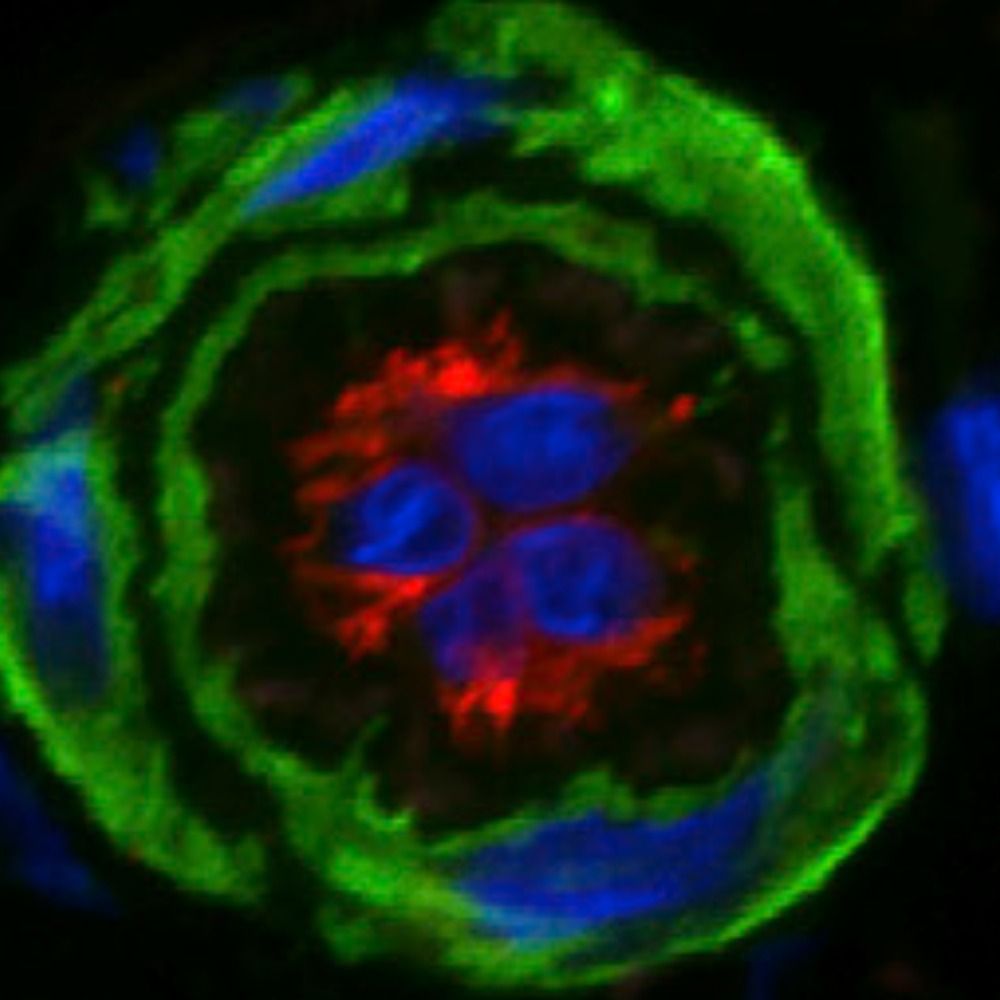
hPSC-derived #BloodBrainBarrier (Neural Crest-derived Pericyte + Endothelial cell) models Flavivirus Neuroinvasion
Powassan virus or Japanese encephalitis virus, not West Nile virus, ⏬BBB in vitro
WNV infection
⏬OXPHOS transcripts in Pericyte, not in EC
#iScience 2026
www.cell.com/iscience/ful...
Powassan virus or Japanese encephalitis virus, not West Nile virus, ⏬BBB in vitro
WNV infection
⏬OXPHOS transcripts in Pericyte, not in EC
#iScience 2026
www.cell.com/iscience/ful...

January 27, 2026 at 8:13 PM
hPSC-derived #BloodBrainBarrier (Neural Crest-derived Pericyte + Endothelial cell) models Flavivirus Neuroinvasion
Powassan virus or Japanese encephalitis virus, not West Nile virus, ⏬BBB in vitro
WNV infection
⏬OXPHOS transcripts in Pericyte, not in EC
#iScience 2026
www.cell.com/iscience/ful...
Powassan virus or Japanese encephalitis virus, not West Nile virus, ⏬BBB in vitro
WNV infection
⏬OXPHOS transcripts in Pericyte, not in EC
#iScience 2026
www.cell.com/iscience/ful...

11/ AAN-I-IFN now appear to be a unifying mechanism causal of at least 13 severe viral diseases. These include: 1) naturally acquired arboviral encephalitis following infection by West Nile virus DOI: 10.1084/jem.20230661, DOI: 10.1101/2025.08.31.25334556…
January 26, 2026 at 9:30 PM
11/ AAN-I-IFN now appear to be a unifying mechanism causal of at least 13 severe viral diseases. These include: 1) naturally acquired arboviral encephalitis following infection by West Nile virus DOI: 10.1084/jem.20230661, DOI: 10.1101/2025.08.31.25334556…

MLCA genotyping in GLUE is currently available for a range of viruses, including:
HCV, HBV, HEV, dengue, chikungunya, West Nile virus, yellow fever virus, rabies virus, and lentiviruses (SRLVs, EIAV).
HCV, HBV, HEV, dengue, chikungunya, West Nile virus, yellow fever virus, rabies virus, and lentiviruses (SRLVs, EIAV).
January 26, 2026 at 6:36 PM
MLCA genotyping in GLUE is currently available for a range of viruses, including:
HCV, HBV, HEV, dengue, chikungunya, West Nile virus, yellow fever virus, rabies virus, and lentiviruses (SRLVs, EIAV).
HCV, HBV, HEV, dengue, chikungunya, West Nile virus, yellow fever virus, rabies virus, and lentiviruses (SRLVs, EIAV).

The Unlikely Predatory Shrimp Battling West Nile Virus
->Yahoo | More on "Predatory Shrimp Fighting West Nile" at BigEarthData.ai | #west nile virus
->Yahoo | More on "Predatory Shrimp Fighting West Nile" at BigEarthData.ai | #west nile virus
The Unlikely Predatory Shrimp Battling West Nile Virus
The post The Unlikely Predatory Shrimp Battling West Nile Virus appeared first on A-Z Animals. Quick Take Triops maintained evolutionary stasis for 300 million years and outlasted dinosaurs . These crustaceans will eat practically anything, including shrimp, potatoes, and lunch...
www.yahoo.com
January 25, 2026 at 9:24 PM