
Tim Hitchcock
banner
timhitchcock.bsky.social
Tim Hitchcock
@timhitchcock.bsky.social

Historian of 18th century London; Professor Emeritus of Digital History at the University of Sussex. Just coughing in the ink to the end of time.

Economics 31%
History 24%

It is a sign of old age and the absurdity of a life spent on things only I think of as important, but on a lot of detailed issues when I do a google search the only sources to come back are things I wrote - and therefore don't trust or like.
'Ofcom has made "urgent contact" with Elon Musk's company xAI following reports its AI tool Grok can be used to make "sexualised images of children" and undress women.'

The slumbering regulatory giant wakes?
Ofcom asks X about reports its Grok AI makes sexualised images of children
Elon Musk's social media platform has warned users not to use Grok to generate illegal content.
www.bbc.co.uk
amazing how the entire machine can pivot within 24 hours. no need to slowly upsell the argument; just issue new marching orders
NEW: Can LLMs open Ottoman archives to generalist historians? I show how AI transcription makes Ottoman Turkish, Albanian, Bulgarian, Greek & Armenian accessible—with auditable, scholarly results. Work in progress; feedback welcome!
generativelives.substack.com/p/opening-the-ottoman-archive
Opening the Ottoman Archive
You want to do granular research on the Ottoman Empire and its successor states, but don't read Ottoman Turkish. Do you throw up you hands or look for a new set of powerful tools?
generativelives.substack.com

Reposted by Tim Hitchcock

For New Year’s Day 2026, a hellenistic glass vase shaped like a pomegranate. 2nd century BC - 1st century AD.

A symbol of abundance and good luck for the year ahead!

📷 Phoenix Art phoenixancientart.com/work-of-art/...

#Archaeology

Hooray! The British Library has just released a beta version of its rebuilt Archives and Manuscripts Catalogue: searcharchives.bl.uk

2,619 hits for 'petition' in Western Manuscripts, texts in English, in case you're curious. 🗃️

Reposted by Tim Hitchcock
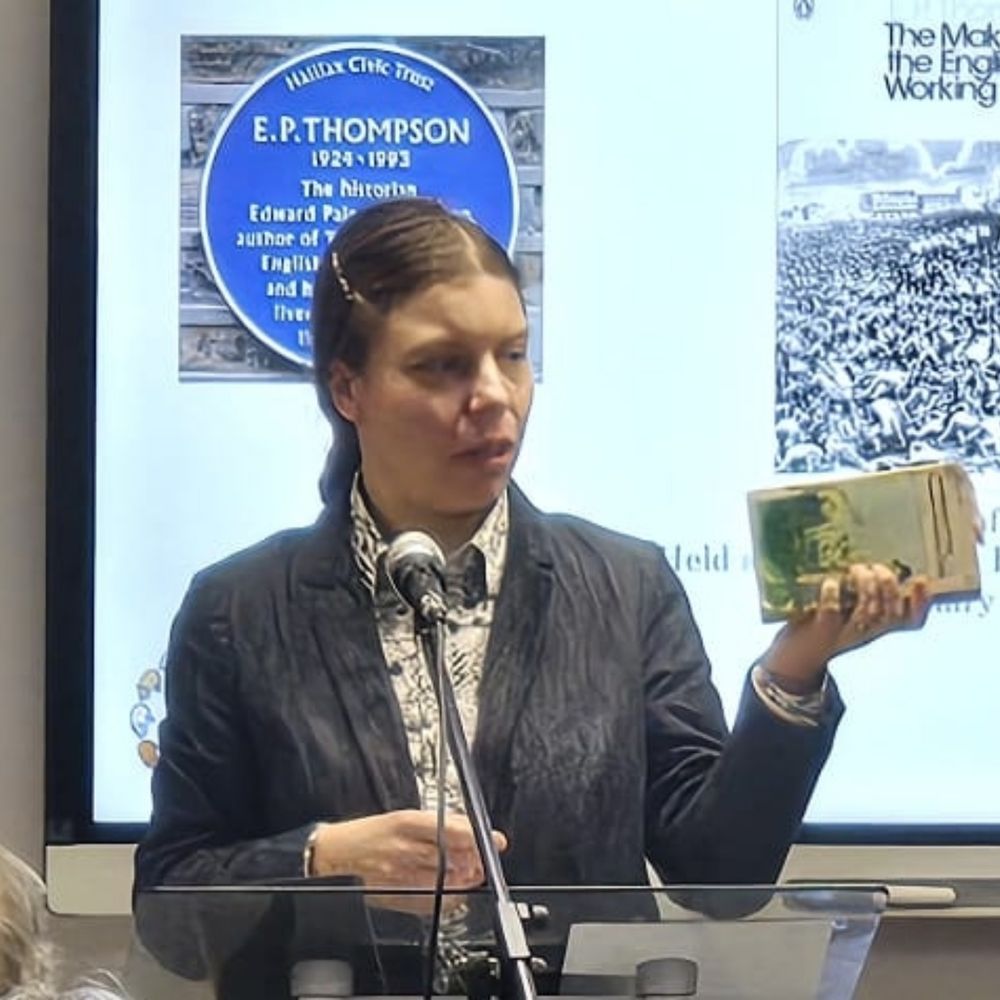
I've published my Pavia University digital mapping lecture slides and workshop notes on my website:
historyofpublicspace.uk/political-me...
Digital mapping and commemoration – contested commons
historyofpublicspace.uk
WINTER Term Card:

We are excited to share our seminar schedule for next term! Our slate of speakers cover a range of #18thc British history topics.

Registrations are now open (with paper abstracts) at the link below 👎

@ihr.bsky.social @ihrlibrary.bsky.social

www.history.ac.uk/news-events/...

So I am confused. The US is replacing a Dutch font with a British one. Can't they come up with anything of their own?
Great to see the programme for the @long18thsem.bsky.social for next term @ihrlibrary.bsky.social . You can register to attend either in person or online here: www.history.ac.uk/news-events/...

Reposted by Tim Hitchcock

I think before that there needs to be many more conversations about what that might look like and how to address IP and copyright (my personal view would be OA and non commercial). Also, funding!

Reposted by Tim Hitchcock

More importantly, there needs to be infrastructure to support collaborative digital projects like this.

Reposted by Tim Hitchcock

100% talk to folk at your national libraries and archives about what they're doing, and find communities of folk like #AI4LAM collaborating to find the best methods for different materials! (she said, knowing that she got an email from Colin Greenstreet this morning!)

Reposted by David Underdown

Great to see Helen Wilson's talk on Black participation in Georgain politics available online (it starts 30 seconds in - my fault) @long18thsem.bsky.social @ihrlibrary.bsky.social : www.history.ac.uk/news-events/...
Black and Political: Reconstructing Black Participation in British Politics, 1750-1850
British History in the Long 18th Century Seminar
www.history.ac.uk

There is a lot of anxiety in the wider historical profession about AI in all forms. The OCR used for most historical projects (now going back 25 years) is just awful - a 50% error rate on semantically significant words - something most historians just want to ignore.

Reposted by Tim Hitchcock

Yep, having this as a serious element of both undergrad and postgrad history degrees is essential, and yet still mostly lacking. Kudos to departments doing this by now!

Reposted by Tim Hitchcock

Reposted by Tim Hitchcock
Most projects (Slave Voyages, Amsterdam Municipal Archives, etc) do very little besides giving the transcriptions side by side with images. More detailed cataloguing like the Prize Papers indeed require quite a lot of effort - although LLMs can speed that up as well.

Reposted by Tim Hitchcock

I think I might be more inclined to language learn if a tool could help me do some of the work. Double checking remains the historians' job.

And yet historians have been using bad online OCR for more than a generation - few of them knowing or acknowledging the ridiculously high error rates involved. The checking and the skills are desparately needed - along with the simple commitment to proper historical method.

Reposted by Tim Hitchcock

British History Online is looking at using LLMs for transcription. But this is at a very early stage right now.

Reposted by Tim Hitchcock

I am both envious of the tools now available to scholars and lost as to how anyone will be able to make sense of everything we’ll have access to. But there is already some wonderful digital history work being done, so I am optimistic for the long term—and grateful to have wrapped up my own work.

Reposted by Tim Hitchcock

NLS Data Foundry models works well, other libraries create catalog records for derived data. But it all requires lots of infrastructure & new staff that rarely gets funded.

Reposted by Tim Hitchcock

The time lag between creating transcription data & infrastructure systems to store+make them discoverable @ institutions is at the heart of this gap in established practices around who makes, evaluates, curates, preserves, and reuses derived data.

Reposted by Tim Hitchcock

I'm going to a digital history workshop conference at Pavia next week, thanks to Adam, and there is a session on AI and translating archives. I'll report back.

Reposted by Tim Hitchcock

Yes - this is a big area of discussion that spans language training, historiographical background, ability to work on site as well as with scanned documents - and of course there is not only 1 correct answer - it will depend on the research aims/ experiences, and risks around archival preservation

Reposted by Tim Hitchcock

And I worry when I see historians creating this data in a personal research capacity that excludes archivists and librarians and infrastructures supporting digital collections. This raises questions about quality/evaluation of outputs, reproducibility, & more (lots more to say, maybe not here!) 2/2

Reposted by Tim Hitchcock

100% - all of my (collaborative) work with creating datasets of transcriptions/visual annotations from historical docs has been done so that these derived datasets become parts of the digital coll. where the physical collections are held, & the work is done in conversation with the curators. 1/2

Fair enough, but I am also very aware of the extent to which many archives are simply not being worked on because of language issues. Developing cultural knowledge is the job, but creating a pathway there, seems a good thing to me.

Reposted by Tim Hitchcock

I’ve talked to people at the BL and the NA who are thinking about transcription. The BL intends to fully integrate digitization and transcription at some pointX and isn’t transcription part of the Prize Papers project?