



Anirudh Wodeyar
@aniwodeyar.bsky.social
Statistics and signal processing for oscillations in the brain.
Assistant Professor at Maastricht University, The Netherlands.
Assistant Professor at Maastricht University, The Netherlands.
Wow I want to do this (to be fair I'm trying to anyway 😁)
Postdoc position in Paris: come help develop new generation human brain computer interfaces ⚡🧠💻
Interested? Contact me if you have experience with machine learning (e.g. simulation-based inference, RL, generative/diffusion models) or dynamical systems.
See below for + details and retweet 🙏
Interested? Contact me if you have experience with machine learning (e.g. simulation-based inference, RL, generative/diffusion models) or dynamical systems.
See below for + details and retweet 🙏


January 28, 2026 at 7:41 AM
Wow I want to do this (to be fair I'm trying to anyway 😁)
Reposted by Anirudh Wodeyar

I came to Minneapolis to report on what's going on, and one of the main questions I showed up with is "just what is the scale of the resistance?" After all, we're all used to the news calling Portland a "war zone" or whatever when it's just some protests in one part of town.
January 22, 2026 at 3:58 AM
I came to Minneapolis to report on what's going on, and one of the main questions I showed up with is "just what is the scale of the resistance?" After all, we're all used to the news calling Portland a "war zone" or whatever when it's just some protests in one part of town.
Reposted by Anirudh Wodeyar
Here's what I put together after several more days on the ground there:
margaretkilljoy.substack.com/p/our-neighb...
margaretkilljoy.substack.com/p/our-neighb...
January 26, 2026 at 7:35 PM
Here's what I put together after several more days on the ground there:
margaretkilljoy.substack.com/p/our-neighb...
margaretkilljoy.substack.com/p/our-neighb...
Reposted by Anirudh Wodeyar

If you're living somewhere outside the USA, one thing you can do is pressure your leaders to boycott World Cup and Olympic events here.
January 24, 2026 at 8:29 PM
If you're living somewhere outside the USA, one thing you can do is pressure your leaders to boycott World Cup and Olympic events here.
Reposted by Anirudh Wodeyar
Job alert 🚨 Fully funded PhD position available in our Maastricht lab! Are you interested in the relationship between memory and prediction, and have a track record of neuroimaging/decoding? Please apply! #NeuroJobs
www.academictransfer.com/nl/jobs/3576...
www.academictransfer.com/nl/jobs/3576...

PhD Candidate: Cognitive Computational Neuroscience of Memory and Prediction
Welcome to Maastricht University! Are you fascinated by how the brain remembers and predicts information, and how it can tell apart representations of past and future? At Maastricht University, you wi...
www.academictransfer.com
January 7, 2026 at 11:22 AM
Job alert 🚨 Fully funded PhD position available in our Maastricht lab! Are you interested in the relationship between memory and prediction, and have a track record of neuroimaging/decoding? Please apply! #NeuroJobs
www.academictransfer.com/nl/jobs/3576...
www.academictransfer.com/nl/jobs/3576...
5️⃣ The thalamus is for __________ learning?
Just to keep this going 😁
Just to keep this going 😁
4️⃣ The hippocampus is for _________ learning?
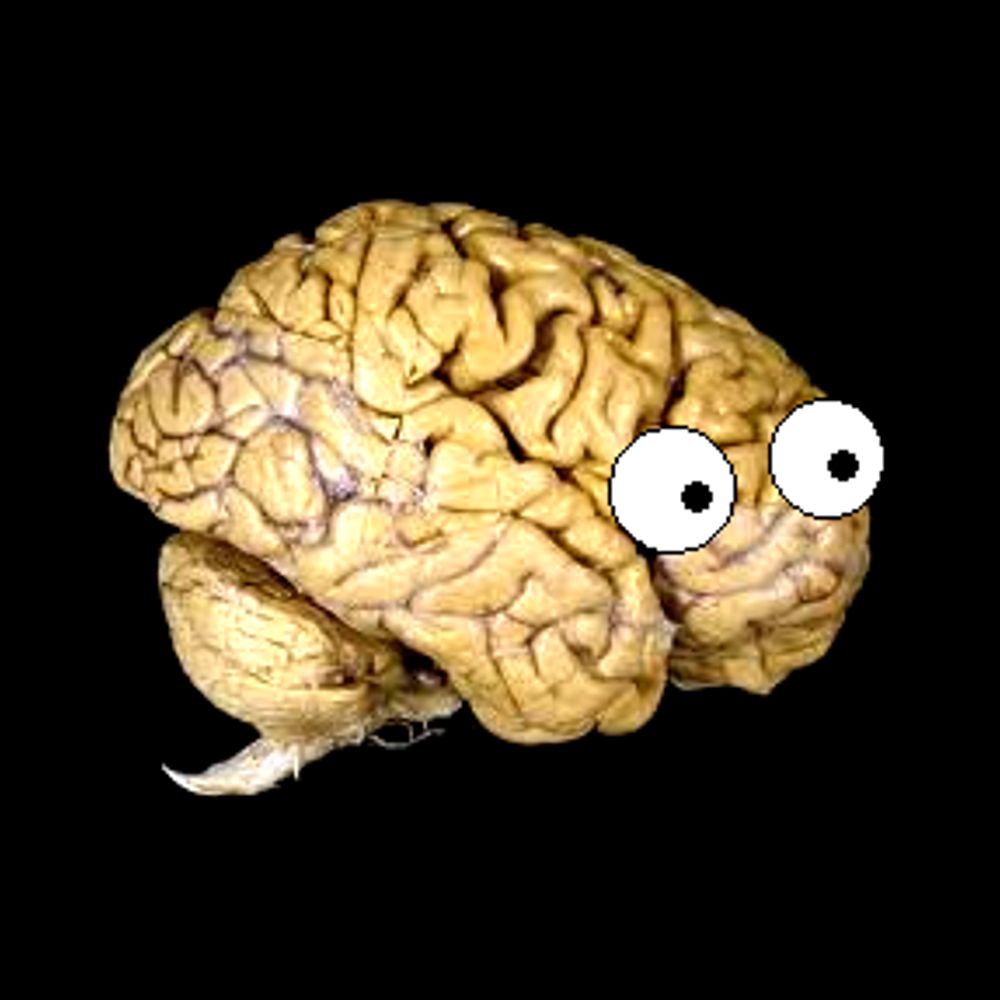
Way back in 1999, Kenji Doya sketched a big picture theory of the brain:
1️⃣The cerebellum is specialized for supervised learning
2️⃣The basal ganglia are for reinforcement learning
3️⃣The cerebral cortex is for unsupervised learning
How does this hold up in 2026? www.sciencedirect.com/science/arti...
1️⃣The cerebellum is specialized for supervised learning
2️⃣The basal ganglia are for reinforcement learning
3️⃣The cerebral cortex is for unsupervised learning
How does this hold up in 2026? www.sciencedirect.com/science/arti...
January 2, 2026 at 6:46 AM
5️⃣ The thalamus is for __________ learning?
Just to keep this going 😁
Just to keep this going 😁
Reposted by Anirudh Wodeyar

New Preprint alert 🚨
“Inter-areal coupling for cognition through coincident oscillatory transients” together with
@ycaoneuro.bsky.social
@ktsetsos.bsky.social
@donnerlab.bsky.social &
Andreas Engel
#MEG #neuroscience #bioRxiv
www.biorxiv.org/content/10.1...
“Inter-areal coupling for cognition through coincident oscillatory transients” together with
@ycaoneuro.bsky.social
@ktsetsos.bsky.social
@donnerlab.bsky.social &
Andreas Engel
#MEG #neuroscience #bioRxiv
www.biorxiv.org/content/10.1...

Inter-areal coupling for cognition through coincident oscillatory transients
How do large-scale brain networks interact to enable cognition? Correlated oscillations, a mechanism for inter-areal interactions, can be expressed as phase coherence or amplitude co-fluctuations. Whi...
www.biorxiv.org
November 24, 2025 at 7:21 AM
New Preprint alert 🚨
“Inter-areal coupling for cognition through coincident oscillatory transients” together with
@ycaoneuro.bsky.social
@ktsetsos.bsky.social
@donnerlab.bsky.social &
Andreas Engel
#MEG #neuroscience #bioRxiv
www.biorxiv.org/content/10.1...
“Inter-areal coupling for cognition through coincident oscillatory transients” together with
@ycaoneuro.bsky.social
@ktsetsos.bsky.social
@donnerlab.bsky.social &
Andreas Engel
#MEG #neuroscience #bioRxiv
www.biorxiv.org/content/10.1...
Reposted by Anirudh Wodeyar
New Perspective from myself, Sarah Heilbronner and @myoo.bsky.social . “Rethinking the centrality of brain areas in understanding functional organization” in Nature Neuroscience. 🧵
rdcu.be/eVZ1A
rdcu.be/eVZ1A

Rethinking the centrality of brain areas in understanding functional organization
Nature Neuroscience - Parcellation of the cortex into functionally modular brain areas is foundational to neuroscience. Here, Hayden, Heilbronner and Yoo question the central status of brain areas...
rdcu.be
December 23, 2025 at 1:02 PM
New Perspective from myself, Sarah Heilbronner and @myoo.bsky.social . “Rethinking the centrality of brain areas in understanding functional organization” in Nature Neuroscience. 🧵
rdcu.be/eVZ1A
rdcu.be/eVZ1A
Reposted by Anirudh Wodeyar
🚨 What if evolution is the ”law”… and networks are the machines that do the work?
In this paper (just published) I try to formalize how living systems are non-equilibrium, information-processing, adaptive matter. With a great biological flavor! 🧪🌐🌍🧬🦠
👉 iopscience.iop.org/article/10.1...
🧵 1/
In this paper (just published) I try to formalize how living systems are non-equilibrium, information-processing, adaptive matter. With a great biological flavor! 🧪🌐🌍🧬🦠
👉 iopscience.iop.org/article/10.1...
🧵 1/

December 16, 2025 at 9:04 AM
🚨 What if evolution is the ”law”… and networks are the machines that do the work?
In this paper (just published) I try to formalize how living systems are non-equilibrium, information-processing, adaptive matter. With a great biological flavor! 🧪🌐🌍🧬🦠
👉 iopscience.iop.org/article/10.1...
🧵 1/
In this paper (just published) I try to formalize how living systems are non-equilibrium, information-processing, adaptive matter. With a great biological flavor! 🧪🌐🌍🧬🦠
👉 iopscience.iop.org/article/10.1...
🧵 1/
Whoaa
Your stomach called – your striatum picked up!
But does this actually happen in humans?
Using simultaneous dopamine PET/fMRI, we show that the gut hormone ghrelin helps the brain adjust motivation to current metabolic need.
Here’s what we found👇
Preprint: shorturl.at/pq4A3
#neuroskyence #🩺
But does this actually happen in humans?
Using simultaneous dopamine PET/fMRI, we show that the gut hormone ghrelin helps the brain adjust motivation to current metabolic need.
Here’s what we found👇
Preprint: shorturl.at/pq4A3
#neuroskyence #🩺

December 12, 2025 at 3:11 PM
Whoaa
Well, this is awesome: academic.oup.com/brain/advanc...

Non-invasive closed-loop spinal stimulation restores leg stepping control in humans with paraplegia
Tazoe et al. demonstrate the feasibility of a non-invasive closed-loop spinal interface for stepping control in individuals with spinal cord injury. This i
academic.oup.com
November 28, 2025 at 11:25 AM
Well, this is awesome: academic.oup.com/brain/advanc...
Fascinating and ground breaking work. I don't think we've ever looked at sinle neuron activity in the human thalamus before.
Thalamus for vision BCIs
Scientists have recorded single neurons in the human LGN for the first time, revealing how it links the retina to visual cortex. When one eye is closed, neurons tuned to that eye reduce their activity, while neurons tuned to the open eye increase in spikerate
#neuroskyence
Scientists have recorded single neurons in the human LGN for the first time, revealing how it links the retina to visual cortex. When one eye is closed, neurons tuned to that eye reduce their activity, while neurons tuned to the open eye increase in spikerate
#neuroskyence

Effects of eye closure on the spiking activity of human lateral geniculate neurons - Nature Communications
The LGN is a critical stage between the retina and visual cortex, but the properties of human LGN neurons are not fully understood. Here the authors report that they closely resemble those in monkeys ...
www.nature.com
November 27, 2025 at 9:22 AM
Fascinating and ground breaking work. I don't think we've ever looked at sinle neuron activity in the human thalamus before.
Reposted by Anirudh Wodeyar
Please help me find the answer to this question by reposting or tagging people who might know. What is a proper #?
I guess it’s now well established that locomotion boosts the signal-to-noise ratio of visual cortical responses in mice. Is there any evidence that locomotion also enhances visual recognition performance at the behavioral level?
November 26, 2025 at 6:07 PM
Please help me find the answer to this question by reposting or tagging people who might know. What is a proper #?
These are all important and relevant points as well. As are others made in these and other threads about oscillations. But one line of thinking I find missing is that of seeing it all as a singular dynamical system.
Spiking networks produce activity that organizes in oscillatory bursts. (1/3)
Spiking networks produce activity that organizes in oscillatory bursts. (1/3)
November 25, 2025 at 6:32 AM
These are all important and relevant points as well. As are others made in these and other threads about oscillations. But one line of thinking I find missing is that of seeing it all as a singular dynamical system.
Spiking networks produce activity that organizes in oscillatory bursts. (1/3)
Spiking networks produce activity that organizes in oscillatory bursts. (1/3)
Immediately a fan from reading the behavioral experiment included here to study the effect of psilocybin

Our new paper is out in Nature Communications! nature.com/articles/s41...
We combined psychophysics, 7T fMRI, and computational modeling of vision with placebo, 5mg, and 10mg psilocybin, in the same group of participants, to clarify the computational mechanisms of psychedelics. 🧵
We combined psychophysics, 7T fMRI, and computational modeling of vision with placebo, 5mg, and 10mg psilocybin, in the same group of participants, to clarify the computational mechanisms of psychedelics. 🧵

November 24, 2025 at 6:05 PM
Immediately a fan from reading the behavioral experiment included here to study the effect of psilocybin
Reposted by Anirudh Wodeyar

This one looks intriguing. Arousal "embedding" whole-brain dynamics. 🤯
#neuroskyence #compneurosky
doi.org/10.1038/s415...
#neuroskyence #compneurosky
doi.org/10.1038/s415...

Arousal as a universal embedding for spatiotemporal brain dynamics - Nature
Reframing of arousal as a latent dynamical system can reconstruct multidimensional measurements of large-scale spatiotemporal brain dynamics on the timescale of seconds in mice.
doi.org
September 25, 2025 at 6:03 AM
This one looks intriguing. Arousal "embedding" whole-brain dynamics. 🤯
#neuroskyence #compneurosky
doi.org/10.1038/s415...
#neuroskyence #compneurosky
doi.org/10.1038/s415...
Reposted by Anirudh Wodeyar

VACANCY:
Assistant Professor in AI in Digital Agriculture and Sustainability.
lnkd.in/gFKhd32z
Professor Christopher Brewster and his team are looking for a highly qualified computer scientist with a broad passion for food and agriculture, environment, and biodiversity.
@cawbrewster.bsky.social
Assistant Professor in AI in Digital Agriculture and Sustainability.
lnkd.in/gFKhd32z
Professor Christopher Brewster and his team are looking for a highly qualified computer scientist with a broad passion for food and agriculture, environment, and biodiversity.
@cawbrewster.bsky.social

September 11, 2025 at 10:34 AM
VACANCY:
Assistant Professor in AI in Digital Agriculture and Sustainability.
lnkd.in/gFKhd32z
Professor Christopher Brewster and his team are looking for a highly qualified computer scientist with a broad passion for food and agriculture, environment, and biodiversity.
@cawbrewster.bsky.social
Assistant Professor in AI in Digital Agriculture and Sustainability.
lnkd.in/gFKhd32z
Professor Christopher Brewster and his team are looking for a highly qualified computer scientist with a broad passion for food and agriculture, environment, and biodiversity.
@cawbrewster.bsky.social
Reposted by Anirudh Wodeyar

A man who had severe depression for more than 30 years has "experienced joy" after undergoing bespoke brain stimulation.

Brain implant lets man 'experience joy' for the first time in decades
A device that has been likened to a pacemaker for the brain has given a man with severe depression great relief
www.newscientist.com
September 2, 2025 at 1:27 AM
A man who had severe depression for more than 30 years has "experienced joy" after undergoing bespoke brain stimulation.
Reposted by Anirudh Wodeyar
Brain–computer interface control with artificial intelligence copilots
#MLSky #CompNeuro #NeuroAI
www.nature.com/articles/s42...
#MLSky #CompNeuro #NeuroAI
www.nature.com/articles/s42...

Brain–computer interface control with artificial intelligence copilots - Nature Machine Intelligence
AI copilots are integrated into brain–computer interfaces, enabling a paralysed participant to achieve improved control of computer cursors and robotic arms. This shared autonomy approach offers a pro...
www.nature.com
September 2, 2025 at 6:17 AM
Brain–computer interface control with artificial intelligence copilots
#MLSky #CompNeuro #NeuroAI
www.nature.com/articles/s42...
#MLSky #CompNeuro #NeuroAI
www.nature.com/articles/s42...
Reposted by Anirudh Wodeyar
A major way we avoid talking to another human being is by driving cars.

Are we heading for a world where no one ever needs to talk to another human being?
Self-service tills, apps for shopping and takeaways, silent hair salons, driverless taxis – why are we going to extreme lengths to avoid engaging with each other?
www.theguardian.com
August 24, 2025 at 5:28 AM
A major way we avoid talking to another human being is by driving cars.
Reposted by Anirudh Wodeyar
1. The philosophy of science sometimes gets an unearned reputation as a purely academic exercise that offers little by way of concrete tools for advancing research.
This is wrong.
And today, as we grapple with how AI is changing the nature of scientific activity, it's desperately wrong.
This is wrong.
And today, as we grapple with how AI is changing the nature of scientific activity, it's desperately wrong.
August 19, 2025 at 4:59 AM
1. The philosophy of science sometimes gets an unearned reputation as a purely academic exercise that offers little by way of concrete tools for advancing research.
This is wrong.
And today, as we grapple with how AI is changing the nature of scientific activity, it's desperately wrong.
This is wrong.
And today, as we grapple with how AI is changing the nature of scientific activity, it's desperately wrong.
My favorite kind of science: www.science.org/content/arti...
I feel I've observed this (dragonflies dipping into water then doing loop-de-loops) in the wild but never fully reflected on the why. The science involved and the experiments required to expose it are delicious to understand :)
I feel I've observed this (dragonflies dipping into water then doing loop-de-loops) in the wild but never fully reflected on the why. The science involved and the experiments required to expose it are delicious to understand :)

‘Absolutely insane.’ Dragonfly’s extreme loop-the-loops are unparalleled in nature
Insects use “crazy turning” to dry off after a cooling dip in water
www.science.org
July 14, 2025 at 11:30 AM
My favorite kind of science: www.science.org/content/arti...
I feel I've observed this (dragonflies dipping into water then doing loop-de-loops) in the wild but never fully reflected on the why. The science involved and the experiments required to expose it are delicious to understand :)
I feel I've observed this (dragonflies dipping into water then doing loop-de-loops) in the wild but never fully reflected on the why. The science involved and the experiments required to expose it are delicious to understand :)
I hope (and suspect) that we will see more of this style of reasoning into the future in several areas. Essentially, you can more effectively enable brain state changes _from_ specific brain states. The idea has existed in other forms elsewhere - tracking phase of oscillations is a variation ...
July 7, 2025 at 10:18 AM
I hope (and suspect) that we will see more of this style of reasoning into the future in several areas. Essentially, you can more effectively enable brain state changes _from_ specific brain states. The idea has existed in other forms elsewhere - tracking phase of oscillations is a variation ...
Reposted by Anirudh Wodeyar
Here's a bit of spice. Brain research clearly needs to tackle more complexity (than, say, Step 1: simple linear causal chains). But that leaves an ~infinite set of alternatives. Here, @pessoabrain.bsky.social advocates not for just a step 2, but a 3. /1
arxiv.org/abs/2411.03621
arxiv.org/abs/2411.03621
July 2, 2025 at 3:39 PM
Here's a bit of spice. Brain research clearly needs to tackle more complexity (than, say, Step 1: simple linear causal chains). But that leaves an ~infinite set of alternatives. Here, @pessoabrain.bsky.social advocates not for just a step 2, but a 3. /1
arxiv.org/abs/2411.03621
arxiv.org/abs/2411.03621
Awesome!

The first results of the Cogitate effort are out in @nature.com Such an interesting paper!
Congratulations to all those involved!
www.nature.com/articles/s41...
Congratulations to all those involved!
www.nature.com/articles/s41...

Adversarial testing of global neuronal workspace and integrated information theories of consciousness - Nature
Multimodal results (iEEG, fMRI and MEG) of predictions from integrated information theory and global neuronal workspace theory align with some predictions of both theories on visual consciou...
www.nature.com
May 1, 2025 at 7:53 AM
Awesome!