


Augustinas Silale
@augustsilale.bsky.social
Structural biology, membrane proteins, microbiology. Postdoc. Newcastle upon Tyne. 🧪🧫❄️🔬🇱🇹🏳️🌈
Pinned

Structure of a distinct β-barrel assembly machinery complex in the Bacteroidota - Nature Microbiology
Structural and functional characterization of the β-barrel assembly machinery complex in Bacteroidota reveals a distinct, seven-component complex with a large extracellular domain that may enable β-barrel–surface lipoprotein complex assembly.
doi.org
Our paper on the Bacteroidota BAM complex is out in @natmicrobiol.nature.com! With @madejmar.bsky.social
We found that BAM in Bacteroides and Porphyromonas gingivalis has a distinct architecture from BAM in Proteobacteria.
doi.org/10.1038/s415...
We found that BAM in Bacteroides and Porphyromonas gingivalis has a distinct architecture from BAM in Proteobacteria.
doi.org/10.1038/s415...
Reposted by Augustinas Silale
My latest preprint on the LolB in Bacteroides! Can't delete it, but you can deplete it to basically nothing and cells grow fine, plus lipoproteins still get to the cell surface 🤯
There is still SO much to understand about lipoproteins in Bacteroides!
There is still SO much to understand about lipoproteins in Bacteroides!
www.biorxiv.org
February 9, 2026 at 3:47 PM
My latest preprint on the LolB in Bacteroides! Can't delete it, but you can deplete it to basically nothing and cells grow fine, plus lipoproteins still get to the cell surface 🤯
There is still SO much to understand about lipoproteins in Bacteroides!
There is still SO much to understand about lipoproteins in Bacteroides!
Reposted by Augustinas Silale
A gift of an article from the inimitable Colin Kleanthous as he says a moving farewell to his laboratory. A brave, unrepentant and scientifically brilliant journey is described - please have a read, friends.
www.jbc.org/article/S002...
www.jbc.org/article/S002...

Bacteriocin biophysics: From protein-protein interaction models to navigators of the bacterial cell envelope
Bacteriocins are toxins deployed by bacteria to kill their competitors. Here, I reflect
on my laboratory’s work on protein bacteriocins and their immunity proteins from Gram-negative
bacteria. We unco...
www.jbc.org
February 2, 2026 at 12:39 PM
A gift of an article from the inimitable Colin Kleanthous as he says a moving farewell to his laboratory. A brave, unrepentant and scientifically brilliant journey is described - please have a read, friends.
www.jbc.org/article/S002...
www.jbc.org/article/S002...
Reposted by Augustinas Silale

Still lots of time to apply for this exciting project with us. Please share and encourage interested students to get in touch.
PhD position available in our team to study how UPEC exploits metals to successfully colonise the host gut. Cool collaboration with @thecopperdoctor.bsky.social and @banzhaflab.bsky.social Please share and get in touch for more details

Microbial metal-head: the integrated roles of metal homeostasis in host-pathogen interaction at Newcastle University on FindAPhD.com
PhD Project - Microbial metal-head: the integrated roles of metal homeostasis in host-pathogen interaction at Newcastle University, listed on FindAPhD.com
www.findaphd.com
February 2, 2026 at 11:18 AM
Still lots of time to apply for this exciting project with us. Please share and encourage interested students to get in touch.
Reposted by Augustinas Silale
BBSSRC (NEEDL) funded PhD studentship in my lab co-supervised by
@thecopperdoctor.bsky.social and @mycobacterium-ncl.bsky.social
If you're interested in structural biology and membrane transport processes, check out www.findaphd.com/phds/project... deadline 27th of Feb!
Get in touch for more info
@thecopperdoctor.bsky.social and @mycobacterium-ncl.bsky.social
If you're interested in structural biology and membrane transport processes, check out www.findaphd.com/phds/project... deadline 27th of Feb!
Get in touch for more info
www.findaphd.com
January 23, 2026 at 12:34 PM
BBSSRC (NEEDL) funded PhD studentship in my lab co-supervised by
@thecopperdoctor.bsky.social and @mycobacterium-ncl.bsky.social
If you're interested in structural biology and membrane transport processes, check out www.findaphd.com/phds/project... deadline 27th of Feb!
Get in touch for more info
@thecopperdoctor.bsky.social and @mycobacterium-ncl.bsky.social
If you're interested in structural biology and membrane transport processes, check out www.findaphd.com/phds/project... deadline 27th of Feb!
Get in touch for more info
Reposted by Augustinas Silale

Fully funded four-year PhD position available in my lab!
Combining structural and synthetic biology to understand iron transport.
Deadline 27th of Feb, get in touch for more details!
www.findaphd.com/phds/project...
Combining structural and synthetic biology to understand iron transport.
Deadline 27th of Feb, get in touch for more details!
www.findaphd.com/phds/project...

Forged by Iron: Synthetic protein binders to decode bacterial iron transport mechanisms at Newcastle University on FindAPhD.com
PhD Project - Forged by Iron: Synthetic protein binders to decode bacterial iron transport mechanisms at Newcastle University, listed on FindAPhD.com
www.findaphd.com
January 27, 2026 at 10:03 PM
Fully funded four-year PhD position available in my lab!
Combining structural and synthetic biology to understand iron transport.
Deadline 27th of Feb, get in touch for more details!
www.findaphd.com/phds/project...
Combining structural and synthetic biology to understand iron transport.
Deadline 27th of Feb, get in touch for more details!
www.findaphd.com/phds/project...
Reposted by Augustinas Silale
💊 We are excited to share our preprint that describes an inhibitor of the widespread and highly conserved Two-Partner Secretion (TPS) system that is critical for Gram-negative pathogens to export a multitude of diverse virulence factors.
(1/6)
www.biorxiv.org/content/10.6...
(1/6)
www.biorxiv.org/content/10.6...

First inhibitor of a bacterial two-partner secretion system.
Two-partner secretion system transporter proteins (TpsB) are widely conserved across Gram-negative pathogens. TpsB family proteins secrete exoprotein virulence factors that perform a myriad of functions such as adhesion and immune modulation. Despite their incredible importance in bacterial infectious disease, TpsB inhibitors have not yet been discovered. Here, we describe a potent inhibitor of FhaC, a TpsB protein produced by Bordetella spp . FhaC secretes the exoprotein FhaB that is essential for the establishment of whooping cough. We designed a peptide called P1 that we predicted would prevent substrate binding and lock FhaC in a secretion-inactive state. Simulations and biochemical assays supported our hypothesis and identified interactions important for P1 binding to FhaC. Strikingly, we observed that the peptide strongly inhibited FhaB secretion from clinical isolates and broadly reduced correlates of virulence. Together, this work provides a strong case for further development of a novel class of anti-TpsB anti-virulence compounds. ### Competing Interest Statement The authors have declared no competing interest. National Institute of Allergy and Infectious Diseases, R21AI180112
www.biorxiv.org
January 13, 2026 at 7:02 AM
💊 We are excited to share our preprint that describes an inhibitor of the widespread and highly conserved Two-Partner Secretion (TPS) system that is critical for Gram-negative pathogens to export a multitude of diverse virulence factors.
(1/6)
www.biorxiv.org/content/10.6...
(1/6)
www.biorxiv.org/content/10.6...
Reposted by Augustinas Silale

Hi fellow membrane protein #StructuralBiology people!
Do you use maltoside detergents / model them in your stuctures? Watch out! ⚠️
Most PDB models of LMNG and GDN are wrong ❌, yet continue to be re-used. Spread the word!
See more: doi.org/10.1021/acsc... (w. @sebvidalchem.bsky.social ) #cryoEM
Do you use maltoside detergents / model them in your stuctures? Watch out! ⚠️
Most PDB models of LMNG and GDN are wrong ❌, yet continue to be re-used. Spread the word!
See more: doi.org/10.1021/acsc... (w. @sebvidalchem.bsky.social ) #cryoEM

January 5, 2026 at 2:05 PM
Hi fellow membrane protein #StructuralBiology people!
Do you use maltoside detergents / model them in your stuctures? Watch out! ⚠️
Most PDB models of LMNG and GDN are wrong ❌, yet continue to be re-used. Spread the word!
See more: doi.org/10.1021/acsc... (w. @sebvidalchem.bsky.social ) #cryoEM
Do you use maltoside detergents / model them in your stuctures? Watch out! ⚠️
Most PDB models of LMNG and GDN are wrong ❌, yet continue to be re-used. Spread the word!
See more: doi.org/10.1021/acsc... (w. @sebvidalchem.bsky.social ) #cryoEM
Reposted by Augustinas Silale
Good news! Erasmus is a great scheme. www.bbc.com/news/article...

UK will rejoin Erasmus student scheme in 2027
The UK left in December 2020 as part of the post-Brexit trade deal with the EU negotiated by Boris Johnson.
www.bbc.com
December 17, 2025 at 2:07 PM
Good news! Erasmus is a great scheme. www.bbc.com/news/article...
Reposted by Augustinas Silale

Fab afternoon at the MHD festive gathering 🎉 congratulations to the winning quiz team and @johncorrigall.bsky.social for most festive outfit.


December 15, 2025 at 3:37 PM
Fab afternoon at the MHD festive gathering 🎉 congratulations to the winning quiz team and @johncorrigall.bsky.social for most festive outfit.
Reposted by Augustinas Silale

Reposted by Augustinas Silale
Structure and organization of AMPA receptor-TARP complexes in the mammalian cerebellum | Science www.science.org/doi/10.1126/...

Structure and organization of AMPA receptor-TARP complexes in the mammalian cerebellum
AMPA receptors (AMPARs) are multimodal transducers of glutamatergic signals throughout the brain. Their diversity is exemplified in the cerebellum; at afferent synapses, AMPARs mediate high-frequency ...
www.science.org
December 12, 2025 at 5:35 AM
Structure and organization of AMPA receptor-TARP complexes in the mammalian cerebellum | Science www.science.org/doi/10.1126/...
Reposted by Augustinas Silale
Our paper on polymyxin interacting with the E. coli outer membrane is out! Simulations by the very talented @dheerajprakaash.bsky.social www.nature.com/articles/s42...
To scale outer membrane protein island simulated at coarse-grained resolution with portions refined at all atom resolution.
To scale outer membrane protein island simulated at coarse-grained resolution with portions refined at all atom resolution.

Polymyxins slow down lateral diffusion of proteins and lipopolysaccharide in the E. coli outer membrane - Communications Biology
Multi-scale molecular dynamics simulations reveal that polymyxins form polymyxin-protein aggregates upon associating with the E. coli outer membrane thereby reducing lateral mobility of outer membrane...
www.nature.com
December 5, 2025 at 3:42 PM
Our paper on polymyxin interacting with the E. coli outer membrane is out! Simulations by the very talented @dheerajprakaash.bsky.social www.nature.com/articles/s42...
To scale outer membrane protein island simulated at coarse-grained resolution with portions refined at all atom resolution.
To scale outer membrane protein island simulated at coarse-grained resolution with portions refined at all atom resolution.
Reposted by Augustinas Silale

Fantastic to have Prof Matthias Wilmanns from EMBL Hamburg hosted by @kshbeckham.bsky.social to give a @mhd-newcastle.bsky.social seminar on mycobacterial infection #dreamtheme

December 2, 2025 at 12:13 PM
Fantastic to have Prof Matthias Wilmanns from EMBL Hamburg hosted by @kshbeckham.bsky.social to give a @mhd-newcastle.bsky.social seminar on mycobacterial infection #dreamtheme
Reposted by Augustinas Silale

Type VII ABC transporters underpin many core activities in the bacterial cell envelope - including efflux, cell division and lipoprotein trafficking.
A new paper in PLOS Biology reveals YbbAP-TesA as a novel Type VII system in E. coli.
dx.plos.org/10.1371/jour...
A new paper in PLOS Biology reveals YbbAP-TesA as a novel Type VII system in E. coli.
dx.plos.org/10.1371/jour...

Structural characterization of the YbbAP-TesA ABC transporter identifies it as a lipid hydrolase complex that extracts hydrophobic compounds from the bacterial inner membrane
In E.coli, three of the four Type VII ABC transporter systems have been structurally characterized. This study solves cryo-EM structures of the fourth Type VII ABC system, YbbAP-TesA, and suggests tha...
dx.plos.org
November 26, 2025 at 12:46 PM
Type VII ABC transporters underpin many core activities in the bacterial cell envelope - including efflux, cell division and lipoprotein trafficking.
A new paper in PLOS Biology reveals YbbAP-TesA as a novel Type VII system in E. coli.
dx.plos.org/10.1371/jour...
A new paper in PLOS Biology reveals YbbAP-TesA as a novel Type VII system in E. coli.
dx.plos.org/10.1371/jour...
Reposted by Augustinas Silale
Excited to share our latest research in @natmicrobiol.nature.com . We uncover hundreds of inhibitory interactions between common chemical pollutants and human gut bacteria. A thread🧵 (1/10) #microbiomesky #microsky @kiranrpatil.bsky.social lab @mrc-tu.bsky.social www.nature.com/articles/s41...

Industrial and agricultural chemicals exhibit antimicrobial activity against human gut bacteria in vitro - Nature Microbiology
Screening of 1,076 compounds reveals 168 chemical pollutants with inhibitory effects on gut bacteria and genetic screens indicate commonality between pollutant and antibiotic resistance.
www.nature.com
November 26, 2025 at 10:30 AM
Excited to share our latest research in @natmicrobiol.nature.com . We uncover hundreds of inhibitory interactions between common chemical pollutants and human gut bacteria. A thread🧵 (1/10) #microbiomesky #microsky @kiranrpatil.bsky.social lab @mrc-tu.bsky.social www.nature.com/articles/s41...
Reposted by Augustinas Silale

Pleased to share our recent article in PNAS - a collaboration with @jessicaandreani.bsky.social & Pablo Radicella, with important roles played by many members of each team.
A tripartite protein complex promotes DNA transport during natural transformation in Firmicutes www.pnas.org/doi/10.1073/...
A tripartite protein complex promotes DNA transport during natural transformation in Firmicutes www.pnas.org/doi/10.1073/...

A tripartite protein complex promotes DNA transport during natural transformation in Firmicutes | PNAS
Natural genetic transformation is a conserved mechanism of bacterial horizontal gene
transfer, which is directed entirely by the recipient cell and...
www.pnas.org
November 26, 2025 at 7:44 AM
Pleased to share our recent article in PNAS - a collaboration with @jessicaandreani.bsky.social & Pablo Radicella, with important roles played by many members of each team.
A tripartite protein complex promotes DNA transport during natural transformation in Firmicutes www.pnas.org/doi/10.1073/...
A tripartite protein complex promotes DNA transport during natural transformation in Firmicutes www.pnas.org/doi/10.1073/...
Reposted by Augustinas Silale

Happy to see work I contributed to during my MSc at @bioscienceleeds.bsky.social with Jennifer Tomlinson’s lab out in @pnas.org! Everyone Bluesky-less except @antoncalabrese.bsky.social
www.pnas.org/doi/10.1073/...
#AMR #MRSA #NMR
www.pnas.org/doi/10.1073/...
#AMR #MRSA #NMR

Inhibition of fusidic acid resistance through restricting conformational flexibility in domain III of EF-G | PNAS
Fusidic acid (FA) is one of few remaining antibiotics active against Methicillin-resistant
Staphylococcus aureus. FusB confers resistance to FA by ...
www.pnas.org
November 25, 2025 at 3:26 PM
Happy to see work I contributed to during my MSc at @bioscienceleeds.bsky.social with Jennifer Tomlinson’s lab out in @pnas.org! Everyone Bluesky-less except @antoncalabrese.bsky.social
www.pnas.org/doi/10.1073/...
#AMR #MRSA #NMR
www.pnas.org/doi/10.1073/...
#AMR #MRSA #NMR
Reposted by Augustinas Silale
rdcu.be/eRxNf here our new study on the characterization of the lipopolysaccharide holotranslocon, LptDE and the newly identified subunits LptM and LptY. Great collaboration with @fronzeslab.bsky.social @pstansfeld.bsky.social @JulienMarcoux @YvesQuentin
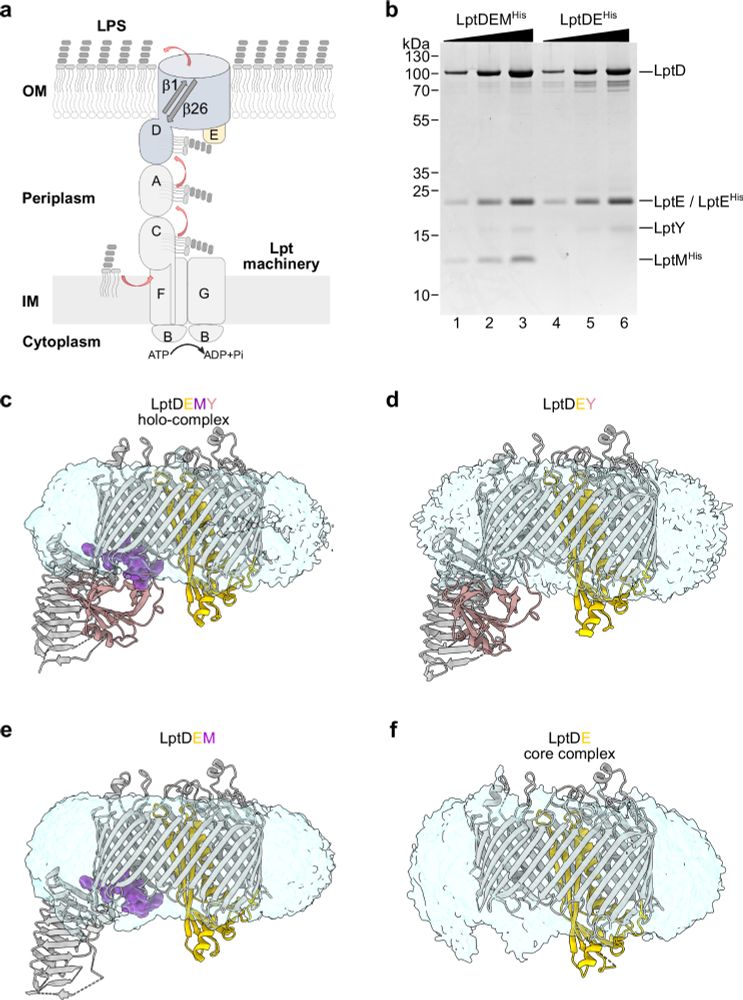
Structural basis of lipopolysaccharide assembly by the outer membrane translocon holo-complex
Nature Communications - The asymmetric distribution of lipopolysaccharide (LPS) on the surface of the bacterial outer membrane is essential and crucial for antibiotic resistance. Here, authors...
rdcu.be
November 24, 2025 at 4:08 PM
rdcu.be/eRxNf here our new study on the characterization of the lipopolysaccharide holotranslocon, LptDE and the newly identified subunits LptM and LptY. Great collaboration with @fronzeslab.bsky.social @pstansfeld.bsky.social @JulienMarcoux @YvesQuentin
Reposted by Augustinas Silale

Proteins are dynamic structures, but structural biology often shows them as static snapshots. Inspired by long-exposure photography and generative art, I built ProteinCHAOS, an artistic tool inspired by molecular dynamics to capture protein flexibility over time, much like long-exposure images.
November 23, 2025 at 11:18 PM
Proteins are dynamic structures, but structural biology often shows them as static snapshots. Inspired by long-exposure photography and generative art, I built ProteinCHAOS, an artistic tool inspired by molecular dynamics to capture protein flexibility over time, much like long-exposure images.
Reposted by Augustinas Silale
A shared mechanism for Bacteroidota protein transport and gliding motility pubmed.ncbi.nlm.nih.gov/41266322/ #cryoem
November 21, 2025 at 1:17 PM
A shared mechanism for Bacteroidota protein transport and gliding motility pubmed.ncbi.nlm.nih.gov/41266322/ #cryoem
Reposted by Augustinas Silale
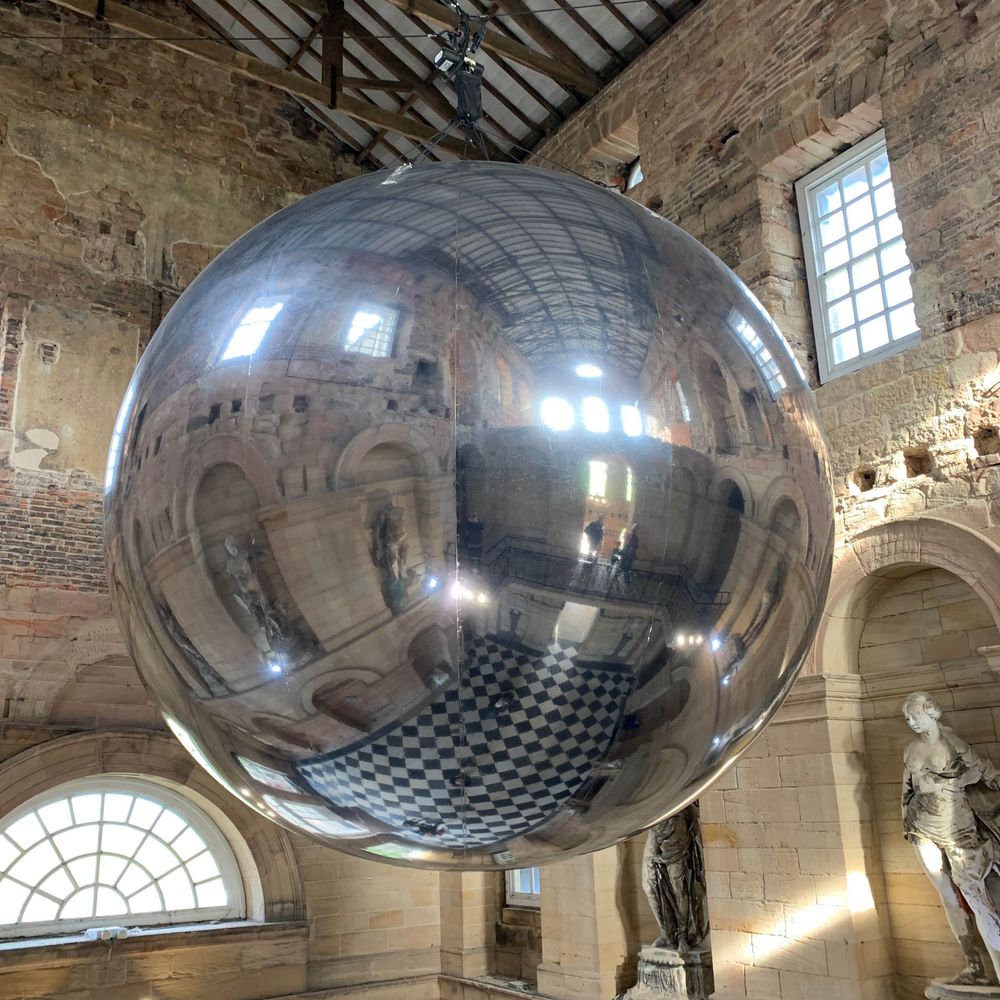
Pleased to see this collaboration with a great PhD student Pei Cing Ng, from Prof. Luning Liu's lab at Liverpool University published. Structure of the H. neapolitanus carbonic anhydrase and localisation in a mini-carboxysome: www.pnas.org/doi/epdf/10....

November 13, 2025 at 9:57 AM
Pleased to see this collaboration with a great PhD student Pei Cing Ng, from Prof. Luning Liu's lab at Liverpool University published. Structure of the H. neapolitanus carbonic anhydrase and localisation in a mini-carboxysome: www.pnas.org/doi/epdf/10....
Reposted by Augustinas Silale

I am excited to share our new preprint on our structural and biochemical analyses of human methionine synthase (MTR). This was the hard work of Douglas Ferreira who carried out this research as a significant part of his PhD. #CryoEM www.biorxiv.org/content/10.1...

Structural insights into cobalamin loading and reactivation of human methionine synthase
Human methionine synthase (MTR) is an essential enzyme of one carbon metabolism. Consisting of a catalytic N-half and a cobalamin binding C-half, MTR utilises this intricate organometallic cofactor in...
www.biorxiv.org
November 11, 2025 at 12:48 PM
I am excited to share our new preprint on our structural and biochemical analyses of human methionine synthase (MTR). This was the hard work of Douglas Ferreira who carried out this research as a significant part of his PhD. #CryoEM www.biorxiv.org/content/10.1...
Reposted by Augustinas Silale

An Asgard archaeon with internal membrane compartments
Brilliant study led by @fmacleod.bsky.social and Andriko von Kügelgen. Tight collaboration with @buzzbaum.bsky.social and lab. Congrats to all authors!
www.biorxiv.org/content/10.1...
Brilliant study led by @fmacleod.bsky.social and Andriko von Kügelgen. Tight collaboration with @buzzbaum.bsky.social and lab. Congrats to all authors!
www.biorxiv.org/content/10.1...

November 7, 2025 at 10:44 AM
An Asgard archaeon with internal membrane compartments
Brilliant study led by @fmacleod.bsky.social and Andriko von Kügelgen. Tight collaboration with @buzzbaum.bsky.social and lab. Congrats to all authors!
www.biorxiv.org/content/10.1...
Brilliant study led by @fmacleod.bsky.social and Andriko von Kügelgen. Tight collaboration with @buzzbaum.bsky.social and lab. Congrats to all authors!
www.biorxiv.org/content/10.1...
Reposted by Augustinas Silale

Next up Dr Francesca Mazzotta from Max Plank with some beautiful structures of peptide nanofibrils

November 7, 2025 at 9:38 AM
Next up Dr Francesca Mazzotta from Max Plank with some beautiful structures of peptide nanofibrils
Reposted by Augustinas Silale
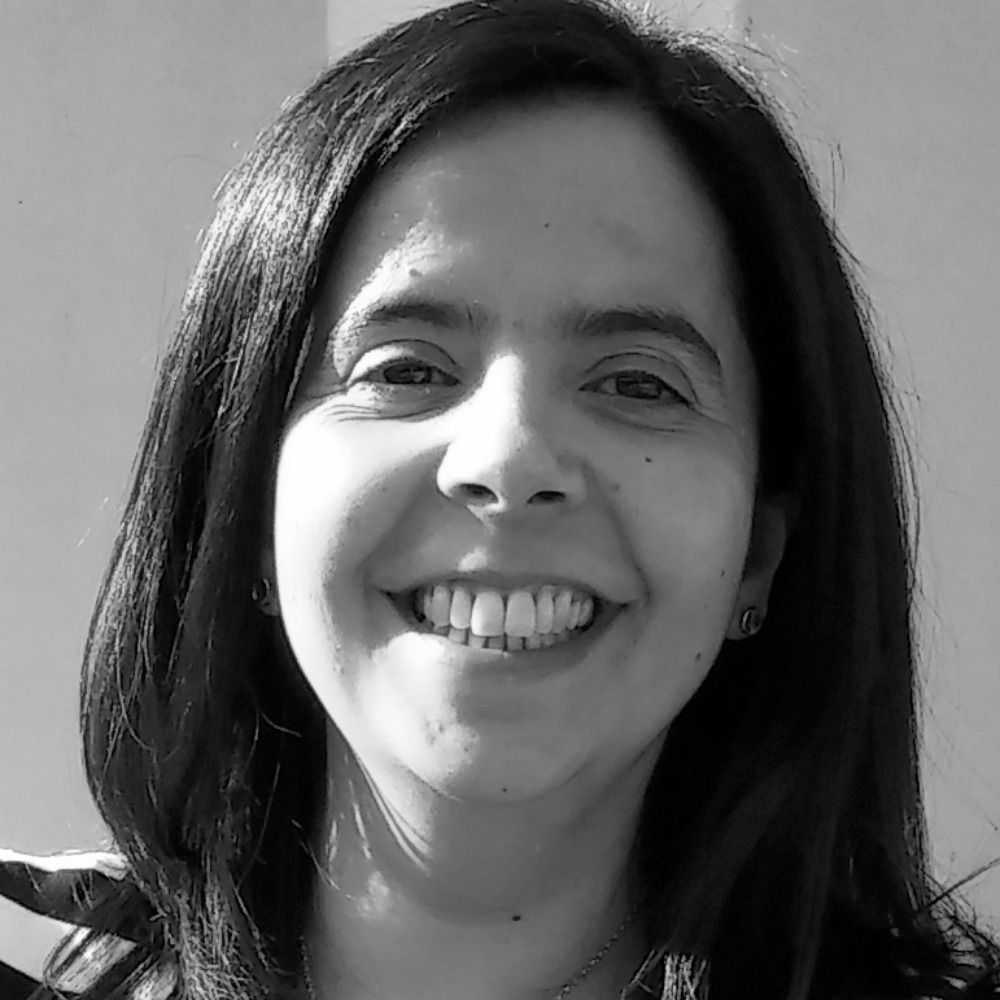
Lovely to have 5 “generations” of #Salgadolab PhD students together at #ccp4north! In chronological order: @adamcrawshaw.bsky.social, Paola Lanzoni-Mangutchi, @vic0210.bsky.social, Ellie Rockliff and @pav2601.bsky.social. #proudPI

November 7, 2025 at 9:47 AM
Lovely to have 5 “generations” of #Salgadolab PhD students together at #ccp4north! In chronological order: @adamcrawshaw.bsky.social, Paola Lanzoni-Mangutchi, @vic0210.bsky.social, Ellie Rockliff and @pav2601.bsky.social. #proudPI