




Cecile Lorrain
@ccilelorrain.bsky.social
SNSF Ambizione Fellow | Junior PI in Plant Pathology @ ETH Zürich | Specializing in fungal genome architecture & TE-driven evolution
lorrainlab.owlstown.net
lorrainlab.owlstown.net
Reposted by Cecile Lorrain

#Antifungal resistance is a global threat, but epigenetic mechanisms drive rapid, reversible adaptation in fungi. This study shows that #RNAi or #heterochromatin driven #epimutations transiently silence the gene fkbA to confer FK506 #tacrolimus resistance in #Mucor @plosbiology.org 🧪 plos.io/4qdttWc

February 3, 2026 at 2:00 PM
#Antifungal resistance is a global threat, but epigenetic mechanisms drive rapid, reversible adaptation in fungi. This study shows that #RNAi or #heterochromatin driven #epimutations transiently silence the gene fkbA to confer FK506 #tacrolimus resistance in #Mucor @plosbiology.org 🧪 plos.io/4qdttWc
Reposted by Cecile Lorrain

How do compartmentalization & loop extrusion organize eukaryotic genomes beyond classical model organisms?
Hi-C analysis of silkworm chromosomes by Drinnenberg, Muller, Mirny et al reveals new combination of these mechanisms, and a new, secluded “S” compartment
link.springer.com/article/10.1...
Hi-C analysis of silkworm chromosomes by Drinnenberg, Muller, Mirny et al reveals new combination of these mechanisms, and a new, secluded “S” compartment
link.springer.com/article/10.1...

Unique territorial and compartmental organization of chromosomes in the holocentric silkworm - The EMBO Journal
Hallmarks of multicellular eukaryotic genome organization are chromosome territories, compartments, and loop-extrusion-mediated structures, including TADs. However, these have mainly been observed in ...
link.springer.com
February 3, 2026 at 10:37 AM
How do compartmentalization & loop extrusion organize eukaryotic genomes beyond classical model organisms?
Hi-C analysis of silkworm chromosomes by Drinnenberg, Muller, Mirny et al reveals new combination of these mechanisms, and a new, secluded “S” compartment
link.springer.com/article/10.1...
Hi-C analysis of silkworm chromosomes by Drinnenberg, Muller, Mirny et al reveals new combination of these mechanisms, and a new, secluded “S” compartment
link.springer.com/article/10.1...
Reposted by Cecile Lorrain
I had intended to post something about this new Google DeepMind paper that appeared yesterday in Nature, but the press coverage has added to what there is to say. So this is a long 🧵
www.nature.com/articles/s41...
www.nature.com/articles/s41...

Advancing regulatory variant effect prediction with AlphaGenome - Nature
AlphaGenome, a deep learning model that inputs 1-Mb DNA sequence to predict functional genomic tracks at single-base resolution across diverse modalities, outperforms existing models in variant effect...
www.nature.com
January 30, 2026 at 9:47 AM
I had intended to post something about this new Google DeepMind paper that appeared yesterday in Nature, but the press coverage has added to what there is to say. So this is a long 🧵
www.nature.com/articles/s41...
www.nature.com/articles/s41...
Reposted by Cecile Lorrain

What enables a fungus to invade a mammal host? @marco-guerreiro.bsky.social unravels signatures of translation adaptation among pathogenic and non-pathogenic species of Trichosporonales. See more: www.nature.com/articles/s41...

Genomic and physiological signatures of adaptation in pathogenic fungi - Nature Communications
Emerging fungal pathogens have detrimental impacts on crops, animals, and humans, however little is known about their transition to a pathogenic lifestyle. This study demonstrates that the transition ...
www.nature.com
January 27, 2026 at 6:55 PM
What enables a fungus to invade a mammal host? @marco-guerreiro.bsky.social unravels signatures of translation adaptation among pathogenic and non-pathogenic species of Trichosporonales. See more: www.nature.com/articles/s41...
Reposted by Cecile Lorrain

It is finally out! If you are interested in TE-derived CREs, and newly described, but evolutionary old KZFP-TE mechanistic modalities, read it at www.cell.com/cell-reports....
Thankful to everyone who took part in this work, namely @orpsf.bsky.social and other @trono-lab.bsky.social members. 🫀🧬✨
Thankful to everyone who took part in this work, namely @orpsf.bsky.social and other @trono-lab.bsky.social members. 🫀🧬✨

Tissue-specific restriction of transposon-derived regulatory elements safeguards cell-type identity
Milovanović et al. uncover a mechanism by which KZFPs restrict the activity of transposon-derived
cis-regulatory elements to safeguard cardiomyocyte functionality. This work extends
the classical TE-K...
www.cell.com
January 29, 2026 at 2:20 PM
It is finally out! If you are interested in TE-derived CREs, and newly described, but evolutionary old KZFP-TE mechanistic modalities, read it at www.cell.com/cell-reports....
Thankful to everyone who took part in this work, namely @orpsf.bsky.social and other @trono-lab.bsky.social members. 🫀🧬✨
Thankful to everyone who took part in this work, namely @orpsf.bsky.social and other @trono-lab.bsky.social members. 🫀🧬✨
Reposted by Cecile Lorrain

🌱 How do plants use dynamic chromatin remodeling to fine-tune transcriptional responses to cold?
Polycomb VIL1 uses H3K27me3 to regulate chromatin architecture at the CBF cluster, modulating growth at low ambient temperature.
🔗 doi.org/10.1093/plce...
#PlantScience #Epigenetics #ChromatinBiology
Polycomb VIL1 uses H3K27me3 to regulate chromatin architecture at the CBF cluster, modulating growth at low ambient temperature.
🔗 doi.org/10.1093/plce...
#PlantScience #Epigenetics #ChromatinBiology

Chromatin remodeling at the C-REPEAT BINDING FACTOR cluster controls growth retardation at low ambient temperature
Plants adapt to low ambient temperatures using a temperature-sensitive control system that remodels chromatin to control growth.
doi.org
January 27, 2026 at 10:08 AM
🌱 How do plants use dynamic chromatin remodeling to fine-tune transcriptional responses to cold?
Polycomb VIL1 uses H3K27me3 to regulate chromatin architecture at the CBF cluster, modulating growth at low ambient temperature.
🔗 doi.org/10.1093/plce...
#PlantScience #Epigenetics #ChromatinBiology
Polycomb VIL1 uses H3K27me3 to regulate chromatin architecture at the CBF cluster, modulating growth at low ambient temperature.
🔗 doi.org/10.1093/plce...
#PlantScience #Epigenetics #ChromatinBiology
Reposted by Cecile Lorrain
Very happy to see this published: doi.org/10.1093/nar/...: a GRN-based approach to predict regulatory subnetworks for developmental and pathogenic processes in Aspergillus fumigatus and GRAsp: a network viz tool: grasp.wid.wisc.edu with @jeanmichelane.bsky.social and Nancy Keller labs!

A network-based model of Aspergillus fumigatus elucidates regulators of development and defensive natural products of an opportunistic pathogen
Abstract. Aspergillus fumigatus is a notorious pathogenic fungus responsible for various harmful, sometimes lethal, diseases known as aspergilloses. Unders
doi.org
January 13, 2026 at 4:49 AM
Very happy to see this published: doi.org/10.1093/nar/...: a GRN-based approach to predict regulatory subnetworks for developmental and pathogenic processes in Aspergillus fumigatus and GRAsp: a network viz tool: grasp.wid.wisc.edu with @jeanmichelane.bsky.social and Nancy Keller labs!
Reposted by Cecile Lorrain

Epigenetics Update - Interplay between cohesin and RNA polymerase II in regulating chromatin interactions and gene transcription go.nature.com/49iRJkK
Albert W. Cheng and Yijun Ruan (Jackson Laboratory) reporting in NSMB
#Epigenetics #Chromatin
---
Discover the breakthrough at epigenometech.com
Albert W. Cheng and Yijun Ruan (Jackson Laboratory) reporting in NSMB
#Epigenetics #Chromatin
---
Discover the breakthrough at epigenometech.com

January 15, 2026 at 8:19 AM
Epigenetics Update - Interplay between cohesin and RNA polymerase II in regulating chromatin interactions and gene transcription go.nature.com/49iRJkK
Albert W. Cheng and Yijun Ruan (Jackson Laboratory) reporting in NSMB
#Epigenetics #Chromatin
---
Discover the breakthrough at epigenometech.com
Albert W. Cheng and Yijun Ruan (Jackson Laboratory) reporting in NSMB
#Epigenetics #Chromatin
---
Discover the breakthrough at epigenometech.com
Reposted by Cecile Lorrain

Sharing our lab’s first publication! Probing clinical isolates of Cryptococcus, a disease-causing fungus of the lungs and brain, we found multiple heat-mobile elements that ‘jump’ in the genome at body temperature (!) with the ability to drive adaptive changes. journals.plos.org/plosgenetics...

January 17, 2026 at 12:33 PM
Sharing our lab’s first publication! Probing clinical isolates of Cryptococcus, a disease-causing fungus of the lungs and brain, we found multiple heat-mobile elements that ‘jump’ in the genome at body temperature (!) with the ability to drive adaptive changes. journals.plos.org/plosgenetics...
Reposted by Cecile Lorrain

Fresh news on de novo genes! Happy to present our latest work published in Nature communications: www.nature.com/articles/s41...
Keywords not in specific order: intergenic ORFs, de novo genes, GC content, foldability, genetic code, ancestral sequence reconstruction and more :)
Keywords not in specific order: intergenic ORFs, de novo genes, GC content, foldability, genetic code, ancestral sequence reconstruction and more :)

January 11, 2026 at 7:43 PM
Fresh news on de novo genes! Happy to present our latest work published in Nature communications: www.nature.com/articles/s41...
Keywords not in specific order: intergenic ORFs, de novo genes, GC content, foldability, genetic code, ancestral sequence reconstruction and more :)
Keywords not in specific order: intergenic ORFs, de novo genes, GC content, foldability, genetic code, ancestral sequence reconstruction and more :)
Reposted by Cecile Lorrain

New Review!
Sang Yup Lee, Bernhard Palsson & Gi Bae Kim discuss how #AI can aid microbial gene function discovery
www.nature.com/articles/s41...
#microsky
Sang Yup Lee, Bernhard Palsson & Gi Bae Kim discuss how #AI can aid microbial gene function discovery
www.nature.com/articles/s41...
#microsky

January 9, 2026 at 11:13 AM
New Review!
Sang Yup Lee, Bernhard Palsson & Gi Bae Kim discuss how #AI can aid microbial gene function discovery
www.nature.com/articles/s41...
#microsky
Sang Yup Lee, Bernhard Palsson & Gi Bae Kim discuss how #AI can aid microbial gene function discovery
www.nature.com/articles/s41...
#microsky
Reposted by Cecile Lorrain

Haplotype-resolved genome reveals allele-aware epigenetic and 3D chromatin regulation of heterosis in the tea hybrid
Lei et al.
nph.onlinelibrary.wiley.com/share/P78TTF...
Lei et al.
nph.onlinelibrary.wiley.com/share/P78TTF...

January 9, 2026 at 10:27 AM
Haplotype-resolved genome reveals allele-aware epigenetic and 3D chromatin regulation of heterosis in the tea hybrid
Lei et al.
nph.onlinelibrary.wiley.com/share/P78TTF...
Lei et al.
nph.onlinelibrary.wiley.com/share/P78TTF...
Reposted by Cecile Lorrain

Beyond excited to see this work finally out in @narjournal.bsky.social! We show that epigenetic modifiers on fungal accessory chromosomes can contribute to the overall epigenetic profile. Many thanks to @gomezlucia93.bsky.social and our other amazing collaborators 👏🏻
academic.oup.com/nar/article/...
academic.oup.com/nar/article/...

Facultative heterochromatin mediated by core and accessory chromosome-encoded H3K27-specific methyltransferases controls virulence in a fungal phytopathogen
Abstract. In many fungal phytopathogens, infection is regulated by accessory genomic regions enriched in facultative heterochromatin, but the precise role
academic.oup.com
January 7, 2026 at 3:39 PM
Beyond excited to see this work finally out in @narjournal.bsky.social! We show that epigenetic modifiers on fungal accessory chromosomes can contribute to the overall epigenetic profile. Many thanks to @gomezlucia93.bsky.social and our other amazing collaborators 👏🏻
academic.oup.com/nar/article/...
academic.oup.com/nar/article/...
Reposted by Cecile Lorrain

I am extremely proud and happy to announce that another paper from my PhD days has just been published in @natecoevo.nature.com on evolution of genome and gene regulation thanks to all the amazing people involved.
Check the paper out at:
www.nature.com/articles/s41...
Check the paper out at:
www.nature.com/articles/s41...

Deep conservation of cis-regulatory elements and chromatin organization in echinoderms uncover ancestral regulatory features of animal genomes - Nature Ecology & Evolution
Analysis of the 3D chromatin architecture and cis-regulatory elements in a sea urchin and a sea star reveals mechanisms of 3D chromatin organization in echinoderms and the long-term evolutionary dynam...
www.nature.com
January 7, 2026 at 12:08 PM
I am extremely proud and happy to announce that another paper from my PhD days has just been published in @natecoevo.nature.com on evolution of genome and gene regulation thanks to all the amazing people involved.
Check the paper out at:
www.nature.com/articles/s41...
Check the paper out at:
www.nature.com/articles/s41...
Reposted by Cecile Lorrain
Hi all!
We developed CAD-C to map chromatin organization at high res in yeast. It revealed an unexpected tight alignment: nucleosomes covering the same sequence tend to be associated across sister chromatids.
www.biorxiv.org/content/10.6...
#3DGenome #chromatin #Cohesin #centromere
We developed CAD-C to map chromatin organization at high res in yeast. It revealed an unexpected tight alignment: nucleosomes covering the same sequence tend to be associated across sister chromatids.
www.biorxiv.org/content/10.6...
#3DGenome #chromatin #Cohesin #centromere

CAD-C reveals centromere pairing and near-perfect alignment of sister chromatids
Three-dimensional (3D) genome organization plays a central role in gene regulation, chromatin folding, and genome stability. Although chromosome-conformation capture (3C)-derived methods have revoluti...
www.biorxiv.org
December 20, 2025 at 4:43 PM
Hi all!
We developed CAD-C to map chromatin organization at high res in yeast. It revealed an unexpected tight alignment: nucleosomes covering the same sequence tend to be associated across sister chromatids.
www.biorxiv.org/content/10.6...
#3DGenome #chromatin #Cohesin #centromere
We developed CAD-C to map chromatin organization at high res in yeast. It revealed an unexpected tight alignment: nucleosomes covering the same sequence tend to be associated across sister chromatids.
www.biorxiv.org/content/10.6...
#3DGenome #chromatin #Cohesin #centromere
Reposted by Cecile Lorrain

Reposted by Cecile Lorrain


Reposted by Cecile Lorrain
🧬 SPECIAL ISSUE REVIEW 🧬
In this review, Lee & Seo highlight the hierarchical organization of plant genomes, emphasizing recent advances in understanding local chromatin structures shaped by cohesins and gene borders as fundamental structural units.
🔗 doi.org/10.1093/jxb/...
#PlantScience 🧪
In this review, Lee & Seo highlight the hierarchical organization of plant genomes, emphasizing recent advances in understanding local chromatin structures shaped by cohesins and gene borders as fundamental structural units.
🔗 doi.org/10.1093/jxb/...
#PlantScience 🧪

December 24, 2025 at 10:32 AM
🧬 SPECIAL ISSUE REVIEW 🧬
In this review, Lee & Seo highlight the hierarchical organization of plant genomes, emphasizing recent advances in understanding local chromatin structures shaped by cohesins and gene borders as fundamental structural units.
🔗 doi.org/10.1093/jxb/...
#PlantScience 🧪
In this review, Lee & Seo highlight the hierarchical organization of plant genomes, emphasizing recent advances in understanding local chromatin structures shaped by cohesins and gene borders as fundamental structural units.
🔗 doi.org/10.1093/jxb/...
#PlantScience 🧪
Reposted by Cecile Lorrain
A major output of the 4D Nucleome project appeared today. This is the joint effort of many scientists working together and (publicly) sharing data and results for several years. We hope this is of interest to many genome biologists!
www.nature.com/articles/s41...
www.nature.com/articles/s41...

An integrated view of the structure and function of the human 4D nucleome - Nature
The 4D Nucleome Project demonstrates the use of genomic assays and computational methods to measure genome folding and then predict genomic structure from DNA sequence, facilitatin...
www.nature.com
December 17, 2025 at 8:59 PM
A major output of the 4D Nucleome project appeared today. This is the joint effort of many scientists working together and (publicly) sharing data and results for several years. We hope this is of interest to many genome biologists!
www.nature.com/articles/s41...
www.nature.com/articles/s41...
Reposted by Cecile Lorrain

CUT&ID for simultaneous profiling of protein-DNA and protein-protein interactions https://www.biorxiv.org/content/10.64898/2025.12.11.693662v1
December 12, 2025 at 11:16 PM
CUT&ID for simultaneous profiling of protein-DNA and protein-protein interactions https://www.biorxiv.org/content/10.64898/2025.12.11.693662v1
Reposted by Cecile Lorrain

Can we tune a plant’s epigenetic toolkit to disrupt plant homeostasis in ways that enable phenotypic innovation?
🌱Check out our new Opinion Paper with @thanvisrikant.bsky.social discussing this topic in @cp-trendsplantsci.bsky.social!
www.sciencedirect.com/science/arti...
🌱Check out our new Opinion Paper with @thanvisrikant.bsky.social discussing this topic in @cp-trendsplantsci.bsky.social!
www.sciencedirect.com/science/arti...

December 12, 2025 at 11:49 AM
Can we tune a plant’s epigenetic toolkit to disrupt plant homeostasis in ways that enable phenotypic innovation?
🌱Check out our new Opinion Paper with @thanvisrikant.bsky.social discussing this topic in @cp-trendsplantsci.bsky.social!
www.sciencedirect.com/science/arti...
🌱Check out our new Opinion Paper with @thanvisrikant.bsky.social discussing this topic in @cp-trendsplantsci.bsky.social!
www.sciencedirect.com/science/arti...
Reposted by Cecile Lorrain

Have you ever wondered how new DNA methylation patterns are established?
Paradigm shift ahead! We discovered a new mode of DNA methylation targeting in plants that relies on transcription factors and sequence motifs rather than chromatin modifications to regulate the methylome. rdcu.be/eQ6L5
1/8
Paradigm shift ahead! We discovered a new mode of DNA methylation targeting in plants that relies on transcription factors and sequence motifs rather than chromatin modifications to regulate the methylome. rdcu.be/eQ6L5
1/8

December 11, 2025 at 9:56 PM
Have you ever wondered how new DNA methylation patterns are established?
Paradigm shift ahead! We discovered a new mode of DNA methylation targeting in plants that relies on transcription factors and sequence motifs rather than chromatin modifications to regulate the methylome. rdcu.be/eQ6L5
1/8
Paradigm shift ahead! We discovered a new mode of DNA methylation targeting in plants that relies on transcription factors and sequence motifs rather than chromatin modifications to regulate the methylome. rdcu.be/eQ6L5
1/8
Reposted by Cecile Lorrain
Editor’s Pick! Silvia Minana-Posada et al. combined multiple approaches to investigate how the wheat pathogen Zymoseptoria tritici responds to and recovers from temperature shocks. Read the open access Editor’s Pick to learn more: https://doi.org/10.1094/PHYTO-02-25-0057-R

December 10, 2025 at 7:12 PM
Editor’s Pick! Silvia Minana-Posada et al. combined multiple approaches to investigate how the wheat pathogen Zymoseptoria tritici responds to and recovers from temperature shocks. Read the open access Editor’s Pick to learn more: https://doi.org/10.1094/PHYTO-02-25-0057-R
Reposted by Cecile Lorrain

Confused by all the histones that are cropping up in organisms that are decidedly NOT eukaryotes? check out our review - fantastic work by team NucEvo in the #Lugerlab
The Expanding Histone Universe: Histone-Based DNA Organization in Noneukaryotic Organisms - www.annualreviews.org/content/jour...
The Expanding Histone Universe: Histone-Based DNA Organization in Noneukaryotic Organisms - www.annualreviews.org/content/jour...

December 9, 2025 at 3:14 PM
Confused by all the histones that are cropping up in organisms that are decidedly NOT eukaryotes? check out our review - fantastic work by team NucEvo in the #Lugerlab
The Expanding Histone Universe: Histone-Based DNA Organization in Noneukaryotic Organisms - www.annualreviews.org/content/jour...
The Expanding Histone Universe: Histone-Based DNA Organization in Noneukaryotic Organisms - www.annualreviews.org/content/jour...
Reposted by Cecile Lorrain
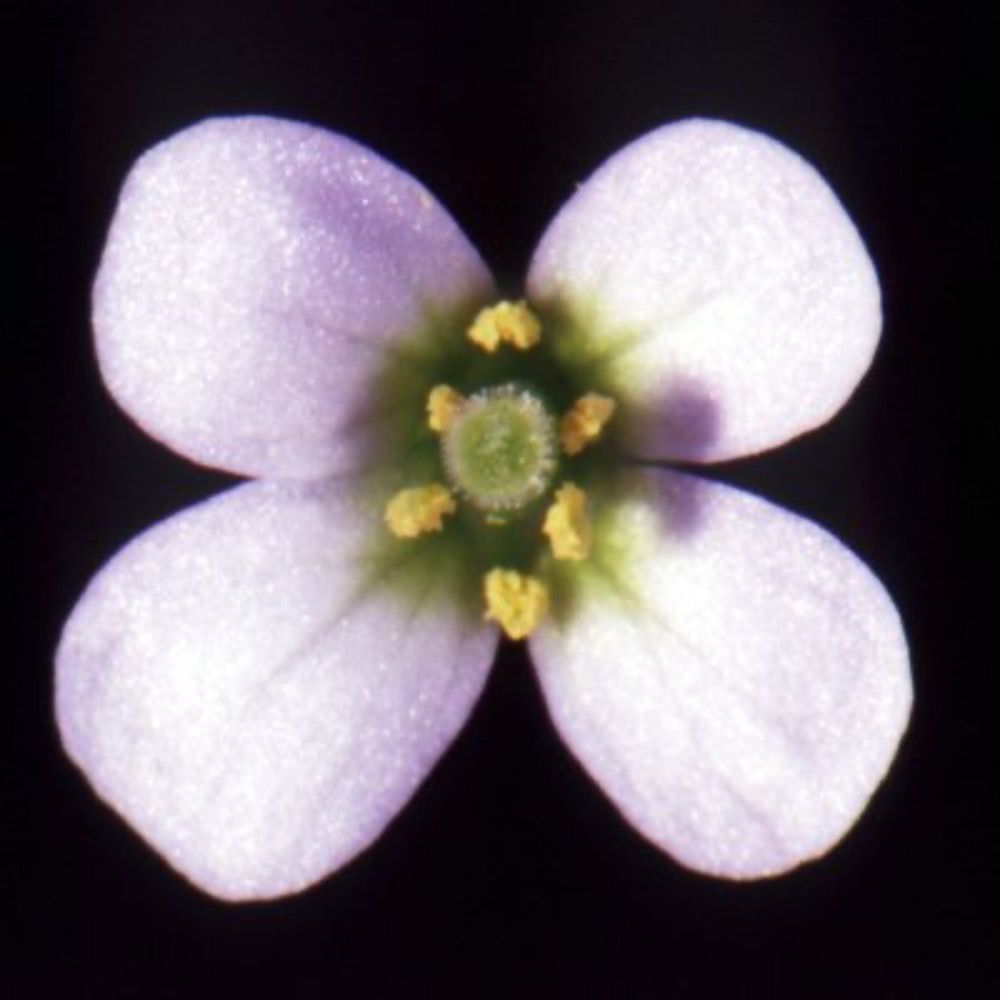
Out after peer review, collaborative study from Nordborg & Weigel labs with help from many others. Not the largest collection of new Arabidopsis thaliana genomes, but we hopefully put forward some good ideas for how to think about pangenomes and their analysis!
www.nature.com/articles/s41...
www.nature.com/articles/s41...

August 20, 2025 at 6:23 AM
Out after peer review, collaborative study from Nordborg & Weigel labs with help from many others. Not the largest collection of new Arabidopsis thaliana genomes, but we hopefully put forward some good ideas for how to think about pangenomes and their analysis!
www.nature.com/articles/s41...
www.nature.com/articles/s41...