



David Pires
@david1822.bsky.social
🪱 Nematologist at INIAV, IP | 🎓 PhD candidate at the UEvora | 🛡️🌱 #Biocontrol | 🍄 Fungi-nematode interactions | 💬 Opinions are my own | 🏳️🌈 He/him |
➡️ https://sites.google.com/view/davidpires/home
➡️ https://sites.google.com/view/davidpires/home
Pinned

🌱🦠 New preprint out!
What if soil is not just a passive background for plant diseases, but an active battlefield & reservoir?
Our review explores how soil structure & microbiomes jointly shape the emergence & persistence of plant pathogens: doi.org/10.21203/rs....
Feedback & discussion welcome.
What if soil is not just a passive background for plant diseases, but an active battlefield & reservoir?
Our review explores how soil structure & microbiomes jointly shape the emergence & persistence of plant pathogens: doi.org/10.21203/rs....
Feedback & discussion welcome.
🌱🦠 New preprint out!
What if soil is not just a passive background for plant diseases, but an active battlefield & reservoir?
Our review explores how soil structure & microbiomes jointly shape the emergence & persistence of plant pathogens: doi.org/10.21203/rs....
Feedback & discussion welcome.
What if soil is not just a passive background for plant diseases, but an active battlefield & reservoir?
Our review explores how soil structure & microbiomes jointly shape the emergence & persistence of plant pathogens: doi.org/10.21203/rs....
Feedback & discussion welcome.
February 5, 2026 at 9:46 AM
🌱🦠 New preprint out!
What if soil is not just a passive background for plant diseases, but an active battlefield & reservoir?
Our review explores how soil structure & microbiomes jointly shape the emergence & persistence of plant pathogens: doi.org/10.21203/rs....
Feedback & discussion welcome.
What if soil is not just a passive background for plant diseases, but an active battlefield & reservoir?
Our review explores how soil structure & microbiomes jointly shape the emergence & persistence of plant pathogens: doi.org/10.21203/rs....
Feedback & discussion welcome.
Reposted by David Pires
Academic precarity in Portugal, a guest post with my examples on how to succeed anyway:
forbetterscience.com/2026/02/04/a...
forbetterscience.com/2026/02/04/a...

Academic precarity in Portugal
“In Portugal more than 95% of all research activities are carried out under precarious labour conditions, by undergraduate and PhD researchers employed under a variety of temporary contracts,…
forbetterscience.com
February 4, 2026 at 9:03 AM
Academic precarity in Portugal, a guest post with my examples on how to succeed anyway:
forbetterscience.com/2026/02/04/a...
forbetterscience.com/2026/02/04/a...
Reposted by David Pires
Imagine still viewing animals and plants as discrete entities in 2026. To ignore the shift toward holobiont terminology at this stage is to admit you’ve willfully stopped reading the literature, basically on how host systems work.
journals.asm.org/doi/10.1128/...
journals.asm.org/doi/10.1128/...

Dormancy and reactivation of the seed and its microbiome: a holobiont perspective | mSystems
Desiccation tolerance—the ability of organisms to withstand severe water loss and
subsequently revive—is a key trait acquired by seeds of most plant species during
the final stages of development, whe...
journals.asm.org
February 4, 2026 at 2:16 PM
Imagine still viewing animals and plants as discrete entities in 2026. To ignore the shift toward holobiont terminology at this stage is to admit you’ve willfully stopped reading the literature, basically on how host systems work.
journals.asm.org/doi/10.1128/...
journals.asm.org/doi/10.1128/...
Reposted by David Pires
Biological control of soybean cyst #nematode (SCN) using fungi associated with cyst nematodes shows promise. Vijay Kunwar et al. screened 75 fungal isolates across 55 species associated with different cyst nematodes to assess antagonistic effects on SCN: https://doi.org/10.1094/PHYTO-03-25-0094-R

February 2, 2026 at 5:10 PM
Biological control of soybean cyst #nematode (SCN) using fungi associated with cyst nematodes shows promise. Vijay Kunwar et al. screened 75 fungal isolates across 55 species associated with different cyst nematodes to assess antagonistic effects on SCN: https://doi.org/10.1094/PHYTO-03-25-0094-R
📈 Really happy to see my first PhD chapter getting some traction: the article has reached 200 reads on ResearchGate. www.researchgate.net/profile/Davi...
📄 Full paper: doi.org/10.1016/j.fu...
📄 Full paper: doi.org/10.1016/j.fu...

February 3, 2026 at 10:38 AM
📈 Really happy to see my first PhD chapter getting some traction: the article has reached 200 reads on ResearchGate. www.researchgate.net/profile/Davi...
📄 Full paper: doi.org/10.1016/j.fu...
📄 Full paper: doi.org/10.1016/j.fu...
🤦♂️ Am I the only one getting fed up with the proliferation of half-baked, AI-generated, and often inaccurate images on social media, and increasingly in papers?

January 30, 2026 at 4:23 PM
🤦♂️ Am I the only one getting fed up with the proliferation of half-baked, AI-generated, and often inaccurate images on social media, and increasingly in papers?
Reposted by David Pires
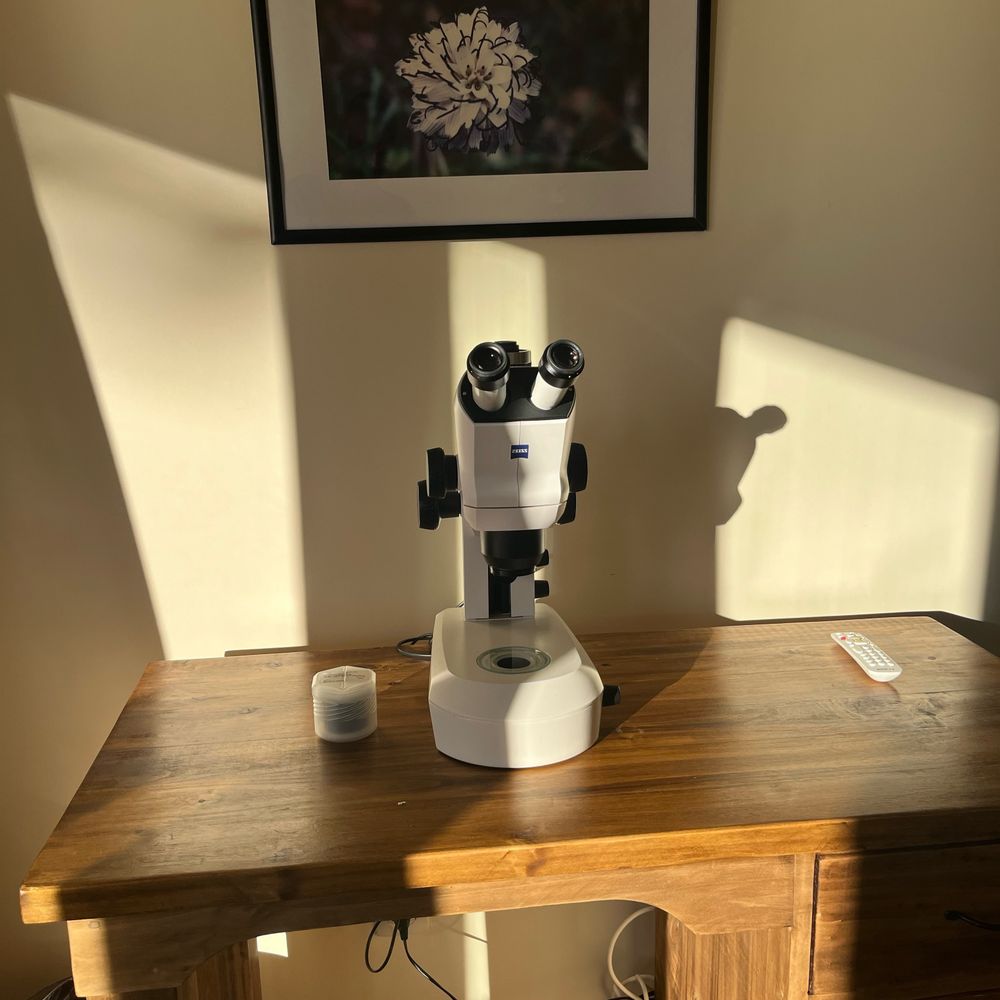
Yesterday I had the great pleasure to talk with Simon Steel
@setiinstitute.bsky.social about cryptobiotic nematodes. You can watch it here:
www.youtube.com/live/K27rhxm...
@setiinstitute.bsky.social about cryptobiotic nematodes. You can watch it here:
www.youtube.com/live/K27rhxm...

Life After Ice: 46,000-Year-Old Worms Wake Up
YouTube video by SETI Institute
www.youtube.com
January 30, 2026 at 7:25 AM
Yesterday I had the great pleasure to talk with Simon Steel
@setiinstitute.bsky.social about cryptobiotic nematodes. You can watch it here:
www.youtube.com/live/K27rhxm...
@setiinstitute.bsky.social about cryptobiotic nematodes. You can watch it here:
www.youtube.com/live/K27rhxm...
Reposted by David Pires

Last chance to join our YNN session at #ESN2026. Abstract submission closes tomorrow!
Excited to announce we are organising a YNN themed session at the 36th Symposium of the European Society of Nematologists June 1–5, 2026. This session will explore unexpected or negative results to extract meaningful messages. Submit your abstract until the 30th January -> forms.gle/9wU8tGbwLxaS...

January 29, 2026 at 6:23 PM
Last chance to join our YNN session at #ESN2026. Abstract submission closes tomorrow!
Reposted by David Pires
🟢 Webinar - Let’s Talk About Planted Forests
📅 Join online to discuss maritime pine and pine wood nematode in South-West Europe: status and challenge.
🕑 27 February 2026 at 2:00 PM CET (Paris Time)
📢 Registration: www.plantedforests.org/webinar-lets...
#forest #plantedforest #ForestScience
📅 Join online to discuss maritime pine and pine wood nematode in South-West Europe: status and challenge.
🕑 27 February 2026 at 2:00 PM CET (Paris Time)
📢 Registration: www.plantedforests.org/webinar-lets...
#forest #plantedforest #ForestScience

January 29, 2026 at 3:40 PM
🟢 Webinar - Let’s Talk About Planted Forests
📅 Join online to discuss maritime pine and pine wood nematode in South-West Europe: status and challenge.
🕑 27 February 2026 at 2:00 PM CET (Paris Time)
📢 Registration: www.plantedforests.org/webinar-lets...
#forest #plantedforest #ForestScience
📅 Join online to discuss maritime pine and pine wood nematode in South-West Europe: status and challenge.
🕑 27 February 2026 at 2:00 PM CET (Paris Time)
📢 Registration: www.plantedforests.org/webinar-lets...
#forest #plantedforest #ForestScience
📅 Webinar: Maritime pine and pine wood #nematode in South-West Europe: status and challenge
🕑 27 February 2026 at 2:00 PM CET (Paris Time)
📢 Registration: www.plantedforests.org/webinar-lets...
🕑 27 February 2026 at 2:00 PM CET (Paris Time)
📢 Registration: www.plantedforests.org/webinar-lets...

Webinar – Let’s Talk About Planted Forests – 27 February 2026 - European Institute of Planted Forest - IEFC
www.plantedforests.org
January 29, 2026 at 2:19 PM
📅 Webinar: Maritime pine and pine wood #nematode in South-West Europe: status and challenge
🕑 27 February 2026 at 2:00 PM CET (Paris Time)
📢 Registration: www.plantedforests.org/webinar-lets...
🕑 27 February 2026 at 2:00 PM CET (Paris Time)
📢 Registration: www.plantedforests.org/webinar-lets...
Reposted by David Pires

How does evolution turn a harmless bacterial feeder into an active predator?
Our new study led by @marianneroca.bsky.social and published in @pnas.org explores how sensory systems were rewired to enable prey detection and predatory behaviour in nematodes.
www.pnas.org/doi/10.1073/...
🧵below!
Our new study led by @marianneroca.bsky.social and published in @pnas.org explores how sensory systems were rewired to enable prey detection and predatory behaviour in nematodes.
www.pnas.org/doi/10.1073/...
🧵below!

Evolution of sensory systems underlies the emergence of predatory feeding behaviors in nematodes | PNAS
Understanding how animal behavior evolves remains a major challenge, with few studies
linking genetic changes to differences in neural function and...
www.pnas.org
January 29, 2026 at 12:30 PM
How does evolution turn a harmless bacterial feeder into an active predator?
Our new study led by @marianneroca.bsky.social and published in @pnas.org explores how sensory systems were rewired to enable prey detection and predatory behaviour in nematodes.
www.pnas.org/doi/10.1073/...
🧵below!
Our new study led by @marianneroca.bsky.social and published in @pnas.org explores how sensory systems were rewired to enable prey detection and predatory behaviour in nematodes.
www.pnas.org/doi/10.1073/...
🧵below!
Reposted by David Pires

📢 January's Reporting Service is OUT NOW!
📖 Read about the latest phytosanitary updates for the EPPO region in November's reporting service.
🔓 Free to read in English and French at gd.eppo.int/reporting/Rs...
📖 Read about the latest phytosanitary updates for the EPPO region in November's reporting service.
🔓 Free to read in English and French at gd.eppo.int/reporting/Rs...

January 29, 2026 at 1:41 PM
📢 January's Reporting Service is OUT NOW!
📖 Read about the latest phytosanitary updates for the EPPO region in November's reporting service.
🔓 Free to read in English and French at gd.eppo.int/reporting/Rs...
📖 Read about the latest phytosanitary updates for the EPPO region in November's reporting service.
🔓 Free to read in English and French at gd.eppo.int/reporting/Rs...
Reposted by David Pires

Why do scientific societies matter now more than ever?
Scientists board explore how societies support researchers, foster global collaboration, & shape the future of science. A must-read for all career stages 👍
🔗 buff.ly/YW2XUN3
#plantscience #science
Scientists board explore how societies support researchers, foster global collaboration, & shape the future of science. A must-read for all career stages 👍
🔗 buff.ly/YW2XUN3
#plantscience #science

January 6, 2026 at 11:30 AM
Why do scientific societies matter now more than ever?
Scientists board explore how societies support researchers, foster global collaboration, & shape the future of science. A must-read for all career stages 👍
🔗 buff.ly/YW2XUN3
#plantscience #science
Scientists board explore how societies support researchers, foster global collaboration, & shape the future of science. A must-read for all career stages 👍
🔗 buff.ly/YW2XUN3
#plantscience #science
Reposted by David Pires

"… I have come to appreciate that success isn’t solely a matter of high-impact papers or the steep climb up the academic ladder. For me, it now means tracing my own path, one that is sustainable and isn’t defined by what others expect of me." #ScienceWorkingLife https://scim.ag/4abAzWo

January 26, 2026 at 3:00 PM
"… I have come to appreciate that success isn’t solely a matter of high-impact papers or the steep climb up the academic ladder. For me, it now means tracing my own path, one that is sustainable and isn’t defined by what others expect of me." #ScienceWorkingLife https://scim.ag/4abAzWo
Reposted by David Pires

Agriculture depends on crop-associated microbiome. Orozco-Mosqueda et al. examine how endophytic and arbuscular mycorrhizal #fungi colonize plants and contribute to growth in coordination with the plant microbiome.
#FEMSMicrobiolRev
buff.ly/xMFmJxa
#FEMSMicrobiolRev
buff.ly/xMFmJxa

January 19, 2026 at 9:01 AM
Agriculture depends on crop-associated microbiome. Orozco-Mosqueda et al. examine how endophytic and arbuscular mycorrhizal #fungi colonize plants and contribute to growth in coordination with the plant microbiome.
#FEMSMicrobiolRev
buff.ly/xMFmJxa
#FEMSMicrobiolRev
buff.ly/xMFmJxa
Reposted by David Pires
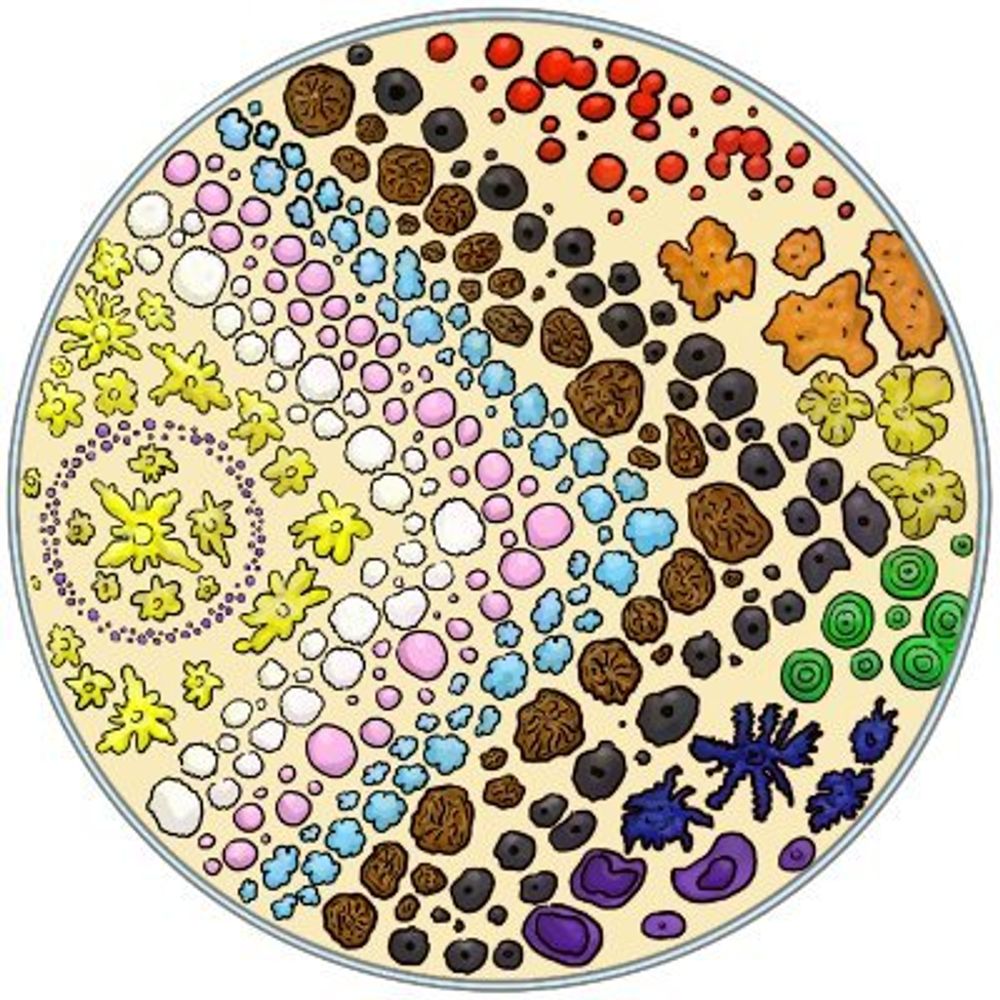
📢 🏳️🌈🦠
We are expanding our matching program for 2SLGBTQIA+ microbiologists! Whether you need a mentor, a collaborator, or community support, we can help you.
🔗 Mentorship & Geo-matching:
tinyurl.com/5cdyppys
🔗 Research Interest Groups:
tinyurl.com/4p88bm4k
#Microbiology #QueerInSTEM
We are expanding our matching program for 2SLGBTQIA+ microbiologists! Whether you need a mentor, a collaborator, or community support, we can help you.
🔗 Mentorship & Geo-matching:
tinyurl.com/5cdyppys
🔗 Research Interest Groups:
tinyurl.com/4p88bm4k
#Microbiology #QueerInSTEM

January 27, 2026 at 7:30 PM
📢 🏳️🌈🦠
We are expanding our matching program for 2SLGBTQIA+ microbiologists! Whether you need a mentor, a collaborator, or community support, we can help you.
🔗 Mentorship & Geo-matching:
tinyurl.com/5cdyppys
🔗 Research Interest Groups:
tinyurl.com/4p88bm4k
#Microbiology #QueerInSTEM
We are expanding our matching program for 2SLGBTQIA+ microbiologists! Whether you need a mentor, a collaborator, or community support, we can help you.
🔗 Mentorship & Geo-matching:
tinyurl.com/5cdyppys
🔗 Research Interest Groups:
tinyurl.com/4p88bm4k
#Microbiology #QueerInSTEM
Reposted by David Pires
We're delighted to share we've been awarded the 2026 Microbiology Society EDI Award!
Our founders, Landon Getz, Bruno Oliveira, and Edel Pérez-López, will receive the award and talk about our accomplishments in Belfast (UK) from April 13 to 16.
Read more:
tinyurl.com/yf3v7fu8
Our founders, Landon Getz, Bruno Oliveira, and Edel Pérez-López, will receive the award and talk about our accomplishments in Belfast (UK) from April 13 to 16.
Read more:
tinyurl.com/yf3v7fu8

January 26, 2026 at 6:03 PM
We're delighted to share we've been awarded the 2026 Microbiology Society EDI Award!
Our founders, Landon Getz, Bruno Oliveira, and Edel Pérez-López, will receive the award and talk about our accomplishments in Belfast (UK) from April 13 to 16.
Read more:
tinyurl.com/yf3v7fu8
Our founders, Landon Getz, Bruno Oliveira, and Edel Pérez-López, will receive the award and talk about our accomplishments in Belfast (UK) from April 13 to 16.
Read more:
tinyurl.com/yf3v7fu8
📢 Officially in print!
“Multiple factors associated with forest decline in the context of control measures for the pinewood #nematode” is out in Eur J of Plant Pathol: doi.org/10.1007/s106...
🌲 We show that managing PWD is ecologically complex & that focusing on a single cause is detrimental.
“Multiple factors associated with forest decline in the context of control measures for the pinewood #nematode” is out in Eur J of Plant Pathol: doi.org/10.1007/s106...
🌲 We show that managing PWD is ecologically complex & that focusing on a single cause is detrimental.

Multiple factors associated with forest decline in the context of control measures for the pinewood nematode - European Journal of Plant Pathology
Forest decline is a complex phenomenon; however, there is often a tendency to oversimplify by attributing it to a single cause, neglecting the interaction of multiple factors. Ever since the detection...
doi.org
January 26, 2026 at 7:29 PM
📢 Officially in print!
“Multiple factors associated with forest decline in the context of control measures for the pinewood #nematode” is out in Eur J of Plant Pathol: doi.org/10.1007/s106...
🌲 We show that managing PWD is ecologically complex & that focusing on a single cause is detrimental.
“Multiple factors associated with forest decline in the context of control measures for the pinewood #nematode” is out in Eur J of Plant Pathol: doi.org/10.1007/s106...
🌲 We show that managing PWD is ecologically complex & that focusing on a single cause is detrimental.
Reposted by David Pires
Vertebrates in general a boring. Plants, fungi, nematodes, unicellular eukaryotes, that’s where it is happening.
As a mammal, I'm offended but intrigued.
'Given the relatively low rate of diversification of mammalian species compared with the overwhelming number and ecological dominance of angiosperms (...), we hypothesized that gene expression levels have evolved at different rates in both clades & kingdoms.
'Given the relatively low rate of diversification of mammalian species compared with the overwhelming number and ecological dominance of angiosperms (...), we hypothesized that gene expression levels have evolved at different rates in both clades & kingdoms.

Evolutionary transcriptomics unveils rapid changes of gene expression patterns in flowering plants
Evolutionary transcriptome analysis of seven angiosperm (flowering plant) species
uncovers rapid evolution of gene expression patterns, particularly for genes involved
in the responses to endogenous a...
www.cell.com
January 25, 2026 at 9:51 AM
Vertebrates in general a boring. Plants, fungi, nematodes, unicellular eukaryotes, that’s where it is happening.
Reposted by David Pires
After turning off ChatGPT’s ‘data consent’ option, Marcel Bucher lost the work behind grant applications, teaching materials and publication drafts
go.nature.com/4r2atei
go.nature.com/4r2atei

When two years of academic work vanished with a single click
Nature - After turning off ChatGPT’s ‘data consent’ option, Marcel Bucher lost the work behind grant applications, teaching materials and publication drafts. Here’s what happened next.
go.nature.com
January 25, 2026 at 3:23 PM
After turning off ChatGPT’s ‘data consent’ option, Marcel Bucher lost the work behind grant applications, teaching materials and publication drafts
go.nature.com/4r2atei
go.nature.com/4r2atei
Reposted by David Pires
Well done 🤓 “This study elucidates a holobiont mechanism whereby vertically transmitted seed microbes constitute a ‘symbiotic toolbox’ that differentially resuscitates under stress, thereby enhancing seedling fitness” nph.onlinelibrary.wiley.com/doi/10.1111/...

Differential ‘resuscitation’ from the seed microbiota: a plant‐holobiont ecological strategy for buffering stresses
The plant and its associated microbiota constitute a holobiont. Within this framework, the seed endophyte reservoir, shaped through multigenerational selection, exhibits pronounced host specificity,...
nph.onlinelibrary.wiley.com
January 23, 2026 at 2:17 PM
Well done 🤓 “This study elucidates a holobiont mechanism whereby vertically transmitted seed microbes constitute a ‘symbiotic toolbox’ that differentially resuscitates under stress, thereby enhancing seedling fitness” nph.onlinelibrary.wiley.com/doi/10.1111/...
Reposted by David Pires
Our latest paper is out in Nature 🥳 We investigated the underlying neuromodulatory regulation of aggressive behavior in the nematode Pristionchus pacificus 🪱🧠🔬 And we show that novel behaviors can evolve through changes of single neuron function by switches in neuromodulator-receptor expression. 👇

Predatory aggression evolved through adaptations to noradrenergic circuits - Nature
Noradrenergic circuits support and balance aggressive behavioural states in predatory nematodes, distinguish predatory from non-predatory nematode species and are associated with the evolution of comp...
www.nature.com
January 21, 2026 at 4:26 PM
Our latest paper is out in Nature 🥳 We investigated the underlying neuromodulatory regulation of aggressive behavior in the nematode Pristionchus pacificus 🪱🧠🔬 And we show that novel behaviors can evolve through changes of single neuron function by switches in neuromodulator-receptor expression. 👇
Reposted by David Pires

The NVWA is conducting extra inspections on sweet potatoes to prevent contamination by the harmful root-knot nematode Meloidogyne enterolobii.
Source: Food and Consumer Product Safety Authority
#NVWA
#MeloidogyneEnterolobii
#ZoeteAardappelen
Source: Food and Consumer Product Safety Authority
#NVWA
#MeloidogyneEnterolobii
#ZoeteAardappelen

Extra Sampling for Imported Sweet Potatoes for Meloidogyne enterolobii
The NVWA is conducting extra inspections on sweet potatoes to prevent contamination by the harmful root-knot nematode Meloidogyne enterolobii.
openrijk.nl
January 22, 2026 at 10:29 AM
The NVWA is conducting extra inspections on sweet potatoes to prevent contamination by the harmful root-knot nematode Meloidogyne enterolobii.
Source: Food and Consumer Product Safety Authority
#NVWA
#MeloidogyneEnterolobii
#ZoeteAardappelen
Source: Food and Consumer Product Safety Authority
#NVWA
#MeloidogyneEnterolobii
#ZoeteAardappelen
Reposted by David Pires
Research rarely goes as planned yet we often don’t talk about it. Did unexpected results challenge your hypothesis? Did a promising idea lead to a dead end? We want to hear about it in our special YNN session at #ESN2026.
#Nematology #OpenScience #ResearchLessons
#Nematology #OpenScience #ResearchLessons
Excited to announce we are organising a YNN themed session at the 36th Symposium of the European Society of Nematologists June 1–5, 2026. This session will explore unexpected or negative results to extract meaningful messages. Submit your abstract until the 30th January -> forms.gle/9wU8tGbwLxaS...
January 21, 2026 at 10:04 AM
Research rarely goes as planned yet we often don’t talk about it. Did unexpected results challenge your hypothesis? Did a promising idea lead to a dead end? We want to hear about it in our special YNN session at #ESN2026.
#Nematology #OpenScience #ResearchLessons
#Nematology #OpenScience #ResearchLessons
Reposted by David Pires
Les plantes aussi ont un microbiote – pourrait-on s’en servir pour se passer de phytosanitaires ?
theconversation.com/les-plantes-...
theconversation.com/les-plantes-...

Les plantes aussi ont un microbiote – pourrait-on s’en servir pour se passer de phytosanitaires ?
Grâce aux récentes avancées en séquençage du génome, nous décodons le langage entre les plantes et leurs microbiotes.
theconversation.com
January 19, 2026 at 7:43 AM
Les plantes aussi ont un microbiote – pourrait-on s’en servir pour se passer de phytosanitaires ?
theconversation.com/les-plantes-...
theconversation.com/les-plantes-...