



Fay Newbery
@fayrnhawk.bsky.social
Plant pathologist with an interest in microfungi on plants, lichens, lichenicolous fungi and aquatic hyphomycetes.
Do I need this Sarah? I think, perhaps, I do! Congratulations.
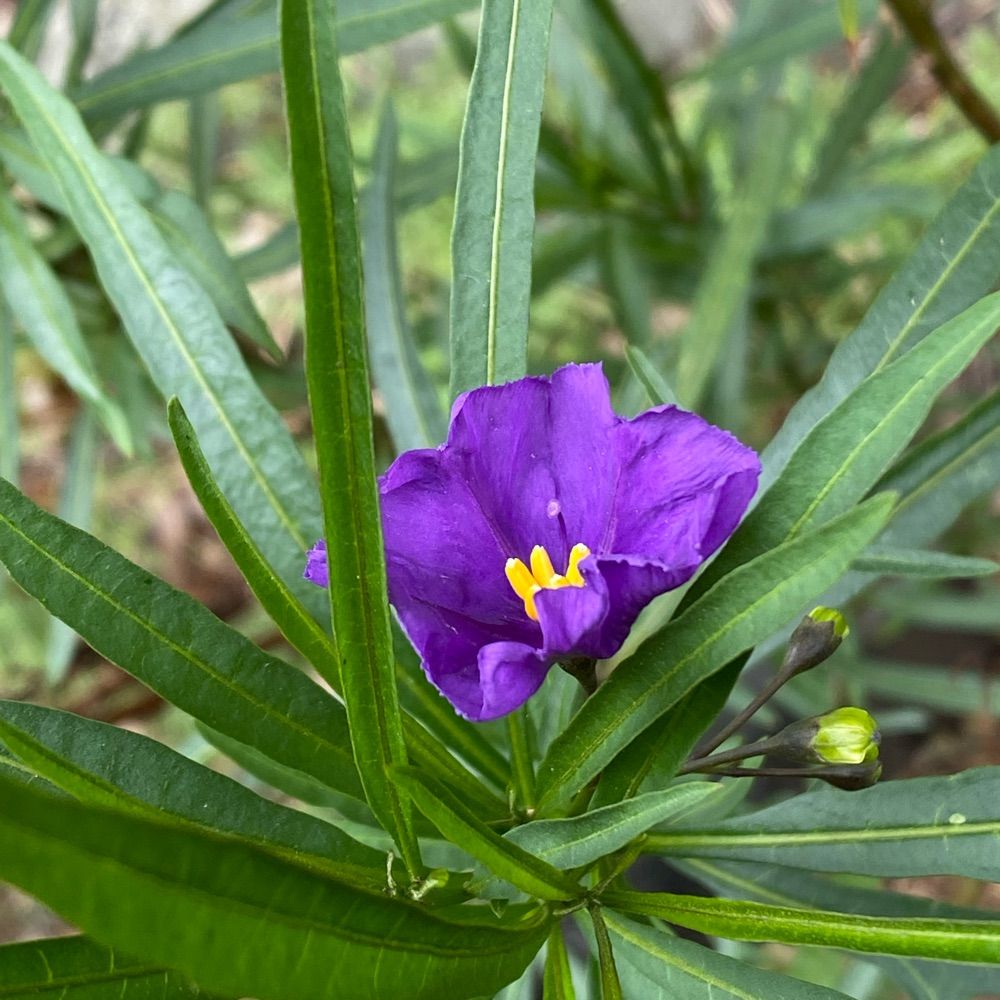
On a rainy grey February, a splendid parcel has arrived. What a relief… @pelagic.bsky.social @nfbr.bsky.social @nbntrust.bsky.social

February 2, 2026 at 1:42 PM
Do I need this Sarah? I think, perhaps, I do! Congratulations.
This looks like fun, as well as being hugely worthwhile. How can people sign up as a volunteer?

3 days of #pond management completed. We worked on 8 ponds that we restored over the last 10 years. Removing scrub is alot of fun & hugely benefits the ponds & so many species spanning plants, invertebrates, amphibians & mammals. *Thanks so much to all our brill volunteers*


February 2, 2026 at 8:24 AM
This looks like fun, as well as being hugely worthwhile. How can people sign up as a volunteer?
Reposted by Fay Newbery
Lots of Claviceps spartinae on the Spartina in the Southport saltmarsh today. On a few plants the Claviceps was hosting Fusarium heterosporum too!

February 1, 2026 at 11:30 PM
Lots of Claviceps spartinae on the Spartina in the Southport saltmarsh today. On a few plants the Claviceps was hosting Fusarium heterosporum too!
Reposted by Fay Newbery

Do microbes get more food by swimming or staying still? Turns out both work, and cilia help them pull in nutrients no matter the strategy.
buff.ly/vK3GmK5
buff.ly/vK3GmK5

Should I stay or should I swim
Evolutionary pressures have shaped the feeding behaviours of aquatic microorganisms in alignment with the underlying physics of fluid flow.
buff.ly
February 1, 2026 at 11:28 PM
Do microbes get more food by swimming or staying still? Turns out both work, and cilia help them pull in nutrients no matter the strategy.
buff.ly/vK3GmK5
buff.ly/vK3GmK5
Reposted by Fay Newbery
A great explanation on how to define a species. It’s complicated… www.scienceofbirds.com/blog/how-do-...

How Do We Define Bird ‘Species?’
The Science of Birds - What exactly is a species? The answer isn’t as simple as you might think.
www.scienceofbirds.com
February 2, 2026 at 3:41 AM
A great explanation on how to define a species. It’s complicated… www.scienceofbirds.com/blog/how-do-...
I had the honour of reading this pre-publication. It seems even better second time around! If you live in the south-east of the UK, you won't find many of the species covered but the book is still worth buying. The advice on HOW to look and how to attempt IDs is second to none.

Our #Bookofthemonth for January: Lichens of Britain and Ireland: An Introductory Guide by Frances Stoakley and Dr Rebecca Yahr. Filling a desired niche, it's a really useable and accessible guide for beginners and a faithful field guide for all! www.summerfieldbooks.com/product/lich...
January 30, 2026 at 8:11 AM
I had the honour of reading this pre-publication. It seems even better second time around! If you live in the south-east of the UK, you won't find many of the species covered but the book is still worth buying. The advice on HOW to look and how to attempt IDs is second to none.
Reposted by Fay Newbery

🦇If you want/need to work on a building that is home to a colony of bats our 'Bats and roost risk management in construction' course is for you!
- Online over two afternoons on 16 & 23 February (1:30pm - 5pm).
- Booking deadline: 15 February
Book now:
www.bats.org.uk/our-work/tra...
- Online over two afternoons on 16 & 23 February (1:30pm - 5pm).
- Booking deadline: 15 February
Book now:
www.bats.org.uk/our-work/tra...

January 28, 2026 at 4:39 PM
🦇If you want/need to work on a building that is home to a colony of bats our 'Bats and roost risk management in construction' course is for you!
- Online over two afternoons on 16 & 23 February (1:30pm - 5pm).
- Booking deadline: 15 February
Book now:
www.bats.org.uk/our-work/tra...
- Online over two afternoons on 16 & 23 February (1:30pm - 5pm).
- Booking deadline: 15 February
Book now:
www.bats.org.uk/our-work/tra...
Reposted by Fay Newbery
🦇 Everything you need to know about the Bat Conservation Trust's Nocturnal Garden at #RHSChelsea Flower Show is here: www.bats.org.uk/our-work/noc... .
Learn about the concept of the garden, our plants, the bat sculpture and more!
Designed by Melanie Hick and sponsored by #ProjectGivingBack
Learn about the concept of the garden, our plants, the bat sculpture and more!
Designed by Melanie Hick and sponsored by #ProjectGivingBack

About the garden - The Nocturnal Garden for RHS Chelsea Flower Show 2026 - Bat Conservation Trust
Everything you need to know about the Bat Conservation Trust's Nocturnal Garden at RHS Chelsea Flower Show can be found here.If you still have questions...
www.bats.org.uk
January 24, 2026 at 4:26 PM
🦇 Everything you need to know about the Bat Conservation Trust's Nocturnal Garden at #RHSChelsea Flower Show is here: www.bats.org.uk/our-work/noc... .
Learn about the concept of the garden, our plants, the bat sculpture and more!
Designed by Melanie Hick and sponsored by #ProjectGivingBack
Learn about the concept of the garden, our plants, the bat sculpture and more!
Designed by Melanie Hick and sponsored by #ProjectGivingBack
Reposted by Fay Newbery

🦋 Pan-Species Listing: Become a Super-Naturalist
Record all the wildlife you see in the UK and level up your natural history skills.
Join @graemelyons.bsky.social Lyons on 13 May to discover the world of PSL. @panspecieslisting.bsky.social
🎟️ FREE! Book now: www.eventbrite.co.uk/e/1977266072...
Record all the wildlife you see in the UK and level up your natural history skills.
Join @graemelyons.bsky.social Lyons on 13 May to discover the world of PSL. @panspecieslisting.bsky.social
🎟️ FREE! Book now: www.eventbrite.co.uk/e/1977266072...

January 20, 2026 at 10:02 AM
🦋 Pan-Species Listing: Become a Super-Naturalist
Record all the wildlife you see in the UK and level up your natural history skills.
Join @graemelyons.bsky.social Lyons on 13 May to discover the world of PSL. @panspecieslisting.bsky.social
🎟️ FREE! Book now: www.eventbrite.co.uk/e/1977266072...
Record all the wildlife you see in the UK and level up your natural history skills.
Join @graemelyons.bsky.social Lyons on 13 May to discover the world of PSL. @panspecieslisting.bsky.social
🎟️ FREE! Book now: www.eventbrite.co.uk/e/1977266072...
Reposted by Fay Newbery

Is this the year when you're going to get to grips with identifying grasses?
They can be tricky, especially when growing in "interesting" ways, like the Creeping soft-grass spotted by @averisben.bsky.social.
Don't worry, we have some great #WildFlowerID resources for you:
bsbi.org/learn/resour...
They can be tricky, especially when growing in "interesting" ways, like the Creeping soft-grass spotted by @averisben.bsky.social.
Don't worry, we have some great #WildFlowerID resources for you:
bsbi.org/learn/resour...
January 20, 2026 at 10:33 AM
Is this the year when you're going to get to grips with identifying grasses?
They can be tricky, especially when growing in "interesting" ways, like the Creeping soft-grass spotted by @averisben.bsky.social.
Don't worry, we have some great #WildFlowerID resources for you:
bsbi.org/learn/resour...
They can be tricky, especially when growing in "interesting" ways, like the Creeping soft-grass spotted by @averisben.bsky.social.
Don't worry, we have some great #WildFlowerID resources for you:
bsbi.org/learn/resour...
Reposted by Fay Newbery
Did somebody mention basal rosettes?
Check out the fabulous Basal Project website, it has almost 2,000 photos of basal & juvenile leaves of British & Irish wild plants:
basalproject.org.uk
Check out the fabulous Basal Project website, it has almost 2,000 photos of basal & juvenile leaves of British & Irish wild plants:
basalproject.org.uk
January 20, 2026 at 10:40 AM
Did somebody mention basal rosettes?
Check out the fabulous Basal Project website, it has almost 2,000 photos of basal & juvenile leaves of British & Irish wild plants:
basalproject.org.uk
Check out the fabulous Basal Project website, it has almost 2,000 photos of basal & juvenile leaves of British & Irish wild plants:
basalproject.org.uk
Reposted by Fay Newbery
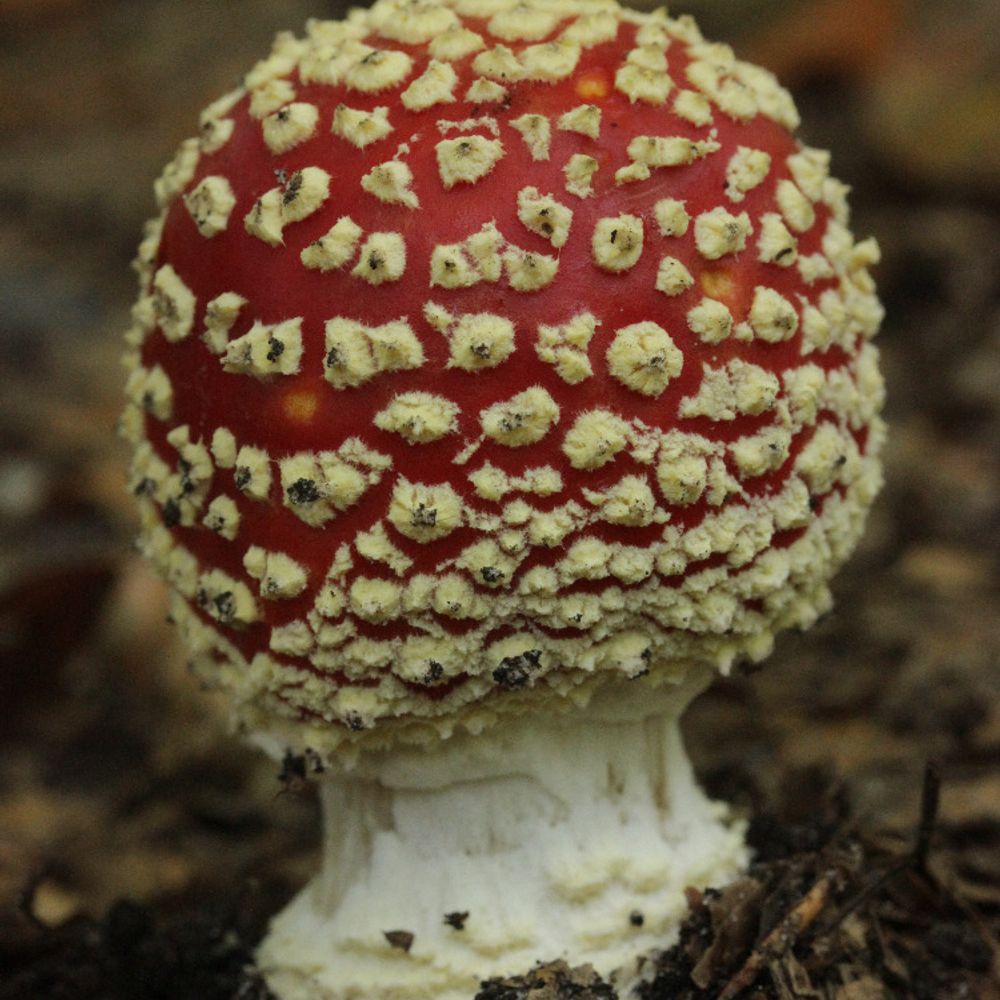
Massaria inquinans ex Acer pseudoplatanus
#Massariainquinans #Massaria #GroßsporigerAhornKugelpilz #Acerpseudoplatanus #Bergahorn #sycamore #Érablesycomore #acerodimonte #arceblanco #mushroom #mushrooms #fungus #fungi #pilz #pilze #champignons #champignon #nature #natur #FungiFriends
#Massariainquinans #Massaria #GroßsporigerAhornKugelpilz #Acerpseudoplatanus #Bergahorn #sycamore #Érablesycomore #acerodimonte #arceblanco #mushroom #mushrooms #fungus #fungi #pilz #pilze #champignons #champignon #nature #natur #FungiFriends


January 20, 2026 at 11:15 AM
Massaria inquinans ex Acer pseudoplatanus
#Massariainquinans #Massaria #GroßsporigerAhornKugelpilz #Acerpseudoplatanus #Bergahorn #sycamore #Érablesycomore #acerodimonte #arceblanco #mushroom #mushrooms #fungus #fungi #pilz #pilze #champignons #champignon #nature #natur #FungiFriends
#Massariainquinans #Massaria #GroßsporigerAhornKugelpilz #Acerpseudoplatanus #Bergahorn #sycamore #Érablesycomore #acerodimonte #arceblanco #mushroom #mushrooms #fungus #fungi #pilz #pilze #champignons #champignon #nature #natur #FungiFriends
Reposted by Fay Newbery

In this review in Fungal Ecology, Håvard Kauserud (@drhyfe.bsky.social) argues that while the ITS region is by far the best DNA (meta)barcoding marker for fungi, we should not use it naively or simplistically doi.org/10.1016/j.fu...

January 20, 2026 at 1:30 AM
In this review in Fungal Ecology, Håvard Kauserud (@drhyfe.bsky.social) argues that while the ITS region is by far the best DNA (meta)barcoding marker for fungi, we should not use it naively or simplistically doi.org/10.1016/j.fu...
Reposted by Fay Newbery

Nice to be starting 2026 with our new paper with @sei.org on making #CitizenScience biological recording more inclusive @savebutterflies.bsky.social doi.org/10.5334/cstp...

Increasing Inclusivity in Biological Recording in the United Kingdom: Progress to Date and Future Priorities | Citizen Science: Theory and Practice
doi.org
January 12, 2026 at 5:46 PM
Nice to be starting 2026 with our new paper with @sei.org on making #CitizenScience biological recording more inclusive @savebutterflies.bsky.social doi.org/10.5334/cstp...
Reposted by Fay Newbery
Thinking of monitoring butterflies in your local area or setting up a monitoring project?
We have new guidance to help navigate the various monitoring methods and choose the best option for your project.
buff.ly/fvThSQq
We have new guidance to help navigate the various monitoring methods and choose the best option for your project.
buff.ly/fvThSQq

January 16, 2026 at 12:01 PM
Thinking of monitoring butterflies in your local area or setting up a monitoring project?
We have new guidance to help navigate the various monitoring methods and choose the best option for your project.
buff.ly/fvThSQq
We have new guidance to help navigate the various monitoring methods and choose the best option for your project.
buff.ly/fvThSQq
Reposted by Fay Newbery
Dormouse monitors! It's time to submit dormouse survey data. There are several different reporting routes, depending on the type of work you’ve carried out, so we’ve put together guidance to help you submit the right information in the right place👇
ptes.org/dormouse-data-submission-guidance
ptes.org/dormouse-data-submission-guidance

Dormouse data submission guidance - People's Trust for Endangered Species
There are several different reporting routes so we've put together guidance to help you submit the right dormouse data to the right place.
ptes.org
January 17, 2026 at 10:00 AM
Dormouse monitors! It's time to submit dormouse survey data. There are several different reporting routes, depending on the type of work you’ve carried out, so we’ve put together guidance to help you submit the right information in the right place👇
ptes.org/dormouse-data-submission-guidance
ptes.org/dormouse-data-submission-guidance
Reposted by Fay Newbery

There are five species of aphid that feed on Bamboo in the UK - so far I've only managed to find this one, Takecallis arundicolens, found again this morning from Bamboo overhanging a pavement in west Norwich.


January 17, 2026 at 4:44 PM
There are five species of aphid that feed on Bamboo in the UK - so far I've only managed to find this one, Takecallis arundicolens, found again this morning from Bamboo overhanging a pavement in west Norwich.
Reposted by Fay Newbery

Vegetative identification of ‘small’ Geranium species can be tricky and you need to take a close look at hair length and glands as well as degree of lobe incision. Here are a couple of useful resources
archive.bsbi.org.uk/BSBINews99.pdf
pg 22-28
thewildflowersociety.org.uk/wp-content/u...
archive.bsbi.org.uk/BSBINews99.pdf
pg 22-28
thewildflowersociety.org.uk/wp-content/u...

January 9, 2026 at 5:56 PM
Vegetative identification of ‘small’ Geranium species can be tricky and you need to take a close look at hair length and glands as well as degree of lobe incision. Here are a couple of useful resources
archive.bsbi.org.uk/BSBINews99.pdf
pg 22-28
thewildflowersociety.org.uk/wp-content/u...
archive.bsbi.org.uk/BSBINews99.pdf
pg 22-28
thewildflowersociety.org.uk/wp-content/u...
Reposted by Fay Newbery
Is your back garden a pollinator hotspot? 🌸🐝
New research shows flower-rich gardens can be powerful refuges for urban pollinators. Join Emma Plant from @glasgow.ac.uk on 22 Apr 2026 for a FREE entoLIVE to learn more. 🌍 🧪
🔗 www.eventbrite.co.uk/e/1964456916...
@royentsoc.bsky.social #pollinators
New research shows flower-rich gardens can be powerful refuges for urban pollinators. Join Emma Plant from @glasgow.ac.uk on 22 Apr 2026 for a FREE entoLIVE to learn more. 🌍 🧪
🔗 www.eventbrite.co.uk/e/1964456916...
@royentsoc.bsky.social #pollinators

January 9, 2026 at 4:58 PM
Is your back garden a pollinator hotspot? 🌸🐝
New research shows flower-rich gardens can be powerful refuges for urban pollinators. Join Emma Plant from @glasgow.ac.uk on 22 Apr 2026 for a FREE entoLIVE to learn more. 🌍 🧪
🔗 www.eventbrite.co.uk/e/1964456916...
@royentsoc.bsky.social #pollinators
New research shows flower-rich gardens can be powerful refuges for urban pollinators. Join Emma Plant from @glasgow.ac.uk on 22 Apr 2026 for a FREE entoLIVE to learn more. 🌍 🧪
🔗 www.eventbrite.co.uk/e/1964456916...
@royentsoc.bsky.social #pollinators
Reposted by Fay Newbery
An hour to kill?
Is it possible that the fabulous @trevorthebotanist.bsky.social doesn't know that his #UrbanPlants talks are #AppointmentViewing, just like #TheTraitors?
Such modesty!
The video is here:
www.youtube.com/watch?v=tCdC...
And here's Trevor's #UrbanPlants book: bsbi.org/blog/2025/06...
Is it possible that the fabulous @trevorthebotanist.bsky.social doesn't know that his #UrbanPlants talks are #AppointmentViewing, just like #TheTraitors?
Such modesty!
The video is here:
www.youtube.com/watch?v=tCdC...
And here's Trevor's #UrbanPlants book: bsbi.org/blog/2025/06...

January 9, 2026 at 7:01 PM
An hour to kill?
Is it possible that the fabulous @trevorthebotanist.bsky.social doesn't know that his #UrbanPlants talks are #AppointmentViewing, just like #TheTraitors?
Such modesty!
The video is here:
www.youtube.com/watch?v=tCdC...
And here's Trevor's #UrbanPlants book: bsbi.org/blog/2025/06...
Is it possible that the fabulous @trevorthebotanist.bsky.social doesn't know that his #UrbanPlants talks are #AppointmentViewing, just like #TheTraitors?
Such modesty!
The video is here:
www.youtube.com/watch?v=tCdC...
And here's Trevor's #UrbanPlants book: bsbi.org/blog/2025/06...
Reposted by Fay Newbery

It is John Aubrey’s 400th anniversary this year! My next book publishes his Natural History in full for the 1st time. It is not the quaint collection of random anecdotes suggested by the heavily edited 1847 version, but cutting edge c17 science all penned with Aubrey’s characteristic brilliance.

January 4, 2026 at 1:06 PM
It is John Aubrey’s 400th anniversary this year! My next book publishes his Natural History in full for the 1st time. It is not the quaint collection of random anecdotes suggested by the heavily edited 1847 version, but cutting edge c17 science all penned with Aubrey’s characteristic brilliance.
Reposted by Fay Newbery

Sunday book review: Pan-species Listing by @graemelyons.bsky.social
Publisher: @pelagic.bsky.social
Review: markavery.info/2026/01/04/s...
"Hardly anyone has the knowledge to write this book & even fewer could write it so well!"
Publisher: @pelagic.bsky.social
Review: markavery.info/2026/01/04/s...
"Hardly anyone has the knowledge to write this book & even fewer could write it so well!"

January 4, 2026 at 9:05 AM
Sunday book review: Pan-species Listing by @graemelyons.bsky.social
Publisher: @pelagic.bsky.social
Review: markavery.info/2026/01/04/s...
"Hardly anyone has the knowledge to write this book & even fewer could write it so well!"
Publisher: @pelagic.bsky.social
Review: markavery.info/2026/01/04/s...
"Hardly anyone has the knowledge to write this book & even fewer could write it so well!"
There are two other lichen guides for Britain and Ireland in print. But this is the first one written by a northern team. If you live in the North of the UK, then this is definitely the one for you.

Been looking for a lichens book and it's mad there wasn't one until now!

“Lichens of Britain & Ireland” by Rebecca Yahr and Frances Stoakley is finally available for purchase. This has been a much needed ID guide for beginners to intermediates and the publication is finally here!! www.bloomsbury.com/uk/lichens-o... #bloomsbury #lichens
December 22, 2025 at 2:48 PM
There are two other lichen guides for Britain and Ireland in print. But this is the first one written by a northern team. If you live in the North of the UK, then this is definitely the one for you.
Looking good. Great to see lichens included.
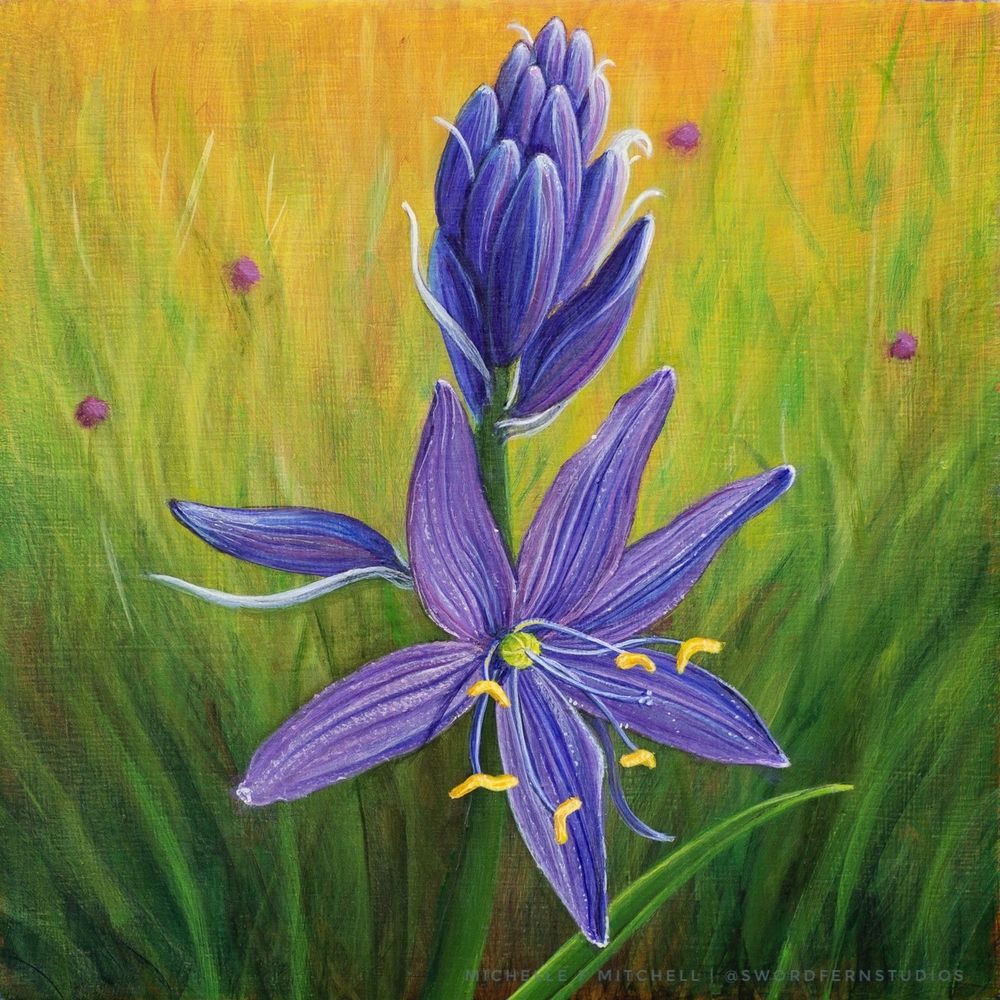
I’m excited to share my newest painting ‘Courtship’ with you!
I shared WIP shots a while back, here’s the finished piece for a gallery show. Just Like Honey 2 opens at Antler & Talon Galleries in PDX 12/19
I dig these hexagon panels.
#ArtAdventCalendar #natureart #salamanders #mushrooms #lichen
I shared WIP shots a while back, here’s the finished piece for a gallery show. Just Like Honey 2 opens at Antler & Talon Galleries in PDX 12/19
I dig these hexagon panels.
#ArtAdventCalendar #natureart #salamanders #mushrooms #lichen

December 14, 2025 at 6:22 PM
Looking good. Great to see lichens included.
Reposted by Fay Newbery

Interested in moth trapping?
Wondering which trap to use? Or if different bulbs collect different species?
Using 100k samples from @gardenmothscheme.bsky.social our new paper looks at these questions and more! With with Bill Kunin and @katatrepsis.bsky.social
#mothsmatter #teammoth
Wondering which trap to use? Or if different bulbs collect different species?
Using 100k samples from @gardenmothscheme.bsky.social our new paper looks at these questions and more! With with Bill Kunin and @katatrepsis.bsky.social
#mothsmatter #teammoth

Effect of bulb type on moth trap catch and composition in UK gardens
We analyse 10 years of records Garden Moth Scheme (GMS) to estimate the effect of bulb and trap type on the number of moths caught by moth traps. We find that brighter, higher wattage bulbs collect ...
resjournals.onlinelibrary.wiley.com
December 13, 2025 at 12:52 PM
Interested in moth trapping?
Wondering which trap to use? Or if different bulbs collect different species?
Using 100k samples from @gardenmothscheme.bsky.social our new paper looks at these questions and more! With with Bill Kunin and @katatrepsis.bsky.social
#mothsmatter #teammoth
Wondering which trap to use? Or if different bulbs collect different species?
Using 100k samples from @gardenmothscheme.bsky.social our new paper looks at these questions and more! With with Bill Kunin and @katatrepsis.bsky.social
#mothsmatter #teammoth