



Kotaro Chihara
@kochihara.bsky.social
Molecular biology in phage-bacteria interactions | Postdoc in the phage engineering group at NIID, Japan

Reposted by Kotaro Chihara
Check this out for the 2026 SISB (phage defense) meeting in NYC. Mark your calendar! (and note the Zoom option, if needed)
sisb2026.rockefeller.edu
sisb2026.rockefeller.edu
SISB2026
sisb2026.rockefeller.edu
December 1, 2025 at 11:44 PM
Check this out for the 2026 SISB (phage defense) meeting in NYC. Mark your calendar! (and note the Zoom option, if needed)
sisb2026.rockefeller.edu
sisb2026.rockefeller.edu
Reposted by Kotaro Chihara
Our SPARHA story is out in Nature Communications!
doi.org/10.1038/s414...
We investigated a new short pAgo-HNH defense system, showing that it assembles into filaments degrading cellular DNA, inducing abortive infection, resolved their structure, and uncovered the activation mechanism 🧵
doi.org/10.1038/s414...
We investigated a new short pAgo-HNH defense system, showing that it assembles into filaments degrading cellular DNA, inducing abortive infection, resolved their structure, and uncovered the activation mechanism 🧵

December 1, 2025 at 8:38 AM
Our SPARHA story is out in Nature Communications!
doi.org/10.1038/s414...
We investigated a new short pAgo-HNH defense system, showing that it assembles into filaments degrading cellular DNA, inducing abortive infection, resolved their structure, and uncovered the activation mechanism 🧵
doi.org/10.1038/s414...
We investigated a new short pAgo-HNH defense system, showing that it assembles into filaments degrading cellular DNA, inducing abortive infection, resolved their structure, and uncovered the activation mechanism 🧵
Reposted by Kotaro Chihara

🧬🛡️How are new immune mechanisms created?
We show how Lamassu antiphage system, originated from a DNA-repair complex and evolved into a compact and modular immune machine, wt Dinshaw Patel lab in @pnas.org.
👏 @matthieu-haudiquet.bsky.social, Arpita Chakravarti & all authors!
doi.org/10.1073/pnas...
We show how Lamassu antiphage system, originated from a DNA-repair complex and evolved into a compact and modular immune machine, wt Dinshaw Patel lab in @pnas.org.
👏 @matthieu-haudiquet.bsky.social, Arpita Chakravarti & all authors!
doi.org/10.1073/pnas...


November 27, 2025 at 9:35 AM
🧬🛡️How are new immune mechanisms created?
We show how Lamassu antiphage system, originated from a DNA-repair complex and evolved into a compact and modular immune machine, wt Dinshaw Patel lab in @pnas.org.
👏 @matthieu-haudiquet.bsky.social, Arpita Chakravarti & all authors!
doi.org/10.1073/pnas...
We show how Lamassu antiphage system, originated from a DNA-repair complex and evolved into a compact and modular immune machine, wt Dinshaw Patel lab in @pnas.org.
👏 @matthieu-haudiquet.bsky.social, Arpita Chakravarti & all authors!
doi.org/10.1073/pnas...
Reposted by Kotaro Chihara
⭐ NAR Breakthrough! ⭐
🔬 New study reveals how the Retron-Eco7 system helps bacteria sense and fight phage attacks, identifying a clever immune-sensing mechanism in the bacteria–phage arms race.
🧬 Read more: doi.org/10.1093/nar/...
#NARBreakthrough #Microbiology #PhageBiology #BacterialDefense
🔬 New study reveals how the Retron-Eco7 system helps bacteria sense and fight phage attacks, identifying a clever immune-sensing mechanism in the bacteria–phage arms race.
🧬 Read more: doi.org/10.1093/nar/...
#NARBreakthrough #Microbiology #PhageBiology #BacterialDefense

November 24, 2025 at 6:16 PM
⭐ NAR Breakthrough! ⭐
🔬 New study reveals how the Retron-Eco7 system helps bacteria sense and fight phage attacks, identifying a clever immune-sensing mechanism in the bacteria–phage arms race.
🧬 Read more: doi.org/10.1093/nar/...
#NARBreakthrough #Microbiology #PhageBiology #BacterialDefense
🔬 New study reveals how the Retron-Eco7 system helps bacteria sense and fight phage attacks, identifying a clever immune-sensing mechanism in the bacteria–phage arms race.
🧬 Read more: doi.org/10.1093/nar/...
#NARBreakthrough #Microbiology #PhageBiology #BacterialDefense
Reposted by Kotaro Chihara

KlebPhaCol paper is now out! Go check it out and see all that we offer.
And when ready, visit our website for more: www.klebphacol.org
And when ready, visit our website for more: www.klebphacol.org
November 22, 2025 at 6:19 PM
KlebPhaCol paper is now out! Go check it out and see all that we offer.
And when ready, visit our website for more: www.klebphacol.org
And when ready, visit our website for more: www.klebphacol.org
Reposted by Kotaro Chihara
#microsky #phagesky #phage
Anyone who’s tried deleting prophages in the lab by HR knows the difficulties of the task. Here we have an example of how HR-mediated natural transformation might hit the same hurdle in a more native context.
academic.oup.com/mbe/article/...
Anyone who’s tried deleting prophages in the lab by HR knows the difficulties of the task. Here we have an example of how HR-mediated natural transformation might hit the same hurdle in a more native context.
academic.oup.com/mbe/article/...

Chromosomal Curing Drives an Arms Race Between Bacterial Transformation and Prophage
Abstract. Transformation occurs when bacteria import exogenous DNA via the competence machinery and integrate it into their genome through homologous recom
academic.oup.com
November 23, 2025 at 4:39 PM
#microsky #phagesky #phage
Anyone who’s tried deleting prophages in the lab by HR knows the difficulties of the task. Here we have an example of how HR-mediated natural transformation might hit the same hurdle in a more native context.
academic.oup.com/mbe/article/...
Anyone who’s tried deleting prophages in the lab by HR knows the difficulties of the task. Here we have an example of how HR-mediated natural transformation might hit the same hurdle in a more native context.
academic.oup.com/mbe/article/...
Reposted by Kotaro Chihara

Excited to share our new study! Great fun working again with my good friend @stephenrgarrett.bsky.social — always a highlight! Huge thanks to fantastic co-authors @samkaytucker.bsky.social, @drandyjroe.bsky.social and our star technician Vojtech Pavelka. academic.oup.com/nargab/artic...
November 21, 2025 at 5:45 PM
Excited to share our new study! Great fun working again with my good friend @stephenrgarrett.bsky.social — always a highlight! Huge thanks to fantastic co-authors @samkaytucker.bsky.social, @drandyjroe.bsky.social and our star technician Vojtech Pavelka. academic.oup.com/nargab/artic...
Reposted by Kotaro Chihara

🚀New preprint from our lab!
I am very excited to finally share what has been the main focus of my PhD for the past almost 3 years! It is about viral dark matter and a powerful tool we built to shed light on it. 🧬💡
Continue reading (🧵)
I am very excited to finally share what has been the main focus of my PhD for the past almost 3 years! It is about viral dark matter and a powerful tool we built to shed light on it. 🧬💡
Continue reading (🧵)

November 20, 2025 at 6:52 PM
🚀New preprint from our lab!
I am very excited to finally share what has been the main focus of my PhD for the past almost 3 years! It is about viral dark matter and a powerful tool we built to shed light on it. 🧬💡
Continue reading (🧵)
I am very excited to finally share what has been the main focus of my PhD for the past almost 3 years! It is about viral dark matter and a powerful tool we built to shed light on it. 🧬💡
Continue reading (🧵)
Reposted by Kotaro Chihara

🚨Preprint alert - this is a big one! We transfer the revolutionary power of TnSeq to bacteriophages.
Our HIDEN-SEQ links the "dark matter" genes of your favorite phage to any selectable phenotype, guiding the path from fun observations to molecular mechanisms.
A thread 1/8
Our HIDEN-SEQ links the "dark matter" genes of your favorite phage to any selectable phenotype, guiding the path from fun observations to molecular mechanisms.
A thread 1/8

November 20, 2025 at 8:40 PM
🚨Preprint alert - this is a big one! We transfer the revolutionary power of TnSeq to bacteriophages.
Our HIDEN-SEQ links the "dark matter" genes of your favorite phage to any selectable phenotype, guiding the path from fun observations to molecular mechanisms.
A thread 1/8
Our HIDEN-SEQ links the "dark matter" genes of your favorite phage to any selectable phenotype, guiding the path from fun observations to molecular mechanisms.
A thread 1/8
Reposted by Kotaro Chihara

Our nuclease-protease story is out! We explored a fascinating case of coevolution and modularity in prokaryotic immune systems: www.science.org/doi/10.1126/...
Thanks to wonderful coauthors/collaborators/friends, the whole @doudna-lab.bsky.social and everyone at @innovativegenomics.bsky.social
Thanks to wonderful coauthors/collaborators/friends, the whole @doudna-lab.bsky.social and everyone at @innovativegenomics.bsky.social

Recurrent acquisition of nuclease-protease pairs in antiviral immunity
Antiviral immune systems diversify by integrating new genes into existing pathways, creating new mechanisms of viral resistance. We identified genes encoding a predicted nuclease paired with a trypsin...
www.science.org
November 13, 2025 at 10:15 PM
Our nuclease-protease story is out! We explored a fascinating case of coevolution and modularity in prokaryotic immune systems: www.science.org/doi/10.1126/...
Thanks to wonderful coauthors/collaborators/friends, the whole @doudna-lab.bsky.social and everyone at @innovativegenomics.bsky.social
Thanks to wonderful coauthors/collaborators/friends, the whole @doudna-lab.bsky.social and everyone at @innovativegenomics.bsky.social
Reposted by Kotaro Chihara

I am so excited to share our project with you! We find prokaryotic proteases activate toxic enzymes and pores as a modular strategy in phage defense. We studied four fascinating protease-toxin pairs that are abundant across bacterial genomes:
www.biorxiv.org/content/10.1...
www.biorxiv.org/content/10.1...

Proteolytic activation of diverse antiviral defense modules in prokaryotes
Linked protease–effector modules are widespread in prokaryotic antiviral defense, yet the mechanisms of most remain poorly understood. Here we show that four of the most prevalent modules—metallo-β-la...
www.biorxiv.org
November 15, 2025 at 11:49 PM
I am so excited to share our project with you! We find prokaryotic proteases activate toxic enzymes and pores as a modular strategy in phage defense. We studied four fascinating protease-toxin pairs that are abundant across bacterial genomes:
www.biorxiv.org/content/10.1...
www.biorxiv.org/content/10.1...
Reposted by Kotaro Chihara

A phage-derived reconfigurable effector associated with an actinobacterial contractile nanomachine tailors bacterial responses to competition | bioRxiv https://www.biorxiv.org/content/10.1101/2025.11.06.686954v1?rss=1

A phage-derived reconfigurable effector associated with an actinobacterial contractile nanomachine tailors bacterial responses to competition
Contractile injection systems (CISs) are derivatives of phage tails and widely distributed in prokaryotes. CISs load cognate effectors and eject them through contractile actions resembling those of phage tails. Ejected effectors play central roles in CIS functionality by acting on target cells and mediating various biological processes. Here, we report a novel group of CIS effectors related to phage tapemeasure protein, the transmembrane component of the phage infection machinery. This group is broadly distributed within the class actinobacteria, one of the bacterial classes in which CIS gene clusters are highly conserved, and is represented by Sle1, a cognate effector of the intracellularly localised Streptomyces lividans phage tail-like nanoparticle (SLP). This effector is associated with Sle2, which contains a CIS effector core domain and interacts with the SLP core component. Sle1 is packaged inside SLP and is translocated to lipid membranes along with SLPs. The functional domain of Sle1, probably through interactions with ribosome-containing subcellular fractions, upregulates the membrane-associated proteome in S. lividans and E. coli . This effect modifies the physiological properties of S. lividans , ultimately enhancing its adaptation to microbial competition. In addition, we revealed that Sle1-type effectors conserved among actinobacterial species are structurally and functionally diverse in their functional domains. One of them from Micromonospora eburnea constitutes a novel toxin-antitoxin system and introducing its functional domain into Sle1 reprogrammes the phenotypic responsiveness of S. lividans to neighbouring bacteria. Our findings illustrate that phage elements can be incorporated into CISs as reconfigurable platforms for bacterial adaptation to various environmental conditions.
www.biorxiv.org
November 7, 2025 at 3:24 AM
A phage-derived reconfigurable effector associated with an actinobacterial contractile nanomachine tailors bacterial responses to competition | bioRxiv https://www.biorxiv.org/content/10.1101/2025.11.06.686954v1?rss=1
Reposted by Kotaro Chihara
#microsky #phagesky #phage defence
Novel bacterial ubiquitination-like pathway!
www.nature.com/articles/s41...
Novel bacterial ubiquitination-like pathway!
www.nature.com/articles/s41...

Mechanistic basis for protein conjugation in a diverged bacterial ubiquitination pathway - Nature Structural & Molecular Biology
Ye et al. define the structure and mechanisms of a bacterial pathway that performs ubiquitination-like protein conjugation, revealing new insights into the evolution and biological roles of ubiquitina...
www.nature.com
November 3, 2025 at 8:56 PM
#microsky #phagesky #phage defence
Novel bacterial ubiquitination-like pathway!
www.nature.com/articles/s41...
Novel bacterial ubiquitination-like pathway!
www.nature.com/articles/s41...
Reposted by Kotaro Chihara

The Wilkinson Lab is open for science! @mskcancercenter.bsky.social
🧬We'll be finding funky new RNA biology, mainly by looking at reverse transcriptases (i.e. the Best Enzymes In The World)🧬
annnd: I'm hiring - come join! Especially postdocs and PhD students - please get in touch (NYC is great)
🧬We'll be finding funky new RNA biology, mainly by looking at reverse transcriptases (i.e. the Best Enzymes In The World)🧬
annnd: I'm hiring - come join! Especially postdocs and PhD students - please get in touch (NYC is great)

Wilkinson Lab
We discover and study reverse transcriptases
wilkinsonlab.bio
October 31, 2025 at 7:00 PM
The Wilkinson Lab is open for science! @mskcancercenter.bsky.social
🧬We'll be finding funky new RNA biology, mainly by looking at reverse transcriptases (i.e. the Best Enzymes In The World)🧬
annnd: I'm hiring - come join! Especially postdocs and PhD students - please get in touch (NYC is great)
🧬We'll be finding funky new RNA biology, mainly by looking at reverse transcriptases (i.e. the Best Enzymes In The World)🧬
annnd: I'm hiring - come join! Especially postdocs and PhD students - please get in touch (NYC is great)
Reposted by Kotaro Chihara

Use antisense oligomers to silence phage genes and discover new biology.
@jorg-vogel-lab.bsky.social @helmholtz-hiri.bsky.social @helmholtzhzi.bsky.social @uni-wuerzburg.de
print: www.nature.com/articles/s41...
highlight: www.nature.com/articles/s41...
briefing: www.nature.com/articles/d41...
@jorg-vogel-lab.bsky.social @helmholtz-hiri.bsky.social @helmholtzhzi.bsky.social @uni-wuerzburg.de
print: www.nature.com/articles/s41...
highlight: www.nature.com/articles/s41...
briefing: www.nature.com/articles/d41...

October 31, 2025 at 8:08 AM
Use antisense oligomers to silence phage genes and discover new biology.
@jorg-vogel-lab.bsky.social @helmholtz-hiri.bsky.social @helmholtzhzi.bsky.social @uni-wuerzburg.de
print: www.nature.com/articles/s41...
highlight: www.nature.com/articles/s41...
briefing: www.nature.com/articles/d41...
@jorg-vogel-lab.bsky.social @helmholtz-hiri.bsky.social @helmholtzhzi.bsky.social @uni-wuerzburg.de
print: www.nature.com/articles/s41...
highlight: www.nature.com/articles/s41...
briefing: www.nature.com/articles/d41...
Reposted by Kotaro Chihara
I’m thrilled to share our Retron Eco8 paper published in Molecular Cell today. Thanks all Fu lab members and our collaborators.
👉Phage SSB detection by retron Eco8 msDNA unleashes nuclease-mediated immunity. www.cell.com/molecular-ce...
👉Phage SSB detection by retron Eco8 msDNA unleashes nuclease-mediated immunity. www.cell.com/molecular-ce...

Phage SSB detection by retron Eco8 msDNA unleashes nuclease-mediated immunity
The cryo-EM structure of the retron Eco8 system reveals an autoinhibited 4:4:4 complex
of RT, msDNA, and OLD nuclease. Phage SSB binding to msdDNA unleashes non-specific
nuclease activity to restrict ...
www.cell.com
October 30, 2025 at 3:06 PM
I’m thrilled to share our Retron Eco8 paper published in Molecular Cell today. Thanks all Fu lab members and our collaborators.
👉Phage SSB detection by retron Eco8 msDNA unleashes nuclease-mediated immunity. www.cell.com/molecular-ce...
👉Phage SSB detection by retron Eco8 msDNA unleashes nuclease-mediated immunity. www.cell.com/molecular-ce...
Reposted by Kotaro Chihara
@prczhaoyansong.bsky.social’s deep dive into the dark matter of compost communities is now out 🎉 Genomic islands hijack jumbo phages—whose capsids enable transfer of large tracts of DNA—shedding new light on the scale & scope of phage-mediated gene flow 😎
www.pnas.org/doi/10.1073/...
www.pnas.org/doi/10.1073/...

Jumbo phage–mediated transduction of genomic islands | PNAS
Bacteria acquire new genes by horizontal gene transfer, typically mediated by mobile
genetic elements (MGEs). While plasmids, bacteriophages, and c...
www.pnas.org
October 28, 2025 at 6:36 PM
@prczhaoyansong.bsky.social’s deep dive into the dark matter of compost communities is now out 🎉 Genomic islands hijack jumbo phages—whose capsids enable transfer of large tracts of DNA—shedding new light on the scale & scope of phage-mediated gene flow 😎
www.pnas.org/doi/10.1073/...
www.pnas.org/doi/10.1073/...
Reposted by Kotaro Chihara
New retron systems from environmental bacteria identify triggers of anti-phage defense and expand tools for genome editing | PLOS Biology https://journals.plos.org/plosbiology/article?id=10.1371/journal.pbio.3003042

New retron systems from environmental bacteria identify triggers of anti-phage defense and expand tools for genome editing
Bacteria rely on retrons for phage defense, yet most known systems come from clinical or lab strains. This study identifies new and diverse retrons from environmental bacteria, uncovering their phage defense mechanisms and applying them as genome editing tools.
journals.plos.org
October 23, 2025 at 11:50 PM
New retron systems from environmental bacteria identify triggers of anti-phage defense and expand tools for genome editing | PLOS Biology https://journals.plos.org/plosbiology/article?id=10.1371/journal.pbio.3003042
Reposted by Kotaro Chihara
Been working on a really strange retron bacterial immune system, here's the preprint: www.biorxiv.org/content/10.1...
Type VI retrons are unlike any other. Phage infection triggers reverse transcription of a DNA fragment that activates translation of a toxin to kill the infected cell.
Type VI retrons are unlike any other. Phage infection triggers reverse transcription of a DNA fragment that activates translation of a toxin to kill the infected cell.

October 23, 2025 at 6:49 PM
Been working on a really strange retron bacterial immune system, here's the preprint: www.biorxiv.org/content/10.1...
Type VI retrons are unlike any other. Phage infection triggers reverse transcription of a DNA fragment that activates translation of a toxin to kill the infected cell.
Type VI retrons are unlike any other. Phage infection triggers reverse transcription of a DNA fragment that activates translation of a toxin to kill the infected cell.
Reposted by Kotaro Chihara
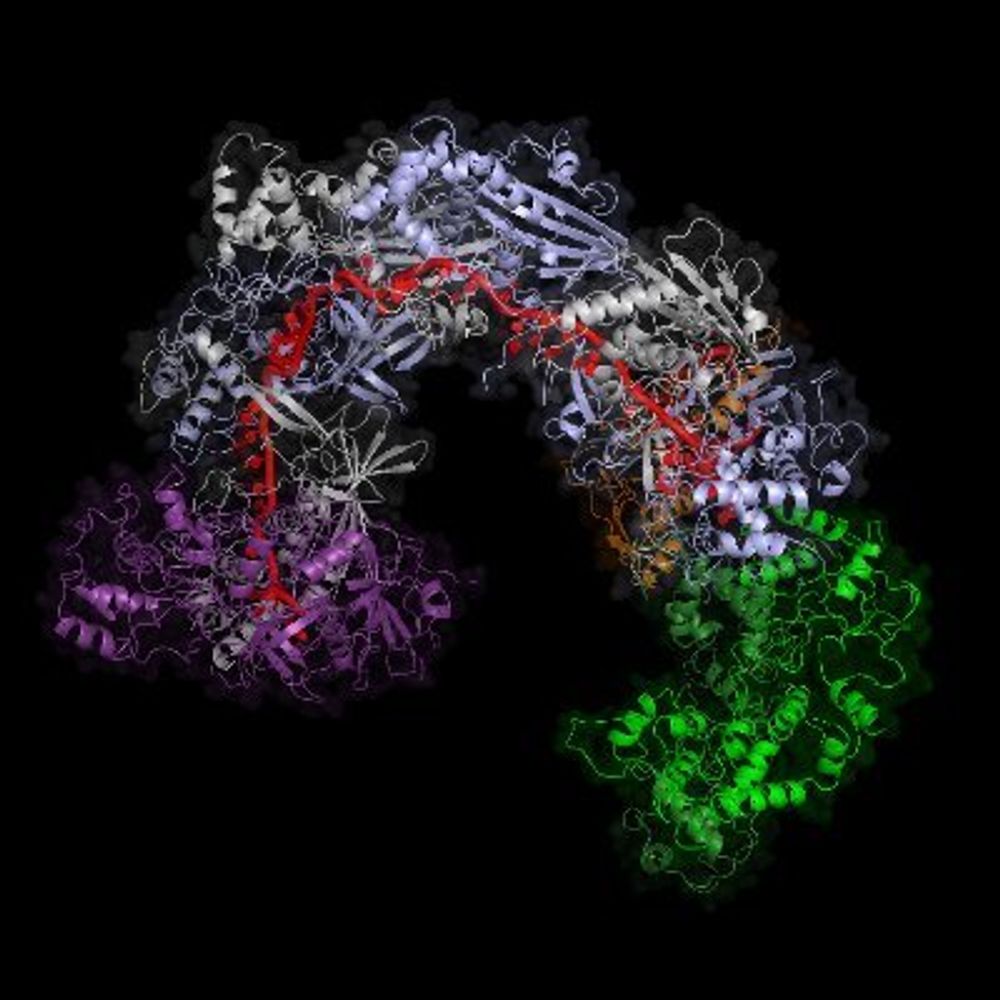
1/10 Genome maintenance by telomerase is a fundamental process in nearly all eukaryotes. But where does it come from?
Today, we report the discovery of telomerase homologs in a family of antiviral RTs, revealing an unexpected evolutionary origin in bacteria.
www.biorxiv.org/content/10.1...
Today, we report the discovery of telomerase homologs in a family of antiviral RTs, revealing an unexpected evolutionary origin in bacteria.
www.biorxiv.org/content/10.1...

Antiviral reverse transcriptases reveal the evolutionary origin of telomerase
Defense-associated reverse transcriptases (DRTs) employ diverse and distinctive mechanisms of cDNA synthesis to protect bacteria against viral infection. However, much of DRT family diversity remains ...
www.biorxiv.org
October 17, 2025 at 5:22 PM
1/10 Genome maintenance by telomerase is a fundamental process in nearly all eukaryotes. But where does it come from?
Today, we report the discovery of telomerase homologs in a family of antiviral RTs, revealing an unexpected evolutionary origin in bacteria.
www.biorxiv.org/content/10.1...
Today, we report the discovery of telomerase homologs in a family of antiviral RTs, revealing an unexpected evolutionary origin in bacteria.
www.biorxiv.org/content/10.1...
Reposted by Kotaro Chihara

www.science.org/doi/10.1126/... Another breakthrough work on the fascinating biology of Diversity Generating Retroelements by Jeff Miller’s team

Targeted protein evolution in the gut microbiome by diversity-generating retroelements
Diversity-generating retroelements (DGRs) accelerate evolution by rapidly diversifying variable proteins. The human gastrointestinal microbiota harbors the greatest density of DGRs known in nature, su...
www.science.org
October 12, 2025 at 7:34 PM
www.science.org/doi/10.1126/... Another breakthrough work on the fascinating biology of Diversity Generating Retroelements by Jeff Miller’s team
Reposted by Kotaro Chihara

Viral AlphaFold Database (VAD) is live in Science Advances
~27,000 predicted viral protein monomers & homodimers
Conserved folds across bacteria, archaea & eukaryotic viruses
New toxin–antitoxin system KreTA uncovered
Vast “functional darkness” remains uncharted
www.science.org/doi/10.1126/...
~27,000 predicted viral protein monomers & homodimers
Conserved folds across bacteria, archaea & eukaryotic viruses
New toxin–antitoxin system KreTA uncovered
Vast “functional darkness” remains uncharted
www.science.org/doi/10.1126/...

The Viral AlphaFold Database of monomers and homodimers reveals conserved protein folds in viruses of bacteria, archaea, and eukaryotes
VAD is a Viral AlphaFold Database of protein monomers and homodimers from viruses infecting hosts across the tree of life.
www.science.org
October 2, 2025 at 8:48 AM
Viral AlphaFold Database (VAD) is live in Science Advances
~27,000 predicted viral protein monomers & homodimers
Conserved folds across bacteria, archaea & eukaryotic viruses
New toxin–antitoxin system KreTA uncovered
Vast “functional darkness” remains uncharted
www.science.org/doi/10.1126/...
~27,000 predicted viral protein monomers & homodimers
Conserved folds across bacteria, archaea & eukaryotic viruses
New toxin–antitoxin system KreTA uncovered
Vast “functional darkness” remains uncharted
www.science.org/doi/10.1126/...
Reposted by Kotaro Chihara
Our story describing the Panoptes bacterial immune defense system is now finally peer-reviewed and published today! www.nature.com/articles/s41...

The Panoptes system uses decoy cyclic nucleotides to defend against phage - Nature
The Panoptes antiphage system defends bacteria by detecting phage-encoded counter-defences that sequester cyclic nucleotide signals, triggering membrane disruption and highlighting a broader strategy of sensing immune evasion through second-messenger surveillance.
www.nature.com
October 1, 2025 at 4:05 PM
Our story describing the Panoptes bacterial immune defense system is now finally peer-reviewed and published today! www.nature.com/articles/s41...
Reposted by Kotaro Chihara
Today in @nature.com , we highlight how a cousin of CRISPR-Cas10, mCpol, establishes an evolutionary trap in anti-phage immune systems.
Check out @erinedoherty.bsky.social and my work from @doudna-lab.bsky.social lab here:
www.nature.com/articles/s41...
Check out @erinedoherty.bsky.social and my work from @doudna-lab.bsky.social lab here:
www.nature.com/articles/s41...

A miniature CRISPR–Cas10 enzyme confers immunity by inhibitory signalling - Nature
Panoptes, an anti-phage defence system against virus-mediated immune suppression, is revealed.
www.nature.com
October 1, 2025 at 5:57 PM
Today in @nature.com , we highlight how a cousin of CRISPR-Cas10, mCpol, establishes an evolutionary trap in anti-phage immune systems.
Check out @erinedoherty.bsky.social and my work from @doudna-lab.bsky.social lab here:
www.nature.com/articles/s41...
Check out @erinedoherty.bsky.social and my work from @doudna-lab.bsky.social lab here:
www.nature.com/articles/s41...