


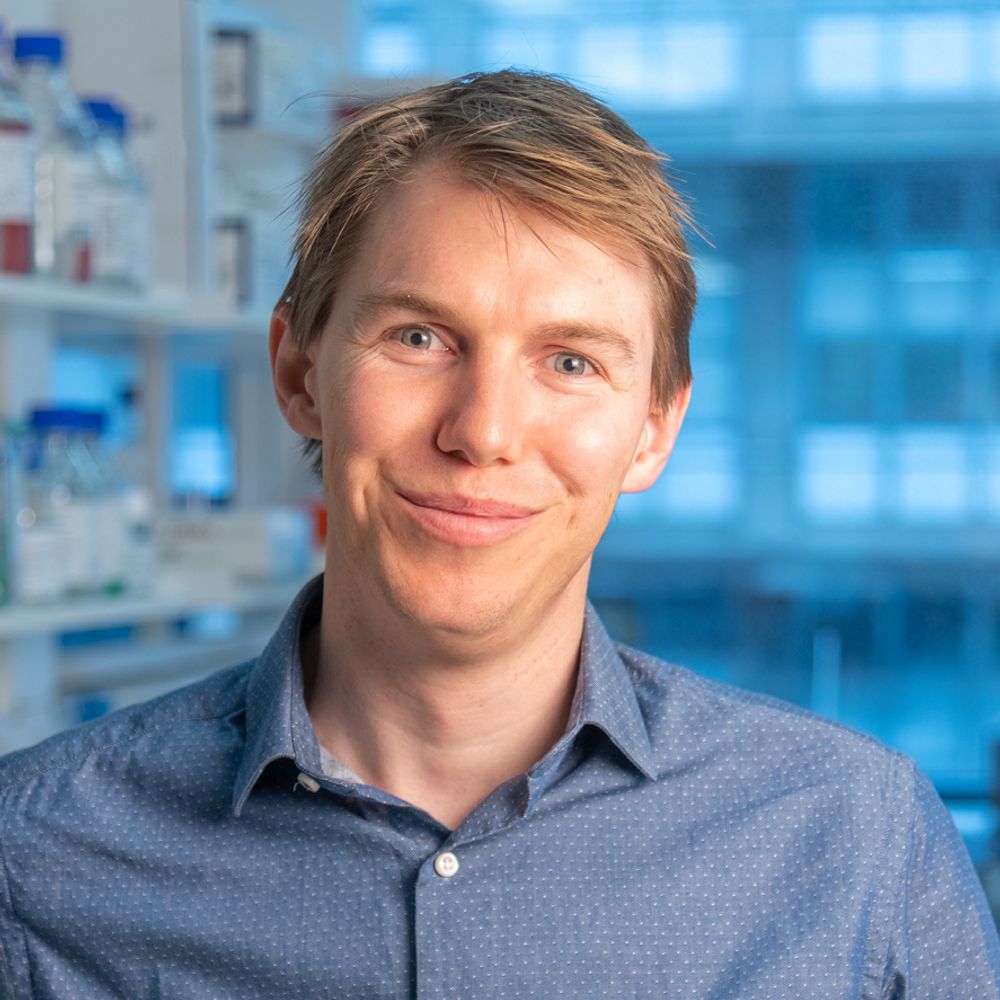
Mike Clark
@michaelbclark.bsky.social
Genetics, transcriptomics, RNA and neuroscience.
Lab head at the University of Melbourne, Australia.
View own.
Lab head at the University of Melbourne, Australia.
View own.
If you're studying #RNA transcript isoforms, check out IsoVis (the Isoform Visualiser webserver). isomix.org/isovis/
Recent updates now also allow visualisation of:
1. RNA modification sites and levels
2. Peptides mapping to open reading frames in isoforms and their abundances. 🧪
Recent updates now also allow visualisation of:
1. RNA modification sites and levels
2. Peptides mapping to open reading frames in isoforms and their abundances. 🧪


December 17, 2025 at 4:52 AM
If you're studying #RNA transcript isoforms, check out IsoVis (the Isoform Visualiser webserver). isomix.org/isovis/
Recent updates now also allow visualisation of:
1. RNA modification sites and levels
2. Peptides mapping to open reading frames in isoforms and their abundances. 🧪
Recent updates now also allow visualisation of:
1. RNA modification sites and levels
2. Peptides mapping to open reading frames in isoforms and their abundances. 🧪
Reposted by Mike Clark

So, who are the the Functional Genomics Working Group?
🎯Our goal is to understand how genes🧬, cells🦠and molecules💠contribute to psychiatric disorders🧠
We work with other PGC groups and different 'omics data (methylation, cytometry, single cell etc.) to do this🧪
🧵1/3
🎯Our goal is to understand how genes🧬, cells🦠and molecules💠contribute to psychiatric disorders🧠
We work with other PGC groups and different 'omics data (methylation, cytometry, single cell etc.) to do this🧪
🧵1/3
December 3, 2025 at 5:37 PM
So, who are the the Functional Genomics Working Group?
🎯Our goal is to understand how genes🧬, cells🦠and molecules💠contribute to psychiatric disorders🧠
We work with other PGC groups and different 'omics data (methylation, cytometry, single cell etc.) to do this🧪
🧵1/3
🎯Our goal is to understand how genes🧬, cells🦠and molecules💠contribute to psychiatric disorders🧠
We work with other PGC groups and different 'omics data (methylation, cytometry, single cell etc.) to do this🧪
🧵1/3
Reposted by Mike Clark
🌟...let's meet the next #earlycareerresearcher #ECR #postdoc with a big heart for functional genomics 🧬
🥁 ... Dr RICARDO DE PAOLI-ISEPPI from @unimelb.bsky.social #UniMelb will tell us how he uses #longreadsequencing to understand #RNAsplicing.
🥁 ... Dr RICARDO DE PAOLI-ISEPPI from @unimelb.bsky.social #UniMelb will tell us how he uses #longreadsequencing to understand #RNAsplicing.

December 10, 2025 at 9:38 AM
🌟...let's meet the next #earlycareerresearcher #ECR #postdoc with a big heart for functional genomics 🧬
🥁 ... Dr RICARDO DE PAOLI-ISEPPI from @unimelb.bsky.social #UniMelb will tell us how he uses #longreadsequencing to understand #RNAsplicing.
🥁 ... Dr RICARDO DE PAOLI-ISEPPI from @unimelb.bsky.social #UniMelb will tell us how he uses #longreadsequencing to understand #RNAsplicing.

December 15, 2025 at 11:22 AM
Reposted by Mike Clark
Share your stories here docs.google.com/forms/d/e/1F... #SaveOzScience

Australian Science & Biomedical Research in Crisis
Please use this form to share the impact of Australia's historically low success rates for major competitive research grants on your research, your team, and your mental health.
Researchers do researc...
docs.google.com
December 1, 2025 at 2:17 PM
Share your stories here docs.google.com/forms/d/e/1F... #SaveOzScience
Reposted by Mike Clark
If your #NHMRC ideas grant was unsuccessful and you have a story to share about the impact of this on your #biomedicalresearch, career, team - get in touch. Federal DOH have asked #NARF to collect stories of impact of low funding. #SaveOzScience #DiscoveriesNeedDollars #EMCRs
November 26, 2024 at 1:46 AM
If your #NHMRC ideas grant was unsuccessful and you have a story to share about the impact of this on your #biomedicalresearch, career, team - get in touch. Federal DOH have asked #NARF to collect stories of impact of low funding. #SaveOzScience #DiscoveriesNeedDollars #EMCRs
Reposted by Mike Clark
The success rate for NHMRC Ideas Grants announced yesterday was just over 8%. That means 11 of every 12 people who applied got rejected. This is a culture changing level of rejection and frankly a point of national shame. This is a crisis for research.
I will not rest until we see this resolved.
I will not rest until we see this resolved.

November 26, 2025 at 8:34 PM
The success rate for NHMRC Ideas Grants announced yesterday was just over 8%. That means 11 of every 12 people who applied got rejected. This is a culture changing level of rejection and frankly a point of national shame. This is a crisis for research.
I will not rest until we see this resolved.
I will not rest until we see this resolved.
Reposted by Mike Clark

Be kind to each other.. bad news for most coming in under embargo. We need more funding in the system...
November 26, 2025 at 4:40 AM
Be kind to each other.. bad news for most coming in under embargo. We need more funding in the system...
Reposted by Mike Clark
this is unsustainable, the $600M underspend of the #MRFF could be funnelled, or at least partially funnelled, to supporting excellent #NHMRC applications that fall below the funding cut off because there is too little money in the pot #DiscoveriesNeedDollars #SaveOzScience
An abismal 8% success rate for this year’s #NHMRC #IdeasGrant scheme. Must be an all time low. Congratulations to those successful, you really earned it! Commiserations to the NINETY TWO percent of applicants who didn’t get it… #australianresearch #discoveriesneeddollars 🥼🧪🔬🧫 🇦🇺
November 26, 2025 at 10:28 AM
this is unsustainable, the $600M underspend of the #MRFF could be funnelled, or at least partially funnelled, to supporting excellent #NHMRC applications that fall below the funding cut off because there is too little money in the pot #DiscoveriesNeedDollars #SaveOzScience
Australian #NHMRC Ideas grants are out. 8.1% success rate. Lowest since the scheme began. Congrats to the successful few, as it looks like less than 200 were funded. 🧪
November 26, 2025 at 6:06 AM
Australian #NHMRC Ideas grants are out. 8.1% success rate. Lowest since the scheme began. Congrats to the successful few, as it looks like less than 200 were funded. 🧪
Chelsea Mayoh gave one of the most inspiring talks of the conference. Performing RNA-seq on kids with cancer in Australia has been highly successful in generating reportable findings, treatment recommendations, correcting diagnoses and mostly importantly, improving survival. #abacbs2025
November 26, 2025 at 4:48 AM
Chelsea Mayoh gave one of the most inspiring talks of the conference. Performing RNA-seq on kids with cancer in Australia has been highly successful in generating reportable findings, treatment recommendations, correcting diagnoses and mostly importantly, improving survival. #abacbs2025
Sequencing data requires read processing. Some tasks are common (trimming, de-multiplexing, filtering) & others bespoke, especially if you have non-standard read-structures.
Introducing Matchbox: a fast and incredibly versatile read processor that can do all this & more 🧪
doi.org/10.1101/2025...
Introducing Matchbox: a fast and incredibly versatile read processor that can do all this & more 🧪
doi.org/10.1101/2025...

November 26, 2025 at 2:03 AM
Sequencing data requires read processing. Some tasks are common (trimming, de-multiplexing, filtering) & others bespoke, especially if you have non-standard read-structures.
Introducing Matchbox: a fast and incredibly versatile read processor that can do all this & more 🧪
doi.org/10.1101/2025...
Introducing Matchbox: a fast and incredibly versatile read processor that can do all this & more 🧪
doi.org/10.1101/2025...
Reposted by Mike Clark

Publicly available, reference datasets are a bioinformatician's best friend! Find out more about the LongBench resource at poster 17 #abacbs2025 from @mritchieau.bsky.social @wehi-research.bsky.social

November 25, 2025 at 11:39 PM
Publicly available, reference datasets are a bioinformatician's best friend! Find out more about the LongBench resource at poster 17 #abacbs2025 from @mritchieau.bsky.social @wehi-research.bsky.social
Ami Bhatt taking us through the wild world of bacterial mobile elements. Jumping insertion sequences that can cause antibiotic resistance; DNA invertons that flip in orientation (including in coding seqs); and the huge abundance of phages integrated into bacterial genomes in our guts. #abacbs2025
November 25, 2025 at 11:29 PM
Ami Bhatt taking us through the wild world of bacterial mobile elements. Jumping insertion sequences that can cause antibiotic resistance; DNA invertons that flip in orientation (including in coding seqs); and the huge abundance of phages integrated into bacterial genomes in our guts. #abacbs2025
@zaminiqbal.bsky.social sequencing 765 historical plasmids (Murray collection) vs modern plasmids. 3 outcomes. 1. plasmid survive in same/similar form. 2. Now found embedded in modern massive plasmids. 3. Go extinct. ~1/2 of the types remain only as small fragments in other plasmids. #abacbs2025
November 25, 2025 at 7:35 AM
@zaminiqbal.bsky.social sequencing 765 historical plasmids (Murray collection) vs modern plasmids. 3 outcomes. 1. plasmid survive in same/similar form. 2. Now found embedded in modern massive plasmids. 3. Go extinct. ~1/2 of the types remain only as small fragments in other plasmids. #abacbs2025
@zaminiqbal.bsky.social on studying the evolution of plasmids in bacteria. How do we model evolution and understand something that jumps around between cells and species? Totally different biological system and investigatory mindset to studying vertically inherited chromosomes. #abacbs2025
November 25, 2025 at 7:32 AM
@zaminiqbal.bsky.social on studying the evolution of plasmids in bacteria. How do we model evolution and understand something that jumps around between cells and species? Totally different biological system and investigatory mindset to studying vertically inherited chromosomes. #abacbs2025
@jovmaksimovic.bsky.social – On how to “easily“ detect fusions in single-cells. 1. Identify fusions with bulk RNA seq. 2. Use Flexify to design fusion detection probes for 10x Flex. 3. Detect fusions and their expression in each cell with scRNA-seq. #abacbs2025
November 25, 2025 at 6:34 AM
@jovmaksimovic.bsky.social – On how to “easily“ detect fusions in single-cells. 1. Identify fusions with bulk RNA seq. 2. Use Flexify to design fusion detection probes for 10x Flex. 3. Detect fusions and their expression in each cell with scRNA-seq. #abacbs2025
Ruining Dong from @unimelb.bsky.social explaining how the ability to detect methylation in circulating tumor DNA (ctDNA) improves ability to determine tumor tissue of origin. Matching methylation profiles of tissues to ctDNA sounds simple, but spoiler alert, it’s actually pretty complex. #abacbs2025
November 25, 2025 at 6:11 AM
Ruining Dong from @unimelb.bsky.social explaining how the ability to detect methylation in circulating tumor DNA (ctDNA) improves ability to determine tumor tissue of origin. Matching methylation profiles of tissues to ctDNA sounds simple, but spoiler alert, it’s actually pretty complex. #abacbs2025
First up in the #abacbs2025 Gene Regulation & Epigenetics session is Feng Yan from @nadia-davidson.bsky.social lab evaluating different long-read methods for de-novo transcriptome analysis. TLDR: Still a way to go to reduce false postives, but RNA-bloom2 generally works best.
November 25, 2025 at 5:43 AM
First up in the #abacbs2025 Gene Regulation & Epigenetics session is Feng Yan from @nadia-davidson.bsky.social lab evaluating different long-read methods for de-novo transcriptome analysis. TLDR: Still a way to go to reduce false postives, but RNA-bloom2 generally works best.
Reposted by Mike Clark

Very excited to be in Adelaide to attend #ABACBS2025 . Australia is a powerhouse of microbial genomics, and indeed of bioinformatics, so am very much looking forward to meeting everyone, old friends and new, and speaking tomorrow!

November 24, 2025 at 12:11 AM
Very excited to be in Adelaide to attend #ABACBS2025 . Australia is a powerhouse of microbial genomics, and indeed of bioinformatics, so am very much looking forward to meeting everyone, old friends and new, and speaking tomorrow!
Reposted by Mike Clark
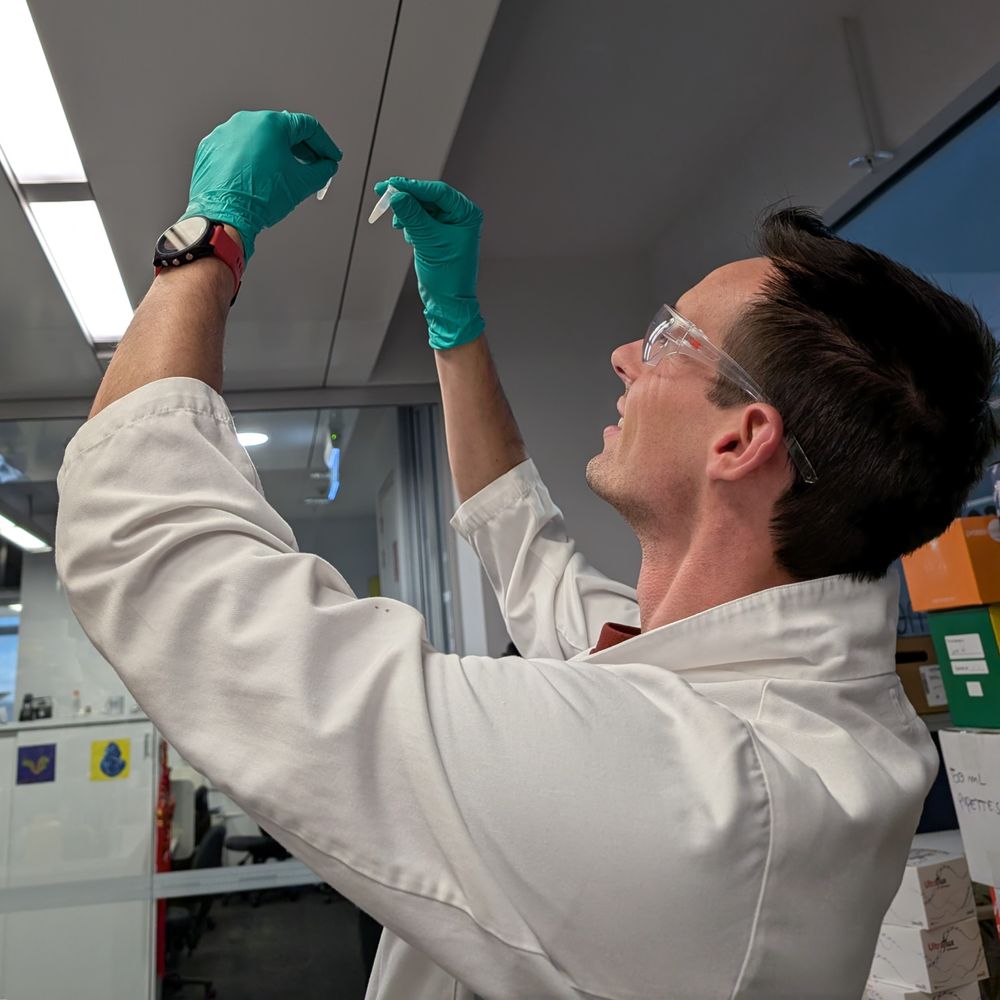
Excited to share matchbox. It’s super fast and versatile to search for patterns in reads, I’m curious to see all the uses it will find!
Congrats to @jakobschuster.bsky.social , co-supervisors @michaelbclark.bsky.social @mritchieau.bsky.social and team!
www.biorxiv.org/content/10.1...
Congrats to @jakobschuster.bsky.social , co-supervisors @michaelbclark.bsky.social @mritchieau.bsky.social and team!
www.biorxiv.org/content/10.1...

November 18, 2025 at 1:26 AM
Excited to share matchbox. It’s super fast and versatile to search for patterns in reads, I’m curious to see all the uses it will find!
Congrats to @jakobschuster.bsky.social , co-supervisors @michaelbclark.bsky.social @mritchieau.bsky.social and team!
www.biorxiv.org/content/10.1...
Congrats to @jakobschuster.bsky.social , co-supervisors @michaelbclark.bsky.social @mritchieau.bsky.social and team!
www.biorxiv.org/content/10.1...
Reposted by Mike Clark
Looking for scientists working with long-read transcriptomics technologies to join a COST action proposal. Contact us!!! @nanoporetech.com @pacbio.bsky.social

October 2, 2025 at 5:25 PM
Looking for scientists working with long-read transcriptomics technologies to join a COST action proposal. Contact us!!! @nanoporetech.com @pacbio.bsky.social
🧪Happy to share our latest paper in Genome Biology.
We profiled #RNA isoforms from 31 neuropsychiatric risk genes in the human brain using long-read sequencing. Unannotated isoforms commonly made up a significant proportion of a gene's expression.
genomebiology.biomedcentral.com/articles/10....
We profiled #RNA isoforms from 31 neuropsychiatric risk genes in the human brain using long-read sequencing. Unannotated isoforms commonly made up a significant proportion of a gene's expression.
genomebiology.biomedcentral.com/articles/10....

Long-read sequencing reveals the RNA isoform repertoire of neuropsychiatric risk genes in human brain - Genome Biology
Background Neuropsychiatric disorders are highly complex conditions and the risk of developing a disorder has been tied to hundreds of genomic variants that alter the expression and/or RNA isoforms made by risk genes. However, how these genes contribute to disease risk and onset through altered expression and RNA splicing is not well understood. Results Combining our new bioinformatic pipeline IsoLamp with nanopore long-read amplicon sequencing, we deeply profile the RNA isoform repertoire of 31 high-confidence neuropsychiatric disorder risk genes in Human brain. We show most risk genes are more complex than previously reported, identifying 363 novel isoforms and 28 novel exons, including isoforms which alter protein domains, and genes such as ATG13 and GATAD2A where most expression was from previously undiscovered isoforms. The greatest isoform diversity is detected in the schizophrenia risk gene ITIH4. Mass spectrometry of brain protein isolates confirms translation of a novel exon skipping event in ITIH4, suggesting a new regulatory mechanism for this gene in the brain. Conclusions Our results emphasize the widespread presence of previously undetected RNA and protein isoforms in the human brain and provide an effective approach to address this knowledge gap. Uncovering the isoform repertoire of candidate neuropsychiatric risk genes will underpin future analyses of the functional impact these isoforms have on neuropsychiatric disorders, enabling the translation of genomic findings into a pathophysiological understanding of disease.
genomebiology.biomedcentral.com
October 3, 2025 at 4:18 AM
🧪Happy to share our latest paper in Genome Biology.
We profiled #RNA isoforms from 31 neuropsychiatric risk genes in the human brain using long-read sequencing. Unannotated isoforms commonly made up a significant proportion of a gene's expression.
genomebiology.biomedcentral.com/articles/10....
We profiled #RNA isoforms from 31 neuropsychiatric risk genes in the human brain using long-read sequencing. Unannotated isoforms commonly made up a significant proportion of a gene's expression.
genomebiology.biomedcentral.com/articles/10....
Reposted by Mike Clark
Long-read transcriptomics is advancing quickly, we benchmarked leading bulk and single-cell protocols in this awesome collaborative effort!
We hope it will be a valuable resource for the community.
Congrats @youyupei.bsky.social @mritchieau.bsky.social @michaelbclark.bsky.social and all!
We hope it will be a valuable resource for the community.
Congrats @youyupei.bsky.social @mritchieau.bsky.social @michaelbclark.bsky.social and all!

Excited to share our latest preprint: LongBench—a cross-platform reference dataset profiling cancer cell lines with bulk and single-cell approaches.
www.biorxiv.org/content/10.1...
www.biorxiv.org/content/10.1...

Benchmarking long-read RNA-sequencing technologies with LongBench: a cross-platform reference dataset profiling cancer cell lines with bulk and single-cell approaches
Long-read RNA sequencing enables full-length transcript profiling and improved isoform resolution, but variable platforms and evolving chemistries demand careful benchmarking for reliable application....
www.biorxiv.org
September 16, 2025 at 1:47 AM
Long-read transcriptomics is advancing quickly, we benchmarked leading bulk and single-cell protocols in this awesome collaborative effort!
We hope it will be a valuable resource for the community.
Congrats @youyupei.bsky.social @mritchieau.bsky.social @michaelbclark.bsky.social and all!
We hope it will be a valuable resource for the community.
Congrats @youyupei.bsky.social @mritchieau.bsky.social @michaelbclark.bsky.social and all!
Reposted by Mike Clark

Bioinformaticians / computational biologists take note - know where you should take your OS tool chain from and do not introduce backdoors.

Heads up: ignore samtools dot org, similarly minimap2 dot com and likely others. It's owned by a known phishing site and while the binaries they offer look valid currently (but note they may be serving us different binaries to others), that could change.
Ie: it's not us (Samtools team)! Be warned
Ie: it's not us (Samtools team)! Be warned
September 15, 2025 at 8:44 AM
Bioinformaticians / computational biologists take note - know where you should take your OS tool chain from and do not introduce backdoors.