


Samuel Eckmann
@samueleckmann.bsky.social
Computational neuroscientist, currently in Cambridge, UK (CBL) as a Newton International Fellow. Interested in neural circuits, E-I balance, and biological learning → http://samueleckmann.github.io
Reposted by Samuel Eckmann

New Journal Club explores TARPs as multi-domain regulators that couple synaptic strength to intrinsic excitability—providing a molecular substrate for coordinated adaptation across timescales.
open.substack.com/pub/grounded...
open.substack.com/pub/grounded...

Beyond Trafficking: Auxiliary Proteins as Multi-Domain Regulators of Neuronal Computation
Auxiliary proteins aren’t just molecular bystanders and supporters, they’re computationally active and play an integral role in intracellular communication.
open.substack.com
January 16, 2026 at 4:01 PM
New Journal Club explores TARPs as multi-domain regulators that couple synaptic strength to intrinsic excitability—providing a molecular substrate for coordinated adaptation across timescales.
open.substack.com/pub/grounded...
open.substack.com/pub/grounded...
"motor cortical engagement is sustained under conditions of sensorimotor uncertainty and dissipates rapidly when sensorimotor contingencies are resolved"

Very excited to share a new preprint - my first paper in the @mikeeconomo.bsky.social lab where we asked when and why the motor cortex is recruited for movement control:🧠👇https://www.biorxiv.org/content/10.64898/2026.01.13.699314v1

Dynamic engagement of the motor cortex in controlling movement
Neural circuits do not contribute equally or continuously to behavior. In mice, the motor cortex can be essential or dispensable for movement in different contexts, but how it is dynamically recruited...
www.biorxiv.org
January 15, 2026 at 9:55 PM
"motor cortical engagement is sustained under conditions of sensorimotor uncertainty and dissipates rapidly when sensorimotor contingencies are resolved"
Reposted by Samuel Eckmann

when doing neuroscience projects I often advocate for computational modelling, followed by data analysis to test model's predictions.
however a few times now I have had pushback from collaborators/reivewers suggesting it would be better to do the data analysis first, then the modelling.
thoughts?
however a few times now I have had pushback from collaborators/reivewers suggesting it would be better to do the data analysis first, then the modelling.
thoughts?
January 12, 2026 at 12:47 PM
when doing neuroscience projects I often advocate for computational modelling, followed by data analysis to test model's predictions.
however a few times now I have had pushback from collaborators/reivewers suggesting it would be better to do the data analysis first, then the modelling.
thoughts?
however a few times now I have had pushback from collaborators/reivewers suggesting it would be better to do the data analysis first, then the modelling.
thoughts?
"In contrast to reactivation of rodent place cells, reactivation of human concept cells does not reflect sequences of events in human experience."
How does the brain replay memories during sleep?
Excited to share our new preprint, the outcome of an extensive effort led by Johannes Niediek, showing that reactivation of human concept neurons reflects memory content rather than event sequence.
Excited to share our new preprint, the outcome of an extensive effort led by Johannes Niediek, showing that reactivation of human concept neurons reflects memory content rather than event sequence.

Episodic memory consolidation by reactivation of human concept neurons during sleep reflects contents, not sequence of events https://www.biorxiv.org/content/10.64898/2026.01.10.698827v1
January 13, 2026 at 9:50 AM
"In contrast to reactivation of rodent place cells, reactivation of human concept cells does not reflect sequences of events in human experience."
"It is essential for the field to systematically explore objectives and data curricula that might cause DNNs to learn more human-like visual representations"
hammer -> nail
hammer -> nail
Published @cp-trendscognsci.bsky.social with @drewlinsley.bsky.social & @tonyfeng.bsky.social: As vision models scale to human/superhuman accuracy, they’re becoming worse models of primate vision—benchmark engineering isn’t neuroscience. @carneyinstitute.bsky.social @browncopsy.bsky.social

Better artificial intelligence does not mean better models of biology
Deep neural networks (DNNs) once showed increasing alignment with primate perception
as they improved on vision benchmarks, raising hopes that advances in artificial intelligence
(AI) would naturally ...
cell.com
January 5, 2026 at 4:54 PM
"It is essential for the field to systematically explore objectives and data curricula that might cause DNNs to learn more human-like visual representations"
hammer -> nail
hammer -> nail
Reposted by Samuel Eckmann

New preprint from the lab! 🚀
We find that hippocampal OLM interneurons provide a circuit-level inhibitory feedback signal that dynamically controls when and where behavioral timescale synaptic plasticity can occur.
Feedback welcome!
We find that hippocampal OLM interneurons provide a circuit-level inhibitory feedback signal that dynamically controls when and where behavioral timescale synaptic plasticity can occur.
Feedback welcome!
Dendrite-targeting OLM interneurons regulate the formation of learning-related CA1 place cell representations https://www.biorxiv.org/content/10.64898/2025.12.21.695825v1
January 5, 2026 at 3:11 PM
New preprint from the lab! 🚀
We find that hippocampal OLM interneurons provide a circuit-level inhibitory feedback signal that dynamically controls when and where behavioral timescale synaptic plasticity can occur.
Feedback welcome!
We find that hippocampal OLM interneurons provide a circuit-level inhibitory feedback signal that dynamically controls when and where behavioral timescale synaptic plasticity can occur.
Feedback welcome!
Reposted by Samuel Eckmann

Published @cp-trendscognsci.bsky.social with @drewlinsley.bsky.social & @tonyfeng.bsky.social: As vision models scale to human/superhuman accuracy, they’re becoming worse models of primate vision—benchmark engineering isn’t neuroscience. @carneyinstitute.bsky.social @browncopsy.bsky.social
Better artificial intelligence does not mean better models of biology
Deep neural networks (DNNs) once showed increasing alignment with primate perception
as they improved on vision benchmarks, raising hopes that advances in artificial intelligence
(AI) would naturally ...
cell.com
January 5, 2026 at 3:33 PM
Published @cp-trendscognsci.bsky.social with @drewlinsley.bsky.social & @tonyfeng.bsky.social: As vision models scale to human/superhuman accuracy, they’re becoming worse models of primate vision—benchmark engineering isn’t neuroscience. @carneyinstitute.bsky.social @browncopsy.bsky.social
Reposted by Samuel Eckmann
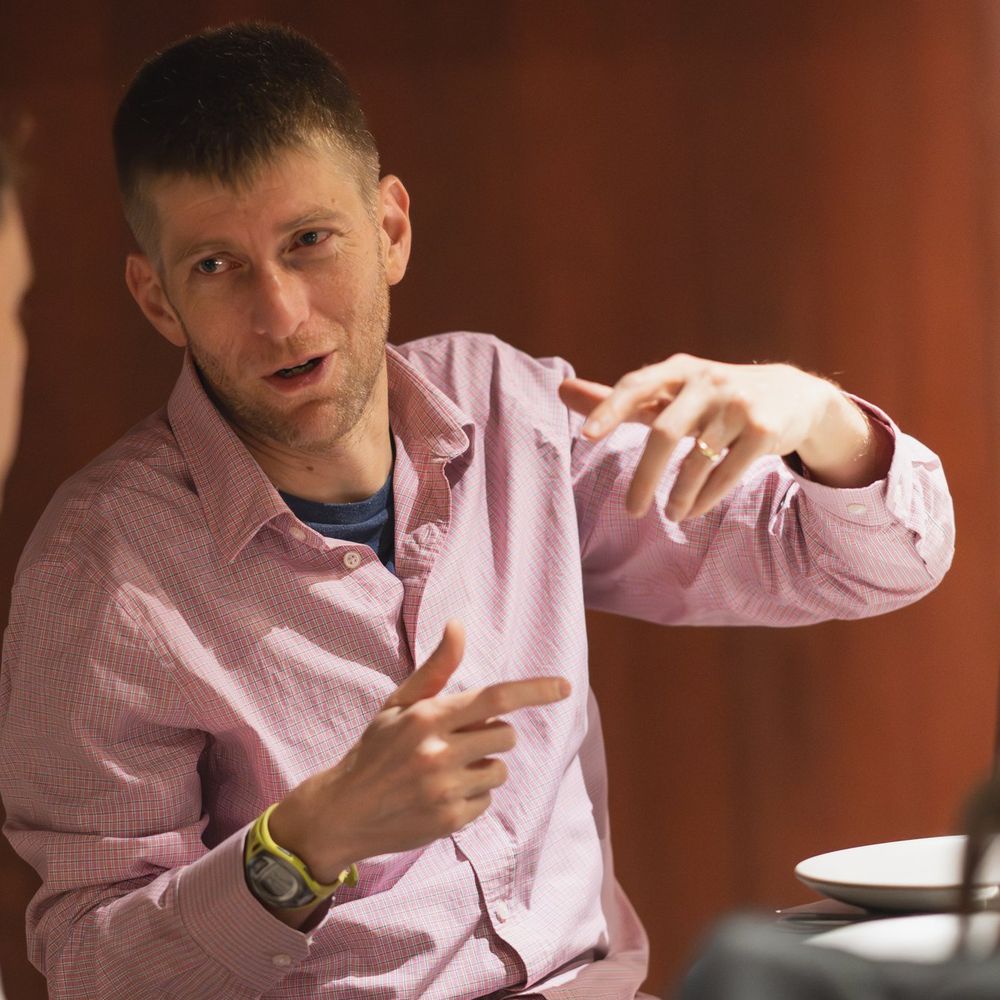
What is the computational role of dendritic excitations? Byung Hun Lee and team mapped voltage dynamics throughout the dendritic trees of CA1 pyramidal neurons in mice navigating in virtual reality. www.biorxiv.org/content/10.6...
January 4, 2026 at 6:17 AM
What is the computational role of dendritic excitations? Byung Hun Lee and team mapped voltage dynamics throughout the dendritic trees of CA1 pyramidal neurons in mice navigating in virtual reality. www.biorxiv.org/content/10.6...
Reposted by Samuel Eckmann

Just published my review of neuroscience in 2025, on The Spike.
The 10th of these, would you believe?
This year we have foundation models, breakthroughs in using light to understand the brain, a gene therapy, and more
Enjoy!
medium.com/the-spike/20...
The 10th of these, would you believe?
This year we have foundation models, breakthroughs in using light to understand the brain, a gene therapy, and more
Enjoy!
medium.com/the-spike/20...

2025: A Review of the Year in Neuroscience
Enlightening the brain
medium.com
December 30, 2025 at 3:52 PM
Just published my review of neuroscience in 2025, on The Spike.
The 10th of these, would you believe?
This year we have foundation models, breakthroughs in using light to understand the brain, a gene therapy, and more
Enjoy!
medium.com/the-spike/20...
The 10th of these, would you believe?
This year we have foundation models, breakthroughs in using light to understand the brain, a gene therapy, and more
Enjoy!
medium.com/the-spike/20...
Reposted by Samuel Eckmann


Reposted by Samuel Eckmann

You can do this right now:
Think of a person who wrote a paper you love, whose work influenced or helped you, or has made your professional life better.
Search up their email address. Shoot them a quick email of thanks. It means so, so much. This is a rough time of year, share some joy.
Think of a person who wrote a paper you love, whose work influenced or helped you, or has made your professional life better.
Search up their email address. Shoot them a quick email of thanks. It means so, so much. This is a rough time of year, share some joy.
December 11, 2025 at 10:08 PM
You can do this right now:
Think of a person who wrote a paper you love, whose work influenced or helped you, or has made your professional life better.
Search up their email address. Shoot them a quick email of thanks. It means so, so much. This is a rough time of year, share some joy.
Think of a person who wrote a paper you love, whose work influenced or helped you, or has made your professional life better.
Search up their email address. Shoot them a quick email of thanks. It means so, so much. This is a rough time of year, share some joy.
Reposted by Samuel Eckmann

Cortical glutamatergic and GABAergic inputs support learning-driven hippocampal stability | Science www.science.org/doi/10.1126/...

Cortical glutamatergic and GABAergic inputs support learning-driven hippocampal stability
Flexibility and stability of neuronal ensembles are crucial features of brain function. Little is known about how these properties of local circuits are influenced by long-range inputs. We show, in mi...
www.science.org
December 12, 2025 at 7:46 AM
Cortical glutamatergic and GABAergic inputs support learning-driven hippocampal stability | Science www.science.org/doi/10.1126/...
Reposted by Samuel Eckmann

Big new blogpost!
My guide to data visualization, which includes a very long table of contents, tons of charts, and more.
--> Why data visualization matters and how to make charts more effective, clear, transparent, and sometimes, beautiful.
www.scientificdiscovery.dev/p/salonis-gu...
My guide to data visualization, which includes a very long table of contents, tons of charts, and more.
--> Why data visualization matters and how to make charts more effective, clear, transparent, and sometimes, beautiful.
www.scientificdiscovery.dev/p/salonis-gu...

December 9, 2025 at 8:28 PM
Big new blogpost!
My guide to data visualization, which includes a very long table of contents, tons of charts, and more.
--> Why data visualization matters and how to make charts more effective, clear, transparent, and sometimes, beautiful.
www.scientificdiscovery.dev/p/salonis-gu...
My guide to data visualization, which includes a very long table of contents, tons of charts, and more.
--> Why data visualization matters and how to make charts more effective, clear, transparent, and sometimes, beautiful.
www.scientificdiscovery.dev/p/salonis-gu...
BTSP in visual cortex
Rapid neocortical network modifications via dendritic plateau potential induced plasticity https://www.biorxiv.org/content/10.1101/2025.11.19.689338v1
November 20, 2025 at 12:45 PM
BTSP in visual cortex
Reposted by Samuel Eckmann

I have so many issues with this podcast with @earlkmiller.bsky.social . I think that this podcast nicely shows why I have trouble with such approaches. Lets go through some of the claims.
Giant Shoulders podcast: Meet the MIT Neuroscientist Proving Brainwaves are the Secret to Consciousness.
youtu.be/7OFb-NG3jIw
#neuroscience
youtu.be/7OFb-NG3jIw
#neuroscience

Meet the MIT Neuroscientist Proving Brain Waves Are the Secret Engine Behind Consciousness
YouTube video by Giant's Shoulder
youtu.be
November 18, 2025 at 8:05 PM
I have so many issues with this podcast with @earlkmiller.bsky.social . I think that this podcast nicely shows why I have trouble with such approaches. Lets go through some of the claims.
Reposted by Samuel Eckmann

See our latest - collab with @jess-cardin.bsky.social, led by @andrewmoberly.bsky.social. We combined mesoscopic and 2p imaging to show that learning-dependent plasticity of ACh release in visual cortex drives enhanced visual representations and conditioned behavior. 1/5 tinyurl.com/3cfea6df

Learning-dependent cholinergic plasticity reconfigures cortical circuit dynamics
Neuromodulation by acetylcholine (ACh) plays a critical role in reshaping neural dynamics in the neocortex as a function of development, behavioral state, and learning [1][1]–[6][2]. Prior work sugges...
www.biorxiv.org
November 14, 2025 at 3:02 AM
See our latest - collab with @jess-cardin.bsky.social, led by @andrewmoberly.bsky.social. We combined mesoscopic and 2p imaging to show that learning-dependent plasticity of ACh release in visual cortex drives enhanced visual representations and conditioned behavior. 1/5 tinyurl.com/3cfea6df
Reposted by Samuel Eckmann
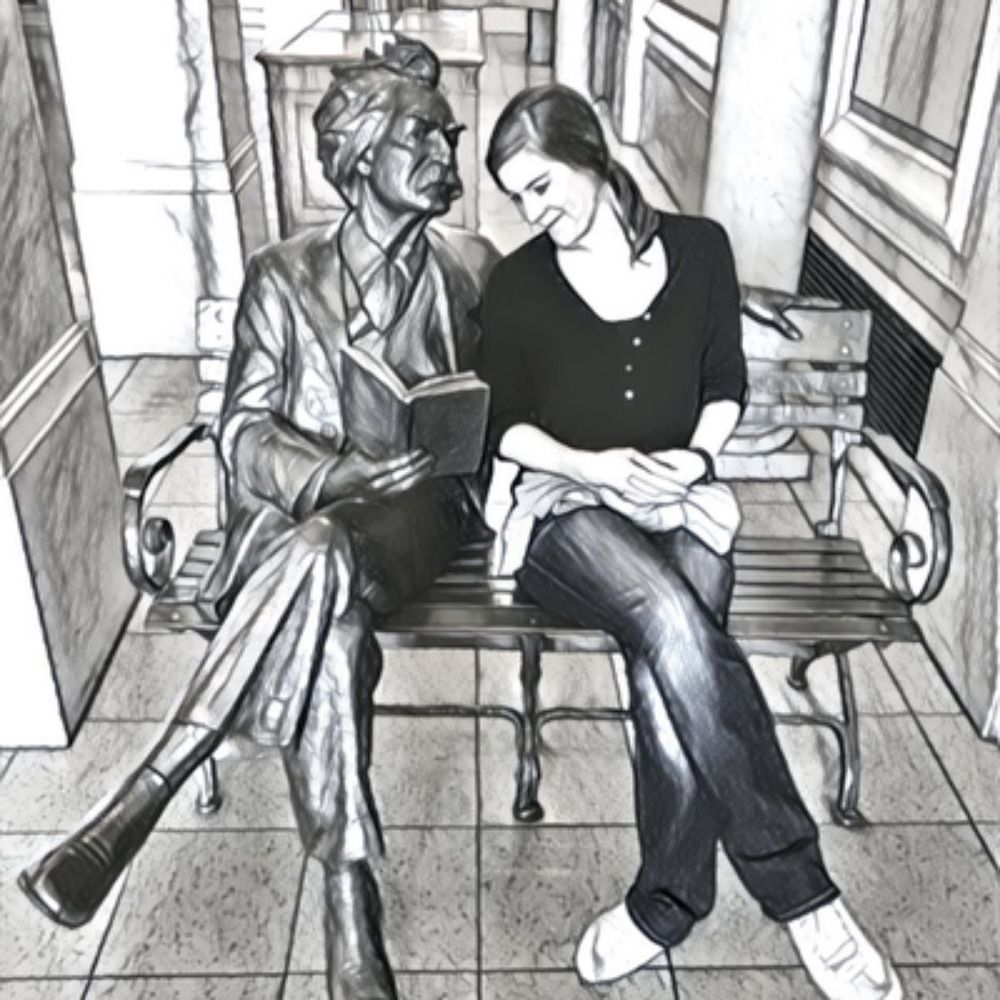
Out now: Favila, Capece Marsico et al. 2025, Nature Communications: Using longitudinal deep-brain imaging, we report that amygdala interneurons exhibit complex and heterogeneous plasticity during associative learning, at both the single-cell and population level.
👉 www.nature.com/articles/s41...
👉 www.nature.com/articles/s41...

Heterogeneous plasticity of amygdala interneurons in associative learning and extinction - Nature Communications
In this study, the authors uncover how diverse inhibitory interneurons in the amygdala flexibly contribute to fear and safety learning, revealing a key role for inhibition in emotional memory and adap...
www.nature.com
November 12, 2025 at 6:55 PM
Out now: Favila, Capece Marsico et al. 2025, Nature Communications: Using longitudinal deep-brain imaging, we report that amygdala interneurons exhibit complex and heterogeneous plasticity during associative learning, at both the single-cell and population level.
👉 www.nature.com/articles/s41...
👉 www.nature.com/articles/s41...
Reposted by Samuel Eckmann

Many of our big insights into brain function come from trying to mimic it, writes @timothyoleary.bsky.social. This lesson should guide how we organize research programs.
www.thetransmitter.org/systems-neur...
#neuroskyence
www.thetransmitter.org/systems-neur...
#neuroskyence

Neuroscience needs engineers—for more reasons than you think
Adopting an engineering mindset will help the field focus its research priorities.
www.thetransmitter.org
November 3, 2025 at 2:22 PM
Many of our big insights into brain function come from trying to mimic it, writes @timothyoleary.bsky.social. This lesson should guide how we organize research programs.
www.thetransmitter.org/systems-neur...
#neuroskyence
www.thetransmitter.org/systems-neur...
#neuroskyence
Reposted by Samuel Eckmann

Now that Affinity is fully free I think there’s a solid opportunity for academia to let go of Inkscape and get serious about designing good figures 💁🏻♂️
www.affinity.studio/download
www.affinity.studio/download

Unsupported client
It seems you are using an old or unsupported browser. To continue enjoying our product, please update to a recent version of one of the following browsers:
www.affinity.studio
November 1, 2025 at 5:28 PM
Now that Affinity is fully free I think there’s a solid opportunity for academia to let go of Inkscape and get serious about designing good figures 💁🏻♂️
www.affinity.studio/download
www.affinity.studio/download
Reposted by Samuel Eckmann

Reposted by Samuel Eckmann

Thrilled that our paper is out today in Nature!
www.nature.com/articles/s4...
www.nature.com/articles/s4...

Sensory expectations shape neural population dynamics in motor circuits
Nature - Experiments with human volunteers and macaques show that expectations produced by probabilistic cueing of future sensory inputs shape motor circuit dynamics in order to increase the...
www.nature.com
October 29, 2025 at 4:11 PM
Thrilled that our paper is out today in Nature!
www.nature.com/articles/s4...
www.nature.com/articles/s4...
Reposted by Samuel Eckmann

"Even short, regular check-ins can make a difference. Time spent helping students to solve problems, or simply asking how a project is going, will pay dividends. It also saves time later by catching small problems before they become big ones"
nature.com/articles/d41...
nature.com/articles/d41...

What makes PhD students happy? Good supervision
Supervisors who invest in positive mentoring relationships with their PhD candidates also reap the benefits for their own research.
nature.com
October 22, 2025 at 3:22 PM
"Even short, regular check-ins can make a difference. Time spent helping students to solve problems, or simply asking how a project is going, will pay dividends. It also saves time later by catching small problems before they become big ones"
nature.com/articles/d41...
nature.com/articles/d41...
Reposted by Samuel Eckmann

#JNeurosci: Kashefi et al. dissociate between the “what” and “how” components of motor sequence learning and provides evidence for the development of motoric sequence representations that guide optimal movement execution.
https://doi.org/10.1523/JNEUROSCI.0299-25.2025
https://doi.org/10.1523/JNEUROSCI.0299-25.2025

September 30, 2025 at 11:31 AM
#JNeurosci: Kashefi et al. dissociate between the “what” and “how” components of motor sequence learning and provides evidence for the development of motoric sequence representations that guide optimal movement execution.
https://doi.org/10.1523/JNEUROSCI.0299-25.2025
https://doi.org/10.1523/JNEUROSCI.0299-25.2025
