


Troels Bøggild
@tboeggild.bsky.social
Political scientist | Associate Professor, @AarhusUni | DFF Research leader | Political behavior, distrust, polarization, social media
Pinned
Troels Bøggild
@tboeggild.bsky.social
· Aug 9

🚨New article🚨 out in AJPS w C Jensen. We analyze downstream consequences of rising incivility between politicians and find adverse effects on citizens' political trust, satisfaction w democracy, and intentions to comply w policies
onlinelibrary.wiley.com/doi/10.1111/...
onlinelibrary.wiley.com/doi/10.1111/...
Reposted by Troels Bøggild

Why do citizens who say they support democracy tolerate leaders who dismantle it? Delighted to share my paper “Framing Democracy: How Elite Discourse Shapes Citizens' Understandings of Democracy and Enables Backsliding” is forthcoming in World Politics...(1/5, link at the end)

December 19, 2025 at 8:11 AM
Why do citizens who say they support democracy tolerate leaders who dismantle it? Delighted to share my paper “Framing Democracy: How Elite Discourse Shapes Citizens' Understandings of Democracy and Enables Backsliding” is forthcoming in World Politics...(1/5, link at the end)
Reposted by Troels Bøggild

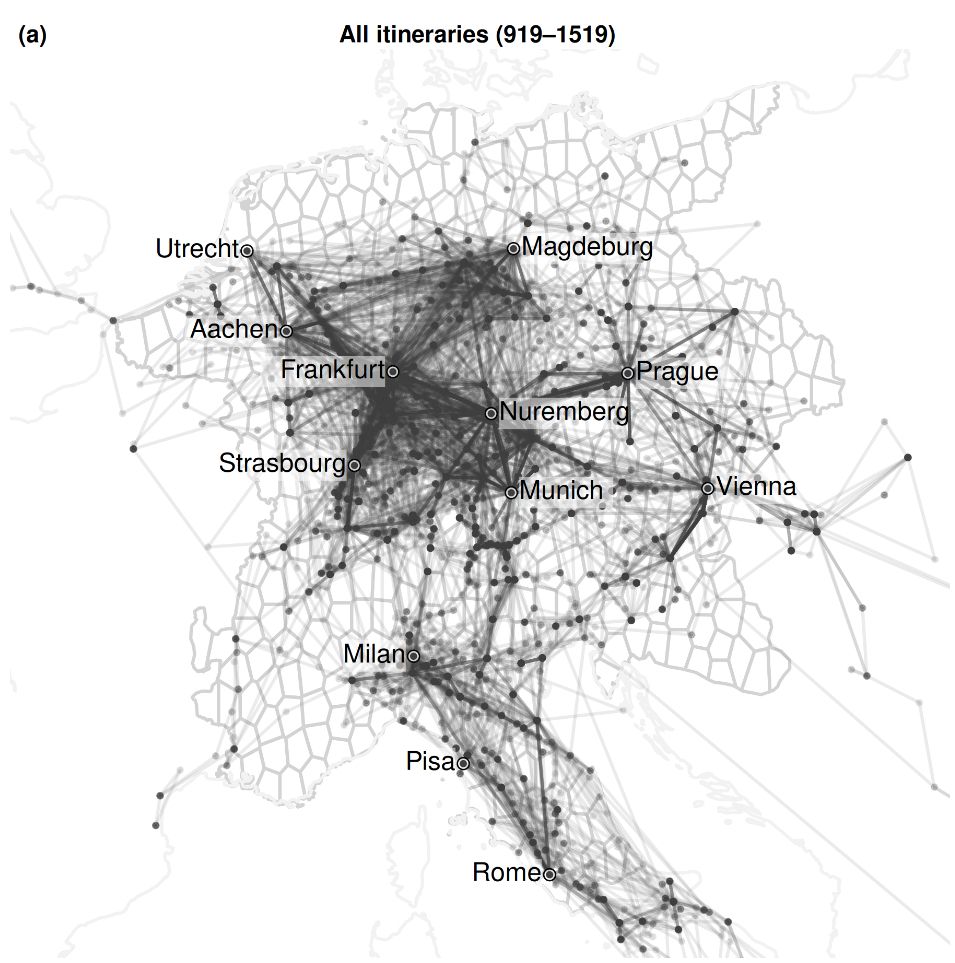
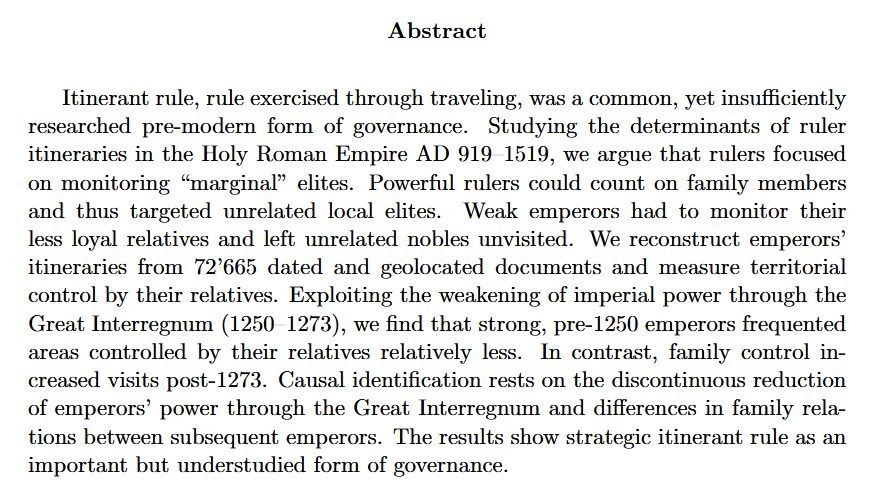
🚨 Very excited that our paper on *Rulers on the Road* has been cond. accepted at the AJPS @ajpseditor.bsky.social. We analyze emperors' strategies of itinerant rule in the Holy Roman Empire 919-1519. Fun working with @claranw.bsky.social, @andrejkokkonen.bsky.social & Jørgen Møller shorturl.at/Spm7z
April 29, 2025 at 3:43 PM
🚨 Very excited that our paper on *Rulers on the Road* has been cond. accepted at the AJPS @ajpseditor.bsky.social. We analyze emperors' strategies of itinerant rule in the Holy Roman Empire 919-1519. Fun working with @claranw.bsky.social, @andrejkokkonen.bsky.social & Jørgen Møller shorturl.at/Spm7z
Reposted by Troels Bøggild

Did you know that from tomorrow, Qualtrics is offering synthetic panels (AI-generated participants)?
Follow me down a rabbit hole I'm calling "doing science is tough and I'm so busy, can't we just make up participants?"
Follow me down a rabbit hole I'm calling "doing science is tough and I'm so busy, can't we just make up participants?"


December 16, 2025 at 5:38 PM
Did you know that from tomorrow, Qualtrics is offering synthetic panels (AI-generated participants)?
Follow me down a rabbit hole I'm calling "doing science is tough and I'm so busy, can't we just make up participants?"
Follow me down a rabbit hole I'm calling "doing science is tough and I'm so busy, can't we just make up participants?"
Reposted by Troels Bøggild
How did Twitter users react right after Elon Musk bought the social media site? @macaukfmak.bsky.social @zeningduan.bsky.social Sijia Yang and I used a panel survey (wave 1 before Musk took control of Twitter, wave 2 after) to find out. 1/ urldefense.com/v3/__https:/...

To quit or not to quit Twitter? The interplay of identities, perceptions, and behavioral reactions to changing platform ownership
Elon Musk’s acquisition of Twitter (now ‘X’) raised concerns about its governance and functioning. Using this as a case study, we propose a framework to analyze the interplay of social identities, ...
urldefense.com
December 15, 2025 at 2:28 PM
How did Twitter users react right after Elon Musk bought the social media site? @macaukfmak.bsky.social @zeningduan.bsky.social Sijia Yang and I used a panel survey (wave 1 before Musk took control of Twitter, wave 2 after) to find out. 1/ urldefense.com/v3/__https:/...
Reposted by Troels Bøggild



November 29, 2025 at 1:27 AM
Reposted by Troels Bøggild
A hidden gem for PolSci in an Econ journal: mainstream right-wing parties seem to capture only a fraction (!) of the far-right vote when the latter don't run in an election. Crucially, left parties seem to gain votes! A key finding for understanding potential coalitions doi.org/10.1016/j.jp...

November 28, 2025 at 11:22 AM
A hidden gem for PolSci in an Econ journal: mainstream right-wing parties seem to capture only a fraction (!) of the far-right vote when the latter don't run in an election. Crucially, left parties seem to gain votes! A key finding for understanding potential coalitions doi.org/10.1016/j.jp...
Reposted by Troels Bøggild

@robbwiller.bsky.social, Director of our #AI and the Future of #SocialScience program, spoke with the Stanford Report about his recent research showing that AI-generated political messages can be as persuasive as those developed by humans.
Learn more ⤵️
Learn more ⤵️
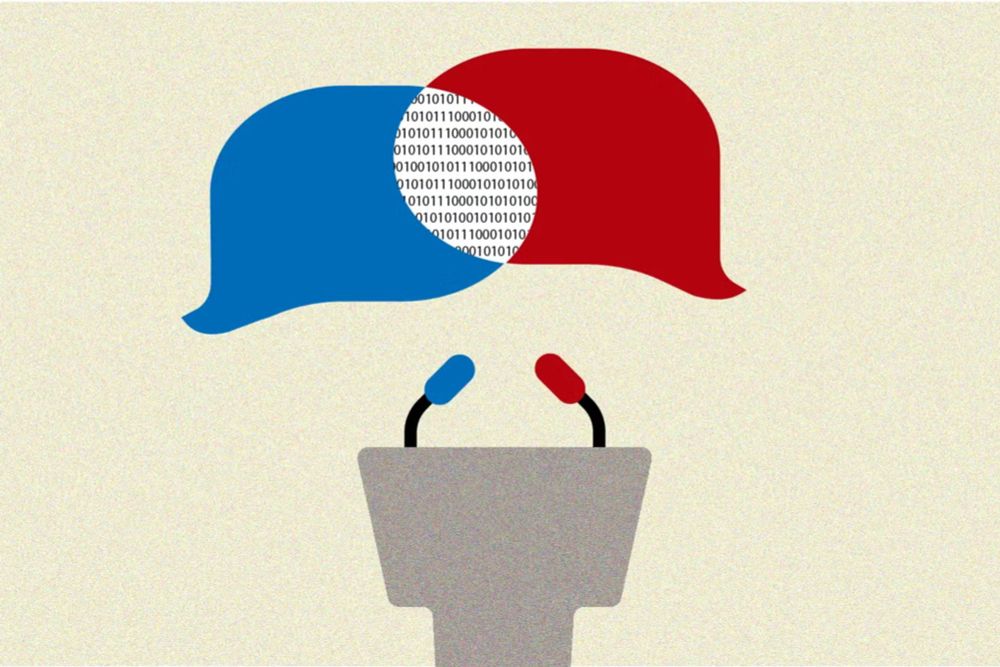
AI rivals humans in political persuasion
New research reveals that people find AI-delivered political arguments convincing. This could help bridge political divides – or fuel polarization.
stanford.io
November 26, 2025 at 4:32 PM
@robbwiller.bsky.social, Director of our #AI and the Future of #SocialScience program, spoke with the Stanford Report about his recent research showing that AI-generated political messages can be as persuasive as those developed by humans.
Learn more ⤵️
Learn more ⤵️
Reposted by Troels Bøggild

NEW ARTICLE: @palesl.bsky.social, Vesa Koskimaa and I have an letter out in JOP, "Politicians talk less about the future as they age" doi.org/10.1086/739406 (1/10)

Legislators talk less about the future as they age | The Journal of Politics: Vol 0, No ja
doi.org
November 21, 2025 at 12:53 PM
NEW ARTICLE: @palesl.bsky.social, Vesa Koskimaa and I have an letter out in JOP, "Politicians talk less about the future as they age" doi.org/10.1086/739406 (1/10)
Reposted by Troels Bøggild

CogSci in Aarhus is hiring, open rank (assi, asso or full prof).
We want somebody working on and teaching computational modelling of cognitive processes and/or social processes. Students are amazing, work/life balance very satisfactory, and colleagues are nice!
international.au.dk/about/profil...
We want somebody working on and teaching computational modelling of cognitive processes and/or social processes. Students are amazing, work/life balance very satisfactory, and colleagues are nice!
international.au.dk/about/profil...

Assistant Professor, Associate Professor or Full Professor of Cognitive Science - Vacancy at Aarhus University
Vacancy at School of Communication and Culture - Linguistics, Cognitive Science and Semiotics, Dept. of, Aarhus University
international.au.dk
November 26, 2025 at 11:38 AM
CogSci in Aarhus is hiring, open rank (assi, asso or full prof).
We want somebody working on and teaching computational modelling of cognitive processes and/or social processes. Students are amazing, work/life balance very satisfactory, and colleagues are nice!
international.au.dk/about/profil...
We want somebody working on and teaching computational modelling of cognitive processes and/or social processes. Students are amazing, work/life balance very satisfactory, and colleagues are nice!
international.au.dk/about/profil...
Reposted by Troels Bøggild

New Publication with @lhaffert.bsky.social in @ejprjournal.bsky.social!
We study the role of generations in the urban-rural divide, which is increasingly shaping the politics of many democracies.
Studying Switzerland, we show: The urban-rural divide is stronger among younger generations. (1/10) 🧵👇
We study the role of generations in the urban-rural divide, which is increasingly shaping the politics of many democracies.
Studying Switzerland, we show: The urban-rural divide is stronger among younger generations. (1/10) 🧵👇

November 24, 2025 at 9:48 AM
New Publication with @lhaffert.bsky.social in @ejprjournal.bsky.social!
We study the role of generations in the urban-rural divide, which is increasingly shaping the politics of many democracies.
Studying Switzerland, we show: The urban-rural divide is stronger among younger generations. (1/10) 🧵👇
We study the role of generations in the urban-rural divide, which is increasingly shaping the politics of many democracies.
Studying Switzerland, we show: The urban-rural divide is stronger among younger generations. (1/10) 🧵👇
Reposted by Troels Bøggild
Thrilled to share my new article in Political Psychology: “The psychology of political attitudinal volatility.” In it, I attempt to answer why do some people change their political views more than others? Open access at: onlinelibrary.wiley.com/doi/epdf/10....
@ispp-pops.bsky.social
@ispp-pops.bsky.social

November 25, 2025 at 3:07 PM
Thrilled to share my new article in Political Psychology: “The psychology of political attitudinal volatility.” In it, I attempt to answer why do some people change their political views more than others? Open access at: onlinelibrary.wiley.com/doi/epdf/10....
@ispp-pops.bsky.social
@ispp-pops.bsky.social
Reposted by Troels Bøggild

“Understanding the mind requires understanding history, because psychology is not only constructed in the present but shaped through deep historical time.”
—Jackson and Atari on the key questions Historical Psychology can help address:
buff.ly/U0pPHZm
—Jackson and Atari on the key questions Historical Psychology can help address:
buff.ly/U0pPHZm


November 23, 2025 at 9:18 AM
“Understanding the mind requires understanding history, because psychology is not only constructed in the present but shaped through deep historical time.”
—Jackson and Atari on the key questions Historical Psychology can help address:
buff.ly/U0pPHZm
—Jackson and Atari on the key questions Historical Psychology can help address:
buff.ly/U0pPHZm
Reposted by Troels Bøggild

Happy that our paper with @bogatyrev.bsky.social, @tabouchadi.bsky.social, @heikekluever.bsky.social, and @lstoetze.bsky.social found a home at @thejop.bsky.social. You can read it here 👇
www.journals.uchicago.edu/doi/10.1086/...
Thanks to all the fantastic people giving feedback and supporting us
www.journals.uchicago.edu/doi/10.1086/...
Thanks to all the fantastic people giving feedback and supporting us
November 22, 2025 at 7:27 PM
Happy that our paper with @bogatyrev.bsky.social, @tabouchadi.bsky.social, @heikekluever.bsky.social, and @lstoetze.bsky.social found a home at @thejop.bsky.social. You can read it here 👇
www.journals.uchicago.edu/doi/10.1086/...
Thanks to all the fantastic people giving feedback and supporting us
www.journals.uchicago.edu/doi/10.1086/...
Thanks to all the fantastic people giving feedback and supporting us
Reposted by Troels Bøggild

So there you have it, twin study estimates were greatly inflated, and molecular data sets the record straight. I walk through possible counter-arguments, but ultimately the uncomfortable truth is that genes contribute to traits much less than we always thought.


November 21, 2025 at 10:34 PM
So there you have it, twin study estimates were greatly inflated, and molecular data sets the record straight. I walk through possible counter-arguments, but ultimately the uncomfortable truth is that genes contribute to traits much less than we always thought.
Reposted by Troels Bøggild

#OpenAccess from @jepsjournal.bsky.social -
Partisan Homogeneity Does Not Increase Collaborative Corruption - https://cup.org/3K65wB9
- @cerpintaxt.bsky.social, Florian Erlbruch & Markus Stephan Tepe
#FirstView
Partisan Homogeneity Does Not Increase Collaborative Corruption - https://cup.org/3K65wB9
- @cerpintaxt.bsky.social, Florian Erlbruch & Markus Stephan Tepe
#FirstView

November 20, 2025 at 11:20 AM
#OpenAccess from @jepsjournal.bsky.social -
Partisan Homogeneity Does Not Increase Collaborative Corruption - https://cup.org/3K65wB9
- @cerpintaxt.bsky.social, Florian Erlbruch & Markus Stephan Tepe
#FirstView
Partisan Homogeneity Does Not Increase Collaborative Corruption - https://cup.org/3K65wB9
- @cerpintaxt.bsky.social, Florian Erlbruch & Markus Stephan Tepe
#FirstView
Reposted by Troels Bøggild

Rising wealth concentration tends to undermine democracy, according to a Stone Center Working Paper by @schechtlm.bsky.social. In this interview, he discusses how he drew on two new sources of data to compare democratic backsliding in 50 U.S. states.
stonecenter.gc.cuny.edu/the-effect-o...
stonecenter.gc.cuny.edu/the-effect-o...

The Effect of Increasing Wealth Inequality on U.S. Democracy at the State Level - Stone Center on Socio-Economic Inequality
Manuel Schechtl, a 2022–2024 Stone Center postdoctoral scholar, discusses his Stone Center Working Paper, which combines two new sources of data to compare the extent of democratic backsliding in all ...
stonecenter.gc.cuny.edu
November 11, 2025 at 6:07 PM
Rising wealth concentration tends to undermine democracy, according to a Stone Center Working Paper by @schechtlm.bsky.social. In this interview, he discusses how he drew on two new sources of data to compare democratic backsliding in 50 U.S. states.
stonecenter.gc.cuny.edu/the-effect-o...
stonecenter.gc.cuny.edu/the-effect-o...
Reposted by Troels Bøggild

🚨Out in PNAS🚨
Examining news on 7 platforms:
1)Right-leaning platforms=lower quality news
2)Echo-platforms: Right-leaning news gets more engagement on right-leaning platforms, vice-versa for left-leaning
3)Low-quality news gets more engagement EVERYWHERE - even BlueSky!
www.pnas.org/doi/10.1073/...
Examining news on 7 platforms:
1)Right-leaning platforms=lower quality news
2)Echo-platforms: Right-leaning news gets more engagement on right-leaning platforms, vice-versa for left-leaning
3)Low-quality news gets more engagement EVERYWHERE - even BlueSky!
www.pnas.org/doi/10.1073/...

November 14, 2025 at 2:35 PM
🚨Out in PNAS🚨
Examining news on 7 platforms:
1)Right-leaning platforms=lower quality news
2)Echo-platforms: Right-leaning news gets more engagement on right-leaning platforms, vice-versa for left-leaning
3)Low-quality news gets more engagement EVERYWHERE - even BlueSky!
www.pnas.org/doi/10.1073/...
Examining news on 7 platforms:
1)Right-leaning platforms=lower quality news
2)Echo-platforms: Right-leaning news gets more engagement on right-leaning platforms, vice-versa for left-leaning
3)Low-quality news gets more engagement EVERYWHERE - even BlueSky!
www.pnas.org/doi/10.1073/...
Reposted by Troels Bøggild

IN NEW ISSUE: Elite Cooperation and Affective Polarization: @markuswagner.bsky.social & @eelcoharteveld.bsky.social examine the link between the two by using 20 years of German coalitions data - buff.ly/DoGL3EA (OPEN ACCESS)
@polstudiesassoc.bsky.social @uoypolitics.bsky.social @sagepub.com
@polstudiesassoc.bsky.social @uoypolitics.bsky.social @sagepub.com

November 12, 2025 at 10:00 PM
IN NEW ISSUE: Elite Cooperation and Affective Polarization: @markuswagner.bsky.social & @eelcoharteveld.bsky.social examine the link between the two by using 20 years of German coalitions data - buff.ly/DoGL3EA (OPEN ACCESS)
@polstudiesassoc.bsky.social @uoypolitics.bsky.social @sagepub.com
@polstudiesassoc.bsky.social @uoypolitics.bsky.social @sagepub.com
Reposted by Troels Bøggild

About one-in-five U.S. adults (21%) say they regularly get news from news influencers on social media. Among 18- to 29-year-olds, that figure jumps to 38%.

News Influencers Fact Sheet
About one-in-five U.S. adults say they regularly get news from news influencers on social media, and this is especially common among younger adults.
www.pewresearch.org
November 12, 2025 at 5:30 PM
About one-in-five U.S. adults (21%) say they regularly get news from news influencers on social media. Among 18- to 29-year-olds, that figure jumps to 38%.
Reposted by Troels Bøggild

Americans’ immigration attitudes reflect both country of origin and religion. Christley & Zhirkov find that immigrants from Muslim-majority countries face lower support for admission—across parties, though less so among Democrats.
#Immigration
Read more:
link.springer.com/article/10.1...
#Immigration
Read more:
link.springer.com/article/10.1...

Americans’ Opposition to Muslim Immigration: Untangling Religion from Country of Origin - Political Behavior
Does an immigrant’s country of origin shape Americans’ immigration preferences? If so, are some attributes of origin countries likely to provoke particularly strong opposition over others? We answer t...
link.springer.com
November 12, 2025 at 4:19 PM
Americans’ immigration attitudes reflect both country of origin and religion. Christley & Zhirkov find that immigrants from Muslim-majority countries face lower support for admission—across parties, though less so among Democrats.
#Immigration
Read more:
link.springer.com/article/10.1...
#Immigration
Read more:
link.springer.com/article/10.1...
Reposted by Troels Bøggild
We are at our most certain about an issue when we have thoroughly researched it and considered all relevant angles.
Only one thing can make us more certain.
Ignorance.
buff.ly/w8OaZGn
Only one thing can make us more certain.
Ignorance.
buff.ly/w8OaZGn

November 12, 2025 at 9:18 AM
We are at our most certain about an issue when we have thoroughly researched it and considered all relevant angles.
Only one thing can make us more certain.
Ignorance.
buff.ly/w8OaZGn
Only one thing can make us more certain.
Ignorance.
buff.ly/w8OaZGn
Reposted by Troels Bøggild
#OpenAccess from @poppublicsphere.bsky.social -
Do Authoritarians Support Political Violence? - https://cup.org/43p5yL9
- Bryan T. Gervais, Connor Dye, Gabriel Acevedo, Christopher G. Ellison & Margaret S. Kelley
#FirstView
Do Authoritarians Support Political Violence? - https://cup.org/43p5yL9
- Bryan T. Gervais, Connor Dye, Gabriel Acevedo, Christopher G. Ellison & Margaret S. Kelley
#FirstView

November 12, 2025 at 9:20 AM
#OpenAccess from @poppublicsphere.bsky.social -
Do Authoritarians Support Political Violence? - https://cup.org/43p5yL9
- Bryan T. Gervais, Connor Dye, Gabriel Acevedo, Christopher G. Ellison & Margaret S. Kelley
#FirstView
Do Authoritarians Support Political Violence? - https://cup.org/43p5yL9
- Bryan T. Gervais, Connor Dye, Gabriel Acevedo, Christopher G. Ellison & Margaret S. Kelley
#FirstView
Reposted by Troels Bøggild

🚨 NEW in @bjpols.bsky.social : When Partygate hit Westminster, trust in Scottish politicians increased. Our experiments reveal a "contrast effect" - scandals at one level can make the other look better by comparison. Who lost most trust in Westminster? Scottish unionists. Read now #OpenAccess 👇

November 11, 2025 at 9:00 AM
🚨 NEW in @bjpols.bsky.social : When Partygate hit Westminster, trust in Scottish politicians increased. Our experiments reveal a "contrast effect" - scandals at one level can make the other look better by comparison. Who lost most trust in Westminster? Scottish unionists. Read now #OpenAccess 👇
Reposted by Troels Bøggild

Do architecture and urban planning affect political behavior? Happy to share a paper that @tesaliarizzo.bsky.social and I have coming out at the APSR which uses computer vision to investigate how the built environment shapes inequalities in civic participation in Mexico: osf.io/preprints/so.... 🧵1/5


November 8, 2025 at 9:29 PM
Do architecture and urban planning affect political behavior? Happy to share a paper that @tesaliarizzo.bsky.social and I have coming out at the APSR which uses computer vision to investigate how the built environment shapes inequalities in civic participation in Mexico: osf.io/preprints/so.... 🧵1/5