



Dan Browne
@drbfx.bsky.social
Space cowboy riding a massive rock across the galaxy, wrangling genomes and herding data. PhD in Biochemistry @TAMUBCBP. Working @LanzaTech.
GitHub: https://github.com/dbrowneup
LinkedIn: https://linkedin.com/in/drbrowne
GitHub: https://github.com/dbrowneup
LinkedIn: https://linkedin.com/in/drbrowne
Reposted by Dan Browne

hf claude code skills allow you to fine-tune an LLM in natural language. E.g.: "Fine-tune Qwen3-0.6B on the dataset open-r1/codeforces-cots" and it'll validate datasets, choose GPU types, kick off HF Jobs, monitor progress, and publish checkpoints/models
huggingface.co/blog/hf-skil...
huggingface.co/blog/hf-skil...

We Got Claude to Fine-Tune an Open Source LLM
We’re on a journey to advance and democratize artificial intelligence through open source and open science.
huggingface.co
December 9, 2025 at 3:01 PM
hf claude code skills allow you to fine-tune an LLM in natural language. E.g.: "Fine-tune Qwen3-0.6B on the dataset open-r1/codeforces-cots" and it'll validate datasets, choose GPU types, kick off HF Jobs, monitor progress, and publish checkpoints/models
huggingface.co/blog/hf-skil...
huggingface.co/blog/hf-skil...
Reposted by Dan Browne

Excited to share our final accepted version of the CiFi method out today: www.nature.com/articles/s41...
December 8, 2025 at 5:54 PM
Excited to share our final accepted version of the CiFi method out today: www.nature.com/articles/s41...
Reposted by Dan Browne

The #1 organism used to make biocement has never been engineered... until now! Excited to share our work on Sporosarcina pasteurii! Esp. since it's the first project I've contributed to here at Cultivarium :)
www.biorxiv.org/content/10.6...
www.biorxiv.org/content/10.6...

A genetic platform for a biocementation bacterium
Sporosarcina pasteurii is the most widely studied bacterium for microbially-induced calcium carbonate precipitation (MICP), a process of intense interest for materials and construction applications. D...
www.biorxiv.org
December 8, 2025 at 2:24 PM
The #1 organism used to make biocement has never been engineered... until now! Excited to share our work on Sporosarcina pasteurii! Esp. since it's the first project I've contributed to here at Cultivarium :)
www.biorxiv.org/content/10.6...
www.biorxiv.org/content/10.6...
Reposted by Dan Browne
🧬🦠🚨 Another new paper alert, this time led by @maureenbug.bsky.social ! In collaboration with the Emerson lab and
@titus.idyll.org lab (@taylorreiter.bsky.social), both at UC Davis. Asking the question: what are we missing in short-read metagenome assembly, and why ?
doi.org/10.1093/narg...
@titus.idyll.org lab (@taylorreiter.bsky.social), both at UC Davis. Asking the question: what are we missing in short-read metagenome assembly, and why ?
doi.org/10.1093/narg...

Comparison of short-read and long-read metagenome assemblies in a natural soil community highlights systematic bias in recovery of high-diversity populations
Abstract. Comparisons of long-read and short-read (meta)genome assemblies typically show that short-read sequence assemblies are less error-prone, but stru
doi.org
December 9, 2025 at 3:25 AM
🧬🦠🚨 Another new paper alert, this time led by @maureenbug.bsky.social ! In collaboration with the Emerson lab and
@titus.idyll.org lab (@taylorreiter.bsky.social), both at UC Davis. Asking the question: what are we missing in short-read metagenome assembly, and why ?
doi.org/10.1093/narg...
@titus.idyll.org lab (@taylorreiter.bsky.social), both at UC Davis. Asking the question: what are we missing in short-read metagenome assembly, and why ?
doi.org/10.1093/narg...
Reposted by Dan Browne

Our paper describing the GlobDB is now published in @bioinfoadv.bsky.social
doi.org/10.1093/bioa...
The GlobDB is the largest species dereplicated genome database currently available, containing 306,260 species representatives.
More information on globdb.org 1/5
🖥️🧬🦠
doi.org/10.1093/bioa...
The GlobDB is the largest species dereplicated genome database currently available, containing 306,260 species representatives.
More information on globdb.org 1/5
🖥️🧬🦠

GlobDB: a comprehensive species-dereplicated microbial genome resource
AbstractMotivation. Over the past years, substantial numbers of microbial species’ genomes have been deposited outside of conventional INSDC databases.Resu
doi.org
November 21, 2025 at 4:21 PM
Our paper describing the GlobDB is now published in @bioinfoadv.bsky.social
doi.org/10.1093/bioa...
The GlobDB is the largest species dereplicated genome database currently available, containing 306,260 species representatives.
More information on globdb.org 1/5
🖥️🧬🦠
doi.org/10.1093/bioa...
The GlobDB is the largest species dereplicated genome database currently available, containing 306,260 species representatives.
More information on globdb.org 1/5
🖥️🧬🦠
Reposted by Dan Browne

proGenomes4: providing 2 million accurately and consistently annotated high-quality prokaryotic genomes academic.oup.com/nar/advance-... #jcampubs

proGenomes4: providing 2 million accurately and consistently annotated high-quality prokaryotic genomes
Abstract. The pervasive availability of publicly available microbial genomes has opened many new avenues for microbiology research, yet it also demands rob
academic.oup.com
November 20, 2025 at 2:02 PM
proGenomes4: providing 2 million accurately and consistently annotated high-quality prokaryotic genomes academic.oup.com/nar/advance-... #jcampubs
Reposted by Dan Browne

Getting Rosalind Franklin’s story right is crucial, because she has become a role model for women going into science
www.nature.com/articles/d41...
www.nature.com/articles/d41...

What Rosalind Franklin truly contributed to the discovery of DNA’s structure
Franklin was no victim in how the DNA double helix was solved. An overlooked letter and an unpublished news article, both written in 1953, reveal that she was an equal player.
www.nature.com
November 10, 2025 at 9:44 AM
Getting Rosalind Franklin’s story right is crucial, because she has become a role model for women going into science
www.nature.com/articles/d41...
www.nature.com/articles/d41...
Reposted by Dan Browne

🚨New preprint out!
We present a foundational genomic resource of human gut microbiome viruses. It delivers high-quality, deeply curated data spanning taxonomy, predicted hosts, structures, and functions, providing a reference for gut virome research. (1/8)
www.biorxiv.org/content/10.1...
We present a foundational genomic resource of human gut microbiome viruses. It delivers high-quality, deeply curated data spanning taxonomy, predicted hosts, structures, and functions, providing a reference for gut virome research. (1/8)
www.biorxiv.org/content/10.1...

November 6, 2025 at 5:26 PM
🚨New preprint out!
We present a foundational genomic resource of human gut microbiome viruses. It delivers high-quality, deeply curated data spanning taxonomy, predicted hosts, structures, and functions, providing a reference for gut virome research. (1/8)
www.biorxiv.org/content/10.1...
We present a foundational genomic resource of human gut microbiome viruses. It delivers high-quality, deeply curated data spanning taxonomy, predicted hosts, structures, and functions, providing a reference for gut virome research. (1/8)
www.biorxiv.org/content/10.1...
Reposted by Dan Browne

Tracking community change via network coherence https://www.biorxiv.org/content/10.1101/2025.11.04.686602v1
November 6, 2025 at 7:32 PM
Tracking community change via network coherence https://www.biorxiv.org/content/10.1101/2025.11.04.686602v1
Reposted by Dan Browne

Nineteen - musings on shrinking the number of amino acids in a proteome
🧬🖥️
omicsomics.blogspot.com/2025/11/nine...
🧬🖥️
omicsomics.blogspot.com/2025/11/nine...
Nineteen
If I had been more atop things, I would have written this just under a week ago, on the nineteenth anniversary of my starting to write in th...
omicsomics.blogspot.com
November 5, 2025 at 4:18 AM
Nineteen - musings on shrinking the number of amino acids in a proteome
🧬🖥️
omicsomics.blogspot.com/2025/11/nine...
🧬🖥️
omicsomics.blogspot.com/2025/11/nine...
Reposted by Dan Browne

Wednesday's WOW! This morning's spectacular panorama sunrise over Chicago.

November 5, 2025 at 12:52 PM
Wednesday's WOW! This morning's spectacular panorama sunrise over Chicago.
Reposted by Dan Browne

I've often wondered about what we should call organisms whose similarity might be due to acquired genetic material. It got a little complicated, but I made a stab at it here
Classifying Convergences in the Light of Horizontal Gene Transfer: Epaktovars and Xenotypes academic.oup.com/mbe/article/...
Classifying Convergences in the Light of Horizontal Gene Transfer: Epaktovars and Xenotypes academic.oup.com/mbe/article/...

Classifying Convergences in the Light of Horizontal Gene Transfer: Epaktovars and Xenotypes
Abstract. The classification of living systems presents significant challenges due to the prevalence of gene transfer between genomes. Traditional taxonomi
academic.oup.com
October 30, 2025 at 11:33 AM
I've often wondered about what we should call organisms whose similarity might be due to acquired genetic material. It got a little complicated, but I made a stab at it here
Classifying Convergences in the Light of Horizontal Gene Transfer: Epaktovars and Xenotypes academic.oup.com/mbe/article/...
Classifying Convergences in the Light of Horizontal Gene Transfer: Epaktovars and Xenotypes academic.oup.com/mbe/article/...
Reposted by Dan Browne

Check out this chemoproteomics tour de force from @stephanhacker2.bsky.social and colleagues — want to know which electrophiles label which amino acid residues proteome-wide? Finally, a comprehensive comparative study with a ton of insights on old and new warheads and optimized workflows. Bravo!

How can we study target engagement and selectivity of covalent inhibitors? Which electrophilic probes are best suited to study a certain amino acid?
Our study on "Profiling the proteome-wide selectivity of diverse electrophiles" is published in Nature Chemistry.(1/7)
www.nature.com/articles/s41...
Our study on "Profiling the proteome-wide selectivity of diverse electrophiles" is published in Nature Chemistry.(1/7)
www.nature.com/articles/s41...

Profiling the proteome-wide selectivity of diverse electrophiles - Nature Chemistry
Covalent inhibitors are powerful entities in drug discovery. Now the amino acid selectivity and reactivity of a diverse electrophile library have been assessed proteome-wide using an unbiased workflow...
www.nature.com
October 30, 2025 at 2:42 PM
Check out this chemoproteomics tour de force from @stephanhacker2.bsky.social and colleagues — want to know which electrophiles label which amino acid residues proteome-wide? Finally, a comprehensive comparative study with a ton of insights on old and new warheads and optimized workflows. Bravo!
Reposted by Dan Browne

Excited to share: DNA glycosylases are diverse antiviral effectors. They recognize phage base modifications and initiate genome destruction. A structure‑guided approach made the scope of this discovery possible! 🧪 #phagesky doi.org/10.1101/2025... #phage #microbiology

Antiviral Defence is a Conserved Function of Diverse DNA Glycosylases
Bacteria are frequently attacked by viruses, known as phages, and rely on diverse defence systems like restriction endonucleases and CRISPR-Cas to survive. While phages can evade these defences by cov...
doi.org
October 30, 2025 at 12:16 PM
Excited to share: DNA glycosylases are diverse antiviral effectors. They recognize phage base modifications and initiate genome destruction. A structure‑guided approach made the scope of this discovery possible! 🧪 #phagesky doi.org/10.1101/2025... #phage #microbiology
Reposted by Dan Browne
Ready For Rugby? The pitch is all set as of this morning at Chicago's Soldier Field for the Ireland versus New Zealand match on Saturday.

October 31, 2025 at 1:31 PM
Ready For Rugby? The pitch is all set as of this morning at Chicago's Soldier Field for the Ireland versus New Zealand match on Saturday.
Reposted by Dan Browne
Monday's final light in the West Town area of Chicago at day's end.

October 27, 2025 at 11:51 PM
Monday's final light in the West Town area of Chicago at day's end.
Reposted by Dan Browne

Looks like OpenFold3 has been formally released in a public "preview". Not quite on parity with AlphaFold3 on a few benchmarks shown, in particular for antibody interactions. All info on the github link. I am sure we will hear more about this from the developers github.com/aqlaboratory...

GitHub - aqlaboratory/openfold-3: OpenFold3: A fully open source biomolecular structure prediction model based on AlphaFold3
OpenFold3: A fully open source biomolecular structure prediction model based on AlphaFold3 - aqlaboratory/openfold-3
github.com
October 28, 2025 at 9:30 AM
Looks like OpenFold3 has been formally released in a public "preview". Not quite on parity with AlphaFold3 on a few benchmarks shown, in particular for antibody interactions. All info on the github link. I am sure we will hear more about this from the developers github.com/aqlaboratory...
Reposted by Dan Browne
1/2 Want to become up to date with pangenomes and genome graphs and their history? Check out this fantastic review by @zbao.bsky.social!
Complexity welcome: Pangenome graphs for comprehensive population genomics
#pangenomes #plantscience #genomegraphs
www.cambridge.org/core/journal...
Complexity welcome: Pangenome graphs for comprehensive population genomics
#pangenomes #plantscience #genomegraphs
www.cambridge.org/core/journal...

October 27, 2025 at 5:53 PM
1/2 Want to become up to date with pangenomes and genome graphs and their history? Check out this fantastic review by @zbao.bsky.social!
Complexity welcome: Pangenome graphs for comprehensive population genomics
#pangenomes #plantscience #genomegraphs
www.cambridge.org/core/journal...
Complexity welcome: Pangenome graphs for comprehensive population genomics
#pangenomes #plantscience #genomegraphs
www.cambridge.org/core/journal...
Reposted by Dan Browne
Fall on Friday. This morning at Chicago's Promontory Point.

October 24, 2025 at 2:22 PM
Fall on Friday. This morning at Chicago's Promontory Point.
Reposted by Dan Browne

ChromPhaser: A HiFi Read Phasing Framework Integrating SNPmers and Hi-C Data. #HaplotypePhasing #HiFi #LongRead #Sequencing #HiC #Bioinformatics #Genomics @biorxiv-genomic.bsky.social 🧬 🖥️
www.biorxiv.org/content/10.1...
www.biorxiv.org/content/10.1...

ChromPhaser: A HiFi Read Phasing Framework Integrating SNPmers and Hi-C Data
Assembling complex heterozygous genomes is hindered by highly similar allelic sequences and interchromosomal repeats, such as segmental duplications and rDNA arrays. Partitioning long HiFi reads by…
www.biorxiv.org
October 21, 2025 at 3:02 PM
ChromPhaser: A HiFi Read Phasing Framework Integrating SNPmers and Hi-C Data. #HaplotypePhasing #HiFi #LongRead #Sequencing #HiC #Bioinformatics #Genomics @biorxiv-genomic.bsky.social 🧬 🖥️
www.biorxiv.org/content/10.1...
www.biorxiv.org/content/10.1...
Reposted by Dan Browne

This week's #MicroscopyMonday features a confocal #microscopy image that shows cell nuclei in #zebrafish skin (blue) and different types of skin ionocytes (magenta, orange). 🔬 (Piotrowski Lab)

October 6, 2025 at 2:37 PM
This week's #MicroscopyMonday features a confocal #microscopy image that shows cell nuclei in #zebrafish skin (blue) and different types of skin ionocytes (magenta, orange). 🔬 (Piotrowski Lab)
Reposted by Dan Browne
New preprint!
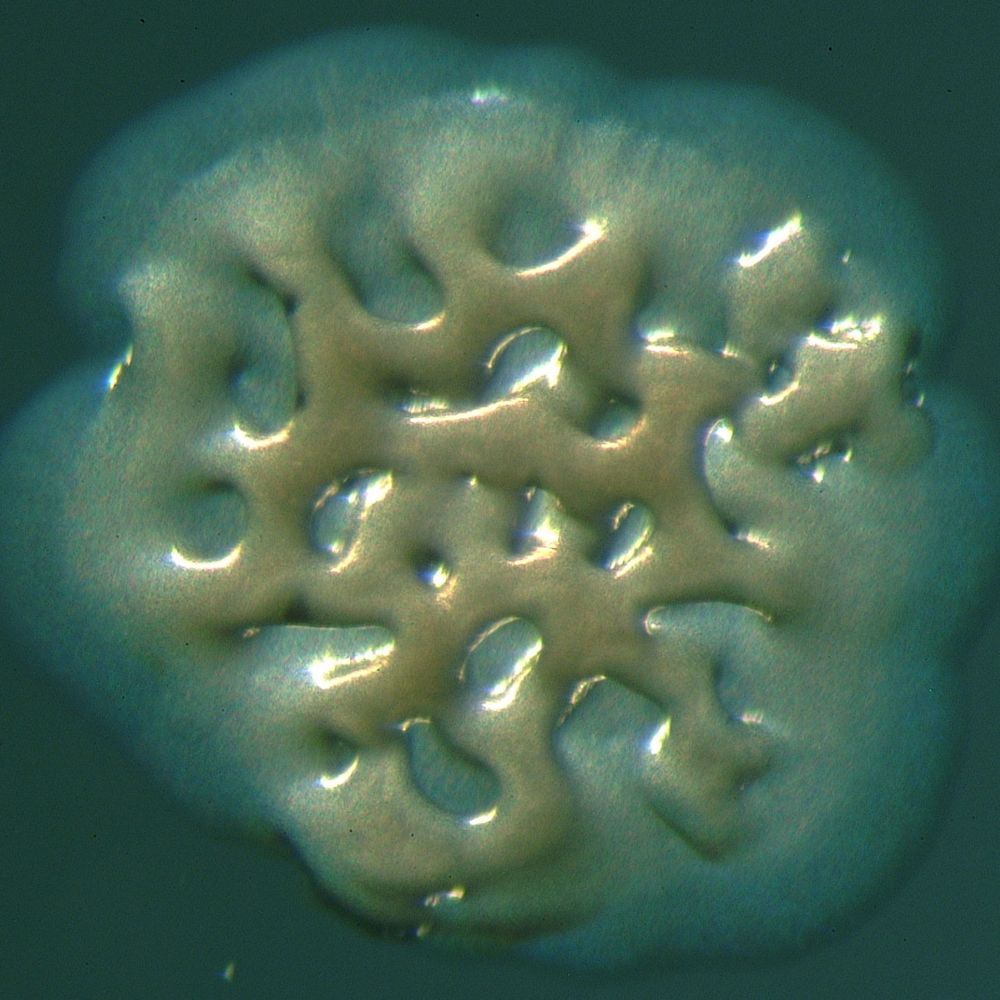
Ever wondered why only a fraction of genomes encode CRISPR immunity? 🧬 🦠
Turns out CRISPR is rarely beneficial against virulent phages, being most beneficial against those for which resistance mutations are rare!
An epic effort by Rosanna Wright
www.biorxiv.org/content/10.1...
Ever wondered why only a fraction of genomes encode CRISPR immunity? 🧬 🦠
Turns out CRISPR is rarely beneficial against virulent phages, being most beneficial against those for which resistance mutations are rare!
An epic effort by Rosanna Wright
www.biorxiv.org/content/10.1...

Resistance mutation supply modulates the benefit of CRISPR immunity against virulent phages
Only a fraction of bacterial genomes encode CRISPR-Cas systems but the selective causes of this variation are unexplained. How naturally virulent bacteriophages (phages) select for CRISPR immunity has...
www.biorxiv.org
October 6, 2025 at 6:27 AM
New preprint!
Ever wondered why only a fraction of genomes encode CRISPR immunity? 🧬 🦠
Turns out CRISPR is rarely beneficial against virulent phages, being most beneficial against those for which resistance mutations are rare!
An epic effort by Rosanna Wright
www.biorxiv.org/content/10.1...
Ever wondered why only a fraction of genomes encode CRISPR immunity? 🧬 🦠
Turns out CRISPR is rarely beneficial against virulent phages, being most beneficial against those for which resistance mutations are rare!
An epic effort by Rosanna Wright
www.biorxiv.org/content/10.1...
Reposted by Dan Browne

Imagine we could travel back in time ⏪⌛️to explore the world of bacterial pathogens before humans discovered and industrialised antibiotics
We just did that to study the history of #AMR spread @science.org
doi.org/10.1126/scie...
If you like time travel & biology, this 🧵is for you👇
We just did that to study the history of #AMR spread @science.org
doi.org/10.1126/scie...
If you like time travel & biology, this 🧵is for you👇

Pre- and postantibiotic epoch: The historical spread of antimicrobial resistance
Plasmids are now the primary vectors of antimicrobial resistance, but our understanding of how human industrialisation of antibiotics influenced their evolution is limited by a paucity of data predati...
doi.org
October 6, 2025 at 10:42 AM
Imagine we could travel back in time ⏪⌛️to explore the world of bacterial pathogens before humans discovered and industrialised antibiotics
We just did that to study the history of #AMR spread @science.org
doi.org/10.1126/scie...
If you like time travel & biology, this 🧵is for you👇
We just did that to study the history of #AMR spread @science.org
doi.org/10.1126/scie...
If you like time travel & biology, this 🧵is for you👇
Reposted by Dan Browne
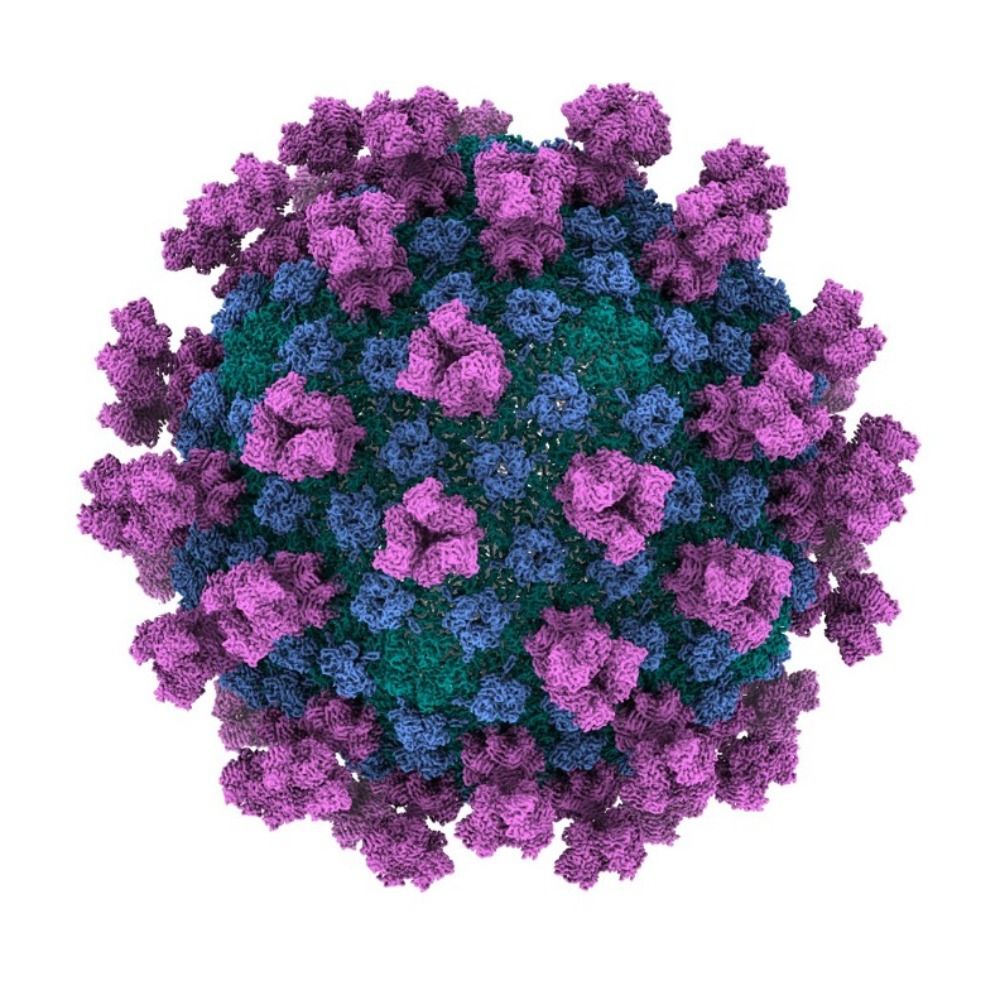
Out in Science Advances: Our #cryoEM structure of HFTV1, a virus infecting the halophile #archaea. *First full atomic structure (containing all structural proteins) of any tailed virus!* Congrats and thanks to all co-authors and our fantastic collaborators! www.science.org/doi/10.1126/...

Cryo-EM resolves the structure of the archaeal dsDNA virus HFTV1 from head to tail
This structure of an archaeal tailed virus (arTV) provides detailed insights into arTV assembly and infection mechanisms.
www.science.org
October 6, 2025 at 11:31 AM
Out in Science Advances: Our #cryoEM structure of HFTV1, a virus infecting the halophile #archaea. *First full atomic structure (containing all structural proteins) of any tailed virus!* Congrats and thanks to all co-authors and our fantastic collaborators! www.science.org/doi/10.1126/...