


Jean-Yves Bouet
@jyb-tlse.bsky.social
Microbiologist, Research, Molecular genetics, DNA, Genome dynamics
Reposted by Jean-Yves Bouet

Confused by all the histones that are cropping up in organisms that are decidedly NOT eukaryotes? check out our review - fantastic work by team NucEvo in the #Lugerlab
The Expanding Histone Universe: Histone-Based DNA Organization in Noneukaryotic Organisms - www.annualreviews.org/content/jour...
The Expanding Histone Universe: Histone-Based DNA Organization in Noneukaryotic Organisms - www.annualreviews.org/content/jour...

December 9, 2025 at 3:14 PM
Confused by all the histones that are cropping up in organisms that are decidedly NOT eukaryotes? check out our review - fantastic work by team NucEvo in the #Lugerlab
The Expanding Histone Universe: Histone-Based DNA Organization in Noneukaryotic Organisms - www.annualreviews.org/content/jour...
The Expanding Histone Universe: Histone-Based DNA Organization in Noneukaryotic Organisms - www.annualreviews.org/content/jour...
Reposted by Jean-Yves Bouet
Now published. Thank you very much to our collaborative team, and very supportive editors and reviewers!!!
www.pnas.org/doi/10.1073/...
www.pnas.org/doi/10.1073/...

Versatile NTP recognition and domain fusions expand the functional repertoire of the ParB-CTPase fold beyond chromosome segregation | PNAS
Nucleotide triphosphate (NTP)-dependent molecular switches regulate essential cellular
processes by cycling between active and inactive states thro...
www.pnas.org
December 4, 2025 at 7:23 PM
Now published. Thank you very much to our collaborative team, and very supportive editors and reviewers!!!
www.pnas.org/doi/10.1073/...
www.pnas.org/doi/10.1073/...
Reposted by Jean-Yves Bouet

New online: DNA topoisomerase I acts as supercoiling sensor for bacterial transcription elongation

DNA topoisomerase I acts as supercoiling sensor for bacterial transcription elongation
Nature Structural & Molecular Biology, Published online: 01 December 2025; doi:10.1038/s41594-025-01703-5Vidmar et al. use cryo-EM to reveal how bacterial RNA polymerase (RNAP) and topoisomerase I (TopoI) cooperate. TopoI switches conformation, senses DNA supercoils near RNAP and relaxes them. Mutations disrupting this process alter bacterial motility and operon polarity.
go.nature.com
December 1, 2025 at 6:09 PM
New online: DNA topoisomerase I acts as supercoiling sensor for bacterial transcription elongation
Reposted by Jean-Yves Bouet
Taming wild replicons: evolution and domestication of large extrachromosomal replicons
#MicroSky
www.sciencedirect.com/science/arti...
#MicroSky
www.sciencedirect.com/science/arti...

Taming wild replicons: evolution and domestication of large extrachromosomal replicons
Bacterial genomes often contain extrachromosomal replicons (ERs), ranging from small, mobile plasmids to large, stably inherited elements, such as meg…
www.sciencedirect.com
December 2, 2025 at 2:25 PM
Taming wild replicons: evolution and domestication of large extrachromosomal replicons
#MicroSky
www.sciencedirect.com/science/arti...
#MicroSky
www.sciencedirect.com/science/arti...
Reposted by Jean-Yves Bouet

From January 1st 2026, the CNRS will cut access to one of the largest commercial bibliometric databases, Clarivate Analytics' Web of Science, along with the Core Collection and Journal Citation Reports.

The CNRS is breaking free from the Web of Science
From January 1st 2026, the CNRS will cut access to one of the largest commercial bibliometric databases, Clarivate Analytics'
www.cnrs.fr
December 1, 2025 at 11:04 AM
From January 1st 2026, the CNRS will cut access to one of the largest commercial bibliometric databases, Clarivate Analytics' Web of Science, along with the Core Collection and Journal Citation Reports.
Reposted by Jean-Yves Bouet
Le 1er janvier 2026, le CNRS coupera l’accès au Web of Science, Core Collection et Journal Citation Reports. Une nouvelle étape de sa politique en faveur de la science ouverte pour promouvoir des alternatives ouvertes, transparentes et responsables.
Le CNRS s’émancipe du Web of Science
À partir du 1er janvier 2026, le CNRS coupera l’accès à l’une des plus importantes bases bibliométriques commerciales : le
www.cnrs.fr
December 1, 2025 at 11:02 AM
Le 1er janvier 2026, le CNRS coupera l’accès au Web of Science, Core Collection et Journal Citation Reports. Une nouvelle étape de sa politique en faveur de la science ouverte pour promouvoir des alternatives ouvertes, transparentes et responsables.
Reposted by Jean-Yves Bouet
The hinge bypass gate paper is finally out! doi.org/10.1038/s414...
We show how loop-extruding SMC complexes can maintain DNA entrapment while bypassing obstacles on DNA — including transcription machinery & potentially other SMCs.
A lucky convergence of 3 projects lead to the initial discovery!
We show how loop-extruding SMC complexes can maintain DNA entrapment while bypassing obstacles on DNA — including transcription machinery & potentially other SMCs.
A lucky convergence of 3 projects lead to the initial discovery!

The SMC Hinge is a Selective Gate for Obstacle Bypass - Nature Communications
SMC complexes are ring-shaped motors that fold DNA by extruding loops, but how they navigate large DNA obstacles is unclear. Here, Liu et al., show that SMC complexes bypass obstacles by threading obs...
doi.org
November 25, 2025 at 3:26 PM
The hinge bypass gate paper is finally out! doi.org/10.1038/s414...
We show how loop-extruding SMC complexes can maintain DNA entrapment while bypassing obstacles on DNA — including transcription machinery & potentially other SMCs.
A lucky convergence of 3 projects lead to the initial discovery!
We show how loop-extruding SMC complexes can maintain DNA entrapment while bypassing obstacles on DNA — including transcription machinery & potentially other SMCs.
A lucky convergence of 3 projects lead to the initial discovery!
Reposted by Jean-Yves Bouet
Phenomenal! WOOOOOOOW .... speechless
www.nature.com/articles/s41...
www.nature.com/articles/s41...

Semantic design of functional de novo genes from a genomic language model - Nature
By learning a semantics of gene function based on genomic context, the genomic language model Evo autocompletes DNA prompts to generate novel genes encoding protein and RNA molecules with defined acti...
www.nature.com
November 22, 2025 at 3:59 PM
Phenomenal! WOOOOOOOW .... speechless
www.nature.com/articles/s41...
www.nature.com/articles/s41...
Reposted by Jean-Yves Bouet
Very happy to see this piece out in @plosbiology.org, on the bacterial immune systems and microbial communities. It was a great team effort with Rafael Custodio, @brockhurstlab.bsky.social , @brownlab.bsky.social, and Edze Westra! 🦠🧫 #phagesky #mevosky
journals.plos.org/plosbiology/...
journals.plos.org/plosbiology/...

Bacterial immune systems as causes and consequences of microbiome structure
Bacterial immune systems have evolved in response to diverse molecular "parasites", yet their ecological roles remain poorly understood. This Essay explores how interactions between mobile genetic ele...
journals.plos.org
November 19, 2025 at 6:35 PM
Very happy to see this piece out in @plosbiology.org, on the bacterial immune systems and microbial communities. It was a great team effort with Rafael Custodio, @brockhurstlab.bsky.social , @brownlab.bsky.social, and Edze Westra! 🦠🧫 #phagesky #mevosky
journals.plos.org/plosbiology/...
journals.plos.org/plosbiology/...
Reposted by Jean-Yves Bouet

Hot off the press! Our latest paper led by @fernpizza.bsky.social, understanding how plasmids evolve inside cells. These small, self-replicating DNA circles live inside bacteria and carry antibiotic resistance genes, but also compete with one another to replicate. 1/
www.science.org/doi/10.1126/...
www.science.org/doi/10.1126/...

Intracellular competition shapes plasmid population dynamics
From populations of multicellular organisms to selfish genetic elements, conflicts between levels of biological organization are central to evolution. Plasmids are extrachromosomal, self-replicating g...
www.science.org
November 20, 2025 at 9:42 PM
Hot off the press! Our latest paper led by @fernpizza.bsky.social, understanding how plasmids evolve inside cells. These small, self-replicating DNA circles live inside bacteria and carry antibiotic resistance genes, but also compete with one another to replicate. 1/
www.science.org/doi/10.1126/...
www.science.org/doi/10.1126/...
Reposted by Jean-Yves Bouet
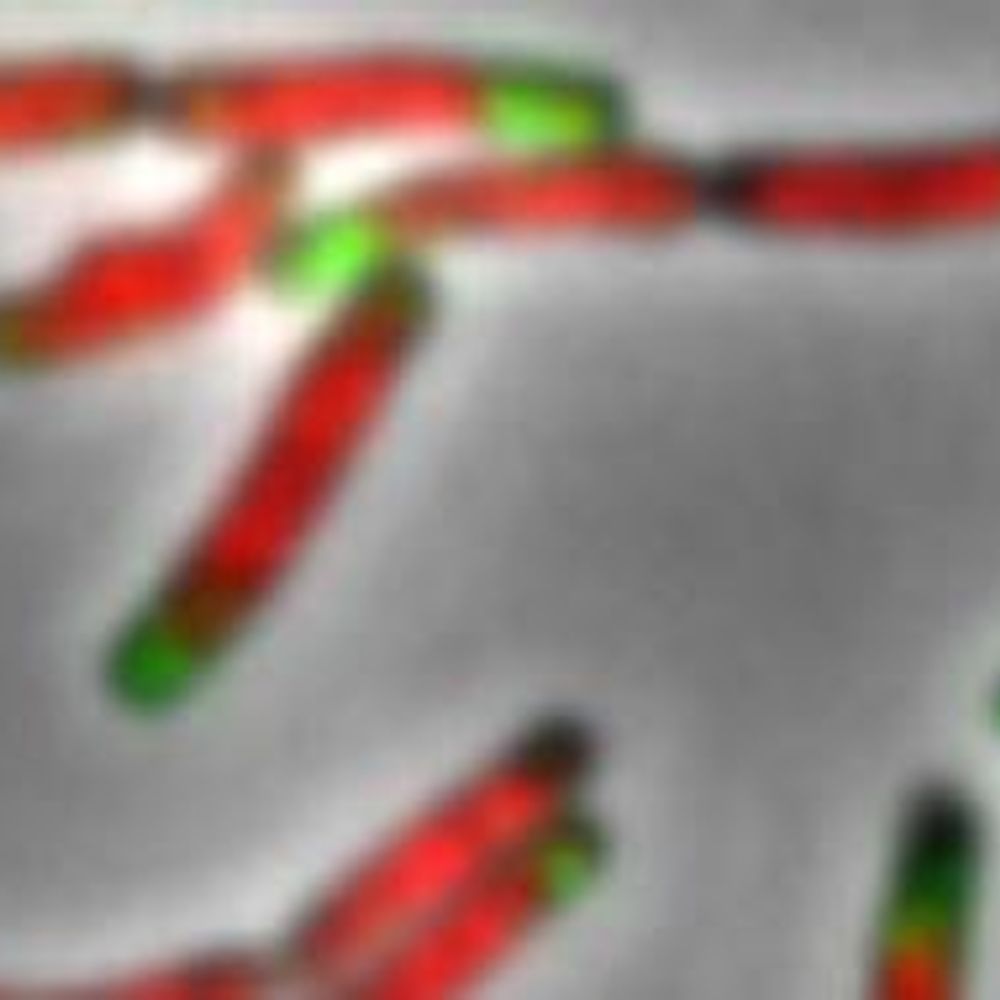
Happy to share our most recent work www.pnas.org/doi/10.1073/.... Here we describe how efficient DNA replication in E. coli is dependent on an interaction between SSB-ssDNA and the DNA polymerase (Pol III). Thanks to all the co-authors for their hard work!

Genome integrity relies on rapid recycling of DNA Pol III in bacteria | PNAS
DNA replication requires precise coordination between DNA unwinding and DNA synthesis.
In all domains of life, protein–protein interactions at the ...
www.pnas.org
November 20, 2025 at 4:54 PM
Happy to share our most recent work www.pnas.org/doi/10.1073/.... Here we describe how efficient DNA replication in E. coli is dependent on an interaction between SSB-ssDNA and the DNA polymerase (Pol III). Thanks to all the co-authors for their hard work!
Reposted by Jean-Yves Bouet
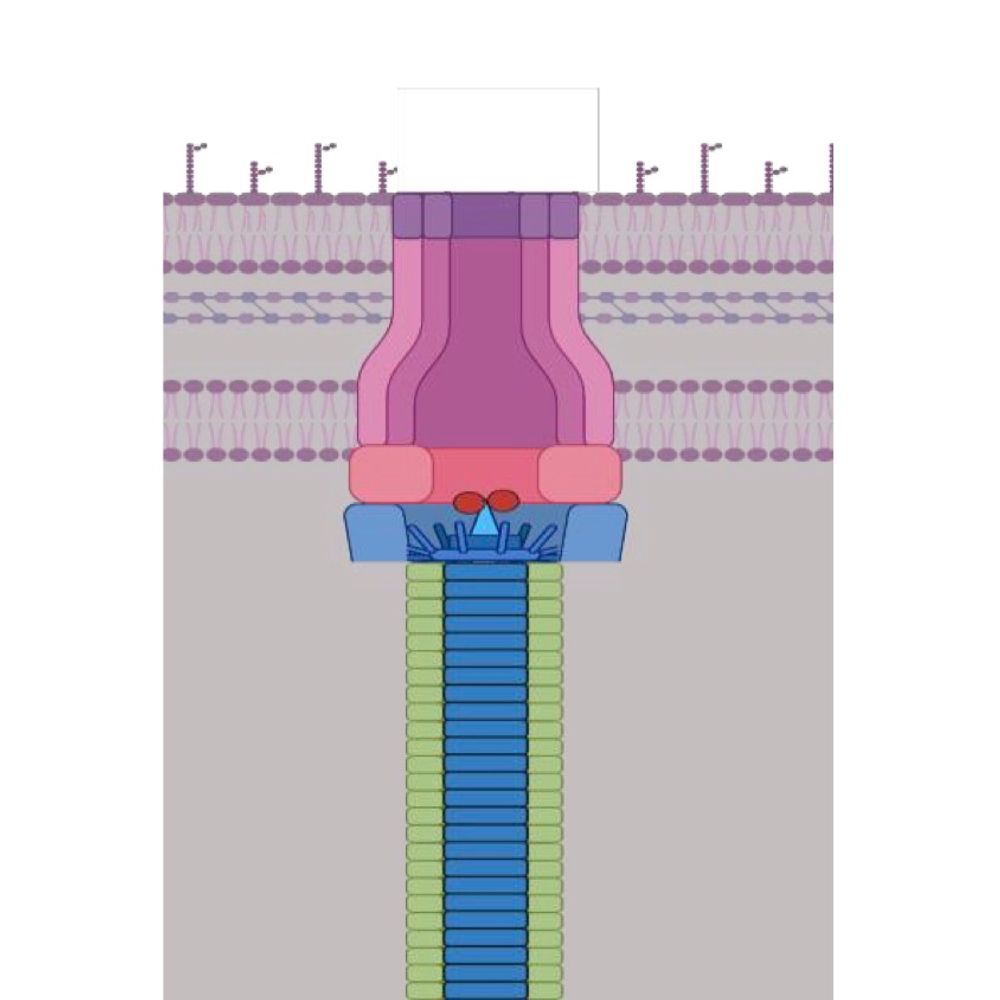
Happy to share the last paper form the lab:
Specialized shuttle proteins recognize
T9SS signals and target
effectors to their final destinations. Great work by @maellepllt.bsky.social, led by @thicoz.bsky.social in collaboration with @audebertstephane.bsky.social
www.nature.com/articles/s42...
Specialized shuttle proteins recognize
T9SS signals and target
effectors to their final destinations. Great work by @maellepllt.bsky.social, led by @thicoz.bsky.social in collaboration with @audebertstephane.bsky.social
www.nature.com/articles/s42...
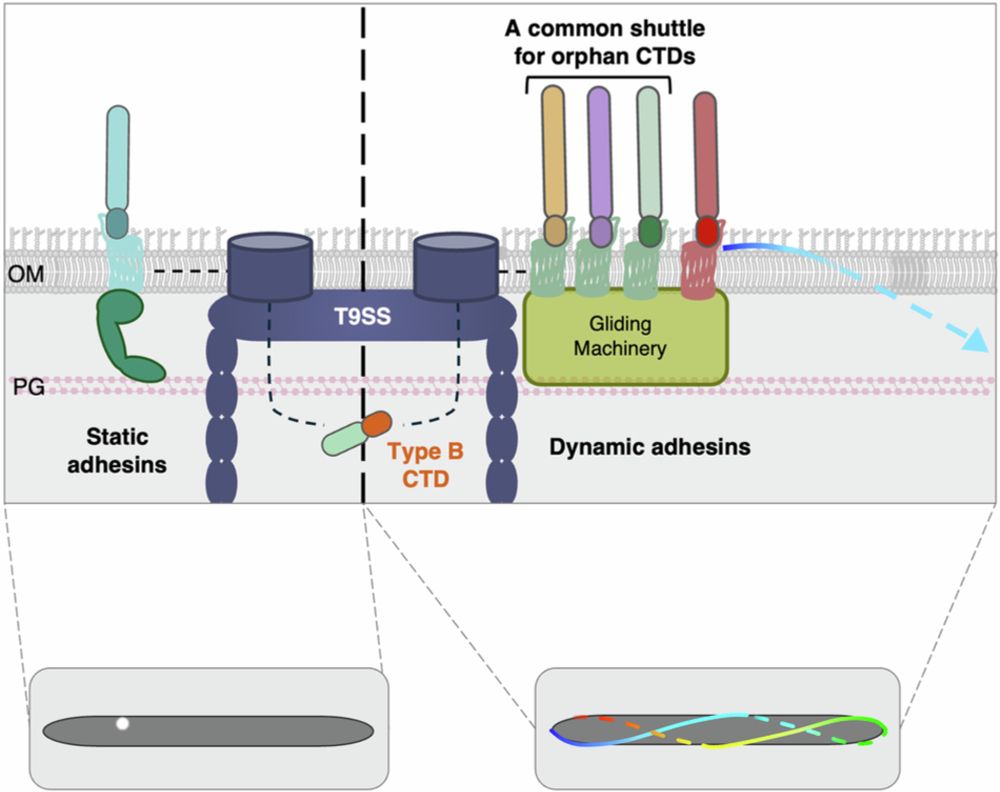
Specialized shuttle proteins recognize Type IX secretion signals and target effectors to their final destinations in Flavobacterium johnsoniae
Communications Biology - Bacteroidota use the Type IX secretion system to secrete proteins with a conserved C-terminal domain (CTD) secretion signal domain. Type B CTDs require specific shuttle...
www.nature.com
November 15, 2025 at 3:55 PM
Happy to share the last paper form the lab:
Specialized shuttle proteins recognize
T9SS signals and target
effectors to their final destinations. Great work by @maellepllt.bsky.social, led by @thicoz.bsky.social in collaboration with @audebertstephane.bsky.social
www.nature.com/articles/s42...
Specialized shuttle proteins recognize
T9SS signals and target
effectors to their final destinations. Great work by @maellepllt.bsky.social, led by @thicoz.bsky.social in collaboration with @audebertstephane.bsky.social
www.nature.com/articles/s42...
Reposted by Jean-Yves Bouet
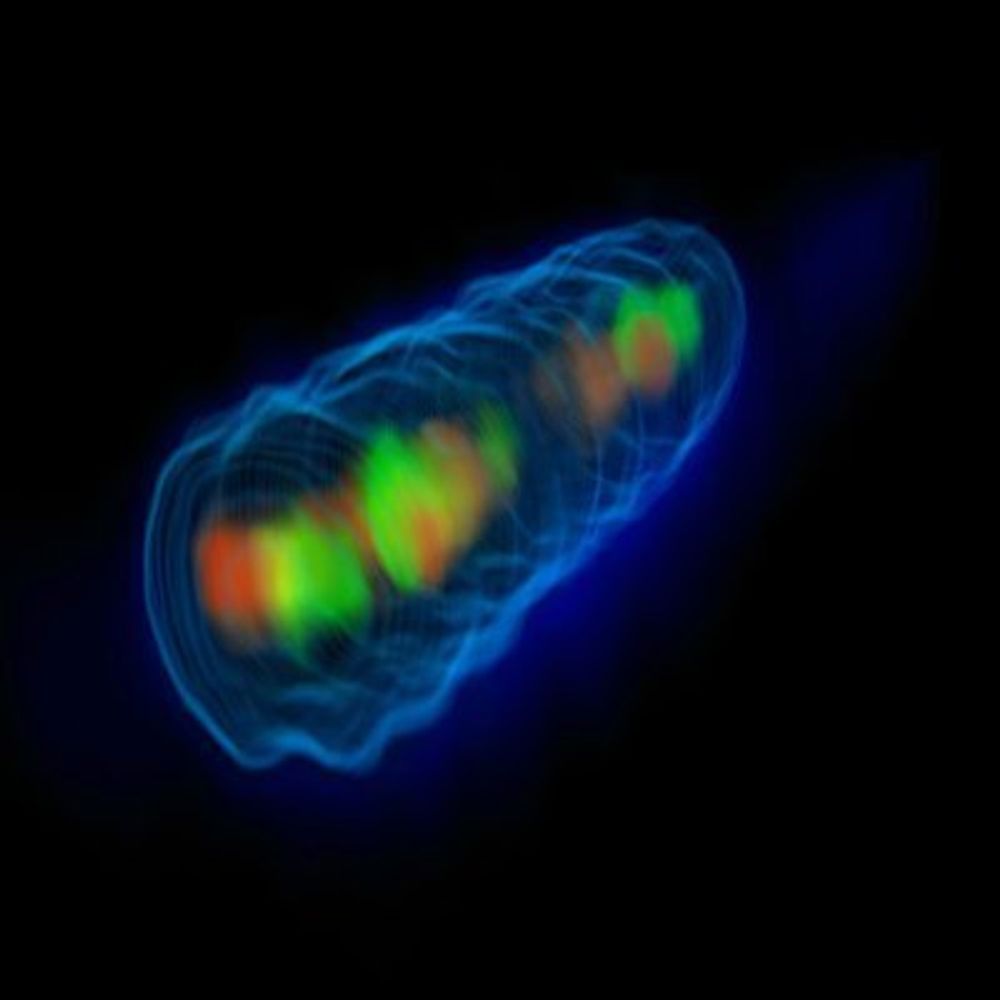
Excited to share our new preprint on Myxococcus xanthus!
We show that two distinct motility motors can propel the same bacterial cell simultaneously, and that this dual propulsion is tunable by environmental calcium. 🧵 1/6
📄 Read it here →https://www.biorxiv.org/content/10.1101/2025.10.29.685086v1
We show that two distinct motility motors can propel the same bacterial cell simultaneously, and that this dual propulsion is tunable by environmental calcium. 🧵 1/6
📄 Read it here →https://www.biorxiv.org/content/10.1101/2025.10.29.685086v1

October 31, 2025 at 1:24 PM
Excited to share our new preprint on Myxococcus xanthus!
We show that two distinct motility motors can propel the same bacterial cell simultaneously, and that this dual propulsion is tunable by environmental calcium. 🧵 1/6
📄 Read it here →https://www.biorxiv.org/content/10.1101/2025.10.29.685086v1
We show that two distinct motility motors can propel the same bacterial cell simultaneously, and that this dual propulsion is tunable by environmental calcium. 🧵 1/6
📄 Read it here →https://www.biorxiv.org/content/10.1101/2025.10.29.685086v1
Reposted by Jean-Yves Bouet

Results from Nature’s 2025 global survey of more than 3,700 doctoral students:
Supervisors who make a conscious effort to support and mentor their PhD candidates have more-satisfied students
www.nature.com/articles/d41...
Supervisors who make a conscious effort to support and mentor their PhD candidates have more-satisfied students
www.nature.com/articles/d41...

What makes PhD students happy? Good supervision
Supervisors who invest in positive mentoring relationships with their PhD candidates also reap the benefits for their own research.
www.nature.com
October 27, 2025 at 12:53 PM
Results from Nature’s 2025 global survey of more than 3,700 doctoral students:
Supervisors who make a conscious effort to support and mentor their PhD candidates have more-satisfied students
www.nature.com/articles/d41...
Supervisors who make a conscious effort to support and mentor their PhD candidates have more-satisfied students
www.nature.com/articles/d41...
Reposted by Jean-Yves Bouet
@prczhaoyansong.bsky.social’s deep dive into the dark matter of compost communities is now out 🎉 Genomic islands hijack jumbo phages—whose capsids enable transfer of large tracts of DNA—shedding new light on the scale & scope of phage-mediated gene flow 😎
www.pnas.org/doi/10.1073/...
www.pnas.org/doi/10.1073/...

Jumbo phage–mediated transduction of genomic islands | PNAS
Bacteria acquire new genes by horizontal gene transfer, typically mediated by mobile
genetic elements (MGEs). While plasmids, bacteriophages, and c...
www.pnas.org
October 28, 2025 at 6:36 PM
@prczhaoyansong.bsky.social’s deep dive into the dark matter of compost communities is now out 🎉 Genomic islands hijack jumbo phages—whose capsids enable transfer of large tracts of DNA—shedding new light on the scale & scope of phage-mediated gene flow 😎
www.pnas.org/doi/10.1073/...
www.pnas.org/doi/10.1073/...
Reposted by Jean-Yves Bouet

🦠🔬🤖🧑💻 #mAIcrobe is out! With @pinholab.bsky.social's lab, we launched an open-source framework for high-throughput bacterial image analysis. By rockstars A. Brito & B. Saraiva et al, making #DeepLearning for phenotyping accessible! Easy to use, plus model training
📜 www.biorxiv.org/content/10.1...
📜 www.biorxiv.org/content/10.1...


October 22, 2025 at 11:10 AM
🦠🔬🤖🧑💻 #mAIcrobe is out! With @pinholab.bsky.social's lab, we launched an open-source framework for high-throughput bacterial image analysis. By rockstars A. Brito & B. Saraiva et al, making #DeepLearning for phenotyping accessible! Easy to use, plus model training
📜 www.biorxiv.org/content/10.1...
📜 www.biorxiv.org/content/10.1...
Reposted by Jean-Yves Bouet

🧬🔬🦠🧫🧪@science.org Escherichia coli with a 57-codon genetic code | Science www.science.org/doi/10.1126/...

October 23, 2025 at 9:51 PM
🧬🔬🦠🧫🧪@science.org Escherichia coli with a 57-codon genetic code | Science www.science.org/doi/10.1126/...
Reposted by Jean-Yves Bouet

E. coli bacteriophage N15 suppresses Mre11-Rad50-mediated end degradation of its linear genome via a telomere-resolution-independent function of its telomere resolvase TelN
#RefereedPreprint c/o @reviewcommons.org by @gruberlab.bsky.social
www.embopress.org/doi/full/10....
#RefereedPreprint c/o @reviewcommons.org by @gruberlab.bsky.social
www.embopress.org/doi/full/10....

October 20, 2025 at 1:19 PM
E. coli bacteriophage N15 suppresses Mre11-Rad50-mediated end degradation of its linear genome via a telomere-resolution-independent function of its telomere resolvase TelN
#RefereedPreprint c/o @reviewcommons.org by @gruberlab.bsky.social
www.embopress.org/doi/full/10....
#RefereedPreprint c/o @reviewcommons.org by @gruberlab.bsky.social
www.embopress.org/doi/full/10....
Reposted by Jean-Yves Bouet
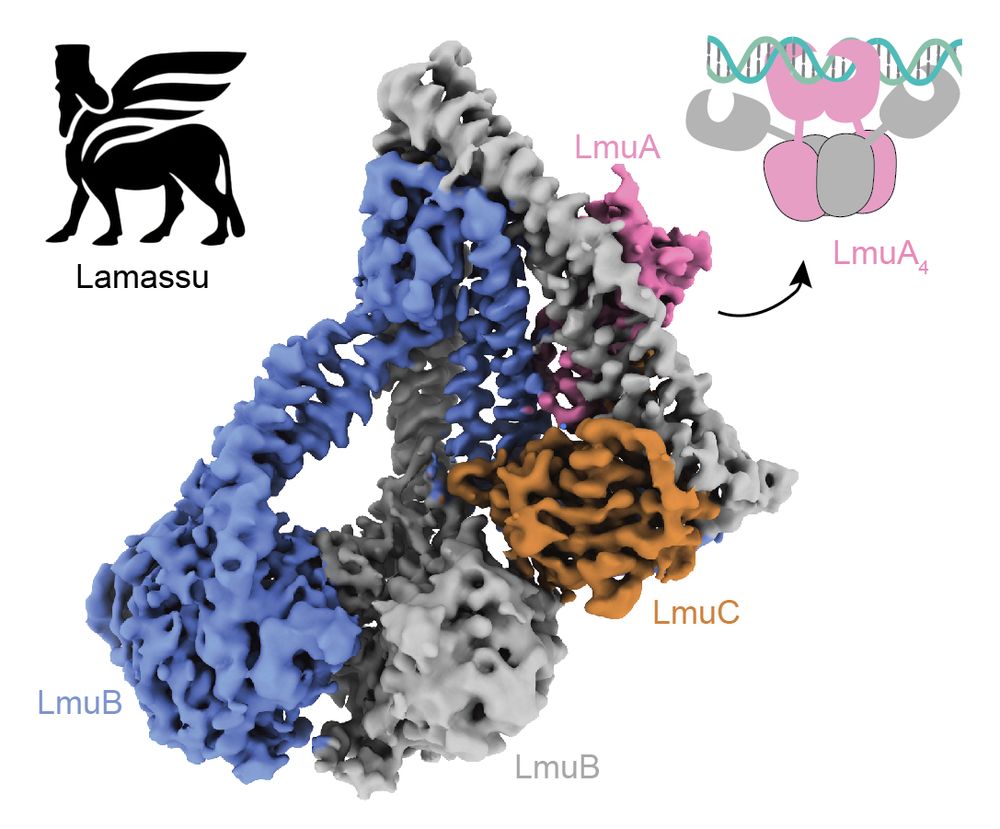
Happy that the final version of our Lamassu work @yli18smc.bsky.social is now out:
www.nature.com/articles/s41...
Thanks again to our awesome collaborators @mblokesch.bsky.social and David and co and Mark Szczelkun and @steven-shaw.bsky.social and the DCI Lausanne @fbm-unil.bsky.social
www.nature.com/articles/s41...
Thanks again to our awesome collaborators @mblokesch.bsky.social and David and co and Mark Szczelkun and @steven-shaw.bsky.social and the DCI Lausanne @fbm-unil.bsky.social
Glad to share the work of @yli18smc.bsky.social and co on Lamassu, a bacterial defense system related to Rad50/Mre11 (RM). While RM carefully trims DNA ends for repair, Lamassu chops up the host chromosome. Our study reveals how it is regulated to minimize damage, activating only during infection.
October 14, 2025 at 9:28 AM
Happy that the final version of our Lamassu work @yli18smc.bsky.social is now out:
www.nature.com/articles/s41...
Thanks again to our awesome collaborators @mblokesch.bsky.social and David and co and Mark Szczelkun and @steven-shaw.bsky.social and the DCI Lausanne @fbm-unil.bsky.social
www.nature.com/articles/s41...
Thanks again to our awesome collaborators @mblokesch.bsky.social and David and co and Mark Szczelkun and @steven-shaw.bsky.social and the DCI Lausanne @fbm-unil.bsky.social
Reposted by Jean-Yves Bouet

Genome maintenance by telomerase is a fundamental process in nearly all eukaryotes. But where does it come from?
Today, we report the discovery of telomerase homologs in a family of antiviral reverse transcriptases, revealing an unexpected evolutionary origin in bacteria.
doi.org/10.1101/2025...
Today, we report the discovery of telomerase homologs in a family of antiviral reverse transcriptases, revealing an unexpected evolutionary origin in bacteria.
doi.org/10.1101/2025...

October 17, 2025 at 12:47 PM
Genome maintenance by telomerase is a fundamental process in nearly all eukaryotes. But where does it come from?
Today, we report the discovery of telomerase homologs in a family of antiviral reverse transcriptases, revealing an unexpected evolutionary origin in bacteria.
doi.org/10.1101/2025...
Today, we report the discovery of telomerase homologs in a family of antiviral reverse transcriptases, revealing an unexpected evolutionary origin in bacteria.
doi.org/10.1101/2025...
Reposted by Jean-Yves Bouet

EpiSci - 🧬 - 🧪 - 3D Chromatin organization persists during Mitosis.
👇🏽👇🏽👇🏽
Dynamics of microcompartment formation at the mitosis-to-G1 transition
www.nature.com/articles/s41...
👇🏽👇🏽👇🏽
Dynamics of microcompartment formation at the mitosis-to-G1 transition
www.nature.com/articles/s41...

Dynamics of microcompartment formation at the mitosis-to-G1 transition - Nature Structural & Molecular Biology
Goel et al. produce high-resolution three-dimensional genome structure mapping from mitosis to G1 phase to show unseen interactions between enhancers and promoters in prometaphase. Polymer modeling in...
www.nature.com
October 18, 2025 at 4:48 AM
EpiSci - 🧬 - 🧪 - 3D Chromatin organization persists during Mitosis.
👇🏽👇🏽👇🏽
Dynamics of microcompartment formation at the mitosis-to-G1 transition
www.nature.com/articles/s41...
👇🏽👇🏽👇🏽
Dynamics of microcompartment formation at the mitosis-to-G1 transition
www.nature.com/articles/s41...
Reposted by Jean-Yves Bouet
Delighted to announce our latest work on how Wadjet loads onto and establishes topological entrapment of plasmid DNA prior to initiating loop extrusion. At @gruberlab.bsky.social, Dubochet Center for Imaging and BSI @igbmc.bsky.social
www.cell.com/molecular-ce...
www.cell.com/molecular-ce...
October 9, 2025 at 2:55 PM
Delighted to announce our latest work on how Wadjet loads onto and establishes topological entrapment of plasmid DNA prior to initiating loop extrusion. At @gruberlab.bsky.social, Dubochet Center for Imaging and BSI @igbmc.bsky.social
www.cell.com/molecular-ce...
www.cell.com/molecular-ce...
Reposted by Jean-Yves Bouet

This is first paper from a new line of research in my lab, with more to come soon. If interested in PDPs I highly recommend this @baym.lol paper www.nature.com/articles/s41... and this classic from Matti Jalasvuori royalsocietypublishing.org/doi/10.1098/...

Diverse and abundant phages exploit conjugative plasmids - Nature Communications
Some phages use plasmid-encoded conjugation proteins as receptors to infect their bacterial hosts, making their host range dependent on horizontal transfer of the plasmid. Here, the authors present a method for identification of new plasmid-dependent phages, and find that they are common and abundant in wastewater and their genetic diversity is largely unexplored.
www.nature.com
October 9, 2025 at 10:07 AM
This is first paper from a new line of research in my lab, with more to come soon. If interested in PDPs I highly recommend this @baym.lol paper www.nature.com/articles/s41... and this classic from Matti Jalasvuori royalsocietypublishing.org/doi/10.1098/...
Reposted by Jean-Yves Bouet
A fresh view on phage specificity, which challenges the traditional view of a narrow host spectrum of phages by unveiling that multihost associations are common across ecosystems kudos at @mmarbout.bsky.social &
@rkoszul.bsky.social www.nature.com/articles/s41...
@rkoszul.bsky.social www.nature.com/articles/s41...

Phages with a broad host range are common across ecosystems - Nature Microbiology
Proximity-ligation-based sequencing from 111 samples and 5 environments reveals that a substantial proportion of phages infect multiple species.
www.nature.com
October 2, 2025 at 4:05 PM
A fresh view on phage specificity, which challenges the traditional view of a narrow host spectrum of phages by unveiling that multihost associations are common across ecosystems kudos at @mmarbout.bsky.social &
@rkoszul.bsky.social www.nature.com/articles/s41...
@rkoszul.bsky.social www.nature.com/articles/s41...