


Raghuram D R
@pseudodoctor.bsky.social
PhDing in Computational biology. Antibiotic resistance, sequence design, deep learning. Biology FTW
Reposted by Raghuram D R

PanSpace: Fast and Scalable Indexing for Massive Bacterial Databases [new]
Fast bacterial assembly classification via neural networks & dense vector indexing for quick queries, minimal disk use.
Fast bacterial assembly classification via neural networks & dense vector indexing for quick queries, minimal disk use.


March 19, 2025 at 10:54 PM
PanSpace: Fast and Scalable Indexing for Massive Bacterial Databases [new]
Fast bacterial assembly classification via neural networks & dense vector indexing for quick queries, minimal disk use.
Fast bacterial assembly classification via neural networks & dense vector indexing for quick queries, minimal disk use.
Reposted by Raghuram D R
What an amazing discovery from Scott Kennedy's lab! A new splicing system that recognizes transposons and removes them from mRNAs! t.co/3p3wyxkYXX
https://www.biorxiv.org/content/10.1101/2025.02.14.638102v1?ct=
t.co
February 18, 2025 at 2:51 PM
What an amazing discovery from Scott Kennedy's lab! A new splicing system that recognizes transposons and removes them from mRNAs! t.co/3p3wyxkYXX
Reposted by Raghuram D R
New: The largest medical A.I. randomized controlled trial yet performed, enrolling >100,000 women undergoing mammography screening
The use of AI led to 29% higher detection of cancer, no increase of false positives, and reduced workload compared with radiologists w/o AI thelancet.com/journals/lan...
The use of AI led to 29% higher detection of cancer, no increase of false positives, and reduced workload compared with radiologists w/o AI thelancet.com/journals/lan...
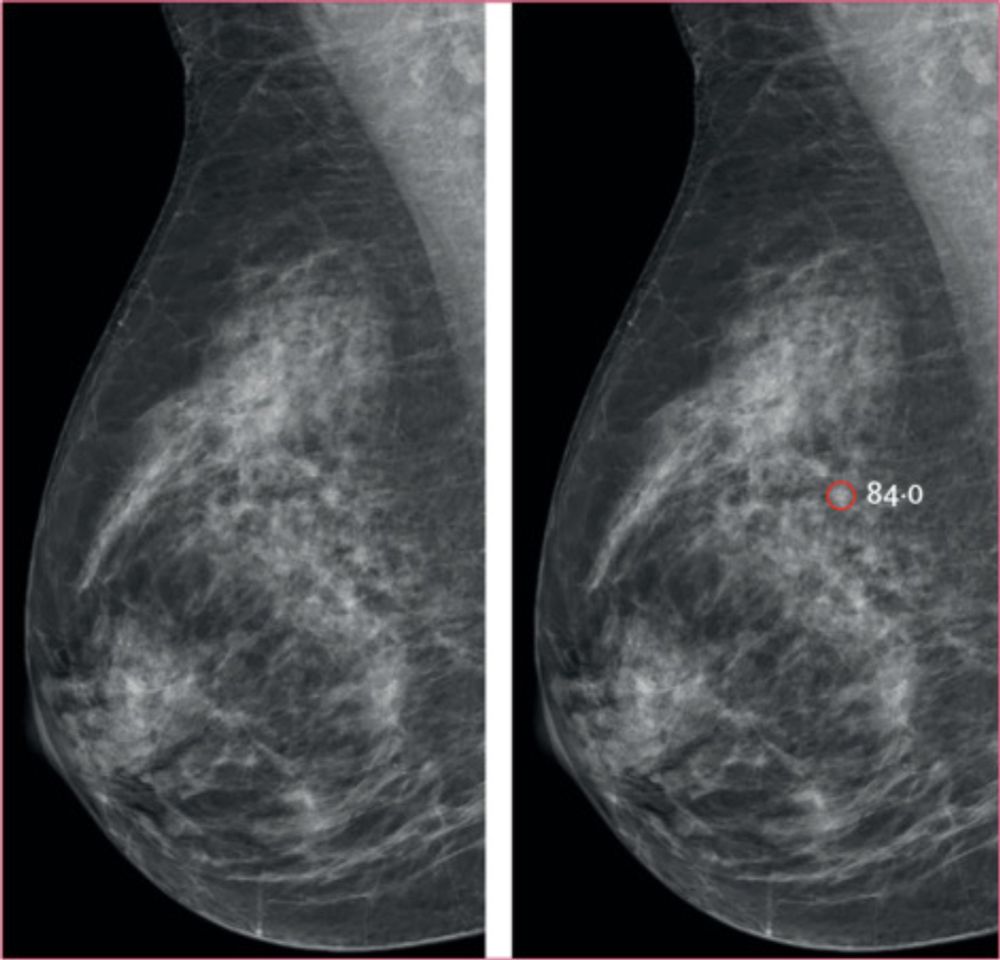
Screening performance and characteristics of breast cancer detected in the Mammography Screening with Artificial Intelligence trial (MASAI): a randomised, controlled, parallel-group, non-inferiority, ...
The findings suggest that AI contributes to the early detection of clinically relevant
breast cancer and reduces screen-reading workload without increasing false positives.
thelancet.com
February 4, 2025 at 3:00 AM
New: The largest medical A.I. randomized controlled trial yet performed, enrolling >100,000 women undergoing mammography screening
The use of AI led to 29% higher detection of cancer, no increase of false positives, and reduced workload compared with radiologists w/o AI thelancet.com/journals/lan...
The use of AI led to 29% higher detection of cancer, no increase of false positives, and reduced workload compared with radiologists w/o AI thelancet.com/journals/lan...
Reposted by Raghuram D R

Participation in The Privacy Challenge is still open! 🫐🍅
Join us in advancing our understanding of privacy in gene-expression datasets at the intersection of computational healthcare and privacy in AI research. #CamdaConference #ISMB/ECCB2025
Register to participate: benchmarks.elsa-ai.eu?ch=4
Join us in advancing our understanding of privacy in gene-expression datasets at the intersection of computational healthcare and privacy in AI research. #CamdaConference #ISMB/ECCB2025
Register to participate: benchmarks.elsa-ai.eu?ch=4
Overview - Health - ELSA Benchmarks Platform
benchmarks.elsa-ai.eu
February 3, 2025 at 1:42 PM
Participation in The Privacy Challenge is still open! 🫐🍅
Join us in advancing our understanding of privacy in gene-expression datasets at the intersection of computational healthcare and privacy in AI research. #CamdaConference #ISMB/ECCB2025
Register to participate: benchmarks.elsa-ai.eu?ch=4
Join us in advancing our understanding of privacy in gene-expression datasets at the intersection of computational healthcare and privacy in AI research. #CamdaConference #ISMB/ECCB2025
Register to participate: benchmarks.elsa-ai.eu?ch=4
Reposted by Raghuram D R
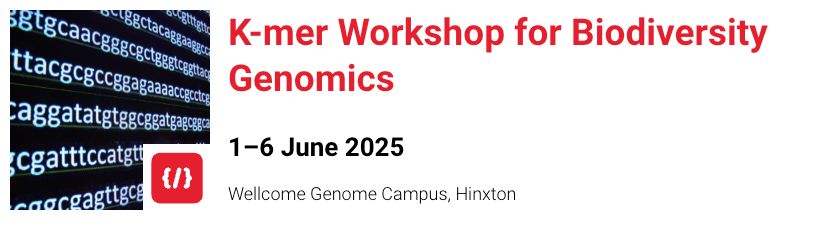
🚨Registration open🚨 1st - 6th of June, me, Katie Jenike, @rayanchikhi.bsky.social and Gene Myers will run a week long workshop on k-mers for biodiversity genomics organised by @connectingscience.bsky.social at @sangerinstitute.bsky.social. Join us & get equipped to wrestle large genomic datasets!
January 31, 2025 at 3:17 PM
🚨Registration open🚨 1st - 6th of June, me, Katie Jenike, @rayanchikhi.bsky.social and Gene Myers will run a week long workshop on k-mers for biodiversity genomics organised by @connectingscience.bsky.social at @sangerinstitute.bsky.social. Join us & get equipped to wrestle large genomic datasets!
Reposted by Raghuram D R

Rare disease research relies on collecting genomic and clinical data across multiple countries.
Learn more about the Solve-RD project and how it aims to collect and harmonise #raredisease data across multiple European partners.
🧬🖥️
www.ebi.ac.uk/about/news/a...
Learn more about the Solve-RD project and how it aims to collect and harmonise #raredisease data across multiple European partners.
🧬🖥️
www.ebi.ac.uk/about/news/a...
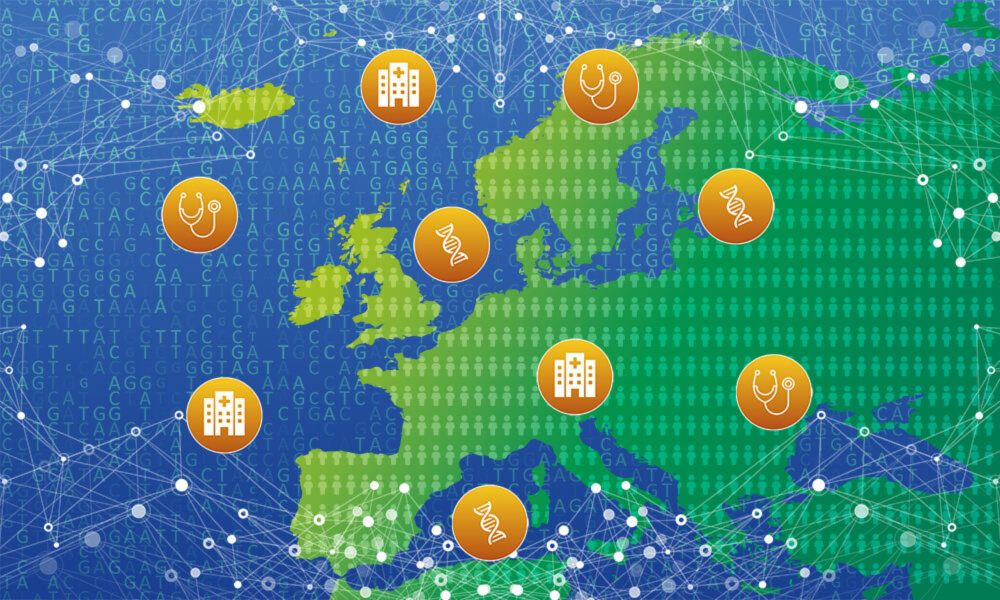
Solve-RD: supporting rare disease data collection and harmonisation
The Solve-RD project standardises genomic and clinical data across Europe to support rare disease research.
www.ebi.ac.uk
January 28, 2025 at 10:19 AM
Rare disease research relies on collecting genomic and clinical data across multiple countries.
Learn more about the Solve-RD project and how it aims to collect and harmonise #raredisease data across multiple European partners.
🧬🖥️
www.ebi.ac.uk/about/news/a...
Learn more about the Solve-RD project and how it aims to collect and harmonise #raredisease data across multiple European partners.
🧬🖥️
www.ebi.ac.uk/about/news/a...
Reposted by Raghuram D R

Interested in predicting AMR in bacteria? We show ignoring phylogenetic structure in genome collections leads to overly optimistic evaluations of machine learning methods for AMR prediction. With @nwheeler443.bsky.social and former PhD student Yanying Yu. 🦠🧫🧬🖥️🧪
www.biorxiv.org/content/10.1...
www.biorxiv.org/content/10.1...

Biased sampling confounds machine learning prediction of antimicrobial resistance
Antimicrobial resistance (AMR) poses a growing threat to human health. Increasingly, genome sequencing is being applied for the surveillance of bacterial pathogens, producing a wealth of data to train...
www.biorxiv.org
January 17, 2025 at 10:08 PM
Interested in predicting AMR in bacteria? We show ignoring phylogenetic structure in genome collections leads to overly optimistic evaluations of machine learning methods for AMR prediction. With @nwheeler443.bsky.social and former PhD student Yanying Yu. 🦠🧫🧬🖥️🧪
www.biorxiv.org/content/10.1...
www.biorxiv.org/content/10.1...
Reposted by Raghuram D R

Protein instability is the main driver of inherited genetic conditions, according to the largest map of protein variants to date − Human Domainome 1.0 🔎
This dataset can help predict how proteins behave, paving the way for new treatments 💊
www.sanger.ac.uk/news_item/hu...
This dataset can help predict how proteins behave, paving the way for new treatments 💊
www.sanger.ac.uk/news_item/hu...
January 9, 2025 at 9:40 AM
Protein instability is the main driver of inherited genetic conditions, according to the largest map of protein variants to date − Human Domainome 1.0 🔎
This dataset can help predict how proteins behave, paving the way for new treatments 💊
www.sanger.ac.uk/news_item/hu...
This dataset can help predict how proteins behave, paving the way for new treatments 💊
www.sanger.ac.uk/news_item/hu...
Reposted by Raghuram D R

Up until recently, habituation — a simple form of learning — was deemed the exclusive domain of complex organisms with brains and nervous systems. But a new study by the CRG's Rosa Martinez Corral offers compelling evidence that even tiny single-cell creatures could exhibit habituation.

Memory is not exclusive to the brain: Non-neural cells also remember
For the first time, a new study has observed the complex spacing effect in modified kidney cells
english.elpais.com
January 5, 2025 at 8:08 AM
Up until recently, habituation — a simple form of learning — was deemed the exclusive domain of complex organisms with brains and nervous systems. But a new study by the CRG's Rosa Martinez Corral offers compelling evidence that even tiny single-cell creatures could exhibit habituation.