


Timon Kunze
@tkunze.bsky.social
Phd student of cognitive neuroscience at SISSA, Trieste. How do little neurons make up such complex minds?
Reposted by Timon Kunze

Hier zur Einordnung dieser Nachricht die globalen Daten der letzten 2024 Jahre.

January 8, 2026 at 8:24 AM
Hier zur Einordnung dieser Nachricht die globalen Daten der letzten 2024 Jahre.
Reposted by Timon Kunze

you guys, i was just invited to actually write this. what is happening???
a grad student at another institution emailed me about their interest in my lab. they attached their thesis proposal, which contained several inaccuracies regarding my work. and also a reference that doesn't exist.

January 7, 2026 at 3:20 PM
you guys, i was just invited to actually write this. what is happening???
Reposted by Timon Kunze

This paper had a pretty shocking headline result (40% of voxels!), so I dug into it, and I think it is wrong. Essentially: they compare two noisy measures and find that about 40% of voxels have different sign between the two. I think this is just noise!
Would love to hear expert views on this paper. It appears to show that the operationalization of brain activity the field has relied on for 3 decades—the BOLD response—is not actually a sensible measure of brain activity.
www.nature.com/articles/s41...
www.nature.com/articles/s41...

BOLD signal changes can oppose oxygen metabolism across the human cortex - Nature Neuroscience
Using quantitative brain imaging, the authors show opposite fMRI BOLD signal to metabolic activity due to variable oxygen extraction across the human cortex. This questions the canonical interpretatio...
www.nature.com
January 5, 2026 at 5:22 PM
This paper had a pretty shocking headline result (40% of voxels!), so I dug into it, and I think it is wrong. Essentially: they compare two noisy measures and find that about 40% of voxels have different sign between the two. I think this is just noise!
Reposted by Timon Kunze

What an ironic plot twist.
If we were better at understanding biology & functional #ecosystems (rather than, say, amplifying psychopathic profit seekers), we wouldn't need to be thinking about a replacement planet for the one we've burned through like a mindless cancerous growth.
#balance
If we were better at understanding biology & functional #ecosystems (rather than, say, amplifying psychopathic profit seekers), we wouldn't need to be thinking about a replacement planet for the one we've burned through like a mindless cancerous growth.
#balance
Naively, I never considered it - if we are to successfully ‘colonise’ space we need to get much better at understanding & building functional ecosystems that include recycling & environmental regulation.
We know how to build rockets; time to better understand biology
🧪
economist.com/leaders/2025...
We know how to build rockets; time to better understand biology
🧪
economist.com/leaders/2025...

The future of space exploration depends on better biology
Rockets are great, but sewage treatment is what you need for the long haul
economist.com
January 4, 2026 at 12:03 PM
What an ironic plot twist.
If we were better at understanding biology & functional #ecosystems (rather than, say, amplifying psychopathic profit seekers), we wouldn't need to be thinking about a replacement planet for the one we've burned through like a mindless cancerous growth.
#balance
If we were better at understanding biology & functional #ecosystems (rather than, say, amplifying psychopathic profit seekers), we wouldn't need to be thinking about a replacement planet for the one we've burned through like a mindless cancerous growth.
#balance
Reposted by Timon Kunze
Episode #36 in #TheoreticalNeurosciencePodcast: On low-dimensional manifolds in motor cortex – with Sara Solla @sasolla.bsky.social
theoreticalneuroscience.no/thn36
Manifold analysis has changed our thinking on how cortex works. One of the pioneers of this modelling approach explains.
theoreticalneuroscience.no/thn36
Manifold analysis has changed our thinking on how cortex works. One of the pioneers of this modelling approach explains.

January 3, 2026 at 9:21 AM
Episode #36 in #TheoreticalNeurosciencePodcast: On low-dimensional manifolds in motor cortex – with Sara Solla @sasolla.bsky.social
theoreticalneuroscience.no/thn36
Manifold analysis has changed our thinking on how cortex works. One of the pioneers of this modelling approach explains.
theoreticalneuroscience.no/thn36
Manifold analysis has changed our thinking on how cortex works. One of the pioneers of this modelling approach explains.
Reposted by Timon Kunze

Metropolis (1927) is set in 2026.

January 1, 2026 at 8:48 AM
Metropolis (1927) is set in 2026.
Reposted by Timon Kunze

Just published my review of neuroscience in 2025, on The Spike.
The 10th of these, would you believe?
This year we have foundation models, breakthroughs in using light to understand the brain, a gene therapy, and more
Enjoy!
medium.com/the-spike/20...
The 10th of these, would you believe?
This year we have foundation models, breakthroughs in using light to understand the brain, a gene therapy, and more
Enjoy!
medium.com/the-spike/20...

2025: A Review of the Year in Neuroscience
Enlightening the brain
medium.com
December 30, 2025 at 3:52 PM
Just published my review of neuroscience in 2025, on The Spike.
The 10th of these, would you believe?
This year we have foundation models, breakthroughs in using light to understand the brain, a gene therapy, and more
Enjoy!
medium.com/the-spike/20...
The 10th of these, would you believe?
This year we have foundation models, breakthroughs in using light to understand the brain, a gene therapy, and more
Enjoy!
medium.com/the-spike/20...
Reposted by Timon Kunze
The solutions of the past 3 decades have failed to change the incentives of #PublishOrPerish. As a result, researcher funding, time, control, and trust has been lost.
The ONE CONSTANT in the wake of the serial crisis, #PlanS and #OpenAccess reform has been publish profit margins.
2/n
The ONE CONSTANT in the wake of the serial crisis, #PlanS and #OpenAccess reform has been publish profit margins.
2/n

November 11, 2025 at 11:52 AM
The solutions of the past 3 decades have failed to change the incentives of #PublishOrPerish. As a result, researcher funding, time, control, and trust has been lost.
The ONE CONSTANT in the wake of the serial crisis, #PlanS and #OpenAccess reform has been publish profit margins.
2/n
The ONE CONSTANT in the wake of the serial crisis, #PlanS and #OpenAccess reform has been publish profit margins.
2/n
Reposted by Timon Kunze

Neural replay is connected to latent cause inference and supports fast generalization https://www.biorxiv.org/content/10.64898/2025.12.12.693963v1
December 13, 2025 at 10:17 AM
Neural replay is connected to latent cause inference and supports fast generalization https://www.biorxiv.org/content/10.64898/2025.12.12.693963v1
Reposted by Timon Kunze

Ten years in the making. For the full story behind the data, read the "Behind the Paper" piece 😉

Discovery of Neuronal Fatty Acid Oxidation in vivo
Intensive learning in Drosophila relies on neuronal fatty acid oxidation. This discovery overturns the long-held view that adult neurons do not use fat as fuel.
communities.springernature.com
December 10, 2025 at 11:13 AM
Ten years in the making. For the full story behind the data, read the "Behind the Paper" piece 😉
Reposted by Timon Kunze
This from Data Colada, about detecting U-shapes with quadratic regression, is extremely good. (Happens to be about AI, but that's not important to anything argued). Nice intuitive explanations of why quadratic regression may not be doing quite what you think it's doing. datacolada.org/131
1/2
1/2

[131] Bending Over Backwards: The Quadratic Puts the U in AI - Data Colada
For a recent journal club in Barcelona, we read a just published article in the Journal of Experimental Psychology: General (JEP:G). The paper is on the impact of using gen-AI on creativity. The paper proposes an inverted U: people are most creative with moderate levels of AI use. The paper has three studies. Studies 1...
datacolada.org
December 10, 2025 at 8:13 PM
This from Data Colada, about detecting U-shapes with quadratic regression, is extremely good. (Happens to be about AI, but that's not important to anything argued). Nice intuitive explanations of why quadratic regression may not be doing quite what you think it's doing. datacolada.org/131
1/2
1/2
Reposted by Timon Kunze

Made a site comparing the sizes of living things :)
The great Julius Csotonyi spent 5 months painting over 60 illustrations for the site, no ai used
> neal.fun/size-of-life/
The great Julius Csotonyi spent 5 months painting over 60 illustrations for the site, no ai used
> neal.fun/size-of-life/
December 10, 2025 at 4:03 PM
Made a site comparing the sizes of living things :)
The great Julius Csotonyi spent 5 months painting over 60 illustrations for the site, no ai used
> neal.fun/size-of-life/
The great Julius Csotonyi spent 5 months painting over 60 illustrations for the site, no ai used
> neal.fun/size-of-life/
Reposted by Timon Kunze
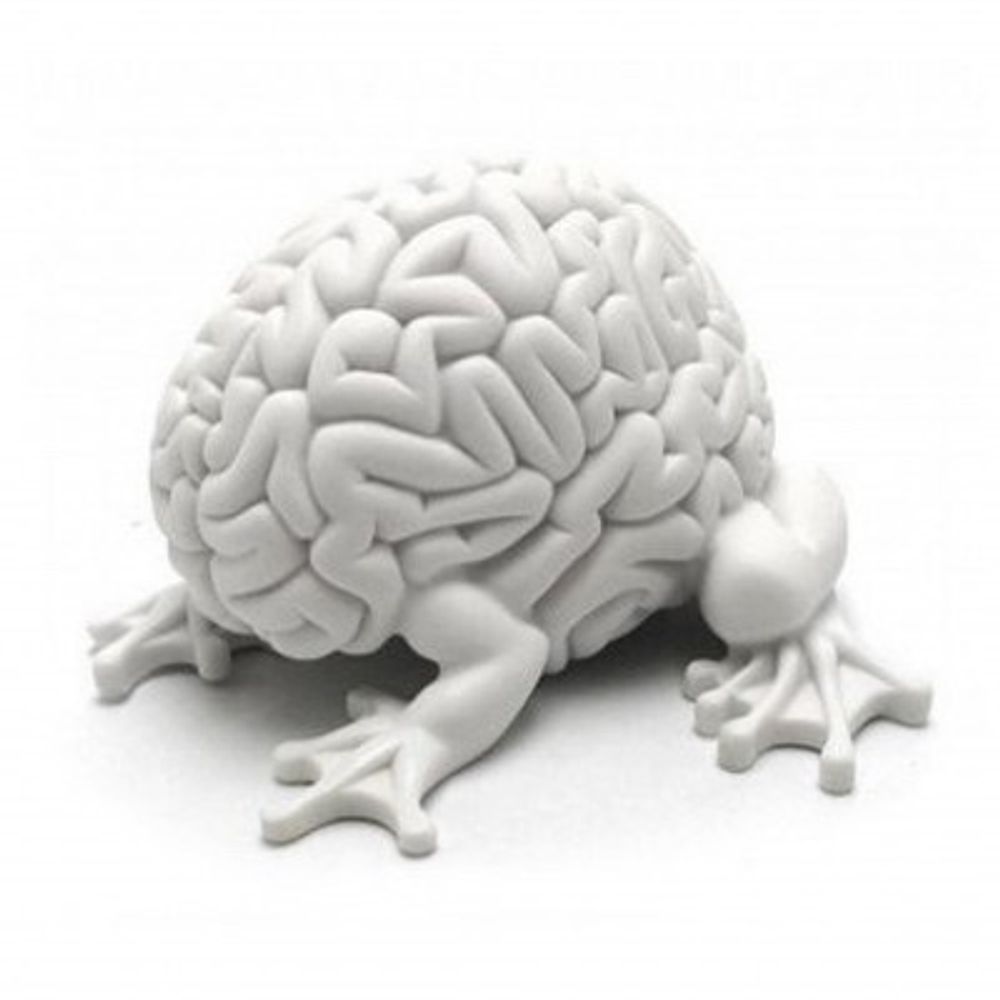
When we see something that's moving, our memories about it end up projected forward in time: We remember it further along than it was. In a new paper in 𝘗𝘴𝘺𝘤𝘩𝘰𝘭𝘰𝘨𝘪𝘤𝘢𝘭 𝘚𝘤𝘪𝘦𝘯𝘤𝘦, out today and led by @dillonplunkett.bsky.social, we demonstrate that this happens even when there is 𝙣𝙤 𝙢𝙤𝙩𝙞𝙤𝙣 𝙬𝙝𝙖𝙩𝙨𝙤𝙚𝙫𝙚𝙧.🧵

Representational Momentum Transcends Motion
Dillon Plunkett & Jorge Morales (2025) Psychological Science
subjectivitylab.org
December 9, 2025 at 3:37 PM
When we see something that's moving, our memories about it end up projected forward in time: We remember it further along than it was. In a new paper in 𝘗𝘴𝘺𝘤𝘩𝘰𝘭𝘰𝘨𝘪𝘤𝘢𝘭 𝘚𝘤𝘪𝘦𝘯𝘤𝘦, out today and led by @dillonplunkett.bsky.social, we demonstrate that this happens even when there is 𝙣𝙤 𝙢𝙤𝙩𝙞𝙤𝙣 𝙬𝙝𝙖𝙩𝙨𝙤𝙚𝙫𝙚𝙧.🧵
Reposted by Timon Kunze

The scientist-statistician was one of the most common professions in 21st century universities. In this era, statistics was seldom conducted by trained statisticians. Instead, subject experts, who possessed hard- and software, were responsible for tasks ranging from study design to causal inference

December 7, 2025 at 9:07 PM
The scientist-statistician was one of the most common professions in 21st century universities. In this era, statistics was seldom conducted by trained statisticians. Instead, subject experts, who possessed hard- and software, were responsible for tasks ranging from study design to causal inference
Reposted by Timon Kunze
Excited to share a new article, led by Barnes Jannuzi. Here we tried to pinpoint something about visual familiarity that isn't reflected in visual cortex via something putatively hippocampal. Nope! Per the theme of this era, the brain is not so simple. /1
www.jneurosci.org/content/earl...
www.jneurosci.org/content/earl...

Sharpened visual memory representations are reflected in inferotemporal cortex
Humans and other primates can robustly report whether they've seen specific images before, even when those images are extremely similar to ones they've previously seen. Multiple lines of evidence sugg...
www.jneurosci.org
December 6, 2025 at 4:23 PM
Excited to share a new article, led by Barnes Jannuzi. Here we tried to pinpoint something about visual familiarity that isn't reflected in visual cortex via something putatively hippocampal. Nope! Per the theme of this era, the brain is not so simple. /1
www.jneurosci.org/content/earl...
www.jneurosci.org/content/earl...
Reposted by Timon Kunze
December 7, 2025 at 7:09 AM
Reposted by Timon Kunze
Iceland is right to consider this an existential threat.
www.dagens.com/news/iceland...
www.dagens.com/news/iceland...

Iceland declares ocean-current instability a national security risk
Iceland has classified the potential collapse of a major Atlantic current system as a national security threat, citing new scientific warnings that such a change could radically alter the country’s cl...
www.dagens.com
November 29, 2025 at 1:46 PM
Iceland is right to consider this an existential threat.
www.dagens.com/news/iceland...
www.dagens.com/news/iceland...
Reposted by Timon Kunze

"Prestige bias" is one of the strongest forms of bias in academia.
Reviewers rank paper submissions from top-20 institutions and non-students higher, but this goes away with blinded reviews.
haruka-uchida.github.io/websitefiles...
Reviewers rank paper submissions from top-20 institutions and non-students higher, but this goes away with blinded reviews.
haruka-uchida.github.io/websitefiles...

November 28, 2025 at 9:19 PM
"Prestige bias" is one of the strongest forms of bias in academia.
Reviewers rank paper submissions from top-20 institutions and non-students higher, but this goes away with blinded reviews.
haruka-uchida.github.io/websitefiles...
Reviewers rank paper submissions from top-20 institutions and non-students higher, but this goes away with blinded reviews.
haruka-uchida.github.io/websitefiles...
Reposted by Timon Kunze

By mapping connections among researchers, Neurotree makes it possible to trace how the field has evolved and to visualize how shifts in lab size, training and other factors can shape its direction, writes founder @stephenvdavid.bsky.social.
bit.ly/4od0SiL
#neuroskyence #StateOfNeuroscience
bit.ly/4od0SiL
#neuroskyence #StateOfNeuroscience

Tracing neuroscience’s family tree to track its growth
By mapping connections among researchers, Neurotree makes it possible to see how the field has evolved and what factors shape its direction.
www.thetransmitter.org
November 25, 2025 at 2:08 PM
By mapping connections among researchers, Neurotree makes it possible to trace how the field has evolved and to visualize how shifts in lab size, training and other factors can shape its direction, writes founder @stephenvdavid.bsky.social.
bit.ly/4od0SiL
#neuroskyence #StateOfNeuroscience
bit.ly/4od0SiL
#neuroskyence #StateOfNeuroscience
Reposted by Timon Kunze

Jumping spiders can recognise one another. This ability to learn, remember and represent images is quite surprising for such a tiny-brained animal!
buff.ly/dCkwPr0
buff.ly/dCkwPr0

November 23, 2025 at 11:01 AM
Jumping spiders can recognise one another. This ability to learn, remember and represent images is quite surprising for such a tiny-brained animal!
buff.ly/dCkwPr0
buff.ly/dCkwPr0
Reposted by Timon Kunze

Relying on ChatGPT to teach you about a topic leaves you with shallower knowledge than Googling and reading about it, according to new research that compared what more than 10,000 people knew after using one method or the other.
Shared by @gizmodo.com: buff.ly/yAAHtHq
Shared by @gizmodo.com: buff.ly/yAAHtHq
November 21, 2025 at 11:48 AM
Relying on ChatGPT to teach you about a topic leaves you with shallower knowledge than Googling and reading about it, according to new research that compared what more than 10,000 people knew after using one method or the other.
Shared by @gizmodo.com: buff.ly/yAAHtHq
Shared by @gizmodo.com: buff.ly/yAAHtHq
Reposted by Timon Kunze

70 teaspoons placed in tearooms around the institute & observed weekly over 5 months. 80% of spoons disappeared; spoon halflife~81 days. Communal room halflife lower than in specific labs. 250 spoons annually required to maintain 70 spoon population.
pmc.ncbi.nlm.nih.gov/articles/PMC...
pmc.ncbi.nlm.nih.gov/articles/PMC...

The case of the disappearing teaspoons: longitudinal cohort study of the displacement of teaspoons in an Australian research institute
Objectives To determine the overall rate of loss of workplace teaspoons and whether attrition and displacement are correlated with the relative value of the teaspoons or type of tearoom. Design Longitudinal cohort study. Setting Research institute ...
pmc.ncbi.nlm.nih.gov
November 20, 2025 at 3:44 AM
70 teaspoons placed in tearooms around the institute & observed weekly over 5 months. 80% of spoons disappeared; spoon halflife~81 days. Communal room halflife lower than in specific labs. 250 spoons annually required to maintain 70 spoon population.
pmc.ncbi.nlm.nih.gov/articles/PMC...
pmc.ncbi.nlm.nih.gov/articles/PMC...
Reposted by Timon Kunze
Huge congrats to Philipp Kaniuth for successfully defending his PhD summa cum laude (with distinction) “on the measurement of representations and similarity”! Phil was my first PhD candidate, so it’s a particularly special event for me, and he can be very proud of his achievements!

November 20, 2025 at 6:16 PM
Huge congrats to Philipp Kaniuth for successfully defending his PhD summa cum laude (with distinction) “on the measurement of representations and similarity”! Phil was my first PhD candidate, so it’s a particularly special event for me, and he can be very proud of his achievements!
Reposted by Timon Kunze
The field is buzzing about work on brain-computer interfaces for speech, the mechanism of psychedelics, a broader definition of hippocampal representations and more.
www.thetransmitter.org/community/th...
#neuroskyence #StateOfNeuroscience
www.thetransmitter.org/community/th...
#neuroskyence #StateOfNeuroscience

The buzziest neuroscience papers of 2023, 2024
The field took note of work on brain-computer interfaces for speech, the mechanism of psychedelics, defining hippocampal representations, and more.
www.thetransmitter.org
November 19, 2025 at 5:15 PM
The field is buzzing about work on brain-computer interfaces for speech, the mechanism of psychedelics, a broader definition of hippocampal representations and more.
www.thetransmitter.org/community/th...
#neuroskyence #StateOfNeuroscience
www.thetransmitter.org/community/th...
#neuroskyence #StateOfNeuroscience
Reposted by Timon Kunze
a century of glaciers melting 🧪🌐
November 3, 2025 at 5:21 PM
a century of glaciers melting 🧪🌐