



LI Xiaodong
@xiaodongli.bsky.social
PhD in Computational Biology. Timing, Decision Making in Neuroscience.
Reposted by LI Xiaodong

Joint modelling of brain and behaviour dynamics with artificial intelligence
www.nature.com/articles/s41...
www.nature.com/articles/s41...

Joint modelling of brain and behaviour dynamics with artificial intelligence - Nature Reviews Neuroscience
Artificial intelligence is rapidly advancing our mechanistic understanding of the shared structure between the brain and higher-order behaviours. In this Review, Mathis and Mathis synthesize state-of-...
www.nature.com
December 3, 2025 at 4:59 PM
Joint modelling of brain and behaviour dynamics with artificial intelligence
www.nature.com/articles/s41...
www.nature.com/articles/s41...
Reposted by LI Xiaodong

Intrinsic persistent firing in CA1 encodes elapsed time across behaviorally relevant scales https://www.biorxiv.org/content/10.64898/2025.12.10.693586v1
December 14, 2025 at 1:15 AM
Intrinsic persistent firing in CA1 encodes elapsed time across behaviorally relevant scales https://www.biorxiv.org/content/10.64898/2025.12.10.693586v1
Reposted by LI Xiaodong
Systematic comparison of color representations between humans and deep neural networks: towards predicting human color perception in a vast color space https://www.biorxiv.org/content/10.64898/2025.12.10.693611v1
December 14, 2025 at 1:15 AM
Systematic comparison of color representations between humans and deep neural networks: towards predicting human color perception in a vast color space https://www.biorxiv.org/content/10.64898/2025.12.10.693611v1
Reposted by LI Xiaodong

Adaptive compression as a unifying framework for episodic and semantic memory
Perspective by David G. Nagy (@davidnagy.bsky.social), Gergő Orbán & Charley M. Wu (@thecharleywu.bsky.social)
Web: go.nature.com/3ZkmRLb
PDF: rdcu.be/epAQ0
Perspective by David G. Nagy (@davidnagy.bsky.social), Gergő Orbán & Charley M. Wu (@thecharleywu.bsky.social)
Web: go.nature.com/3ZkmRLb
PDF: rdcu.be/epAQ0

June 5, 2025 at 1:17 PM
Adaptive compression as a unifying framework for episodic and semantic memory
Perspective by David G. Nagy (@davidnagy.bsky.social), Gergő Orbán & Charley M. Wu (@thecharleywu.bsky.social)
Web: go.nature.com/3ZkmRLb
PDF: rdcu.be/epAQ0
Perspective by David G. Nagy (@davidnagy.bsky.social), Gergő Orbán & Charley M. Wu (@thecharleywu.bsky.social)
Web: go.nature.com/3ZkmRLb
PDF: rdcu.be/epAQ0
Reposted by LI Xiaodong

Excited to share my PhD paper! In it, we use targeted 2-photon optogenetic stimulation to determine how V1 activity is read-out in a detection task. We found that network influence, not visual coding properties, predicted the impact of ensembles on behavior - contradicting our expectations (1/5).


May 15, 2025 at 4:38 PM
Excited to share my PhD paper! In it, we use targeted 2-photon optogenetic stimulation to determine how V1 activity is read-out in a detection task. We found that network influence, not visual coding properties, predicted the impact of ensembles on behavior - contradicting our expectations (1/5).
Reposted by LI Xiaodong

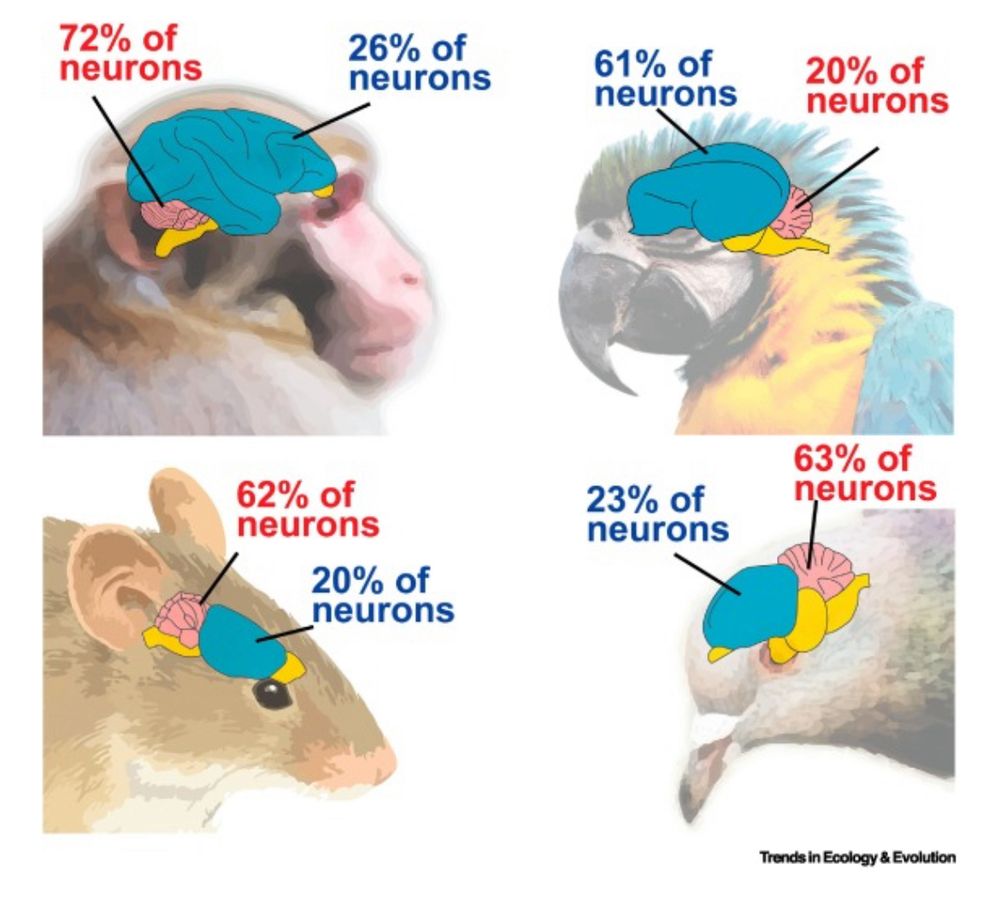
Our new paper is out. We point out that large brained (and often smart) mammals and birds have evolved very different distribution of neurons numbers in the brain.
This means that similar cognitive abilities have evolved in very different brains.
www.sciencedirect.com/science/arti...
This means that similar cognitive abilities have evolved in very different brains.
www.sciencedirect.com/science/arti...
April 17, 2025 at 9:22 PM
Our new paper is out. We point out that large brained (and often smart) mammals and birds have evolved very different distribution of neurons numbers in the brain.
This means that similar cognitive abilities have evolved in very different brains.
www.sciencedirect.com/science/arti...
This means that similar cognitive abilities have evolved in very different brains.
www.sciencedirect.com/science/arti...
Reposted by LI Xiaodong

Out today in PNAS! We asked how Bayesian inference is implemented in macaque prefrontal cortex www.pnas.org/doi/10.1073/...
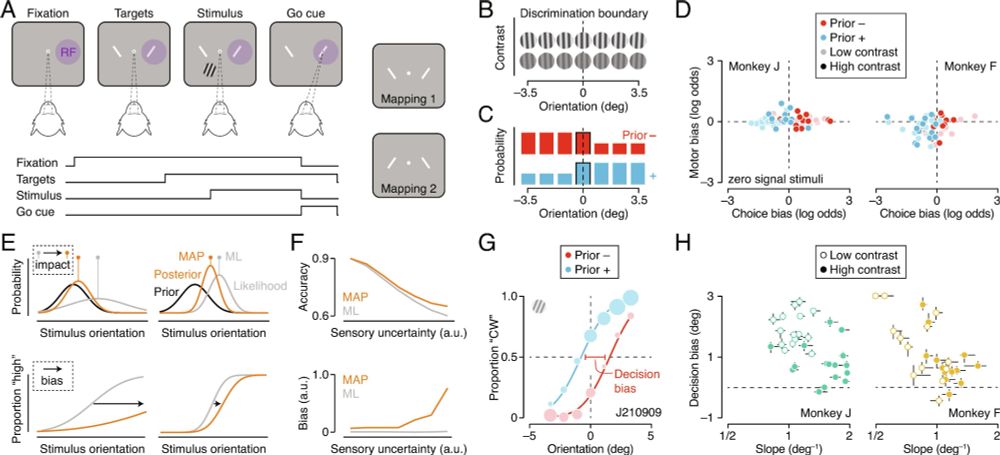
Bayesian inference by visuomotor neurons in the prefrontal cortex | PNAS
Perceptual judgments of the environment emerge from the concerted activity of neural
populations in decision-making areas downstream of the sensory...
www.pnas.org
March 27, 2025 at 7:54 PM
Out today in PNAS! We asked how Bayesian inference is implemented in macaque prefrontal cortex www.pnas.org/doi/10.1073/...
Reposted by LI Xiaodong

I am SO excited to share my latest #preprint with
@robbrutledge.bsky.social, Chongyu Qin, Zeb Kurth-Nelson, Martin Chadwick, @summerfieldlab.bsky.social, and others from DeepMind:
"Increasing happiness through conversations with artificial intelligence"
arxiv.org/abs/2504.02091
A short 🧵
1/7
@robbrutledge.bsky.social, Chongyu Qin, Zeb Kurth-Nelson, Martin Chadwick, @summerfieldlab.bsky.social, and others from DeepMind:
"Increasing happiness through conversations with artificial intelligence"
arxiv.org/abs/2504.02091
A short 🧵
1/7

Increasing happiness through conversations with artificial intelligence
Chatbots powered by artificial intelligence (AI) have rapidly become a significant part of everyday life, with over a quarter of American adults using them multiple times per week. While these tools o...
arxiv.org
April 4, 2025 at 1:33 PM
I am SO excited to share my latest #preprint with
@robbrutledge.bsky.social, Chongyu Qin, Zeb Kurth-Nelson, Martin Chadwick, @summerfieldlab.bsky.social, and others from DeepMind:
"Increasing happiness through conversations with artificial intelligence"
arxiv.org/abs/2504.02091
A short 🧵
1/7
@robbrutledge.bsky.social, Chongyu Qin, Zeb Kurth-Nelson, Martin Chadwick, @summerfieldlab.bsky.social, and others from DeepMind:
"Increasing happiness through conversations with artificial intelligence"
arxiv.org/abs/2504.02091
A short 🧵
1/7
Reposted by LI Xiaodong

Explore the newly launched Early-Career Neuroscientists Resource Center, designed to help you navigate the field with news, expert insights and practical tools. The page also highlights job openings, seminars, and more:
#neuroskyence
www.thetransmitter.org/early-career...
#neuroskyence
www.thetransmitter.org/early-career...

Early-Career Neuroscientists Resource Center
News, perspectives and resources to help navigate the early stages of your neuroscience career
www.thetransmitter.org
March 20, 2025 at 9:12 PM
Explore the newly launched Early-Career Neuroscientists Resource Center, designed to help you navigate the field with news, expert insights and practical tools. The page also highlights job openings, seminars, and more:
#neuroskyence
www.thetransmitter.org/early-career...
#neuroskyence
www.thetransmitter.org/early-career...
Reposted by LI Xiaodong

Pleased to share our latest collaborative publication, "Thermosensory predictive coding underpins an illusion of pain", out now in Science Advances! The first major output of our Visceral Mind Project, lead by the amazing @francescafardo.bsky.social! www.science.org/doi/full/10....
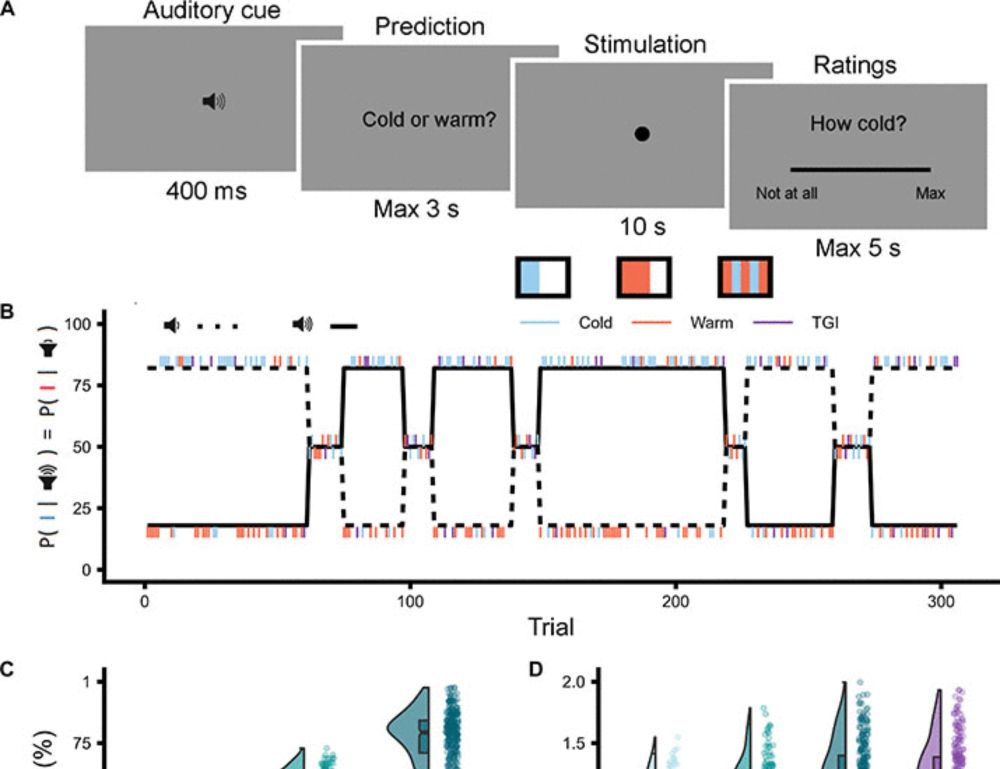
Thermosensory predictive coding underpins an illusion of pain
Computational modeling reveals how uncertainty transforms harmless stimuli into perceptions of pain.
www.science.org
March 19, 2025 at 8:26 AM
Pleased to share our latest collaborative publication, "Thermosensory predictive coding underpins an illusion of pain", out now in Science Advances! The first major output of our Visceral Mind Project, lead by the amazing @francescafardo.bsky.social! www.science.org/doi/full/10....
Reposted by LI Xiaodong
Dynamically rich states in balanced networks induced by single-neuron dynamics https://www.biorxiv.org/content/10.1101/2025.02.28.640576v1
March 2, 2025 at 7:15 PM
Dynamically rich states in balanced networks induced by single-neuron dynamics https://www.biorxiv.org/content/10.1101/2025.02.28.640576v1
Reposted by LI Xiaodong

In @elife.bsky.social: An image-computable model of speeded decision-making doi.org/10.7554/eLif...

An image-computable model of speeded decision-making
Combining biologically-plausible neural network models of vision with traditional decision-making models enables a detailed characterization of how the visual system extracts representations that guid...
doi.org
February 28, 2025 at 10:53 PM
In @elife.bsky.social: An image-computable model of speeded decision-making doi.org/10.7554/eLif...
Reposted by LI Xiaodong

Trends in Cognitive Sciences
Predictive coding: a more cognitive process than we thought?
www.sciencedirect.com/science/arti...
Predictive coding: a more cognitive process than we thought?
www.sciencedirect.com/science/arti...
Predictive coding: a more cognitive process than we thought?
In predictive coding (PC), higher-order brain areas generate predictions that are sent to lower-order sensory areas. Top-down predictions are compared…
www.sciencedirect.com
March 2, 2025 at 4:25 AM
Trends in Cognitive Sciences
Predictive coding: a more cognitive process than we thought?
www.sciencedirect.com/science/arti...
Predictive coding: a more cognitive process than we thought?
www.sciencedirect.com/science/arti...
Reposted by LI Xiaodong

How do different stimulus manipulations affect perceptual accuracy vs. confidence? In a new preprint, we show that 4 manipulations have remarkably similar effects, while a 5th one has qualitatively different effects than all other ones.
osf.io/preprints/ps...
osf.io/preprints/ps...
OSF
osf.io
February 27, 2025 at 1:03 PM
How do different stimulus manipulations affect perceptual accuracy vs. confidence? In a new preprint, we show that 4 manipulations have remarkably similar effects, while a 5th one has qualitatively different effects than all other ones.
osf.io/preprints/ps...
osf.io/preprints/ps...
Reposted by LI Xiaodong

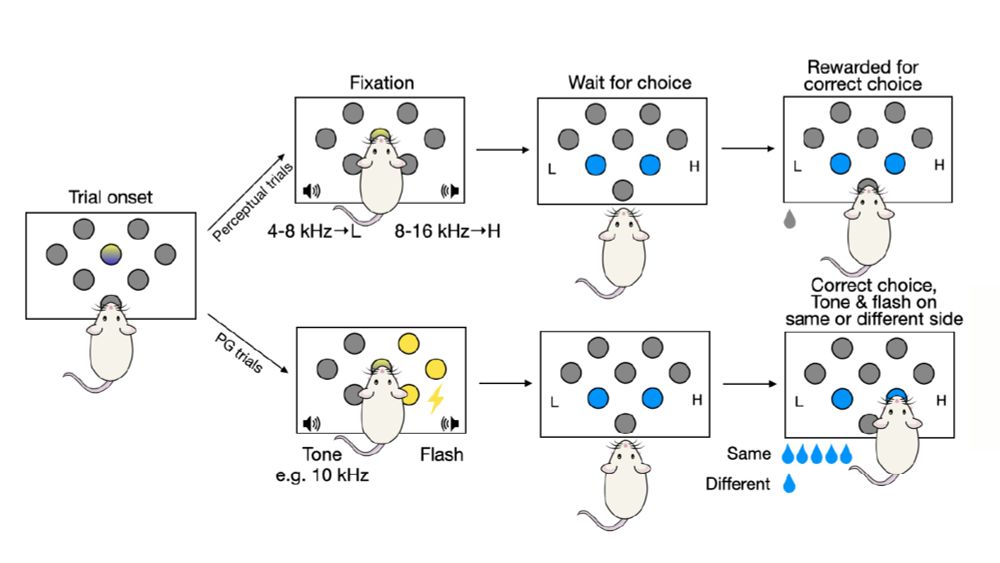
“You can’t just be confident, you have to be confident about something.”
Research led by @jerlich.bsky.social and Xiaoyue Zhu set out to disentangle the different kinds of confidence by designing a perceptual gambling task for rodents.
⬇️
www.sainsburywellcome.org/web/blog/dec...
Research led by @jerlich.bsky.social and Xiaoyue Zhu set out to disentangle the different kinds of confidence by designing a perceptual gambling task for rodents.
⬇️
www.sainsburywellcome.org/web/blog/dec...
February 26, 2025 at 9:24 AM
“You can’t just be confident, you have to be confident about something.”
Research led by @jerlich.bsky.social and Xiaoyue Zhu set out to disentangle the different kinds of confidence by designing a perceptual gambling task for rodents.
⬇️
www.sainsburywellcome.org/web/blog/dec...
Research led by @jerlich.bsky.social and Xiaoyue Zhu set out to disentangle the different kinds of confidence by designing a perceptual gambling task for rodents.
⬇️
www.sainsburywellcome.org/web/blog/dec...
Reposted by LI Xiaodong


A Visual Introduction to Hierarchical Models
A visual explanation of multi-level modeling
mfviz.com
February 18, 2025 at 2:56 PM
Reposted by LI Xiaodong

Word production has typically been studied using two distinct approaches. A Perspective in Nature Reviews Psychology draws from both approaches to discuss how speakers assess whether production is going smoothly, adjust to difficulties and fix errors. https://go.nature.com/40Oc0sS 🔒

February 12, 2025 at 5:23 PM
Word production has typically been studied using two distinct approaches. A Perspective in Nature Reviews Psychology draws from both approaches to discuss how speakers assess whether production is going smoothly, adjust to difficulties and fix errors. https://go.nature.com/40Oc0sS 🔒
Reposted by LI Xiaodong
Nature Methods
MARBLE: interpretable representations of neural population dynamics using geometric deep learning
www.nature.com/articles/s41...
MARBLE: interpretable representations of neural population dynamics using geometric deep learning
www.nature.com/articles/s41...

MARBLE: interpretable representations of neural population dynamics using geometric deep learning - Nature Methods
MARBLE uses geometric deep learning to map dynamics such as neural activity into a latent representation, which can then be used to decode the neural activity or compare it across systems.
www.nature.com
February 18, 2025 at 10:30 AM
Nature Methods
MARBLE: interpretable representations of neural population dynamics using geometric deep learning
www.nature.com/articles/s41...
MARBLE: interpretable representations of neural population dynamics using geometric deep learning
www.nature.com/articles/s41...
Reposted by LI Xiaodong

What's the right way to think about modularity in the brain? This devilish 😈 question is a big part of my research now, and it started with this paper with @solarpunkgabs.bsky.social, finally published after the first preprint in 2021! 🤖🧠🧪
www.nature.com/articles/s41...
www.nature.com/articles/s41...
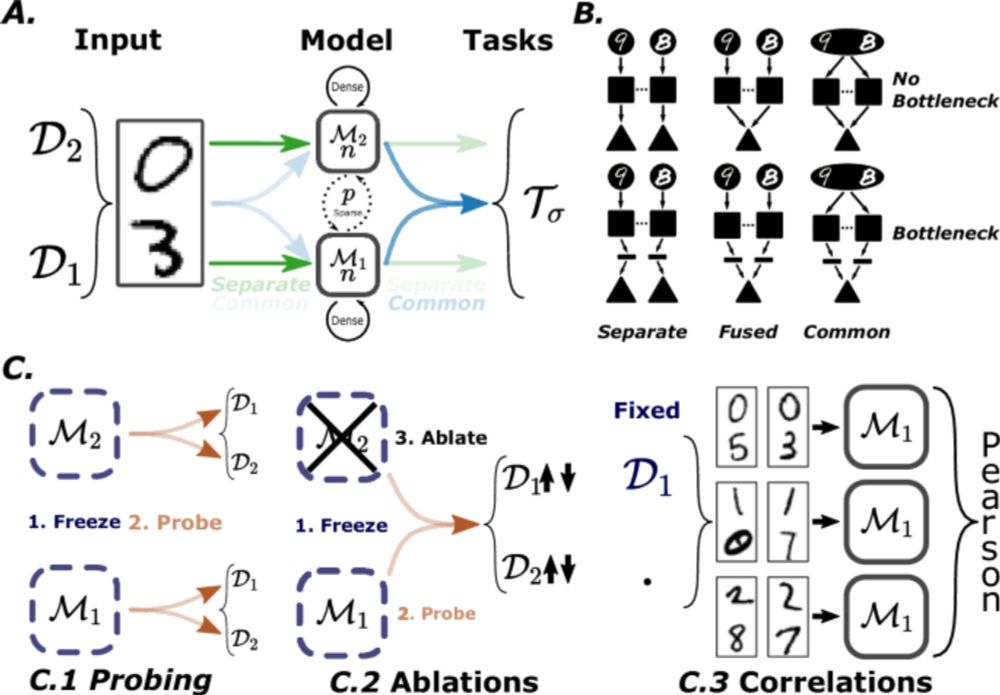
Dynamics of specialization in neural modules under resource constraints - Nature Communications
The extent to which structural modularity in neural networks ensures functional specialization remains unclear. Here the authors show that specialization can emerge in neural modules placed under reso...
www.nature.com
January 23, 2025 at 4:37 PM
What's the right way to think about modularity in the brain? This devilish 😈 question is a big part of my research now, and it started with this paper with @solarpunkgabs.bsky.social, finally published after the first preprint in 2021! 🤖🧠🧪
www.nature.com/articles/s41...
www.nature.com/articles/s41...
Reposted by LI Xiaodong

Reposted by LI Xiaodong
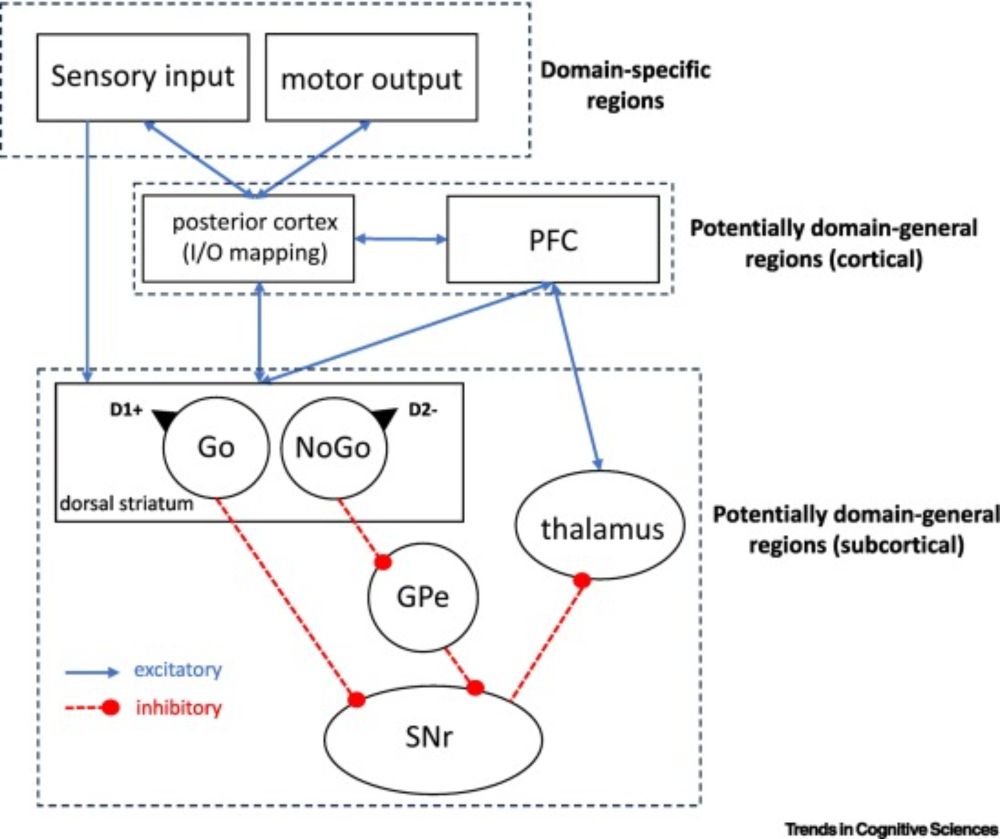
The geometry of the neural state space of decisions https://www.biorxiv.org/content/10.1101/2025.01.24.634806v1
January 26, 2025 at 1:20 AM
The geometry of the neural state space of decisions https://www.biorxiv.org/content/10.1101/2025.01.24.634806v1
Reposted by LI Xiaodong
My article "A comprehensive assessment of current methods for measuring metacognition" is finally out in Nature Communications 🎉 If you work on metacognition and think you know the psychometric properties of your favorite measure, you may be surprised.
www.nature.com/articles/s41...
www.nature.com/articles/s41...
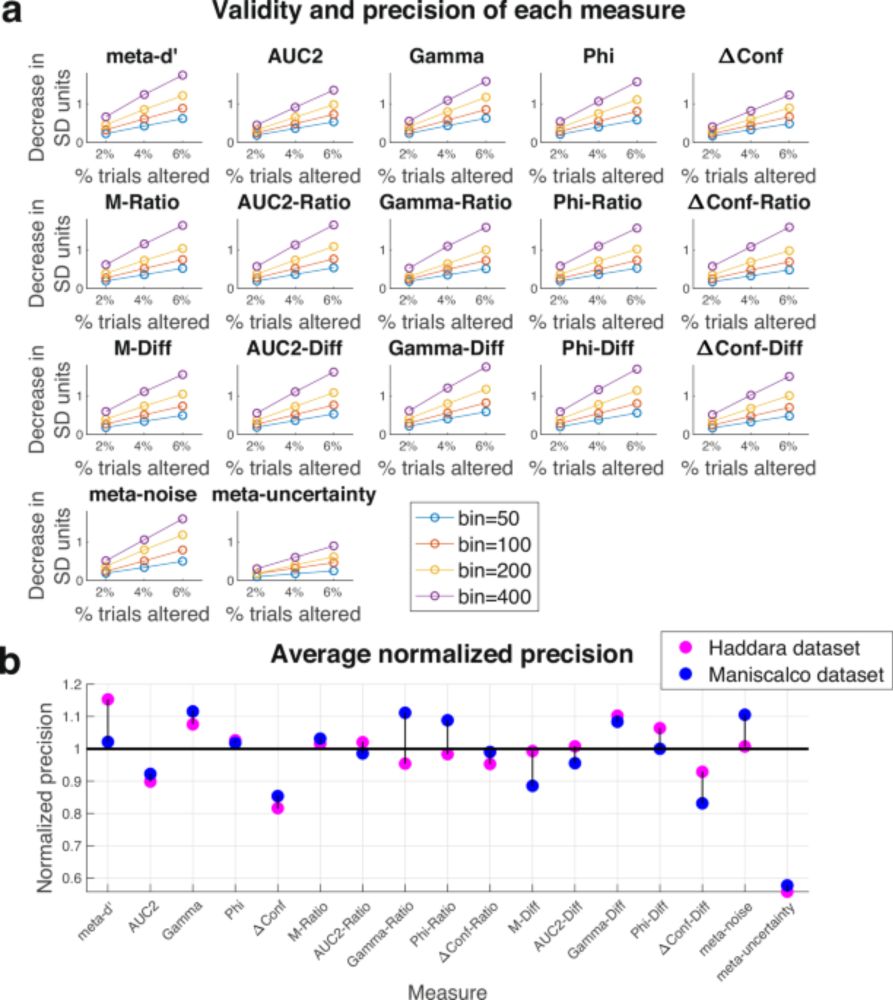
A comprehensive assessment of current methods for measuring metacognition - Nature Communications
Measuring metacognitive ability is one of the enduring challenges in cognitive science. The current paper develops formal tests of the quality of different measures and assesses how current metrics pe...
www.nature.com
January 16, 2025 at 8:17 PM
My article "A comprehensive assessment of current methods for measuring metacognition" is finally out in Nature Communications 🎉 If you work on metacognition and think you know the psychometric properties of your favorite measure, you may be surprised.
www.nature.com/articles/s41...
www.nature.com/articles/s41...
Reposted by LI Xiaodong

1/ Super-excited to share our new work “Episodic and associative memory from spatial scaffolds in the hippocampus”, that just appeared in Nature! www.nature.com/articles/s41... Key insights and ideas 👇#tweeprint
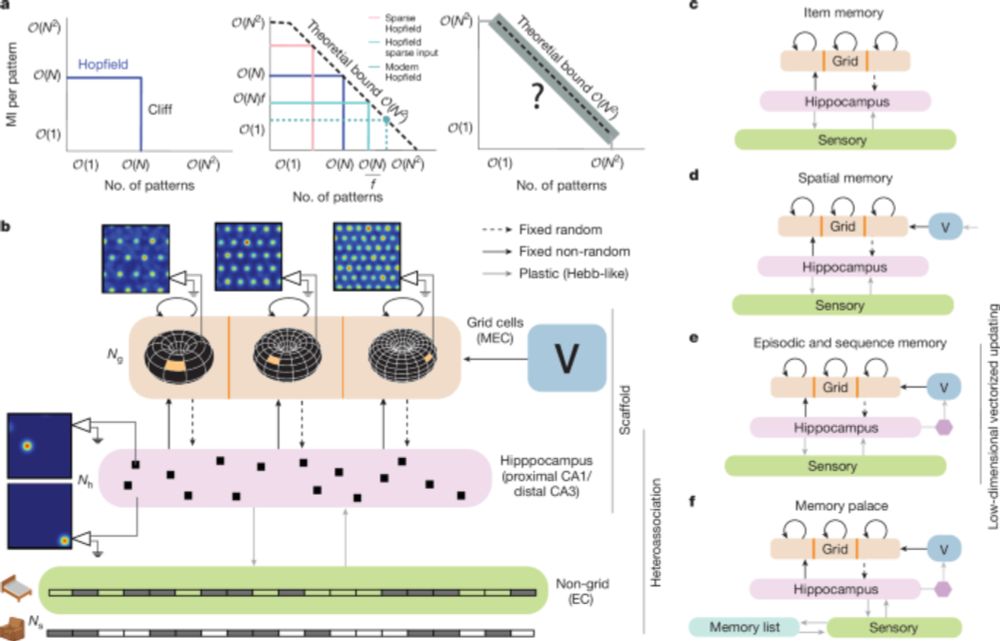
Episodic and associative memory from spatial scaffolds in the hippocampus - Nature
A neocortical–entorhinal–hippocampal network model based on grid cell states recapitulates experimental results and reconciles the spatial, associative and episodic memory roles of the hippocampus.
www.nature.com
January 17, 2025 at 12:08 AM
1/ Super-excited to share our new work “Episodic and associative memory from spatial scaffolds in the hippocampus”, that just appeared in Nature! www.nature.com/articles/s41... Key insights and ideas 👇#tweeprint
Reposted by LI Xiaodong
An Independent Coding Scheme for Distance versus Position in the Hippocampus https://www.biorxiv.org/content/10.1101/2024.12.27.629676v1
December 27, 2024 at 11:17 PM
An Independent Coding Scheme for Distance versus Position in the Hippocampus https://www.biorxiv.org/content/10.1101/2024.12.27.629676v1
Reposted by LI Xiaodong

Amazing collective problem solving in ants:
December 27, 2024 at 5:01 PM
Amazing collective problem solving in ants: