



#ICYMI The Chemoproteomics Group at the Nucleus, led by @dina-sch.bsky.social, uses mass spec-based techniques to study proteins & their molecular interactions. The group supports Stanford researchers throughout a project, from design consultation to data analysis.

Chemoproteomics Group at the Nucleus, Sarafan ChEM-H
The Chemoproteomics Group at the Nucleus, Sarafan ChEM-H, led by Dr. Dina Schuster, focuses on a wide range of mass spectrometry-based techniques to study proteins and their molecular interactions.…
youtube.com
January 15, 2026 at 8:03 PM
#ICYMI The Chemoproteomics Group at the Nucleus, led by @dina-sch.bsky.social, uses mass spec-based techniques to study proteins & their molecular interactions. The group supports Stanford researchers throughout a project, from design consultation to data analysis.
Turns out you can do cysteine profiling without lysing the cells first!
www.nature.com/articles/s41...
Led by @bendavisgroup.bsky.social and with some very deep chemoproteomics characterisation
www.nature.com/articles/s41...
Led by @bendavisgroup.bsky.social and with some very deep chemoproteomics characterisation

Biocompatible ligand balancing in transition metal coordination enables benign in-cell protein arylation - Nature Chemistry
The perceived toxicity of organometallic reagents has limited their use in living systems. Now it has been shown that balancing flexible chelation with biocompatible ligands without precluding chemica...
www.nature.com
January 7, 2026 at 10:15 AM
Turns out you can do cysteine profiling without lysing the cells first!
www.nature.com/articles/s41...
Led by @bendavisgroup.bsky.social and with some very deep chemoproteomics characterisation
www.nature.com/articles/s41...
Led by @bendavisgroup.bsky.social and with some very deep chemoproteomics characterisation

What an extraordinary joy it is to finally be able to share this work with the world. If any of you are excited by chemoproteomics or new tools on the covalent warhead toolbox I think this paper may be right up your alley 💕
Is arginine the new cysteine?! Check out our lab's latest in collaboration with @ianseiple.bsky.social's team where we introduce ninhydrin as a selective covalent warhead and probe targeting reactive arginines.
www.biorxiv.org/content/10.6...
www.biorxiv.org/content/10.6...

Ninhydrin as a covalent warhead for chemical proteomic-enabled discovery and selective engagement of reactive arginines
Covalent molecules have emerged as next-generation therapeutics and as powerful tools for perturbing fundamental biological processes. Chemical proteomic methods to screen for reactive proteinaceous a...
www.biorxiv.org
January 6, 2026 at 5:28 PM
What an extraordinary joy it is to finally be able to share this work with the world. If any of you are excited by chemoproteomics or new tools on the covalent warhead toolbox I think this paper may be right up your alley 💕

TubercuProbe: A Cross-Attention Graph-Sequence Model for Cross-Species Chemoproteomic Discovery in Mycobacterium tuberculosis [new]
Cross-species ML: M.tb compound-protein X-attn & human chemoproteomics.
Cross-species ML: M.tb compound-protein X-attn & human chemoproteomics.


January 5, 2026 at 10:50 AM
TubercuProbe: A Cross-Attention Graph-Sequence Model for Cross-Species Chemoproteomic Discovery in Mycobacterium tuberculosis [new]
Cross-species ML: M.tb compound-protein X-attn & human chemoproteomics.
Cross-species ML: M.tb compound-protein X-attn & human chemoproteomics.

The group of Jacob Geri published a method for residue-specific #chemoproteomics without the need for an enrichment step. To achieve this, they developed reagents that shift the ion mobility of modified peptides for gas phase separation. (2/12)
pubs.acs.org/doi/full/10....
pubs.acs.org/doi/full/10....
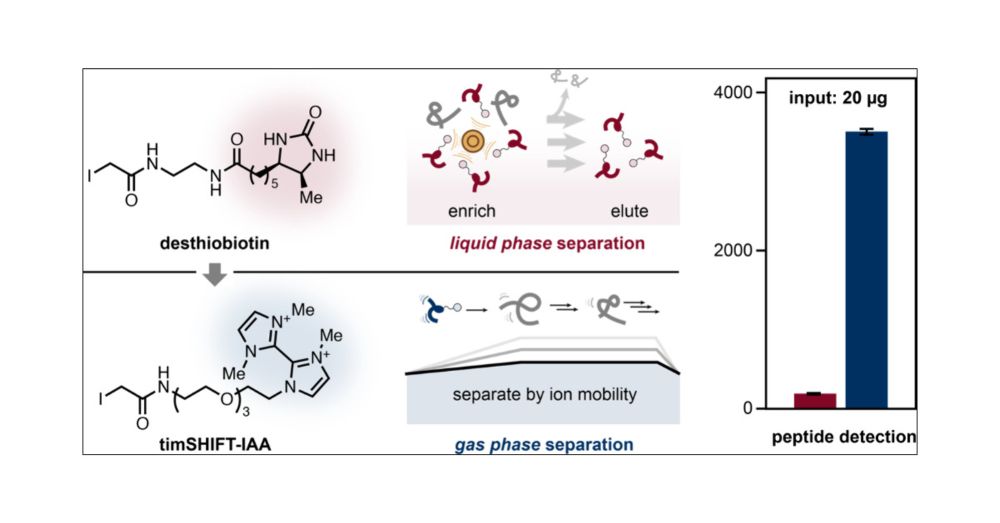
Gas Phase Separation of Modified Peptides for Activity-Based Protein Profiling
Profiling the reactivity of the proteome with amino-acid level resolution requires the identification and quantification of reacted peptides in the presence of abundant unmodified peptides. Affinity-b...
pubs.acs.org
January 4, 2026 at 6:44 AM
The group of Jacob Geri published a method for residue-specific #chemoproteomics without the need for an enrichment step. To achieve this, they developed reagents that shift the ion mobility of modified peptides for gas phase separation. (2/12)
pubs.acs.org/doi/full/10....
pubs.acs.org/doi/full/10....

Excited to highlight our latest bioRxiv led by grad student Zoe Duong and Qian Shao. We report a chemistry-centric, chemoproteomics-enabled strategy to discover non-degradative molecular glues for transcriptional rewiring.
🔗 www.biorxiv.org/content/10.6...

Discovery of Non-Degradative Covalent Molecular Glues for Transcriptional Reprogramming
Transcriptional reprogramming through induced proximity has emerged as a powerful strategy for modulating the expression of oncogenic and tumor-suppressive genes. Inspired by transcriptional reprogram...
www.biorxiv.org
December 14, 2025 at 7:36 PM
Excited to highlight our latest bioRxiv led by grad student Zoe Duong and Qian Shao. We report a chemistry-centric, chemoproteomics-enabled strategy to discover non-degradative molecular glues for transcriptional rewiring.
🔗 www.biorxiv.org/content/10.6...


🔓Don't miss this #OpenAccess review from @dbkonrad.bsky.social & co. at @univie.ac.at & @lmumuenchen.bsky.social, part of our New Talent collection providing their perspective on cysteine-reactive activity-based probes #orgchem #chembio
Check it out in full here🔽
Check it out in full here🔽

A perspective on cysteine-reactive activity-based probes
Activity-based protein profiling (ABPP) is a powerful method to investigate protein function, identify protein targets and determine the mechanisms-of-action of chemical probes as well as small…
pubs.rsc.org
December 13, 2025 at 2:33 AM

Take-home: ABPP can bridge genotype→phenotype gaps and complement genomic surveillance, a practical way to anticipate cross-resistance and de-risk insecticide rollout/rotation strategies. #malaria #vectorcontrol #chemoproteomics 
December 12, 2025 at 9:01 AM
Take-home: ABPP can bridge genotype→phenotype gaps and complement genomic surveillance, a practical way to anticipate cross-resistance and de-risk insecticide rollout/rotation strategies. #malaria #vectorcontrol #chemoproteomics 
New in Nature Communications: a predictive chemoproteomics workflow (competitive ABPP) to spot future insecticide resistance liabilities in Anopheles gambiae before they’re obvious in the field. doi.org/10.1038/s414...

Predictive chemoproteomics and functional validation reveal Coeae6g-mediated insecticide cross-resistance in the malaria vector Anopheles gambiae - Nature Communications
The evolution of insecticide resistance in the major malaria vector, Anopheles gambiae, remains an important issue in sustainable malaria control in Africa. Here, the authors present a framework for i...
doi.org
December 12, 2025 at 8:57 AM
New in Nature Communications: a predictive chemoproteomics workflow (competitive ABPP) to spot future insecticide resistance liabilities in Anopheles gambiae before they’re obvious in the field. doi.org/10.1038/s414...

#AminoAcidAdvent Day 6: Cysteine (Cys; C)
Like Mork & Mindy, these stinky residues love to bond! Jerks like us break these bonds, with chemoproteomics trying to map, probe, and manipulate them. Leftovers stuck to S-S is a fun field but I love them for their antioxidant and metal binding abilities.
Like Mork & Mindy, these stinky residues love to bond! Jerks like us break these bonds, with chemoproteomics trying to map, probe, and manipulate them. Leftovers stuck to S-S is a fun field but I love them for their antioxidant and metal binding abilities.

December 9, 2025 at 1:41 PM
#AminoAcidAdvent Day 6: Cysteine (Cys; C)
Like Mork & Mindy, these stinky residues love to bond! Jerks like us break these bonds, with chemoproteomics trying to map, probe, and manipulate them. Leftovers stuck to S-S is a fun field but I love them for their antioxidant and metal binding abilities.
Like Mork & Mindy, these stinky residues love to bond! Jerks like us break these bonds, with chemoproteomics trying to map, probe, and manipulate them. Leftovers stuck to S-S is a fun field but I love them for their antioxidant and metal binding abilities.
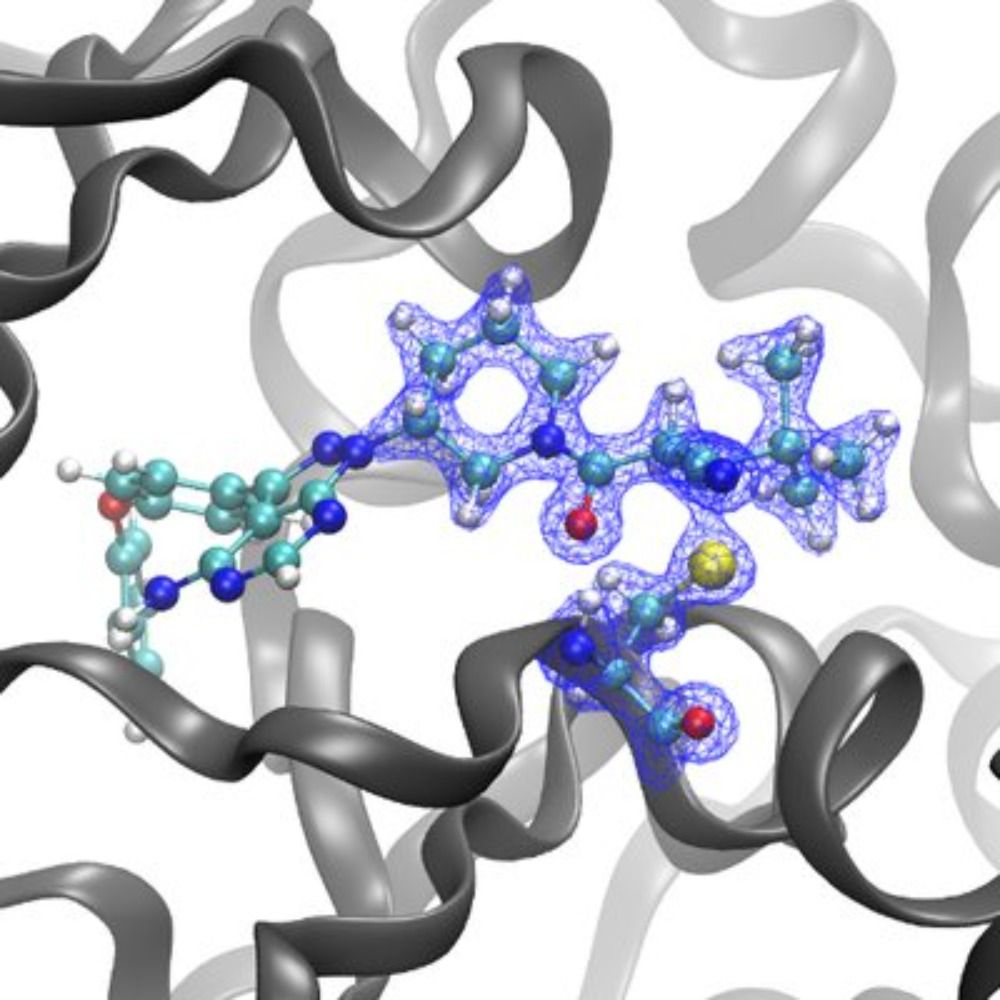
A Highly Reactive Cysteine-Targeted Acrylophenone Chemical Probe That Enables Peptide/Protein Bioconjugation and Chemoproteomics Analysis https://covalentmodifiers.blogspot.com/2025/12/a-highly-reactive-cysteine-targeted.html
December 7, 2025 at 5:00 AM
A Highly Reactive Cysteine-Targeted Acrylophenone Chemical Probe That Enables Peptide/Protein Bioconjugation and Chemoproteomics Analysis https://covalentmodifiers.blogspot.com/2025/12/a-highly-reactive-cysteine-targeted.html

Today took place the 12th Young Scientists Forum of the Hellenic Society of Biochemistry and Molecular Biology as a pre-event of the #EEBMB2025 conference. As evidenced by Aspasia Dimitriadou’s presentation, #chemoproteomics is putting down roots in Athens. And I won’t hide my pride.

December 4, 2025 at 4:54 PM
Today took place the 12th Young Scientists Forum of the Hellenic Society of Biochemistry and Molecular Biology as a pre-event of the #EEBMB2025 conference. As evidenced by Aspasia Dimitriadou’s presentation, #chemoproteomics is putting down roots in Athens. And I won’t hide my pride.
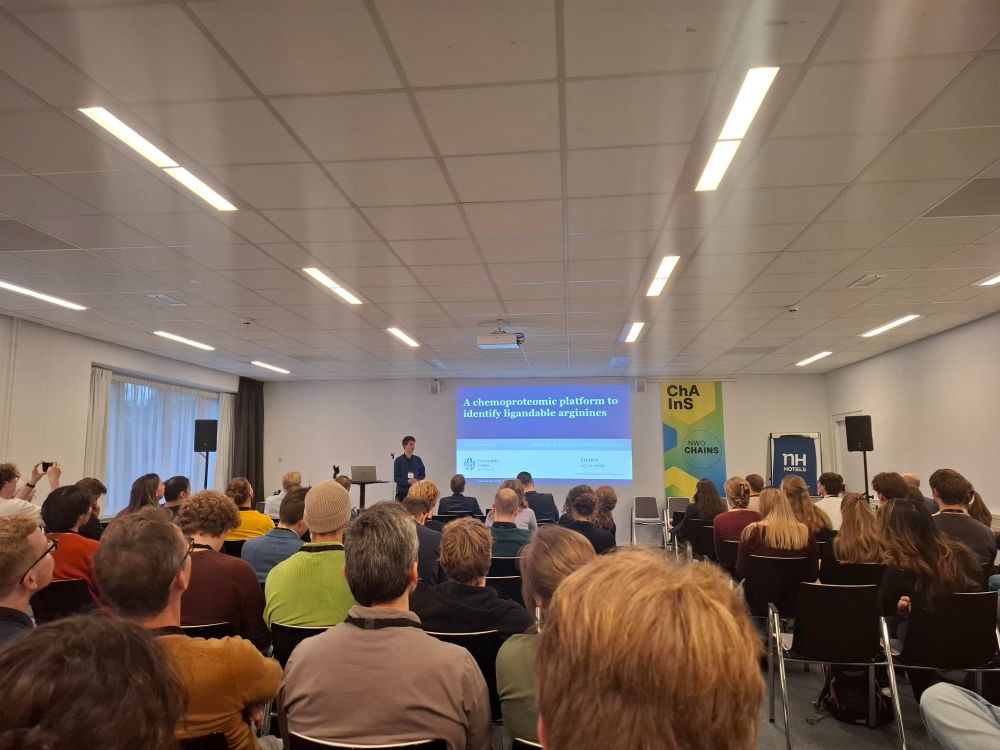
Very happy that @marnixroseboom.bsky.social represented our group of the @led3hub.bsky.social with a very well-attended talk at #NWOCHAINS. He reported on his #PhD work on developing #ChemoProteomics technologies to study #CovalentInhibitor target engagement at arginines.
#ChemSky #ChemBio #ProudPI
#ChemSky #ChemBio #ProudPI
December 3, 2025 at 2:28 PM
Very happy that @marnixroseboom.bsky.social represented our group of the @led3hub.bsky.social with a very well-attended talk at #NWOCHAINS. He reported on his #PhD work on developing #ChemoProteomics technologies to study #CovalentInhibitor target engagement at arginines.
#ChemSky #ChemBio #ProudPI
#ChemSky #ChemBio #ProudPI
We are getting our slides and posters ready! In a few days, NKUA Proteomics Core Facility goes EEBMB2025. We have from sponge proteomics to chemoproteomics for you, including multiple myeloma proteomics as well as murine multiomics.
#Chembio #Proteomics #chemoproteomics
#Chembio #Proteomics #chemoproteomics

December 2, 2025 at 12:58 PM
We are getting our slides and posters ready! In a few days, NKUA Proteomics Core Facility goes EEBMB2025. We have from sponge proteomics to chemoproteomics for you, including multiple myeloma proteomics as well as murine multiomics.
#Chembio #Proteomics #chemoproteomics
#Chembio #Proteomics #chemoproteomics
Great to see our Nature Chemistry paper out in its final published and printed form.
If you want to check it out, you can find it here: www.nature.com/articles/s41...
#ChemSky #ChemBio #ChemicalProteomics #Chemoproteomics #ProteoProbes #ChemPro
If you want to check it out, you can find it here: www.nature.com/articles/s41...
#ChemSky #ChemBio #ChemicalProteomics #Chemoproteomics #ProteoProbes #ChemPro

November 21, 2025 at 11:08 AM
Great to see our Nature Chemistry paper out in its final published and printed form.
If you want to check it out, you can find it here: www.nature.com/articles/s41...
#ChemSky #ChemBio #ChemicalProteomics #Chemoproteomics #ProteoProbes #ChemPro
If you want to check it out, you can find it here: www.nature.com/articles/s41...
#ChemSky #ChemBio #ChemicalProteomics #Chemoproteomics #ProteoProbes #ChemPro

We just took a deep dive into this tour-de-force chemoproteomics paper from @stephanhacker2.bsky.social and colleagues in our journal club today — really interesting findings about selectivity and coverage of 56 different electrophilic warheads, and great experimental and analysis workflows. Bravo!
How can we study target engagement and selectivity of covalent inhibitors? Which electrophilic probes are best suited to study a certain amino acid?
Our study on "Profiling the proteome-wide selectivity of diverse electrophiles" is published in Nature Chemistry.(1/7)
www.nature.com/articles/s41...
Our study on "Profiling the proteome-wide selectivity of diverse electrophiles" is published in Nature Chemistry.(1/7)
www.nature.com/articles/s41...

Profiling the proteome-wide selectivity of diverse electrophiles - Nature Chemistry
Covalent inhibitors are powerful entities in drug discovery. Now the amino acid selectivity and reactivity of a diverse electrophile library have been assessed proteome-wide using an unbiased workflow...
www.nature.com
November 20, 2025 at 1:24 AM
We just took a deep dive into this tour-de-force chemoproteomics paper from @stephanhacker2.bsky.social and colleagues in our journal club today — really interesting findings about selectivity and coverage of 56 different electrophilic warheads, and great experimental and analysis workflows. Bravo!
Check out this chemoproteomics tour de force from @stephanhacker2.bsky.social and colleagues — want to know which electrophiles label which amino acid residues proteome-wide? Finally, a comprehensive comparative study with a ton of insights on old and new warheads and optimized workflows. Bravo!
How can we study target engagement and selectivity of covalent inhibitors? Which electrophilic probes are best suited to study a certain amino acid?
Our study on "Profiling the proteome-wide selectivity of diverse electrophiles" is published in Nature Chemistry.(1/7)
www.nature.com/articles/s41...
Our study on "Profiling the proteome-wide selectivity of diverse electrophiles" is published in Nature Chemistry.(1/7)
www.nature.com/articles/s41...
Profiling the proteome-wide selectivity of diverse electrophiles - Nature Chemistry
Covalent inhibitors are powerful entities in drug discovery. Now the amino acid selectivity and reactivity of a diverse electrophile library have been assessed proteome-wide using an unbiased workflow...
www.nature.com
October 30, 2025 at 2:42 PM
Check out this chemoproteomics tour de force from @stephanhacker2.bsky.social and colleagues — want to know which electrophiles label which amino acid residues proteome-wide? Finally, a comprehensive comparative study with a ton of insights on old and new warheads and optimized workflows. Bravo!

This project started 5 years ago. It led us to add isotope-labeling support to #FragPipe/#IonQuant. Since then, the tools have grown so much and are now widely used in #Chemoproteomics.
Huge thanks to everyone, and special thanks to @stephanhacker2.bsky.social and @pzanon.bsky.social
Huge thanks to everyone, and special thanks to @stephanhacker2.bsky.social and @pzanon.bsky.social
How can we study target engagement and selectivity of covalent inhibitors? Which electrophilic probes are best suited to study a certain amino acid?
Our study on "Profiling the proteome-wide selectivity of diverse electrophiles" is published in Nature Chemistry.(1/7)
www.nature.com/articles/s41...
Our study on "Profiling the proteome-wide selectivity of diverse electrophiles" is published in Nature Chemistry.(1/7)
www.nature.com/articles/s41...
Profiling the proteome-wide selectivity of diverse electrophiles - Nature Chemistry
Covalent inhibitors are powerful entities in drug discovery. Now the amino acid selectivity and reactivity of a diverse electrophile library have been assessed proteome-wide using an unbiased workflow...
www.nature.com
October 30, 2025 at 2:15 PM
This project started 5 years ago. It led us to add isotope-labeling support to #FragPipe/#IonQuant. Since then, the tools have grown so much and are now widely used in #Chemoproteomics.
Huge thanks to everyone, and special thanks to @stephanhacker2.bsky.social and @pzanon.bsky.social
Huge thanks to everyone, and special thanks to @stephanhacker2.bsky.social and @pzanon.bsky.social
Chemoproteomics v. Boltz-2:
"These cases...point to the need to re-train ML co-folding tools on datasets enriched in more diverse types of small molecule-protein interactions...to avoid biased predictions derived from memorization of common orthosteric ligand poses"
www.biorxiv.org/content/10.1...
"These cases...point to the need to re-train ML co-folding tools on datasets enriched in more diverse types of small molecule-protein interactions...to avoid biased predictions derived from memorization of common orthosteric ligand poses"
www.biorxiv.org/content/10.1...

Tryptoline Stereoprobe Elaboration Identifies Inhibitors of the GRPEL1-HSPA9 Chaperone Complex
Activity-based protein profiling has identified hundreds of proteins from diverse classes that react at specific cysteine residues with stereochemically defined electrophilic compounds (stereoprobes) ...
www.biorxiv.org
October 27, 2025 at 6:31 PM
Chemoproteomics v. Boltz-2:
"These cases...point to the need to re-train ML co-folding tools on datasets enriched in more diverse types of small molecule-protein interactions...to avoid biased predictions derived from memorization of common orthosteric ligand poses"
www.biorxiv.org/content/10.1...
"These cases...point to the need to re-train ML co-folding tools on datasets enriched in more diverse types of small molecule-protein interactions...to avoid biased predictions derived from memorization of common orthosteric ligand poses"
www.biorxiv.org/content/10.1...
New from the Cravatt Lab!
Tryptoline stereoprobes reveal hidden cysteine ligandability: while Boltz-2 nails orthosteric sites but burns out on non-orthosteric ones.
A masterpiece of chemoproteomics + AI.
🔗 doi.org/10.1101/2025...
Tryptoline stereoprobes reveal hidden cysteine ligandability: while Boltz-2 nails orthosteric sites but burns out on non-orthosteric ones.
A masterpiece of chemoproteomics + AI.
🔗 doi.org/10.1101/2025...
Tryptoline Stereoprobe Elaboration Identifies Inhibitors of the GRPEL1-HSPA9 Chaperone Complex
Activity-based protein profiling has identified hundreds of proteins from diverse classes that react at specific cysteine residues with stereochemically defined electrophilic compounds (stereoprobes) ...
doi.org
October 22, 2025 at 7:12 PM
New from the Cravatt Lab!
Tryptoline stereoprobes reveal hidden cysteine ligandability: while Boltz-2 nails orthosteric sites but burns out on non-orthosteric ones.
A masterpiece of chemoproteomics + AI.
🔗 doi.org/10.1101/2025...
Tryptoline stereoprobes reveal hidden cysteine ligandability: while Boltz-2 nails orthosteric sites but burns out on non-orthosteric ones.
A masterpiece of chemoproteomics + AI.
🔗 doi.org/10.1101/2025...

Congrats to Zhihong Li for leading the development of SuPUR chemistry — a chemoproteomics platform mapping 31K+ reactive Tyr/Lys sites across the human proteome.
SuPUR revealed an ACAT2-Y237 ligand uncovering a cancer metabolic vulnerability.
www.biorxiv.org/content/10.1...
SuPUR revealed an ACAT2-Y237 ligand uncovering a cancer metabolic vulnerability.
www.biorxiv.org/content/10.1...

A Chemoproteomic Atlas of the Human Purine Interactome for Regioselective Ligand Discovery
Purines are essential bioactive molecules that interact with a large fraction of the human proteome. Despite their importance, the scope of actionable purine-binding pockets for ligand discovery remai...
www.biorxiv.org
October 22, 2025 at 12:39 PM
Congrats to Zhihong Li for leading the development of SuPUR chemistry — a chemoproteomics platform mapping 31K+ reactive Tyr/Lys sites across the human proteome.
SuPUR revealed an ACAT2-Y237 ligand uncovering a cancer metabolic vulnerability.
www.biorxiv.org/content/10.1...
SuPUR revealed an ACAT2-Y237 ligand uncovering a cancer metabolic vulnerability.
www.biorxiv.org/content/10.1...

Hiring: Postdoctoral Associate – University of Miami! Our lab in the DSUI and SCCC seeks a motivated postdoc with expertise in organic synthesis, protein chemistry, or chemoproteomics to study cancer and aging through epigenetic and metabolic pathways. www.zawanglab.com/join-us
Our team | zawanglab
www.zawanglab.com
October 20, 2025 at 10:05 AM
Hiring: Postdoctoral Associate – University of Miami! Our lab in the DSUI and SCCC seeks a motivated postdoc with expertise in organic synthesis, protein chemistry, or chemoproteomics to study cancer and aging through epigenetic and metabolic pathways. www.zawanglab.com/join-us

New Cell Host & Microbe paper alert!
Chemoproteomics were used to uncover a previously unknown serine protease Bfp1 from B fragilis! This sneaky enzyme cleaves PAR2, setting off a chain reaction of barrier dysfunction, colonic inflammation, and nociceptor activation
pubmed.ncbi.nlm.nih.gov/41015045/
Chemoproteomics were used to uncover a previously unknown serine protease Bfp1 from B fragilis! This sneaky enzyme cleaves PAR2, setting off a chain reaction of barrier dysfunction, colonic inflammation, and nociceptor activation
pubmed.ncbi.nlm.nih.gov/41015045/

A Bacteroides fragilis protease activates host PAR2 to induce intestinal pain and inflammation - PubMed
Protease-activated receptor 2 (PAR<sub>2</sub>) is a central regulator of intestinal barrier function, inflammation, and pain. Upregulated intestinal proteolysis and PAR<sub>2</sub> signaling are impl...
pubmed.ncbi.nlm.nih.gov
October 16, 2025 at 8:07 PM
New Cell Host & Microbe paper alert!
Chemoproteomics were used to uncover a previously unknown serine protease Bfp1 from B fragilis! This sneaky enzyme cleaves PAR2, setting off a chain reaction of barrier dysfunction, colonic inflammation, and nociceptor activation
pubmed.ncbi.nlm.nih.gov/41015045/
Chemoproteomics were used to uncover a previously unknown serine protease Bfp1 from B fragilis! This sneaky enzyme cleaves PAR2, setting off a chain reaction of barrier dysfunction, colonic inflammation, and nociceptor activation
pubmed.ncbi.nlm.nih.gov/41015045/

"VVD-159642, Vividion’s fourth clinical-stage program stemming from its chemoproteomics discovery platform, is designed to improve patient outcomes by inhibiting RAS-PI3Kα, a key signaling pathway implicated in solid tumor development and progression." More labels or...
"chemoproteomics"
"chemoproteomics"
October 16, 2025 at 3:00 AM
"VVD-159642, Vividion’s fourth clinical-stage program stemming from its chemoproteomics discovery platform, is designed to improve patient outcomes by inhibiting RAS-PI3Kα, a key signaling pathway implicated in solid tumor development and progression." More labels or...
"chemoproteomics"
"chemoproteomics"

Are #TranscriptionFactors no longer "undruggable"? Recent innovations in small molecule chemistry, peptide design, #chemoproteomics, #structuralbiology make modulating #TranscriptionFactor activity possible ➡️
www.nature.com/articles/s41...
www.nature.com/articles/s41...

Big pharma seduced by transcription factors again. What has changed? - Nature Biotechnology
Long considered undruggable, transcription factors have finally become fair game for a clutch of innovative biotechs who are combining biological insights with innovative chemistry to bring into play ...
www.nature.com
October 15, 2025 at 7:34 AM
Are #TranscriptionFactors no longer "undruggable"? Recent innovations in small molecule chemistry, peptide design, #chemoproteomics, #structuralbiology make modulating #TranscriptionFactor activity possible ➡️
www.nature.com/articles/s41...
www.nature.com/articles/s41...