



Cyanobacteria like this ball of slime have been around for at least 4.3 billion years - the most common forms were stromatolites - pretty much the only life forms except perhaps for other bacteria and viruses, generally confined to oceans and some lakes
January 13, 2026 at 1:47 AM
Cyanobacteria like this ball of slime have been around for at least 4.3 billion years - the most common forms were stromatolites - pretty much the only life forms except perhaps for other bacteria and viruses, generally confined to oceans and some lakes

What could go wrong?

January 13, 2026 at 1:09 AM
What could go wrong?
I was going to stand up for cyanobacteria and whatever bryophyte was making spore tetrads at the Ordovician-Silurian boundary.
January 12, 2026 at 11:07 PM
I was going to stand up for cyanobacteria and whatever bryophyte was making spore tetrads at the Ordovician-Silurian boundary.

Viral infections of ocean cyanobacteria release nutrients that boost microbial growth, supporting oxygen-rich zones below the surface and linking viral activity to ecosystem productivity.

How marine viruses help fuel underwater oxygen-rich zones
Newly published interdisciplinary research led by the University of Tennessee, Knoxville, and University of Maryland shows that viral infection of blue-green algae in the ocean stimulates productivity in the ecosystem and contributes to a rich band of oxygen in the water.
phys.org
January 12, 2026 at 8:30 PM
Viral infections of ocean cyanobacteria release nutrients that boost microbial growth, supporting oxygen-rich zones below the surface and linking viral activity to ecosystem productivity.

Researchers have achieved a significant advance in recombinant protein expression within cyanobacteria, specifically Synechocystis sp. PCC 6803, by over-expressing human interferon α-2 fused with phycocyanin's CpcB subunit.
🔗 Source: https://pubmed.ncbi.nlm.nih.gov/41388596/%22
🔗 Source: https://pubmed.ncbi.nlm.nih.gov/41388596/%22

January 12, 2026 at 7:40 PM
Researchers have achieved a significant advance in recombinant protein expression within cyanobacteria, specifically Synechocystis sp. PCC 6803, by over-expressing human interferon α-2 fused with phycocyanin's CpcB subunit.
🔗 Source: https://pubmed.ncbi.nlm.nih.gov/41388596/%22
🔗 Source: https://pubmed.ncbi.nlm.nih.gov/41388596/%22

Estimated 100-125K years thermal max and ocean temp rise to deeper and deeper methane clathrate formations with stratification reaching the abyssals and the skies finally clear for cyanobacteria to restore the atmosphere for re-evolution of life. Don't hold your breath.
January 12, 2026 at 2:07 PM
Estimated 100-125K years thermal max and ocean temp rise to deeper and deeper methane clathrate formations with stratification reaching the abyssals and the skies finally clear for cyanobacteria to restore the atmosphere for re-evolution of life. Don't hold your breath.

Lichens are a result of a symbiotic relationship of a fungus, a photosynthetic partner, either green algae or cyanobacteria, or both, & as recently discovered, bacteria. FYI, lichens are beneficial in their ecosystems & do not harm trees. Read: greengardeningmatters.blogspot.com/2020/11/lich...

January 12, 2026 at 1:00 PM
Lichens are a result of a symbiotic relationship of a fungus, a photosynthetic partner, either green algae or cyanobacteria, or both, & as recently discovered, bacteria. FYI, lichens are beneficial in their ecosystems & do not harm trees. Read: greengardeningmatters.blogspot.com/2020/11/lich...

To better understand why cyanobacteria cannot utilize the elevated CO2 intake we investigated the transcriptomic changes in model cyanobacterium:
lnkd.in/edRussCW
This knowledge is important to use cyanobacteria to capture carbon directly from industrial CO2 point sources such as flue gases.
lnkd.in/edRussCW
This knowledge is important to use cyanobacteria to capture carbon directly from industrial CO2 point sources such as flue gases.

Very high CO2 concentrations inhibit photosynthesis and trigger transcriptomic stress responses in cyanobacteria
Abstract. CO$_2$ concentrations above air level (0.04%) are beneficial for the growth of cyanobacteria. However, very high CO$_2$ levels inhibit growth, li
academic.oup.com
January 12, 2026 at 10:31 AM
To better understand why cyanobacteria cannot utilize the elevated CO2 intake we investigated the transcriptomic changes in model cyanobacterium:
lnkd.in/edRussCW
This knowledge is important to use cyanobacteria to capture carbon directly from industrial CO2 point sources such as flue gases.
lnkd.in/edRussCW
This knowledge is important to use cyanobacteria to capture carbon directly from industrial CO2 point sources such as flue gases.

📢 PHOTOREFINERIES 2026
📆 2–4 Sept 2026 | 📍 Novi Sad, Serbia
🧪 2nd International Conference on Novel Photorefineries for Resource Recovery
♻️ Purple bacteria, cyanobacteria & microalgae
🔗 lnkd.in/efkxFnMT
#PHOTOREFINERIES #Biotechnology #Sustainability #COSTAction
📆 2–4 Sept 2026 | 📍 Novi Sad, Serbia
🧪 2nd International Conference on Novel Photorefineries for Resource Recovery
♻️ Purple bacteria, cyanobacteria & microalgae
🔗 lnkd.in/efkxFnMT
#PHOTOREFINERIES #Biotechnology #Sustainability #COSTAction

January 12, 2026 at 9:28 AM
📢 PHOTOREFINERIES 2026
📆 2–4 Sept 2026 | 📍 Novi Sad, Serbia
🧪 2nd International Conference on Novel Photorefineries for Resource Recovery
♻️ Purple bacteria, cyanobacteria & microalgae
🔗 lnkd.in/efkxFnMT
#PHOTOREFINERIES #Biotechnology #Sustainability #COSTAction
📆 2–4 Sept 2026 | 📍 Novi Sad, Serbia
🧪 2nd International Conference on Novel Photorefineries for Resource Recovery
♻️ Purple bacteria, cyanobacteria & microalgae
🔗 lnkd.in/efkxFnMT
#PHOTOREFINERIES #Biotechnology #Sustainability #COSTAction

you idiot, lichen is often confused with moss but is actually a hybrid colony of algae or cyanobacteria living symbiotically among filaments of multiple fungus species, along with bacteria[1][2] embedded in the cortex or "skin", in a mutualistic relationship.
donate $3 to Wikipedia immediately
donate $3 to Wikipedia immediately
January 11, 2026 at 9:09 PM
you idiot, lichen is often confused with moss but is actually a hybrid colony of algae or cyanobacteria living symbiotically among filaments of multiple fungus species, along with bacteria[1][2] embedded in the cortex or "skin", in a mutualistic relationship.
donate $3 to Wikipedia immediately
donate $3 to Wikipedia immediately

Because the truth is that the way that animals serve humans is by serving all of.
For example whale poop fertilizes the oceans which leads to greater cyanobacteria that generate oxygen.
And penguins in Antarctica poop and sulfates from that reflect sunlight and help keep the ice from melting.
For example whale poop fertilizes the oceans which leads to greater cyanobacteria that generate oxygen.
And penguins in Antarctica poop and sulfates from that reflect sunlight and help keep the ice from melting.
January 11, 2026 at 7:40 PM
Because the truth is that the way that animals serve humans is by serving all of.
For example whale poop fertilizes the oceans which leads to greater cyanobacteria that generate oxygen.
And penguins in Antarctica poop and sulfates from that reflect sunlight and help keep the ice from melting.
For example whale poop fertilizes the oceans which leads to greater cyanobacteria that generate oxygen.
And penguins in Antarctica poop and sulfates from that reflect sunlight and help keep the ice from melting.

Geeking out a bit 🤓
"The 2025 Planetary Health Check showed that the Ocean Acidification boundary has been breached for the first time."
www.stockholmresilience.org/research/pla...
This points to #cyanobacteria dominance? :(
"The 2025 Planetary Health Check showed that the Ocean Acidification boundary has been breached for the first time."
www.stockholmresilience.org/research/pla...
This points to #cyanobacteria dominance? :(

Planetary boundaries
The planetary boundaries framework highlights the rising risks from human pressure on nine critical global processes that regulate the stability and resilience of the Earth
www.stockholmresilience.org
January 10, 2026 at 6:28 PM
Geeking out a bit 🤓
"The 2025 Planetary Health Check showed that the Ocean Acidification boundary has been breached for the first time."
www.stockholmresilience.org/research/pla...
This points to #cyanobacteria dominance? :(
"The 2025 Planetary Health Check showed that the Ocean Acidification boundary has been breached for the first time."
www.stockholmresilience.org/research/pla...
This points to #cyanobacteria dominance? :(
There are two #extinction scenarios today:
🟢 plants and fungi somehow make it. Only animals (consumers aka parasites) go extinct.
🔴 Even plants and fungi don't make it due to #cyanobacteria becoming dominant again
I hope for A but fear for B.
🟢 plants and fungi somehow make it. Only animals (consumers aka parasites) go extinct.
🔴 Even plants and fungi don't make it due to #cyanobacteria becoming dominant again
I hope for A but fear for B.

January 10, 2026 at 5:16 PM
There are two #extinction scenarios today:
🟢 plants and fungi somehow make it. Only animals (consumers aka parasites) go extinct.
🔴 Even plants and fungi don't make it due to #cyanobacteria becoming dominant again
I hope for A but fear for B.
🟢 plants and fungi somehow make it. Only animals (consumers aka parasites) go extinct.
🔴 Even plants and fungi don't make it due to #cyanobacteria becoming dominant again
I hope for A but fear for B.
Technically speaking, some bacteria should be able to survive. Cyanobacteria for example. Cyanobacteria could restart everything again and who knows what may happen after 1.5 billion years? I'm not sure animals can make it. Some ferns and grasses maybe? There are too many toxins to bet on it imo.

January 10, 2026 at 4:54 PM
Technically speaking, some bacteria should be able to survive. Cyanobacteria for example. Cyanobacteria could restart everything again and who knows what may happen after 1.5 billion years? I'm not sure animals can make it. Some ferns and grasses maybe? There are too many toxins to bet on it imo.

Very high CO2 concentrations inhibit photosynthesis and trigger transcriptomic stress responses in cyanobacteria | NAR Genomics and Bioinformatics | Oxford Academic https://academic.oup.com/nargab/article/8/1/lqaf207/8419149?login=false

Very high CO2 concentrations inhibit photosynthesis and trigger transcriptomic stress responses in cyanobacteria
Abstract. CO$_2$ concentrations above air level (0.04%) are beneficial for the growth of cyanobacteria. However, very high CO$_2$ levels inhibit growth, li
dx.doi.org
January 10, 2026 at 12:23 PM
Very high CO2 concentrations inhibit photosynthesis and trigger transcriptomic stress responses in cyanobacteria | NAR Genomics and Bioinformatics | Oxford Academic https://academic.oup.com/nargab/article/8/1/lqaf207/8419149?login=false

I've lived in Oakland for like 12 years now and I still have never been! I hear it's nice and that you can swim there sometimes? when it's not cyanobacteria season?
January 10, 2026 at 12:31 AM
I've lived in Oakland for like 12 years now and I still have never been! I hear it's nice and that you can swim there sometimes? when it's not cyanobacteria season?

Diverging temporal trends and environmental drivers of dominant cyanobacteria in the Gulf of Riga, 1976–2024 - @frontiersin.bsky.social Marine Science
www.frontiersin.org/journals/mar...
www.frontiersin.org/journals/mar...

January 9, 2026 at 8:29 PM
Diverging temporal trends and environmental drivers of dominant cyanobacteria in the Gulf of Riga, 1976–2024 - @frontiersin.bsky.social Marine Science
www.frontiersin.org/journals/mar...
www.frontiersin.org/journals/mar...


January 9, 2026 at 8:03 PM

Starting a service that sends you a symbiotic mixture of fungus and cyanobacteria every month, called Lichen Subscribe
January 9, 2026 at 2:27 PM
Starting a service that sends you a symbiotic mixture of fungus and cyanobacteria every month, called Lichen Subscribe

🎉 Honoured to have won the second place of the contest created by the CUSO Doctoral Program in Microbiology.
🎨 Switzerland’s landscapes and research themes explored by PhD students.
CUSO website:
biologie.cuso.ch/microbiologi...
#sciart #illustration #microbiology #cyanobacteria #fungi #protist
🎨 Switzerland’s landscapes and research themes explored by PhD students.
CUSO website:
biologie.cuso.ch/microbiologi...
#sciart #illustration #microbiology #cyanobacteria #fungi #protist

January 9, 2026 at 2:10 PM
🎉 Honoured to have won the second place of the contest created by the CUSO Doctoral Program in Microbiology.
🎨 Switzerland’s landscapes and research themes explored by PhD students.
CUSO website:
biologie.cuso.ch/microbiologi...
#sciart #illustration #microbiology #cyanobacteria #fungi #protist
🎨 Switzerland’s landscapes and research themes explored by PhD students.
CUSO website:
biologie.cuso.ch/microbiologi...
#sciart #illustration #microbiology #cyanobacteria #fungi #protist

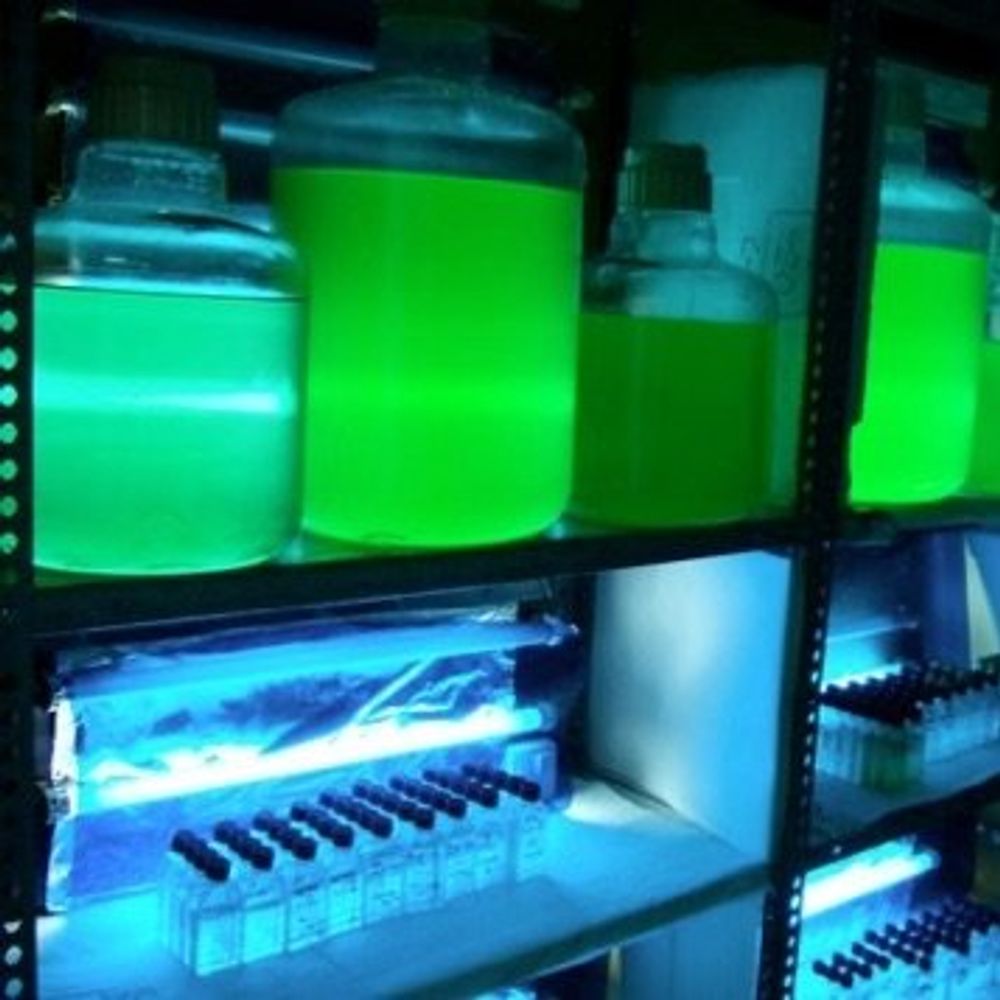
Happy to share the most recent collaboration with @synbiojazz.bsky.social to produce plant pigments in cyanobacteria. This time our cyanos were quite talented at transforming aromatic amino acids into colorful beetroot compounds! 🦠
Establishing heterologous betaxanthin pigment biosynthesis in cyanobacteria www.sciencedirect.com/science/arti...

Establishing heterologous betaxanthin pigment biosynthesis in cyanobacteria
Betalains are water-soluble pigments with two major classes: red-violet betacyanins and yellow-orange betaxanthins. These pigments are increasingly be…
www.sciencedirect.com
January 9, 2026 at 12:20 PM
Happy to share the most recent collaboration with @synbiojazz.bsky.social to produce plant pigments in cyanobacteria. This time our cyanos were quite talented at transforming aromatic amino acids into colorful beetroot compounds! 🦠
Establishing heterologous betaxanthin pigment biosynthesis in cyanobacteria www.sciencedirect.com/science/arti...
Establishing heterologous betaxanthin pigment biosynthesis in cyanobacteria
Betalains are water-soluble pigments with two major classes: red-violet betacyanins and yellow-orange betaxanthins. These pigments are increasingly be…
www.sciencedirect.com
January 9, 2026 at 11:06 AM
Establishing heterologous betaxanthin pigment biosynthesis in cyanobacteria www.sciencedirect.com/science/arti...
Exploring the comprehensive ROS defense toolbox of selected marine cyanobacteria under hydrogen peroxide stress link.springer.com/article/10.1...
Client Challenge
link.springer.com
January 9, 2026 at 11:05 AM
Exploring the comprehensive ROS defense toolbox of selected marine cyanobacteria under hydrogen peroxide stress link.springer.com/article/10.1...

the omsi fossil exhibit has powerscaled cyanobacteria as top-level monsters because of the mass extinction they caused
January 8, 2026 at 9:05 PM
the omsi fossil exhibit has powerscaled cyanobacteria as top-level monsters because of the mass extinction they caused

Taxonomic Description Of Uncultured Cyanobacteria From Extreme Habitats Through Genome-Based Classification
astrobiology.com/2026/01/taxo... #astrobiology #microbiology #extremophile #AAS247
astrobiology.com/2026/01/taxo... #astrobiology #microbiology #extremophile #AAS247

Taxonomic Description Of Uncultured Cyanobacteria From Extreme Habitats Through Genome-Based Classification - Astrobiology
Cyanobacteria form a morphologically and phylogenetically diverse group of oxygenic phototrophic bacteria inhabiting a wide range of environments, including extreme habitats such as hot springs and vo...
astrobiology.com
January 8, 2026 at 6:42 PM
Taxonomic Description Of Uncultured Cyanobacteria From Extreme Habitats Through Genome-Based Classification
astrobiology.com/2026/01/taxo... #astrobiology #microbiology #extremophile #AAS247
astrobiology.com/2026/01/taxo... #astrobiology #microbiology #extremophile #AAS247