



ABCA1 ↑s macrophage infiltration into tumors, ↓s angiogenic potential, ↓s efferocytosis, and ↑s support of T cell expansion and cytotoxic activity.
January 13, 2026 at 11:39 AM
ABCA1 ↑s macrophage infiltration into tumors, ↓s angiogenic potential, ↓s efferocytosis, and ↑s support of T cell expansion and cytotoxic activity.

Stimulating the immune cell process known as efferocytosis may help reduce chronic neuropathic pain and improve nerve repair following nerve injury, according to recent preclinical findings. doi.org/hbh4v9

Stimulating immune cell cleanup process may ease chronic pain after nerve injury
Researchers at The University of Texas MD Anderson Cancer Center have discovered that targeting a specific immune process could help improve recovery after nerve injury and reduce chronic pain.
medicalxpress.com
January 7, 2026 at 9:20 PM
Stimulating the immune cell process known as efferocytosis may help reduce chronic neuropathic pain and improve nerve repair following nerve injury, according to recent preclinical findings. doi.org/hbh4v9

I was fine necrosis, necroptosis, apoptosis, pyroptosis, anoikis, entosis, ferroptosis, NET/MET/EETosis, PANoptosis, parthanatos, and efferocytosis but this is a bit ridiculous
January 4, 2026 at 6:20 PM
I was fine necrosis, necroptosis, apoptosis, pyroptosis, anoikis, entosis, ferroptosis, NET/MET/EETosis, PANoptosis, parthanatos, and efferocytosis but this is a bit ridiculous

This #STTT study identified SIK3 as an inhibitor of macrophage #Efferocytosis, demonstrating that SIK inhibition promotes M2 polarization & Treg differentiation to alleviate #SynovialInflammation & bone destruction in RA.
#OpenAccess: doi.org/10.1038/s413...
#OpenAccess: doi.org/10.1038/s413...

December 29, 2025 at 10:00 AM
This #STTT study identified SIK3 as an inhibitor of macrophage #Efferocytosis, demonstrating that SIK inhibition promotes M2 polarization & Treg differentiation to alleviate #SynovialInflammation & bone destruction in RA.
#OpenAccess: doi.org/10.1038/s413...
#OpenAccess: doi.org/10.1038/s413...

#Review in #MedComm
Efferocytosis in Health and Disease doi.org/10.1002/mco2...
#ApoptoticCellClearance #CD47 #TAMreceptor #efferocytosis #ImmunometabolicRewiring
Efferocytosis in Health and Disease doi.org/10.1002/mco2...
#ApoptoticCellClearance #CD47 #TAMreceptor #efferocytosis #ImmunometabolicRewiring

Efferocytosis in Health and Disease
Efferocytosis in health and disease. Efferocytosis integrates apoptotic cell recognition, engulfment, digestion, and reprogramming to link cell clearance with tissue repair. Molecular checkpoints bal...
doi.org
December 26, 2025 at 2:30 AM
#Review in #MedComm
Efferocytosis in Health and Disease doi.org/10.1002/mco2...
#ApoptoticCellClearance #CD47 #TAMreceptor #efferocytosis #ImmunometabolicRewiring
Efferocytosis in Health and Disease doi.org/10.1002/mco2...
#ApoptoticCellClearance #CD47 #TAMreceptor #efferocytosis #ImmunometabolicRewiring

Online now: Macrophage efferocytosis mediated by the TP63-RAC2 pathway promotes immunosuppressive remodeling in esophageal cancer

Macrophage efferocytosis mediated by the TP63-RAC2 pathway promotes immunosuppressive remodeling in esophageal cancer
Xi et al. identify an FN1+ macrophage subtype in esophageal cancer with high efferocytosis activity. They delineate a TP63-RAC2 transcriptional axis that drives this process, promoting M2 macrophage polarization and immunosuppression. Targeting this pathway impairs efferocytosis and suppresses tumor growth, revealing a therapeutic vulnerability.
dlvr.it
December 23, 2025 at 1:27 PM
Online now: Macrophage efferocytosis mediated by the TP63-RAC2 pathway promotes immunosuppressive remodeling in esophageal cancer

In a recent study, O'Hern, @aaguirre1980.bsky.social et al., also from @msu-medicine.bsky.social & @msumgi.bsky.social revealed that TRMPs modulate cardiac signaling, clear dead cells through efferocytosis, & regulate extracellular matrix remodeling and electrical conduction.
December 19, 2025 at 1:23 PM
In a recent study, O'Hern, @aaguirre1980.bsky.social et al., also from @msu-medicine.bsky.social & @msumgi.bsky.social revealed that TRMPs modulate cardiac signaling, clear dead cells through efferocytosis, & regulate extracellular matrix remodeling and electrical conduction.
Hyperglycemia exacerbates osteoarthritis by impairing macrophage efferocytosis through modulation of CD11b lactylation @natcomms.nature.com
www.nature.com/articles/s41...
www.nature.com/articles/s41...

December 13, 2025 at 4:11 AM
Hyperglycemia exacerbates osteoarthritis by impairing macrophage efferocytosis through modulation of CD11b lactylation @natcomms.nature.com
www.nature.com/articles/s41...
www.nature.com/articles/s41...

A Continuation Award will bolster research by Yuting Tan, MD, PhD, of Stanford University, on “Targeting glycosylation defects to restore efferocytosis and reverse aging,” funded through a prior Glenn Foundation for Medical Research Postdoctoral Fellowship: https://ow.ly/ieIn50XxbEM

December 1, 2025 at 7:00 PM
A Continuation Award will bolster research by Yuting Tan, MD, PhD, of Stanford University, on “Targeting glycosylation defects to restore efferocytosis and reverse aging,” funded through a prior Glenn Foundation for Medical Research Postdoctoral Fellowship: https://ow.ly/ieIn50XxbEM
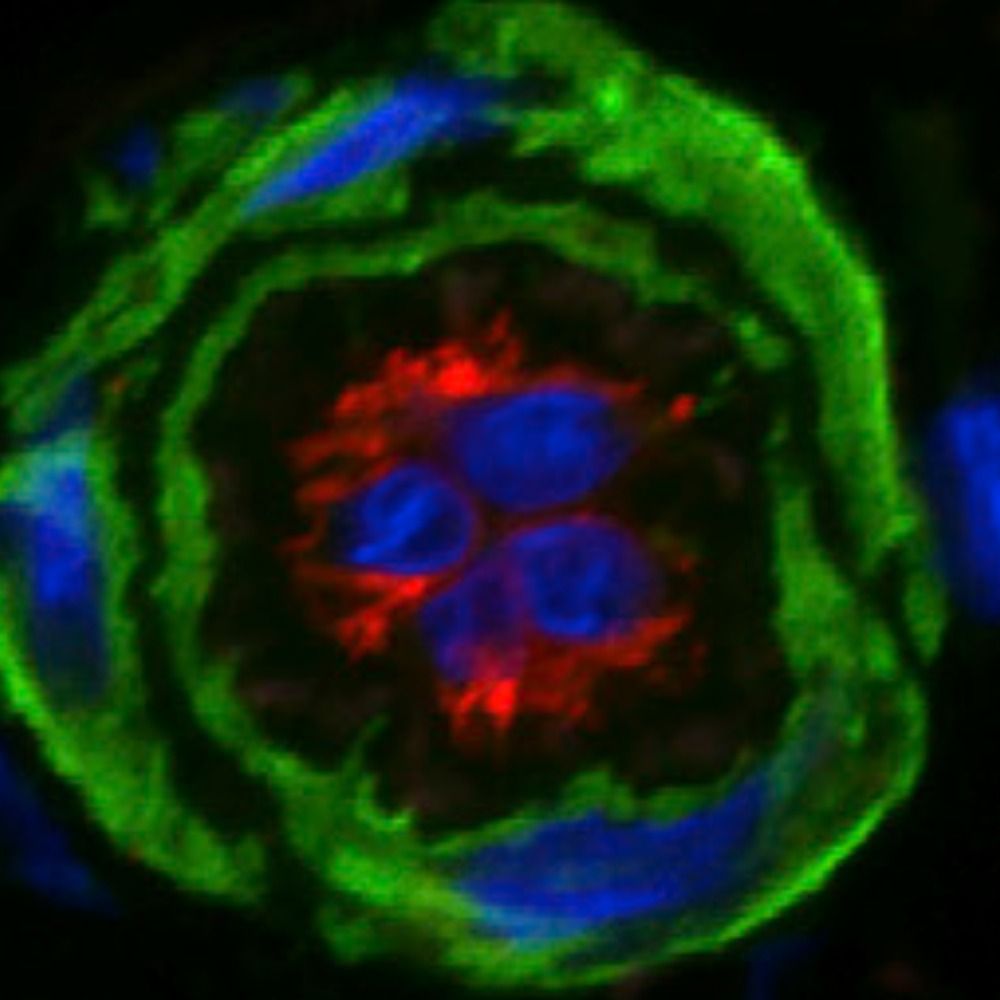
#EndothelialCell #MerTK #Efferocytosis #Atherosclerosis
EC MerTK KO🐭+ AAV8-PCSK9 + #HighFatDiet 2-mo
👉⏫lesion burden
👉⏫NADPH oxidase
👉⏫inflamm cytokines
Aortic Arch lesion #Proteomics➡️
⏫TGFβ HIF1α Wnt3a IL2
⏬LARP1 NAMPT TEAD1
Zufeng Ding lab #RedoxBiol 2025
www.sciencedirect.com/science/arti...
EC MerTK KO🐭+ AAV8-PCSK9 + #HighFatDiet 2-mo
👉⏫lesion burden
👉⏫NADPH oxidase
👉⏫inflamm cytokines
Aortic Arch lesion #Proteomics➡️
⏫TGFβ HIF1α Wnt3a IL2
⏬LARP1 NAMPT TEAD1
Zufeng Ding lab #RedoxBiol 2025
www.sciencedirect.com/science/arti...

November 28, 2025 at 12:24 PM
#EndothelialCell #MerTK #Efferocytosis #Atherosclerosis
EC MerTK KO🐭+ AAV8-PCSK9 + #HighFatDiet 2-mo
👉⏫lesion burden
👉⏫NADPH oxidase
👉⏫inflamm cytokines
Aortic Arch lesion #Proteomics➡️
⏫TGFβ HIF1α Wnt3a IL2
⏬LARP1 NAMPT TEAD1
Zufeng Ding lab #RedoxBiol 2025
www.sciencedirect.com/science/arti...
EC MerTK KO🐭+ AAV8-PCSK9 + #HighFatDiet 2-mo
👉⏫lesion burden
👉⏫NADPH oxidase
👉⏫inflamm cytokines
Aortic Arch lesion #Proteomics➡️
⏫TGFβ HIF1α Wnt3a IL2
⏬LARP1 NAMPT TEAD1
Zufeng Ding lab #RedoxBiol 2025
www.sciencedirect.com/science/arti...

This new review outlines the role of cell-mediated #Efferocytosis in clearing #Neutrophils and M1 macrophages, links to M2 polarization, and identifies molecular pathways that serve as targets to improve #TissueRepair. #medsky
#OpenAccess: www.sciencedirect.com/science/arti...
#OpenAccess: www.sciencedirect.com/science/arti...

November 27, 2025 at 12:47 AM
This new review outlines the role of cell-mediated #Efferocytosis in clearing #Neutrophils and M1 macrophages, links to M2 polarization, and identifies molecular pathways that serve as targets to improve #TissueRepair. #medsky
#OpenAccess: www.sciencedirect.com/science/arti...
#OpenAccess: www.sciencedirect.com/science/arti...

Hanson Tam, Jason Cyster et al. identify GPR34 as a receptor required for cDC1 efferocytosis and cross-presentation and suggest a model where PLA1A catabolizes phosphatidylserine on apoptotic cells to generate GPR34 ligands. rupress.org/jem/article/...
#InnateImmunity #inflammation
@hhmi.org
#InnateImmunity #inflammation
@hhmi.org

November 24, 2025 at 7:45 PM
Hanson Tam, Jason Cyster et al. identify GPR34 as a receptor required for cDC1 efferocytosis and cross-presentation and suggest a model where PLA1A catabolizes phosphatidylserine on apoptotic cells to generate GPR34 ligands. rupress.org/jem/article/...
#InnateImmunity #inflammation
@hhmi.org
#InnateImmunity #inflammation
@hhmi.org

Efferocytosis‐Driven Polyamine Metabolism in Macrophages Enhances Cancer Stem Cell Enrichment after Chemotherapy in Ovarian Cancer
Efferocytosis‐Driven Polyamine Metabolism in Macrophages Enhances Cancer Stem Cell Enrichment after Chemotherapy in Ovarian Cancer
Chemotherapy-induced efferocytosis drives ovarian cancer stem cell enrichment. By engulfing apoptotic cancer cells, macrophages upregulate ODC1 and produce putrescine, which elevates osteopontin (OPN) expression. Secreted OPN then activates the CD44 receptor on cancer cells, promoting stemness and chemoresistance. This study uncovers a macrophage–polyamine–OPN axis as a crucial pathway in post-chemotherapy relapse.
Abstract
Chemotherapy-induced enrichment of cancer stem cells (CSCs) is a key mechanism underlying acquired chemoresistance and recurrence of epithelial ovarian cancer (OC). Although chemotherapy may enrich CSCs through selection or by inducing dedifferentiation, the dynamic changes in the tumor niche and their impact on CSCs during chemotherapy remain unclear. In this study, single-cell sequencing and multiplex immunohistochemical analysis are used to define microenvironmental changes, and a post-chemotherapy increase in efferocytotic macrophages that phagocytosed chemotherapy-induced apoptotic tumor cells is identified. Efferocytotic macrophages are associated with poor prognosis and CSCs in OC. Their conditioned medium facilitates OC stemness in vitro. Meanwhile, targeting efferocytosis suppresses CSC enrichment, chemoresistance, and regrowth in vivo. Mechanistically, it is demonstrated that enhanced expression of ODC1 driven by efferocytosis increases polyamine flux, particularly putrescine, by integrating metabolomics and transcriptomics. The increase in putrescine content leads to the SPP1 and OPN overexpression in macrophages, conferring cancer stemness to OC cells through the OPN-CD44 axis. Treatment with an ODC1 selector inhibitor mitigates CSC enrichment, sensitizes tumors to cisplatin, and restricts tumor regrowth. Together, the study shows that efferocytosis and associated polyamine metabolic reprogramming support the chemotherapy-induced enrichment of CSCs, providing new targets for addressing chemoresistance and recurrence of OC.
advanced.onlinelibrary.wiley.com
November 23, 2025 at 4:40 AM
Efferocytosis‐Driven Polyamine Metabolism in Macrophages Enhances Cancer Stem Cell Enrichment after Chemotherapy in Ovarian Cancer
Splenic cDC1 efferocytosis and cross-presentation to CD8 T cells is promoted by GPR34 and lysophosphatidylserine, say Hanson Tam, Jason Cyster and colleagues: rupress.org/jem/article/...
#InnateImmunity #inflammation
@HHMI.org
#InnateImmunity #inflammation
@HHMI.org

November 17, 2025 at 2:30 PM
Splenic cDC1 efferocytosis and cross-presentation to CD8 T cells is promoted by GPR34 and lysophosphatidylserine, say Hanson Tam, Jason Cyster and colleagues: rupress.org/jem/article/...
#InnateImmunity #inflammation
@HHMI.org
#InnateImmunity #inflammation
@HHMI.org
These findings underscore the significance of efferocytosis-related pathways in colon cancer progression and immune modulation, positioning S1PR5 as a promising prognostic marker and therapeutic target.
November 13, 2025 at 9:46 AM
These findings underscore the significance of efferocytosis-related pathways in colon cancer progression and immune modulation, positioning S1PR5 as a promising prognostic marker and therapeutic target.
This study developed a prognostic model based on efferocytosis-related genes, identifying S1PR5 as a key biomarker in colon cancer. S1PR5 was found to be overexpressed in colon tumors, correlating with advanced stages, poor survival, and diminished immunotherapy responses.
November 13, 2025 at 9:46 AM
This study developed a prognostic model based on efferocytosis-related genes, identifying S1PR5 as a key biomarker in colon cancer. S1PR5 was found to be overexpressed in colon tumors, correlating with advanced stages, poor survival, and diminished immunotherapy responses.
Uncover the hidden power of efferocytosis in colon cancer - S1PR5 emerges as a game-changing prognostic biomarker, shedding light on immune modulation and paving the way for targeted ther...
🧵 Thread below
Full analysis: https://helixbrief.com/article/892812c9-2069-4293-ae57-a127dcbedb25
🧵 Thread below
Full analysis: https://helixbrief.com/article/892812c9-2069-4293-ae57-a127dcbedb25
November 13, 2025 at 9:46 AM
Uncover the hidden power of efferocytosis in colon cancer - S1PR5 emerges as a game-changing prognostic biomarker, shedding light on immune modulation and paving the way for targeted ther...
🧵 Thread below
Full analysis: https://helixbrief.com/article/892812c9-2069-4293-ae57-a127dcbedb25
🧵 Thread below
Full analysis: https://helixbrief.com/article/892812c9-2069-4293-ae57-a127dcbedb25

Protectin DX resolves fracture-induced postoperative pain in mice via neuronal signaling and GPR37-activated macrophage efferocytosis https://www.biorxiv.org/content/10.1101/2025.11.10.687700v1
November 12, 2025 at 7:15 PM
Protectin DX resolves fracture-induced postoperative pain in mice via neuronal signaling and GPR37-activated macrophage efferocytosis https://www.biorxiv.org/content/10.1101/2025.11.10.687700v1

Protectin DX resolves fracture-induced postoperative pain in mice via neuronal signaling and GPR37-activated macrophage efferocytosis https://www.biorxiv.org/content/10.1101/2025.11.10.687700v1
November 12, 2025 at 7:15 PM
Protectin DX resolves fracture-induced postoperative pain in mice via neuronal signaling and GPR37-activated macrophage efferocytosis https://www.biorxiv.org/content/10.1101/2025.11.10.687700v1
Piezo1 Upregulation in Monocyte‐Derived Macrophages Impairs Post‐Myocardial Infarction Cardiac Repair via Defective Efferocytosis and Enhanced Ferroptosis
Piezo1 Upregulation in Monocyte‐Derived Macrophages Impairs Post‐Myocardial Infarction Cardiac Repair via Defective Efferocytosis and Enhanced Ferroptosis
This study reports early Piezo1 activation in bone marrow monocyte-derived macrophages (MoMs) during myocardial infarction (MI), which governs the fate and function of recruited macrophages. The recruited MoMs with increased Piezo1 expression exhibit increased ferroptosis and defective efferocytosis, delayed clearance of dead cells and resolution of inflammation, leading to the aggravation of post-MI cardiac remodeling and heart failure.
Abstract
The regulation of macrophage function, particularly that of monocyte-derived macrophages (MoMs), by mechanical forces during myocardial infarction (MI) remains poorly understood. Consistently upregulated Piezo1 expression in cardiac macrophages and MoMs post-MI is found. Elevated Piezo1 expression in MoMs directly contributes to increased Piezo1 levels in cardiac macrophages. Myeloid cell-specific Piezo1-deficient mice (Piezo1 Lyz2 ) exhibit significant improvements in ventricular function/remodeling after MI, accompanied by decreased apoptotic cardiomyocytes and decreased inflammation, increased numbers of macrophages, and increased border zone efferocytosis. In vitro, Piezo1 activation by Yoda1 increased oxygen-glucose deprivation (OGD)-induced ferroptosis and impaired MoM efferocytosis. Conversely, Piezo1 deficiency in MoMs decreases ferroptosis and increases efferocytosis. SLC7A11 is shown to mediate Piezo1-induced defective efferocytosis in MoMs. Piezo1 activation aggravated OGD-induced macrophage ferroptosis via Ca 2+ influx followed by SLC15A3 upregulation. Piezo1 upregulated SLC7A11 in macrophages via a Ca 2+ /ATF4-dependent pathway. MoM-specific SLC7A11 knockdown significantly increases efferocytosis, reduces cardiomyocyte apoptosis and inflammation, and ameliorates post-MI left ventricular remodeling and function. In conclusion, early Piezo1 activation in MoMs is identified during MI, which governs the fate and function of recruited macrophages. These data establish an ischemic heart–bone marrow functional network and provide a novel therapeutic strategy in which MoM Piezo1 is targeted for post–MI heart repair.
advanced.onlinelibrary.wiley.com
November 12, 2025 at 8:28 AM
Piezo1 Upregulation in Monocyte‐Derived Macrophages Impairs Post‐Myocardial Infarction Cardiac Repair via Defective Efferocytosis and Enhanced Ferroptosis
GPR34 is a splenic cDC1 receptor that is required for efferocytosis and for the cross-presentation of apoptotic cell–associated antigen to CD8 T cells @jem.org
rupress.org/jem/article/...
rupress.org/jem/article/...

November 10, 2025 at 5:59 PM
GPR34 is a splenic cDC1 receptor that is required for efferocytosis and for the cross-presentation of apoptotic cell–associated antigen to CD8 T cells @jem.org
rupress.org/jem/article/...
rupress.org/jem/article/...

In @jem.org, Tam, Cyster et al. identify GPR34 as a splenic cDC1 receptor that is required for efferocytosis and for the cross-presentation of apoptotic cell–associated antigen to CD8 T cells. rupress.org/jem/article/...
#InnateImmunity #inflammation
@hhmi.org
#InnateImmunity #inflammation
@hhmi.org

November 10, 2025 at 5:45 PM
In @jem.org, Tam, Cyster et al. identify GPR34 as a splenic cDC1 receptor that is required for efferocytosis and for the cross-presentation of apoptotic cell–associated antigen to CD8 T cells. rupress.org/jem/article/...
#InnateImmunity #inflammation
@hhmi.org
#InnateImmunity #inflammation
@hhmi.org
Tam, Cyster et al. identify GPR34 as a splenic cDC1 receptor that is required for efferocytosis and for the cross-presentation of apoptotic cell–associated antigen to CD8 T cells. rupress.org/jem/article/...
#InnateImmunity #inflammation
@hhmi.org
#InnateImmunity #inflammation
@hhmi.org

November 10, 2025 at 5:01 PM
Tam, Cyster et al. identify GPR34 as a splenic cDC1 receptor that is required for efferocytosis and for the cross-presentation of apoptotic cell–associated antigen to CD8 T cells. rupress.org/jem/article/...
#InnateImmunity #inflammation
@hhmi.org
#InnateImmunity #inflammation
@hhmi.org

Efferocytosis-related signatures identified via Single-cell analysis and machine learning predict TNBC outcomes and immunotherapy response
->Nature | More from Lil Dr Glen EcoChat at BigEarthData.ai
->Nature | More from Lil Dr Glen EcoChat at BigEarthData.ai

Efferocytosis-related signatures identified via Single-cell analysis and machine learning predict TNBC outcomes and immunotherapy response
We reanalyzed several previously published datasets to train and validate our predictive model. The analysis included four bulk RNA sequencing cohorts (TCGA, METABRIC, GSE21653, and GSE58812) and four scRNA-seq datasets (GSE176078, GSE143423, GSE161529 and GSE114725). In total, 739 samples were...
www.nature.com
November 7, 2025 at 8:06 AM

Sympathetic signaling directs macrophage efferocytosis in thermogenic adipose tissue https://www.biorxiv.org/content/10.1101/2025.10.28.685032v1
October 29, 2025 at 7:16 PM
Sympathetic signaling directs macrophage efferocytosis in thermogenic adipose tissue https://www.biorxiv.org/content/10.1101/2025.10.28.685032v1