



Here's another exciting opportunity to join the ERC FORAGER team! This one is a 3-year postdoc on paleoclimate modelling with the fantastic Matt Osman here in @cam.ac.uk, with opportunity for synergies (pun intended 😜) with other team members in archaeology and zoology www.jobs.cam.ac.uk/job/54411/
Postdoctoral Research Associate in Paleoclimate Statistics and Dynamics (Fixed Term) - Job Opportunities - University of Cambridge
Postdoctoral Research Associate in Paleoclimate Statistics and Dynamics (Fixed Term) in the Department of Geography at the University of Cambridge.
www.jobs.cam.ac.uk
February 8, 2026 at 6:23 PM
Here's another exciting opportunity to join the ERC FORAGER team! This one is a 3-year postdoc on paleoclimate modelling with the fantastic Matt Osman here in @cam.ac.uk, with opportunity for synergies (pun intended 😜) with other team members in archaeology and zoology www.jobs.cam.ac.uk/job/54411/

Recent assessments have found the last glacial maximum implies a climate sensitivity of 2.4C (1.4C to 5.0C): www.science.org/doi/...
And the Pliocene implies a sensitivity of 3.1C (2.3C to 4.7C): www.pnas.org/doi/10....
Paleoclimate evidence generally provides the strongest constraint on high ECS.
And the Pliocene implies a sensitivity of 3.1C (2.3C to 4.7C): www.pnas.org/doi/10....
Paleoclimate evidence generally provides the strongest constraint on high ECS.

February 2, 2026 at 6:51 PM
Recent assessments have found the last glacial maximum implies a climate sensitivity of 2.4C (1.4C to 5.0C): www.science.org/doi/...
And the Pliocene implies a sensitivity of 3.1C (2.3C to 4.7C): www.pnas.org/doi/10....
Paleoclimate evidence generally provides the strongest constraint on high ECS.
And the Pliocene implies a sensitivity of 3.1C (2.3C to 4.7C): www.pnas.org/doi/10....
Paleoclimate evidence generally provides the strongest constraint on high ECS.

📣 Register & join CESM Paleoclimate Working Group Meeting on Feb 12
Hybrid community meeting on paleo modeling, proxy data, & model–data integration. Talks cover deep-time, isotopes, community efforts & coordination
Register for virtual link www.cesm.ucar.edu/events/worki...
@ncar-cgd.bsky.social
Hybrid community meeting on paleo modeling, proxy data, & model–data integration. Talks cover deep-time, isotopes, community efforts & coordination
Register for virtual link www.cesm.ucar.edu/events/worki...
@ncar-cgd.bsky.social

February 2, 2026 at 4:53 PM
📣 Register & join CESM Paleoclimate Working Group Meeting on Feb 12
Hybrid community meeting on paleo modeling, proxy data, & model–data integration. Talks cover deep-time, isotopes, community efforts & coordination
Register for virtual link www.cesm.ucar.edu/events/worki...
@ncar-cgd.bsky.social
Hybrid community meeting on paleo modeling, proxy data, & model–data integration. Talks cover deep-time, isotopes, community efforts & coordination
Register for virtual link www.cesm.ucar.edu/events/worki...
@ncar-cgd.bsky.social
ECS is certainly state-dependent (as the paleoclimate literature notes!). But we can learn something about what to expect in the future based on prior warm periods in the Earth's history, as well as more recent observations and climate models. agupubs.onlinelibrary.wiley.com/doi/10.1029/...

An Assessment of Earth's Climate Sensitivity Using Multiple Lines of Evidence
We assess evidence relevant to Earth's climate sensitivity S: feedback process understanding and the historical and paleoclimate records All three lines of evidence are difficult to reconcile with ...
agupubs.onlinelibrary.wiley.com
February 2, 2026 at 10:33 PM
ECS is certainly state-dependent (as the paleoclimate literature notes!). But we can learn something about what to expect in the future based on prior warm periods in the Earth's history, as well as more recent observations and climate models. agupubs.onlinelibrary.wiley.com/doi/10.1029/...

It underplays Hansen's work, saying it only relies on paleoclimate (ice age) info. That's not true. Hansen (& @leonsimons.com) also use recent temp readings during IMO2020 changes, and also used decrease in Earth's measured albedo in past 25 years.
February 1, 2026 at 2:37 AM
It underplays Hansen's work, saying it only relies on paleoclimate (ice age) info. That's not true. Hansen (& @leonsimons.com) also use recent temp readings during IMO2020 changes, and also used decrease in Earth's measured albedo in past 25 years.

Check out the @pnas.org highlight for our new paper on how Paleoclimate Pattern Effects in the Pliocene lead to tighter constraints on the modern response to CO2 (a.k.a. climate sensitivity)
The Pliocene climate was more sensitive than the current climate, suggesting that the upper bound of potential 21st-century warming—an estimate informed by Pliocene warming—should be revised down from 5 °C to 4 °C, according to the authors. In PNAS: https://ow.ly/U5H750Y5yUo

January 30, 2026 at 6:30 PM
Check out the @pnas.org highlight for our new paper on how Paleoclimate Pattern Effects in the Pliocene lead to tighter constraints on the modern response to CO2 (a.k.a. climate sensitivity)

The Pliocene climate was more sensitive than the current climate, suggesting that the upper bound of potential 21st-century warming—an estimate informed by Pliocene warming—should be revised down from 5 °C to 4 °C, according to the authors. In PNAS: https://ow.ly/U5H750Y5yUo
January 30, 2026 at 2:00 AM
The Pliocene climate was more sensitive than the current climate, suggesting that the upper bound of potential 21st-century warming—an estimate informed by Pliocene warming—should be revised down from 5 °C to 4 °C, according to the authors. In PNAS: https://ow.ly/U5H750Y5yUo

I disagree here. We covered blackbody radiation in my paleoclimate class in graduate school. It’s a foundational concept for understanding Earth’s energy balance and climate models.
January 28, 2026 at 12:38 PM
I disagree here. We covered blackbody radiation in my paleoclimate class in graduate school. It’s a foundational concept for understanding Earth’s energy balance and climate models.

[1/8] Des paléontologues de l’Université de Saragosse étudient Zélandia, un continent presque entièrement submergé du Pacifique sud, afin de reconstituer les climats passés. Leur objectif est de mieux comprendre le fonctionnement du système climatique en contexte chaud. #geography #paleoclimate

Zelandia, lo que el continente oculto puede decirnos sobre el cambio climático
Zelandia es un continente sumergido en el océano Pacífico que guarda valiosa información sobre el clima del pasado. Registra efectos de calentamiento global hace millones de años que nos ayudan a ente...
theconversation.com
January 27, 2026 at 7:43 AM
[1/8] Des paléontologues de l’Université de Saragosse étudient Zélandia, un continent presque entièrement submergé du Pacifique sud, afin de reconstituer les climats passés. Leur objectif est de mieux comprendre le fonctionnement du système climatique en contexte chaud. #geography #paleoclimate

Breaking out the replica IODP cores to help with my third-year paleoclimate teaching this term.
Showed them the excellent K-Pg section from Blake Nose last week, and onto the Walvis Ridge PETM today.
You can borrow them from UKIODP for teaching/ display too! www.ukiodp.org/core-replicas
🧪⚒️
Showed them the excellent K-Pg section from Blake Nose last week, and onto the Walvis Ridge PETM today.
You can borrow them from UKIODP for teaching/ display too! www.ukiodp.org/core-replicas
🧪⚒️


January 26, 2026 at 3:09 PM
Breaking out the replica IODP cores to help with my third-year paleoclimate teaching this term.
Showed them the excellent K-Pg section from Blake Nose last week, and onto the Walvis Ridge PETM today.
You can borrow them from UKIODP for teaching/ display too! www.ukiodp.org/core-replicas
🧪⚒️
Showed them the excellent K-Pg section from Blake Nose last week, and onto the Walvis Ridge PETM today.
You can borrow them from UKIODP for teaching/ display too! www.ukiodp.org/core-replicas
🧪⚒️

Paleoclimate 🤝 Pattern effect, you can do amazing things when paleo and modelers hang out together www.pnas.org/doi/10.1073/...
January 23, 2026 at 5:33 PM
Paleoclimate 🤝 Pattern effect, you can do amazing things when paleo and modelers hang out together www.pnas.org/doi/10.1073/...

#FossilFriday Fossils of Belemnites (Belemnitella americana) like the ones pictured are important to Geochemistry.
The famous "Pee Dee Belemnite" are historically a standard for Carbonate isotope ratios of δ13C.
δ13C is a stable carbon isotope used in many ways, such as inferring paleoclimate
The famous "Pee Dee Belemnite" are historically a standard for Carbonate isotope ratios of δ13C.
δ13C is a stable carbon isotope used in many ways, such as inferring paleoclimate


January 17, 2026 at 1:07 AM
#FossilFriday Fossils of Belemnites (Belemnitella americana) like the ones pictured are important to Geochemistry.
The famous "Pee Dee Belemnite" are historically a standard for Carbonate isotope ratios of δ13C.
δ13C is a stable carbon isotope used in many ways, such as inferring paleoclimate
The famous "Pee Dee Belemnite" are historically a standard for Carbonate isotope ratios of δ13C.
δ13C is a stable carbon isotope used in many ways, such as inferring paleoclimate
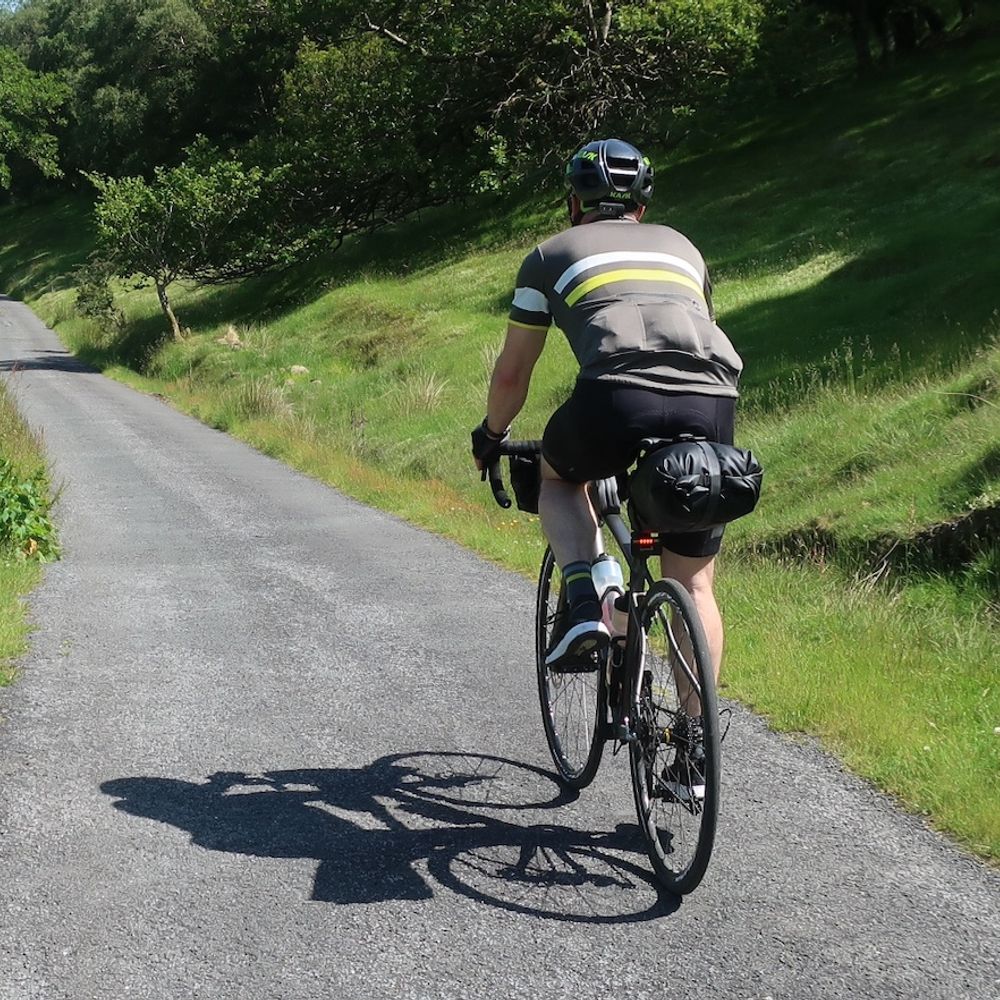
A fascinating study of the Thwaites and Pine Island Glaciers during the Pliocene (5.33-2.58 million years ago) shows repeated rapid collapse cycles at the temperatures we are now heading for.
www.pnas.org/doi/epdf/10....
#climatechange #paleoclimate #Antarctica #Thwaites #Pliocene #sealevelrise
www.pnas.org/doi/epdf/10....
#climatechange #paleoclimate #Antarctica #Thwaites #Pliocene #sealevelrise

January 12, 2026 at 10:47 AM
A fascinating study of the Thwaites and Pine Island Glaciers during the Pliocene (5.33-2.58 million years ago) shows repeated rapid collapse cycles at the temperatures we are now heading for.
www.pnas.org/doi/epdf/10....
#climatechange #paleoclimate #Antarctica #Thwaites #Pliocene #sealevelrise
www.pnas.org/doi/epdf/10....
#climatechange #paleoclimate #Antarctica #Thwaites #Pliocene #sealevelrise

A new study in Nature Geoscience shows that deep Southern Ocean temperatures in the Oligocene fluctuated by up to 4 °C, explaining the large oxygen isotope (δ¹⁸O) swings recorded in deep-sea #fossils, while the #AntarcticIceSheet remained relatively stable. DOI: doi.org/10.1038/s415... #Paleoclimate

Deep ocean temperatures challenge past views of the Antarctic ice sheet • Muser Press
Understanding past Antarctic ice sheet behaviour relies on oxygen isotope ratios (δ¹⁸O) measured in deep-sea fossils. Traditionally, large Oligocene δ¹⁸O
www.muser.press
January 8, 2026 at 6:58 PM
A new study in Nature Geoscience shows that deep Southern Ocean temperatures in the Oligocene fluctuated by up to 4 °C, explaining the large oxygen isotope (δ¹⁸O) swings recorded in deep-sea #fossils, while the #AntarcticIceSheet remained relatively stable. DOI: doi.org/10.1038/s415... #Paleoclimate
Doing my part to build the geo/paleo community here! The vert paleo folks and dino/paleo art folks have been providing the most quality content. Mineral and paleoclimate folks are also prolific. Time for some field geologists and sed/strat types (like me!) to step up!

a group of soldiers are standing in a row wearing helmets and armor .
Alt: GIF from the movie Starship Troopers. A group of soldiers are standing in a row wearing helmets and armor. One of the soldier says "I'm doing my part", subtitles show the text. This was from a scene in the movie that was a military recruiting ad.
media.tenor.com
January 8, 2026 at 1:14 PM
Doing my part to build the geo/paleo community here! The vert paleo folks and dino/paleo art folks have been providing the most quality content. Mineral and paleoclimate folks are also prolific. Time for some field geologists and sed/strat types (like me!) to step up!

Interesting!
"Fossils in storm beds plus paleoclimate modelling reveal a seasonal, nearshore setting like that of modern horseshoe crabs."
www.sciencedirect.com/science/arti...
🧪 #Geology ⚒️ #Paleobio #EvoBio
"Fossils in storm beds plus paleoclimate modelling reveal a seasonal, nearshore setting like that of modern horseshoe crabs."
www.sciencedirect.com/science/arti...
🧪 #Geology ⚒️ #Paleobio #EvoBio

January 6, 2026 at 9:09 PM
Interesting!
"Fossils in storm beds plus paleoclimate modelling reveal a seasonal, nearshore setting like that of modern horseshoe crabs."
www.sciencedirect.com/science/arti...
🧪 #Geology ⚒️ #Paleobio #EvoBio
"Fossils in storm beds plus paleoclimate modelling reveal a seasonal, nearshore setting like that of modern horseshoe crabs."
www.sciencedirect.com/science/arti...
🧪 #Geology ⚒️ #Paleobio #EvoBio

The deadline for graduate student applications for paleoCAMP 2026 (Paleoclimate Training in Climate Archives, Models, and Proxies) summer school is this Friday, January 9th! paleoCAMP is completely free for all students selected to attend paleoclimate.camp/apply

Application — paleoCAMP
paleoclimate.camp
January 5, 2026 at 6:48 PM
The deadline for graduate student applications for paleoCAMP 2026 (Paleoclimate Training in Climate Archives, Models, and Proxies) summer school is this Friday, January 9th! paleoCAMP is completely free for all students selected to attend paleoclimate.camp/apply

that had previously favored them. It’s written as a general-audience synthesis rather than a paleoclimate methods paper, which is why isotope datasets and circulation models aren’t foregrounded, though the underlying literature is cited throughout with links. 🧵✂️
January 1, 2026 at 7:36 PM
that had previously favored them. It’s written as a general-audience synthesis rather than a paleoclimate methods paper, which is why isotope datasets and circulation models aren’t foregrounded, though the underlying literature is cited throughout with links. 🧵✂️

Higher RCPs and SSPs likely provide the most accurate indications of climate change over the next decades.
We need scenarios more in line with policy based greenhouse gas and aerosol emissions and models with paleoclimate and NASA satellite corrected climate sensitivity:
We need scenarios more in line with policy based greenhouse gas and aerosol emissions and models with paleoclimate and NASA satellite corrected climate sensitivity:

December 30, 2025 at 8:14 PM
Higher RCPs and SSPs likely provide the most accurate indications of climate change over the next decades.
We need scenarios more in line with policy based greenhouse gas and aerosol emissions and models with paleoclimate and NASA satellite corrected climate sensitivity:
We need scenarios more in line with policy based greenhouse gas and aerosol emissions and models with paleoclimate and NASA satellite corrected climate sensitivity:

Please follow or subscribe to @climateages.bsky.social for insights on how #paleobio and paleoclimate science matter. My #sustainwhat post explains why: open.substack.com/pub/revkin/p...
December 30, 2025 at 3:37 AM
Please follow or subscribe to @climateages.bsky.social for insights on how #paleobio and paleoclimate science matter. My #sustainwhat post explains why: open.substack.com/pub/revkin/p...

Postdoctoral Position in Earth System Modelling & Paleoclimate Research – IPSL, France.
Eligibility: PhD in Earth System Science, Climate Physics, or Computational Modelling.
Deadline: 9 January 2026.
Apply: higherjobz.com/ipsl-postdoc...
#AcademicJobs #ClimateJobs #FranceJobs @cnrs.fr
Eligibility: PhD in Earth System Science, Climate Physics, or Computational Modelling.
Deadline: 9 January 2026.
Apply: higherjobz.com/ipsl-postdoc...
#AcademicJobs #ClimateJobs #FranceJobs @cnrs.fr

Postdoctoral Fellowship in Climate & Palaeoclimates Research ~ HigherJobz
Fully funded IPSL postdoctoral in Earth System Modelling & Palaeoclimates, Paris, France. Open to PhD holders. Apply by 9 January 2026.
higherjobz.com
December 24, 2025 at 4:49 AM
Postdoctoral Position in Earth System Modelling & Paleoclimate Research – IPSL, France.
Eligibility: PhD in Earth System Science, Climate Physics, or Computational Modelling.
Deadline: 9 January 2026.
Apply: higherjobz.com/ipsl-postdoc...
#AcademicJobs #ClimateJobs #FranceJobs @cnrs.fr
Eligibility: PhD in Earth System Science, Climate Physics, or Computational Modelling.
Deadline: 9 January 2026.
Apply: higherjobz.com/ipsl-postdoc...
#AcademicJobs #ClimateJobs #FranceJobs @cnrs.fr

New #INTEGRADIV paper shows #paleoclimate stability is major driver of functional & phylogenetic diversity in animals & plants across Mediterranean #forests🌿❄️ Important implications for impacts of #climatechange ♨️Thx to @cmlmagneville.bsky.social for leading!
onlinelibrary.wiley.com/doi/10.1111/...
onlinelibrary.wiley.com/doi/10.1111/...

Echoes of the Past: Long‐Term Climate Stability Shapes Functional and Phylogenetic Diversity in Euro‐Mediterranean Forests
Aim Understanding the relative influence of past and present environmental and anthropogenic drivers on biodiversity is crucial for predicting future biodiversity trends. We assessed how past climat...
onlinelibrary.wiley.com
December 19, 2025 at 3:17 PM
New #INTEGRADIV paper shows #paleoclimate stability is major driver of functional & phylogenetic diversity in animals & plants across Mediterranean #forests🌿❄️ Important implications for impacts of #climatechange ♨️Thx to @cmlmagneville.bsky.social for leading!
onlinelibrary.wiley.com/doi/10.1111/...
onlinelibrary.wiley.com/doi/10.1111/...

Last day of #AGU25! Make sure to check out MRG PhD student, Annabelle Horton, at her poster titled "Comparison of the Environmental DNA Signatures of the Overwash Deposits from the 1962 Ash Wednesday Nor’easter and the Hurricane of 1821"
@michaelemann.bsky.social | #noreaster #eDNA #paleoclimate
@michaelemann.bsky.social | #noreaster #eDNA #paleoclimate

December 19, 2025 at 3:27 PM
Last day of #AGU25! Make sure to check out MRG PhD student, Annabelle Horton, at her poster titled "Comparison of the Environmental DNA Signatures of the Overwash Deposits from the 1962 Ash Wednesday Nor’easter and the Hurricane of 1821"
@michaelemann.bsky.social | #noreaster #eDNA #paleoclimate
@michaelemann.bsky.social | #noreaster #eDNA #paleoclimate
The ten I have picked and summarise in this article take a journey through the whole subject, starting with the paleoclimate as far back as 485 million years ago. We then jump forward to just 8.7 million years ago, the last time the Arctic was permafrost free but CO2 levels were only 350ppm.
December 17, 2025 at 9:22 AM
The ten I have picked and summarise in this article take a journey through the whole subject, starting with the paleoclimate as far back as 485 million years ago. We then jump forward to just 8.7 million years ago, the last time the Arctic was permafrost free but CO2 levels were only 350ppm.

Next book up! “The West Without Water,” which puts more recent problems in the context of paleoclimate.

December 16, 2025 at 2:14 AM
Next book up! “The West Without Water,” which puts more recent problems in the context of paleoclimate.