



Alexa Sadier
@aigverte.bsky.social
CNRS PI at Institut des Sciences de l'Evolution de Montpellier | Evo-devo - Bats - Teeth - Dev Constraints - Adaptation | Evolution on Earth and beyond | ERC NOVELTEETH |
Co-host @podcastscience | Cham steepskier
website: alexasadier.com
Co-host @podcastscience | Cham steepskier
website: alexasadier.com
Pinned
Alexa Sadier
@aigverte.bsky.social
· Sep 24
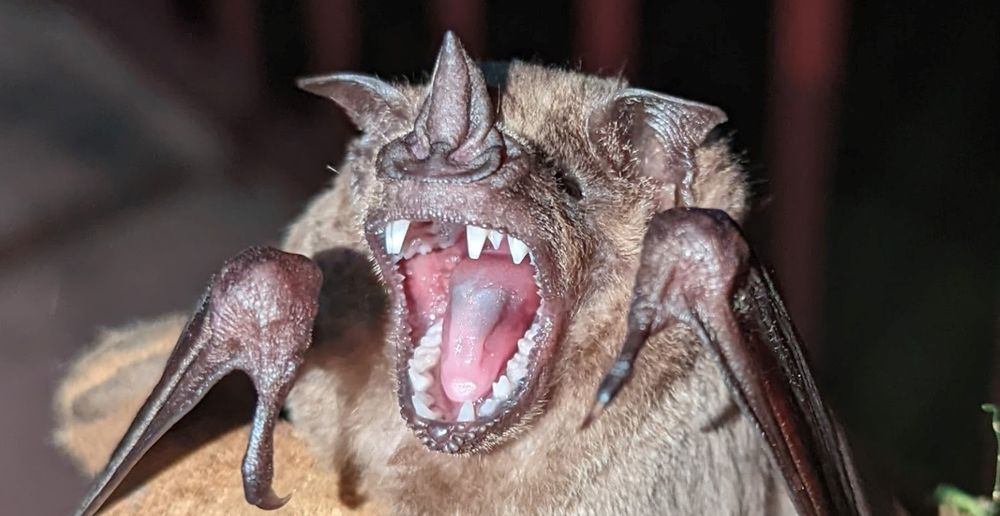
Comme il y a beaucoup de nouveaux arrivants, c'est le moment d'une nouvelle présentation ! Je suis chercheuse en biologie évolutive du développement et dans mon équipe, nous essayons de comprendre comment et par quels mécanismes les espèces (et surtout les chiroptères !! 🦇) se diversifient 👇🧵
Reposted by Alexa Sadier

Donc si vous êtes une femme scientifique et que vous êtes co-autrice d’un joli papier publié récemment, ou alors que vous avez juste vu un super papier dans votre domaine, faites-moi signe 👋
February 1, 2026 at 2:19 PM
Donc si vous êtes une femme scientifique et que vous êtes co-autrice d’un joli papier publié récemment, ou alors que vous avez juste vu un super papier dans votre domaine, faites-moi signe 👋
Reposted by Alexa Sadier
The last word on Ctenophores versus Sponges (not).
www.nature.com/articles/d41...
www.nature.com/articles/d41...

What were the first animals? The fierce sponge–jelly battle that just won’t end
For almost two decades, scientists have debated whether sponges or comb jellies are the first animal lineage. Now some are calling for a more harmonious approach.
www.nature.com
January 27, 2026 at 1:19 PM
The last word on Ctenophores versus Sponges (not).
www.nature.com/articles/d41...
www.nature.com/articles/d41...
Reposted by Alexa Sadier

Situation gravissime dans les Universités : lettre de la Présidente de @univpaulvalery.bsky.social au Président Macron.
www.lemonde.fr/campus/artic...
@yannbisiou.bsky.social
www.lemonde.fr/campus/artic...
@yannbisiou.bsky.social


January 26, 2026 at 10:16 PM
Situation gravissime dans les Universités : lettre de la Présidente de @univpaulvalery.bsky.social au Président Macron.
www.lemonde.fr/campus/artic...
@yannbisiou.bsky.social
www.lemonde.fr/campus/artic...
@yannbisiou.bsky.social
Reposted by Alexa Sadier

🚨NEW PAPER 🚨 #Caecilians maintain a functional long-wavelength-sensitive cone opsin gene despite signatures of relaxed selection and more than 200 million years of fossoriality, published in Evolution @sse-evolution.bsky.social
academic.oup.com/evolut/artic...
academic.oup.com/evolut/artic...

Caecilians maintain a functional long-wavelength-sensitive cone opsin gene despite signatures of relaxed selection and more than 200 million years of fossoriality
The colonization of low-light environments exerts selective pressure to enhance non-visual senses while relaxing selection on vision, often leading to opsi
academic.oup.com
January 26, 2026 at 5:50 AM
🚨NEW PAPER 🚨 #Caecilians maintain a functional long-wavelength-sensitive cone opsin gene despite signatures of relaxed selection and more than 200 million years of fossoriality, published in Evolution @sse-evolution.bsky.social
academic.oup.com/evolut/artic...
academic.oup.com/evolut/artic...
Reposted by Alexa Sadier
Organizing an intensive writing day for a group of experienced & junior scientists!Goals are to outline manuscript, agree on questions/hypotheses, draft sections, start analysis.
Team will be split into outlining/writing + stats/analysis group.
Tips for max progress & momentum after?
Team will be split into outlining/writing + stats/analysis group.
Tips for max progress & momentum after?
January 22, 2026 at 5:30 PM
Organizing an intensive writing day for a group of experienced & junior scientists!Goals are to outline manuscript, agree on questions/hypotheses, draft sections, start analysis.
Team will be split into outlining/writing + stats/analysis group.
Tips for max progress & momentum after?
Team will be split into outlining/writing + stats/analysis group.
Tips for max progress & momentum after?
Reposted by Alexa Sadier
New paper presenting rather compelling evidence that the stem-vertebrate Haikouichthys had paired lateral and supranumerary medial eyes (!!!), and proposing that the medial eyes may have deep homology with the pineal and parapineal organs.
www.nature.com/articles/s41...
www.nature.com/articles/s41...

Four camera-type eyes in the earliest vertebrates from the Cambrian Period - Nature
Early vertebrates, particularly myllokunmingids, possessed four camera-type eyes (a pair of lateral eyes and pineal and parapineal organs), which indicates that these structures functio...
www.nature.com
January 21, 2026 at 5:47 PM
New paper presenting rather compelling evidence that the stem-vertebrate Haikouichthys had paired lateral and supranumerary medial eyes (!!!), and proposing that the medial eyes may have deep homology with the pineal and parapineal organs.
www.nature.com/articles/s41...
www.nature.com/articles/s41...
Reposted by Alexa Sadier

Bird retinae are among the most oxygen-hungry tissues known, but they do their stuff entirely anaerobically, thanks to a structure called the pecten. This paper in @nature.com also contains the most antique citation I've ever seen www.nature.com/articles/s41...

Oxygen-free metabolism in the bird inner retina supported by the pecten - Nature
While the photoreceptor outer segments in the bird outer retina have access to oxygen, the inner retina operates under chronic anoxia, supported by anaerobic glycolysis in the retinal neurons.
www.nature.com
January 21, 2026 at 5:29 PM
Bird retinae are among the most oxygen-hungry tissues known, but they do their stuff entirely anaerobically, thanks to a structure called the pecten. This paper in @nature.com also contains the most antique citation I've ever seen www.nature.com/articles/s41...
Reposted by Alexa Sadier

Great new study about the loss of a colour morph in Common Wall Lizards (Podarcis muralis)
www.science.org/doi/10.1126/...
www.science.org/doi/10.1126/...

Adaptive spread of a sexually selected syndrome eliminates an ancient color polymorphism in wall lizards
Genetically determined color morphs are found in many animals. Polymorphism can be maintained by social selection if competitive interactions allow each morph to increase in frequency when rare. This ...
www.science.org
January 4, 2026 at 1:29 PM
Great new study about the loss of a colour morph in Common Wall Lizards (Podarcis muralis)
www.science.org/doi/10.1126/...
www.science.org/doi/10.1126/...
Reposted by Alexa Sadier

More than 400 million years ago, during the Silurian Period, an evolutionary event led to the later emergence of spiders’ spinnerets—the abdominal organs that make silk—according to new #ScienceAdvances research. https://scim.ag/4sFX3pJ

An ancient genome duplication event drives the development and evolution of spinnerets in spiders
A genome duplication event during the Silurian played a crucial role in the evolutionary emergence of spinnerets in spiders.
scim.ag
January 16, 2026 at 7:15 PM
More than 400 million years ago, during the Silurian Period, an evolutionary event led to the later emergence of spiders’ spinnerets—the abdominal organs that make silk—according to new #ScienceAdvances research. https://scim.ag/4sFX3pJ
Reposted by Alexa Sadier

🚨 New offer in our lab:
🐝🧬22-month postdoc or engineer position to estimate the effectiveness of the genetic queen fertilisation control in honey bees through large-scale sequencing and genomic analysis
Location: Toulouse, France 😍
More information: thibaultleroyfr.github.io/pdf/Annonce_...
Reposts🙏
🐝🧬22-month postdoc or engineer position to estimate the effectiveness of the genetic queen fertilisation control in honey bees through large-scale sequencing and genomic analysis
Location: Toulouse, France 😍
More information: thibaultleroyfr.github.io/pdf/Annonce_...
Reposts🙏
January 13, 2026 at 4:54 PM
🚨 New offer in our lab:
🐝🧬22-month postdoc or engineer position to estimate the effectiveness of the genetic queen fertilisation control in honey bees through large-scale sequencing and genomic analysis
Location: Toulouse, France 😍
More information: thibaultleroyfr.github.io/pdf/Annonce_...
Reposts🙏
🐝🧬22-month postdoc or engineer position to estimate the effectiveness of the genetic queen fertilisation control in honey bees through large-scale sequencing and genomic analysis
Location: Toulouse, France 😍
More information: thibaultleroyfr.github.io/pdf/Annonce_...
Reposts🙏
Reposted by Alexa Sadier
"serious doubts over >50% of high impact papers [on] microplastics...brain microplastic paper is a joke...race to publish led to rushed results and routine checks overlooked" www.theguardian.com/environment/...

‘A bombshell’: doubt cast on discovery of microplastics throughout human body
Exclusive: Some scientists say many detections are most likely error, with one high-profile study called a ‘joke’
www.theguardian.com
January 13, 2026 at 5:12 PM
"serious doubts over >50% of high impact papers [on] microplastics...brain microplastic paper is a joke...race to publish led to rushed results and routine checks overlooked" www.theguardian.com/environment/...
Reposted by Alexa Sadier

Why does life explore so few of the forms it could possibly take? Using fractal descriptors, this #scienceadvances paper shows that Earth’s biosphere clusters around simple shapes, reflecting deep evolutionary constraints. @artemyte.bsky.social @manlius.bsky.social www.science.org/doi/pdf/10.1...

January 11, 2026 at 1:23 PM
Why does life explore so few of the forms it could possibly take? Using fractal descriptors, this #scienceadvances paper shows that Earth’s biosphere clusters around simple shapes, reflecting deep evolutionary constraints. @artemyte.bsky.social @manlius.bsky.social www.science.org/doi/pdf/10.1...
Reposted by Alexa Sadier
I explained the dangers of the recent politicization of grant reviews at NIH for The Hill, and also that while diversity otherwise remains a bad word, geographic diversity is somehow laudable.
thehill.com/opinion/tech...
thehill.com/opinion/tech...
thehill.com
January 7, 2026 at 3:12 PM
I explained the dangers of the recent politicization of grant reviews at NIH for The Hill, and also that while diversity otherwise remains a bad word, geographic diversity is somehow laudable.
thehill.com/opinion/tech...
thehill.com/opinion/tech...
Reposted by Alexa Sadier
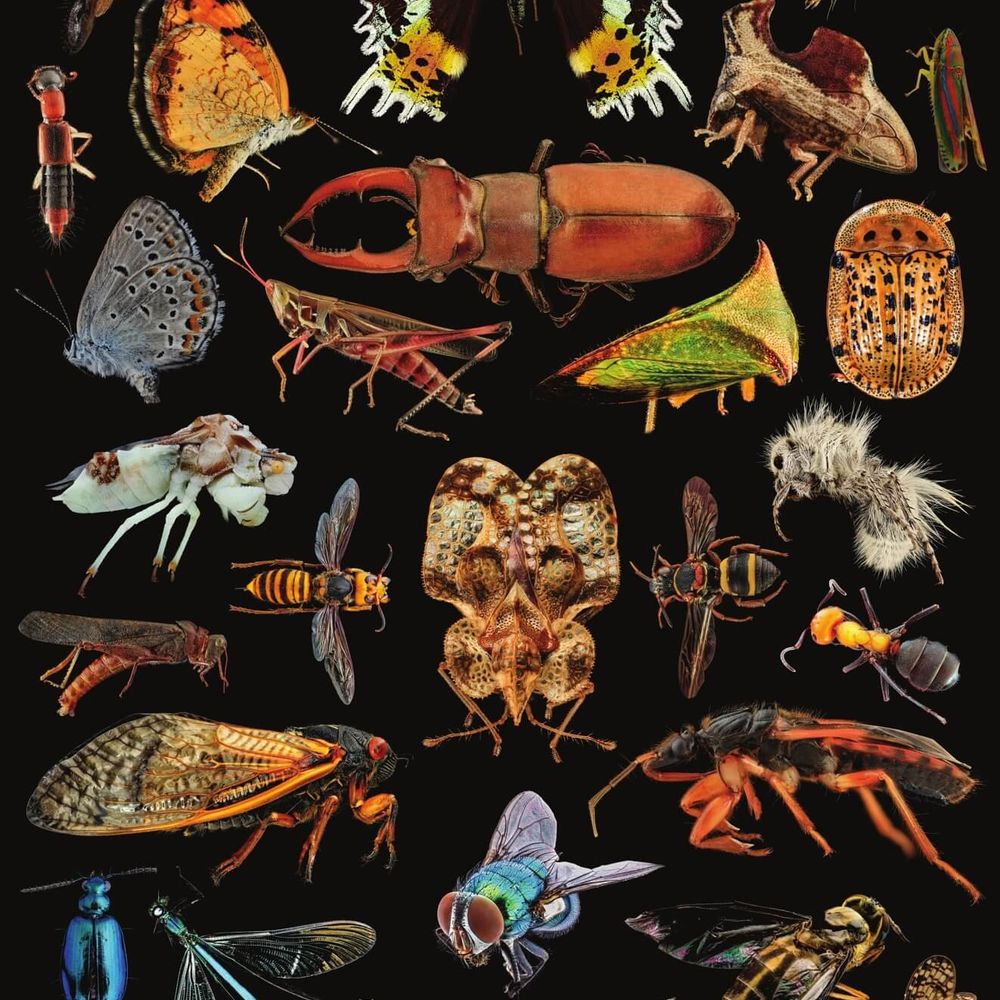
I am very happy (and a bit scared) to present to you what we have been working on over the last 4 years. This manuscript is exactly what I dreamt of when I started the lab and I could not be happier and prouder of the outcome!

Evolutionary dynamics of temporal transcription factor series in the insect optic lobe https://www.biorxiv.org/content/10.64898/2026.01.08.698497v1
January 10, 2026 at 9:43 AM
I am very happy (and a bit scared) to present to you what we have been working on over the last 4 years. This manuscript is exactly what I dreamt of when I started the lab and I could not be happier and prouder of the outcome!
Reposted by Alexa Sadier

In mammals:
🧠 A liver looks transcriptionally like a liver, even across large evolutionary distances.
In plants:
🌱 A leaf from one species can be transcriptionally closer to another organ in the same species than to a leaf from a distant species.
This fundamentally changes how body plans evolve.
🧠 A liver looks transcriptionally like a liver, even across large evolutionary distances.
In plants:
🌱 A leaf from one species can be transcriptionally closer to another organ in the same species than to a leaf from a distant species.
This fundamentally changes how body plans evolve.
January 7, 2026 at 11:50 AM
In mammals:
🧠 A liver looks transcriptionally like a liver, even across large evolutionary distances.
In plants:
🌱 A leaf from one species can be transcriptionally closer to another organ in the same species than to a leaf from a distant species.
This fundamentally changes how body plans evolve.
🧠 A liver looks transcriptionally like a liver, even across large evolutionary distances.
In plants:
🌱 A leaf from one species can be transcriptionally closer to another organ in the same species than to a leaf from a distant species.
This fundamentally changes how body plans evolve.
Reposted by Alexa Sadier
🧵 Just out in Cell after more than 10 years in the making!
🎓 www.cell.com/cell/fulltex...
Plants and animals evolve radically different body plans.
Do they also operate under fundamentally different molecular evolutionary constraints during organ formation?
@cellpress.bsky.social
🎓 www.cell.com/cell/fulltex...
Plants and animals evolve radically different body plans.
Do they also operate under fundamentally different molecular evolutionary constraints during organ formation?
@cellpress.bsky.social

January 7, 2026 at 11:50 AM
🧵 Just out in Cell after more than 10 years in the making!
🎓 www.cell.com/cell/fulltex...
Plants and animals evolve radically different body plans.
Do they also operate under fundamentally different molecular evolutionary constraints during organ formation?
@cellpress.bsky.social
🎓 www.cell.com/cell/fulltex...
Plants and animals evolve radically different body plans.
Do they also operate under fundamentally different molecular evolutionary constraints during organ formation?
@cellpress.bsky.social
Reposted by Alexa Sadier
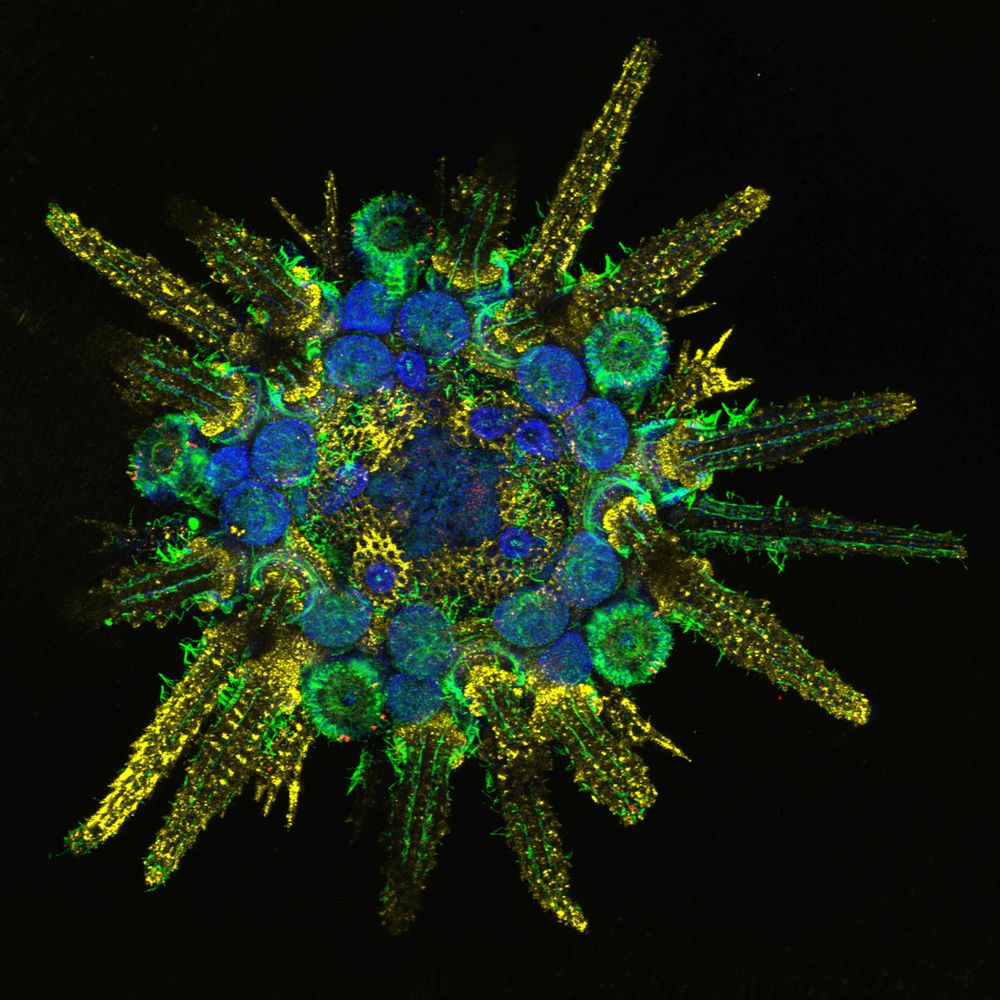
Exciting news to start the new year! We’re thrilled to see this work finally out in @natecoevo.nature.com, the result of a major collaboration between my lab and the labs of Veronica Hinman and Nacho Maeso, began many years ago with the dear José Luis Gómez-Skarmeta.
www.nature.com/articles/s41...
www.nature.com/articles/s41...

January 7, 2026 at 10:17 AM
Exciting news to start the new year! We’re thrilled to see this work finally out in @natecoevo.nature.com, the result of a major collaboration between my lab and the labs of Veronica Hinman and Nacho Maeso, began many years ago with the dear José Luis Gómez-Skarmeta.
www.nature.com/articles/s41...
www.nature.com/articles/s41...
Reposted by Alexa Sadier
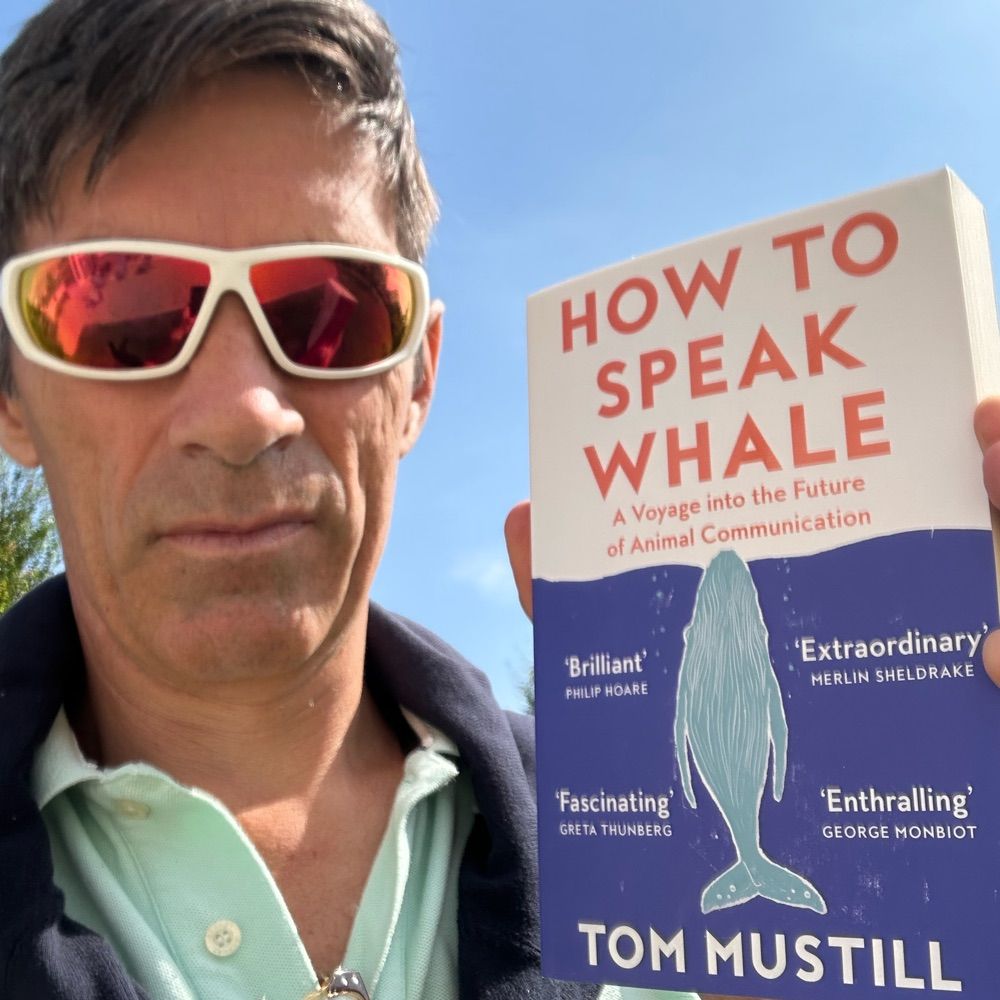
And here is the PDF of the 4th course @college-de-france.fr. You will find the justification and presentation of geometric representation of cell decisions, a parsimonious mathematical model for signalling and cell state transitions
tinyurl.com/yc7u296j
tinyurl.com/yc7u296j


December 16, 2025 at 9:57 AM
And here is the PDF of the 4th course @college-de-france.fr. You will find the justification and presentation of geometric representation of cell decisions, a parsimonious mathematical model for signalling and cell state transitions
tinyurl.com/yc7u296j
tinyurl.com/yc7u296j
Reposted by Alexa Sadier
The genetics, evolution, and maintenance of a biological rock-paper-scissors game | Science www.science.org/doi/10.1126/...

The genetics, evolution, and maintenance of a biological rock-paper-scissors game
Side-blotched lizards (Uta stansburiana) play a biological rock-paper-scissors game in which three differently colored male morphs utilize alternative mating strategies. We identified the genetic basi...
www.science.org
January 2, 2026 at 2:16 PM
The genetics, evolution, and maintenance of a biological rock-paper-scissors game | Science www.science.org/doi/10.1126/...
Reposted by Alexa Sadier
Muurahaiset eivät ole mitään maailman helpointa ruokaa, mutta niitä on niin paljon, että jos kehkeytyy keinot syödä ja sulattaa muurahaisia, niin luonnonvalinta tykkää
Mammals have evolved into ant eaters 12 times since the dinosaur age phys.org/news/2025-07...
Mammals have evolved into ant eaters 12 times since the dinosaur age phys.org/news/2025-07...

Mammals have evolved into ant eaters 12 times since the dinosaur age, study finds
Mammals have developed some unusual eating habits over the past 100 million years, but a new study has uncovered the surprising lengths to which some have gone to satisfy one of the more peculiar—a ta...
phys.org
December 29, 2025 at 10:27 AM
Muurahaiset eivät ole mitään maailman helpointa ruokaa, mutta niitä on niin paljon, että jos kehkeytyy keinot syödä ja sulattaa muurahaisia, niin luonnonvalinta tykkää
Mammals have evolved into ant eaters 12 times since the dinosaur age phys.org/news/2025-07...
Mammals have evolved into ant eaters 12 times since the dinosaur age phys.org/news/2025-07...
Reposted by Alexa Sadier

Our preprint "Predictive design of tissue-specific mammalian enhancers that function in vivo in the mouse embryo" is on bioRxiv: www.biorxiv.org/content/10.6... . Amazing collaboration by @shenzhichen1999.bsky.social, Vincent Loubiere (@impvienna.bsky.social,@viennabiocenter.bsky.social),... (1/2)

Predictive design of tissue-specific mammalian enhancers that function in vivo in the mouse embryo
Enhancers control tissue-specific gene expression across metazoans. Although deep learning has enabled enhancer prediction and design in mammalian cell lines and invertebrate systems, it remains uncle...
www.biorxiv.org
December 24, 2025 at 3:06 PM
Our preprint "Predictive design of tissue-specific mammalian enhancers that function in vivo in the mouse embryo" is on bioRxiv: www.biorxiv.org/content/10.6... . Amazing collaboration by @shenzhichen1999.bsky.social, Vincent Loubiere (@impvienna.bsky.social,@viennabiocenter.bsky.social),... (1/2)
Reposted by Alexa Sadier

Excited to share the final version of our study on Nematostella cell type regulatory programs. Part of our @erc.europa.eu StG project, this was a challenging 5-year effort extraodinarily led by @aelek.bsky.social and @martaig.bsky.social.
www.nature.com/articles/s41...
www.nature.com/articles/s41...

Decoding cnidarian cell type gene regulation - Nature Ecology & Evolution
This study reconstructs the gene regulatory networks that define cell types in the sea anemone Nematostella vectensis, providing a valuable resource for comparative regulatory genomics and the evoluti...
www.nature.com
December 22, 2025 at 10:12 AM
Excited to share the final version of our study on Nematostella cell type regulatory programs. Part of our @erc.europa.eu StG project, this was a challenging 5-year effort extraodinarily led by @aelek.bsky.social and @martaig.bsky.social.
www.nature.com/articles/s41...
www.nature.com/articles/s41...
Reposted by Alexa Sadier

L’ANR lance l’appel à projets #TremplinERC Consolidator Grant (T-ERC CoG) 2026 dédié à améliorer le taux de réussite de la France aux appels de l’European Research Council (ERC).
📅 Jusqu'au 19/01/2026, 13h
➡ anr.fr/TERC-COG-2026
📅 Jusqu'au 19/01/2026, 13h
➡ anr.fr/TERC-COG-2026

December 22, 2025 at 1:59 PM
L’ANR lance l’appel à projets #TremplinERC Consolidator Grant (T-ERC CoG) 2026 dédié à améliorer le taux de réussite de la France aux appels de l’European Research Council (ERC).
📅 Jusqu'au 19/01/2026, 13h
➡ anr.fr/TERC-COG-2026
📅 Jusqu'au 19/01/2026, 13h
➡ anr.fr/TERC-COG-2026
Reposted by Alexa Sadier
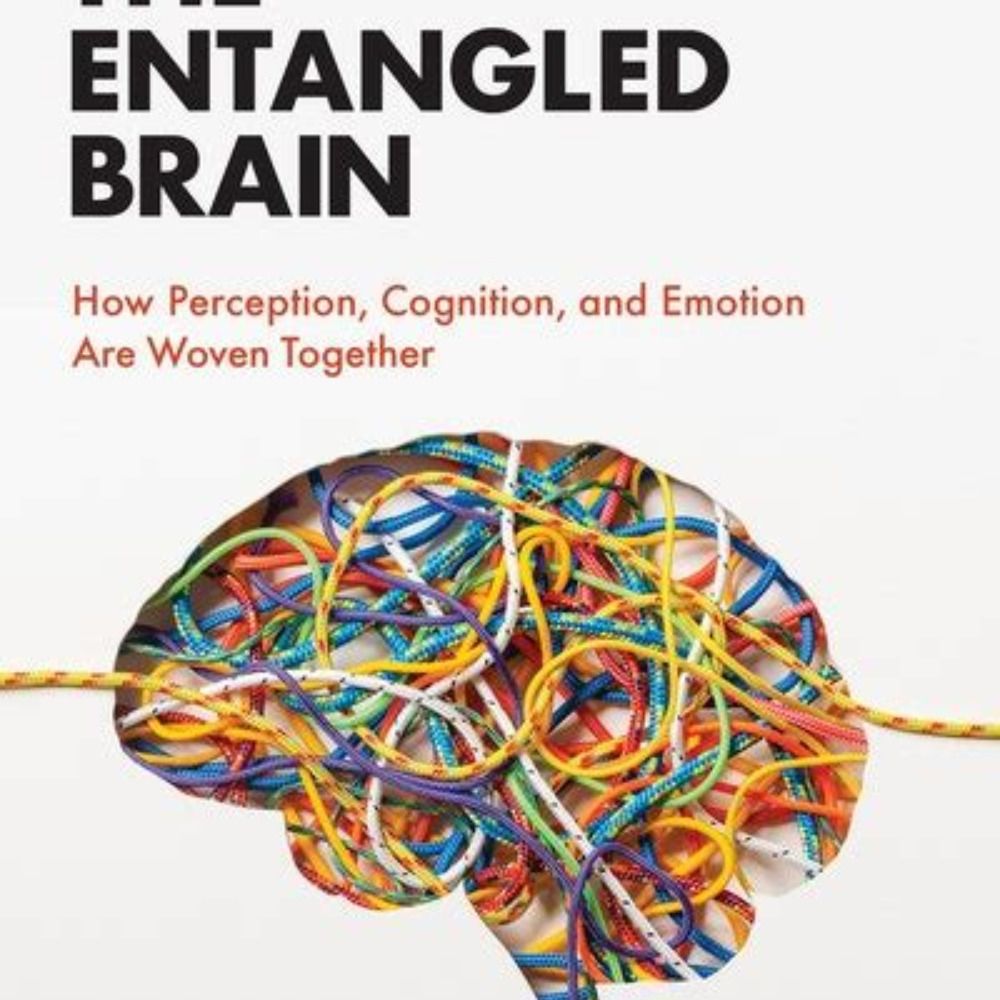
*The architecture of living systems*
Ambitious treatment of the physics of living systems
Some quibbles but impressive!
iopscience.iop.org/article/10.1...
#complexsystems
Ambitious treatment of the physics of living systems
Some quibbles but impressive!
iopscience.iop.org/article/10.1...
#complexsystems

December 20, 2025 at 6:08 PM
*The architecture of living systems*
Ambitious treatment of the physics of living systems
Some quibbles but impressive!
iopscience.iop.org/article/10.1...
#complexsystems
Ambitious treatment of the physics of living systems
Some quibbles but impressive!
iopscience.iop.org/article/10.1...
#complexsystems
Reposted by Alexa Sadier

"Range extender mediates long-distance
enhancer activity" by @evgenykvon.bsky.social 's team, led by @gracebower.bsky.social is one of my papers of the year. Discovery of a new class of cis-regulatory elements that modulate the regulatory activity and reach of enhancers.
doi.org/10.1038/s415...
enhancer activity" by @evgenykvon.bsky.social 's team, led by @gracebower.bsky.social is one of my papers of the year. Discovery of a new class of cis-regulatory elements that modulate the regulatory activity and reach of enhancers.
doi.org/10.1038/s415...
December 21, 2025 at 10:08 PM
"Range extender mediates long-distance
enhancer activity" by @evgenykvon.bsky.social 's team, led by @gracebower.bsky.social is one of my papers of the year. Discovery of a new class of cis-regulatory elements that modulate the regulatory activity and reach of enhancers.
doi.org/10.1038/s415...
enhancer activity" by @evgenykvon.bsky.social 's team, led by @gracebower.bsky.social is one of my papers of the year. Discovery of a new class of cis-regulatory elements that modulate the regulatory activity and reach of enhancers.
doi.org/10.1038/s415...