



Alejandro S. Borlaff
@asborlaff.bsky.social
NASA Space Scientist at Ames Research Center. Astrofísico. Desarrollando telescopios espaciales. Galaxies and rocket science. @ESA @unicomplutense @IAC_astrofisica.
Pinned

Are we destroying our window to the cosmos? Satellite trails could make space science nearly impossible, say astronomers | BBC Sky at Night Magazine
Projected 560,000 satellites could overwhelm future observatories. Astronomers worry satellite trails will mar every view of the Universe.
www.skyatnightmagazine.com
Uncontrolled use of Low Earth Orbit will replace the brightest stars in the sky with AI data centers.
And decrease the Ozone layer.
And fill the Earth's environment with space debris.
Let's not set the last forest on fire.
Thanks BBC Sky at Night!
www.skyatnightmagazine.com/news/satelli...
And decrease the Ozone layer.
And fill the Earth's environment with space debris.
Let's not set the last forest on fire.
Thanks BBC Sky at Night!
www.skyatnightmagazine.com/news/satelli...
Reposted by Alejandro S. Borlaff


Reposted by Alejandro S. Borlaff

This galaxy is VERY tiny—much much smaller than our own Milky Way—& incredibly distant. But we can see it AND distinguish its shape!
How?
The light we see from it is from SO LONG AGO that the Universe was MUCH smaller at the time: we see it as it was when it was close enough to us to look big!! 🤯
How?
The light we see from it is from SO LONG AGO that the Universe was MUCH smaller at the time: we see it as it was when it was close enough to us to look big!! 🤯
This is what the most distant confirmed galaxy looks like. The light we're receiving was emitted when the Universe was ~15x smaller in linear size than today, and right now it's ~30 billion light-years away from us. The light was emitted when the Universe was <300 million years old. Pretty amazing!

News from the edge of the visible universe:
JWST has confirmed this galaxy, MoM-z14, as the most distant one yet studied. We're seeing it as it was 13.5 billion years ago, 98% of the way back to the beginning of time.
(MoM stands for "miracle or mirage.") 🧪🔭
science.nasa.gov/missions/web...
JWST has confirmed this galaxy, MoM-z14, as the most distant one yet studied. We're seeing it as it was 13.5 billion years ago, 98% of the way back to the beginning of time.
(MoM stands for "miracle or mirage.") 🧪🔭
science.nasa.gov/missions/web...
February 7, 2026 at 2:28 AM
This galaxy is VERY tiny—much much smaller than our own Milky Way—& incredibly distant. But we can see it AND distinguish its shape!
How?
The light we see from it is from SO LONG AGO that the Universe was MUCH smaller at the time: we see it as it was when it was close enough to us to look big!! 🤯
How?
The light we see from it is from SO LONG AGO that the Universe was MUCH smaller at the time: we see it as it was when it was close enough to us to look big!! 🤯
Reposted by Alejandro S. Borlaff

It’s me, chatting about many satellites. Enjoy!
Podcast!
💥Elon Musk's proposal for orbital data centres
💥Kids ODing on melatonin-laced gummies
💥Global pesticide threat is growing
open.spotify.com/episode/0EUy... with @pennysarchet.bsky.social, @astrojonny.bsky.social @mjflepage.bsky.social
💥Elon Musk's proposal for orbital data centres
💥Kids ODing on melatonin-laced gummies
💥Global pesticide threat is growing
open.spotify.com/episode/0EUy... with @pennysarchet.bsky.social, @astrojonny.bsky.social @mjflepage.bsky.social
Spotify – Web Player
open.spotify.com
February 6, 2026 at 3:34 PM
It’s me, chatting about many satellites. Enjoy!
Uncontrolled use of Low Earth Orbit will replace the brightest stars in the sky with AI data centers.
And decrease the Ozone layer.
And fill the Earth's environment with space debris.
Let's not set the last forest on fire.
Thanks BBC Sky at Night!
www.skyatnightmagazine.com/news/satelli...
And decrease the Ozone layer.
And fill the Earth's environment with space debris.
Let's not set the last forest on fire.
Thanks BBC Sky at Night!
www.skyatnightmagazine.com/news/satelli...
Are we destroying our window to the cosmos? Satellite trails could make space science nearly impossible, say astronomers | BBC Sky at Night Magazine
Projected 560,000 satellites could overwhelm future observatories. Astronomers worry satellite trails will mar every view of the Universe.
www.skyatnightmagazine.com
February 6, 2026 at 5:42 PM
Uncontrolled use of Low Earth Orbit will replace the brightest stars in the sky with AI data centers.
And decrease the Ozone layer.
And fill the Earth's environment with space debris.
Let's not set the last forest on fire.
Thanks BBC Sky at Night!
www.skyatnightmagazine.com/news/satelli...
And decrease the Ozone layer.
And fill the Earth's environment with space debris.
Let's not set the last forest on fire.
Thanks BBC Sky at Night!
www.skyatnightmagazine.com/news/satelli...
Regulations are the reason your food and water is not full of lead.

February 6, 2026 at 5:54 AM
Regulations are the reason your food and water is not full of lead.
Amazing interview to @planet4589.bsky.social about SpaceX' plans to launch one million AI data centers to Earth orbit.
"Are there other technical advances that could happen to make Earth-based data centers more efficient? It’s very much an open question whether this is the right move."
"Are there other technical advances that could happen to make Earth-based data centers more efficient? It’s very much an open question whether this is the right move."
I talked to Pitchbook about the proposed million sat constellation pitchbook.com/news/article...

A leading astrophysicist has some questions for Elon - PitchBook
A Q&A with Jonathan McDowell, a leading expert on Earth orbit, about his doubts that SpaceX can pull off its vision of orbital data centers powering the world.
pitchbook.com
February 6, 2026 at 2:38 AM
Amazing interview to @planet4589.bsky.social about SpaceX' plans to launch one million AI data centers to Earth orbit.
"Are there other technical advances that could happen to make Earth-based data centers more efficient? It’s very much an open question whether this is the right move."
"Are there other technical advances that could happen to make Earth-based data centers more efficient? It’s very much an open question whether this is the right move."
Reposted by Alejandro S. Borlaff
I talked to Pitchbook about the proposed million sat constellation pitchbook.com/news/article...
A leading astrophysicist has some questions for Elon - PitchBook
A Q&A with Jonathan McDowell, a leading expert on Earth orbit, about his doubts that SpaceX can pull off its vision of orbital data centers powering the world.
pitchbook.com
February 6, 2026 at 12:10 AM
I talked to Pitchbook about the proposed million sat constellation pitchbook.com/news/article...
Reposted by Alejandro S. Borlaff

Really can't make this stuff up
I did not have a fast-tracked FCC application for an actual megaconstellation (1 million satellites) justified as "taking the first step towards becoming a Kardashev Il-level civilization" on my 2026 bingo card
What are we doing friends
I did not have a fast-tracked FCC application for an actual megaconstellation (1 million satellites) justified as "taking the first step towards becoming a Kardashev Il-level civilization" on my 2026 bingo card
What are we doing friends

February 5, 2026 at 3:33 AM
Really can't make this stuff up
I did not have a fast-tracked FCC application for an actual megaconstellation (1 million satellites) justified as "taking the first step towards becoming a Kardashev Il-level civilization" on my 2026 bingo card
What are we doing friends
I did not have a fast-tracked FCC application for an actual megaconstellation (1 million satellites) justified as "taking the first step towards becoming a Kardashev Il-level civilization" on my 2026 bingo card
What are we doing friends
Reposted by Alejandro S. Borlaff
This is what taxpayer-funded open science plus decades of hard-won investment and expertise looks like
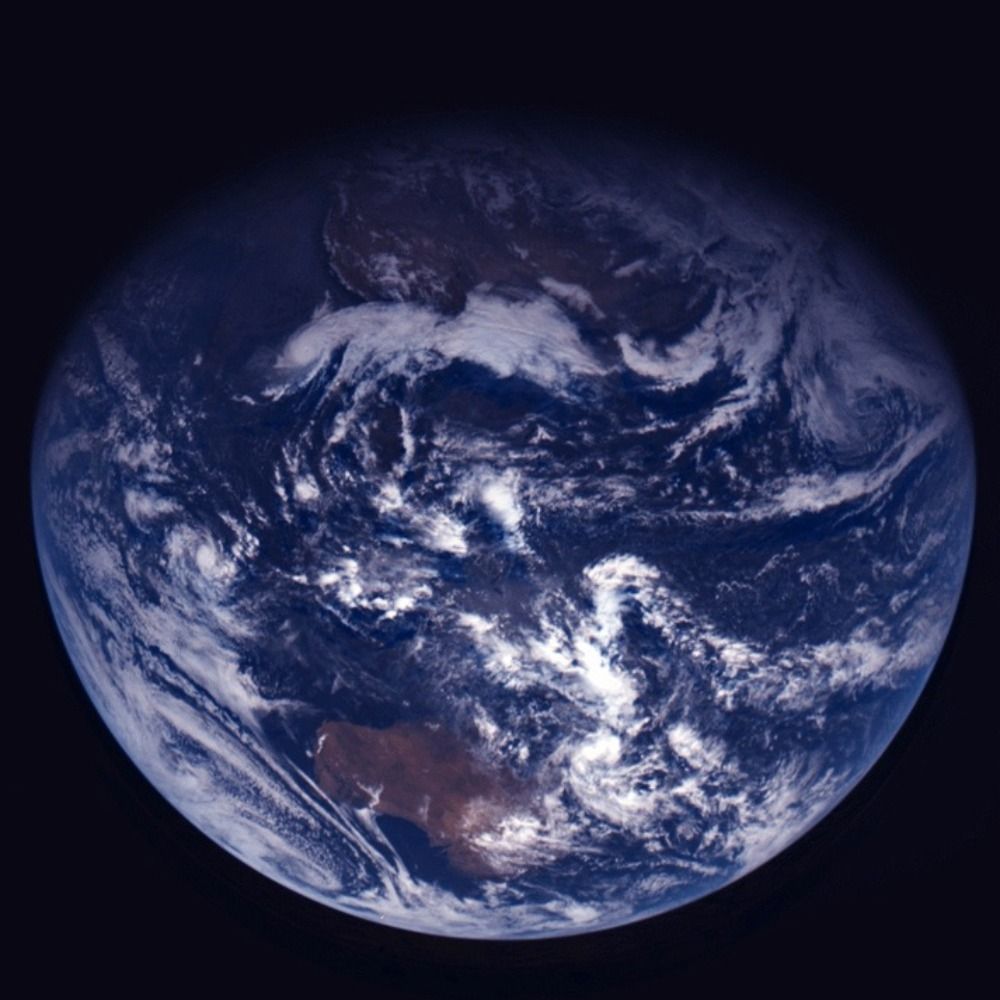
New JWST 🔭 data is available for Uranus, here is just a brief look, manual color stretching with DS9.
Credits: NASA, ESA, CSA, STScI.
Credits: NASA, ESA, CSA, STScI.
February 2, 2026 at 10:44 PM
This is what taxpayer-funded open science plus decades of hard-won investment and expertise looks like
Reposted by Alejandro S. Borlaff
SpaceX just applied to launch a million satellites, but why?
The satellites are intended for vast orbital data centres in orbit. But is it a serious proposal, a land grab, a joke – or all of the above?
Story by me in @newscientist.com
www.newscientist.com/article/2514...
The satellites are intended for vast orbital data centres in orbit. But is it a serious proposal, a land grab, a joke – or all of the above?
Story by me in @newscientist.com
www.newscientist.com/article/2514...

Why did SpaceX just apply to launch 1 million satellites?
SpaceX says it wants to deploy an astronomical number of data centres in orbit to supply power for artificial intelligence, but the proposal might not be entirely serious
www.newscientist.com
February 3, 2026 at 2:22 PM
SpaceX just applied to launch a million satellites, but why?
The satellites are intended for vast orbital data centres in orbit. But is it a serious proposal, a land grab, a joke – or all of the above?
Story by me in @newscientist.com
www.newscientist.com/article/2514...
The satellites are intended for vast orbital data centres in orbit. But is it a serious proposal, a land grab, a joke – or all of the above?
Story by me in @newscientist.com
www.newscientist.com/article/2514...
Not one month ago I was getting angry emails from fellow astronomers saying that 560,000 satellites was "exagerated".
Do not underestimate the fires of industry, my friends.
Do not underestimate the fires of industry, my friends.


February 3, 2026 at 6:12 AM
Not one month ago I was getting angry emails from fellow astronomers saying that 560,000 satellites was "exagerated".
Do not underestimate the fires of industry, my friends.
Do not underestimate the fires of industry, my friends.
Reposted by Alejandro S. Borlaff

After a year of protests from astronomers, authorities have abandoned plans for a giant, light-polluting renewable-energy facility in Chile’s Atacama Desert

Astronomers have won the latest battle over dark skies, but the global conflict continues
After a year of protests from astronomers, authorities have abandoned plans for a giant, light-polluting renewable-energy facility in Chile’s Atacama Desert
www.scientificamerican.com
February 2, 2026 at 4:23 PM
After a year of protests from astronomers, authorities have abandoned plans for a giant, light-polluting renewable-energy facility in Chile’s Atacama Desert
Reposted by Alejandro S. Borlaff
Hey space people, I’m looking for experts to comment and provide some insight on SpaceX’s application for a million satellites.
If that’s you drop me a line. Thanks!
jdaoca[at]gmail[dot]com
If that’s you drop me a line. Thanks!
jdaoca[at]gmail[dot]com
February 2, 2026 at 7:46 AM
Hey space people, I’m looking for experts to comment and provide some insight on SpaceX’s application for a million satellites.
If that’s you drop me a line. Thanks!
jdaoca[at]gmail[dot]com
If that’s you drop me a line. Thanks!
jdaoca[at]gmail[dot]com
Reposted by Alejandro S. Borlaff
SpaceX has put in a kinda-sorta-application to the FCC for an orbital data center constellation with a MILLION satellites. However, the description is rather vague without the usual specifics of the orbital parameters of each shell. fccprod.servicenowservices.com/icfs?id=ibfs...

ICFS Application Summary - ICFS Portal
fccprod.servicenowservices.com
January 31, 2026 at 8:01 PM
SpaceX has put in a kinda-sorta-application to the FCC for an orbital data center constellation with a MILLION satellites. However, the description is rather vague without the usual specifics of the orbital parameters of each shell. fccprod.servicenowservices.com/icfs?id=ibfs...
Reposted by Alejandro S. Borlaff

As land degradation threatens essential ecosystem services such as regulating climate and providing benefits to people, the world has a bold plan: the Global Biodiversity Framework.
How much do you know about biodiversity loss? Take the quiz & test your knowledge: https://ow.ly/pFlg50Y5iwm
How much do you know about biodiversity loss? Take the quiz & test your knowledge: https://ow.ly/pFlg50Y5iwm

January 31, 2026 at 5:40 AM
As land degradation threatens essential ecosystem services such as regulating climate and providing benefits to people, the world has a bold plan: the Global Biodiversity Framework.
How much do you know about biodiversity loss? Take the quiz & test your knowledge: https://ow.ly/pFlg50Y5iwm
How much do you know about biodiversity loss? Take the quiz & test your knowledge: https://ow.ly/pFlg50Y5iwm
Reposted by Alejandro S. Borlaff
You may have seen pictures, but have you ever seen video of a gigantic jet #TLE from space?
Astronaut Jeanette Epps captured this incredible sequence on July 20th, 2024 for the DTU/@science.esa.int Thor-Davis experiment. 🧪🔭
youtu.be/xN2J7_rOBJY
Credit: ESA/NASA/J. Epps
Processing: Simeon Schmauß
Astronaut Jeanette Epps captured this incredible sequence on July 20th, 2024 for the DTU/@science.esa.int Thor-Davis experiment. 🧪🔭
youtu.be/xN2J7_rOBJY
Credit: ESA/NASA/J. Epps
Processing: Simeon Schmauß
January 30, 2026 at 9:09 PM
You may have seen pictures, but have you ever seen video of a gigantic jet #TLE from space?
Astronaut Jeanette Epps captured this incredible sequence on July 20th, 2024 for the DTU/@science.esa.int Thor-Davis experiment. 🧪🔭
youtu.be/xN2J7_rOBJY
Credit: ESA/NASA/J. Epps
Processing: Simeon Schmauß
Astronaut Jeanette Epps captured this incredible sequence on July 20th, 2024 for the DTU/@science.esa.int Thor-Davis experiment. 🧪🔭
youtu.be/xN2J7_rOBJY
Credit: ESA/NASA/J. Epps
Processing: Simeon Schmauß
Reposted by Alejandro S. Borlaff

Like searching for needles in a cosmic haystack, a team of astronomers used AI to find rare, oddball objects in archived Hubble data. Out of nearly 100 million sources, the team quickly found more than 1,300 celestial oddities, most new: https://news.stsci.edu/4sUNPpO

January 27, 2026 at 3:03 PM
Like searching for needles in a cosmic haystack, a team of astronomers used AI to find rare, oddball objects in archived Hubble data. Out of nearly 100 million sources, the team quickly found more than 1,300 celestial oddities, most new: https://news.stsci.edu/4sUNPpO
Well, I'm glad that we extrapolated our results up to one million satellites.
www.nature.com/articles/s41...
www.nature.com/articles/s41...
January 27, 2026 at 5:14 AM
Well, I'm glad that we extrapolated our results up to one million satellites.
www.nature.com/articles/s41...
www.nature.com/articles/s41...
Reposted by Alejandro S. Borlaff
I've updated my megaconstellations list www.planet4589.org/space/con/co... with details of the planned Blue Origin Terawave system and the enormous CTC1 and CTC2 constellations China just filed with the ITU, for a total of almost 750,000 proposed satellites in the years to come.
Jonathan's Space Report | Space Statistics
Jonathan McDowell's new homepage
www.planet4589.org
January 26, 2026 at 2:25 AM
I've updated my megaconstellations list www.planet4589.org/space/con/co... with details of the planned Blue Origin Terawave system and the enormous CTC1 and CTC2 constellations China just filed with the ITU, for a total of almost 750,000 proposed satellites in the years to come.
Reposted by Alejandro S. Borlaff
In fact, not only is it journals who should be checking the submitted papers for hallucinated citations: finding one should mean it gets sent back to the authors *before* contacting any potential referees about that submission.
🧪
🧪
Also, checking that every single citation points to an existing paper does not require expertise in the particular field. So it should be done by the journal that pockets all the money for the "editorial" process, not the reviewers who do the work for free.
January 21, 2026 at 6:06 PM
In fact, not only is it journals who should be checking the submitted papers for hallucinated citations: finding one should mean it gets sent back to the authors *before* contacting any potential referees about that submission.
🧪
🧪
Reposted by Alejandro S. Borlaff

🔭✨A mysterious iron ‘bar’ has been discovered in the Ring Nebula.
Using the new #WEAVE spectrograph on the William Herschel telescope (La Palma), a team led by @ucl.ac.uk and #CardiffUniversity, with the participation of IAC, has detected a structure never seen before.
👉 www.iac.es/en/outreach/...
Using the new #WEAVE spectrograph on the William Herschel telescope (La Palma), a team led by @ucl.ac.uk and #CardiffUniversity, with the participation of IAC, has detected a structure never seen before.
👉 www.iac.es/en/outreach/...


January 16, 2026 at 10:37 AM
🔭✨A mysterious iron ‘bar’ has been discovered in the Ring Nebula.
Using the new #WEAVE spectrograph on the William Herschel telescope (La Palma), a team led by @ucl.ac.uk and #CardiffUniversity, with the participation of IAC, has detected a structure never seen before.
👉 www.iac.es/en/outreach/...
Using the new #WEAVE spectrograph on the William Herschel telescope (La Palma), a team led by @ucl.ac.uk and #CardiffUniversity, with the participation of IAC, has detected a structure never seen before.
👉 www.iac.es/en/outreach/...
Reposted by Alejandro S. Borlaff
1 PhD in planetary astro vs. a dude & his AI 🥴

January 16, 2026 at 5:44 AM
1 PhD in planetary astro vs. a dude & his AI 🥴
Reposted by Alejandro S. Borlaff
Took a very preliminary look at the first of the new Chinese megaconstellation ITU filings (CTC1). Inclinations from 40 to 100 deg, heights from 300 to 21500 km, plus 4 sats in Molniya orbit.
January 13, 2026 at 7:12 AM
Took a very preliminary look at the first of the new Chinese megaconstellation ITU filings (CTC1). Inclinations from 40 to 100 deg, heights from 300 to 21500 km, plus 4 sats in Molniya orbit.
Reposted by Alejandro S. Borlaff
Finally uploaded this piece to ArtStation too. @jointheschwarz.bsky.social took us to a pulsar during a #StarWarsRPG adventure, so I had to draw it 😄
In the link you can also see the original pencil drawing with no edits, and a quick mock-up I did to help me draw the Gymsnor-3 freighter:
In the link you can also see the original pencil drawing with no edits, and a quick mock-up I did to help me draw the Gymsnor-3 freighter:

Race to the pulsar, Héctor Vives
A couple years ago we got to visit a pulsar in our Star Wars RPG adventure! So, being the astrophysicist that I am, I just had to draw it.
Several crews, including ours, were summoned to a planet in ...
www.artstation.com
January 5, 2026 at 8:26 PM
Finally uploaded this piece to ArtStation too. @jointheschwarz.bsky.social took us to a pulsar during a #StarWarsRPG adventure, so I had to draw it 😄
In the link you can also see the original pencil drawing with no edits, and a quick mock-up I did to help me draw the Gymsnor-3 freighter:
In the link you can also see the original pencil drawing with no edits, and a quick mock-up I did to help me draw the Gymsnor-3 freighter:
Reposted by Alejandro S. Borlaff
So very here for @profkelsey.bsky.social giving a room of astronomers a 101 on the ethics of outer space. Get to room 226a if you're at #aas247 and learn some things!

January 6, 2026 at 5:14 PM
So very here for @profkelsey.bsky.social giving a room of astronomers a 101 on the ethics of outer space. Get to room 226a if you're at #aas247 and learn some things!