



Bernie Bastien-Olvera
@bbastien.bsky.social
Interdisciplinary climate change scientist and communicator • National Geographic Explorer ⛰️ • Assistant Professor at UNAM 🇲🇽
Reposted by Bernie Bastien-Olvera

Climate change has an impact on the oceans, which in turn affects humanity, including our economy. In this recent paper, we quantify these impacts www.nature.com/articles/s41..., led by @bbastien.bsky.social with @francescogranella.bsky.social @maxtav.bsky.social
within @sparccle.bsky.social project
within @sparccle.bsky.social project

Accounting for ocean impacts nearly doubles the social cost of carbon - Nature Climate Change
Oceans provide essential ecosystem services to human society, yet the climate impacts on blue capital have long been ignored. Incorporating the latest works on ocean science and economics, researchers...
www.nature.com
January 20, 2026 at 1:54 PM
Climate change has an impact on the oceans, which in turn affects humanity, including our economy. In this recent paper, we quantify these impacts www.nature.com/articles/s41..., led by @bbastien.bsky.social with @francescogranella.bsky.social @maxtav.bsky.social
within @sparccle.bsky.social project
within @sparccle.bsky.social project
Reposted by Bernie Bastien-Olvera

🔍 Behind the Paper: 'My Neighbor, the Ocean.' 🌊 The system that regulates the planet’s climate barely appeared in climate policy calculations. Not because it had been “wrong” before, but because it had been incomplete.🔗 Read more here: bit.ly/49NXSo4. @bbastien.bsky.social #ClimateChange

January 21, 2026 at 4:00 PM
🔍 Behind the Paper: 'My Neighbor, the Ocean.' 🌊 The system that regulates the planet’s climate barely appeared in climate policy calculations. Not because it had been “wrong” before, but because it had been incomplete.🔗 Read more here: bit.ly/49NXSo4. @bbastien.bsky.social #ClimateChange
Reposted by Bernie Bastien-Olvera

The social cost of carbon (SCC), a crucial indicator for #climatechange policy, has largely overlooked the significant economic and societal benefits provided by oceans, often referred to as 'blue capital'.
www.nature.com/articles/s41...
www.nature.com/articles/s41...

Accounting for ocean impacts nearly doubles the social cost of carbon - Nature Climate Change
Oceans provide essential ecosystem services to human society, yet the climate impacts on blue capital have long been ignored. Incorporating the latest works on ocean science and economics, researchers...
www.nature.com
January 15, 2026 at 5:26 PM
The social cost of carbon (SCC), a crucial indicator for #climatechange policy, has largely overlooked the significant economic and societal benefits provided by oceans, often referred to as 'blue capital'.
www.nature.com/articles/s41...
www.nature.com/articles/s41...
Reposted by Bernie Bastien-Olvera

RESEARCH: Accounting for ocean impacts nearly doubles the social cost of carbon. Co-authored by Dr. William Cheung @ubccoru.bsky.social @solvingfcb.org
www.nature.com/articles/s41...
www.nature.com/articles/s41...

Accounting for ocean impacts nearly doubles the social cost of carbon - Nature Climate Change
Oceans provide essential ecosystem services to human society, yet the climate impacts on blue capital have long been ignored. Incorporating the latest works on ocean science and economics, researchers...
www.nature.com
January 15, 2026 at 6:52 PM
RESEARCH: Accounting for ocean impacts nearly doubles the social cost of carbon. Co-authored by Dr. William Cheung @ubccoru.bsky.social @solvingfcb.org
www.nature.com/articles/s41...
www.nature.com/articles/s41...
Reposted by Bernie Bastien-Olvera

🌊 Accounting for ocean impacts nearly doubles the social cost of carbon
By factoring in impacts on corals, mangroves, fisheries, & ports, the 2020 blue social cost of carbon jumps to $48/ton CO2-almost doubling traditional estimates. Protecting “blue capital” matters
www.nature.com/articles/s41...
By factoring in impacts on corals, mangroves, fisheries, & ports, the 2020 blue social cost of carbon jumps to $48/ton CO2-almost doubling traditional estimates. Protecting “blue capital” matters
www.nature.com/articles/s41...

Accounting for ocean impacts nearly doubles the social cost of carbon - Nature Climate Change
Oceans provide essential ecosystem services to human society, yet the climate impacts on blue capital have long been ignored. Incorporating the latest works on ocean science and economics, researchers...
www.nature.com
January 15, 2026 at 7:06 PM
🌊 Accounting for ocean impacts nearly doubles the social cost of carbon
By factoring in impacts on corals, mangroves, fisheries, & ports, the 2020 blue social cost of carbon jumps to $48/ton CO2-almost doubling traditional estimates. Protecting “blue capital” matters
www.nature.com/articles/s41...
By factoring in impacts on corals, mangroves, fisheries, & ports, the 2020 blue social cost of carbon jumps to $48/ton CO2-almost doubling traditional estimates. Protecting “blue capital” matters
www.nature.com/articles/s41...
Reposted by Bernie Bastien-Olvera

Accounting for ocean impacts nearly doubles the social cost of carbon www.nature.com/articles/s41... #jcampubs 🌊

Accounting for ocean impacts nearly doubles the social cost of carbon - Nature Climate Change
Oceans provide essential ecosystem services to human society, yet the climate impacts on blue capital have long been ignored. Incorporating the latest works on ocean science and economics, researchers...
www.nature.com
January 15, 2026 at 1:56 PM
Accounting for ocean impacts nearly doubles the social cost of carbon www.nature.com/articles/s41... #jcampubs 🌊
The Social Cost of Carbon for the Oceans is out today in Nature Climate Change.
www.nature.com/articles/s41...
Until now, ocean damages have been largely missing from SCC estimates used in climate policy.
www.nature.com/articles/s41...
Until now, ocean damages have been largely missing from SCC estimates used in climate policy.

Accounting for ocean impacts nearly doubles the social cost of carbon - Nature Climate Change
Oceans provide essential ecosystem services to human society, yet the climate impacts on blue capital have long been ignored. Incorporating the latest works on ocean science and economics, researchers...
www.nature.com
January 15, 2026 at 12:21 PM
The Social Cost of Carbon for the Oceans is out today in Nature Climate Change.
www.nature.com/articles/s41...
Until now, ocean damages have been largely missing from SCC estimates used in climate policy.
www.nature.com/articles/s41...
Until now, ocean damages have been largely missing from SCC estimates used in climate policy.
Solar radiation management looks most attractive precisely when governance is weakest — and that’s exactly when it’s most likely to fail. Check out our new paper in Environmental Research: Climate
iopscience.iop.org/article/10.1...
iopscience.iop.org/article/10.1...
Radware Bot Manager Captcha
To ensure we keep this website safe, please can you confirm you are a human by ticking the box below.
iopscience.iop.org
January 8, 2026 at 4:30 AM
Solar radiation management looks most attractive precisely when governance is weakest — and that’s exactly when it’s most likely to fail. Check out our new paper in Environmental Research: Climate
iopscience.iop.org/article/10.1...
iopscience.iop.org/article/10.1...
Reposted by Bernie Bastien-Olvera

Projections indicate that rising ocean temperatures could offset anticipated gains in global mangrove restoration by 2100, resulting in significant ecosystem and economic losses, especially in Asia. doi.org/g92dsh

Ocean warming projected to stall expected mangrove recovery
Increasing ocean temperatures will erase mangrove restoration gains expected to occur due to economic development and conservation, according to a new study from researchers at UC San Diego's Scripps Institution of Oceanography.
phys.org
September 3, 2025 at 1:46 PM
Projections indicate that rising ocean temperatures could offset anticipated gains in global mangrove restoration by 2100, resulting in significant ecosystem and economic losses, especially in Asia. doi.org/g92dsh
Reposted by Bernie Bastien-Olvera
About 150,000 hectares (580 sq. mi.) of mangrove ecosystems, vital for coastal protection, habitat creation, carbon storage, and water quality, will be lost by the end of the century due to #climatechange, with Asia bearing nearly two-thirds of these losses.
oceanographicmagazine.com/news/warming...
oceanographicmagazine.com/news/warming...

Warming ocean will cost $28bn a year in mangrove losses alone - Oceanographic
Continued increase in ocean temperatures is projected to stall the advances made in mangrove recovery and restoration, a new study has warned.
oceanographicmagazine.com
September 3, 2025 at 5:30 PM
About 150,000 hectares (580 sq. mi.) of mangrove ecosystems, vital for coastal protection, habitat creation, carbon storage, and water quality, will be lost by the end of the century due to #climatechange, with Asia bearing nearly two-thirds of these losses.
oceanographicmagazine.com/news/warming...
oceanographicmagazine.com/news/warming...
New paper out! We looked at how warming oceans & socioeconomic change shape the future of mangroves worldwide. @ioppublishing.bsky.social
TLDR: Climate change could stall restoration efforts & deepen global inequalities.
Paper: iopscience.iop.org/article/10.1...
TLDR: Climate change could stall restoration efforts & deepen global inequalities.
Paper: iopscience.iop.org/article/10.1...
September 3, 2025 at 1:54 PM
New paper out! We looked at how warming oceans & socioeconomic change shape the future of mangroves worldwide. @ioppublishing.bsky.social
TLDR: Climate change could stall restoration efforts & deepen global inequalities.
Paper: iopscience.iop.org/article/10.1...
TLDR: Climate change could stall restoration efforts & deepen global inequalities.
Paper: iopscience.iop.org/article/10.1...
Reposted by Bernie Bastien-Olvera

I'm pleased to announce our newest paper published at Scientific Data, where we establish a framework for generating fast, custom SRM scenarios. This will allow us to develop probabilístic regional and global impact studies of geoengineering interventions.
www.nature.com/articles/s41...
www.nature.com/articles/s41...

GeoMIP-Pattern – a pattern scaling dataset for efficient generation of custom geoengineering scenarios - Scientific Data
Scientific Data - GeoMIP-Pattern – a pattern scaling dataset for efficient generation of custom geoengineering scenarios
www.nature.com
August 1, 2025 at 5:40 PM
I'm pleased to announce our newest paper published at Scientific Data, where we establish a framework for generating fast, custom SRM scenarios. This will allow us to develop probabilístic regional and global impact studies of geoengineering interventions.
www.nature.com/articles/s41...
www.nature.com/articles/s41...
After months held up in customs, @paulkelleher.net 's book finally made it to me. Now riding along with me on the Mexico City metro.

August 7, 2025 at 3:33 PM
After months held up in customs, @paulkelleher.net 's book finally made it to me. Now riding along with me on the Mexico City metro.
Reposted by Bernie Bastien-Olvera
Claim: "Water vapor is a greenhouse gas!"
Reality: Yes, and there's more of it in a warmer atmosphere
-"CO2 is plant food!"
-pretty hard to eat when you're on fire
-"Climate has changed before!"
-We know, we told you that
-"Scientists don't know everything!"
- doesn't mean we know *nothing*
Reality: Yes, and there's more of it in a warmer atmosphere
-"CO2 is plant food!"
-pretty hard to eat when you're on fire
-"Climate has changed before!"
-We know, we told you that
-"Scientists don't know everything!"
- doesn't mean we know *nothing*
July 30, 2025 at 3:17 PM
Claim: "Water vapor is a greenhouse gas!"
Reality: Yes, and there's more of it in a warmer atmosphere
-"CO2 is plant food!"
-pretty hard to eat when you're on fire
-"Climate has changed before!"
-We know, we told you that
-"Scientists don't know everything!"
- doesn't mean we know *nothing*
Reality: Yes, and there's more of it in a warmer atmosphere
-"CO2 is plant food!"
-pretty hard to eat when you're on fire
-"Climate has changed before!"
-We know, we told you that
-"Scientists don't know everything!"
- doesn't mean we know *nothing*
New paper!
Polycrisis isn’t a series of mistakes — it’s a tangled web of crises we navigate through increasingly rough terrain.
www.cambridge.org/core/journal...
Polycrisis isn’t a series of mistakes — it’s a tangled web of crises we navigate through increasingly rough terrain.
www.cambridge.org/core/journal...


July 19, 2025 at 8:35 PM
New paper!
Polycrisis isn’t a series of mistakes — it’s a tangled web of crises we navigate through increasingly rough terrain.
www.cambridge.org/core/journal...
Polycrisis isn’t a series of mistakes — it’s a tangled web of crises we navigate through increasingly rough terrain.
www.cambridge.org/core/journal...
Polycrisis isn’t a series of mistakes — it’s a tangled web of crises we navigate through increasingly rough terrain.
In this study, we compile a global database and analyze the co-occurrence of shocks, the building blocks of crisis, from 1970 to today.
www.cambridge.org/core/journal...
In this study, we compile a global database and analyze the co-occurrence of shocks, the building blocks of crisis, from 1970 to today.
www.cambridge.org/core/journal...
Dynamics of the polycrisis: temporal trends, spatial distribution, and co-occurrences of national shocks (1970–2019) | Global Sustainability | Cambridge Core
Dynamics of the polycrisis: temporal trends, spatial distribution, and co-occurrences of national shocks (1970–2019) - Volume 8
www.cambridge.org
July 15, 2025 at 4:03 PM
Polycrisis isn’t a series of mistakes — it’s a tangled web of crises we navigate through increasingly rough terrain.
In this study, we compile a global database and analyze the co-occurrence of shocks, the building blocks of crisis, from 1970 to today.
www.cambridge.org/core/journal...
In this study, we compile a global database and analyze the co-occurrence of shocks, the building blocks of crisis, from 1970 to today.
www.cambridge.org/core/journal...
Very happy to be an AERE Scholar this year! I'm looking forward to contributing meaningfully to the field.

🌿AERE Scholar Spotlight: Bernardo Bastien-Olvera ( @bbastien.bsky.social )🌿
Bernado's research focuses on how climate change will impact the ecosystems that provide tangible and intangible benefits to people.
Website: buff.ly/UODc7CR
📈📉 #Econsky
Bernado's research focuses on how climate change will impact the ecosystems that provide tangible and intangible benefits to people.
Website: buff.ly/UODc7CR
📈📉 #Econsky

July 14, 2025 at 4:43 PM
Very happy to be an AERE Scholar this year! I'm looking forward to contributing meaningfully to the field.
Reposted by Bernie Bastien-Olvera

Call for abstracts! The Beijer Young Scholars are convening a session at #AGU25: "Advances in Modeling and Governing Interacting Shocks in the Anthropocene". Submit by July 30! 🌍⚡
📍New Orleans, Dec 15–19
🔗 agu.confex.com/agu/agu25/pr...
📍New Orleans, Dec 15–19
🔗 agu.confex.com/agu/agu25/pr...
Advances in Modeling and Governing Interacting Shocks in the Anthropocene
Our collective well-being depends on interconnected socio-ecological systems. In the Anthropocene, these systems increasingly face unanticipated variability in key inputs (i.e., shocks), and nonlinear...
agu.confex.com
July 9, 2025 at 8:17 AM
Call for abstracts! The Beijer Young Scholars are convening a session at #AGU25: "Advances in Modeling and Governing Interacting Shocks in the Anthropocene". Submit by July 30! 🌍⚡
📍New Orleans, Dec 15–19
🔗 agu.confex.com/agu/agu25/pr...
📍New Orleans, Dec 15–19
🔗 agu.confex.com/agu/agu25/pr...
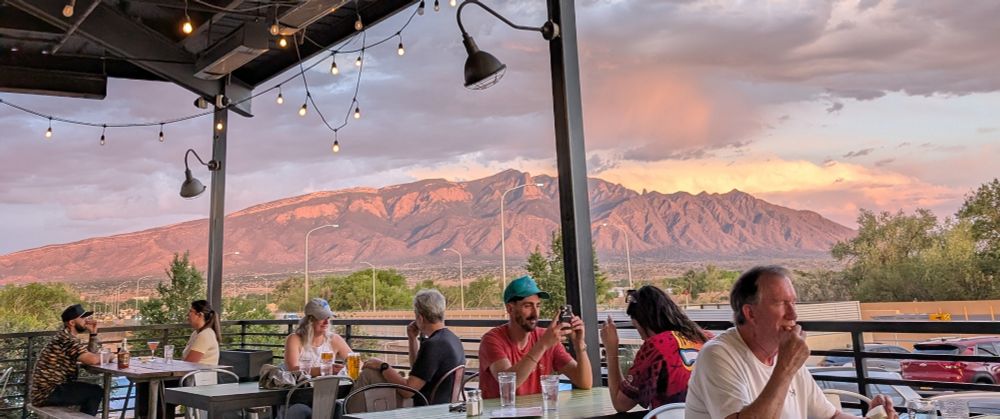
What a view of the Sandia mountains last week in Albuquerque. So happy to join the @aereorg.bsky.social scholars cohort, an amazing group of supportive and brilliant people!
June 3, 2025 at 8:49 PM
What a view of the Sandia mountains last week in Albuquerque. So happy to join the @aereorg.bsky.social scholars cohort, an amazing group of supportive and brilliant people!
Reposted by Bernie Bastien-Olvera

📈 Daily global temperature between 1940 to 2025 – @hausfath.bsky.social
2️⃣ bsky.app/profile/haus...
2️⃣ bsky.app/profile/haus...

May 30, 2025 at 11:35 AM
📈 Daily global temperature between 1940 to 2025 – @hausfath.bsky.social
2️⃣ bsky.app/profile/haus...
2️⃣ bsky.app/profile/haus...
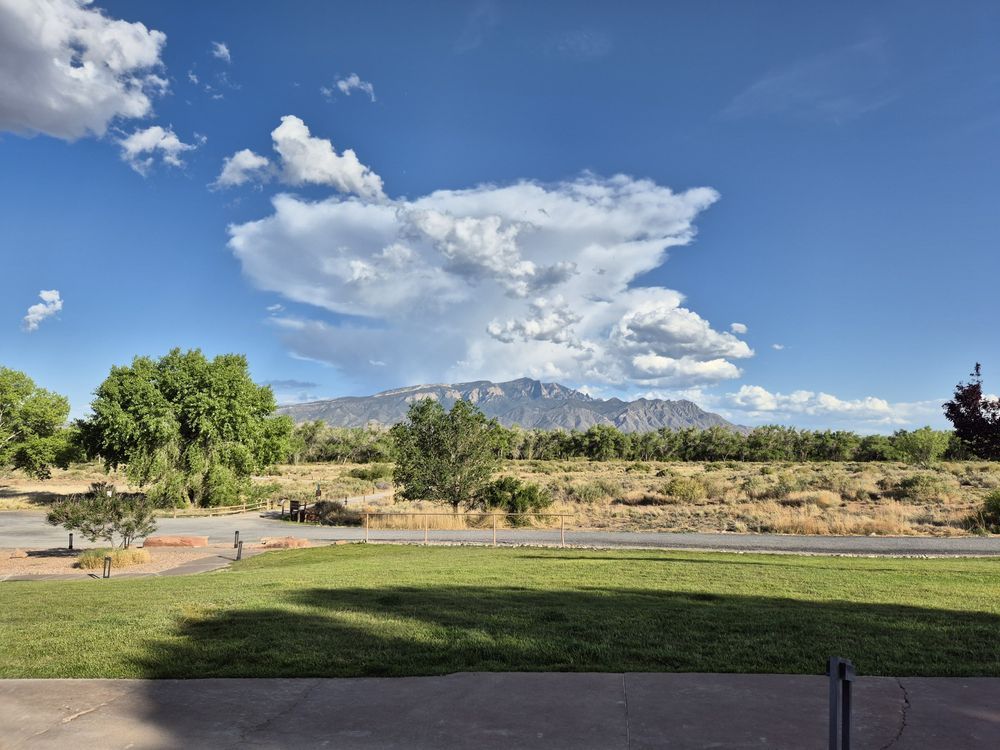
A weather system over Houston keeps delaying my connecting flight, but still hopeful I'll make it on time for the first session!
✨Welcome to Santa Ana Pueblo, New Mexico, AERE economists!
We’re excited to kick off #AERE2025—don’t forget to tag your posts with #AERE2025 and share the moments! 😊
#EconSky
We’re excited to kick off #AERE2025—don’t forget to tag your posts with #AERE2025 and share the moments! 😊
#EconSky



May 28, 2025 at 4:38 PM
A weather system over Houston keeps delaying my connecting flight, but still hopeful I'll make it on time for the first session!
What an amazing week at the Beijer Institute, Royal Swedish Academy of Sciences!
Sharing ideas, methods and good moments with this talented group of scholars studying socioecological impacts.
Sharing ideas, methods and good moments with this talented group of scholars studying socioecological impacts.

May 27, 2025 at 3:30 PM
What an amazing week at the Beijer Institute, Royal Swedish Academy of Sciences!
Sharing ideas, methods and good moments with this talented group of scholars studying socioecological impacts.
Sharing ideas, methods and good moments with this talented group of scholars studying socioecological impacts.
Reposted by Bernie Bastien-Olvera

🚨"Heat disproportionally kills young people: Evidence from Wet-Bulb Temperature Exposure" My new paper co-lead with @ajsw.info is out today!
Using 20 years of nationwide mortality microdata + wet-bulb temperature, we uncovered fascinating new findings. Thread 👇
www.science.org/doi/10.1126/...
Using 20 years of nationwide mortality microdata + wet-bulb temperature, we uncovered fascinating new findings. Thread 👇
www.science.org/doi/10.1126/...
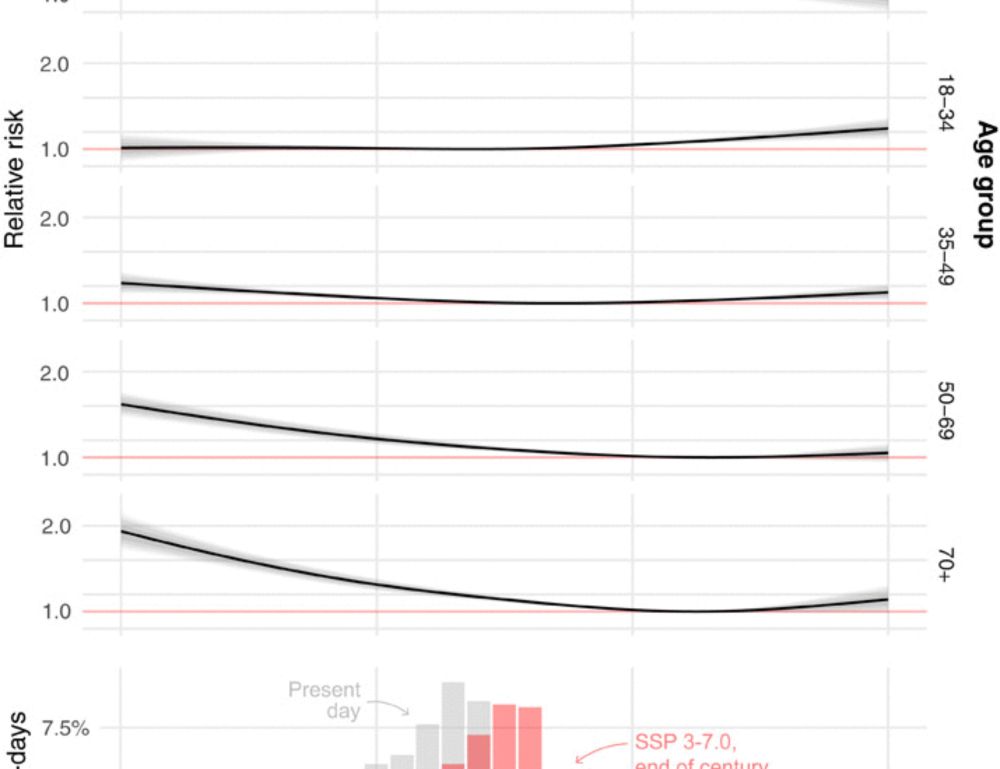
Heat disproportionately kills young people: Evidence from wet-bulb temperature in Mexico
Analysis of temperature exposure and microdata finds the majority of heat-related deaths are among people under 35 years old.
www.science.org
December 6, 2024 at 10:09 PM
🚨"Heat disproportionally kills young people: Evidence from Wet-Bulb Temperature Exposure" My new paper co-lead with @ajsw.info is out today!
Using 20 years of nationwide mortality microdata + wet-bulb temperature, we uncovered fascinating new findings. Thread 👇
www.science.org/doi/10.1126/...
Using 20 years of nationwide mortality microdata + wet-bulb temperature, we uncovered fascinating new findings. Thread 👇
www.science.org/doi/10.1126/...