



Boris Sieber
@borissieber.bsky.social
Postdoc @SophieMartinLab.bsky.social studying #GPCR and #MAPK signalling in fission yeast. Alumnus of @mjafreeman.bsky.social and @jordanraff.bsky.social
Pinned
Boris Sieber
@borissieber.bsky.social
· Sep 25

Mammalian cells have KSR, budding yeast has Ste5… and fission yeast has Sms1 as the MAPK scaffold for sexual reproduction!
Very excited to share my postdoc work where we discover that the hemi-arrestin Sms1 binds all components of the MAPK cascade, including ERK-like Spk1
doi.org/10.1101/2025...
Very excited to share my postdoc work where we discover that the hemi-arrestin Sms1 binds all components of the MAPK cascade, including ERK-like Spk1
doi.org/10.1101/2025...
Reposted by Boris Sieber
End-of-year preprint dump! A collaboration with @messorensen.bsky.social and German and Korean colleagues: "The phylogenetic context for the origin of a unique purple-green photosymbiosis "
doi.org/10.64898/202...
doi.org/10.64898/202...

December 23, 2025 at 2:51 PM
End-of-year preprint dump! A collaboration with @messorensen.bsky.social and German and Korean colleagues: "The phylogenetic context for the origin of a unique purple-green photosymbiosis "
doi.org/10.64898/202...
doi.org/10.64898/202...
Reposted by Boris Sieber
JCB’s Cover of the Year voting is open!
I’ll just say… they are all gorgeous, but April has my heart 😍❄️🔬
#teamtomo @attychang.bsky.social
I’ll just say… they are all gorgeous, but April has my heart 😍❄️🔬
#teamtomo @attychang.bsky.social

Vote for JCB’s cover of the year! Explore 12 breathtaking images submitted by our talented authors and pick a favorite. Voting closes on Wednesday, December 31! 👉 www.surveymonkey.com/r/JCB2025Cov...
#ScienceArt
#ScienceArt

December 22, 2025 at 8:03 PM
JCB’s Cover of the Year voting is open!
I’ll just say… they are all gorgeous, but April has my heart 😍❄️🔬
#teamtomo @attychang.bsky.social
I’ll just say… they are all gorgeous, but April has my heart 😍❄️🔬
#teamtomo @attychang.bsky.social
Reposted by Boris Sieber
Interesting preprint from the Boyce lab! Sec23IP (protein linking COPII inner and outer coats) is regulated by O-GlcNAcylation. Site-specific modification of its disordered domain controls O-GlcNAcylation, Sec31A recruitment, COPII assembly, and ER exit site function.
www.biorxiv.org/content/10.6...
www.biorxiv.org/content/10.6...

December 22, 2025 at 12:23 PM
Interesting preprint from the Boyce lab! Sec23IP (protein linking COPII inner and outer coats) is regulated by O-GlcNAcylation. Site-specific modification of its disordered domain controls O-GlcNAcylation, Sec31A recruitment, COPII assembly, and ER exit site function.
www.biorxiv.org/content/10.6...
www.biorxiv.org/content/10.6...
Reposted by Boris Sieber
I will be recruiting two postdocs early next year.
- One image analyst
- one biologist interested in working on lymphatics!
Reach out if you are interested 👍
- One image analyst
- one biologist interested in working on lymphatics!
Reach out if you are interested 👍
The Center is a wonderful collaboration with scientists extraordinaire @taijamakinenlab.bsky.social Kari Vaahtomeri and Cecilia Sahlgren.
We are all recruiting, so keep an eye on our website If you are looking for a postdoc position 😀
We are all recruiting, so keep an eye on our website If you are looking for a postdoc position 😀
I am delighted to introduce our new Centre of Excellence in Immune-Endothelial Interfaces (IMMENs) funded by the Research Council of Finland.
www.helsinki.fi/en/researchg...
I will be recruiting two postdocs early next year. One image analyst and one biologist interested in working on lymphatics!
www.helsinki.fi/en/researchg...
I will be recruiting two postdocs early next year. One image analyst and one biologist interested in working on lymphatics!
December 21, 2025 at 8:58 AM
I will be recruiting two postdocs early next year.
- One image analyst
- one biologist interested in working on lymphatics!
Reach out if you are interested 👍
- One image analyst
- one biologist interested in working on lymphatics!
Reach out if you are interested 👍
Reposted by Boris Sieber
Take advantage of this fantastic opportunity to become part of the SCALE community! Several professorships and group leader positions are available at Goethe University and FIAS. We are looking for professors in the fields of molecular microbiology, cellular biochemistry, and molecular biochemistry.

⏰Call for Applications - Join Our Team and Help Shape Our Cluster
@goetheuni.bsky.social and the Cluster of Excellence SCALE - Subcellular Architecture of Life are seeking 3 highly motivated scientists to join a vibrant and innovative research community on Campus Riedberg.
Share with your network!
@goetheuni.bsky.social and the Cluster of Excellence SCALE - Subcellular Architecture of Life are seeking 3 highly motivated scientists to join a vibrant and innovative research community on Campus Riedberg.
Share with your network!

December 19, 2025 at 10:44 PM
Take advantage of this fantastic opportunity to become part of the SCALE community! Several professorships and group leader positions are available at Goethe University and FIAS. We are looking for professors in the fields of molecular microbiology, cellular biochemistry, and molecular biochemistry.
Reposted by Boris Sieber

📢 ECCB2026 - Call for proceedings now open !
The Scientific Committee welcomes full manuscripts presenting original and unpublished work in computational biology.
🗓 Deadline: 5 March 2026, 1 p.m. CET
🔗 eccb2026.org/call-proceedings
#ECCB2026 #Bioinformatics #ComputationalBiology #CallForPapers
The Scientific Committee welcomes full manuscripts presenting original and unpublished work in computational biology.
🗓 Deadline: 5 March 2026, 1 p.m. CET
🔗 eccb2026.org/call-proceedings
#ECCB2026 #Bioinformatics #ComputationalBiology #CallForPapers
December 9, 2025 at 3:14 PM
📢 ECCB2026 - Call for proceedings now open !
The Scientific Committee welcomes full manuscripts presenting original and unpublished work in computational biology.
🗓 Deadline: 5 March 2026, 1 p.m. CET
🔗 eccb2026.org/call-proceedings
#ECCB2026 #Bioinformatics #ComputationalBiology #CallForPapers
The Scientific Committee welcomes full manuscripts presenting original and unpublished work in computational biology.
🗓 Deadline: 5 March 2026, 1 p.m. CET
🔗 eccb2026.org/call-proceedings
#ECCB2026 #Bioinformatics #ComputationalBiology #CallForPapers
Reposted by Boris Sieber
Thanks @jcellsci.bsky.social for this opportunity to contribute to your centenary collection with our take on the state of the field - 10 years after its modern reincarnation 🧪🌍
W/ @alebenoit.bsky.social @eelcotromer.bsky.social @fritzlaylin.bsky.social
journals.biologists.com/jcs/article/...
W/ @alebenoit.bsky.social @eelcotromer.bsky.social @fritzlaylin.bsky.social
journals.biologists.com/jcs/article/...

Evolutionary cell biology comes of age
Summary: This Perspective discusses how the discipline of evolutionary cell biology, by integrating evolutionary theory, comparative physiology and modern molecular approaches, works to understand how...
journals.biologists.com
December 19, 2025 at 4:13 PM
Thanks @jcellsci.bsky.social for this opportunity to contribute to your centenary collection with our take on the state of the field - 10 years after its modern reincarnation 🧪🌍
W/ @alebenoit.bsky.social @eelcotromer.bsky.social @fritzlaylin.bsky.social
journals.biologists.com/jcs/article/...
W/ @alebenoit.bsky.social @eelcotromer.bsky.social @fritzlaylin.bsky.social
journals.biologists.com/jcs/article/...
Reposted by Boris Sieber
🧵 Cytoskeleton question of the day:
You want to localize your favourite protein.
What do you trust first?
🔹 GFP overexpression
🔹 CRISPR knock-in
🔹 Commercial Antibodies
🔹Homemade antibodies
🔹 Or “all of the above + controls” 👀
You want to localize your favourite protein.
What do you trust first?
🔹 GFP overexpression
🔹 CRISPR knock-in
🔹 Commercial Antibodies
🔹Homemade antibodies
🔹 Or “all of the above + controls” 👀
December 18, 2025 at 9:44 AM
🧵 Cytoskeleton question of the day:
You want to localize your favourite protein.
What do you trust first?
🔹 GFP overexpression
🔹 CRISPR knock-in
🔹 Commercial Antibodies
🔹Homemade antibodies
🔹 Or “all of the above + controls” 👀
You want to localize your favourite protein.
What do you trust first?
🔹 GFP overexpression
🔹 CRISPR knock-in
🔹 Commercial Antibodies
🔹Homemade antibodies
🔹 Or “all of the above + controls” 👀
Reposted by Boris Sieber
📣 #Job alert!
Looking to establish your own independent research in cell biology, development or evo-devo?
The @cnrs.fr is recruiting 7 scientists in that area of research.
Here are updated unofficial guidelines. Reach out to members of the committee if you have questions
c3n-cn.fr/section-24-w...
Looking to establish your own independent research in cell biology, development or evo-devo?
The @cnrs.fr is recruiting 7 scientists in that area of research.
Here are updated unofficial guidelines. Reach out to members of the committee if you have questions
c3n-cn.fr/section-24-w...
December 18, 2025 at 8:52 AM
📣 #Job alert!
Looking to establish your own independent research in cell biology, development or evo-devo?
The @cnrs.fr is recruiting 7 scientists in that area of research.
Here are updated unofficial guidelines. Reach out to members of the committee if you have questions
c3n-cn.fr/section-24-w...
Looking to establish your own independent research in cell biology, development or evo-devo?
The @cnrs.fr is recruiting 7 scientists in that area of research.
Here are updated unofficial guidelines. Reach out to members of the committee if you have questions
c3n-cn.fr/section-24-w...
Reposted by Boris Sieber
My lab is hiring a postdoc (ERC funded)! If you're interested, get in touch!
December 18, 2025 at 8:36 AM
My lab is hiring a postdoc (ERC funded)! If you're interested, get in touch!
Reposted by Boris Sieber
Thrilled to see our review article "The evolutionary origins of synaptic proteins" highlighted on the cover of Nature Reviews Neuroscience 🤩.
www.nature.com/articles/s41...
@msarscentre.bsky.social 🧠✨🧬🌊🪼🧽
www.nature.com/articles/s41...
@msarscentre.bsky.social 🧠✨🧬🌊🪼🧽

December 17, 2025 at 3:25 PM
Thrilled to see our review article "The evolutionary origins of synaptic proteins" highlighted on the cover of Nature Reviews Neuroscience 🤩.
www.nature.com/articles/s41...
@msarscentre.bsky.social 🧠✨🧬🌊🪼🧽
www.nature.com/articles/s41...
@msarscentre.bsky.social 🧠✨🧬🌊🪼🧽
Reposted by Boris Sieber

Congratulations to Prof. Omaya Dudin for receiving the Friedrich Miescher Award 2026!
Find out more: www.ls2.ch/awards/fried...
Prof. Dudin will present his award lecture at the LS2 Annual Meeting 2026 in Zurich: annual-meeting.ls2.ch/2026
@dudinlab.bsky.social @fmiscience.bsky.social
Find out more: www.ls2.ch/awards/fried...
Prof. Dudin will present his award lecture at the LS2 Annual Meeting 2026 in Zurich: annual-meeting.ls2.ch/2026
@dudinlab.bsky.social @fmiscience.bsky.social

December 17, 2025 at 9:41 AM
Congratulations to Prof. Omaya Dudin for receiving the Friedrich Miescher Award 2026!
Find out more: www.ls2.ch/awards/fried...
Prof. Dudin will present his award lecture at the LS2 Annual Meeting 2026 in Zurich: annual-meeting.ls2.ch/2026
@dudinlab.bsky.social @fmiscience.bsky.social
Find out more: www.ls2.ch/awards/fried...
Prof. Dudin will present his award lecture at the LS2 Annual Meeting 2026 in Zurich: annual-meeting.ls2.ch/2026
@dudinlab.bsky.social @fmiscience.bsky.social
Reposted by Boris Sieber
Talin didn’t evolve for integrins... integrins evolved for talin 🤯
pN force coupling via talin is ancient, conserved from amoebae to humans; signaling came later.
Read this amazing paper here 👇🏽
www.nature.com/articles/s41...
pN force coupling via talin is ancient, conserved from amoebae to humans; signaling came later.
Read this amazing paper here 👇🏽
www.nature.com/articles/s41...

Talin force coupling underlies eukaryotic cell-substrate adhesion - Nature Communications
Talin is a well-known regulator of cell adhesion and intracellular force transmission in animals. Here, the authors demonstrate that talin’s mechanical function is evolutionarily conserved and already established in unicellular eukaryotes.
www.nature.com
December 16, 2025 at 4:23 PM
Talin didn’t evolve for integrins... integrins evolved for talin 🤯
pN force coupling via talin is ancient, conserved from amoebae to humans; signaling came later.
Read this amazing paper here 👇🏽
www.nature.com/articles/s41...
pN force coupling via talin is ancient, conserved from amoebae to humans; signaling came later.
Read this amazing paper here 👇🏽
www.nature.com/articles/s41...
Reposted by Boris Sieber
Are you very busy but still want to learn what Aphelids are and why they are important to understand the evolution of Fungi?
Then check out our “Quick guide” on Aphelids published in collaboration with @deemteam.bsky.social, Sergey and Guifré. #protistsonsky
doi.org/10.1016/j.cu...
Then check out our “Quick guide” on Aphelids published in collaboration with @deemteam.bsky.social, Sergey and Guifré. #protistsonsky
doi.org/10.1016/j.cu...

December 15, 2025 at 5:41 PM
Are you very busy but still want to learn what Aphelids are and why they are important to understand the evolution of Fungi?
Then check out our “Quick guide” on Aphelids published in collaboration with @deemteam.bsky.social, Sergey and Guifré. #protistsonsky
doi.org/10.1016/j.cu...
Then check out our “Quick guide” on Aphelids published in collaboration with @deemteam.bsky.social, Sergey and Guifré. #protistsonsky
doi.org/10.1016/j.cu...
Reposted by Boris Sieber
Vaults. They are cell biology's greatest puzzle! This preprint from Martin Beck's lab shows them docked on ER membranes with a ribosome inside. What on earth is going on there??
#CellBiology #WTFology
www.biorxiv.org/content/10.6...
#CellBiology #WTFology
www.biorxiv.org/content/10.6...

The vault associates with membranes in situ
The eukaryotic vault particle is a giant ribonucleoprotein complex that assembles into an iconic barrel-like cage. Its cellular function has remained elusive despite extensive characterization. Using ...
www.biorxiv.org
December 16, 2025 at 6:35 AM
Vaults. They are cell biology's greatest puzzle! This preprint from Martin Beck's lab shows them docked on ER membranes with a ribosome inside. What on earth is going on there??
#CellBiology #WTFology
www.biorxiv.org/content/10.6...
#CellBiology #WTFology
www.biorxiv.org/content/10.6...
Reposted by Boris Sieber
New preprint out! Using ~75k environmental OTUs + 77 fossil calibrations, we reconstructed a Proterozoic timeline of eukaryote evolution. Our results show crown eukaryotes were already diversifying >1.6 Ga, long before the first undisputed fossils (~1.05 Ga).
🔗 DOI: www.biorxiv.org/content/10.6...
🔗 DOI: www.biorxiv.org/content/10.6...

December 15, 2025 at 8:19 AM
New preprint out! Using ~75k environmental OTUs + 77 fossil calibrations, we reconstructed a Proterozoic timeline of eukaryote evolution. Our results show crown eukaryotes were already diversifying >1.6 Ga, long before the first undisputed fossils (~1.05 Ga).
🔗 DOI: www.biorxiv.org/content/10.6...
🔗 DOI: www.biorxiv.org/content/10.6...
Reposted by Boris Sieber
#Mastodon, the Command Center for Large-Scale Lineage-Tracing Microscopy Datasets, is finally heading for publication (well, let's see). To #cite or not to cite shall no longer be the question 🙃, because the #preprint. Software is available in every #Fiji near you.
www.biorxiv.org/content/10.6...
www.biorxiv.org/content/10.6...
December 13, 2025 at 6:14 PM
#Mastodon, the Command Center for Large-Scale Lineage-Tracing Microscopy Datasets, is finally heading for publication (well, let's see). To #cite or not to cite shall no longer be the question 🙃, because the #preprint. Software is available in every #Fiji near you.
www.biorxiv.org/content/10.6...
www.biorxiv.org/content/10.6...
Reposted by Boris Sieber
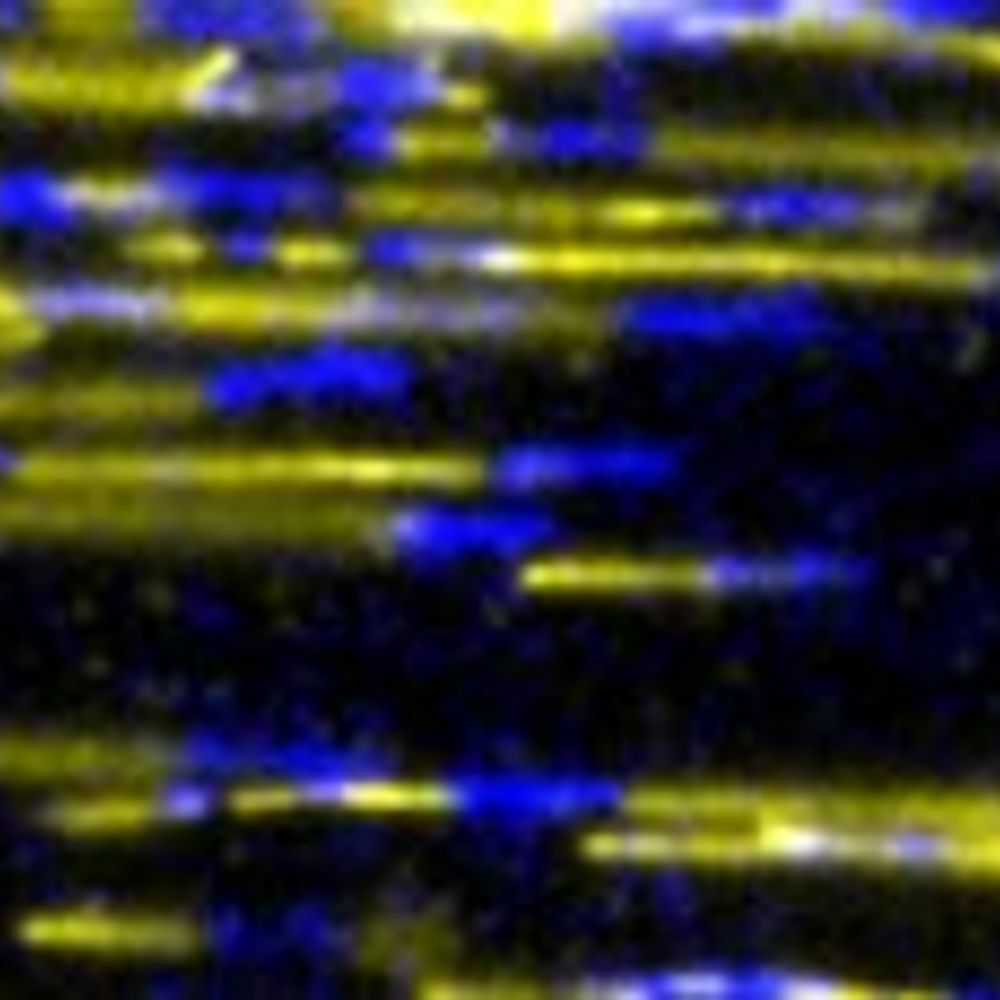
A reminder to use the right P2A sequence to produce separate proteins - the images are from a GPCR-P2A-mCherry construct using a P2A variant without (upper row) and with (lower row) a preceding GSG linker.

December 12, 2025 at 5:55 PM
A reminder to use the right P2A sequence to produce separate proteins - the images are from a GPCR-P2A-mCherry construct using a P2A variant without (upper row) and with (lower row) a preceding GSG linker.
Reposted by Boris Sieber
Come and work with us, We are looking for a new group leader at Turku Bioscience @turkubioscience.bsky.social.
Åbo Akademi University invites applications for a fixed term position as Head of Research in Bioscience (Principle Investigator).
abo.rekrytointi.com/paikat/?o=A_...
Åbo Akademi University invites applications for a fixed term position as Head of Research in Bioscience (Principle Investigator).
abo.rekrytointi.com/paikat/?o=A_...
LinkedIn
This link will take you to a page that’s not on LinkedIn
lnkd.in
December 12, 2025 at 8:02 AM
Come and work with us, We are looking for a new group leader at Turku Bioscience @turkubioscience.bsky.social.
Åbo Akademi University invites applications for a fixed term position as Head of Research in Bioscience (Principle Investigator).
abo.rekrytointi.com/paikat/?o=A_...
Åbo Akademi University invites applications for a fixed term position as Head of Research in Bioscience (Principle Investigator).
abo.rekrytointi.com/paikat/?o=A_...
Reposted by Boris Sieber
My excellent collaborator, Giulia Zanetti, is advertising for a post-doc to work on our shared MRC grant. Please consider applying to this great lab with a supportive mentor to do some exciting structural biology.
www.ucl.ac.uk/work-at-ucl/...
www.ucl.ac.uk/work-at-ucl/...
UCL – University College London
UCL is consistently ranked as one of the top ten universities in the world (QS World University Rankings 2010-2022) and is No.2 in the UK for research power (Research Excellence Framework 2021).
www.ucl.ac.uk
December 11, 2025 at 12:53 PM
My excellent collaborator, Giulia Zanetti, is advertising for a post-doc to work on our shared MRC grant. Please consider applying to this great lab with a supportive mentor to do some exciting structural biology.
www.ucl.ac.uk/work-at-ucl/...
www.ucl.ac.uk/work-at-ucl/...
Reposted by Boris Sieber
💥I am excited to present our first research paper from the lab about caveolae lipid trafficking 🎉 Led by my fantastic PhD candidate @estherocket.bsky.social
Here we looked into caveolae mediated dietary lipid uptake and how this process is mechanistically facilitated 👇 1/n
Here we looked into caveolae mediated dietary lipid uptake and how this process is mechanistically facilitated 👇 1/n

Lipid-induced Caveolin1-Lipid droplet trafficking is associated with lipid droplet growth https://www.biorxiv.org/content/10.64898/2025.12.10.693432v1
December 11, 2025 at 7:08 AM
💥I am excited to present our first research paper from the lab about caveolae lipid trafficking 🎉 Led by my fantastic PhD candidate @estherocket.bsky.social
Here we looked into caveolae mediated dietary lipid uptake and how this process is mechanistically facilitated 👇 1/n
Here we looked into caveolae mediated dietary lipid uptake and how this process is mechanistically facilitated 👇 1/n
Reposted by Boris Sieber
📢 Deadline approaching fast 📢
to submit an abstract for the great cytoskeleton extravaganza!
to submit an abstract for the great cytoskeleton extravaganza!

Learn all things #cytoskeleton #research in an interdisciplinary environment at EMBO Workshop "Structure and Function of the Cytoskeleton" in Paris, FR, 7–10 April 2026.
Deadline: 20 December 2025
https://meetings.embo.org/event/26-cytoskeleton
#EMBOCytoskeletalFunction #EMBOevents #conference 🧪
Deadline: 20 December 2025
https://meetings.embo.org/event/26-cytoskeleton
#EMBOCytoskeletalFunction #EMBOevents #conference 🧪

Structure and Function of the Cytoskeleton
The cytoskeleton, a dynamic and intricate network of protein filaments, is found within the cytoplasm of all cells, from bacteria and archaea to complex eukaryotes. This essential cellular component …
meetings.embo.org
December 10, 2025 at 4:44 PM
📢 Deadline approaching fast 📢
to submit an abstract for the great cytoskeleton extravaganza!
to submit an abstract for the great cytoskeleton extravaganza!
Reposted by Boris Sieber
Postdoc opportunity with Michel Goedert and myself to work on #cryoEM/#cryoET structures of #amyloids. Feel free to email me with any questions you might have.
mrc.tal.net/vx/mobile-0/...
mrc.tal.net/vx/mobile-0/...
Postdoctoral Scientist - Neurobiology - Dr Michel Goedert - LMB 2752 - Medical Research Council
Location: Cambridge. Vacancy: Postdoctoral Scientist - Neurobiology - Dr Michel Goedert - LMB 2752. Closing Date: 04/01/2026, 23:55
mrc.tal.net
December 10, 2025 at 2:28 PM
Postdoc opportunity with Michel Goedert and myself to work on #cryoEM/#cryoET structures of #amyloids. Feel free to email me with any questions you might have.
mrc.tal.net/vx/mobile-0/...
mrc.tal.net/vx/mobile-0/...
Reposted by Boris Sieber

The @biologists.bsky.social is amazing 🧪

December 9, 2025 at 3:48 PM
The @biologists.bsky.social is amazing 🧪
Reposted by Boris Sieber
We are recruiting a tenure track professor in the broader area of molecular biology @zmbh.uni-heidelberg.de at Heidelberg University! www.nature.com/naturecareer... Please share and apply!

Tenure Track Professorship (W1 with Tenure Track to W3) in “Molecular Biology" (f/m/d) - Heidelberg job with Universität Heidelberg | 12850668
The Center for Molecular Biology of Heidelberg University (ZMBH) and the Faculty of Biosciences invite applications for a Tenure Track Professors...
www.nature.com
December 9, 2025 at 6:11 PM
We are recruiting a tenure track professor in the broader area of molecular biology @zmbh.uni-heidelberg.de at Heidelberg University! www.nature.com/naturecareer... Please share and apply!