



Andrew Ellisdon
@drellisdon.bsky.social
Structural biology and protein engineering at Monash University. Cryo-EM and AI/ML-guided structural biology of cancer and immune complexes.
https://t.co/5JwsAwTSH5
https://t.co/5JwsAwTSH5
Pinned

Excited to share our latest research, out today in Cell (@cellpress.bsky.social)
Using cryo-EM and cell-based studies, we reveal how large nutrient sensing protein complexes form at the lysosomal membrane to turn off mTORC1 and halt anabolic signalling.
Read the paper here: doi.org/10.1016/j.ce...
Using cryo-EM and cell-based studies, we reveal how large nutrient sensing protein complexes form at the lysosomal membrane to turn off mTORC1 and halt anabolic signalling.
Read the paper here: doi.org/10.1016/j.ce...
Reposted by Andrew Ellisdon

TSC1 phosphorylation by lysosomal mTORC1 establishes a minimal autoregulatory feedback loop https://www.biorxiv.org/content/10.64898/2026.01.15.699678v1
January 16, 2026 at 5:30 AM
TSC1 phosphorylation by lysosomal mTORC1 establishes a minimal autoregulatory feedback loop https://www.biorxiv.org/content/10.64898/2026.01.15.699678v1
Reposted by Andrew Ellisdon

🤠
Cryo-EM structure of the human COP1-DET1 ubiquitin ligase complex #cryoEM
www.nature.com/articles/s41...
Cryo-EM structure of the human COP1-DET1 ubiquitin ligase complex #cryoEM
www.nature.com/articles/s41...

January 15, 2026 at 10:56 AM
🤠
Cryo-EM structure of the human COP1-DET1 ubiquitin ligase complex #cryoEM
www.nature.com/articles/s41...
Cryo-EM structure of the human COP1-DET1 ubiquitin ligase complex #cryoEM
www.nature.com/articles/s41...
Reposted by Andrew Ellisdon


Reposted by Andrew Ellisdon
⁉️The ARC has delayed outcomes of ALL grants 1–4 months & increased scheduled outcome windows from 2 weeks to 3 months!
This reverses 4 years of progress in providing greater certainty & ability to plan for researchers, their families & unis.
Their excuse? Security checks under new ARC legislation👇
This reverses 4 years of progress in providing greater certainty & ability to plan for researchers, their families & unis.
Their excuse? Security checks under new ARC legislation👇

January 12, 2026 at 1:17 AM
⁉️The ARC has delayed outcomes of ALL grants 1–4 months & increased scheduled outcome windows from 2 weeks to 3 months!
This reverses 4 years of progress in providing greater certainty & ability to plan for researchers, their families & unis.
Their excuse? Security checks under new ARC legislation👇
This reverses 4 years of progress in providing greater certainty & ability to plan for researchers, their families & unis.
Their excuse? Security checks under new ARC legislation👇
Reposted by Andrew Ellisdon

You can find out more here: www.cell.com/cell/fulltex...

Structure of the lysosomal KICSTOR-GATOR1-SAMTOR nutrient-sensing supercomplex
This study reveals how KICSTOR and GATOR1 assemble into a crescent-shaped lysosomal
complex that regulates mTORC1 during amino acid starvation and how SAMTOR binds KICSTOR
in an S-adenosylmethionine-i...
www.cell.com
January 13, 2026 at 1:56 AM
You can find out more here: www.cell.com/cell/fulltex...
Reposted by Andrew Ellisdon
The latest research from our team is out in Cell @cp-cell.bsky.social! We used #cryo-EM, #imaging, #BRET, and #biosensors targeted to the lysosome to understand how the KICSTOR-GATOR1 complex turns off #mTORC1 in response to low levels of amino acids.

January 13, 2026 at 1:56 AM
The latest research from our team is out in Cell @cp-cell.bsky.social! We used #cryo-EM, #imaging, #BRET, and #biosensors targeted to the lysosome to understand how the KICSTOR-GATOR1 complex turns off #mTORC1 in response to low levels of amino acids.
Reposted by Andrew Ellisdon
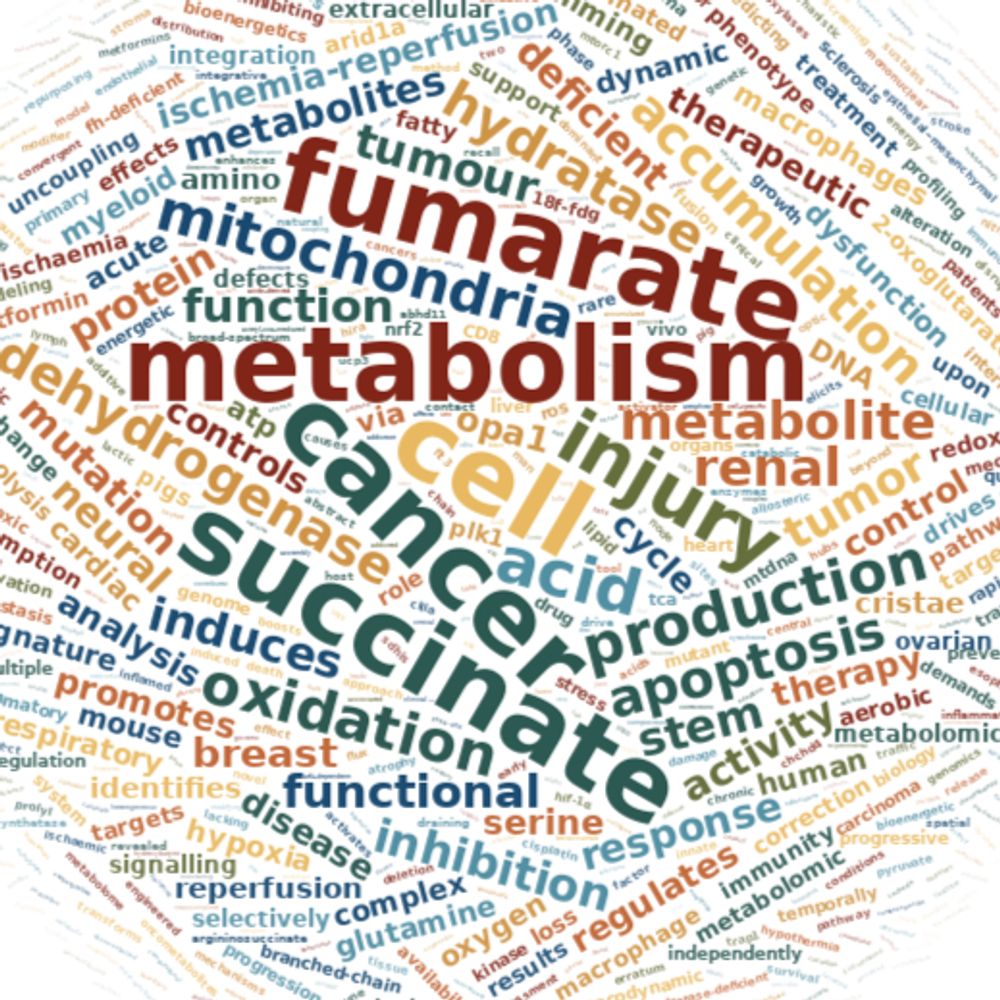
Good Sunday, all. Here is a great summary of last week's papers in #cancermetabolism and #mitochondrialbiology. Don't miss it! Find it here: biomed.news/bims-camemi/... Biomed News #keepreading
"Life isn't a dress rehearsal; this is it. It's your job to show up for this moment" Oliver Burkeman
"Life isn't a dress rehearsal; this is it. It's your job to show up for this moment" Oliver Burkeman

January 11, 2026 at 6:37 AM
Good Sunday, all. Here is a great summary of last week's papers in #cancermetabolism and #mitochondrialbiology. Don't miss it! Find it here: biomed.news/bims-camemi/... Biomed News #keepreading
"Life isn't a dress rehearsal; this is it. It's your job to show up for this moment" Oliver Burkeman
"Life isn't a dress rehearsal; this is it. It's your job to show up for this moment" Oliver Burkeman
Reposted by Andrew Ellisdon
Structure of the lysosomal KICSTOR-GATOR1-SAMTOR nutrient-sensing supercomplex pubmed.ncbi.nlm.nih.gov/41512879/ #cryoem
January 10, 2026 at 12:35 PM
Structure of the lysosomal KICSTOR-GATOR1-SAMTOR nutrient-sensing supercomplex pubmed.ncbi.nlm.nih.gov/41512879/ #cryoem
Reposted by Andrew Ellisdon
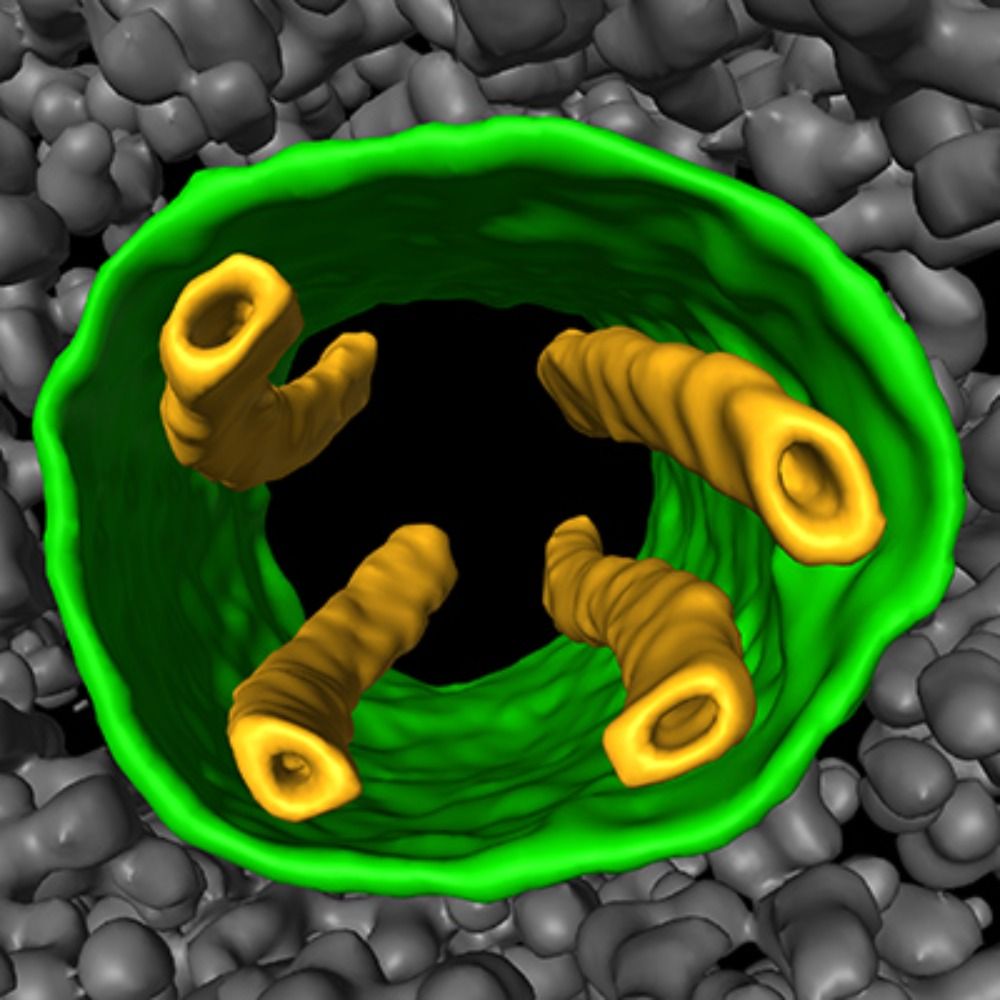
The #ChlamyDataset is on the cover of @cp-molcell.bsky.social 🖼️🥰!
Read @lifeonthewedge.bsky.social's great thread🧵 for the inside scoop🍨 on all the #TeamTomo developments already made possible since these 1829 tomos hit EMPIAR 🧪 🧶🧬
For more, here's the old preprint thread:
bsky.app/profile/cell...
Read @lifeonthewedge.bsky.social's great thread🧵 for the inside scoop🍨 on all the #TeamTomo developments already made possible since these 1829 tomos hit EMPIAR 🧪 🧶🧬
For more, here's the old preprint thread:
bsky.app/profile/cell...
This one was quite the journey! The paper describing the #ChlamyDataset is finally out and on the cover of Mol Cell!
This beautiful rendering made by co-author @jessheebner.bsky.social and Holly Peterson shows an instance of mitochondrial fission found in the dataset 😍
[Maybe long thread ahead]
This beautiful rendering made by co-author @jessheebner.bsky.social and Holly Peterson shows an instance of mitochondrial fission found in the dataset 😍
[Maybe long thread ahead]
January 9, 2026 at 7:49 PM
The #ChlamyDataset is on the cover of @cp-molcell.bsky.social 🖼️🥰!
Read @lifeonthewedge.bsky.social's great thread🧵 for the inside scoop🍨 on all the #TeamTomo developments already made possible since these 1829 tomos hit EMPIAR 🧪 🧶🧬
For more, here's the old preprint thread:
bsky.app/profile/cell...
Read @lifeonthewedge.bsky.social's great thread🧵 for the inside scoop🍨 on all the #TeamTomo developments already made possible since these 1829 tomos hit EMPIAR 🧪 🧶🧬
For more, here's the old preprint thread:
bsky.app/profile/cell...
Excited to share our latest research, out today in Cell (@cellpress.bsky.social)
Using cryo-EM and cell-based studies, we reveal how large nutrient sensing protein complexes form at the lysosomal membrane to turn off mTORC1 and halt anabolic signalling.
Read the paper here: doi.org/10.1016/j.ce...
Using cryo-EM and cell-based studies, we reveal how large nutrient sensing protein complexes form at the lysosomal membrane to turn off mTORC1 and halt anabolic signalling.
Read the paper here: doi.org/10.1016/j.ce...
January 9, 2026 at 7:11 AM
Excited to share our latest research, out today in Cell (@cellpress.bsky.social)
Using cryo-EM and cell-based studies, we reveal how large nutrient sensing protein complexes form at the lysosomal membrane to turn off mTORC1 and halt anabolic signalling.
Read the paper here: doi.org/10.1016/j.ce...
Using cryo-EM and cell-based studies, we reveal how large nutrient sensing protein complexes form at the lysosomal membrane to turn off mTORC1 and halt anabolic signalling.
Read the paper here: doi.org/10.1016/j.ce...
Reposted by Andrew Ellisdon

Now online! Structure of the lysosomal KICSTOR-GATOR1-SAMTOR nutrient-sensing supercomplex

Structure of the lysosomal KICSTOR-GATOR1-SAMTOR nutrient-sensing supercomplex
This study reveals how KICSTOR and GATOR1 assemble into a crescent-shaped lysosomal complex that regulates mTORC1 during amino acid starvation and how SAMTOR binds KICSTOR in an S-adenosylmethionine-incompatible conformation to couple methionine sensing to mTORC1 regulation.
dlvr.it
January 8, 2026 at 3:59 PM
Now online! Structure of the lysosomal KICSTOR-GATOR1-SAMTOR nutrient-sensing supercomplex
Reposted by Andrew Ellisdon
Thrilled to share our latest work @luptoncj.bsky.social @drellisdon.bsky.social @drmlhalls.bsky.social.
Structure of the lysosomal KICSTOR-GATOR1-SAMTOR nutrient-sensing supercomplex.
🧪🔬#cryoEM
Now online @cellpress.bsky.social.
doi.org/10.1016/j.ce...
Structure of the lysosomal KICSTOR-GATOR1-SAMTOR nutrient-sensing supercomplex.
🧪🔬#cryoEM
Now online @cellpress.bsky.social.
doi.org/10.1016/j.ce...

January 8, 2026 at 7:39 PM
Thrilled to share our latest work @luptoncj.bsky.social @drellisdon.bsky.social @drmlhalls.bsky.social.
Structure of the lysosomal KICSTOR-GATOR1-SAMTOR nutrient-sensing supercomplex.
🧪🔬#cryoEM
Now online @cellpress.bsky.social.
doi.org/10.1016/j.ce...
Structure of the lysosomal KICSTOR-GATOR1-SAMTOR nutrient-sensing supercomplex.
🧪🔬#cryoEM
Now online @cellpress.bsky.social.
doi.org/10.1016/j.ce...
Reposted by Andrew Ellisdon
A very brief break in the clouds over Melbourne last night. The universe is stunning.

December 24, 2025 at 12:02 AM
A very brief break in the clouds over Melbourne last night. The universe is stunning.
Reposted by Andrew Ellisdon
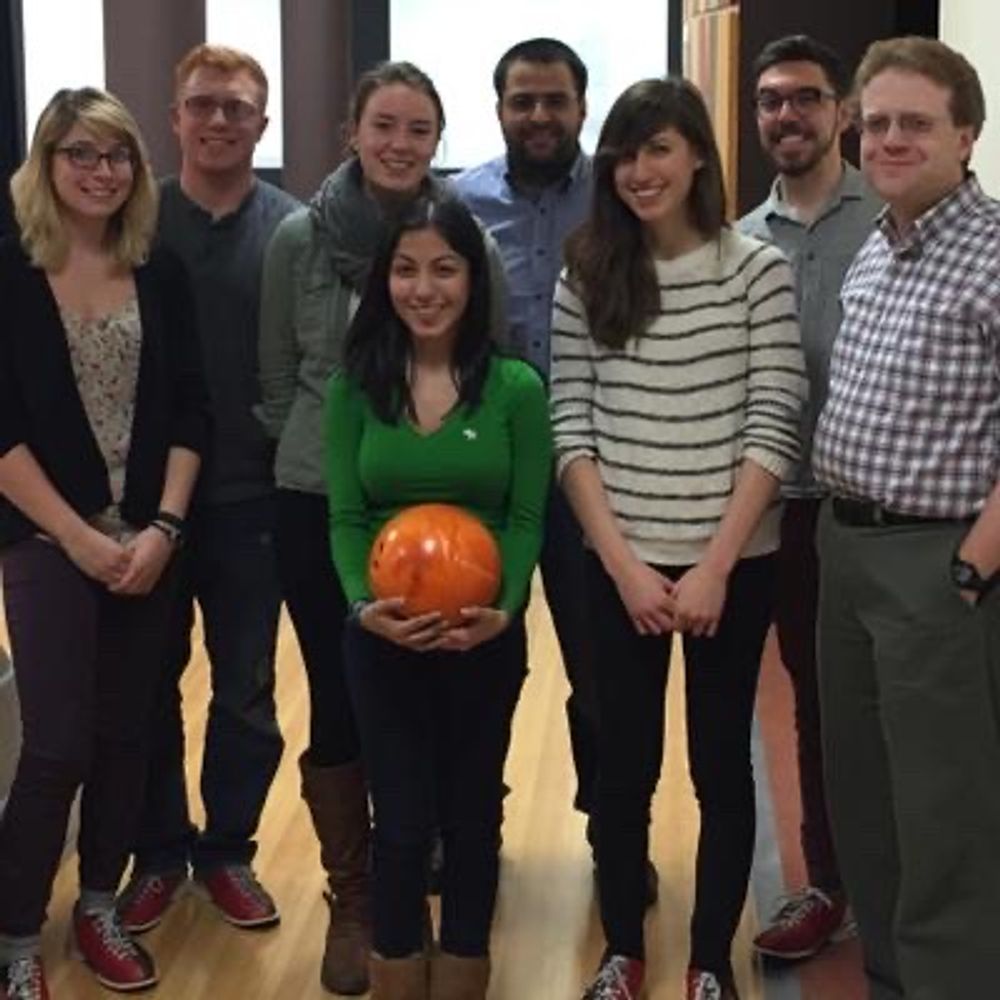
This long-awaited article demonstrates that depletion of individual essential amino acids induces profound changes in the liver epigenome, with AA-specific molecular changes at the level of histone PTMs, the transcriptome, and metabolome www.jbc.org/article/S002...

Depletion of individual dietary amino acids induce distinct metabolic and chromatin states
Reducing dietary levels of protein or specific essential amino acids (EAAs) promotes
favorable metabolic reprogramming, including improved glucose tolerance, increased
insulin sensitivity and reduced ...
www.jbc.org
December 18, 2025 at 9:02 PM
This long-awaited article demonstrates that depletion of individual essential amino acids induces profound changes in the liver epigenome, with AA-specific molecular changes at the level of histone PTMs, the transcriptome, and metabolome www.jbc.org/article/S002...
Reposted by Andrew Ellisdon

In our new preprint, we show how fibril-dynamics of signaling component TIRAP supports sensitive & fast sensing of endotoxin LPS. Congrats to co-lead @arthurfelker.bsky.social. @piehlerlab.bsky.social @arnemoeller.bsky.social #TLR #cryoEM #blender doi.org/10.64898/202...


December 17, 2025 at 4:00 PM
In our new preprint, we show how fibril-dynamics of signaling component TIRAP supports sensitive & fast sensing of endotoxin LPS. Congrats to co-lead @arthurfelker.bsky.social. @piehlerlab.bsky.social @arnemoeller.bsky.social #TLR #cryoEM #blender doi.org/10.64898/202...
Reposted by Andrew Ellisdon

Organelles do NOT have a single uniform pH.
And if you think they must, because “protons diffuse fast,” this paper is for you.
A thread on why that assumption is wrong; and what we found instead. 🧵 1/n
And if you think they must, because “protons diffuse fast,” this paper is for you.
A thread on why that assumption is wrong; and what we found instead. 🧵 1/n

Organelles harbour pH gradients https://www.biorxiv.org/content/10.64898/2025.12.12.694065v1
December 17, 2025 at 12:46 AM
Organelles do NOT have a single uniform pH.
And if you think they must, because “protons diffuse fast,” this paper is for you.
A thread on why that assumption is wrong; and what we found instead. 🧵 1/n
And if you think they must, because “protons diffuse fast,” this paper is for you.
A thread on why that assumption is wrong; and what we found instead. 🧵 1/n
Reposted by Andrew Ellisdon

Jacqmin, Boonen et al. report that the loss of maspardin, which is deficient in spastic paraplegia 21, results in RAB7 hyperactivation due to mislocalization. This abnormal RAB7 localization leads to defects in #lysosome #trafficking & disruption of the mTOR–TFEB pathway. rupress.org/jcb/article/...

December 16, 2025 at 5:30 PM
Jacqmin, Boonen et al. report that the loss of maspardin, which is deficient in spastic paraplegia 21, results in RAB7 hyperactivation due to mislocalization. This abnormal RAB7 localization leads to defects in #lysosome #trafficking & disruption of the mTOR–TFEB pathway. rupress.org/jcb/article/...
Reposted by Andrew Ellisdon
Congratulations to the Landsberg lab for a fantastic paper in Nat Comms on the structure of the YenTC toxin. Led by Yu Shang Low and Solace Roche. @dr-berger.bsky.social @sarahjpiper.bsky.social

Complete structures of the YenTc holotoxin prepore and pore reveal the evolutionary basis for chitinase incorporation into ABC toxins - Nature Communications
ABC toxins are bacterial insecticides with biotechnological potential. Here, Low et al. have deciphered soluble and membrane-inserted structures of YenTc that highlight structural and mechanistic dive...
www.nature.com
December 15, 2025 at 10:30 PM
Congratulations to the Landsberg lab for a fantastic paper in Nat Comms on the structure of the YenTC toxin. Led by Yu Shang Low and Solace Roche. @dr-berger.bsky.social @sarahjpiper.bsky.social
Reposted by Andrew Ellisdon
This work started more than 5 years ago and combines molecular phylogenetics, diversification models, paleoecology and micropaleontology, requiring ~136 CPU-years 🧬💻! A lovely interdisciplinary collaboration with @phoebefossil.bsky.social, Hélèn Morlon and @fburki.bsky.social.
#ProtistsOnSky
#ProtistsOnSky
December 15, 2025 at 8:19 AM
This work started more than 5 years ago and combines molecular phylogenetics, diversification models, paleoecology and micropaleontology, requiring ~136 CPU-years 🧬💻! A lovely interdisciplinary collaboration with @phoebefossil.bsky.social, Hélèn Morlon and @fburki.bsky.social.
#ProtistsOnSky
#ProtistsOnSky
Reposted by Andrew Ellisdon

A new study reveals a signaling loop that drives metastasis in triple-negative breast cancer, discoveries about amylin receptor subunits could inform future drug design, and more this week in #ScienceSignaling. https://scim.ag/3HH1ePw

August 19, 2025 at 9:00 PM
A new study reveals a signaling loop that drives metastasis in triple-negative breast cancer, discoveries about amylin receptor subunits could inform future drug design, and more this week in #ScienceSignaling. https://scim.ag/3HH1ePw
Hox-C12 coordinates β2-adrenoceptor coupling to a cAMP/calcium feedforward loop to drive invasion in triple-negative breast cancer | Science Signaling www.science.org/doi/10.1126/...

Hox-C12 coordinates β2-adrenoceptor coupling to a cAMP/calcium feedforward loop to drive invasion in triple-negative breast cancer
A GPCR and a moonlighting transcription factor together drive metastasis in breast cancer.
www.science.org
August 19, 2025 at 8:09 PM
Hox-C12 coordinates β2-adrenoceptor coupling to a cAMP/calcium feedforward loop to drive invasion in triple-negative breast cancer | Science Signaling www.science.org/doi/10.1126/...
Exciting times for structural biology @monashuniversity.bsky.social from cryo-EM to therapeutic development of new AI-guided therapeutics.
www.theage.com.au/technology/n...
www.theage.com.au/technology/n...

Nvidia supercomputer marks ‘new era’ for Australian AI
The world’s most valuable company is building an Australia-first supercomputer that will initially tackle cancer research.
www.theage.com.au
August 15, 2025 at 11:26 PM
Exciting times for structural biology @monashuniversity.bsky.social from cryo-EM to therapeutic development of new AI-guided therapeutics.
www.theage.com.au/technology/n...
www.theage.com.au/technology/n...
Reposted by Andrew Ellisdon
@lorneproteins.bsky.social Meeting with the Lorne Protein Committee to plan for the 2026 and future meetings!
@wehi-research.bsky.social
@wehi-research.bsky.social
July 23, 2025 at 3:57 AM
@lorneproteins.bsky.social Meeting with the Lorne Protein Committee to plan for the 2026 and future meetings!
@wehi-research.bsky.social
@wehi-research.bsky.social
Reposted by Andrew Ellisdon

Happy to share the latest work on a bacterial protein that inhibits human mRNA decay machinery, in collaboration with @smlea.bsky.social #RNAsky
www.nature.com/articles/s41... Intracellular pathogen effector reprograms host gene expression by inhibiting mRNA decay | Nature Communications
www.nature.com/articles/s41... Intracellular pathogen effector reprograms host gene expression by inhibiting mRNA decay | Nature Communications
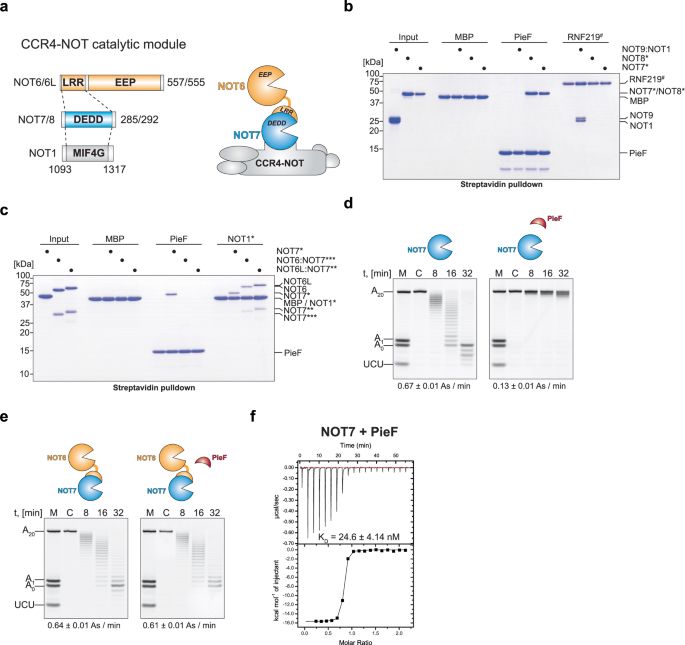
Intracellular pathogen effector reprograms host gene expression by inhibiting mRNA decay - Nature Communications
Intracellular pathogens hijack host gene expression to subvert cellular processes. Here, the authors show that Legionella pneumophila’s PieF effector inhibits the human CCR4-NOT deadenylation machiner...
www.nature.com
July 13, 2025 at 3:59 AM
Happy to share the latest work on a bacterial protein that inhibits human mRNA decay machinery, in collaboration with @smlea.bsky.social #RNAsky
www.nature.com/articles/s41... Intracellular pathogen effector reprograms host gene expression by inhibiting mRNA decay | Nature Communications
www.nature.com/articles/s41... Intracellular pathogen effector reprograms host gene expression by inhibiting mRNA decay | Nature Communications