



Roland Hatzenpichler
@environmicrobio.bsky.social
archaea, methane, microbial ecophysiology, single cell activity, next generation physiology / for evidence-based decision-making / I hold strong opinions / I don’t mince words / posts reflect personal views / www.environmental-microbiology.com
Pinned
Physiology, the functioning of a cell at a given time and in a given set of physiochemical conditions, is an emergent property that cannot be reliably predicted from genomic data or metabolic reconstructions alone. #testthy(metagenomic)hypotheses
Reposted by Roland Hatzenpichler

New from Matters Microbial— episode 123: What Whooping Cough Can Teach Us
Dr. Seema Mattoo joins @markowenmartin.bsky.social to discuss the fascinating molecular genetics of the bacterium Bordetella pertussis, which can cause the human disease whooping cough. 🔗⬇️
Dr. Seema Mattoo joins @markowenmartin.bsky.social to discuss the fascinating molecular genetics of the bacterium Bordetella pertussis, which can cause the human disease whooping cough. 🔗⬇️

Matters Microbial #123: What Whooping Cough Can Teach US
YouTube video by MicrobeTV
youtu.be
February 6, 2026 at 2:47 PM
New from Matters Microbial— episode 123: What Whooping Cough Can Teach Us
Dr. Seema Mattoo joins @markowenmartin.bsky.social to discuss the fascinating molecular genetics of the bacterium Bordetella pertussis, which can cause the human disease whooping cough. 🔗⬇️
Dr. Seema Mattoo joins @markowenmartin.bsky.social to discuss the fascinating molecular genetics of the bacterium Bordetella pertussis, which can cause the human disease whooping cough. 🔗⬇️
Reposted by Roland Hatzenpichler
Why methane surged in the atmosphere during the early 2020s www.science.org/doi/10.1126/... #jcampubs

Why methane surged in the atmosphere during the early 2020s
The atmospheric methane (CH4) growth rate surged after 2019, peaking at 16.2 parts per billion per year (ppb year−1) in 2020 before declining to 8.6 ppb year−1 in 2023. Using multiple atmospheric inve...
www.science.org
February 6, 2026 at 3:33 PM
Why methane surged in the atmosphere during the early 2020s www.science.org/doi/10.1126/... #jcampubs
Is it research misconduct to use chatbots because the training used stolen data? You cannot avoid it! The question is just if you are ok with it. Please argue pro or con misconduct.
February 6, 2026 at 1:31 AM
Is it research misconduct to use chatbots because the training used stolen data? You cannot avoid it! The question is just if you are ok with it. Please argue pro or con misconduct.
Can we just agree to call generative AI tools “plagiarism robots” from now on?

I get to review journal articles sometimes. Can confirm, it’s getting pretty sloppy.
It astonishes me that people ask these things scientific questions at all. You should see what the citations look like in a paper generated by a plagiarism robot. Utterly worthless.
It astonishes me that people ask these things scientific questions at all. You should see what the citations look like in a paper generated by a plagiarism robot. Utterly worthless.

Welcome, piles of slop filling up the journals with clouds of useless wordy garbage. Case in point:
February 5, 2026 at 1:31 AM
Can we just agree to call generative AI tools “plagiarism robots” from now on?
Reposted by Roland Hatzenpichler
Come work with us on #darkoxygen as part of the NASA Postdoctoral Fellowship Program. It is an amazing opportunity to get up to 3 years of funding. Deadlines are March 1. and November 1. Happy to discuss your ideas! Details here: zintellect.com/Opportunity/...
@mblscience.bsky.social #astrobiology
@mblscience.bsky.social #astrobiology
Zintellect - National Aeronautics and Space Administration (NASA) - ICAR - OxyMoRon: Understanding dioxygen production and consumption in apparently anoxic environments - 0042-NPP-MAR26-ABProg-Astrobi...
About the NASA Postdoctoral Program The NASA Postdoctoral Program (NPP) offers unique research opportunities to highly-talented scientists to engage in ong
zintellect.com
February 3, 2026 at 9:20 PM
Come work with us on #darkoxygen as part of the NASA Postdoctoral Fellowship Program. It is an amazing opportunity to get up to 3 years of funding. Deadlines are March 1. and November 1. Happy to discuss your ideas! Details here: zintellect.com/Opportunity/...
@mblscience.bsky.social #astrobiology
@mblscience.bsky.social #astrobiology
New preprint: “Proteomic stress response by a novel methanogen enriched from the Great Salt Lake”, first author William Christian. TLDR: we enriched a novel, euryarchaeotal, methyl-dismutating methanogen that grows at 16% salinity. biorxiv.org/content/10.64898/2026.01.29.702513v2 🧵 🦠 #microsky

February 3, 2026 at 4:37 PM
New preprint: “Proteomic stress response by a novel methanogen enriched from the Great Salt Lake”, first author William Christian. TLDR: we enriched a novel, euryarchaeotal, methyl-dismutating methanogen that grows at 16% salinity. biorxiv.org/content/10.64898/2026.01.29.702513v2 🧵 🦠 #microsky
Pioneering work by the @kacarlab.bsky.social Ancestral state reconstruction, expression of ancient nitrogenases, measuring their isotope fractionation, reinterpretations of geobiological record. Super cool :)

The study shows that nitrogenase enzymes have maintained stable isotope signatures over billions of years, revealing how ancient #microbes shaped Earth’s #nitrogen cycle and offering a new experimental framework for probing early life.
www.nature.com/articles/s41...
www.nature.com/articles/s41...

Resurrected nitrogenases recapitulate canonical N-isotope biosignatures over two billion years - Nature Communications
The study shows that nitrogenase enzymes have maintained stable isotope signatures over billions of years, revealing how ancient microbes shaped Earth’s nitrogen cycle and offering a new experimental ...
www.nature.com
January 29, 2026 at 2:16 PM
Pioneering work by the @kacarlab.bsky.social Ancestral state reconstruction, expression of ancient nitrogenases, measuring their isotope fractionation, reinterpretations of geobiological record. Super cool :)
Reposted by Roland Hatzenpichler

The origin of eukaryotic cells continues to be one of the greatest mysteries in biology.
EMBL Grenoble is excited to welcome Florian Wollweber, who will use cutting-edge imaging techniques to study Asgard archaea — microbes closely related to our earliest ancestors. 🦠🔬
www.embl.org/news/people-...
EMBL Grenoble is excited to welcome Florian Wollweber, who will use cutting-edge imaging techniques to study Asgard archaea — microbes closely related to our earliest ancestors. 🦠🔬
www.embl.org/news/people-...

January 28, 2026 at 10:56 AM
The origin of eukaryotic cells continues to be one of the greatest mysteries in biology.
EMBL Grenoble is excited to welcome Florian Wollweber, who will use cutting-edge imaging techniques to study Asgard archaea — microbes closely related to our earliest ancestors. 🦠🔬
www.embl.org/news/people-...
EMBL Grenoble is excited to welcome Florian Wollweber, who will use cutting-edge imaging techniques to study Asgard archaea — microbes closely related to our earliest ancestors. 🦠🔬
www.embl.org/news/people-...
R u an undergraduate and wanna work in my lab - or another lab at MSU - in the summer? Apply to our NSF-funded Research Experiences for Undergraduates program 'Microbiology of Low Oxygen Ecosystems'! Expenses paid, competitive application, email me if you have questions. montana.edu/mbi/reu/
REU Program - Department of Microbiology & Cell Biology | Montana State University
www.montana.edu
January 28, 2026 at 8:29 PM
R u an undergraduate and wanna work in my lab - or another lab at MSU - in the summer? Apply to our NSF-funded Research Experiences for Undergraduates program 'Microbiology of Low Oxygen Ecosystems'! Expenses paid, competitive application, email me if you have questions. montana.edu/mbi/reu/
Reposted by Roland Hatzenpichler
Meet "OxyMoRon" our 5-year NASA ICAR program to study dark oxygen production in Earth's hidden ecosystems. We have multiple positions and are happy about collabs.
Co-PIs:@valdeanda.bsky.social @microbiaki.bsky.social @valiergaly.bsky.social Ranjani Murali, Scott Wankel
www.mbl.edu/news/emil-ru...
Co-PIs:@valdeanda.bsky.social @microbiaki.bsky.social @valiergaly.bsky.social Ranjani Murali, Scott Wankel
www.mbl.edu/news/emil-ru...

Emil Ruff Leads Team to Explore Dark Oxygen Through NASA Collaborative Award | Marine Biological Laboratory
For more than a century, textbooks asserted that molecular oxygen (O2) on Earth is produced almost entirely by photosynthesis, through plants and microbes. But discoveries over the past decade have ov...
www.mbl.edu
January 28, 2026 at 5:34 PM
Meet "OxyMoRon" our 5-year NASA ICAR program to study dark oxygen production in Earth's hidden ecosystems. We have multiple positions and are happy about collabs.
Co-PIs:@valdeanda.bsky.social @microbiaki.bsky.social @valiergaly.bsky.social Ranjani Murali, Scott Wankel
www.mbl.edu/news/emil-ru...
Co-PIs:@valdeanda.bsky.social @microbiaki.bsky.social @valiergaly.bsky.social Ranjani Murali, Scott Wankel
www.mbl.edu/news/emil-ru...
“We argue that ever-changing taxonomic orthodoxy should not override practical utility, historical coherence, and sense of community.”

How do you react when your favorite microbe is renamed by taxonomists who are completely outside your field—and who ignore the community that actually works with it? Here is our clear answer re the case of Pseudomonas putida KT2440 👉🏻 journals.asm.org/doi/10.1128/...

The disputed identity of Pseudomonas putida KT2440: when taxonomists rename your favorite microbe | mBio
Names matter; they are not mere labels. They operate as anchors of memory, social coordinates, and references of collective identity. When a name becomes established through long-term
use and broad ad...
journals.asm.org
January 27, 2026 at 5:21 PM
“We argue that ever-changing taxonomic orthodoxy should not override practical utility, historical coherence, and sense of community.”
Reposted by Roland Hatzenpichler

New episode of #MattersMicrobial for 2026! This time, Dr. Alaina Weinheimer joins the #QualityQuorum to chat about marine jumbophages and related matters. Please spread the #GoodMicrobialWord? @microbe.tv @univpugetsound @ASMicrobiology
youtu.be/5j4qy1hgoUY?...
youtu.be/5j4qy1hgoUY?...

January 27, 2026 at 4:02 PM
New episode of #MattersMicrobial for 2026! This time, Dr. Alaina Weinheimer joins the #QualityQuorum to chat about marine jumbophages and related matters. Please spread the #GoodMicrobialWord? @microbe.tv @univpugetsound @ASMicrobiology
youtu.be/5j4qy1hgoUY?...
youtu.be/5j4qy1hgoUY?...
Reposted by Roland Hatzenpichler

A quorum-sensing molecule from Pseudomonas aeruginosa induces defensive multicellularity in a coinfecting pathogen
-in PNAS from @anukharelab.bsky.social
www.pnas.org/doi/10.1073/...
-in PNAS from @anukharelab.bsky.social
www.pnas.org/doi/10.1073/...

A quorum-sensing molecule from Pseudomonas aeruginosa induces defensive multicellularity in a coinfecting pathogen | PNAS
Microorganisms commonly exist in polymicrobial communities, where they can respond
to interspecies secreted molecules by altering behaviors and phy...
www.pnas.org
January 24, 2026 at 11:38 AM
A quorum-sensing molecule from Pseudomonas aeruginosa induces defensive multicellularity in a coinfecting pathogen
-in PNAS from @anukharelab.bsky.social
www.pnas.org/doi/10.1073/...
-in PNAS from @anukharelab.bsky.social
www.pnas.org/doi/10.1073/...
Reposted by Roland Hatzenpichler
Here’s the deal with the FY26 NIH funding bill:
One line in the 1000+ pg bill = significantly less science.
The increase to ~40% of grants moving to MYF is estimated to result in a 35% decrease in the NUMBER of NIH grants funded annually—moving the paylines from 10% to around 4%.
THIS IS BAD.
One line in the 1000+ pg bill = significantly less science.
The increase to ~40% of grants moving to MYF is estimated to result in a 35% decrease in the NUMBER of NIH grants funded annually—moving the paylines from 10% to around 4%.
THIS IS BAD.
January 21, 2026 at 1:11 PM
Here’s the deal with the FY26 NIH funding bill:
One line in the 1000+ pg bill = significantly less science.
The increase to ~40% of grants moving to MYF is estimated to result in a 35% decrease in the NUMBER of NIH grants funded annually—moving the paylines from 10% to around 4%.
THIS IS BAD.
One line in the 1000+ pg bill = significantly less science.
The increase to ~40% of grants moving to MYF is estimated to result in a 35% decrease in the NUMBER of NIH grants funded annually—moving the paylines from 10% to around 4%.
THIS IS BAD.
Reposted by Roland Hatzenpichler

This is the most astonishing graph of what the Trump regime has done to US science. They have destroyed the federal science workforce across the board. The negative impacts on Americans will be felt for generations, and the US might never be the same again.
www.nature.com/immersive/d4...
www.nature.com/immersive/d4...

January 20, 2026 at 10:53 PM
This is the most astonishing graph of what the Trump regime has done to US science. They have destroyed the federal science workforce across the board. The negative impacts on Americans will be felt for generations, and the US might never be the same again.
www.nature.com/immersive/d4...
www.nature.com/immersive/d4...
Dr. Bill Inskeep, now (sadly) Professor >Emeritus< here at Montana State University recently gave two podcasts about life in Yellowstone hot springs! www.bisonjam.com/2374227/epis...
www.bisonjam.com/2374227/epis...
www.bisonjam.com/2374227/epis...

The Hot Side of Yellowstone – Finding New Life in Yellowstone! - Bison Jam
In our second season of Bison Jam, we are focusing on the “hot side” of Yellowstone. In this episode, we are again visiting with Dr. Bill Inskeep, Professor Emeritus in the Department of Land Resource...
www.bisonjam.com
January 20, 2026 at 6:39 PM
Dr. Bill Inskeep, now (sadly) Professor >Emeritus< here at Montana State University recently gave two podcasts about life in Yellowstone hot springs! www.bisonjam.com/2374227/epis...
www.bisonjam.com/2374227/epis...
www.bisonjam.com/2374227/epis...
Reposted by Roland Hatzenpichler

ALERT: Abstract submission deadline is tomorrow (21 January) for the ASM Applied & Environmental Microbiology Meeting within ASM Microbe 2026 in Washington, D.C. (4-7 June). @asm.org
asm.org/events/asm-m...
🧵 for more information including themes for Contributed Abstracts for In-Depth Sessions:
asm.org/events/asm-m...
🧵 for more information including themes for Contributed Abstracts for In-Depth Sessions:
ASM Microbe | Abstracts
ASM Microbe showcases the best microbial sciences in the world and provides a one-of-a-kind forum to explore everything from basic microbiology to translation and application.
asm.org
January 20, 2026 at 3:10 PM
ALERT: Abstract submission deadline is tomorrow (21 January) for the ASM Applied & Environmental Microbiology Meeting within ASM Microbe 2026 in Washington, D.C. (4-7 June). @asm.org
asm.org/events/asm-m...
🧵 for more information including themes for Contributed Abstracts for In-Depth Sessions:
asm.org/events/asm-m...
🧵 for more information including themes for Contributed Abstracts for In-Depth Sessions:
Reposted by Roland Hatzenpichler
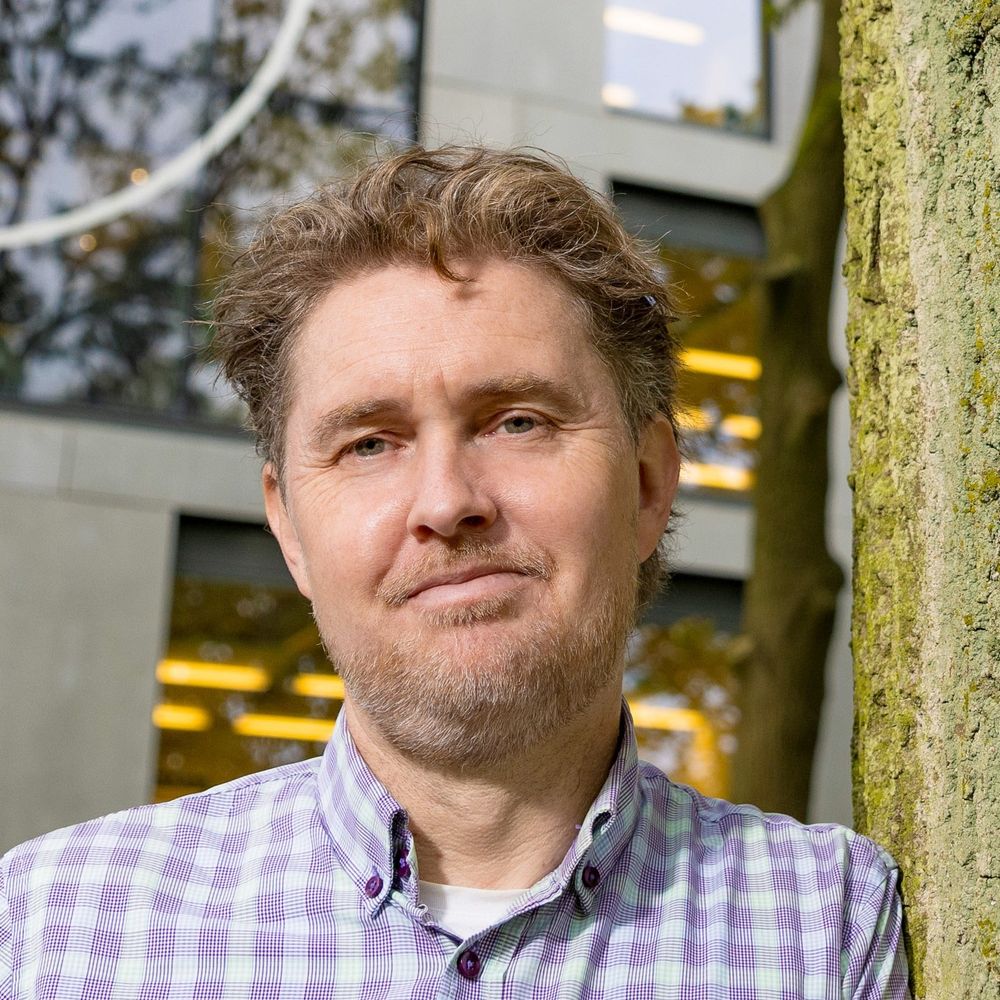
I have a postdoc position in metagenomic exploration available in my group. Candidates with documented experience in phylo & metagenomics and preferably with petabase-scale data mining and GLM workflows are encouraged to apply. Come join us! 🧬🦠💻
Please repost
Apply here: www.wur.nl/en/vacancy/p...
Please repost
Apply here: www.wur.nl/en/vacancy/p...
January 5, 2026 at 10:45 PM
I have a postdoc position in metagenomic exploration available in my group. Candidates with documented experience in phylo & metagenomics and preferably with petabase-scale data mining and GLM workflows are encouraged to apply. Come join us! 🧬🦠💻
Please repost
Apply here: www.wur.nl/en/vacancy/p...
Please repost
Apply here: www.wur.nl/en/vacancy/p...
Reposted by Roland Hatzenpichler

📢 JOB OPPORTUNITY We are hiring a Research Technologist (Advanced Professional) to design, implement, support, analyze, and report on rigorous research in genetics, entomology, and host-microbe interactions. Please consider and share with others in need.
psu.wd1.myworkdayjobs.com/PSU_Staff/jo...
psu.wd1.myworkdayjobs.com/PSU_Staff/jo...

Research Technologist - Life Sciences Advance Professional - Bordenstein Lab
APPLICATION INSTRUCTIONS: CURRENT PENN STATE EMPLOYEE (faculty, staff, technical service, or student), please login to Workday to complete the internal application process. Please do not apply here, a...
psu.wd1.myworkdayjobs.com
January 17, 2026 at 11:01 PM
📢 JOB OPPORTUNITY We are hiring a Research Technologist (Advanced Professional) to design, implement, support, analyze, and report on rigorous research in genetics, entomology, and host-microbe interactions. Please consider and share with others in need.
psu.wd1.myworkdayjobs.com/PSU_Staff/jo...
psu.wd1.myworkdayjobs.com/PSU_Staff/jo...
Any good language people use to explain to congressional staffers why MYF for the NIH as bad? Succinct, clear language suggestions?
January 17, 2026 at 4:27 PM
Any good language people use to explain to congressional staffers why MYF for the NIH as bad? Succinct, clear language suggestions?
Reposted by Roland Hatzenpichler
Dominant contribution of Asgard archaea to eukaryogenesis www.nature.com/articles/s41... #jcampubs
January 14, 2026 at 5:27 PM
Dominant contribution of Asgard archaea to eukaryogenesis www.nature.com/articles/s41... #jcampubs
Reposted by Roland Hatzenpichler

In this week’s @science.org cover article, we discover tree bark is a hidden habitat for abundant, diverse, and specialized microbial life that actively regulate our climate 🦠. Bark isn't just an inert armor of tree but an active interface for climate and biodiversity
www.science.org/eprint/7H9PX...
www.science.org/eprint/7H9PX...

Bark microbiota modulate climate-active gas fluxes in Australian forests
Recent studies suggest that microbes inhabit tree bark, yet little is known about their identities, functions, and environmental roles. Here we reveal, through gene-centric and genome-resolved metagen...
www.science.org
January 8, 2026 at 8:37 PM
In this week’s @science.org cover article, we discover tree bark is a hidden habitat for abundant, diverse, and specialized microbial life that actively regulate our climate 🦠. Bark isn't just an inert armor of tree but an active interface for climate and biodiversity
www.science.org/eprint/7H9PX...
www.science.org/eprint/7H9PX...
Reposted by Roland Hatzenpichler

As I browse around, I keep an eye out for (what I think) are surprising facts.
This 2021 paper estimated that the USA, China and the UK spend USD 2.5 billion on peer review, based on the contribution made by researchers.
🧵
This 2021 paper estimated that the USA, China and the UK spend USD 2.5 billion on peer review, based on the contribution made by researchers.
🧵

January 6, 2026 at 4:09 PM
As I browse around, I keep an eye out for (what I think) are surprising facts.
This 2021 paper estimated that the USA, China and the UK spend USD 2.5 billion on peer review, based on the contribution made by researchers.
🧵
This 2021 paper estimated that the USA, China and the UK spend USD 2.5 billion on peer review, based on the contribution made by researchers.
🧵
New paper out in Current Opinion in Microbiology: MCR-encoding (potentially methanogenic) Thermoproteota are widespread and transcriptionally active in diverse anoxic ecosystems! @dr-zj.bsky.social, Matthew Kellom & @emileyeloe-fadrosh.bsky.social. Funded by DOE BER program. tinyurl.com/2fsyxswj 🦠🧪

January 6, 2026 at 7:54 PM
New paper out in Current Opinion in Microbiology: MCR-encoding (potentially methanogenic) Thermoproteota are widespread and transcriptionally active in diverse anoxic ecosystems! @dr-zj.bsky.social, Matthew Kellom & @emileyeloe-fadrosh.bsky.social. Funded by DOE BER program. tinyurl.com/2fsyxswj 🦠🧪
Reposted by Roland Hatzenpichler
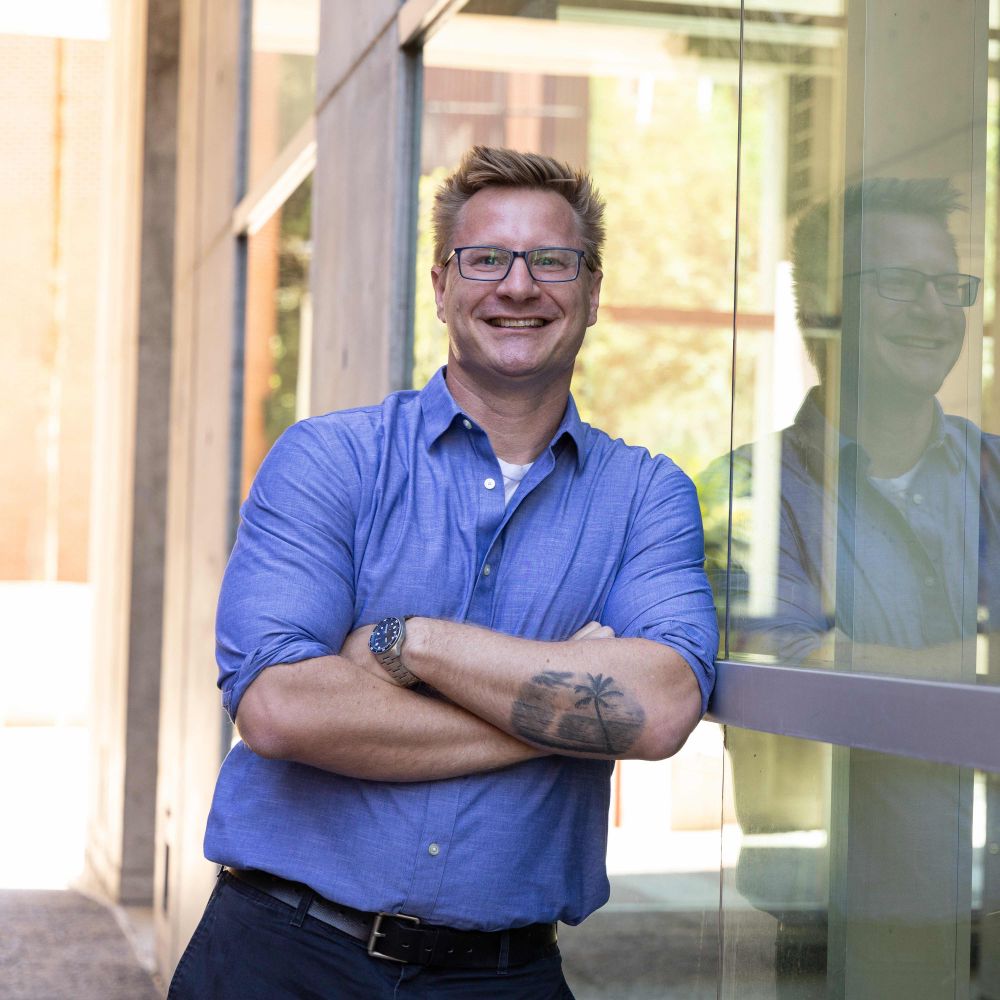
I know many of you know Joe James (of Binning Singletons)
Joe and his family had a terrible tragedy occur on Christmas. If you can give, this is a good family to help out
gofund.me/5cbfe22fe
Joe and his family had a terrible tragedy occur on Christmas. If you can give, this is a good family to help out
gofund.me/5cbfe22fe

Donate to Honoring Sarah James Through Education, organized by Joe James
Honoring Sarah James & Supporting Her Children’s Future
On Christmas, our com… Joe James needs your support for Honoring Sarah James Through Education
gofund.me
January 1, 2026 at 10:05 PM
I know many of you know Joe James (of Binning Singletons)
Joe and his family had a terrible tragedy occur on Christmas. If you can give, this is a good family to help out
gofund.me/5cbfe22fe
Joe and his family had a terrible tragedy occur on Christmas. If you can give, this is a good family to help out
gofund.me/5cbfe22fe