


Felix Taschbach
@ftaschbach.bsky.social
PhD candidate at UCSD
Computational Neuroethology
Computational Neuroethology
Reposted by Felix Taschbach

Bichan Wu (@bichanw.bsky.social) & I wrote a tutorial paper on Reduced Rank Regression (RRR) — the statistical method underlying "communication subspaces" from Semedo et al 2019 — aimed at neuroscientists.
arxiv.org/abs/2512.12467
arxiv.org/abs/2512.12467

Reduced rank regression for neural communication: a tutorial for neuroscientists
Reduced rank regression (RRR) is a statistical method for finding a low-dimensional linear mapping between a set of high-dimensional inputs and outputs. In recent years, RRR has found numerous applica...
arxiv.org
December 17, 2025 at 2:06 AM
Bichan Wu (@bichanw.bsky.social) & I wrote a tutorial paper on Reduced Rank Regression (RRR) — the statistical method underlying "communication subspaces" from Semedo et al 2019 — aimed at neuroscientists.
arxiv.org/abs/2512.12467
arxiv.org/abs/2512.12467
Reposted by Felix Taschbach

📆 updated for 2026!
list of summer schools & short courses in the realm of (computational) neuroscience or data analysis of EEG / MEG / LFP: 🔗 docs.google.com/spreadsheets...
list of summer schools & short courses in the realm of (computational) neuroscience or data analysis of EEG / MEG / LFP: 🔗 docs.google.com/spreadsheets...

various computational neuroscience / MEEG / LFP short courses and summer schools
docs.google.com
December 19, 2025 at 4:37 PM
📆 updated for 2026!
list of summer schools & short courses in the realm of (computational) neuroscience or data analysis of EEG / MEG / LFP: 🔗 docs.google.com/spreadsheets...
list of summer schools & short courses in the realm of (computational) neuroscience or data analysis of EEG / MEG / LFP: 🔗 docs.google.com/spreadsheets...
Reposted by Felix Taschbach

Under Trump, the NIH is giving fewer grants to fewer scientists. The grants awarded are smaller and scientists have less time to spend them.
Projects in cancer, diabetes, aging, neurological disorder, and more are going unfunded.
“Make America Healthy Again.”
Projects in cancer, diabetes, aging, neurological disorder, and more are going unfunded.
“Make America Healthy Again.”

The U.S. Is Funding Fewer Grants in Every Area of Science and Medicine
A quiet policy change means the government is making fewer bets on long-term science.
www.nytimes.com
December 2, 2025 at 10:01 PM
Under Trump, the NIH is giving fewer grants to fewer scientists. The grants awarded are smaller and scientists have less time to spend them.
Projects in cancer, diabetes, aging, neurological disorder, and more are going unfunded.
“Make America Healthy Again.”
Projects in cancer, diabetes, aging, neurological disorder, and more are going unfunded.
“Make America Healthy Again.”
Namecheap
www.namecheap.com
December 3, 2025 at 12:30 AM
Reposted by Felix Taschbach

Please help spread the word! All contributions tax deductible!

Today is #GivingTuesday! Join us in helping to make computational science education accessible to everyone, everywhere!
Since, 2021, Neuromatch Academy and Climatematch Academy have supported nearly 14,000 learners from 135 countries.
Your support makes this possible.
neuromatch.io/donate/
Since, 2021, Neuromatch Academy and Climatematch Academy have supported nearly 14,000 learners from 135 countries.
Your support makes this possible.
neuromatch.io/donate/

December 2, 2025 at 2:52 PM
Please help spread the word! All contributions tax deductible!
Reposted by Felix Taschbach

Thanks! And check out our new review on mixed selectivity, please and thanks.
doi.org/10.1016/j.ne...
doi.org/10.1016/j.ne...
December 1, 2025 at 4:52 PM
Thanks! And check out our new review on mixed selectivity, please and thanks.
doi.org/10.1016/j.ne...
doi.org/10.1016/j.ne...
Reposted by Felix Taschbach

“I will die on the hill that population coding is the relevant level of encoding information in the brain.” In the latest “This paper changed my life,” Nancy Padilla-Coreano discusses a paper on mixed selectivity neurons.
#neuroskyence
www.thetransmitter.org/this-paper-c...
#neuroskyence
www.thetransmitter.org/this-paper-c...

This paper changed my life: Nancy Padilla-Coreano on learning the value of population coding
The 2013 Nature paper by Mattia Rigotti and his colleagues revealed how mixed selectivity neurons—cells that are not selectively tuned to a stimulus—play a key role in cognition.
www.thetransmitter.org
December 1, 2025 at 2:23 PM
“I will die on the hill that population coding is the relevant level of encoding information in the brain.” In the latest “This paper changed my life,” Nancy Padilla-Coreano discusses a paper on mixed selectivity neurons.
#neuroskyence
www.thetransmitter.org/this-paper-c...
#neuroskyence
www.thetransmitter.org/this-paper-c...
Reposted by Felix Taschbach

When @natrevneuro.nature.com asked me to highlight a paper that influenced both my field and my own research, I immediately thought of the work on mixed selectivity by @matrig.net, @stefanofusi.bsky.social, and colleagues.
More on this journal club: rdcu.be/eRKLk
More on this journal club: rdcu.be/eRKLk
Mixed selectivity: when neurons stopped looking like specialists
Nature Reviews Neuroscience - In this Journal Club, Fanny Cazettes highlights a 2013 paper that demonstrated the importance of mixed selectivity for cortical computations.
rdcu.be
November 26, 2025 at 6:35 AM
When @natrevneuro.nature.com asked me to highlight a paper that influenced both my field and my own research, I immediately thought of the work on mixed selectivity by @matrig.net, @stefanofusi.bsky.social, and colleagues.
More on this journal club: rdcu.be/eRKLk
More on this journal club: rdcu.be/eRKLk
Reposted by Felix Taschbach

Y’all are reading this paper in the wrong way.
We love to trash dominant hypothesis, but we need to look for evidence against the manifold hypothesis elsewhere:
This elegant work doesn't show neural dynamics are high D, nor that we should stop using PCA
It’s quite the opposite!
(thread)
We love to trash dominant hypothesis, but we need to look for evidence against the manifold hypothesis elsewhere:
This elegant work doesn't show neural dynamics are high D, nor that we should stop using PCA
It’s quite the opposite!
(thread)

“Our findings challenge the conventional focus on low-dimensional coding subspaces as a sufficient framework for understanding neural computations, demonstrating that dimensions previously considered task-irrelevant and accounting for little variance can have a critical role in driving behavior.”

Neural dynamics outside task-coding dimensions drive decision trajectories through transient amplification
Most behaviors involve neural dynamics in high-dimensional activity spaces. A common approach is to extract dimensions that capture task-related variability, such as those separating stimuli or choice...
www.biorxiv.org
November 25, 2025 at 4:16 PM
Y’all are reading this paper in the wrong way.
We love to trash dominant hypothesis, but we need to look for evidence against the manifold hypothesis elsewhere:
This elegant work doesn't show neural dynamics are high D, nor that we should stop using PCA
It’s quite the opposite!
(thread)
We love to trash dominant hypothesis, but we need to look for evidence against the manifold hypothesis elsewhere:
This elegant work doesn't show neural dynamics are high D, nor that we should stop using PCA
It’s quite the opposite!
(thread)
Guess international students can't apply for a postdoc at MIT🙃

November 22, 2025 at 7:49 PM
Guess international students can't apply for a postdoc at MIT🙃
ShaReD had its first outing in this motor learning paper, where we used it to extract shared neural components across animals. For the full method + new communication-subspace results, come to my #SfN2025 poster PSTR253.22 (YY21), Mon 1–5pm.

Nature research paper: Motor learning refines thalamic influence on motor cortex
https://go.nature.com/4m5gNjv
https://go.nature.com/4m5gNjv

Motor learning refines thalamic influence on motor cortex - Nature
Imaging and optogenetics in mice provide insight into the interplay between the primary motor cortex and the motor thalamus during learning, showing that thalamic inputs have a key role in the execution of learned movements.
go.nature.com
November 13, 2025 at 9:19 PM
ShaReD had its first outing in this motor learning paper, where we used it to extract shared neural components across animals. For the full method + new communication-subspace results, come to my #SfN2025 poster PSTR253.22 (YY21), Mon 1–5pm.
Reposted by Felix Taschbach

a “Space Force”, if you will


November 13, 2025 at 2:27 PM
a “Space Force”, if you will
Reposted by Felix Taschbach

Our next paper on comparing dynamical systems (with special interest to artificial and biological neural networks) is out!! Joint work with @annhuang42.bsky.social , as well as @satpreetsingh.bsky.social , @leokoz8.bsky.social , Ila Fiete, and @kanakarajanphd.bsky.social : arxiv.org/pdf/2510.25943

November 10, 2025 at 4:16 PM
Our next paper on comparing dynamical systems (with special interest to artificial and biological neural networks) is out!! Joint work with @annhuang42.bsky.social , as well as @satpreetsingh.bsky.social , @leokoz8.bsky.social , Ila Fiete, and @kanakarajanphd.bsky.social : arxiv.org/pdf/2510.25943
Reposted by Felix Taschbach
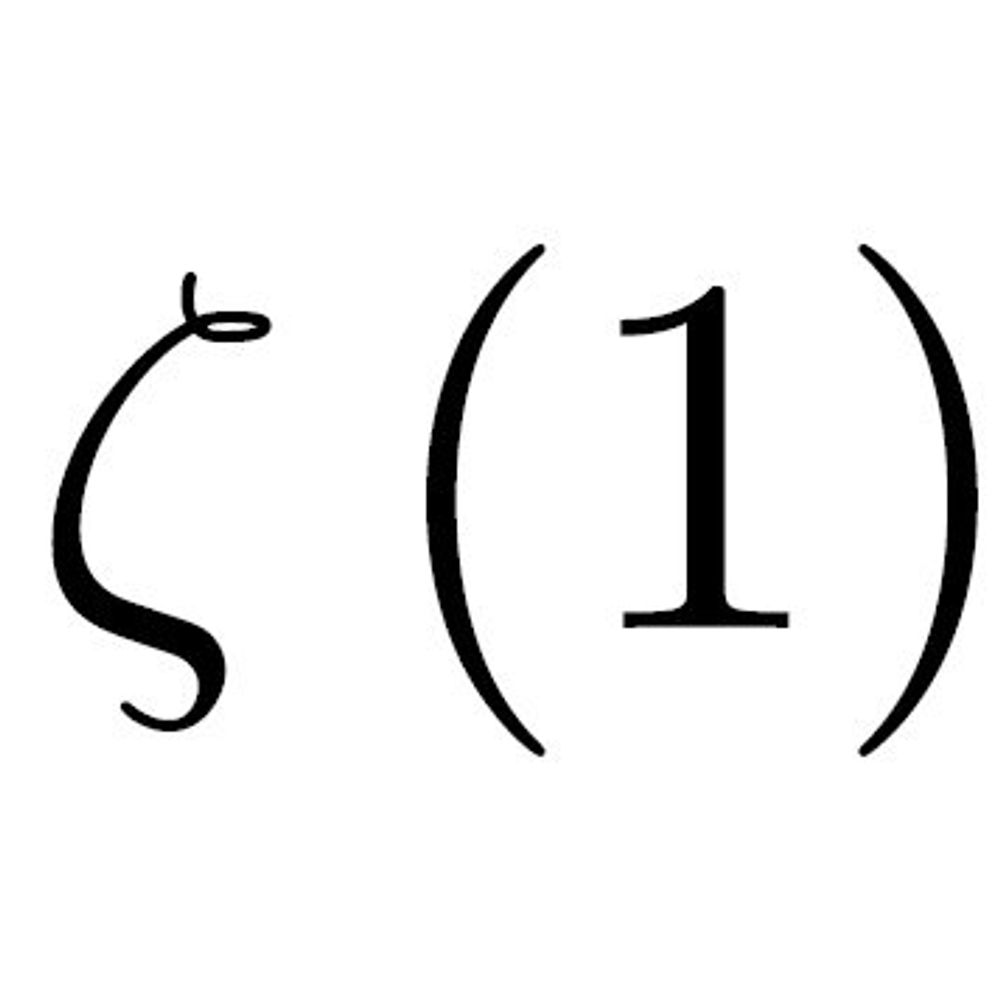
A meme I created for a presentation I gave today
Best wishes to @bengolub.bsky.social and all other Eigenvalue appreciators
Best wishes to @bengolub.bsky.social and all other Eigenvalue appreciators

October 22, 2025 at 7:15 PM
A meme I created for a presentation I gave today
Best wishes to @bengolub.bsky.social and all other Eigenvalue appreciators
Best wishes to @bengolub.bsky.social and all other Eigenvalue appreciators
Reposted by Felix Taschbach

Excited that this work discovering cross-species signatures of stabilizing foot placement control is now out in PNAS!
pnas.org/doi/10.1073/...
@antoinecomite.bsky.social
pnas.org/doi/10.1073/...
@antoinecomite.bsky.social
October 21, 2025 at 9:39 PM
Excited that this work discovering cross-species signatures of stabilizing foot placement control is now out in PNAS!
pnas.org/doi/10.1073/...
@antoinecomite.bsky.social
pnas.org/doi/10.1073/...
@antoinecomite.bsky.social
Reposted by Felix Taschbach

Appendix A7 most striking graph for me:

October 26, 2025 at 5:52 PM
Appendix A7 most striking graph for me: