


Waser Group
@lcsolab.bsky.social
Organic Chemistry Lab at ISIC EPFL, NCCR Catalysis, SNE ChemBio
https://www.epfl.ch/labs/lcso/ https://www.linkedin.com/in/lcso-lab/
Starter packs - OrgChem https://go.bsky.app/NSEFPFJ https://go.bsky.app/GwH8t
- Chem. in CH https://go.bsky.app/CdvVFKj
https://www.epfl.ch/labs/lcso/ https://www.linkedin.com/in/lcso-lab/
Starter packs - OrgChem https://go.bsky.app/NSEFPFJ https://go.bsky.app/GwH8t
- Chem. in CH https://go.bsky.app/CdvVFKj
Pinned
Waser Group
@lcsolab.bsky.social
· Jan 17
Starter package OrgChem2 continues to grow with new arrivals:
go.bsky.app/GwH8tnF
(completing the already full OrgChem:
go.bsky.app/NSEFPFJ)
go.bsky.app/GwH8tnF
(completing the already full OrgChem:
go.bsky.app/NSEFPFJ)
Want to learn more about our strained ring chemistry: Jerome will give a talk at the Thieme Cheminar Strain-Release Chemistry on February 24, 11-13 CET. Hosted by Prof. Biju and featuring also presentation of @harigroupiisc.bsky.social and Wipf group.
cassyni.com/events/P3TyB...
cassyni.com/events/P3TyB...

February 17, 2026 at 1:44 PM
Want to learn more about our strained ring chemistry: Jerome will give a talk at the Thieme Cheminar Strain-Release Chemistry on February 24, 11-13 CET. Hosted by Prof. Biju and featuring also presentation of @harigroupiisc.bsky.social and Wipf group.
cassyni.com/events/P3TyB...
cassyni.com/events/P3TyB...

Reposted by Waser Group

A step forward toward more sustainable organic photocatalysis !! ♻️♻️
Here, you can check our last JACS publication (@jacs.acspublications.org) in collaboration with the Benetti's group. @unipd.bsky.social
shorturl.at/nnPdk
Here, you can check our last JACS publication (@jacs.acspublications.org) in collaboration with the Benetti's group. @unipd.bsky.social
shorturl.at/nnPdk

Recyclable IPN Photocatalysts Supported by Polymer Matrices: From Soluble Copolymers to Core-Polymer Brush Shell Nanostructures
Functional polymeric materials have recently emerged as promising supports for organic photocatalysts (PCs), yet the effects of PC design and polymer architecture on catalytic performance remain underexplored. In this study, we present a versatile strategy for small-molecule activation using carbazolyl-dicyanobenzene-based PCs featuring an isophthalonitrile (IPN) core. These PCs feature thermally activated delayed fluorescence (TADF) properties and long-lived excited states, although they also suffer from an intrinsic chemical fragility that hampers their recyclability. A library of IPN derivatives was synthesized, characterized, and integrated into either soluble copolymers (by exploiting controlled radical polymerization) or grafted from inert silica nanoparticles (NPs) to yield PC-loaded spherical polymer brushes. Although soluble copolymers showed catalytic activity comparable to that of free PCs while testing model Povarov-type cycloadditions, PC recovery was only modest and relied on precipitation steps. In contrast, PC-loaded brushes on NPs achieved high yields and enabled efficient catalyst recovery and reuse (≥90%) over multiple cycles. This comparative approach highlights how the nature of the polymeric support, soluble vs. nanostructured, critically influences both catalytic performance and recyclability. More generally, the incorporation of IPN PCs into advanced polymer scaffolds is demonstrated to enhance their applicability, cost-efficiency, and sustainability.
shorturl.at
February 11, 2026 at 9:14 AM
A step forward toward more sustainable organic photocatalysis !! ♻️♻️
Here, you can check our last JACS publication (@jacs.acspublications.org) in collaboration with the Benetti's group. @unipd.bsky.social
shorturl.at/nnPdk
Here, you can check our last JACS publication (@jacs.acspublications.org) in collaboration with the Benetti's group. @unipd.bsky.social
shorturl.at/nnPdk
Reposted by Waser Group

Here comes e-Diazo / e-Cyclopropanation ⚡️
Can diazo chemistry finally scale if diazo never accumulates?
Electro-generate, consume immediately.
Gram-scale cyclopropanes, safer by design!
pubs.rsc.org/en/content/a...
@chemicalscience.rsc.org @realtimechem.bsky.social
#Electrosynthesis #ChemSky
Can diazo chemistry finally scale if diazo never accumulates?
Electro-generate, consume immediately.
Gram-scale cyclopropanes, safer by design!
pubs.rsc.org/en/content/a...
@chemicalscience.rsc.org @realtimechem.bsky.social
#Electrosynthesis #ChemSky

February 11, 2026 at 5:00 PM
Here comes e-Diazo / e-Cyclopropanation ⚡️
Can diazo chemistry finally scale if diazo never accumulates?
Electro-generate, consume immediately.
Gram-scale cyclopropanes, safer by design!
pubs.rsc.org/en/content/a...
@chemicalscience.rsc.org @realtimechem.bsky.social
#Electrosynthesis #ChemSky
Can diazo chemistry finally scale if diazo never accumulates?
Electro-generate, consume immediately.
Gram-scale cyclopropanes, safer by design!
pubs.rsc.org/en/content/a...
@chemicalscience.rsc.org @realtimechem.bsky.social
#Electrosynthesis #ChemSky
Reposted by Waser Group

Our first venture into short peptide diversification is now online 😁 doi.org/10.26434/che...
Bioinspired Diversification of Short Peptides via Tyrosine Umpolung | ChemRxiv
Herein, we report a bioinspired strategy for the selective modification of tyrosine residues in short peptides based on a formal umpolung of the phenolic side chain. Mild oxidation with a hypervalent iodine(V) reagent enables the in situ generation of ...
doi.org
February 11, 2026 at 11:55 AM
Our first venture into short peptide diversification is now online 😁 doi.org/10.26434/che...

Reposted by Waser Group

We are hiring! Please spread, thanks!
PS: Note that all applications have to go through our university's new online portal, see link in the pdf.
PS: Note that all applications have to go through our university's new online portal, see link in the pdf.

February 6, 2026 at 7:26 PM
We are hiring! Please spread, thanks!
PS: Note that all applications have to go through our university's new online portal, see link in the pdf.
PS: Note that all applications have to go through our university's new online portal, see link in the pdf.
Reposted by Waser Group
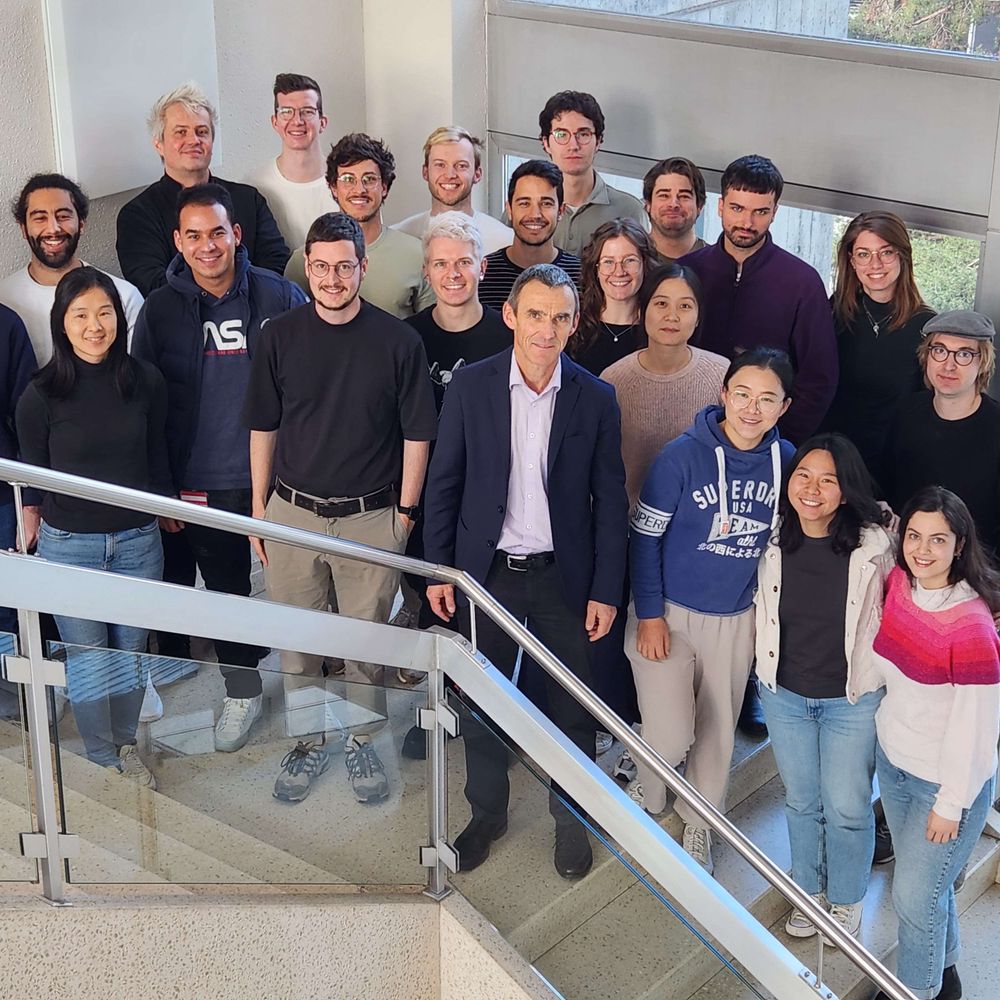
🎉Check out our latest publication "Data Augmentation in a Triple Transformer Loop Retrosynthesis Model" by Yves Grandjean, David Kreutter and Jean-Louis Reymond in Digital Discovery!
👉Read it here: pubs.rsc.org/en/content/a...
👉Read it here: pubs.rsc.org/en/content/a...

February 6, 2026 at 12:28 PM
🎉Check out our latest publication "Data Augmentation in a Triple Transformer Loop Retrosynthesis Model" by Yves Grandjean, David Kreutter and Jean-Louis Reymond in Digital Discovery!
👉Read it here: pubs.rsc.org/en/content/a...
👉Read it here: pubs.rsc.org/en/content/a...
Alexandre Schoepfer just became PhD #33 from @lcsolab.bsky.social ! Also the first ever shared PhD student with LCMD @corminboeuf-lab.bsky.social !
www.linkedin.com/feed/update/...
www.linkedin.com/feed/update/...

Congratulations to Alexandre Schoepfer on the successful defense of his thesis and the completion of his PhD!🎓 As the first jointly supervised PhD student between LCSO and LCMD, he set a strong… | LCS...
Congratulations to Alexandre Schoepfer on the successful defense of his thesis and the completion of his PhD!🎓 As the first jointly supervised PhD student between LCSO and LCMD, he set a strong exampl...
www.linkedin.com
February 6, 2026 at 8:58 AM
Alexandre Schoepfer just became PhD #33 from @lcsolab.bsky.social ! Also the first ever shared PhD student with LCMD @corminboeuf-lab.bsky.social !
www.linkedin.com/feed/update/...
www.linkedin.com/feed/update/...
Reposted by Waser Group
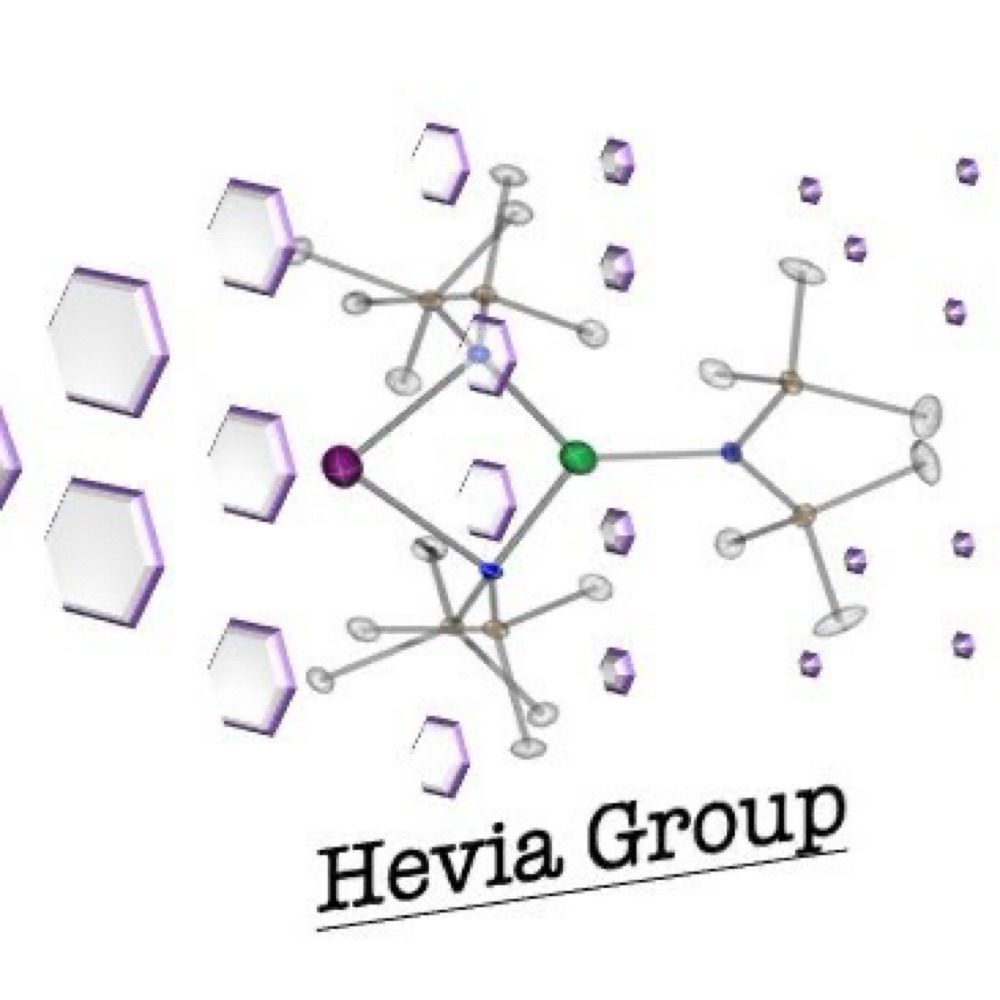
While traditionally used as stoichiometric reagents, #HeavierAlkaliMetalAmides have emerged as versatile #catalysts find out more in this #perspective with #DavidSancehzRoa @pubs.acs.org in collaboration with @remglasgow.bsky.social @unistrathclyde.bsky.social
pubs.acs.org/doi/10.1021/...
pubs.acs.org/doi/10.1021/...

February 4, 2026 at 6:55 PM
While traditionally used as stoichiometric reagents, #HeavierAlkaliMetalAmides have emerged as versatile #catalysts find out more in this #perspective with #DavidSancehzRoa @pubs.acs.org in collaboration with @remglasgow.bsky.social @unistrathclyde.bsky.social
pubs.acs.org/doi/10.1021/...
pubs.acs.org/doi/10.1021/...
Reposted by Waser Group

Welcome, piles of slop filling up the journals with clouds of useless wordy garbage. Case in point:

What the Literature is Filling Up With
www.science.org
February 4, 2026 at 8:47 PM
Welcome, piles of slop filling up the journals with clouds of useless wordy garbage. Case in point:
Reposted by Waser Group

Why Your University Has So Many Administrators
www.chronicle.com/article/why-...
www.chronicle.com/article/why-...

Opinion | Why Your University Has So Many Administrators
Great teaching is expensive, but back-office functions should be getting cheaper. Why aren’t they?
www.chronicle.com
February 3, 2026 at 3:54 PM
Why Your University Has So Many Administrators
www.chronicle.com/article/why-...
www.chronicle.com/article/why-...


Reposted by Waser Group
Now online:
Article by Jing Gong, Qian Wang & Jieping Zhu
Concerted 1,3-migration through regiodivergent consecutive 1,2-rearrangements using palladium catalysis
www.nature.com/articles/s44... ($)
#Chemsky
Article by Jing Gong, Qian Wang & Jieping Zhu
Concerted 1,3-migration through regiodivergent consecutive 1,2-rearrangements using palladium catalysis
www.nature.com/articles/s44... ($)
#Chemsky

Concerted 1,3-migration through regiodivergent consecutive 1,2-rearrangements using palladium catalysis - Nature Synthesis
Concerted 1,3-alkyl shifts are often challenging due to antiaromatic transition states and geometric strain. Now, a formal 1,3-migration can be achieved through two consecutive 1,2-shifts—a Pd(II)-cat...
www.nature.com
February 2, 2026 at 2:24 PM
Now online:
Article by Jing Gong, Qian Wang & Jieping Zhu
Concerted 1,3-migration through regiodivergent consecutive 1,2-rearrangements using palladium catalysis
www.nature.com/articles/s44... ($)
#Chemsky
Article by Jing Gong, Qian Wang & Jieping Zhu
Concerted 1,3-migration through regiodivergent consecutive 1,2-rearrangements using palladium catalysis
www.nature.com/articles/s44... ($)
#Chemsky
Reposted by Waser Group

A Pd2L4-type receptor for squaraine dyes enabling ultrafast dark resonance energy transfer. Work by Damien Chen with help from Sybille Collignon, Farzaneh Fadaei-Tirani, and the @feldmannlab.bsky.social. Now out in @angewandtechemie.bsky.social: onlinelibrary.wiley.com/doi/10.1002/...

February 2, 2026 at 9:29 AM
A Pd2L4-type receptor for squaraine dyes enabling ultrafast dark resonance energy transfer. Work by Damien Chen with help from Sybille Collignon, Farzaneh Fadaei-Tirani, and the @feldmannlab.bsky.social. Now out in @angewandtechemie.bsky.social: onlinelibrary.wiley.com/doi/10.1002/...
The last work of Clément TANGUY and Emma Robert on the formal total synthesis of Strictamine is now published in @helvchimacta.bsky.social !
onlinelibrary.wiley.com/doi/10.1002/...
onlinelibrary.wiley.com/doi/10.1002/...

January 30, 2026 at 2:20 PM
The last work of Clément TANGUY and Emma Robert on the formal total synthesis of Strictamine is now published in @helvchimacta.bsky.social !
onlinelibrary.wiley.com/doi/10.1002/...
onlinelibrary.wiley.com/doi/10.1002/...
Reposted by Waser Group

Nitration is one of those elementary organic chemistry reactions that is at times useful, hard to run properly and dangerous
This #JOC shows nitrating reagents and the entire table is a list of “oh WOW that looks scary”
(Nitro-triflate? Seriously?)
[insert “Brave Sir Robin Bravely Ran Away gif]
This #JOC shows nitrating reagents and the entire table is a list of “oh WOW that looks scary”
(Nitro-triflate? Seriously?)
[insert “Brave Sir Robin Bravely Ran Away gif]

Quantitative Scale for the Nitronium Cation-Donating Ability of Electrophilic Nitrating Reagents
Electrophilic nitration is a fundamental transformation in organic synthesis; however, traditional mineral acid-based methods suffer from harsh conditions and limited substrate scope, motivating the d...
pubs.acs.org
January 29, 2026 at 4:40 PM
Nitration is one of those elementary organic chemistry reactions that is at times useful, hard to run properly and dangerous
This #JOC shows nitrating reagents and the entire table is a list of “oh WOW that looks scary”
(Nitro-triflate? Seriously?)
[insert “Brave Sir Robin Bravely Ran Away gif]
This #JOC shows nitrating reagents and the entire table is a list of “oh WOW that looks scary”
(Nitro-triflate? Seriously?)
[insert “Brave Sir Robin Bravely Ran Away gif]
Reposted by Waser Group

From donor/core CV to catalyst design:
a new method to develop inexpensive and tunable organic RL/NIR photocatalysts.
Dual Ni/photoredox C–heteroatom coupling with a new cyanoarene photocatalyst under 620 nm LEDs!
@angewandtechemie.bsky.social #Chemsky #photocatalysis
doi.org/10.1002/anie...
a new method to develop inexpensive and tunable organic RL/NIR photocatalysts.
Dual Ni/photoredox C–heteroatom coupling with a new cyanoarene photocatalyst under 620 nm LEDs!
@angewandtechemie.bsky.social #Chemsky #photocatalysis
doi.org/10.1002/anie...

Predictive, Data‐Driven Design of Red‐Light Photoredox Catalysts for C─Heteroatom Bond Formation
From redox numbers to red light: Donor oxidation and core reduction potentials predict E0-0 in cyanoarene dyes, guiding selection of an efficient red-light catalyst, 4MeODPATPN (PC13). Under 620 nm l...
doi.org
January 28, 2026 at 12:58 PM
From donor/core CV to catalyst design:
a new method to develop inexpensive and tunable organic RL/NIR photocatalysts.
Dual Ni/photoredox C–heteroatom coupling with a new cyanoarene photocatalyst under 620 nm LEDs!
@angewandtechemie.bsky.social #Chemsky #photocatalysis
doi.org/10.1002/anie...
a new method to develop inexpensive and tunable organic RL/NIR photocatalysts.
Dual Ni/photoredox C–heteroatom coupling with a new cyanoarene photocatalyst under 620 nm LEDs!
@angewandtechemie.bsky.social #Chemsky #photocatalysis
doi.org/10.1002/anie...
If you are interested to have more insights into this work, have a look on our post thread in Linkedin:
www.linkedin.com/feed/update/...
www.linkedin.com/feed/update/...
www.linkedin.com/feed/update/...
www.linkedin.com/feed/update/...
www.linkedin.com/feed/update/...
www.linkedin.com/feed/update/...
www.linkedin.com/feed/update/...
www.linkedin.com/feed/update/...
January 26, 2026 at 7:50 AM
If you are interested to have more insights into this work, have a look on our post thread in Linkedin:
www.linkedin.com/feed/update/...
www.linkedin.com/feed/update/...
www.linkedin.com/feed/update/...
www.linkedin.com/feed/update/...
www.linkedin.com/feed/update/...
www.linkedin.com/feed/update/...
www.linkedin.com/feed/update/...
www.linkedin.com/feed/update/...
How to make the smallest house?
Have a look a the last preprint at @chemrxiv.org of Clement Tanguy @vladyslavsmyrnov.bsky.social and Matthew Wodrich on the diastereoselective synthesis of housanes via the carbocupration of cyclopropenes!
chemrxiv.org/doi/full/10....
Have a look a the last preprint at @chemrxiv.org of Clement Tanguy @vladyslavsmyrnov.bsky.social and Matthew Wodrich on the diastereoselective synthesis of housanes via the carbocupration of cyclopropenes!
chemrxiv.org/doi/full/10....

January 22, 2026 at 10:00 AM
How to make the smallest house?
Have a look a the last preprint at @chemrxiv.org of Clement Tanguy @vladyslavsmyrnov.bsky.social and Matthew Wodrich on the diastereoselective synthesis of housanes via the carbocupration of cyclopropenes!
chemrxiv.org/doi/full/10....
Have a look a the last preprint at @chemrxiv.org of Clement Tanguy @vladyslavsmyrnov.bsky.social and Matthew Wodrich on the diastereoselective synthesis of housanes via the carbocupration of cyclopropenes!
chemrxiv.org/doi/full/10....
Reposted by Waser Group
The Garg Lab just putting double bonds wherever now…
I mean c’mon we have RULES here!
Now everyone is gonna want olefins everywhere…
(Awesome paper out in @natchem.nature.com)
Really well done all - excellent work
I mean c’mon we have RULES here!
Now everyone is gonna want olefins everywhere…
(Awesome paper out in @natchem.nature.com)
Really well done all - excellent work

Hyperpyramidalized alkenes with bond orders near 1.5 as synthetic building blocks - Nature Chemistry
Alkenes are essential functional groups in organic chemistry, featuring well-defined geometries and bond orders of 2. In this study, cubene and 1,7-quadricyclene are calculated to possess unusual hype...
www.nature.com
January 21, 2026 at 4:03 PM
Reposted by Waser Group
The new ChemRxiv website is now live! Come and check out the new platform at chemrxiv.org
chemrxiv.org
January 21, 2026 at 3:52 PM
The new ChemRxiv website is now live! Come and check out the new platform at chemrxiv.org
Reposted by Waser Group

Congratulations to @dorotheakossmann.bsky.social! Her paper describing a novel sensor for bacterial pH just appeared online. Great collaboration with @ayaiizuka.bsky.social and Nina Khanna within the @nccr-antiresist.bsky.social! @chem.uzh.ch
pubs.acs.org/doi/10.1021/...
pubs.acs.org/doi/10.1021/...

A Ratiometric pH Sensor for Gram-Positive and Gram-Negative Bacteria
Fluctuating environments can lead to phenotypic heterogeneity within a monoclonal bacterial population, especially in response to antibiotics or the human immune system. Methods are required to analyz...
pubs.acs.org
January 21, 2026 at 7:33 AM
Congratulations to @dorotheakossmann.bsky.social! Her paper describing a novel sensor for bacterial pH just appeared online. Great collaboration with @ayaiizuka.bsky.social and Nina Khanna within the @nccr-antiresist.bsky.social! @chem.uzh.ch
pubs.acs.org/doi/10.1021/...
pubs.acs.org/doi/10.1021/...
