


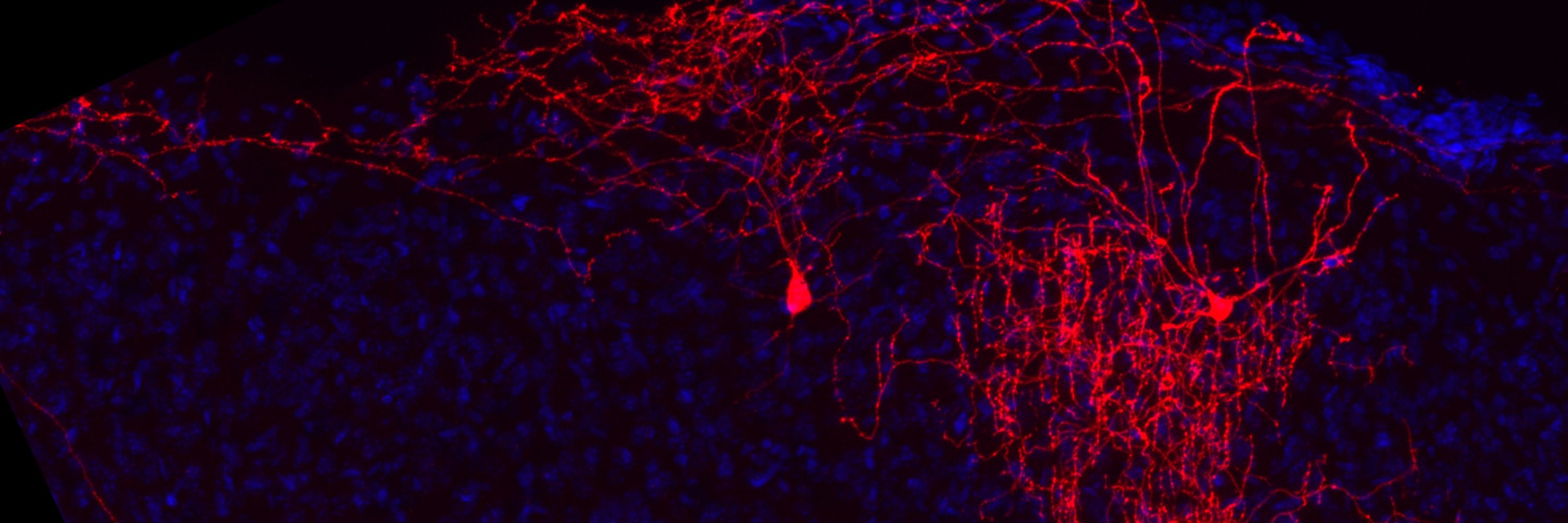

Oscar Marín Lab
@marinlab.bsky.social
Brain development and childhood disorders laboratory at King's College London
1/10 Our latest research, led by Monika Moissidis, identifies a mechanism regulating the maturation of PV interneurons in the #cortex. This is the story @cellcellpress.bsky.social www.cell.com/cell/fulltex... ⬇︎ thread @devneuro.bsky.social @kingsioppn.bsky.social
@wellcometrust.bsky.social
@wellcometrust.bsky.social
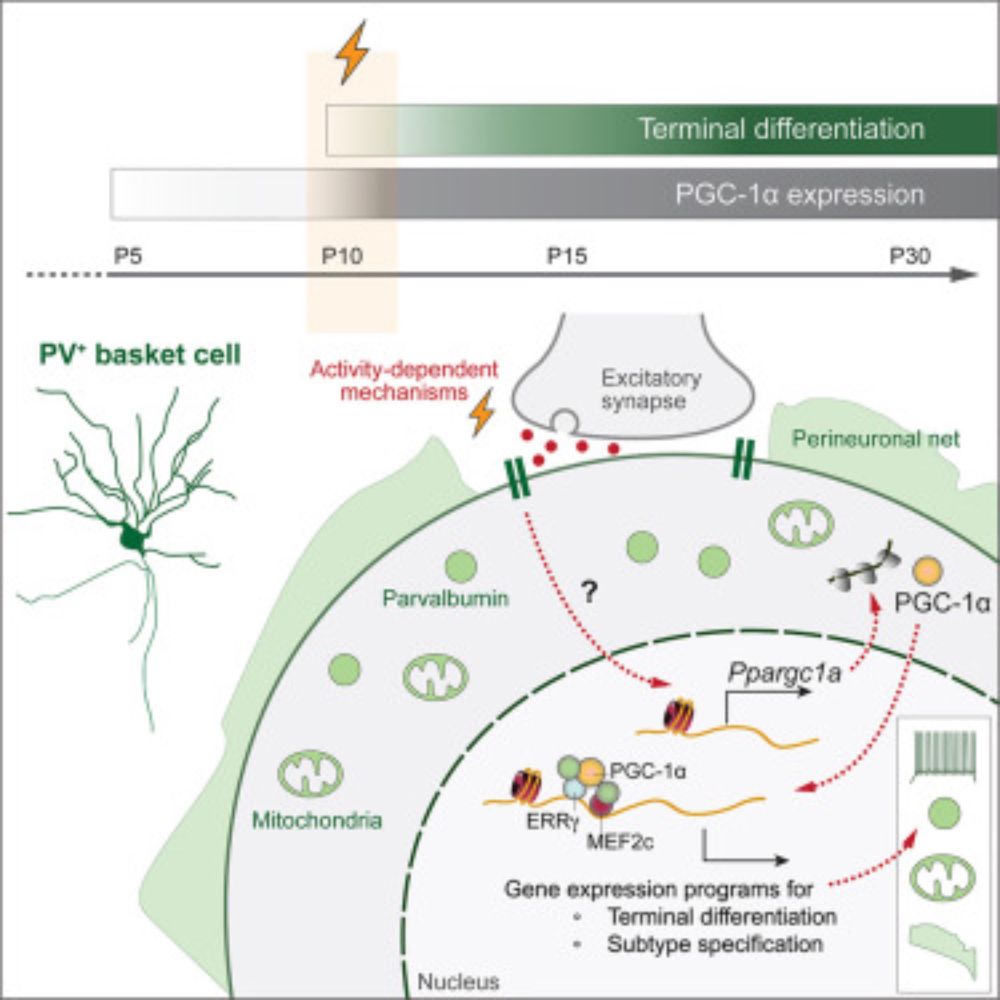
A postnatal molecular switch drives activity-dependent maturation of parvalbumin interneurons
Neuronal activity triggers PGC-1α-mediated transcriptional programs that drive the
late maturation of PV+ interneurons, essential for cortical circuit function. PGC-1α
partners with ERRγ and Mef2c to ...
www.cell.com
July 16, 2025 at 7:59 AM
1/10 Our latest research, led by Monika Moissidis, identifies a mechanism regulating the maturation of PV interneurons in the #cortex. This is the story @cellcellpress.bsky.social www.cell.com/cell/fulltex... ⬇︎ thread @devneuro.bsky.social @kingsioppn.bsky.social
@wellcometrust.bsky.social
@wellcometrust.bsky.social
Reposted by Oscar Marín Lab
🚨 New Paper Alert! 🚨
I’m very happy to share our newest paper in Cell, led by the brilliant Monika Moissidis. We show that PGC1a regulates the maturation of PV+ interneurons in an activity-dependent manner.
Link below 👇
www.cell.com/cell/fulltex...
@cellpress.bsky.social @marinlab.bsky.social
I’m very happy to share our newest paper in Cell, led by the brilliant Monika Moissidis. We show that PGC1a regulates the maturation of PV+ interneurons in an activity-dependent manner.
Link below 👇
www.cell.com/cell/fulltex...
@cellpress.bsky.social @marinlab.bsky.social
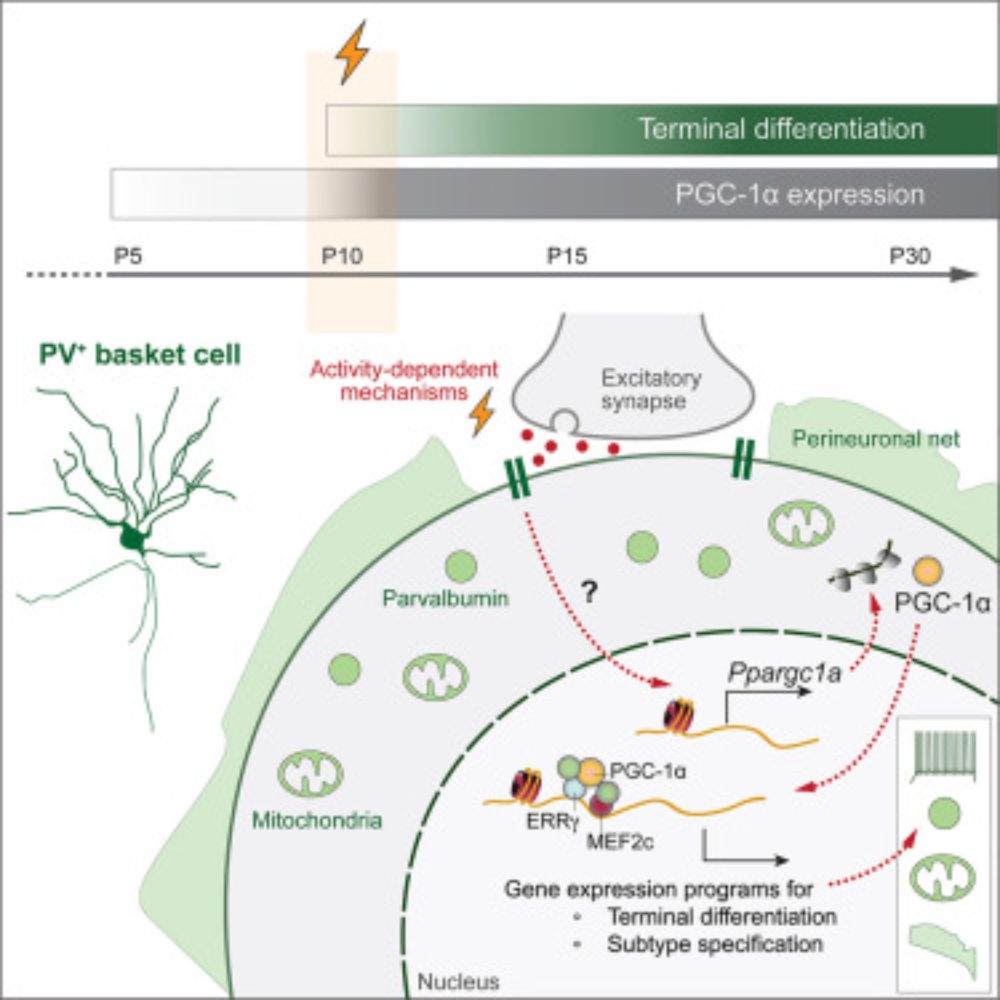
A postnatal molecular switch drives activity-dependent maturation of parvalbumin interneurons
Neuronal activity triggers PGC-1α-mediated transcriptional programs that drive the
late maturation of PV+ interneurons, essential for cortical circuit function. PGC-1α
partners with ERRγ and Mef2c to ...
www.cell.com
July 15, 2025 at 3:18 PM
🚨 New Paper Alert! 🚨
I’m very happy to share our newest paper in Cell, led by the brilliant Monika Moissidis. We show that PGC1a regulates the maturation of PV+ interneurons in an activity-dependent manner.
Link below 👇
www.cell.com/cell/fulltex...
@cellpress.bsky.social @marinlab.bsky.social
I’m very happy to share our newest paper in Cell, led by the brilliant Monika Moissidis. We show that PGC1a regulates the maturation of PV+ interneurons in an activity-dependent manner.
Link below 👇
www.cell.com/cell/fulltex...
@cellpress.bsky.social @marinlab.bsky.social
Reposted by Oscar Marín Lab

We're #hiring for a new role as Senior #ExecutiveAssistant to our fantastic Director and Managing Director! Deadline 23 June
@marinlab.bsky.social
www.kcl.ac.uk/jobs/116505-...
@marinlab.bsky.social
www.kcl.ac.uk/jobs/116505-...

Senior Executive Assistant
www.kcl.ac.uk
June 4, 2025 at 12:38 PM
We're #hiring for a new role as Senior #ExecutiveAssistant to our fantastic Director and Managing Director! Deadline 23 June
@marinlab.bsky.social
www.kcl.ac.uk/jobs/116505-...
@marinlab.bsky.social
www.kcl.ac.uk/jobs/116505-...
Reposted by Oscar Marín Lab

How to find Evolutionary Conserved Enhancers in 2025? 🐣-🐭
Check out our paper - fresh off the press!!!
We find widespread functional conservation of enhancers in absence of sequence homology
Including: a bioinformatic tool to map sequence-diverged enhancers!
rdcu.be/enVDN
github.com/tobiaszehnde...
Check out our paper - fresh off the press!!!
We find widespread functional conservation of enhancers in absence of sequence homology
Including: a bioinformatic tool to map sequence-diverged enhancers!
rdcu.be/enVDN
github.com/tobiaszehnde...
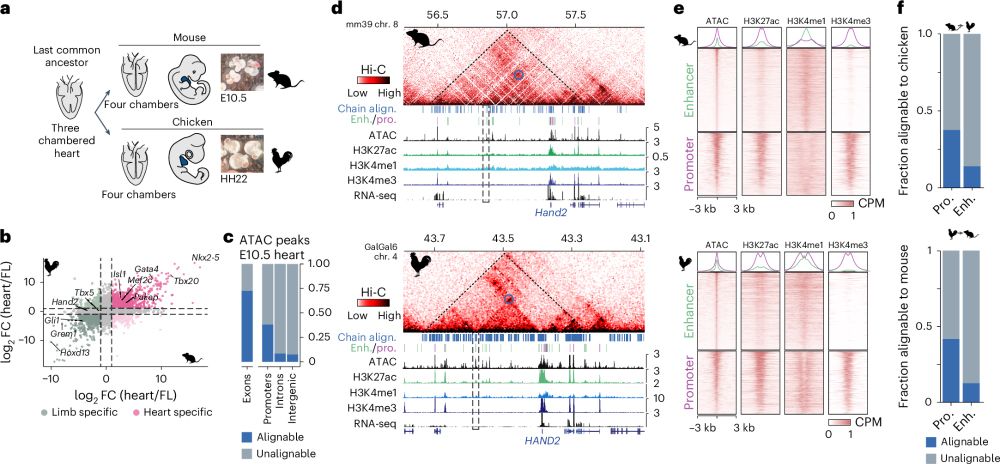
Conservation of regulatory elements with highly diverged sequences across large evolutionary distances
Nature Genetics - Combining functional genomic data from mouse and chicken with a synteny-based strategy identifies positionally conserved cis-regulatory elements in the absence of direct sequence...
rdcu.be
May 27, 2025 at 12:19 PM
How to find Evolutionary Conserved Enhancers in 2025? 🐣-🐭
Check out our paper - fresh off the press!!!
We find widespread functional conservation of enhancers in absence of sequence homology
Including: a bioinformatic tool to map sequence-diverged enhancers!
rdcu.be/enVDN
github.com/tobiaszehnde...
Check out our paper - fresh off the press!!!
We find widespread functional conservation of enhancers in absence of sequence homology
Including: a bioinformatic tool to map sequence-diverged enhancers!
rdcu.be/enVDN
github.com/tobiaszehnde...
Reposted by Oscar Marín Lab

Still openings, check it out!
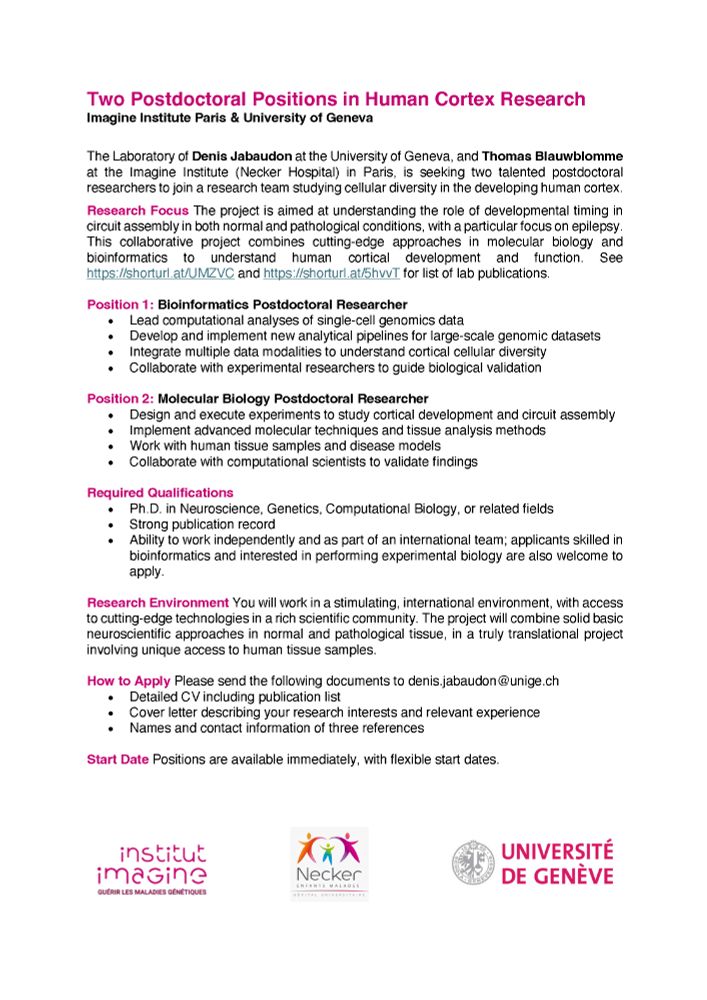
🧠Job Opening!🧠
We are opening 2️⃣! positions
– bioinformatics / molecular biology –
in a project studying how temporal patterns set up connectivity in human brain tissue.
@institutimagine.bsky.social.
Full details below, contact me for details if interested.
And please retweet (re-bluesky?)!
We are opening 2️⃣! positions
– bioinformatics / molecular biology –
in a project studying how temporal patterns set up connectivity in human brain tissue.
@institutimagine.bsky.social.
Full details below, contact me for details if interested.
And please retweet (re-bluesky?)!
May 28, 2025 at 5:02 AM
Still openings, check it out!
Reposted by Oscar Marín Lab

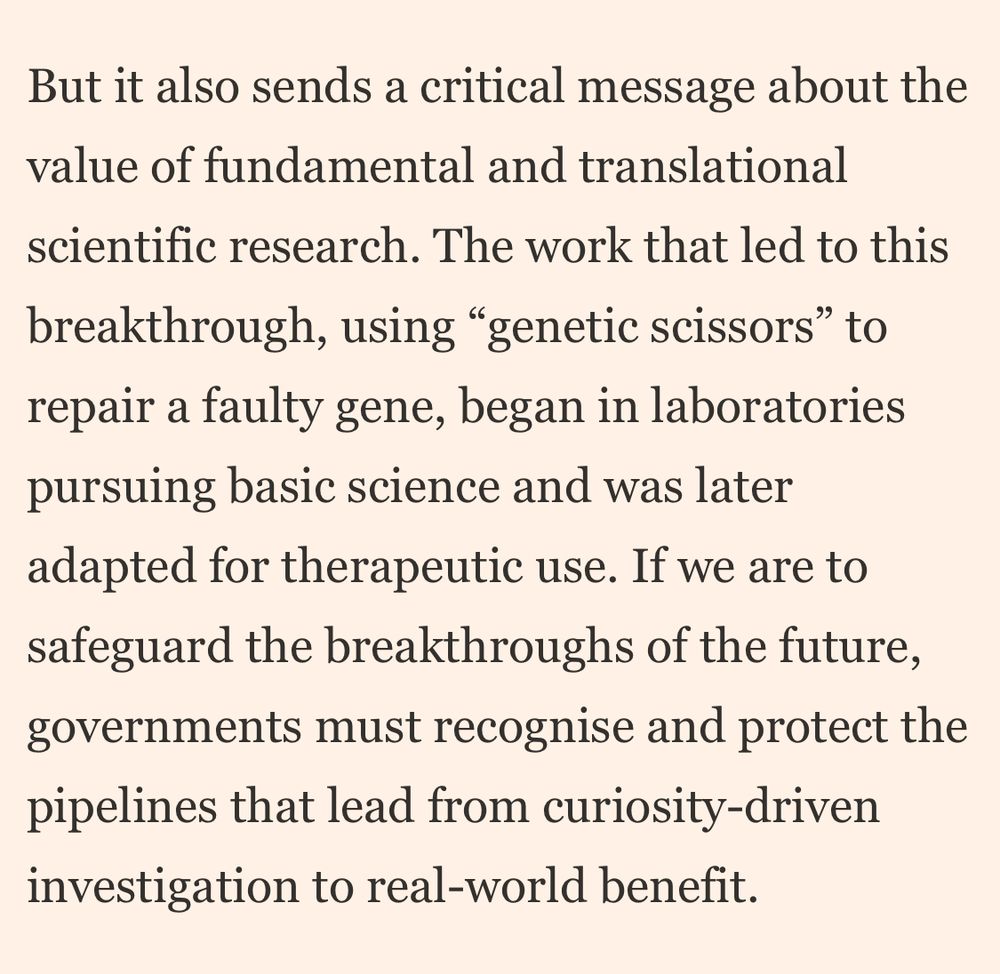
On the value of investing in curiosity driven research - which in this case contributed to the personalised gene therapy for a rare disease
on.ft.com/45rXI50 @anjahuja.bsky.social
on.ft.com/45rXI50 @anjahuja.bsky.social
May 28, 2025 at 6:24 AM
On the value of investing in curiosity driven research - which in this case contributed to the personalised gene therapy for a rare disease
on.ft.com/45rXI50 @anjahuja.bsky.social
on.ft.com/45rXI50 @anjahuja.bsky.social
Reposted by Oscar Marín Lab
🎙️[49] ENTENDER EL CEREBRO PARA REGULARLO
👨🔬 con #OscarMarínParra
@MarinLab
Alteraciones durante el desarrollo de nuestro🧠 pueden ser la causa de desordenes psiquiátricos como #autismo, #epilepsia, #bipolaridad o #esquizofrenia
#Neurociencias
(1/3)
👨🔬 con #OscarMarínParra
@MarinLab
Alteraciones durante el desarrollo de nuestro🧠 pueden ser la causa de desordenes psiquiátricos como #autismo, #epilepsia, #bipolaridad o #esquizofrenia
#Neurociencias
(1/3)
May 11, 2025 at 11:33 AM
🎙️[49] ENTENDER EL CEREBRO PARA REGULARLO
👨🔬 con #OscarMarínParra
@MarinLab
Alteraciones durante el desarrollo de nuestro🧠 pueden ser la causa de desordenes psiquiátricos como #autismo, #epilepsia, #bipolaridad o #esquizofrenia
#Neurociencias
(1/3)
👨🔬 con #OscarMarínParra
@MarinLab
Alteraciones durante el desarrollo de nuestro🧠 pueden ser la causa de desordenes psiquiátricos como #autismo, #epilepsia, #bipolaridad o #esquizofrenia
#Neurociencias
(1/3)
Reposted by Oscar Marín Lab

Great @nature.com paper on the early stages of human cortical development, led by @qianxuyu.bsky.social from C. Walsh’s lab, in collaboration with @drmingyaoli.bsky.social
A wonderful new resource to probe area & layer specification 🧪🧠🧬
A wonderful new resource to probe area & layer specification 🧪🧠🧬
May 15, 2025 at 5:51 AM
Great @nature.com paper on the early stages of human cortical development, led by @qianxuyu.bsky.social from C. Walsh’s lab, in collaboration with @drmingyaoli.bsky.social
A wonderful new resource to probe area & layer specification 🧪🧠🧬
A wonderful new resource to probe area & layer specification 🧪🧠🧬
Reposted by Oscar Marín Lab
Thrilled to share our latest study out in @natureportfolio.nature.com led by the fantastically talented Jing Liu. Our study provides insight into a long standing question in biology: What molecular features make us uniquely human and how do these function? www.nature.com/articles/s41...
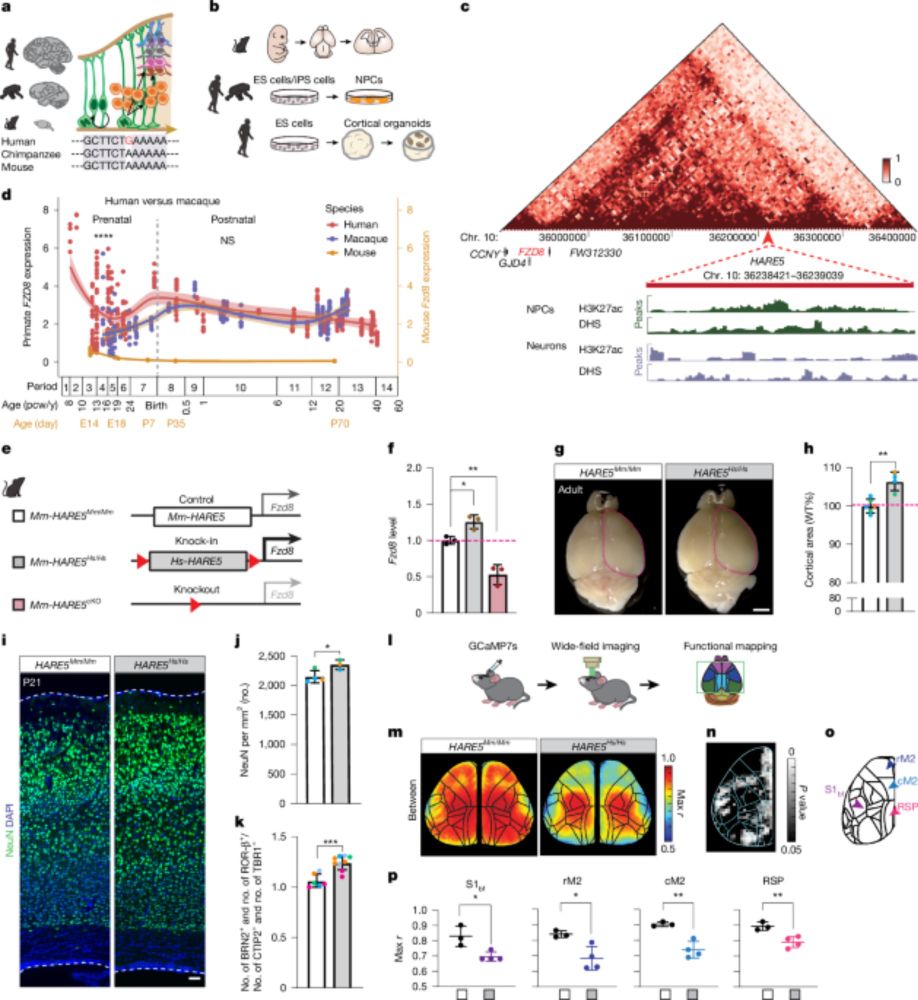
A human-specific enhancer fine-tunes radial glia potency and corticogenesis - Nature
HARE5, a human accelerated region enhancer, modulates cortical development by influencing neural progenitor cell behaviour, leading to an enlarged neocortex with increased functional independence betw...
www.nature.com
May 14, 2025 at 4:09 PM
Thrilled to share our latest study out in @natureportfolio.nature.com led by the fantastically talented Jing Liu. Our study provides insight into a long standing question in biology: What molecular features make us uniquely human and how do these function? www.nature.com/articles/s41...
Reposted by Oscar Marín Lab
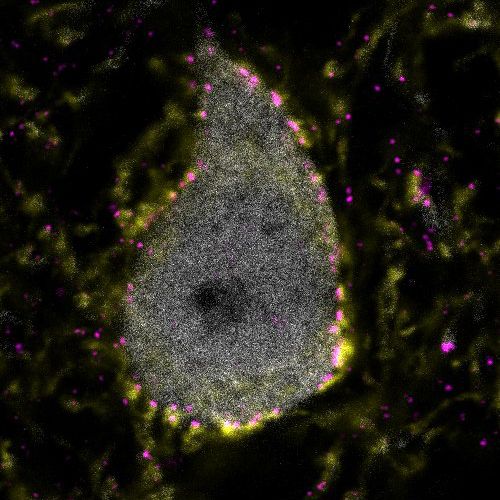
1/10 Our latest research, led by @martijnselten.bsky.social, identifies a mechanism through which Parvalbumin (PV) interneurons regulate their activity in the #cortex. This is the story @nature.com
www.nature.com/articles/s41... ⬇︎ 🧵 @devneuro.bsky.social @kingsioppn.bsky.social @erc.europa.eu
www.nature.com/articles/s41... ⬇︎ 🧵 @devneuro.bsky.social @kingsioppn.bsky.social @erc.europa.eu
April 30, 2025 at 3:12 PM
1/10 Our latest research, led by @martijnselten.bsky.social, identifies a mechanism through which Parvalbumin (PV) interneurons regulate their activity in the #cortex. This is the story @nature.com
www.nature.com/articles/s41... ⬇︎ 🧵 @devneuro.bsky.social @kingsioppn.bsky.social @erc.europa.eu
www.nature.com/articles/s41... ⬇︎ 🧵 @devneuro.bsky.social @kingsioppn.bsky.social @erc.europa.eu
Reposted by Oscar Marín Lab
Meet the 2025 @dev-journal.bsky.social Pathway to Independence (PI) fellows
Eight developmental and stem cell biologists transitioning from postdoc to principal investigator
journals.biologists.com/dev/pages/pi...
Eight developmental and stem cell biologists transitioning from postdoc to principal investigator
journals.biologists.com/dev/pages/pi...
PI Fellows 2025 | Development | The Company of Biologists
PI Fellows 2025 | Development | The Company of Biologists
.align{
margin-right: 10px;
margin-left: 0px;
}
.left {
float: left;
width: 15%;
}
.right {...
journals.biologists.com
May 7, 2025 at 5:38 AM
Meet the 2025 @dev-journal.bsky.social Pathway to Independence (PI) fellows
Eight developmental and stem cell biologists transitioning from postdoc to principal investigator
journals.biologists.com/dev/pages/pi...
Eight developmental and stem cell biologists transitioning from postdoc to principal investigator
journals.biologists.com/dev/pages/pi...
1/10 Our latest research, led by @martijnselten.bsky.social, identifies a mechanism through which Parvalbumin (PV) interneurons regulate their activity in the #cortex. This is the story @nature.com
www.nature.com/articles/s41... ⬇︎ 🧵 @devneuro.bsky.social @kingsioppn.bsky.social @erc.europa.eu
www.nature.com/articles/s41... ⬇︎ 🧵 @devneuro.bsky.social @kingsioppn.bsky.social @erc.europa.eu
April 30, 2025 at 3:12 PM
1/10 Our latest research, led by @martijnselten.bsky.social, identifies a mechanism through which Parvalbumin (PV) interneurons regulate their activity in the #cortex. This is the story @nature.com
www.nature.com/articles/s41... ⬇︎ 🧵 @devneuro.bsky.social @kingsioppn.bsky.social @erc.europa.eu
www.nature.com/articles/s41... ⬇︎ 🧵 @devneuro.bsky.social @kingsioppn.bsky.social @erc.europa.eu
Reposted by Oscar Marín Lab
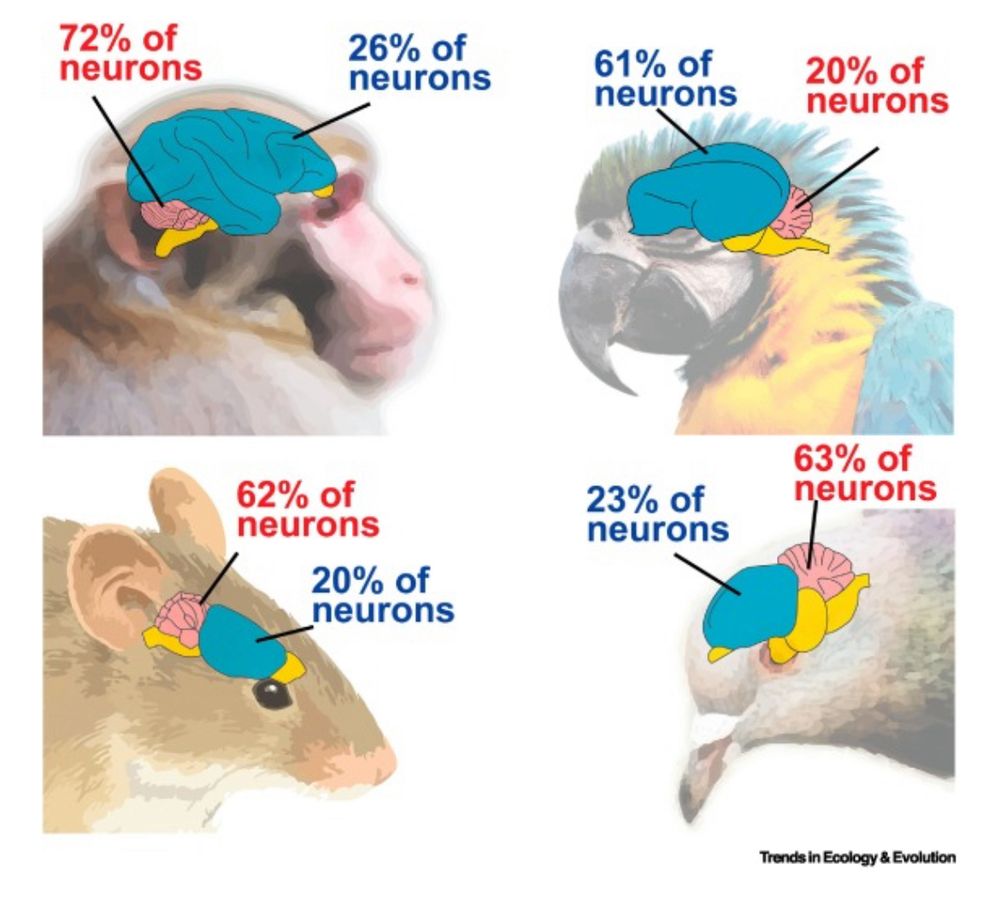
Our new paper is out. We point out that large brained (and often smart) mammals and birds have evolved very different distribution of neurons numbers in the brain.
This means that similar cognitive abilities have evolved in very different brains.
www.sciencedirect.com/science/arti...
This means that similar cognitive abilities have evolved in very different brains.
www.sciencedirect.com/science/arti...
April 17, 2025 at 9:22 PM
Our new paper is out. We point out that large brained (and often smart) mammals and birds have evolved very different distribution of neurons numbers in the brain.
This means that similar cognitive abilities have evolved in very different brains.
www.sciencedirect.com/science/arti...
This means that similar cognitive abilities have evolved in very different brains.
www.sciencedirect.com/science/arti...
Reposted by Oscar Marín Lab
Paper accepted!!!
Stay tuned for updates very soon!
(Now time for a little celebration)
Stay tuned for updates very soon!
(Now time for a little celebration)
March 26, 2025 at 9:56 AM
Paper accepted!!!
Stay tuned for updates very soon!
(Now time for a little celebration)
Stay tuned for updates very soon!
(Now time for a little celebration)