




Mike Lacy
@mlacyphd.bsky.social
I work @addgene.bsky.social curating DNA and web content.
#OpenScience supporter, previously at ASCB, science publishing/preprints.
Yale Biophysics PhD. Opinions my own. He/him
#OpenScience supporter, previously at ASCB, science publishing/preprints.
Yale Biophysics PhD. Opinions my own. He/him
Pinned
Mike Lacy
@mlacyphd.bsky.social
· Nov 12
👋 Intro for new folks:
I'm a scientific curator at @addgene.bsky.social. You might see my blog posts or get emails from me about depositing plasmids. Our team mainly works behind the scenes cleaning up data, making/updating webpages, and more. I'm always on the lookout for cool new science to share!
I'm a scientific curator at @addgene.bsky.social. You might see my blog posts or get emails from me about depositing plasmids. Our team mainly works behind the scenes cleaning up data, making/updating webpages, and more. I'm always on the lookout for cool new science to share!
Reposted by Mike Lacy
One of my concerns with AI-assisted research in biology is that we're already looking only in the lamplight and AI incentivizes us to narrow the beam. Seems like it's happening...
www.nature.com/articles/s41...
www.nature.com/articles/s41...

Artificial intelligence tools expand scientists’ impact but contract science’s focus - Nature
Artificial intelligence boosts individual scientists’ output, citations and career progression, but collectively narrows research diversity and reduces collaboration, concentrating work in data-rich a...
www.nature.com
January 15, 2026 at 4:08 PM
One of my concerns with AI-assisted research in biology is that we're already looking only in the lamplight and AI incentivizes us to narrow the beam. Seems like it's happening...
www.nature.com/articles/s41...
www.nature.com/articles/s41...
Reposted by Mike Lacy

Are you an industry scientist? Addgene's mission is to empower scientists with access to research materials, and that means you too! Our repository includes nearly 10,000 tools available to industry laboratories. Check them out in our latest blog post:

blog.addgene.org
Addgene’s Expanding Collection of Research Tools for Industry Scientists
twp.ai
January 15, 2026 at 1:00 PM
Are you an industry scientist? Addgene's mission is to empower scientists with access to research materials, and that means you too! Our repository includes nearly 10,000 tools available to industry laboratories. Check them out in our latest blog post:
Reposted by Mike Lacy
2) What's REPROcode? A barcoded, arrayed lentiviral library of 408 immune TFs (now available through Addgene - www.addgene.org/Filipe_Perei...) + scRNA-seq that links which reprogramming TFs a cell receives to the identity it acquires. With no extra barcode PCR steps!

January 14, 2026 at 4:42 PM
2) What's REPROcode? A barcoded, arrayed lentiviral library of 408 immune TFs (now available through Addgene - www.addgene.org/Filipe_Perei...) + scRNA-seq that links which reprogramming TFs a cell receives to the identity it acquires. With no extra barcode PCR steps!
Reposted by Mike Lacy

It's easier to tear down than build up, and in science we have a bad case of that. So: how to lead a journal club that actually finds value in what you read. scientistseessquirre... 🧪

How to lead a journal club you won’t be embarrassed by later
One of the jobs facing an early-career scientist, and a developing writer, is to learn what their field’s literature looks like. One of the best tools to that end is the journal club. If you’ve nev…
scientistseessquirrel.wordpress.com
January 13, 2026 at 2:08 PM
It's easier to tear down than build up, and in science we have a bad case of that. So: how to lead a journal club that actually finds value in what you read. scientistseessquirre... 🧪
Reposted by Mike Lacy
Preprints of pandemic potential - new historical piece from me on the history of bioRxiv/medRxiv, their role in the pandemic, and the way forward. 1/n journals.asm.org/doi/10.1128/...

January 12, 2026 at 2:33 PM
Preprints of pandemic potential - new historical piece from me on the history of bioRxiv/medRxiv, their role in the pandemic, and the way forward. 1/n journals.asm.org/doi/10.1128/...
Reposted by Mike Lacy

🔬 🖥️ Applications are open for the CSHL course Quantitative Imaging: From Acquisition to Analysis (April 6–21, 2026)!
An intensive, hands-on course covering advanced fluorescence microscopy and quantitative image analysis using open-source tools.
🗓️ Apply online by Jan 30, 2026
An intensive, hands-on course covering advanced fluorescence microscopy and quantitative image analysis using open-source tools.
🗓️ Apply online by Jan 30, 2026

Quantitative Imaging: From Acquisition to Analysis
Cold Spring Harbor Laboratory Meetings & Courses -- a private, non-profit institution with research programs in cancer, neuroscience, plant biology, genomics, bioinformatics.
meetings.cshl.edu
January 6, 2026 at 7:18 PM
🔬 🖥️ Applications are open for the CSHL course Quantitative Imaging: From Acquisition to Analysis (April 6–21, 2026)!
An intensive, hands-on course covering advanced fluorescence microscopy and quantitative image analysis using open-source tools.
🗓️ Apply online by Jan 30, 2026
An intensive, hands-on course covering advanced fluorescence microscopy and quantitative image analysis using open-source tools.
🗓️ Apply online by Jan 30, 2026
Reposted by Mike Lacy

Giving the gift of negative data 🥰
Since I joined @lsajournal.org I have handled several stellar manuscripts that report null results. These papers do very well and reviewers almost always appreciate them!
Thanks @rockefeller.edu news team for the article!
www.rockefeller.edu/news/38829-t...
Since I joined @lsajournal.org I have handled several stellar manuscripts that report null results. These papers do very well and reviewers almost always appreciate them!
Thanks @rockefeller.edu news team for the article!
www.rockefeller.edu/news/38829-t...

The value of publishing negative data - News
Scientific journals love news-worthy results. Editors want to publish studies with novel data that scientists will eagerly read and cite in their own work. Because of this desire for novelty, studies ...
www.rockefeller.edu
December 23, 2025 at 1:26 PM
Giving the gift of negative data 🥰
Since I joined @lsajournal.org I have handled several stellar manuscripts that report null results. These papers do very well and reviewers almost always appreciate them!
Thanks @rockefeller.edu news team for the article!
www.rockefeller.edu/news/38829-t...
Since I joined @lsajournal.org I have handled several stellar manuscripts that report null results. These papers do very well and reviewers almost always appreciate them!
Thanks @rockefeller.edu news team for the article!
www.rockefeller.edu/news/38829-t...
Reposted by Mike Lacy

Interesting to see support for the hypothesis that the rainbow palette isn’t inherently ordered (the colors don’t map to "more" or "less").
www.sciencedirect.com/science/arti...
#dataviz 📊 #color 🎨
www.sciencedirect.com/science/arti...
#dataviz 📊 #color 🎨

January 6, 2026 at 12:59 AM
Interesting to see support for the hypothesis that the rainbow palette isn’t inherently ordered (the colors don’t map to "more" or "less").
www.sciencedirect.com/science/arti...
#dataviz 📊 #color 🎨
www.sciencedirect.com/science/arti...
#dataviz 📊 #color 🎨
Reposted by Mike Lacy
We recently published a paper in @plosbiology.org
We found a lot of problems in animal studies of hemorrhagic stroke.
Research integrity folks found the paper but the neuroscience community seems to have missed it completely.
I'd like them to read it too!
doi.org/10.1371/journal.pbio.3003438
We found a lot of problems in animal studies of hemorrhagic stroke.
Research integrity folks found the paper but the neuroscience community seems to have missed it completely.
I'd like them to read it too!
doi.org/10.1371/journal.pbio.3003438

High prevalence of articles with image-related problems in animal studies of subarachnoid hemorrhage and low rates of correction by publishers
Unchallenged erroneous articles can undermine scientific progress and mislead future research. This study shows that image-related issues affect 40% of reviewed articles on early brain injury in anima...
doi.org
January 5, 2026 at 11:41 AM
We recently published a paper in @plosbiology.org
We found a lot of problems in animal studies of hemorrhagic stroke.
Research integrity folks found the paper but the neuroscience community seems to have missed it completely.
I'd like them to read it too!
doi.org/10.1371/journal.pbio.3003438
We found a lot of problems in animal studies of hemorrhagic stroke.
Research integrity folks found the paper but the neuroscience community seems to have missed it completely.
I'd like them to read it too!
doi.org/10.1371/journal.pbio.3003438
"We need to stop measuring what's easy to measure and start looking for what's important." - Tony Ross-Hellauer [2021]
Example case study: UniProt database saves users €1000s per year in the "time they would have otherwise spent digging up the information from other sources"
Example case study: UniProt database saves users €1000s per year in the "time they would have otherwise spent digging up the information from other sources"
"hard to measure social and economic impacts of making papers and data free...little strong evidence of long-lasting and widespread effects [but] indicators remain to be fully developed" www.science.org/content/arti...

Is ‘open science’ delivering benefits? Major study finds proof is sparse
It’s hard to measure social and economic impacts of making papers and data free, researchers say
www.science.org
January 2, 2026 at 4:35 PM
"We need to stop measuring what's easy to measure and start looking for what's important." - Tony Ross-Hellauer [2021]
Example case study: UniProt database saves users €1000s per year in the "time they would have otherwise spent digging up the information from other sources"
Example case study: UniProt database saves users €1000s per year in the "time they would have otherwise spent digging up the information from other sources"
Reposted by Mike Lacy

A free, open-access library of high-quality organism illustrations for science communication

A free, open-access library of high-quality organism illustrations for science communication
We create vector graphics of model organisms and emerging biological research organisms to enhance our publications. We’re sharing these editable graphics under a CC0 license for other scientists to...
doi.org
December 29, 2025 at 6:03 PM
A free, open-access library of high-quality organism illustrations for science communication
Reposted by Mike Lacy

On delayed application review, the NIH grant terminations lawsuit appears to be headed for a settlement.
Both plaintiffs and defendants have submitted a joint document outlining their agreement. Judge Young must sign off on it before it takes effect.
Here's what it says and what all this means 🧵
Both plaintiffs and defendants have submitted a joint document outlining their agreement. Judge Young must sign off on it before it takes effect.
Here's what it says and what all this means 🧵
December 29, 2025 at 11:49 PM
On delayed application review, the NIH grant terminations lawsuit appears to be headed for a settlement.
Both plaintiffs and defendants have submitted a joint document outlining their agreement. Judge Young must sign off on it before it takes effect.
Here's what it says and what all this means 🧵
Both plaintiffs and defendants have submitted a joint document outlining their agreement. Judge Young must sign off on it before it takes effect.
Here's what it says and what all this means 🧵
Reposted by Mike Lacy

We’ve highlighted some wonderful images and researchers in our ‘Featured image’ series in 2025. To celebrate, we’re inviting you to vote for your favourite in our image competition!
#FluorescenceFriday
Check them out here: focalplane.biologists.com/2025/12/19/v...
#FluorescenceFriday
Check them out here: focalplane.biologists.com/2025/12/19/v...

Vote for your favourite 'Featured image' from 2025 - FocalPlane
Vote for your favourite 'Featured image' from 2025 - News
focalplane.biologists.com
December 19, 2025 at 10:58 AM
We’ve highlighted some wonderful images and researchers in our ‘Featured image’ series in 2025. To celebrate, we’re inviting you to vote for your favourite in our image competition!
#FluorescenceFriday
Check them out here: focalplane.biologists.com/2025/12/19/v...
#FluorescenceFriday
Check them out here: focalplane.biologists.com/2025/12/19/v...
Reposted by Mike Lacy

For my cytoskeleton cell biology colleagues, this preprint from Sho Ono at Emory disproves and corrects a long-standing accepted notion (one that I have accepted since 1976 when I started in the actin field).
www.biorxiv.org/content/10.1...
www.biorxiv.org/content/10.1...

Linear Z-line-like alignment of capping protein in obliquely striated muscle of the nematode C. elegans suggests that dense bodies are not equivalent to Z-lines
Many invertebrates have obliquely striated muscles, in which neighboring thin and thick filaments are staggered and aligned in an oblique manner. This type of muscle allows force production over a wid...
www.biorxiv.org
December 18, 2025 at 4:43 PM
For my cytoskeleton cell biology colleagues, this preprint from Sho Ono at Emory disproves and corrects a long-standing accepted notion (one that I have accepted since 1976 when I started in the actin field).
www.biorxiv.org/content/10.1...
www.biorxiv.org/content/10.1...
Reposted by Mike Lacy

🧵 Cytoskeleton question of the day:
You want to localize your favourite protein.
What do you trust first?
🔹 GFP overexpression
🔹 CRISPR knock-in
🔹 Commercial Antibodies
🔹Homemade antibodies
🔹 Or “all of the above + controls” 👀
You want to localize your favourite protein.
What do you trust first?
🔹 GFP overexpression
🔹 CRISPR knock-in
🔹 Commercial Antibodies
🔹Homemade antibodies
🔹 Or “all of the above + controls” 👀
December 18, 2025 at 9:44 AM
🧵 Cytoskeleton question of the day:
You want to localize your favourite protein.
What do you trust first?
🔹 GFP overexpression
🔹 CRISPR knock-in
🔹 Commercial Antibodies
🔹Homemade antibodies
🔹 Or “all of the above + controls” 👀
You want to localize your favourite protein.
What do you trust first?
🔹 GFP overexpression
🔹 CRISPR knock-in
🔹 Commercial Antibodies
🔹Homemade antibodies
🔹 Or “all of the above + controls” 👀
Reposted by Mike Lacy

Reposted by Mike Lacy

Last Friday, the @NSF released an RFI for a new Tech Labs Initiative, to "build and scale next-gen independent research organizations to advance science."

December 16, 2025 at 4:06 PM
Last Friday, the @NSF released an RFI for a new Tech Labs Initiative, to "build and scale next-gen independent research organizations to advance science."
Reposted by Mike Lacy
An important reminder that the wild and wonderful are often not recapitulated by model organism biology.
The Rudner lab shows that the biogenesis of #anthrax spores has striking differences with the process in B. subtilis
🧪
The Rudner lab shows that the biogenesis of #anthrax spores has striking differences with the process in B. subtilis
🧪

Is #Bsubtilis a good model for the spore-forming #anthrax #pathogen B. anthracis? This study identifies >150 B. anthracis #sporulation genes and cytologically phenotypes the mutants, revealing similarities & striking differences between model & pathogen @plosbiology.org 🧪 plos.io/3YsvlyZ

December 16, 2025 at 4:52 PM
An important reminder that the wild and wonderful are often not recapitulated by model organism biology.
The Rudner lab shows that the biogenesis of #anthrax spores has striking differences with the process in B. subtilis
🧪
The Rudner lab shows that the biogenesis of #anthrax spores has striking differences with the process in B. subtilis
🧪
Reposted by Mike Lacy

Organelles do NOT have a single uniform pH.
And if you think they must, because “protons diffuse fast,” this paper is for you.
A thread on why that assumption is wrong; and what we found instead. 🧵 1/n
And if you think they must, because “protons diffuse fast,” this paper is for you.
A thread on why that assumption is wrong; and what we found instead. 🧵 1/n

Organelles harbour pH gradients https://www.biorxiv.org/content/10.64898/2025.12.12.694065v1
December 17, 2025 at 12:46 AM
Organelles do NOT have a single uniform pH.
And if you think they must, because “protons diffuse fast,” this paper is for you.
A thread on why that assumption is wrong; and what we found instead. 🧵 1/n
And if you think they must, because “protons diffuse fast,” this paper is for you.
A thread on why that assumption is wrong; and what we found instead. 🧵 1/n
Reposted by Mike Lacy
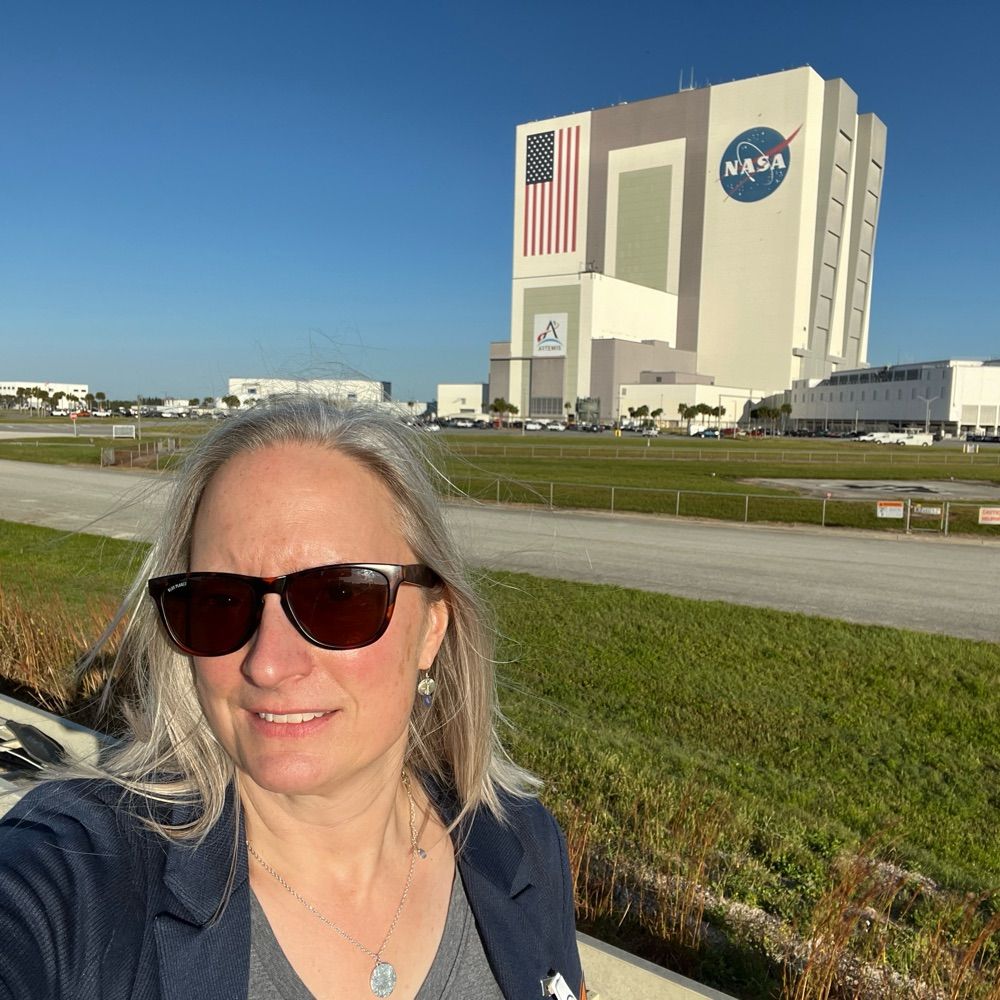
Attendance at US-based science conferences is bouncing around this year but generally down. #AGU25 has ~10k fewer this year! I explored these trends for @nature.com — including solutions to keep conferences local & productive:
www.nature.com/articles/d41...
🧪
www.nature.com/articles/d41...
🧪

Scientists skip key US meetings — and seize on smaller alternatives
Researchers are devising creative ways to get together as Trump’s policies curb travel to US gatherings.
www.nature.com
December 16, 2025 at 5:18 PM
Attendance at US-based science conferences is bouncing around this year but generally down. #AGU25 has ~10k fewer this year! I explored these trends for @nature.com — including solutions to keep conferences local & productive:
www.nature.com/articles/d41...
🧪
www.nature.com/articles/d41...
🧪
Reposted by Mike Lacy
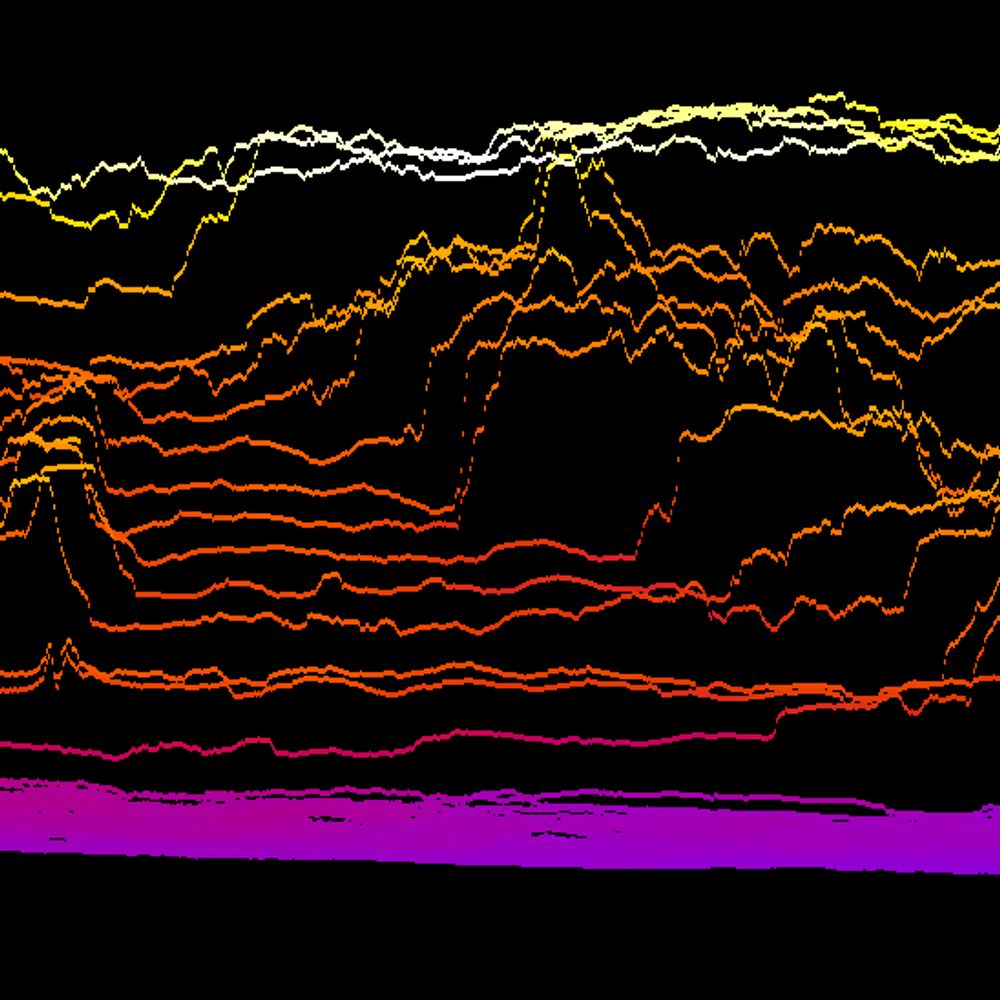
Getting SMART about FRAP enabled us to make many FRAP curves in one imaging session. Now we are doing things like 18 conditions n = 30 in a single overnight session.
Study protein dynamics in high throughput.
Curious on how? see our publication:
febs.onlinelibrary.wiley.com/doi/full/10....
Study protein dynamics in high throughput.
Curious on how? see our publication:
febs.onlinelibrary.wiley.com/doi/full/10....

FEBS Press
RoboMic is an automated confocal microscopy pipeline for high-throughput functional imaging in living cells. Demonstrated with fluorescence recovery after photobleaching (FRAP), it integrates AI-driv...
febs.onlinelibrary.wiley.com
December 16, 2025 at 9:53 AM
Getting SMART about FRAP enabled us to make many FRAP curves in one imaging session. Now we are doing things like 18 conditions n = 30 in a single overnight session.
Study protein dynamics in high throughput.
Curious on how? see our publication:
febs.onlinelibrary.wiley.com/doi/full/10....
Study protein dynamics in high throughput.
Curious on how? see our publication:
febs.onlinelibrary.wiley.com/doi/full/10....
Reposted by Mike Lacy
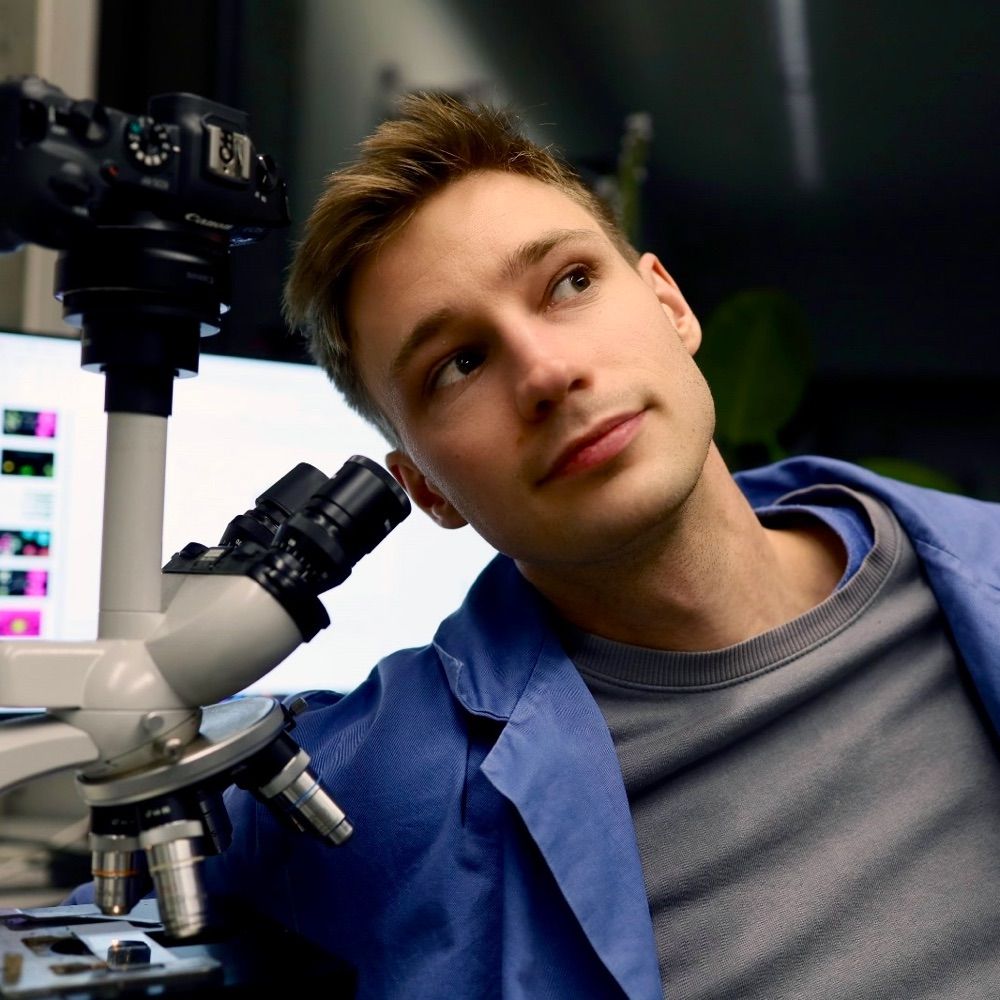
Pleased to share this thoughtful essay by Jess on my flower design project🌹🧬
As a small thank-you for spreading the work, I'm randomly giving away 5 of these new morphogenesis hoodies to whoever reposts this!
As a small thank-you for spreading the work, I'm randomly giving away 5 of these new morphogenesis hoodies to whoever reposts this!

December 15, 2025 at 5:51 PM
Pleased to share this thoughtful essay by Jess on my flower design project🌹🧬
As a small thank-you for spreading the work, I'm randomly giving away 5 of these new morphogenesis hoodies to whoever reposts this!
As a small thank-you for spreading the work, I'm randomly giving away 5 of these new morphogenesis hoodies to whoever reposts this!
Reposted by Mike Lacy
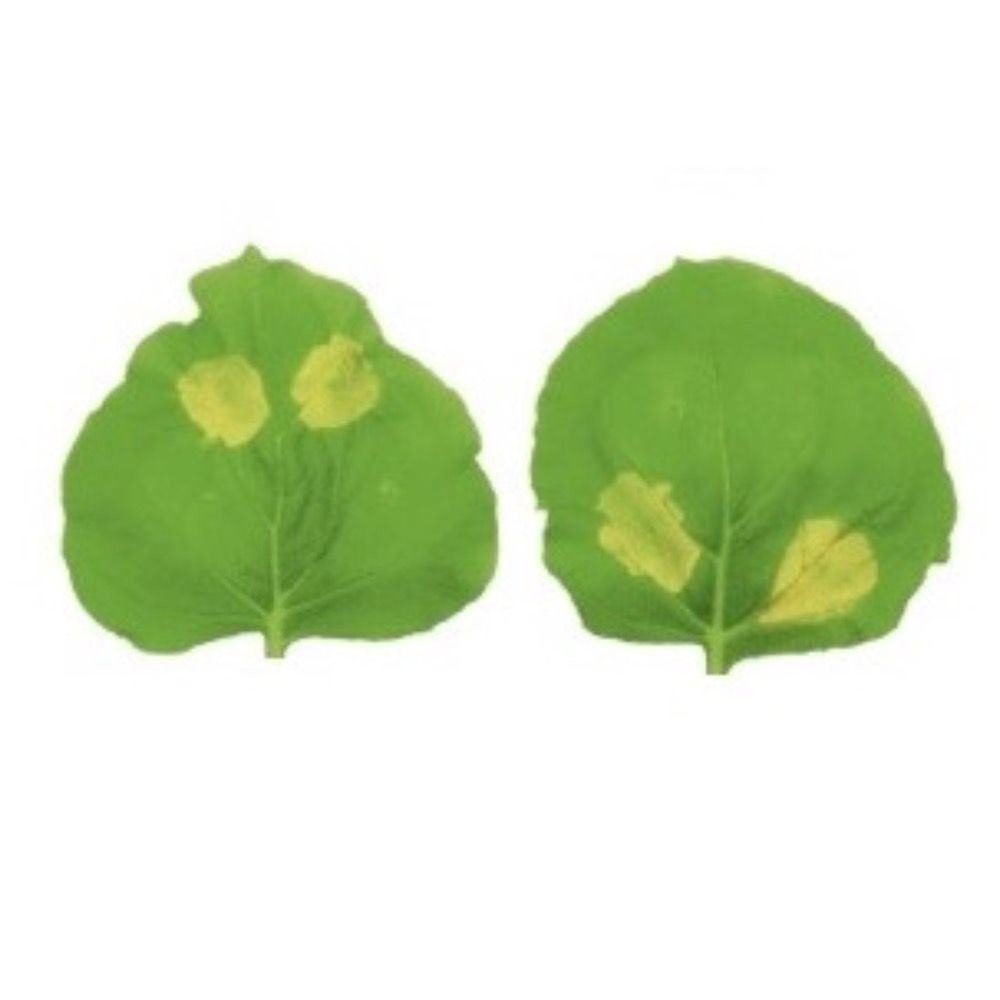
I just published: In praise of experts: distinguishing sense from nonsense in the age of AI
Can chatbots flag bad science? In a sea of polished, plausible noise, expertise matters more
than ever.
medium.com/p/in-praise-...
Can chatbots flag bad science? In a sea of polished, plausible noise, expertise matters more
than ever.
medium.com/p/in-praise-...

In praise of experts: distinguishing sense from nonsense in the age of AI
Can chatbots flag bad science? In a sea of polished, plausible noise, expertise matters more than ever.
medium.com
December 15, 2025 at 4:10 PM
I just published: In praise of experts: distinguishing sense from nonsense in the age of AI
Can chatbots flag bad science? In a sea of polished, plausible noise, expertise matters more
than ever.
medium.com/p/in-praise-...
Can chatbots flag bad science? In a sea of polished, plausible noise, expertise matters more
than ever.
medium.com/p/in-praise-...
Reposted by Mike Lacy
This is excellent: Tips and Tricks for Writing Constructive Peer Reviews
Perhaps the most excellent part is this subhead: "Remember that peer review is not meant to crush souls". Right? Peer review should improve papers (and OK, gatekeep a little) - not make an author regret their career choices!
Perhaps the most excellent part is this subhead: "Remember that peer review is not meant to crush souls". Right? Peer review should improve papers (and OK, gatekeep a little) - not make an author regret their career choices!

In my first Editorial as Associate Editor for @conphysjournal.bsky.social, we help combat this lack of training by providing some "tips and tricks" for writing constructive peer reviews, based on our collective experiences as editors for multiple scientific journals.

Tips and tricks for writing constructive peer reviews
Peer review has been the cornerstone of scientific inquiry for centuries and is considered the backbone of scientific quality and rigour (Spier, 2002). Des
academic.oup.com
December 15, 2025 at 3:04 PM
This is excellent: Tips and Tricks for Writing Constructive Peer Reviews
Perhaps the most excellent part is this subhead: "Remember that peer review is not meant to crush souls". Right? Peer review should improve papers (and OK, gatekeep a little) - not make an author regret their career choices!
Perhaps the most excellent part is this subhead: "Remember that peer review is not meant to crush souls". Right? Peer review should improve papers (and OK, gatekeep a little) - not make an author regret their career choices!
Reposted by Mike Lacy
🤩 We love seeing agar stabs arrive at the lab! Thanks for the explainer and great tips @bumblingbiochemist.bsky.social
That plasmid you order for your lab will likely come as an agar stab...
youtube.com/shorts/QVMde... bit.ly/plasmid_prep...
youtube.com/shorts/QVMde... bit.ly/plasmid_prep...

That plasmid you order for your lab will likely come as an agar stab...
YouTube video by the bumbling biochemist
youtube.com
December 12, 2025 at 3:21 PM
🤩 We love seeing agar stabs arrive at the lab! Thanks for the explainer and great tips @bumblingbiochemist.bsky.social