




Jerome Moore
@robotnose.bsky.social
PhD Chemist/Physicist/Materials Scientist near Chicago.
Researching new ways to measure scents, to better understand the cognition of taste and smell, find pollutants and toxics, measure quality of air and foods and add olfaction to robotic systems.
Researching new ways to measure scents, to better understand the cognition of taste and smell, find pollutants and toxics, measure quality of air and foods and add olfaction to robotic systems.
Reposted by Jerome Moore

This wood “robot” can plant seeds in remote places.
Watch it drill into soil on #WorldSoilDay: https://scim.ag/48BaHBz
Watch it drill into soil on #WorldSoilDay: https://scim.ag/48BaHBz
December 5, 2025 at 11:37 PM
This wood “robot” can plant seeds in remote places.
Watch it drill into soil on #WorldSoilDay: https://scim.ag/48BaHBz
Watch it drill into soil on #WorldSoilDay: https://scim.ag/48BaHBz
Reposted by Jerome Moore


Sometimes I have to recalibrate my sense of wonder. This is a picture from the surface of Mars taken by a robot that is wandering around (with some human input, but not real time) probing stuff and collecting samples.

Sol 1704: Right Navigation Camera (Navcam), taken at 12:04:59.448 (local mean solar time)

December 5, 2025 at 6:57 PM
Sometimes I have to recalibrate my sense of wonder. This is a picture from the surface of Mars taken by a robot that is wandering around (with some human input, but not real time) probing stuff and collecting samples.
Reposted by Jerome Moore
The U.S. Department of Energy is reorganizing its scientific efforts by establishing new offices for types of research favored by the White House. https://scim.ag/4aonc5S

As Energy Department prioritizes AI and fusion, basic research faces squeeze
Reorganization could shift mission of the United States’s largest funder of the physical sciences
scim.ag
December 3, 2025 at 11:47 PM
The U.S. Department of Energy is reorganizing its scientific efforts by establishing new offices for types of research favored by the White House. https://scim.ag/4aonc5S

Human Nose Can Detect a Trillion Smells
New analysis blows previous estimates away
www.science.org
December 1, 2025 at 2:58 AM
Very early stage work for human integration, but the underlying technology is interesting - chips that use peptide-coated sensors and optics to detect very small changes due to volatile organic compounds (VOCs) interacting with the coating.

“Rather than exploiting the smell pathway… the technology makes use of a less known nerve highway in the nose that transmits other sensations, including the kick of wasabi and the coolness of mint.”
#scicomm
www.science.org/content/arti...
🧪
#scicomm
www.science.org/content/arti...
🧪

Artificial ‘nose’ tells people when certain smells are present
Technology that uses a less known sensory system to substitute for olfaction could one day help anosmic people detect some odors
www.science.org
December 1, 2025 at 12:33 AM
Very early stage work for human integration, but the underlying technology is interesting - chips that use peptide-coated sensors and optics to detect very small changes due to volatile organic compounds (VOCs) interacting with the coating.
This is so engaging without being too flashy, and although it's a subject I've read and heard about many times, there was still new info for me. 10 minutes runtime.
www.youtube.com/watch?v=W06g...
www.youtube.com/watch?v=W06g...

Oppenheimer's Gamble - The Plutonium Crisis
YouTube video by Welch Labs
www.youtube.com
November 26, 2025 at 5:08 AM
This is so engaging without being too flashy, and although it's a subject I've read and heard about many times, there was still new info for me. 10 minutes runtime.
www.youtube.com/watch?v=W06g...
www.youtube.com/watch?v=W06g...
The paper is good. The C&EN (further below) "could use it to make a skin patch" is not trivial to achieve. I wish science news could leave the focus on the achievement and not always point at the pie-in-the-sky future. pubs.acs.org/doi/10.1021/...
November 25, 2025 at 7:50 PM
The paper is good. The C&EN (further below) "could use it to make a skin patch" is not trivial to achieve. I wish science news could leave the focus on the achievement and not always point at the pie-in-the-sky future. pubs.acs.org/doi/10.1021/...
Reposted by Jerome Moore
1/5
Odor intensity isn’t just about concentration! We have a new preprint to prove it: www.biorxiv.org/content/10.1...
In cahoots with @jmainland.bsky.social, @alexkoulakov.bsky.social, Rick Gerkin, Khristina Samoilova and others not on bluesky. 🧪
Which of these molecules smells stronger?
Odor intensity isn’t just about concentration! We have a new preprint to prove it: www.biorxiv.org/content/10.1...
In cahoots with @jmainland.bsky.social, @alexkoulakov.bsky.social, Rick Gerkin, Khristina Samoilova and others not on bluesky. 🧪
Which of these molecules smells stronger?

August 12, 2025 at 8:34 PM
1/5
Odor intensity isn’t just about concentration! We have a new preprint to prove it: www.biorxiv.org/content/10.1...
In cahoots with @jmainland.bsky.social, @alexkoulakov.bsky.social, Rick Gerkin, Khristina Samoilova and others not on bluesky. 🧪
Which of these molecules smells stronger?
Odor intensity isn’t just about concentration! We have a new preprint to prove it: www.biorxiv.org/content/10.1...
In cahoots with @jmainland.bsky.social, @alexkoulakov.bsky.social, Rick Gerkin, Khristina Samoilova and others not on bluesky. 🧪
Which of these molecules smells stronger?
Reposted by Jerome Moore

It's that time again: C&EN's molecule of the year poll is now open! Vote for your favorite molecule of 2025: cen.acs.org/synthesis/Mo...
#chemsky 🧪
#chemsky 🧪
November 24, 2025 at 6:39 PM
It's that time again: C&EN's molecule of the year poll is now open! Vote for your favorite molecule of 2025: cen.acs.org/synthesis/Mo...
#chemsky 🧪
#chemsky 🧪
Wonderful analogy:
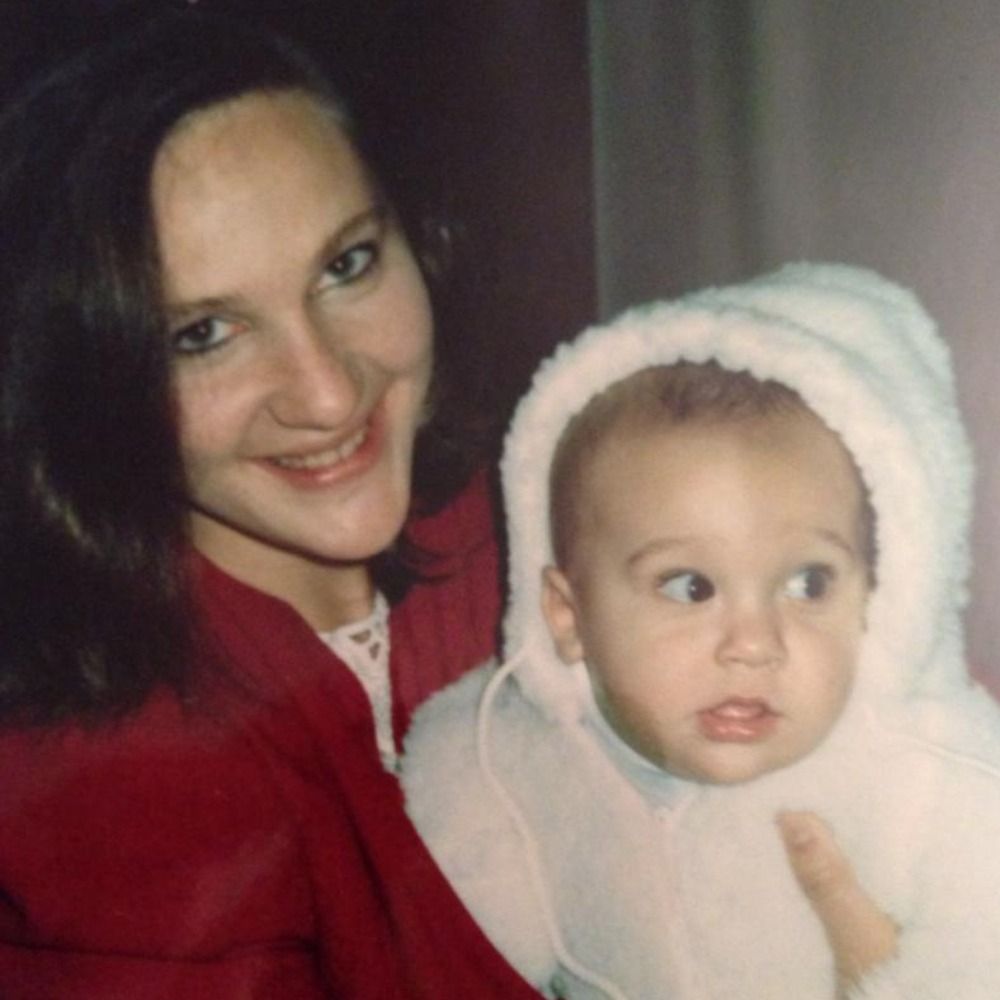
Human brains are amazing. It's not that we are stupid, it's that we needed this pattern recognition to get to where we are, and now it's like a border collie locked in a basement apartment trying to give itself a job. Conspiracy theories are the chewed couch.
cognitiontoday.com/why-did-huma...
cognitiontoday.com/why-did-huma...

Why Did Humans Evolve Pattern Recognition Abilities? - Cognition Today
Pattern recognition capacities sit at the helm of our basic cognitive architecture. Through evolution, humans developed cognitive abilities to spot patterns and use them to their advantage. Here is wh...
cognitiontoday.com
November 23, 2025 at 8:43 PM
Wonderful analogy:
Information that is useful for improving prediction* through theory

A question for scientists (construed as broadly as you like) of BlueSky: What makes something data?
(Question inspired by a talk I listened to this morning, and of course I have thoughts, but I wanted to throw this out there first.)
(Question inspired by a talk I listened to this morning, and of course I have thoughts, but I wanted to throw this out there first.)
November 23, 2025 at 8:17 PM
Information that is useful for improving prediction* through theory
Reposted by Jerome Moore

New DOE org chart just dropped. EERE has vanished, an Office of Fusion has appeared, and S3 is now the Undersecretary of Energy, which won't be confusing at all. . .
www.energy.gov/sites/defaul...
www.energy.gov/sites/defaul...
www.energy.gov
November 20, 2025 at 7:23 PM
New DOE org chart just dropped. EERE has vanished, an Office of Fusion has appeared, and S3 is now the Undersecretary of Energy, which won't be confusing at all. . .
www.energy.gov/sites/defaul...
www.energy.gov/sites/defaul...
Very good summary of the situation in the linked article. tl;dr is that bringing samples back from Mars is harder and more $ than expected. The samples are most interesting if they contain signatures of life.
It may be time to plan for better in-situ measurements.
It may be time to plan for better in-situ measurements.

NASA spent years and billions of dollars collecting Martian samples to bring home. Now they might be stranded

NASA Found Something on Mars. Now We Might Just Leave It There
NASA spent years and billions of dollars collecting Martian samples to bring home. Now they might be stranded
www.scientificamerican.com
November 20, 2025 at 10:23 PM
Very good summary of the situation in the linked article. tl;dr is that bringing samples back from Mars is harder and more $ than expected. The samples are most interesting if they contain signatures of life.
It may be time to plan for better in-situ measurements.
It may be time to plan for better in-situ measurements.
Reposted by Jerome Moore
Postdoc opening: airborne NH3 measurements
Join our team! The UMN atmospheric chemistry group is recruiting a postdoc to collect and analyze airborne NH3 measurements as part of NASA FarmFlux.
See z.umn.edu/aw67 for details, & contact Julieta ([email protected]) and I ([email protected]) with questions!
Join our team! The UMN atmospheric chemistry group is recruiting a postdoc to collect and analyze airborne NH3 measurements as part of NASA FarmFlux.
See z.umn.edu/aw67 for details, & contact Julieta ([email protected]) and I ([email protected]) with questions!

PostdocAd-FarmFlux
Postdoctoral Associate: aircraft-based measurements of atmospheric ammonia Join our team! The atmospheric chemistry group at the University of Minnesota (UMN) seeks applications for a Postdoctoral A...
z.umn.edu
November 20, 2025 at 2:59 AM
Postdoc opening: airborne NH3 measurements
Join our team! The UMN atmospheric chemistry group is recruiting a postdoc to collect and analyze airborne NH3 measurements as part of NASA FarmFlux.
See z.umn.edu/aw67 for details, & contact Julieta ([email protected]) and I ([email protected]) with questions!
Join our team! The UMN atmospheric chemistry group is recruiting a postdoc to collect and analyze airborne NH3 measurements as part of NASA FarmFlux.
See z.umn.edu/aw67 for details, & contact Julieta ([email protected]) and I ([email protected]) with questions!
My first real-science work as an undergraduate was analysis of rainwater, funded in part by NASA to judge the impact of space launches on the local environment. We looked at numerous cations (including metals) and anions via flow injection colorimetry. At that time the results were not concerning.
As more rockets and satellites in low Earth orbit burn up in the atmosphere at the end of their lives, the amount of introduced vapors and particulate matter there is dramatically rising. cen.acs.org/physical-che... #chemsky 🧪

Space pollution levels in the atmosphere are rocketing
More metal than ever is entering the upper atmosphere because of space traffic, with unknown effects on climate
cen.acs.org
November 20, 2025 at 1:49 AM
My first real-science work as an undergraduate was analysis of rainwater, funded in part by NASA to judge the impact of space launches on the local environment. We looked at numerous cations (including metals) and anions via flow injection colorimetry. At that time the results were not concerning.
Funny, but also a useful reminder to have one, especially if your furnace or appliances are gas fired. And of course have 1+ smoke detectors functioning.

Man Just Going To Assume Apartment Has Functional Carbon Monoxide Detector Somewhere https://theonion.com/man-just-going-to-assume-apartment-has-functional-carbo-1819575839/

November 19, 2025 at 4:04 PM
Funny, but also a useful reminder to have one, especially if your furnace or appliances are gas fired. And of course have 1+ smoke detectors functioning.
Good info and a pic of sandhill cranes.
This part was welcome news: "you can buy home rapid antigen tests that distinguish if someone has COVID, Flu A or Flu B"
This part was welcome news: "you can buy home rapid antigen tests that distinguish if someone has COVID, Flu A or Flu B"
✨Please share! My newsletter is out.✨
💉Flu strain mismatch to vaccine this yr, but should help some
📈RSV, Flu starting to ⬆️
🔬 Long COVID research update from PolyBio symposium
🦆 1st human case of H5N5 Bird Flu in WA state
🦋 EBV link to Lupus
& much more buff.ly/DS8XnhH
#medsky #pedsky #IDsky 🛟😷🧪
💉Flu strain mismatch to vaccine this yr, but should help some
📈RSV, Flu starting to ⬆️
🔬 Long COVID research update from PolyBio symposium
🦆 1st human case of H5N5 Bird Flu in WA state
🦋 EBV link to Lupus
& much more buff.ly/DS8XnhH
#medsky #pedsky #IDsky 🛟😷🧪

November 17, 2025 at 6:32 AM
Good info and a pic of sandhill cranes.
This part was welcome news: "you can buy home rapid antigen tests that distinguish if someone has COVID, Flu A or Flu B"
This part was welcome news: "you can buy home rapid antigen tests that distinguish if someone has COVID, Flu A or Flu B"

Reposted by Jerome Moore

Another example of emergent properties of complex systems.
An 18-year dataset from the North Sea reveals that rogue waves are not freak accidents but particular products of ordinary swells stacking up—an insight that could make prediction possible

Dangerous Rogue Waves Aren’t Random—They’re Predictable
An 18-year dataset from the North Sea reveals that rogue waves are not freak accidents but particular products of ordinary swells stacking up—an insight that could make prediction possible
www.scientificamerican.com
November 13, 2025 at 2:23 PM
Another example of emergent properties of complex systems.
I still remember hearing about Sagan's death, it was a blow. He was not only an inspiring voice for science, but a pioneer in planetary science.
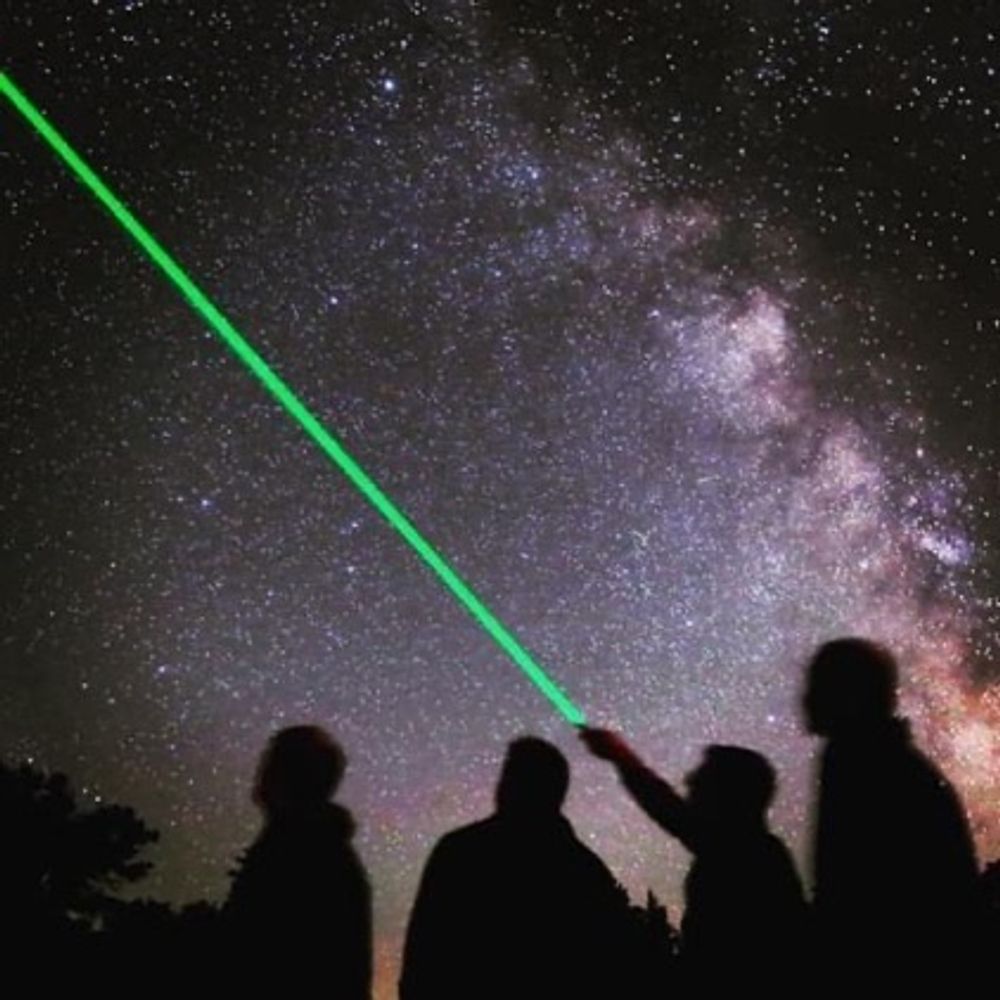
On what would have been his 91st birthday, I reflect on how Carl Sagan helped humanity look up & inward, reminding us that science is a way of seeing, not just knowing.🔭🧪
💫 Read on #Medium —
The Candle in the Dark: #CarlSagan’s Legacy
🔗 medium.com/@shanil.vira...
#CarlSaganDay #Cosmos #PaleBlueDot
💫 Read on #Medium —
The Candle in the Dark: #CarlSagan’s Legacy
🔗 medium.com/@shanil.vira...
#CarlSaganDay #Cosmos #PaleBlueDot

𝘛𝘩𝘦 Candle in the Dark: Celebrating Carl Sagan and the Human Story of Science
Science is not a list of facts — it’s a human story.
medium.com
November 11, 2025 at 5:04 AM
I still remember hearing about Sagan's death, it was a blow. He was not only an inspiring voice for science, but a pioneer in planetary science.
I feel for everyone w/SAD, but I have the opposite problem: June is awful. There is so much sun, light and warmth that I get horrible insomnia.

Hello team. How's your SAD doing this year? Mine is making me feel like an inside out football sock forgotten in a half term sports bag.
November 11, 2025 at 4:30 AM
I feel for everyone w/SAD, but I have the opposite problem: June is awful. There is so much sun, light and warmth that I get horrible insomnia.
Reposted by Jerome Moore
Researchers at the University of Pittsburgh have developed a skin patch that can detect antibodies for COVID and flu. It’s far more sensitive than current tests, needs only a half-volt of power, and provides results in about 10 minutes.
Source: archive.li/yBsS2
Study: pubs.acs.org/doi/10.1021/...
Source: archive.li/yBsS2
Study: pubs.acs.org/doi/10.1021/...
archive.li
November 10, 2025 at 11:52 PM
Researchers at the University of Pittsburgh have developed a skin patch that can detect antibodies for COVID and flu. It’s far more sensitive than current tests, needs only a half-volt of power, and provides results in about 10 minutes.
Source: archive.li/yBsS2
Study: pubs.acs.org/doi/10.1021/...
Source: archive.li/yBsS2
Study: pubs.acs.org/doi/10.1021/...
Reposted by Jerome Moore

Wikipedia HERO
A guy discovered a faked photo of a rare blue gas on Wikipedia. So he SYNTHESIZED THE GAS HIMSELF so that he could photograph it. Yesterday he updated the article with this real photo of trifluoronitrosomethane:
A guy discovered a faked photo of a rare blue gas on Wikipedia. So he SYNTHESIZED THE GAS HIMSELF so that he could photograph it. Yesterday he updated the article with this real photo of trifluoronitrosomethane:

November 8, 2025 at 8:51 PM
Wikipedia HERO
A guy discovered a faked photo of a rare blue gas on Wikipedia. So he SYNTHESIZED THE GAS HIMSELF so that he could photograph it. Yesterday he updated the article with this real photo of trifluoronitrosomethane:
A guy discovered a faked photo of a rare blue gas on Wikipedia. So he SYNTHESIZED THE GAS HIMSELF so that he could photograph it. Yesterday he updated the article with this real photo of trifluoronitrosomethane: