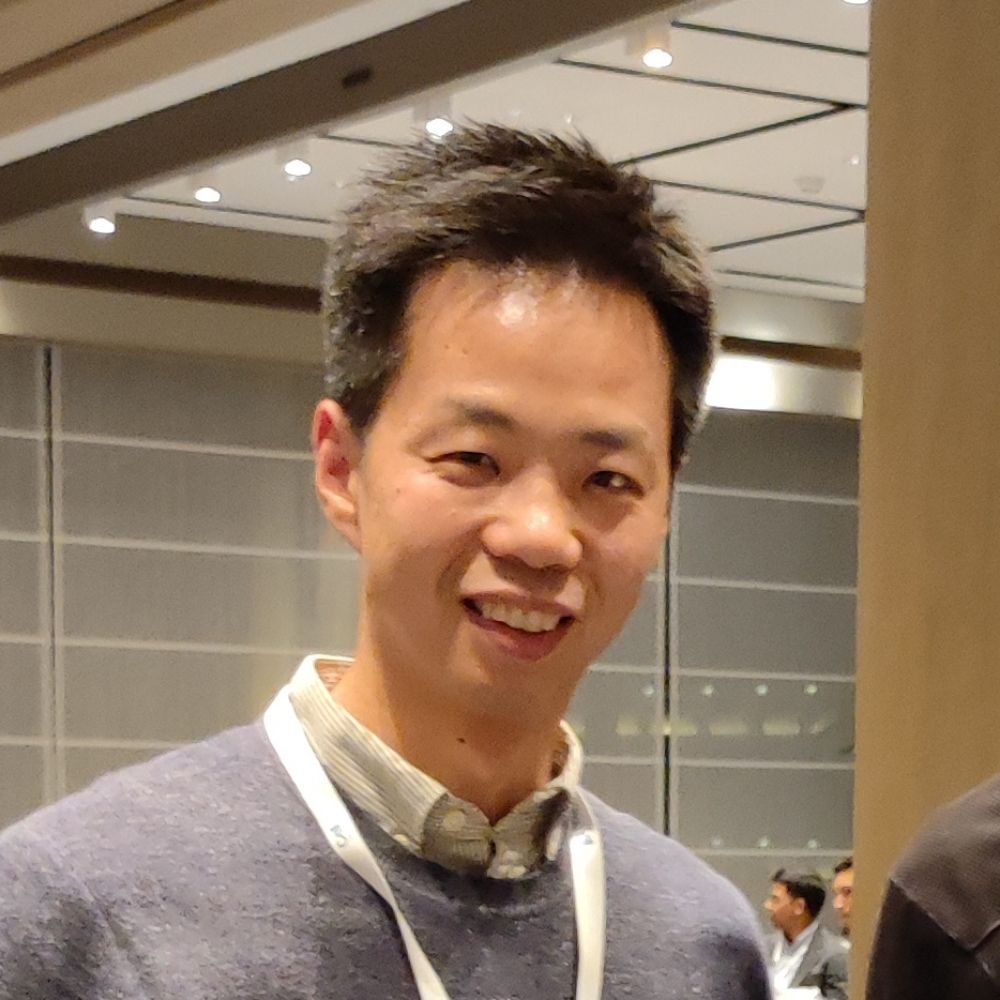
Changwei YU
@changweiyu.bsky.social
Postdoc in the Brennecke lab @IMBA, Vienna | Alumni: PhD @igbmc @unistra | enthusiast of transcription, chromatin, germline/early development, and transposon biology
Pinned
Intrigued by a long-standing conundrum in small RNA biology—how nuclear Argonaute proteins silence transposons when they *need* target transcription for their own recruitment—we studied the piRNA pathway.
And found a hidden RNA-decay axis from Piwi to the RNA exosome.
And found a hidden RNA-decay axis from Piwi to the RNA exosome.
RNA decay via the nuclear exosome is essential for piwi-mediated transposon silencing https://www.biorxiv.org/content/10.64898/2025.12.16.694471v1
Very happy to share my postdoc work (on preprint), where we try to understand a long-standing transcription-silencing paradox, and uncovered a hidden RNA decay arm of nuclear piRNA pathway, see detailed threads quoted from @juliusbrennecke.bsky.social
Reposted by Changwei YU
Read our new preprint where we uncover a hierarchy in human PIC assembly and establish a quantitative framework that connects factor exchange kinetics to the regulation of Pol II activity in living human cells. doi: doi.org/10.64898/202...
By A. Oravecz and our collaborators @molinalab.bsky.social
By A. Oravecz and our collaborators @molinalab.bsky.social

RNA polymerase II initiation factors show different dynamic behaviour upon induced transcription in live cells
Transcription by RNA polymerase II (Pol II) requires the ordered action of general transcription factors (GTFs) forming the pre-initiation complex (PIC). How these events unfold kinetically remains un...
doi.org
December 24, 2025 at 1:35 PM
Read our new preprint where we uncover a hierarchy in human PIC assembly and establish a quantitative framework that connects factor exchange kinetics to the regulation of Pol II activity in living human cells. doi: doi.org/10.64898/202...
By A. Oravecz and our collaborators @molinalab.bsky.social
By A. Oravecz and our collaborators @molinalab.bsky.social
Reposted by Changwei YU

Our preprint "Predictive design of tissue-specific mammalian enhancers that function in vivo in the mouse embryo" is on bioRxiv: www.biorxiv.org/content/10.6... . Amazing collaboration by @shenzhichen1999.bsky.social, Vincent Loubiere (@impvienna.bsky.social,@viennabiocenter.bsky.social),... (1/2)

Predictive design of tissue-specific mammalian enhancers that function in vivo in the mouse embryo
Enhancers control tissue-specific gene expression across metazoans. Although deep learning has enabled enhancer prediction and design in mammalian cell lines and invertebrate systems, it remains uncle...
www.biorxiv.org
December 24, 2025 at 3:06 PM
Our preprint "Predictive design of tissue-specific mammalian enhancers that function in vivo in the mouse embryo" is on bioRxiv: www.biorxiv.org/content/10.6... . Amazing collaboration by @shenzhichen1999.bsky.social, Vincent Loubiere (@impvienna.bsky.social,@viennabiocenter.bsky.social),... (1/2)
Reposted by Changwei YU

Excited to share new manuscript on histone acylations, exploring how H4K16 acylations regulate inter and intranucleosomal interactions and how they confer resilience to metabolic challenges in vivo. Thanks to all authors +1 author @sandrani.bsky.social Enjoy 👇👇
www.sciencedirect.com/science/arti...
www.sciencedirect.com/science/arti...

H4K16 acylations destabilize chromatin architecture and facilitate transcriptional response during metabolic perturbations
Histone modifications play crucial roles in genome function. However, how chromatin integrates physiological and metabolic responses at the molecular …
www.sciencedirect.com
December 19, 2025 at 5:17 PM
Excited to share new manuscript on histone acylations, exploring how H4K16 acylations regulate inter and intranucleosomal interactions and how they confer resilience to metabolic challenges in vivo. Thanks to all authors +1 author @sandrani.bsky.social Enjoy 👇👇
www.sciencedirect.com/science/arti...
www.sciencedirect.com/science/arti...
Reposted by Changwei YU
Happy to share two BioRxiv manuscripts from our lab. One on genetic Argonaute interaction and unexpected non-correlation between small RNAs and their targets:
doi.org/10.64898/202...
The second on IDR processing and IDR-mediated Argonaute loading control:
doi.org/10.64898/202...
Merry Xmas😊
doi.org/10.64898/202...
The second on IDR processing and IDR-mediated Argonaute loading control:
doi.org/10.64898/202...
Merry Xmas😊
December 22, 2025 at 2:06 PM
Happy to share two BioRxiv manuscripts from our lab. One on genetic Argonaute interaction and unexpected non-correlation between small RNAs and their targets:
doi.org/10.64898/202...
The second on IDR processing and IDR-mediated Argonaute loading control:
doi.org/10.64898/202...
Merry Xmas😊
doi.org/10.64898/202...
The second on IDR processing and IDR-mediated Argonaute loading control:
doi.org/10.64898/202...
Merry Xmas😊
Reposted by Changwei YU

The Department of Genetics at the University of Cambridge is seeking a talented Postdoctoral Research Associate to work in the group of Dr Felipe Karam Teixeira (www.gen.cam.ac.uk/research-gro...)
➡️For Further details see the link www.cam.ac.uk/jobs/postdoc...
➡️For Further details see the link www.cam.ac.uk/jobs/postdoc...
Postdoctoral Research Associate (Fixed Term)
Applications are invited for a Postdoctoral Research Associate position to work in the group of Dr Felipe Karam Teixeira (https://www.gen.cam.ac.uk/research-groups/research-groups/karam-teixeira) in
www.cam.ac.uk
December 10, 2025 at 11:22 AM
The Department of Genetics at the University of Cambridge is seeking a talented Postdoctoral Research Associate to work in the group of Dr Felipe Karam Teixeira (www.gen.cam.ac.uk/research-gro...)
➡️For Further details see the link www.cam.ac.uk/jobs/postdoc...
➡️For Further details see the link www.cam.ac.uk/jobs/postdoc...
Reposted by Changwei YU
Intrigued by a long-standing conundrum in small RNA biology—how nuclear Argonaute proteins silence transposons when they *need* target transcription for their own recruitment—we studied the piRNA pathway.
And found a hidden RNA-decay axis from Piwi to the RNA exosome.
And found a hidden RNA-decay axis from Piwi to the RNA exosome.
RNA decay via the nuclear exosome is essential for piwi-mediated transposon silencing https://www.biorxiv.org/content/10.64898/2025.12.16.694471v1
December 22, 2025 at 6:14 PM
Intrigued by a long-standing conundrum in small RNA biology—how nuclear Argonaute proteins silence transposons when they *need* target transcription for their own recruitment—we studied the piRNA pathway.
And found a hidden RNA-decay axis from Piwi to the RNA exosome.
And found a hidden RNA-decay axis from Piwi to the RNA exosome.
Very happy to share my postdoc work (on preprint), where we try to understand a long-standing transcription-silencing paradox, and uncovered a hidden RNA decay arm of nuclear piRNA pathway, see detailed threads quoted from @juliusbrennecke.bsky.social
Intrigued by a long-standing conundrum in small RNA biology—how nuclear Argonaute proteins silence transposons when they *need* target transcription for their own recruitment—we studied the piRNA pathway.
And found a hidden RNA-decay axis from Piwi to the RNA exosome.
And found a hidden RNA-decay axis from Piwi to the RNA exosome.
RNA decay via the nuclear exosome is essential for piwi-mediated transposon silencing https://www.biorxiv.org/content/10.64898/2025.12.16.694471v1
December 22, 2025 at 7:38 PM
Very happy to share my postdoc work (on preprint), where we try to understand a long-standing transcription-silencing paradox, and uncovered a hidden RNA decay arm of nuclear piRNA pathway, see detailed threads quoted from @juliusbrennecke.bsky.social
Reposted by Changwei YU
Huge thanks to our fantastic collaborators @sebastianfalk.bsky.social & @felipekteixeira.bsky.social, all co‑authors, the Brennecke lab @imbavienna.bsky.social & our amazing core facilities!
We would be happy to receive your comments & critical feedback on the data, storyline, representation ...
We would be happy to receive your comments & critical feedback on the data, storyline, representation ...
December 22, 2025 at 6:14 PM
Huge thanks to our fantastic collaborators @sebastianfalk.bsky.social & @felipekteixeira.bsky.social, all co‑authors, the Brennecke lab @imbavienna.bsky.social & our amazing core facilities!
We would be happy to receive your comments & critical feedback on the data, storyline, representation ...
We would be happy to receive your comments & critical feedback on the data, storyline, representation ...
Reposted by Changwei YU

RNA decay via the nuclear exosome is essential for piwi-mediated transposon silencing https://www.biorxiv.org/content/10.64898/2025.12.16.694471v1
December 17, 2025 at 3:21 AM
RNA decay via the nuclear exosome is essential for piwi-mediated transposon silencing https://www.biorxiv.org/content/10.64898/2025.12.16.694471v1
Reposted by Changwei YU

RNA decay via the nuclear exosome is essential for piwi-mediated transposon silencing https://www.biorxiv.org/content/10.64898/2025.12.16.694471v1
December 17, 2025 at 3:21 AM
RNA decay via the nuclear exosome is essential for piwi-mediated transposon silencing https://www.biorxiv.org/content/10.64898/2025.12.16.694471v1
Reposted by Changwei YU

☕Xu et al. identify REPRODUCTIVE MERISTEM #TranscriptionFactors that are required for RNA-directed #DNAmethylation at CLASSY3 target loci in male and female reproductive tissues of Arabidopsis.
bit.ly/4iYqr6d
bit.ly/4iYqr6d

Transcription factors instruct DNA methylation patterns in plant reproductive tissues - Nature Cell Biology
Xu et al. identify REPRODUCTIVE MERISTEM transcription factors that are required for RNA-directed DNA methylation at CLASSY3 target loci in male and female reproductive tissues of Arabidopsis.
bit.ly
December 16, 2025 at 10:10 PM
☕Xu et al. identify REPRODUCTIVE MERISTEM #TranscriptionFactors that are required for RNA-directed #DNAmethylation at CLASSY3 target loci in male and female reproductive tissues of Arabidopsis.
bit.ly/4iYqr6d
bit.ly/4iYqr6d
Reposted by Changwei YU
🍰Interested in reading more about the study? Read also the News & Views article written by Pratheek Pandesha & R. Keith Slotkin:
👉https://rdcu.be/eUZCm
bit.ly/3MBUvst
👉https://rdcu.be/eUZCm
bit.ly/3MBUvst

Transcription factor-mediated recruitment of small interfering RNA production - Nature Plants
Decades of research in plants has established that the protein complexes that transcribe small interfering RNAs (siRNAs) are not targeted to DNA in a sequence-specific manner. Two independent studies ...
bit.ly
December 16, 2025 at 10:10 PM
🍰Interested in reading more about the study? Read also the News & Views article written by Pratheek Pandesha & R. Keith Slotkin:
👉https://rdcu.be/eUZCm
bit.ly/3MBUvst
👉https://rdcu.be/eUZCm
bit.ly/3MBUvst
Reposted by Changwei YU

@pravrutharaman.bsky.social got super intrigued about EZHIP/CATACOMB, previously identified as a histone H3K27M mimic of PRC2. You can read about her efforts here: www.biorxiv.org/content/10.6... We hope these analyses will help spur more analyses in this very cool gene! 1/

Dynamic evolution of EZHIP, an inhibitor of the Polycomb Repressive Complex 2 in mammals
The Polycomb Repressive Complex 2 (PRC2) is an ancient, conserved chromatin-interacting complex that controls gene expression, facilitating differentiation and cellular identity during development. It...
www.biorxiv.org
December 13, 2025 at 10:08 PM
@pravrutharaman.bsky.social got super intrigued about EZHIP/CATACOMB, previously identified as a histone H3K27M mimic of PRC2. You can read about her efforts here: www.biorxiv.org/content/10.6... We hope these analyses will help spur more analyses in this very cool gene! 1/
Reposted by Changwei YU
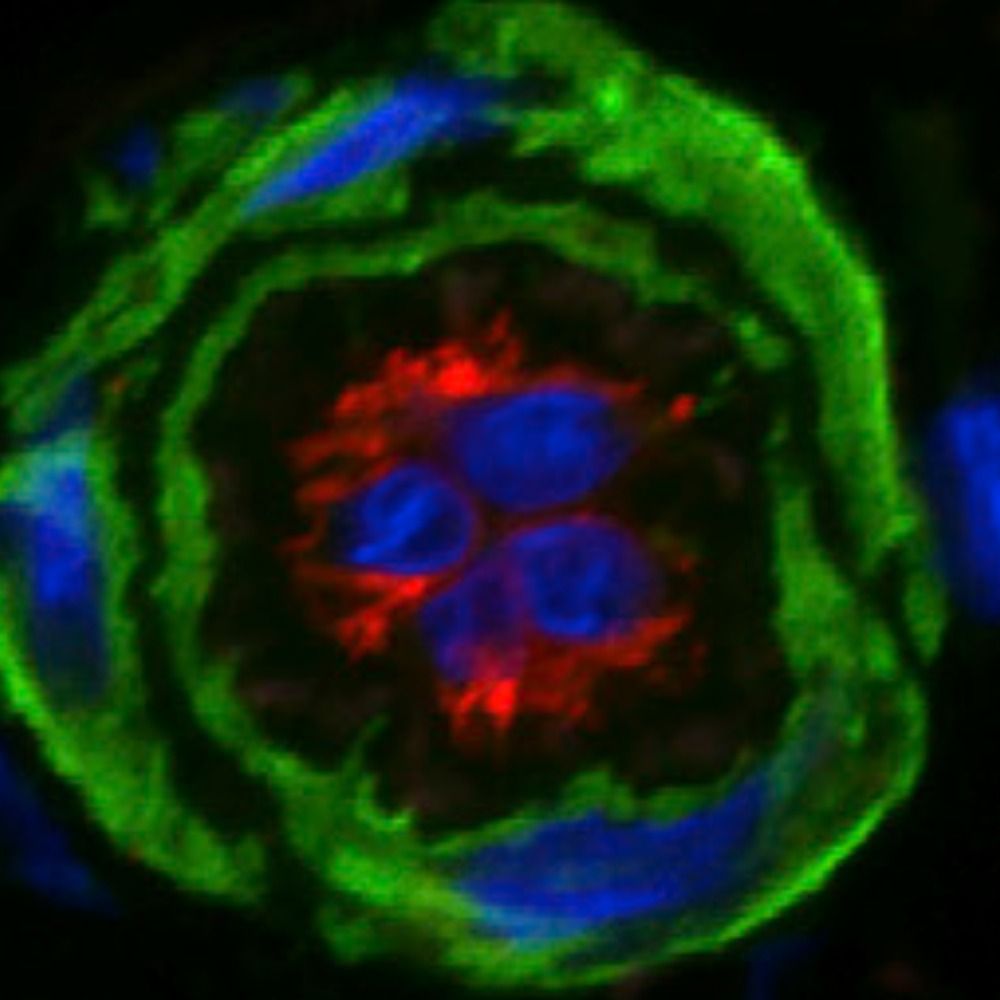
The dark proteome: translation from noncanonical open reading frames
1⃣5'-UTR 2⃣3'-UTR small ORF/sORF
3⃣out-of-frame 4⃣In-frame overlapping ORF
Translating micropeptide <100aa, proteins distinct from canonical ORFs, or isoforms
#TrendsCellBio 2022
www.sciencedirect.com/science/arti...
1⃣5'-UTR 2⃣3'-UTR small ORF/sORF
3⃣out-of-frame 4⃣In-frame overlapping ORF
Translating micropeptide <100aa, proteins distinct from canonical ORFs, or isoforms
#TrendsCellBio 2022
www.sciencedirect.com/science/arti...

December 13, 2025 at 1:34 PM
The dark proteome: translation from noncanonical open reading frames
1⃣5'-UTR 2⃣3'-UTR small ORF/sORF
3⃣out-of-frame 4⃣In-frame overlapping ORF
Translating micropeptide <100aa, proteins distinct from canonical ORFs, or isoforms
#TrendsCellBio 2022
www.sciencedirect.com/science/arti...
1⃣5'-UTR 2⃣3'-UTR small ORF/sORF
3⃣out-of-frame 4⃣In-frame overlapping ORF
Translating micropeptide <100aa, proteins distinct from canonical ORFs, or isoforms
#TrendsCellBio 2022
www.sciencedirect.com/science/arti...
Reposted by Changwei YU

Please RT‼️ #TenureTrack position @zmbh.uni-heidelberg.de one of the best #proteostasis research centres in the world. www.nature.com/naturecareer...

Tenure Track Professorship (W1 with Tenure Track to W3) in “Molecular Biology" (f/m/d) - Heidelberg job with Universität Heidelberg | 12850668
The Center for Molecular Biology of Heidelberg University (ZMBH) and the Faculty of Biosciences invite applications for a Tenure Track Professors...
www.nature.com
December 10, 2025 at 2:14 PM
Please RT‼️ #TenureTrack position @zmbh.uni-heidelberg.de one of the best #proteostasis research centres in the world. www.nature.com/naturecareer...
Reposted by Changwei YU

SY-Stem 2026 is here! The symposium focusing on the next generation of stem cell researchers returns to the Vienna BioCenter from 11–13 March 2026. Register online: sy-stem.org

December 10, 2025 at 4:10 PM
SY-Stem 2026 is here! The symposium focusing on the next generation of stem cell researchers returns to the Vienna BioCenter from 11–13 March 2026. Register online: sy-stem.org
Reposted by Changwei YU

I am happy to share that my postdoctoral work in the @gerlichlab.bsky.social at @imbavienna.bsky.social is finally out 🎉!
Our study reveals how cohesin guides focused and accurate homology search.
Read more 👉 www.science.org/doi/10.1126/...
Follow along for key insights and updates! 🧵
Our study reveals how cohesin guides focused and accurate homology search.
Read more 👉 www.science.org/doi/10.1126/...
Follow along for key insights and updates! 🧵

Cohesin guides homology search during DNA repair using loops and sister chromatid linkages
Accurate repair of DNA double-strand breaks (DSBs) is essential for genome stability, and defective repair underlies diseases such as cancer. Homologous recombination uses an intact homologous sequenc...
www.science.org
December 4, 2025 at 8:18 PM
I am happy to share that my postdoctoral work in the @gerlichlab.bsky.social at @imbavienna.bsky.social is finally out 🎉!
Our study reveals how cohesin guides focused and accurate homology search.
Read more 👉 www.science.org/doi/10.1126/...
Follow along for key insights and updates! 🧵
Our study reveals how cohesin guides focused and accurate homology search.
Read more 👉 www.science.org/doi/10.1126/...
Follow along for key insights and updates! 🧵
Reposted by Changwei YU

We have just published a tribute to John Gurdon, reflecting on his scientific legacy and the profound influence he had on generations of developmental biologists.
The piece is available open access in Nature Communications:
www.nature.com/articles/s41...
The piece is available open access in Nature Communications:
www.nature.com/articles/s41...

Reversibility, regulation, and the community of development: the legacy of Sir John B. Gurdon - Nature Communications
Nature Communications - Reversibility, regulation, and the community of development: the legacy of Sir John B. Gurdon
www.nature.com
December 5, 2025 at 8:05 AM
We have just published a tribute to John Gurdon, reflecting on his scientific legacy and the profound influence he had on generations of developmental biologists.
The piece is available open access in Nature Communications:
www.nature.com/articles/s41...
The piece is available open access in Nature Communications:
www.nature.com/articles/s41...
Reposted by Changwei YU

How to keep in step when your (protein) partner speeds up…
Here we investigated the adaptive remodeling of a protein-protein interaction surface essential for telomere protection.
Congrats to whole team!
www.science.org/doi/10.1126/...
Here we investigated the adaptive remodeling of a protein-protein interaction surface essential for telomere protection.
Congrats to whole team!
www.science.org/doi/10.1126/...

Rapid compensatory evolution within a multiprotein complex preserves telomere integrity
Intragenomic conflict with selfish genetic elements spurs adaptive changes in subunits of essential multiprotein complexes. Whether and how these adaptive changes disrupt interactions within such comp...
www.science.org
November 28, 2025 at 5:22 PM
How to keep in step when your (protein) partner speeds up…
Here we investigated the adaptive remodeling of a protein-protein interaction surface essential for telomere protection.
Congrats to whole team!
www.science.org/doi/10.1126/...
Here we investigated the adaptive remodeling of a protein-protein interaction surface essential for telomere protection.
Congrats to whole team!
www.science.org/doi/10.1126/...
Reposted by Changwei YU

Beautiful story on the evolutionary response to fly telomeres battling the genome they protect the ends of!
Also, nice to see that the dream data clarity we all imagine when starting a project can actually materialize!
www.science.org/doi/10.1126/...
@sungyalin.bsky.social @levine-lab.bsky.social
Also, nice to see that the dream data clarity we all imagine when starting a project can actually materialize!
www.science.org/doi/10.1126/...
@sungyalin.bsky.social @levine-lab.bsky.social

Rapid compensatory evolution within a multiprotein complex preserves telomere integrity
Intragenomic conflict with selfish genetic elements spurs adaptive changes in subunits of essential multiprotein complexes. Whether and how these adaptive changes disrupt interactions within such comp...
www.science.org
November 27, 2025 at 9:20 PM
Beautiful story on the evolutionary response to fly telomeres battling the genome they protect the ends of!
Also, nice to see that the dream data clarity we all imagine when starting a project can actually materialize!
www.science.org/doi/10.1126/...
@sungyalin.bsky.social @levine-lab.bsky.social
Also, nice to see that the dream data clarity we all imagine when starting a project can actually materialize!
www.science.org/doi/10.1126/...
@sungyalin.bsky.social @levine-lab.bsky.social
Reposted by Changwei YU

New online: Heterochromatin boundaries maintain centromere position, size and number

Heterochromatin boundaries maintain centromere position, size and number
Nature Structural & Molecular Biology, Published online: 25 November 2025; doi:10.1038/s41594-025-01706-2Carty et al. identify the H3K9 methyltransferases that restrict the size and position of the centromere protein A chromatin domain, maintaining functional centromeres.
go.nature.com
November 25, 2025 at 5:05 PM
New online: Heterochromatin boundaries maintain centromere position, size and number
Reposted by Changwei YU
Happy to share that my PhD project is finally published!🪱✨
Selfish genes are found across the tree of life. They can disrupt inheritance patterns and at the same time act as units for molecular innovation. Here we tried to answer one big question: how do selfish genes emerge in the first place?
Selfish genes are found across the tree of life. They can disrupt inheritance patterns and at the same time act as units for molecular innovation. Here we tried to answer one big question: how do selfish genes emerge in the first place?

Recurrent evolution of selfishness from an essential tRNA synthetase in Caenorhabditis tropicalis 🧪
www.nature.com/articles/s41...
www.nature.com/articles/s41...

Recurrent evolution of selfishness from an essential tRNA synthetase in Caenorhabditis tropicalis - Nature Ecology & Evolution
In Caenorhabditis tropicalis, three toxin–antidote elements arose via gene duplication from the essential tRNA-synthetase subunit FARS-3. The ancestral antidote probably acquired affinity for FARS-3, ...
www.nature.com
November 24, 2025 at 9:10 PM
Happy to share that my PhD project is finally published!🪱✨
Selfish genes are found across the tree of life. They can disrupt inheritance patterns and at the same time act as units for molecular innovation. Here we tried to answer one big question: how do selfish genes emerge in the first place?
Selfish genes are found across the tree of life. They can disrupt inheritance patterns and at the same time act as units for molecular innovation. Here we tried to answer one big question: how do selfish genes emerge in the first place?
Reposted by Changwei YU

How does messenger RNA (mRNA) get out of the nucleus to become a protein? Eukaryotic mRNA is packaged, exported, and then translated in the cytoplasm. But how do these steps work? And what are open questions? Check out our new review for our take: www.annualreviews.org/content/jour... (1/3)

November 21, 2025 at 5:37 PM
How does messenger RNA (mRNA) get out of the nucleus to become a protein? Eukaryotic mRNA is packaged, exported, and then translated in the cytoplasm. But how do these steps work? And what are open questions? Check out our new review for our take: www.annualreviews.org/content/jour... (1/3)
Reposted by Changwei YU
Congrats to Dr. @julsportell.bsky.social
on her PhD! Her journey as a joint student (Brennecke/Our Lab) led to key insights into gene silencing. Paper: www.cell.com/molecular-ce.... Journey: www.viennabiocenter.org/about/news/t.... CP.
on her PhD! Her journey as a joint student (Brennecke/Our Lab) led to key insights into gene silencing. Paper: www.cell.com/molecular-ce.... Journey: www.viennabiocenter.org/about/news/t.... CP.

November 20, 2025 at 3:56 PM
Congrats to Dr. @julsportell.bsky.social
on her PhD! Her journey as a joint student (Brennecke/Our Lab) led to key insights into gene silencing. Paper: www.cell.com/molecular-ce.... Journey: www.viennabiocenter.org/about/news/t.... CP.
on her PhD! Her journey as a joint student (Brennecke/Our Lab) led to key insights into gene silencing. Paper: www.cell.com/molecular-ce.... Journey: www.viennabiocenter.org/about/news/t.... CP.