



Julien Vibert (李满山)
@julienmanshan.bsky.social
MD, PhD | Medical Oncologist & Postdoctoral Researcher | AI & Computational Oncology | Sarcoma & Rare Cancers | Gustave Roussy & Heidelberg | Kung Fu practitioner | Philosophy lover |
Reposted by Julien Vibert (李满山)
Many thanks to @michaelboutros.bsky.social, all our collaborators at @embl.org and @dkfz.bsky.social, and our funders!
📘Preprint: www.biorxiv.org/content/10.6... 10/10
📘Preprint: www.biorxiv.org/content/10.6... 10/10

Direct detection of CRISPR mutations and transcriptional responses at single cell resolution in vivo
CRISPR screens coupled with single-cell RNA sequencing are transforming high-throughput functional genomics. However, applications in vivo remain limited and are confounded by difficulties in identify...
www.biorxiv.org
December 27, 2025 at 4:13 PM
Many thanks to @michaelboutros.bsky.social, all our collaborators at @embl.org and @dkfz.bsky.social, and our funders!
📘Preprint: www.biorxiv.org/content/10.6... 10/10
📘Preprint: www.biorxiv.org/content/10.6... 10/10
Reposted by Julien Vibert (李满山)
The hegemonic EWSR1::ETS oncoprotein overrules core regulatory circuitry principles in Ewing sarcoma
www.nature.com/articles/s41...
www.nature.com/articles/s41...
The hegemonic EWSR1::ETS oncoprotein overrules core regulatory circuitry principles in Ewing sarcoma - npj Precision Oncology
npj Precision Oncology - The hegemonic EWSR1::ETS oncoprotein overrules core regulatory circuitry principles in Ewing sarcoma
www.nature.com
December 26, 2025 at 9:10 PM
The hegemonic EWSR1::ETS oncoprotein overrules core regulatory circuitry principles in Ewing sarcoma
www.nature.com/articles/s41...
www.nature.com/articles/s41...
Reposted by Julien Vibert (李满山)

Online Now: Epitranscriptomic control of cancer hallmarks: Functions, mechanisms, and therapeutics of RNA modifications

Epitranscriptomic control of cancer hallmarks: Functions, mechanisms, and therapeutics of RNA modifications
RNA modifications dynamically regulate cancer hallmarks. Deng et al. summarize how epitranscriptomic marks (e.g., m6A, m5C, Ψ, and A-to-I editing) orchestrate tumor proliferation, stemness, metabolism, immune evasion, and therapy resistance. Emerging detection, single-cell mapping, and therapeutic targeting strategies position RNA epitranscriptomics as a new frontier in cancer biology and treatment.
dlvr.it
December 24, 2025 at 7:51 PM
Online Now: Epitranscriptomic control of cancer hallmarks: Functions, mechanisms, and therapeutics of RNA modifications
Reposted by Julien Vibert (李满山)

1/ 🎄 We got our Christmas present today: "Two distinct chromatin modules regulate proinflammatory gene expression" is now published @natcellbio.nature.com doi.org/10.1038/s415.... Our study introduces a scATAC-seq-based framework for genome-wide analysis of gene regulation features.

December 24, 2025 at 10:44 PM
1/ 🎄 We got our Christmas present today: "Two distinct chromatin modules regulate proinflammatory gene expression" is now published @natcellbio.nature.com doi.org/10.1038/s415.... Our study introduces a scATAC-seq-based framework for genome-wide analysis of gene regulation features.
Reposted by Julien Vibert (李满山)

Clinical trial participants donate data and biospecimens. We call for faster and broader sharing of clinical data and samples to accelerate patient-centered oncology research. Proud to contribute to this global effort published in
@jamaoncology.com
doi.org/10.1001/jama...
@jamaoncology.com
doi.org/10.1001/jama...


December 18, 2025 at 8:31 PM
Clinical trial participants donate data and biospecimens. We call for faster and broader sharing of clinical data and samples to accelerate patient-centered oncology research. Proud to contribute to this global effort published in
@jamaoncology.com
doi.org/10.1001/jama...
@jamaoncology.com
doi.org/10.1001/jama...
Reposted by Julien Vibert (李满山)
An Analysis compares the performance of 27 single-cell perturbation response prediction methods under comprehensive test conditions.
www.nature.com/articles/s41...
www.nature.com/articles/s41...

Benchmarking algorithms for generalizable single-cell perturbation response prediction - Nature Methods
This analysis performs comprehensive comparisons of 27 single-cell perturbation response prediction methods using 29 datasets under different test scenarios and against multiple evaluation metrics.
www.nature.com
December 18, 2025 at 8:34 PM
An Analysis compares the performance of 27 single-cell perturbation response prediction methods under comprehensive test conditions.
www.nature.com/articles/s41...
www.nature.com/articles/s41...
Reposted by Julien Vibert (李满山)

Developing guidance in #AI is challenging as technology evolves rapidly. ESMO task forces have developed long-lasting recommendations to support the responsible use of AI in #oncology. Read more in the #ESMODailyReporter 📌 https://ow.ly/XonL50XLkVg
#HealthAI #DigitalOncology
#HealthAI #DigitalOncology

December 18, 2025 at 1:20 PM
Developing guidance in #AI is challenging as technology evolves rapidly. ESMO task forces have developed long-lasting recommendations to support the responsible use of AI in #oncology. Read more in the #ESMODailyReporter 📌 https://ow.ly/XonL50XLkVg
#HealthAI #DigitalOncology
#HealthAI #DigitalOncology
Reposted by Julien Vibert (李满山)
Online Now: Circulating tumor DNA as a biomarker in early phase clinical trials

Circulating tumor DNA as a biomarker in early phase clinical trials
The clinical development of novel cancer therapeutics is rapidly evolving with the integration of molecular biomarkers to advance precision medicine. Circulating tumor DNA (ctDNA) represents a versatile tool to detect targetable alterations, predict therapeutic response, monitor tumor evolution, and inform pharmacokinetic and pharmacodynamic effects. This could accelerate early phase drug development and deepen understanding of biological drivers of response and resistance. Herein, we highlight current applications and future opportunities for ctDNA as a multi-utility biomarker in early phase clinical trials.
dlvr.it
December 18, 2025 at 7:52 PM
Online Now: Circulating tumor DNA as a biomarker in early phase clinical trials
Reposted by Julien Vibert (李满山)
A Perspective reviews recent and emerging developments in building multimodal foundation transformer models in genomics.
www.nature.com/articles/s41...
www.nature.com/articles/s41...

Multimodal foundation transformer models for multiscale genomics - Nature Methods
This Perspective overviews recent and emerging developments in building and using multimodal foundation models based on transformers for analyzing various types of genomics data.
www.nature.com
December 18, 2025 at 8:05 PM
A Perspective reviews recent and emerging developments in building multimodal foundation transformer models in genomics.
www.nature.com/articles/s41...
www.nature.com/articles/s41...
Reposted by Julien Vibert (李满山)
A Perspective reviews computational methods for cross-species knowledge transfer.
www.nature.com/articles/s41...
www.nature.com/articles/s41...

Computational strategies for cross-species knowledge transfer - Nature Methods
This Perspective reviews computational methods for cross-species knowledge transfer and introduces ‘agnology’, a data-driven concept of functional equivalence independent of evolutionary origin.
www.nature.com
December 18, 2025 at 8:09 PM
A Perspective reviews computational methods for cross-species knowledge transfer.
www.nature.com/articles/s41...
www.nature.com/articles/s41...
Reposted by Julien Vibert (李满山)

See 👇 our new manuscript introducing SpaCEy, an explainable method for predicting clinical outcomes from spatial omics data 🧬
📄 Paper: www.biorxiv.org/content/10.6...
💻 Code repo: github.com/saezlab/SpaCEy
📄 Paper: www.biorxiv.org/content/10.6...
💻 Code repo: github.com/saezlab/SpaCEy

December 17, 2025 at 8:14 AM
See 👇 our new manuscript introducing SpaCEy, an explainable method for predicting clinical outcomes from spatial omics data 🧬
📄 Paper: www.biorxiv.org/content/10.6...
💻 Code repo: github.com/saezlab/SpaCEy
📄 Paper: www.biorxiv.org/content/10.6...
💻 Code repo: github.com/saezlab/SpaCEy
Reposted by Julien Vibert (李满山)
Exploring the use of AI authors and reviewers at Agents4Science - @jameszou.bsky.social go.nature.com/4j1O7a3

Exploring the use of AI authors and reviewers at Agents4Science - Nature Biotechnology
Nature Biotechnology - Exploring the use of AI authors and reviewers at Agents4Science
go.nature.com
December 17, 2025 at 4:51 PM
Exploring the use of AI authors and reviewers at Agents4Science - @jameszou.bsky.social go.nature.com/4j1O7a3
Reposted by Julien Vibert (李满山)
Novae: a graph-based foundation model for spatial transcriptomics modeling and analysis tasks.
www.nature.com/articles/s41...
www.nature.com/articles/s41...

Novae: a graph-based foundation model for spatial transcriptomics data - Nature Methods
Novae, a self-supervised graph attention network, is a foundation model excelling at a diverse spectrum of spatial transcriptomics modeling and analysis tasks.
www.nature.com
December 16, 2025 at 5:46 PM
Novae: a graph-based foundation model for spatial transcriptomics modeling and analysis tasks.
www.nature.com/articles/s41...
www.nature.com/articles/s41...
Reposted by Julien Vibert (李满山)
🚀 New preprint!
The Human Cytokine Dictionary - 9.7M cells, 12 donors, 90 cytokines - our largest human single-cell perturbation atlas yet. Users can map cytokine activity in their own data. Huge thanks to Lukas, Sören, Larsen, Parse Bio & Seelig lab!
🔗 www.biorxiv.org/content/10.6...
The Human Cytokine Dictionary - 9.7M cells, 12 donors, 90 cytokines - our largest human single-cell perturbation atlas yet. Users can map cytokine activity in their own data. Huge thanks to Lukas, Sören, Larsen, Parse Bio & Seelig lab!
🔗 www.biorxiv.org/content/10.6...

December 15, 2025 at 10:42 PM
🚀 New preprint!
The Human Cytokine Dictionary - 9.7M cells, 12 donors, 90 cytokines - our largest human single-cell perturbation atlas yet. Users can map cytokine activity in their own data. Huge thanks to Lukas, Sören, Larsen, Parse Bio & Seelig lab!
🔗 www.biorxiv.org/content/10.6...
The Human Cytokine Dictionary - 9.7M cells, 12 donors, 90 cytokines - our largest human single-cell perturbation atlas yet. Users can map cytokine activity in their own data. Huge thanks to Lukas, Sören, Larsen, Parse Bio & Seelig lab!
🔗 www.biorxiv.org/content/10.6...
Reposted by Julien Vibert (李满山)
A Method to Watch: The virtual cell
www.nature.com/articles/s41...
www.nature.com/articles/s41...

The virtual cell - Nature Methods
Virtual cells based on artificial intelligence models are on the horizon
www.nature.com
December 15, 2025 at 4:55 PM
A Method to Watch: The virtual cell
www.nature.com/articles/s41...
www.nature.com/articles/s41...
Reposted by Julien Vibert (李满山)
Grateful to present at the AI in Medicine Symposium at @cedarssinaicancer.bsky.social
My talk will focus on evaluation frameworks for oncology AI: Robust validation, generalizability, and scientific integrity as prerequisites for clinical impact.
cedars.cloud-cme.com/course/cours...
My talk will focus on evaluation frameworks for oncology AI: Robust validation, generalizability, and scientific integrity as prerequisites for clinical impact.
cedars.cloud-cme.com/course/cours...


December 13, 2025 at 2:07 PM
Grateful to present at the AI in Medicine Symposium at @cedarssinaicancer.bsky.social
My talk will focus on evaluation frameworks for oncology AI: Robust validation, generalizability, and scientific integrity as prerequisites for clinical impact.
cedars.cloud-cme.com/course/cours...
My talk will focus on evaluation frameworks for oncology AI: Robust validation, generalizability, and scientific integrity as prerequisites for clinical impact.
cedars.cloud-cme.com/course/cours...
Reposted by Julien Vibert (李满山)
Nature Methods names AI agents a “Method to Watch”!
We've started building active-learning loops with perturbation models, where AI proposes experiments & data closes loop. Supplying such models to agents could transform exp design into theory search.
www.nature.com/articles/s41...
We've started building active-learning loops with perturbation models, where AI proposes experiments & data closes loop. Supplying such models to agents could transform exp design into theory search.
www.nature.com/articles/s41...

Artificial intelligence agents for biology - Nature Methods
Artificial intelligence agents may have a transformative effect on how biological research is performed.
www.nature.com
December 12, 2025 at 3:46 PM
Nature Methods names AI agents a “Method to Watch”!
We've started building active-learning loops with perturbation models, where AI proposes experiments & data closes loop. Supplying such models to agents could transform exp design into theory search.
www.nature.com/articles/s41...
We've started building active-learning loops with perturbation models, where AI proposes experiments & data closes loop. Supplying such models to agents could transform exp design into theory search.
www.nature.com/articles/s41...
Reposted by Julien Vibert (李满山)
Our latest Review discusses #liquidbiopsy approaches and their clinical validity and utility, highlighting opportunities to support implementation in cancer care. From Valsamo Anagnostou, Victor Velculescu et al. @hopkinsmedicine.bsky.social
https://www.nature.com/articles/s41591-025-04093-9
https://www.nature.com/articles/s41591-025-04093-9

Liquid biopsies across the cancer care continuum - Nature Medicine
This Review summarizes current and emerging liquid biopsy methods, together with their clinical validity and utility, and highlights opportunities to support their implementation throughout the cancer care continuum.
www.nature.com
December 11, 2025 at 1:01 PM
Our latest Review discusses #liquidbiopsy approaches and their clinical validity and utility, highlighting opportunities to support implementation in cancer care. From Valsamo Anagnostou, Victor Velculescu et al. @hopkinsmedicine.bsky.social
https://www.nature.com/articles/s41591-025-04093-9
https://www.nature.com/articles/s41591-025-04093-9
Reposted by Julien Vibert (李满山)
GWAS has been an incredible discovery tool for human genetics: it regularly identifies *causal* links from 1000s of SNPs to any given trait. But mechanistic interpretation is usually difficult.
Our latest work on causal models for this is out yesterday:
www.nature.com/articles/s41...
A short🧵:
Our latest work on causal models for this is out yesterday:
www.nature.com/articles/s41...
A short🧵:

Causal modelling of gene effects from regulators to programs to traits - Nature
Approaches combining genetic association and Perturb-seq data that link genetic variants to functional programs to traits are described.
www.nature.com
December 11, 2025 at 5:54 PM
GWAS has been an incredible discovery tool for human genetics: it regularly identifies *causal* links from 1000s of SNPs to any given trait. But mechanistic interpretation is usually difficult.
Our latest work on causal models for this is out yesterday:
www.nature.com/articles/s41...
A short🧵:
Our latest work on causal models for this is out yesterday:
www.nature.com/articles/s41...
A short🧵:
Reposted by Julien Vibert (李满山)
Somatic evolution following cancer treatment in normal tissue @nature.com @nickymcgranahan.bsky.social @ucl.ac.uk @crick.ac.uk @charlesswanton.bsky.social
www.nature.com/articles/s41...
www.nature.com/articles/s41...

December 10, 2025 at 7:08 PM
Somatic evolution following cancer treatment in normal tissue @nature.com @nickymcgranahan.bsky.social @ucl.ac.uk @crick.ac.uk @charlesswanton.bsky.social
www.nature.com/articles/s41...
www.nature.com/articles/s41...
Reposted by Julien Vibert (李满山)
Excited to share new preprint led by Sergio Salas on “unassigned RNAs” in imaging-based spatial transcriptomics. Across technologies, 30-40% of transcripts fall outside segmentation, & many show structured, biologically meaningful extrasomatic patterns.
📄 www.biorxiv.org/content/10.6...
📄 www.biorxiv.org/content/10.6...

December 10, 2025 at 3:21 PM
Excited to share new preprint led by Sergio Salas on “unassigned RNAs” in imaging-based spatial transcriptomics. Across technologies, 30-40% of transcripts fall outside segmentation, & many show structured, biologically meaningful extrasomatic patterns.
📄 www.biorxiv.org/content/10.6...
📄 www.biorxiv.org/content/10.6...
Reposted by Julien Vibert (李满山)

Now online! Multimodal AI generates virtual population for tumor microenvironment modeling
Multimodal AI generates virtual population for tumor microenvironment modeling
GigaTIME leverages multimodal AI to generate virtual multiplex immunofluorescence (mIF) profiles from standard H&E slides, enabling comprehensive tumor immune microenvironment modeling across a large (>14,000) and diverse patient population. This virtual approach unlocks new opportunities for large-scale clinical discoveries that were previously hindered by the scarcity of mIF data.
dlvr.it
December 9, 2025 at 7:51 PM
Now online! Multimodal AI generates virtual population for tumor microenvironment modeling
Reposted by Julien Vibert (李满山)

Now online in Cancer Discovery @aacrjournals.bsky.social concurrent with the #ASH25 presentation by Elvin Wagenblast: Ontogeny Dictates Oncogenic Potential, Lineage Hierarchy, and Therapy Response in Pediatric Leukemia - by Ke Wang, Elvin Wagenblast, et al. doi.org/10.1158/2159...

December 6, 2025 at 10:00 PM
Now online in Cancer Discovery @aacrjournals.bsky.social concurrent with the #ASH25 presentation by Elvin Wagenblast: Ontogeny Dictates Oncogenic Potential, Lineage Hierarchy, and Therapy Response in Pediatric Leukemia - by Ke Wang, Elvin Wagenblast, et al. doi.org/10.1158/2159...
Reposted by Julien Vibert (李满山)
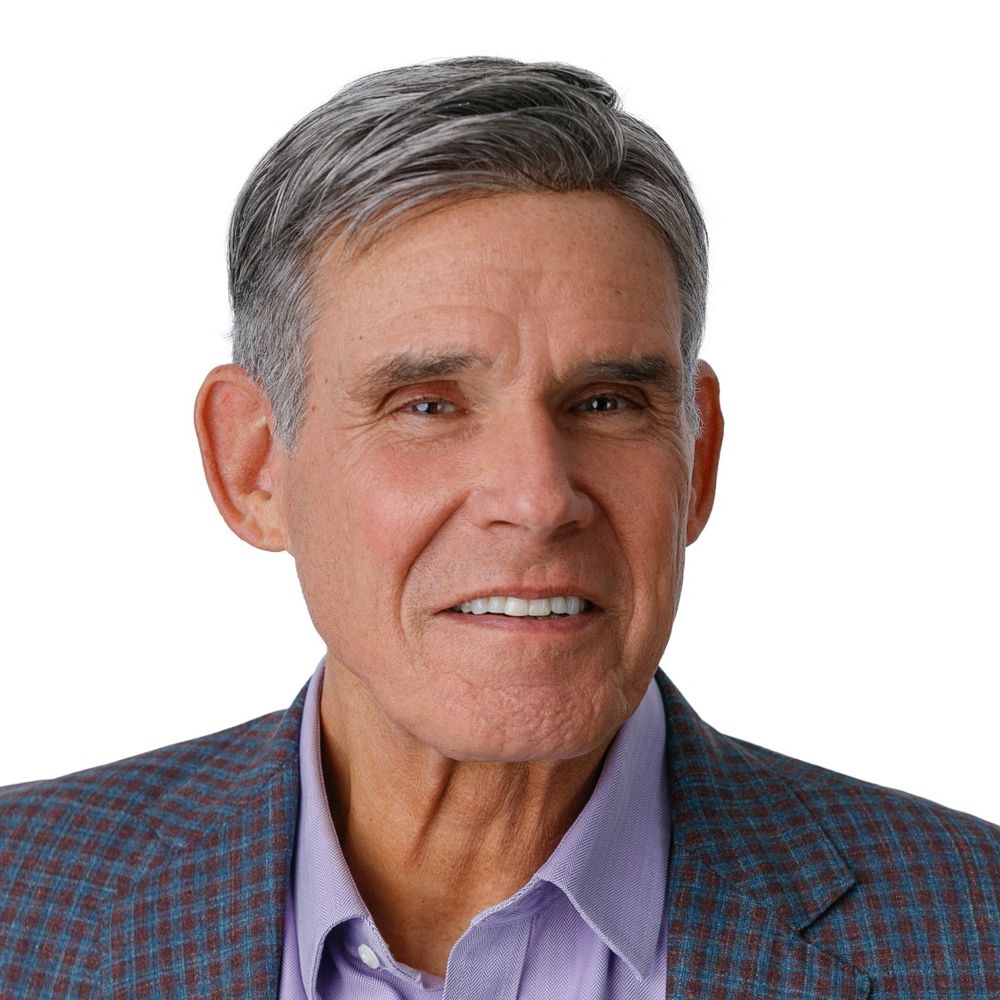
AI and the New Science of Medicine
today @nejm.org
"the science of medicine is ready for reinvention"
"AI generates hypotheses, but those hypotheses are tested the old-fashioned way, avoiding the myriad statistical problems of relying on AI alone for discovery."
nejm.org/doi/full/10....
today @nejm.org
"the science of medicine is ready for reinvention"
"AI generates hypotheses, but those hypotheses are tested the old-fashioned way, avoiding the myriad statistical problems of relying on AI alone for discovery."
nejm.org/doi/full/10....

Bedside to Bench — AI and the New Science of Medicine | NEJM
Today, medical research builds up an understanding of the whole from molecular parts, but artificial intelligence can revive an approach building down from patient-level data to theory and understa...
nejm.org
December 6, 2025 at 2:34 PM
AI and the New Science of Medicine
today @nejm.org
"the science of medicine is ready for reinvention"
"AI generates hypotheses, but those hypotheses are tested the old-fashioned way, avoiding the myriad statistical problems of relying on AI alone for discovery."
nejm.org/doi/full/10....
today @nejm.org
"the science of medicine is ready for reinvention"
"AI generates hypotheses, but those hypotheses are tested the old-fashioned way, avoiding the myriad statistical problems of relying on AI alone for discovery."
nejm.org/doi/full/10....
Reposted by Julien Vibert (李满山)
📢Out now! Ouyang Zhu and Jun Li from @notredame.bsky.social present Scouter, a lightweight AI method that can predict genome-wide transcriptional responses to single- and two-gene perturbations using LLM embeddings. www.nature.com/articles/s43... 🖥️ 🧬

Scouter predicts transcriptional responses to genetic perturbations with large language model embeddings - Nature Computational Science
A lightweight AI method called Scouter that predicts genome-wide transcriptional responses to single- and two-gene perturbations using large language model embeddings is presented and achieves substan...
www.nature.com
December 5, 2025 at 7:10 PM
📢Out now! Ouyang Zhu and Jun Li from @notredame.bsky.social present Scouter, a lightweight AI method that can predict genome-wide transcriptional responses to single- and two-gene perturbations using LLM embeddings. www.nature.com/articles/s43... 🖥️ 🧬