




SUBHAJIT Singha
@ssingha9956.bsky.social
Ph.D Research Fellow @WeizmannScience | Helmholtz Fellow @ufz.de | Interested in Microbiome-Food-Host-Health | Microbiome Enthusiast | Protein Biochemist
X/Twitter: https://x.com/ssingha9956
X/Twitter: https://x.com/ssingha9956
Reposted by SUBHAJIT Singha

New preprint from the lab: "Planetary microbiome structure and generalist-driven gene flow across disparate habitats" analysing 85k metagenomes across the world, e.g. looking into generalism across habitats www.biorxiv.org/content/10.1... – see the thread below for more details!
#MicroSky 🖥️🧬🦠
#MicroSky 🖥️🧬🦠
Our new preprint is out!
www.biorxiv.org/content/10.1...
In this study, we present the largest systematic analysis of microbiome structure and function, integrating 85K uniformly processed metagenomes from diverse habitats worldwide.
@podlesny.bsky.social @jonas-bio.bsky.social @borklab.bsky.social
www.biorxiv.org/content/10.1...
In this study, we present the largest systematic analysis of microbiome structure and function, integrating 85K uniformly processed metagenomes from diverse habitats worldwide.
@podlesny.bsky.social @jonas-bio.bsky.social @borklab.bsky.social

Planetary microbiome structure and generalist-driven gene flow across disparate habitats
Microbes are ubiquitous on Earth, forming microbiomes that sustain macroscopic life and biogeochemical cycles. Microbial dispersion, driven by natural processes and human activities, interconnects mic...
www.biorxiv.org
July 21, 2025 at 1:57 PM
New preprint from the lab: "Planetary microbiome structure and generalist-driven gene flow across disparate habitats" analysing 85k metagenomes across the world, e.g. looking into generalism across habitats www.biorxiv.org/content/10.1... – see the thread below for more details!
#MicroSky 🖥️🧬🦠
#MicroSky 🖥️🧬🦠
Reposted by SUBHAJIT Singha
Our article on the challenges and opportunities in studying host-microbe symbioses is now published in Cell Host & Microbe! @cp-cellhostmicrobe.bsky.social
www.sciencedirect.com/science/arti...
www.sciencedirect.com/science/arti...
Theory of host-microbe symbioses: Challenges and opportunities
Growing insight into microbial symbioses highlights the need to model these systems mathematically. We discuss three areas requiring theoretical advan…
www.sciencedirect.com
July 9, 2025 at 7:00 PM
Our article on the challenges and opportunities in studying host-microbe symbioses is now published in Cell Host & Microbe! @cp-cellhostmicrobe.bsky.social
www.sciencedirect.com/science/arti...
www.sciencedirect.com/science/arti...
Reposted by SUBHAJIT Singha

🚨Out now!
About 15,000 pairwise interactions within S. epidermidis from 18 people in 6 families reveal the antagonism and molecular trade-offs that shape the skin microbiota @contaminatedsci.bsky.social @mancusosci.bsky.social #MicrobiomeSky
www.nature.com/articles/s41...
read here: rdcu.be/et7VP
About 15,000 pairwise interactions within S. epidermidis from 18 people in 6 families reveal the antagonism and molecular trade-offs that shape the skin microbiota @contaminatedsci.bsky.social @mancusosci.bsky.social #MicrobiomeSky
www.nature.com/articles/s41...
read here: rdcu.be/et7VP
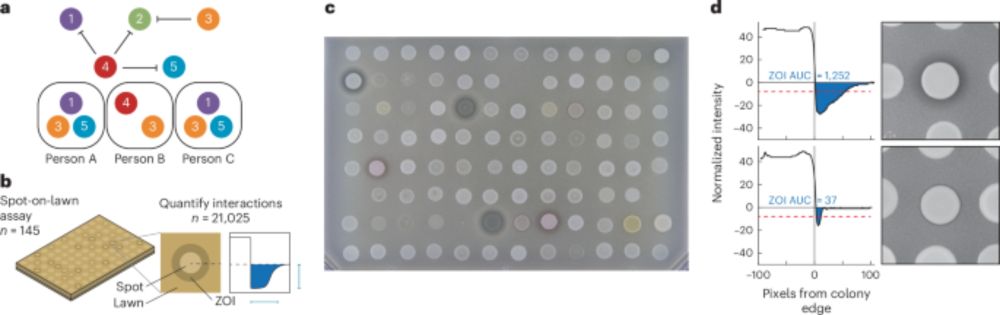
Intraspecies warfare restricts strain coexistence in human skin microbiomes - Nature Microbiology
About 15,000 pairwise interactions within S. epidermidis from 18 people in 6 families reveal the antagonism and molecular trade-offs that shape the skin microbiota.
www.nature.com
June 30, 2025 at 3:46 PM
🚨Out now!
About 15,000 pairwise interactions within S. epidermidis from 18 people in 6 families reveal the antagonism and molecular trade-offs that shape the skin microbiota @contaminatedsci.bsky.social @mancusosci.bsky.social #MicrobiomeSky
www.nature.com/articles/s41...
read here: rdcu.be/et7VP
About 15,000 pairwise interactions within S. epidermidis from 18 people in 6 families reveal the antagonism and molecular trade-offs that shape the skin microbiota @contaminatedsci.bsky.social @mancusosci.bsky.social #MicrobiomeSky
www.nature.com/articles/s41...
read here: rdcu.be/et7VP
Reposted by SUBHAJIT Singha

Interesting new study, showing that the gut microbial metabolite ADP-heptose is produced by a consortium of gram negative microbes (e.g., Bacteroides) and associated with a rise in pre-leukemia cells and NF-κB signaling in aging mice. www.nature.com/articles/s41...

Microbial metabolite drives ageing-related clonal haematopoiesis via ALPK1 - Nature
ADP-heptose binds to ALPK1, triggering transcriptional reprogramming and NF-κB activation, endowing pre-leukaemic cells with a competitive advantage due to excessive clonal proliferation.
www.nature.com
June 21, 2025 at 2:58 AM
Interesting new study, showing that the gut microbial metabolite ADP-heptose is produced by a consortium of gram negative microbes (e.g., Bacteroides) and associated with a rise in pre-leukemia cells and NF-κB signaling in aging mice. www.nature.com/articles/s41...
Reposted by SUBHAJIT Singha
Interested in microbiome GWAS and heritability studies? Check out our new Review in Nature Reviews Genetics! We explore key findings, challenges, and future directions of the field.
rdcu.be/epoRR
@blekhman.bsky.social @sambhawa.bsky.social and Dr. Kelsey Johnson.
rdcu.be/epoRR
@blekhman.bsky.social @sambhawa.bsky.social and Dr. Kelsey Johnson.
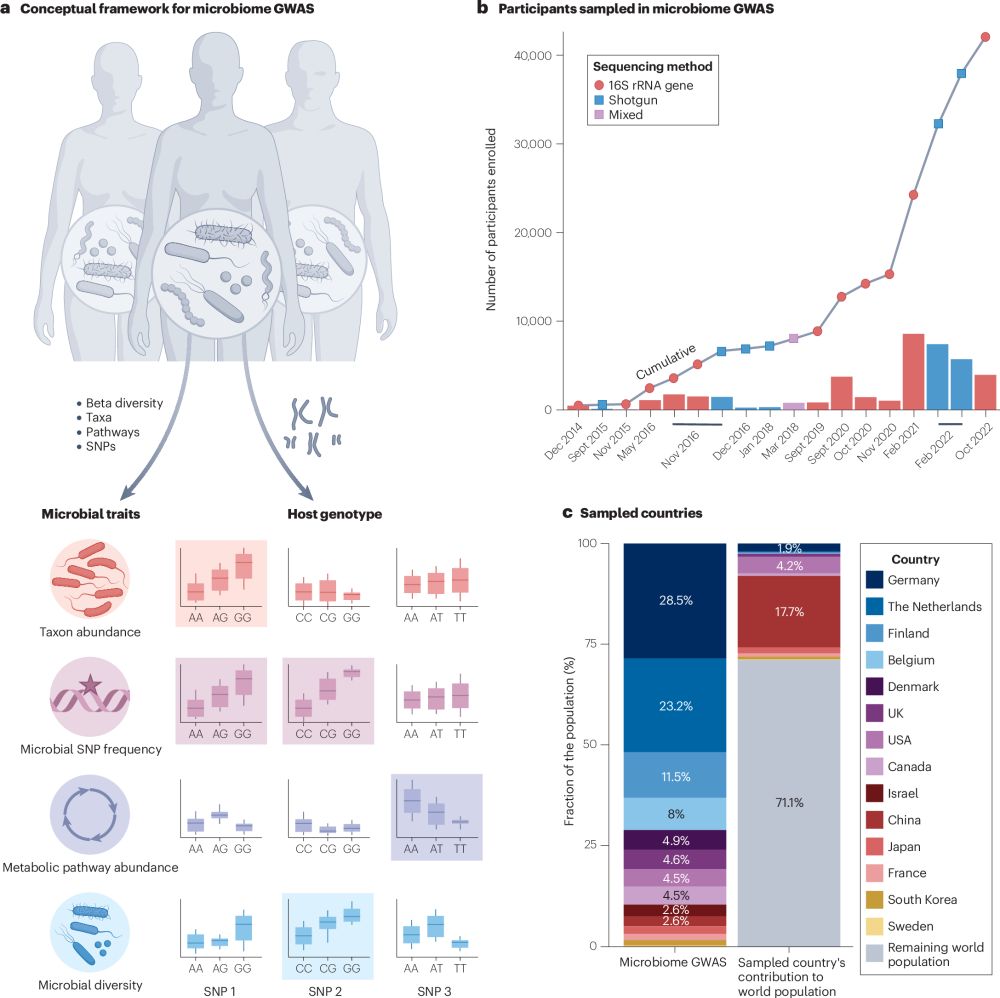
Genomics of host–microbiome interactions in humans
Nature Reviews Genetics - In this Review, Ferretti et al. discuss advances in our understanding of interactions between the human genome and the microbiome, including the effects of the microbiome...
rdcu.be
June 4, 2025 at 4:52 PM
Interested in microbiome GWAS and heritability studies? Check out our new Review in Nature Reviews Genetics! We explore key findings, challenges, and future directions of the field.
rdcu.be/epoRR
@blekhman.bsky.social @sambhawa.bsky.social and Dr. Kelsey Johnson.
rdcu.be/epoRR
@blekhman.bsky.social @sambhawa.bsky.social and Dr. Kelsey Johnson.
I had the privilege of contributing to Issue 8 of STEM Dorado magazine, designed to spark curiosity in young children, distributed to all state schools in Barnet via the Barnet Council, and featured on the STEM Learning UK platform.
Here is my article on page 43:
online.fliphtml5.com/dqwze/jzki/
Here is my article on page 43:
online.fliphtml5.com/dqwze/jzki/

May 19, 2025 at 10:18 AM
I had the privilege of contributing to Issue 8 of STEM Dorado magazine, designed to spark curiosity in young children, distributed to all state schools in Barnet via the Barnet Council, and featured on the STEM Learning UK platform.
Here is my article on page 43:
online.fliphtml5.com/dqwze/jzki/
Here is my article on page 43:
online.fliphtml5.com/dqwze/jzki/
Reposted by SUBHAJIT Singha
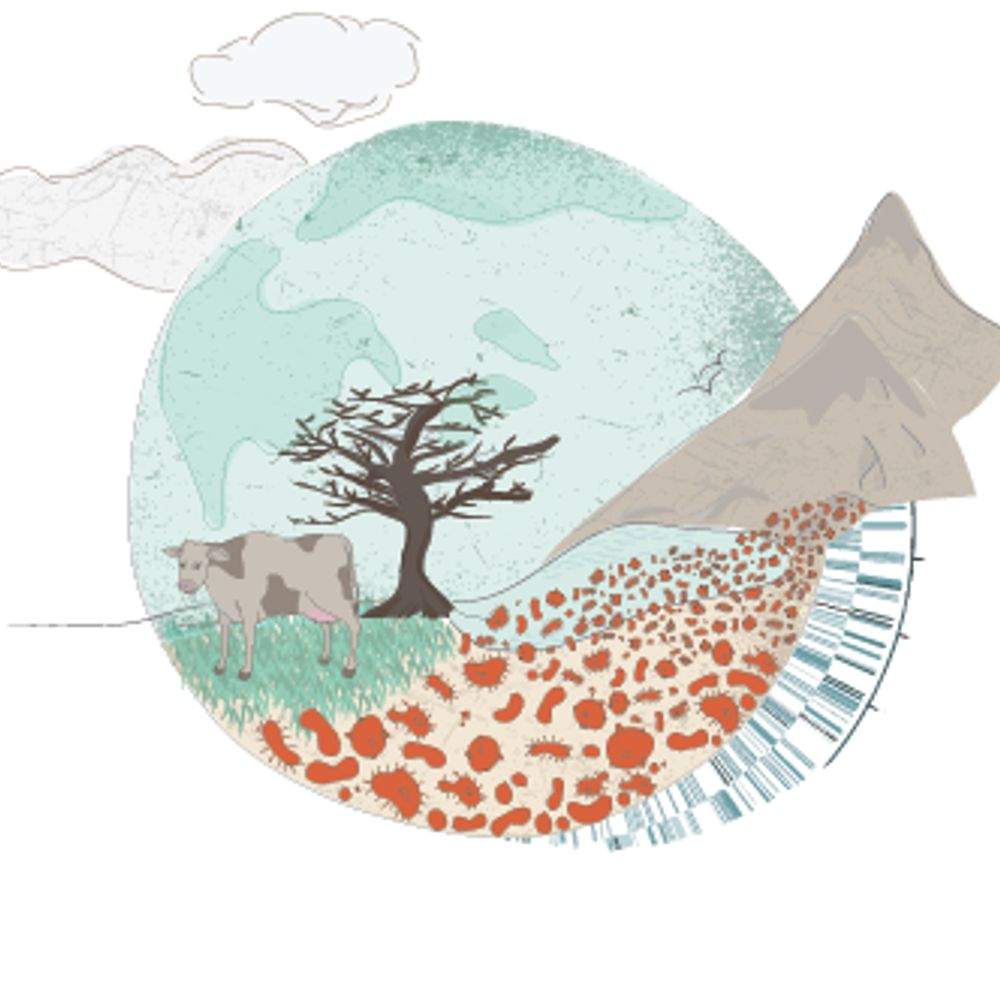
Modeling the microbiome is complex, but metabolic interactions offer a path to better models 🦠 However, Scaling from singles to communities is still a challenge. Check this new paper about the Hits & Misses of community-scale metabolic models - rdcu.be/ehkVn
@gibbological.bsky.social @cdiener.com
@gibbological.bsky.social @cdiener.com
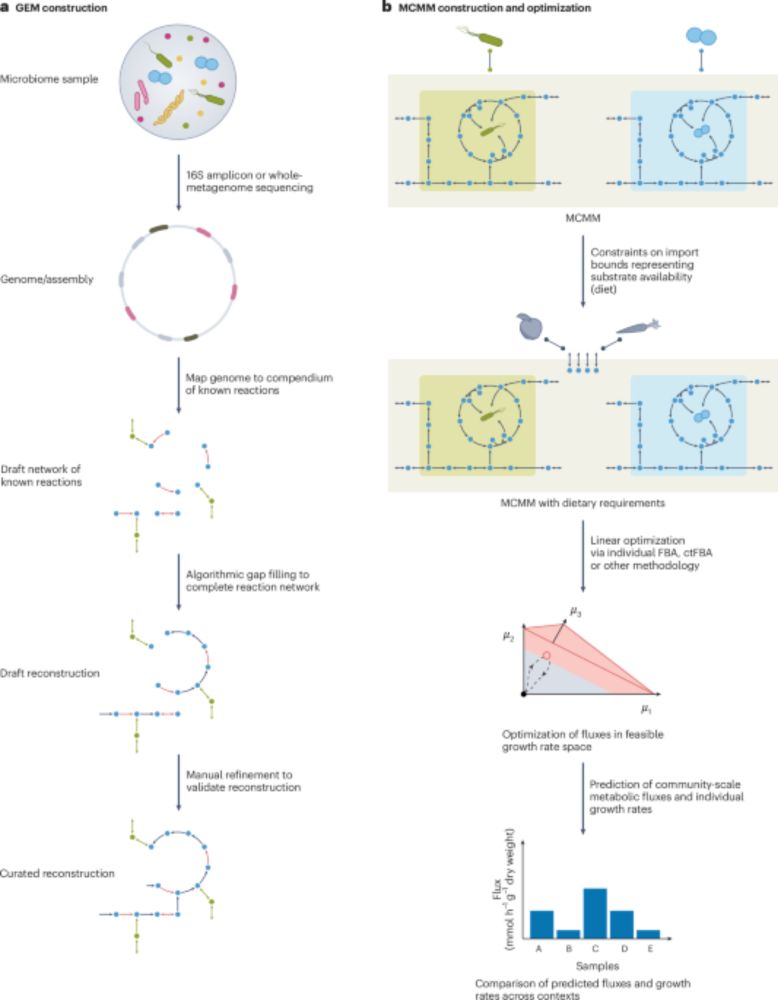
Moving from genome-scale to community-scale metabolic models for the human gut microbiome - Nature Microbiology
In this Perspective, Deiner, Gibbons and colleagues describe the current strengths and limitations of microbial community-scale metabolic models in microbiome research.
www.nature.com
May 5, 2025 at 2:21 PM
Modeling the microbiome is complex, but metabolic interactions offer a path to better models 🦠 However, Scaling from singles to communities is still a challenge. Check this new paper about the Hits & Misses of community-scale metabolic models - rdcu.be/ehkVn
@gibbological.bsky.social @cdiener.com
@gibbological.bsky.social @cdiener.com
Reposted by SUBHAJIT Singha
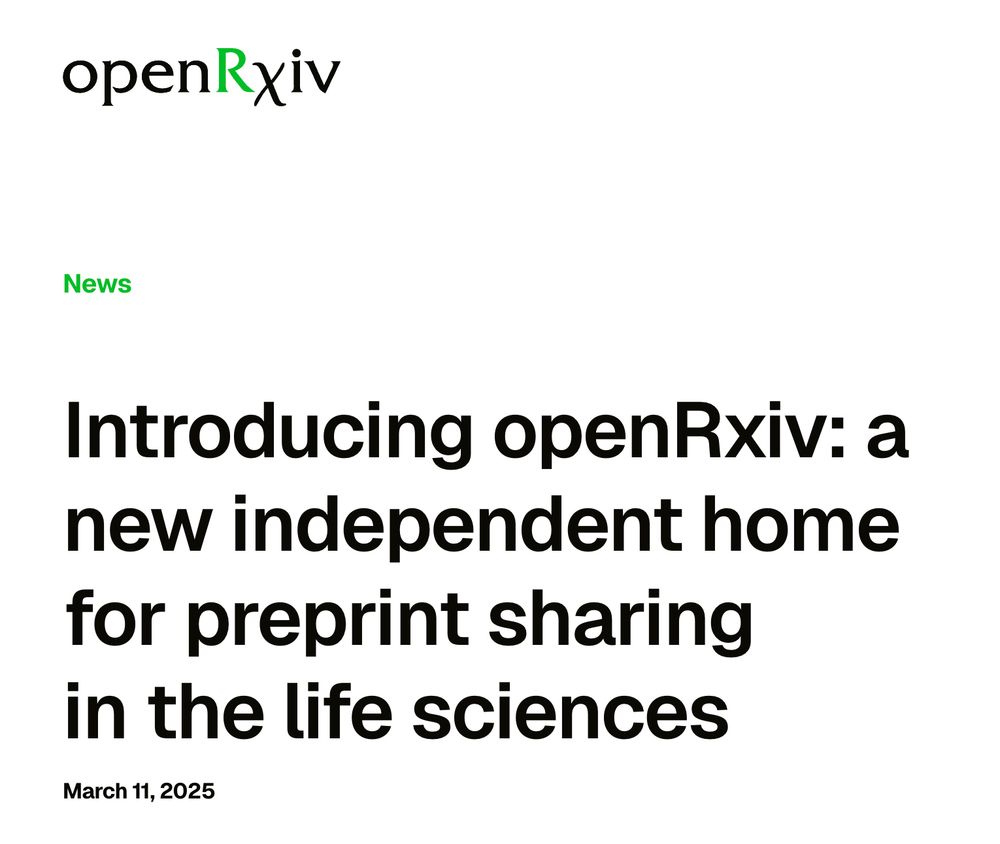
Today marks the beginning of OpenRxiv, which replaces bioRxiv and medRxiv, the world's largest preprint platform for life and medical science
openrxiv.org/introducing-...
@openrxiv.bsky.social
openrxiv.org/introducing-...
@openrxiv.bsky.social
March 11, 2025 at 2:55 PM
Today marks the beginning of OpenRxiv, which replaces bioRxiv and medRxiv, the world's largest preprint platform for life and medical science
openrxiv.org/introducing-...
@openrxiv.bsky.social
openrxiv.org/introducing-...
@openrxiv.bsky.social
Reposted by SUBHAJIT Singha
"Many organisms important to human health... haven't even been named, let alone studied," reports Ewen Callaway in @nature.com, citing Nicola Segata of @cibiocm.bsky.social www.nature.com/articles/d41... #darkdata

These are the 20 most-studied bacteria — the majority have been ignored
Model microbes such as Escherichia coli hog scientists’ attention, leaving most known bacteria with few publications devoted to them.
www.nature.com
January 15, 2025 at 12:54 AM
"Many organisms important to human health... haven't even been named, let alone studied," reports Ewen Callaway in @nature.com, citing Nicola Segata of @cibiocm.bsky.social www.nature.com/articles/d41... #darkdata
Reposted by SUBHAJIT Singha
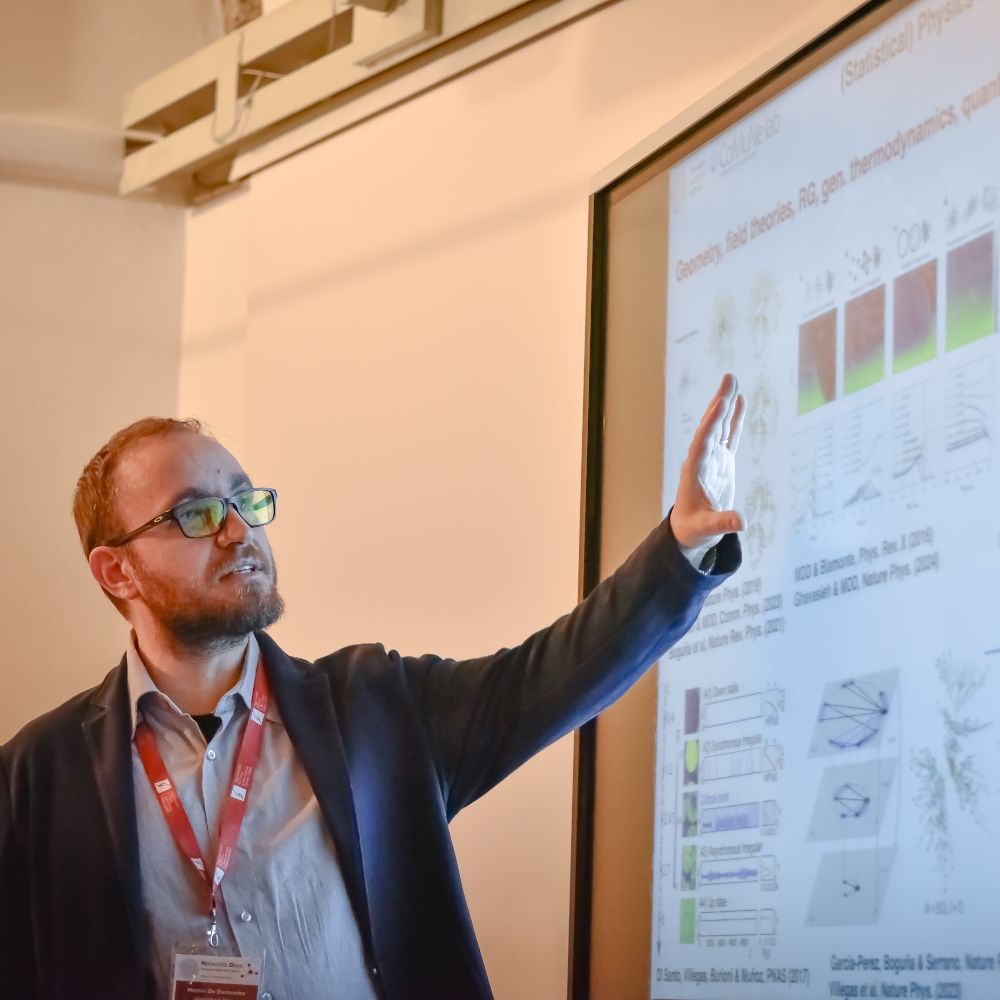
Great piece by @kakape.bsky.social about BlueSky and the growth of its academic community
Feat. @lorenzspreen.bsky.social @carlbergstrom.com @jbakcoleman.bsky.social and others, as well as my efforts to monitor and analyze the network out of the equilibrium regime 👇
www.science.org/content/arti...
Feat. @lorenzspreen.bsky.social @carlbergstrom.com @jbakcoleman.bsky.social and others, as well as my efforts to monitor and analyze the network out of the equilibrium regime 👇
www.science.org/content/arti...

As academic Bluesky grows, researchers find strengths—and shortcomings
Platform fosters collegial interactions among scientists, but potentially limits interactions beyond the academic community
www.science.org
January 7, 2025 at 10:43 PM
Great piece by @kakape.bsky.social about BlueSky and the growth of its academic community
Feat. @lorenzspreen.bsky.social @carlbergstrom.com @jbakcoleman.bsky.social and others, as well as my efforts to monitor and analyze the network out of the equilibrium regime 👇
www.science.org/content/arti...
Feat. @lorenzspreen.bsky.social @carlbergstrom.com @jbakcoleman.bsky.social and others, as well as my efforts to monitor and analyze the network out of the equilibrium regime 👇
www.science.org/content/arti...
Reposted by SUBHAJIT Singha

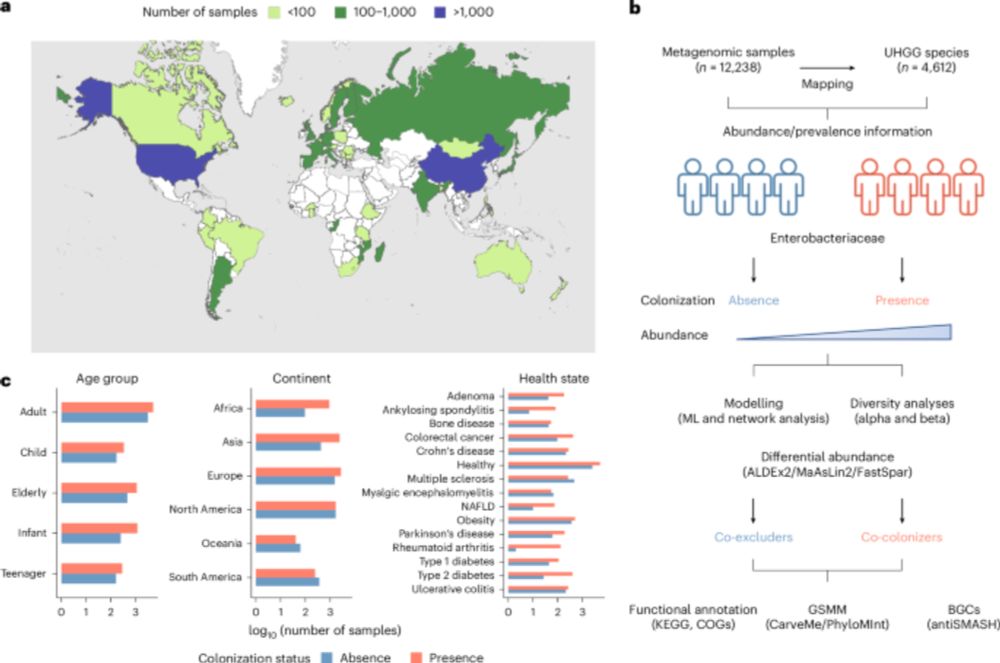
Delighted to share the first peer-reviewed paper from our team @camvetschool.bsky.social where we investigate the ecological dynamics of Enterobacteriaceae in the human gut #microbiome: www.nature.com/articles/s41... @naturemicrobiol.bsky.social
Ecological dynamics of Enterobacteriaceae in the human gut microbiome across global populations - Nature Microbiology
Assessing more than 12,000 metagenomic samples from across the world using computational approaches, the authors determined interactions between species that co-colonize or co-exclude Enterobacteriace...
www.nature.com
January 10, 2025 at 10:06 AM
Delighted to share the first peer-reviewed paper from our team @camvetschool.bsky.social where we investigate the ecological dynamics of Enterobacteriaceae in the human gut #microbiome: www.nature.com/articles/s41... @naturemicrobiol.bsky.social
Reposted by SUBHAJIT Singha

Hi Bluesky community! 👋
Are you looking forward to 2025 as much as we are? 👀
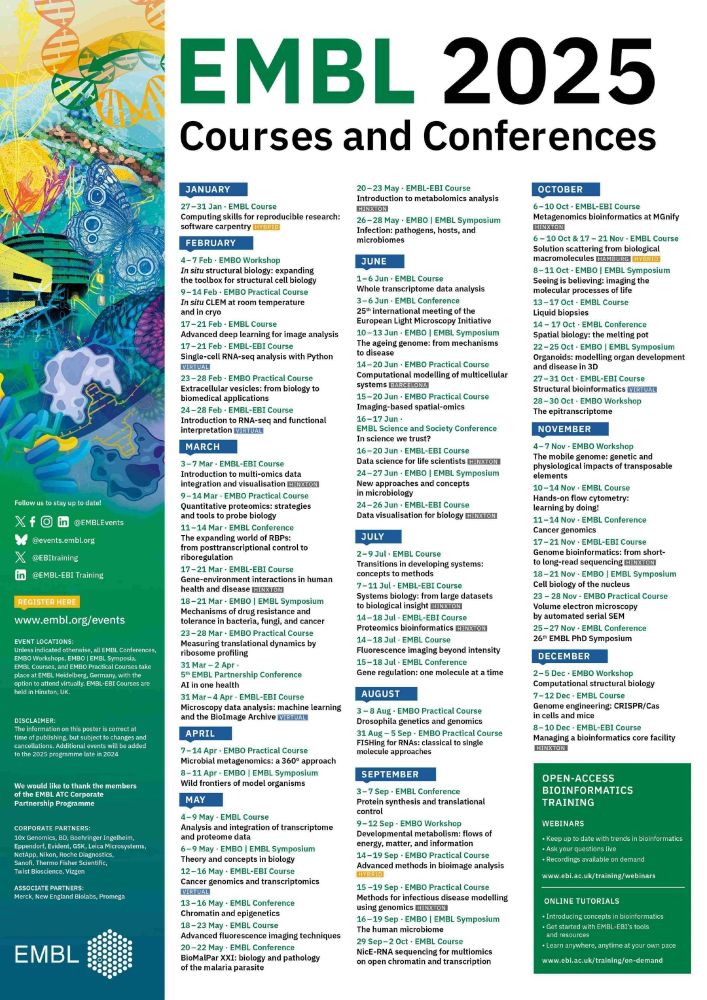
We just updated our 2025 Annual Poster to include even more events for you to join, so go and have a look!
➡️ s.embl.org/poster-bl
#EMBLEvents #molecularbiology #lifesciencetraining
Are you looking forward to 2025 as much as we are? 👀
We just updated our 2025 Annual Poster to include even more events for you to join, so go and have a look!
➡️ s.embl.org/poster-bl
#EMBLEvents #molecularbiology #lifesciencetraining
December 13, 2024 at 9:06 AM
Hi Bluesky community! 👋
Are you looking forward to 2025 as much as we are? 👀
We just updated our 2025 Annual Poster to include even more events for you to join, so go and have a look!
➡️ s.embl.org/poster-bl
#EMBLEvents #molecularbiology #lifesciencetraining
Are you looking forward to 2025 as much as we are? 👀
We just updated our 2025 Annual Poster to include even more events for you to join, so go and have a look!
➡️ s.embl.org/poster-bl
#EMBLEvents #molecularbiology #lifesciencetraining
Reposted by SUBHAJIT Singha
The gut microbiome signature from different diets in 20,000 individuals. Red meat intake correlated with reduced cardiometabolic health; the opposite for plant-based foods or in omnivores with enriched plant-based intake
www.nature.com/articles/s41...
www.nature.com/articles/s41...

January 6, 2025 at 4:07 PM
The gut microbiome signature from different diets in 20,000 individuals. Red meat intake correlated with reduced cardiometabolic health; the opposite for plant-based foods or in omnivores with enriched plant-based intake
www.nature.com/articles/s41...
www.nature.com/articles/s41...
Reposted by SUBHAJIT Singha
OUT NOW Twenty years of bacterial ecology and evolution in a freshwater lake
@archaeal.bsky.social @quendi.bsky.social @robinrohwer.bsky.social
www.nature.com/articles/s41...
@archaeal.bsky.social @quendi.bsky.social @robinrohwer.bsky.social
www.nature.com/articles/s41...

Two decades of bacterial ecology and evolution in a freshwater lake - Nature Microbiology
A 471-metagenome time series from Lake Mendota in Wisconsin, USA, reveals seasonal and decadal shifts in bacterial functional and ecological dynamics, especially in response to environmental extremes.
www.nature.com
January 3, 2025 at 4:27 PM
OUT NOW Twenty years of bacterial ecology and evolution in a freshwater lake
@archaeal.bsky.social @quendi.bsky.social @robinrohwer.bsky.social
www.nature.com/articles/s41...
@archaeal.bsky.social @quendi.bsky.social @robinrohwer.bsky.social
www.nature.com/articles/s41...
Here’s to 2025!
Thank you, 2024, for the lessons, connections, and growth.
This year, I’m looking forward to new opportunities, achieving career goals, advancing microbiome research, and collaborating on groundbreaking ideas. Let’s make 2025 unforgettable!
#NewYear #Grateful #Microbiome #Innovation
Thank you, 2024, for the lessons, connections, and growth.
This year, I’m looking forward to new opportunities, achieving career goals, advancing microbiome research, and collaborating on groundbreaking ideas. Let’s make 2025 unforgettable!
#NewYear #Grateful #Microbiome #Innovation
January 1, 2025 at 6:17 PM
Here’s to 2025!
Thank you, 2024, for the lessons, connections, and growth.
This year, I’m looking forward to new opportunities, achieving career goals, advancing microbiome research, and collaborating on groundbreaking ideas. Let’s make 2025 unforgettable!
#NewYear #Grateful #Microbiome #Innovation
Thank you, 2024, for the lessons, connections, and growth.
This year, I’m looking forward to new opportunities, achieving career goals, advancing microbiome research, and collaborating on groundbreaking ideas. Let’s make 2025 unforgettable!
#NewYear #Grateful #Microbiome #Innovation