


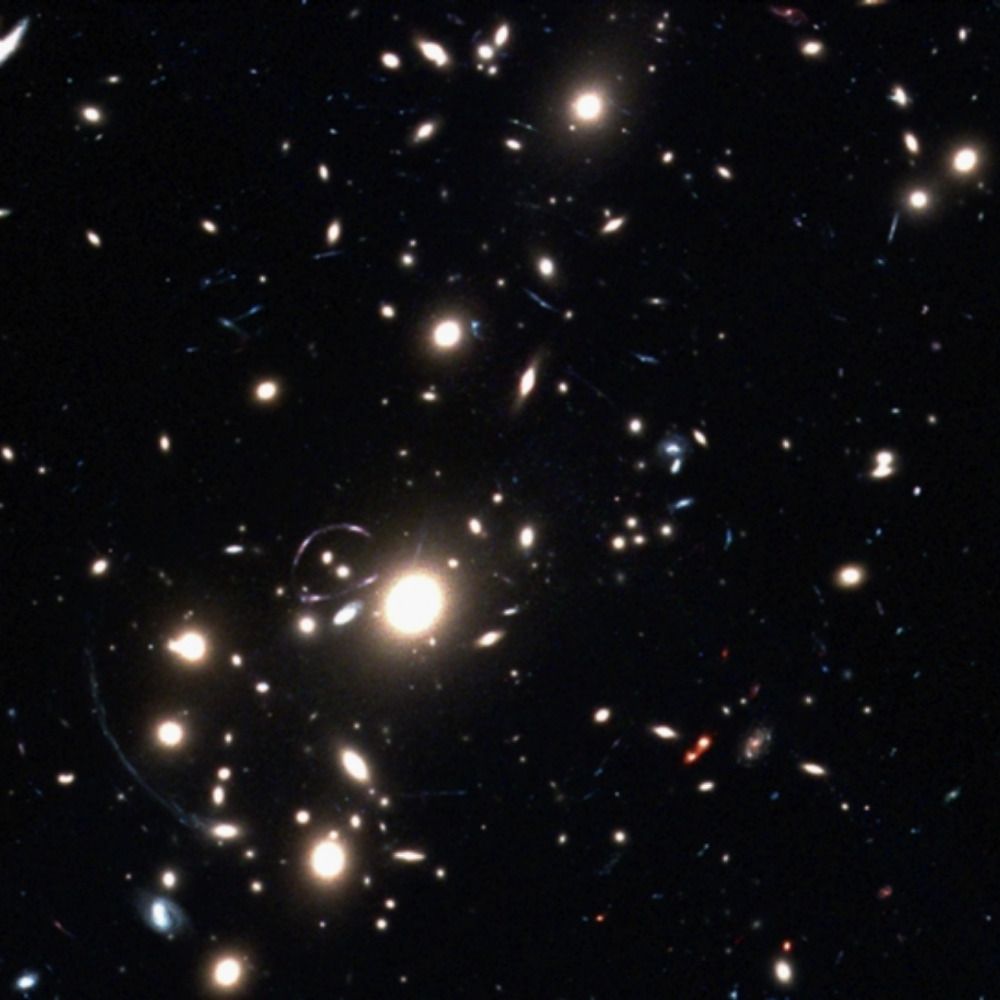
Similarly the answer to life the Universe and everything (H0) is 42 miles per second per Megaparsec (or 68 km/s/Mpc for the metric fans) 🧪🔭 #cosmology

Regular reminder:
total matter / baryonic matter
= Ω_m / Ω_b
= 6.357 +/- 0.053
= 2π
within 1.4σ & within 1.2%
#Cosmology is easy 😎
🔭🧪
total matter / baryonic matter
= Ω_m / Ω_b
= 6.357 +/- 0.053
= 2π
within 1.4σ & within 1.2%
#Cosmology is easy 😎
🔭🧪

Planck 2018 results. VI. Cosmological parameters
We present cosmological parameter results from the final full-mission Planck measurements of the CMB anisotropies. We find good consistency with the standard spatially-flat 6-parameter $Λ$CDM cosmolog...
arxiv.org
December 11, 2025 at 8:29 AM
Similarly the answer to life the Universe and everything (H0) is 42 miles per second per Megaparsec (or 68 km/s/Mpc for the metric fans) 🧪🔭 #cosmology

I'm currently building a clone of Haskell's Megaparsec for v5 of language-ext. I'm using the trait based approach to bring massive performance benefits + bespoke errors + lifting of other monads into its transformer structure.
github.com/louthy/langu...
github.com/louthy/langu...

language-ext/LanguageExt.Megaparsec at v5-megaparsec · louthy/language-ext
C# pure functional programming framework - come and get declarative! - louthy/language-ext
github.com
December 7, 2025 at 6:33 PM
I'm currently building a clone of Haskell's Megaparsec for v5 of language-ext. I'm using the trait based approach to bring massive performance benefits + bespoke errors + lifting of other monads into its transformer structure.
github.com/louthy/langu...
github.com/louthy/langu...

Astronomers Clock Universe’s Expansion Using Cosmic Lenses
Eight distant quasars, their light bent and delayed by massive galaxies in the foreground, have given astronomers a new measurement of how fast the universe is expanding. The number: 74.3 kilometers per second per megaparsec, give or take…
Eight distant quasars, their light bent and delayed by massive galaxies in the foreground, have given astronomers a new measurement of how fast the universe is expanding. The number: 74.3 kilometers per second per megaparsec, give or take…

Astronomers Clock Universe’s Expansion Using Cosmic Lenses
Eight distant quasars, their light bent and delayed by massive galaxies in the foreground, have given astronomers a new measurement of how fast the universe is expanding. The number: 74.3 kilometers per second per megaparsec, give or take about 3 to 4 km/s/Mpc. What that means is this: Pick any galaxy 3.3 million light-years away (one megaparsec in astronomer-speak). Now pick another one twice as far.
scienceblog.com
December 5, 2025 at 1:24 PM
Astronomers Clock Universe’s Expansion Using Cosmic Lenses
Eight distant quasars, their light bent and delayed by massive galaxies in the foreground, have given astronomers a new measurement of how fast the universe is expanding. The number: 74.3 kilometers per second per megaparsec, give or take…
Eight distant quasars, their light bent and delayed by massive galaxies in the foreground, have given astronomers a new measurement of how fast the universe is expanding. The number: 74.3 kilometers per second per megaparsec, give or take…

Here is the units module, I'm still learning how to upload everything directly through Python/Anaconda and haven't organized it yet for GitHub.
Quantum scales (attosecond & nanometer) to cosmological scales (Gyr/Es/Ys & Megaparsec + log10Es)
#Python #Units #ForScience #OpenUse #ScienceSoftware
Quantum scales (attosecond & nanometer) to cosmological scales (Gyr/Es/Ys & Megaparsec + log10Es)
#Python #Units #ForScience #OpenUse #ScienceSoftware

USSN Units Module: Advanced Distance & Time Converter
Professional Python module for converting units across 40+ orders of magnitude - from quantum scales to cosmological distances and times with auto-scaling.
claude.ai
November 25, 2025 at 3:22 AM
Here is the units module, I'm still learning how to upload everything directly through Python/Anaconda and haven't organized it yet for GitHub.
Quantum scales (attosecond & nanometer) to cosmological scales (Gyr/Es/Ys & Megaparsec + log10Es)
#Python #Units #ForScience #OpenUse #ScienceSoftware
Quantum scales (attosecond & nanometer) to cosmological scales (Gyr/Es/Ys & Megaparsec + log10Es)
#Python #Units #ForScience #OpenUse #ScienceSoftware
So I'm still learning how to use Python and stuff but the Unit Module may be of use to others so I'll upload it as a sharable library. Attosecond and nanometer to Gyr/Ps/Es/Gs and Megaparsec ranges with context-aware hybrid scaling and conversion to h:m:s for human reading.
Quantum to Universal.
Quantum to Universal.
November 25, 2025 at 2:51 AM
So I'm still learning how to use Python and stuff but the Unit Module may be of use to others so I'll upload it as a sharable library. Attosecond and nanometer to Gyr/Ps/Es/Gs and Megaparsec ranges with context-aware hybrid scaling and conversion to h:m:s for human reading.
Quantum to Universal.
Quantum to Universal.

okay, still no idea how *that* error happened exactly, but i messed up my implementation of chainr1 (which isn't in megaparsec for some reason) so it was pretty easy to fix
November 19, 2025 at 12:34 AM
okay, still no idea how *that* error happened exactly, but i messed up my implementation of chainr1 (which isn't in megaparsec for some reason) so it was pretty easy to fix

No 😉, but gravitational waves passed through us - and would have been theoretically detectable on Earth.
"The authors estimate a signal of this kind would be visible out to a distance of 160 Megaparsec or 522 million light years."
astrobites.org/2024/10/08/g...
"The authors estimate a signal of this kind would be visible out to a distance of 160 Megaparsec or 522 million light years."
astrobites.org/2024/10/08/g...

Can we perform a Supernova Autopsy Via Gravitational Waves?
In this Astrobite, the authors try to solve the mystery of what happens to the corpse of a supernova post-explosion: black hole or neutron star?
astrobites.org
November 17, 2025 at 10:40 AM
No 😉, but gravitational waves passed through us - and would have been theoretically detectable on Earth.
"The authors estimate a signal of this kind would be visible out to a distance of 160 Megaparsec or 522 million light years."
astrobites.org/2024/10/08/g...
"The authors estimate a signal of this kind would be visible out to a distance of 160 Megaparsec or 522 million light years."
astrobites.org/2024/10/08/g...

Image on wikimedia: commons.wikimedia.org/wiki/File:An...
distance Antlia B: 1.29 Megaparsec according to Sand et al. 2015: ui.adsabs.harvard.edu/abs/2015ApJ....
distance ESO 499-7 from NED: 207.26 Megaparsec ned.ipac.caltech.edu/byname?objna...
distance Antlia B: 1.29 Megaparsec according to Sand et al. 2015: ui.adsabs.harvard.edu/abs/2015ApJ....
distance ESO 499-7 from NED: 207.26 Megaparsec ned.ipac.caltech.edu/byname?objna...
November 13, 2025 at 3:47 PM
Image on wikimedia: commons.wikimedia.org/wiki/File:An...
distance Antlia B: 1.29 Megaparsec according to Sand et al. 2015: ui.adsabs.harvard.edu/abs/2015ApJ....
distance ESO 499-7 from NED: 207.26 Megaparsec ned.ipac.caltech.edu/byname?objna...
distance Antlia B: 1.29 Megaparsec according to Sand et al. 2015: ui.adsabs.harvard.edu/abs/2015ApJ....
distance ESO 499-7 from NED: 207.26 Megaparsec ned.ipac.caltech.edu/byname?objna...
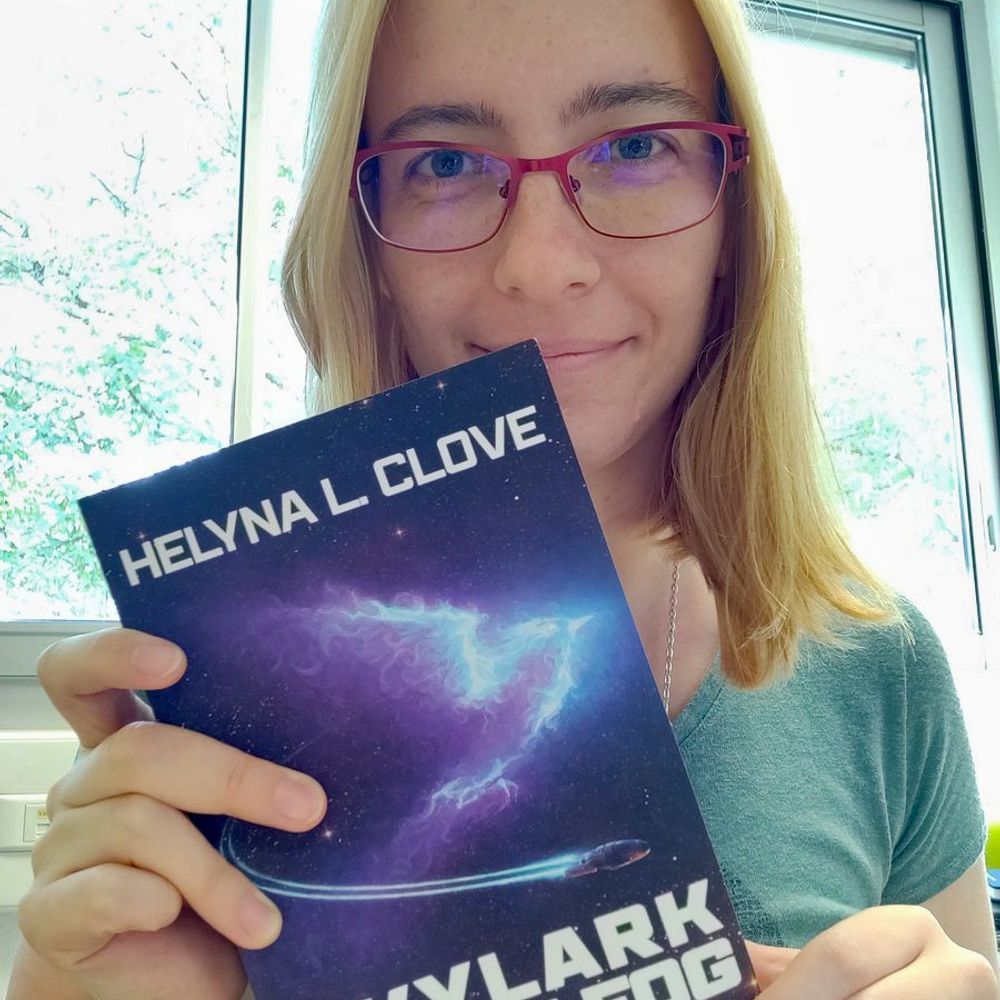
Astronomers use it often, along with its larger buddy, kiloparsec! In extragalactic/cosmology scales, even megaparsec is quite useful sometimes.
November 11, 2025 at 7:30 AM
Astronomers use it often, along with its larger buddy, kiloparsec! In extragalactic/cosmology scales, even megaparsec is quite useful sometimes.

She slips into conversation about TDCosmo and the Hubble tension and says the most amazing things.
Quasars: they're not just for navigation anymore!
Did I say meta parsec? I meant megaparsec. I'd like to yeet Meta a megaparsec.
Quasars: they're not just for navigation anymore!
Did I say meta parsec? I meant megaparsec. I'd like to yeet Meta a megaparsec.
October 24, 2025 at 6:26 PM
She slips into conversation about TDCosmo and the Hubble tension and says the most amazing things.
Quasars: they're not just for navigation anymore!
Did I say meta parsec? I meant megaparsec. I'd like to yeet Meta a megaparsec.
Quasars: they're not just for navigation anymore!
Did I say meta parsec? I meant megaparsec. I'd like to yeet Meta a megaparsec.

i still hate megaparsec for using a `Set` for custom parse errors for absolutely no reason and making me derive completely meaningless Ord instances for half of my AST
October 17, 2025 at 2:30 PM
i still hate megaparsec for using a `Set` for custom parse errors for absolutely no reason and making me derive completely meaningless Ord instances for half of my AST

3/8
As the universe expands, the farther away a galaxy is, the faster it recedes from us. It's measured by the #HubbleConstant, currently estimated at about 70 km/sec per megaparsec.
Meaning that at a certain distance—about 14 billion light-years—galaxies are receding from us at the speed of light.
As the universe expands, the farther away a galaxy is, the faster it recedes from us. It's measured by the #HubbleConstant, currently estimated at about 70 km/sec per megaparsec.
Meaning that at a certain distance—about 14 billion light-years—galaxies are receding from us at the speed of light.
October 6, 2025 at 8:55 AM
3/8
As the universe expands, the farther away a galaxy is, the faster it recedes from us. It's measured by the #HubbleConstant, currently estimated at about 70 km/sec per megaparsec.
Meaning that at a certain distance—about 14 billion light-years—galaxies are receding from us at the speed of light.
As the universe expands, the farther away a galaxy is, the faster it recedes from us. It's measured by the #HubbleConstant, currently estimated at about 70 km/sec per megaparsec.
Meaning that at a certain distance—about 14 billion light-years—galaxies are receding from us at the speed of light.

Giri, Fendt, Bagchi, Thorat, Saikia, Deane, Delhaize: Probing the formation of megaparsec-scale giant radio galaxies II. Continuum & polarization behavior from MHD simulations https://arxiv.org/abs/2510.03037 https://arxiv.org/pdf/2510.03037 https://arxiv.org/html/2510.03037
October 6, 2025 at 6:42 AM
Giri, Fendt, Bagchi, Thorat, Saikia, Deane, Delhaize: Probing the formation of megaparsec-scale giant radio galaxies II. Continuum & polarization behavior from MHD simulations https://arxiv.org/abs/2510.03037 https://arxiv.org/pdf/2510.03037 https://arxiv.org/html/2510.03037

Probing the formation of megaparsec-scale giant radio galaxies II. Continuum & polarization behavior from MHD simulations. Gourab Giri et. al. https://arxiv.org/abs/2510.03037


October 6, 2025 at 1:49 AM
Probing the formation of megaparsec-scale giant radio galaxies II. Continuum & polarization behavior from MHD simulations. Gourab Giri et. al. https://arxiv.org/abs/2510.03037

That nothingness is expanding roughly 70 kilometers per second per megaparsec...into nothing. NOTHING!
September 29, 2025 at 1:25 AM
That nothingness is expanding roughly 70 kilometers per second per megaparsec...into nothing. NOTHING!

I read it and liked it about 50 years ago but remember almost nothing of it.
A wrinkle in time saves nine
Megaparsec
A wrinkle in time saves nine
Megaparsec
September 12, 2025 at 3:01 AM
I read it and liked it about 50 years ago but remember almost nothing of it.
A wrinkle in time saves nine
Megaparsec
A wrinkle in time saves nine
Megaparsec

The stars tell me…the value of the Hubble constant is 73.8 kilometers per second per megaparsec!
September 11, 2025 at 6:19 PM
The stars tell me…the value of the Hubble constant is 73.8 kilometers per second per megaparsec!

I am planning to use chumsky (parser generator). When using nom I’ve gone lexerless since I’ve only written S-Expr langs or a toy markdown parser, which don’t need the complexity, and glances at SO answer about Megaparsec recommended lexerless
(I haven’t, uh, started yet, because I need to sleep
(I haven’t, uh, started yet, because I need to sleep
August 10, 2025 at 10:58 AM
I am planning to use chumsky (parser generator). When using nom I’ve gone lexerless since I’ve only written S-Expr langs or a toy markdown parser, which don’t need the complexity, and glances at SO answer about Megaparsec recommended lexerless
(I haven’t, uh, started yet, because I need to sleep
(I haven’t, uh, started yet, because I need to sleep

your crime is tasting good and being in within a 16 megaparsec radius of me
August 9, 2025 at 9:23 PM
your crime is tasting good and being in within a 16 megaparsec radius of me

no me digas ni de q signo sos ni tu gusto de helado favorito. decime q siglas de patentes (viejas) buscas en las calles y te pone contentx de ver. empiezo con mi listado (orden random)
KGB
CGT
CFK
MIR
EEI
MKC (eei en ruso)
NGC (new general catalog de galaxias)
MPC (megaparsec)
NPC
KPC (kiloparsec)
KGB
CGT
CFK
MIR
EEI
MKC (eei en ruso)
NGC (new general catalog de galaxias)
MPC (megaparsec)
NPC
KPC (kiloparsec)
August 5, 2025 at 2:20 PM
no me digas ni de q signo sos ni tu gusto de helado favorito. decime q siglas de patentes (viejas) buscas en las calles y te pone contentx de ver. empiezo con mi listado (orden random)
KGB
CGT
CFK
MIR
EEI
MKC (eei en ruso)
NGC (new general catalog de galaxias)
MPC (megaparsec)
NPC
KPC (kiloparsec)
KGB
CGT
CFK
MIR
EEI
MKC (eei en ruso)
NGC (new general catalog de galaxias)
MPC (megaparsec)
NPC
KPC (kiloparsec)
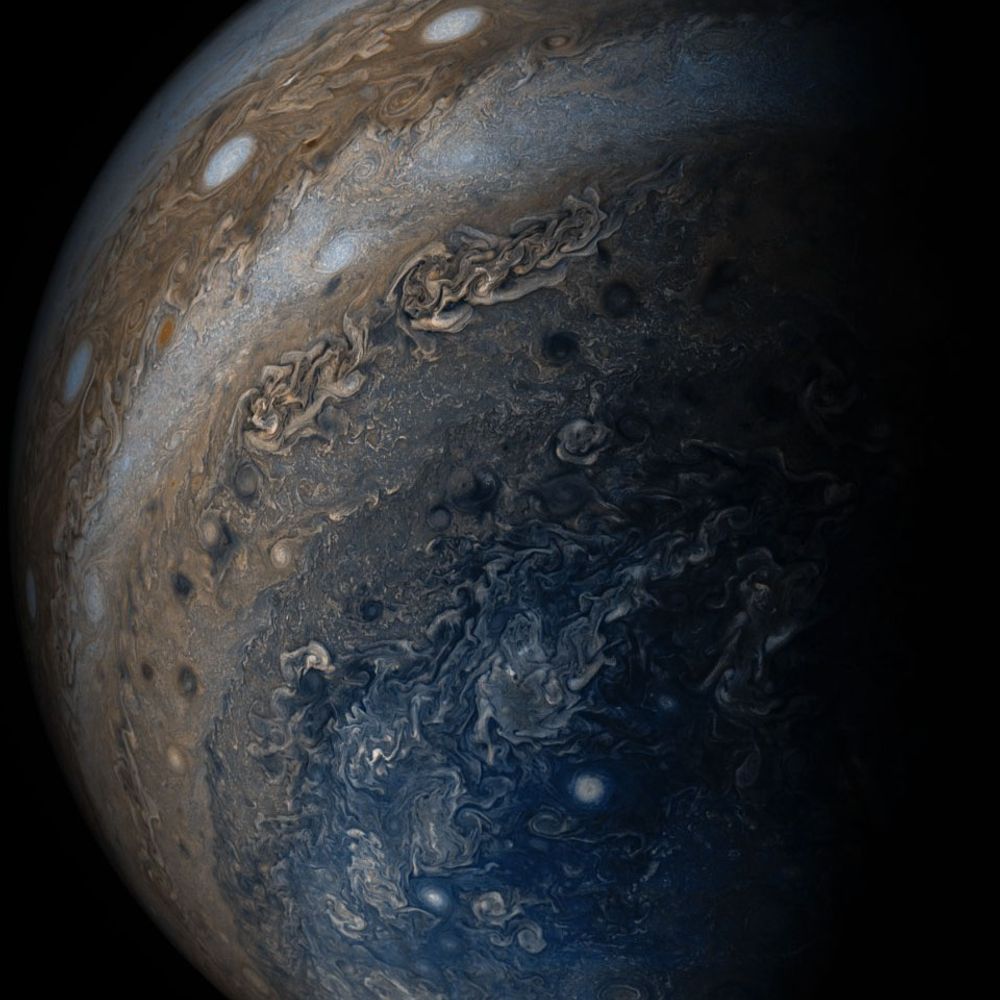
NASA Astronomy Hourly Picture - 1996-05-13: Hubble's Constant and The Expanding Universe (I)
#Astronomy #NASA #Space
#Astronomy #NASA #Space

July 27, 2025 at 4:20 AM
NASA Astronomy Hourly Picture - 1996-05-13: Hubble's Constant and The Expanding Universe (I)
#Astronomy #NASA #Space
#Astronomy #NASA #Space

Los datos corresponden a un desplazamiento al rojo de z≈3.22, lo que resulta en una distancia temporal de aprox. 11.55 Giga-años (miles de millones de años), y una distancia comóvil (con ciertos valores razonables de constantes universales) de unos 6481 Megaparsec. Ahí, al lado.
>>
>>
July 26, 2025 at 11:00 AM
Los datos corresponden a un desplazamiento al rojo de z≈3.22, lo que resulta en una distancia temporal de aprox. 11.55 Giga-años (miles de millones de años), y una distancia comóvil (con ciertos valores razonables de constantes universales) de unos 6481 Megaparsec. Ahí, al lado.
>>
>>
G. Lawrie, R. P. Deane, R. Dav\`e: A MeerKAT study of a neutral hydrogen rich grouping of galaxies with megaparsec-scale filamentary-like structure https://arxiv.org/abs/2507.15699 https://arxiv.org/pdf/2507.15699 https://arxiv.org/html/2507.15699
July 22, 2025 at 6:42 AM
G. Lawrie, R. P. Deane, R. Dav\`e: A MeerKAT study of a neutral hydrogen rich grouping of galaxies with megaparsec-scale filamentary-like structure https://arxiv.org/abs/2507.15699 https://arxiv.org/pdf/2507.15699 https://arxiv.org/html/2507.15699

A MeerKAT study of a neutral hydrogen rich grouping of galaxies with megaparsec-scale filamentary-like structure
https://arxiv.org/pdf/2507.15699
G. Lawrie, R. P. Deane, R. Davè.
https://arxiv.org/pdf/2507.15699
G. Lawrie, R. P. Deane, R. Davè.
https://arxiv.org/abs/2507.15699
arXiv abstract link
arxiv.org
July 22, 2025 at 4:33 AM
A MeerKAT study of a neutral hydrogen rich grouping of galaxies with megaparsec-scale filamentary-like structure
https://arxiv.org/pdf/2507.15699
G. Lawrie, R. P. Deane, R. Davè.
https://arxiv.org/pdf/2507.15699
G. Lawrie, R. P. Deane, R. Davè.