


Andrew Krusenstjerna, Ph.D.
@ackrusen.bsky.social
Chicano | Microbiologist | Ph.D. w/ @BStevensonLab | Postdoc w/ @GoleyLab | Appreciating the little things in life | Views are my own 🧫🇲🇽🏳️🌈(He/Him)
Reposted by Andrew Krusenstjerna, Ph.D.

Congressionally Directed Medical Research Programs:
Tick-Borne Disease Research Program Anticipated Funding Opportunities for Fiscal Year 2026
cdmrp.health.mil/pubs/press/2...
Tick-Borne Disease Research Program Anticipated Funding Opportunities for Fiscal Year 2026
cdmrp.health.mil/pubs/press/2...
cdmrp.health.mil
February 17, 2026 at 5:36 PM
Congressionally Directed Medical Research Programs:
Tick-Borne Disease Research Program Anticipated Funding Opportunities for Fiscal Year 2026
cdmrp.health.mil/pubs/press/2...
Tick-Borne Disease Research Program Anticipated Funding Opportunities for Fiscal Year 2026
cdmrp.health.mil/pubs/press/2...
Reposted by Andrew Krusenstjerna, Ph.D.
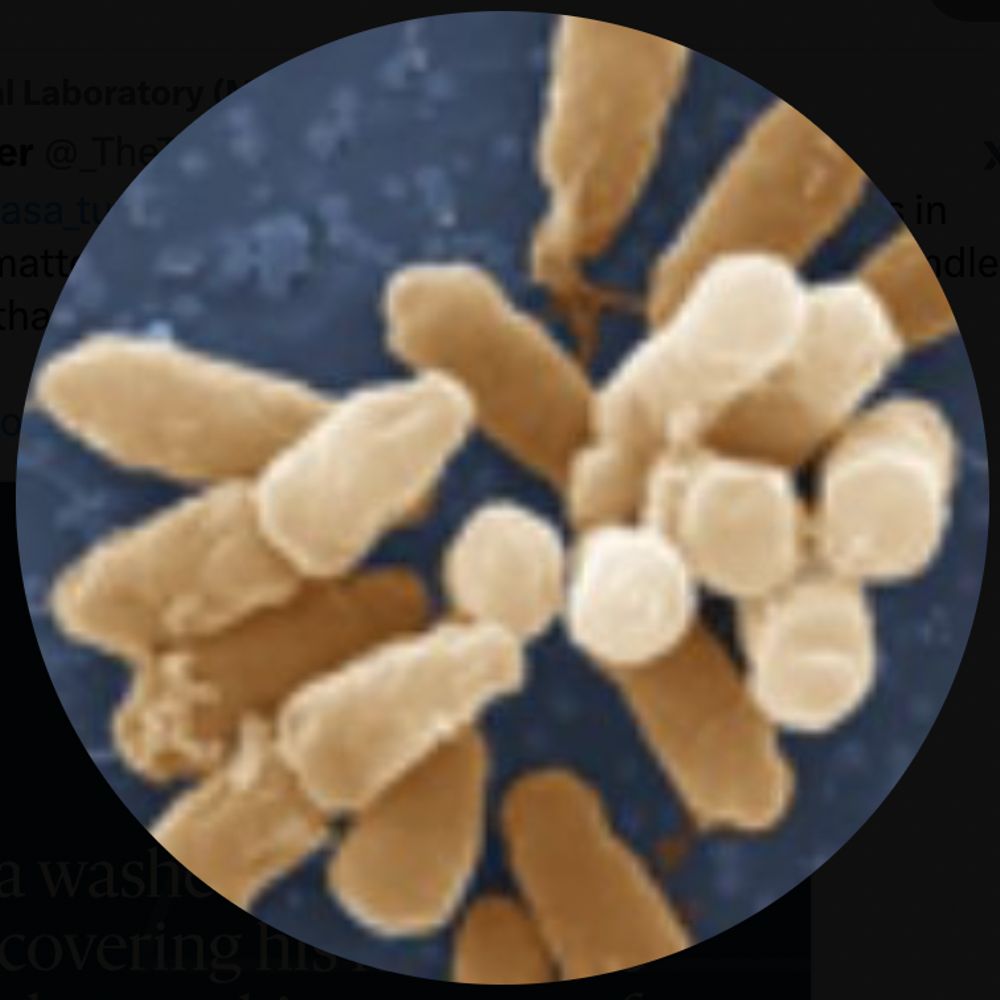
New in JB: Jackson, Kearns et al. describe a role for ClpX-dependent proteolysis of a global regulator controlling expression of the flagellar genes and thus motility.
journals.asm.org/doi/10.1128/...
@asm.org #JBacteriology
journals.asm.org/doi/10.1128/...
@asm.org #JBacteriology

February 11, 2026 at 3:18 PM
New in JB: Jackson, Kearns et al. describe a role for ClpX-dependent proteolysis of a global regulator controlling expression of the flagellar genes and thus motility.
journals.asm.org/doi/10.1128/...
@asm.org #JBacteriology
journals.asm.org/doi/10.1128/...
@asm.org #JBacteriology
Reposted by Andrew Krusenstjerna, Ph.D.
New in JB: Jorgenson reviews recent advances in cell envelope assembly via the lens of the essential lipid carrier undecaprenyl phosphate and with an eye on targets of novel Abx development.
journals.asm.org/doi/10.1128/...
@asm.org #JBacteriology
journals.asm.org/doi/10.1128/...
@asm.org #JBacteriology

February 5, 2026 at 2:27 PM
New in JB: Jorgenson reviews recent advances in cell envelope assembly via the lens of the essential lipid carrier undecaprenyl phosphate and with an eye on targets of novel Abx development.
journals.asm.org/doi/10.1128/...
@asm.org #JBacteriology
journals.asm.org/doi/10.1128/...
@asm.org #JBacteriology
Reposted by Andrew Krusenstjerna, Ph.D.
The new US budget includes funding for the Tick-Borne Disease Research Program of the CDMRP.
Details on the program and requests for applications to be announced soon.
cdmrp.health.mil/pubs/press/2...
#MicroSky
Details on the program and requests for applications to be announced soon.
cdmrp.health.mil/pubs/press/2...
#MicroSky

February 5, 2026 at 4:05 PM
The new US budget includes funding for the Tick-Borne Disease Research Program of the CDMRP.
Details on the program and requests for applications to be announced soon.
cdmrp.health.mil/pubs/press/2...
#MicroSky
Details on the program and requests for applications to be announced soon.
cdmrp.health.mil/pubs/press/2...
#MicroSky
Reposted by Andrew Krusenstjerna, Ph.D.
Check out our exciting new paper out now in @plos.org where Dr Ahmad manipulated #peptidoglycan chemistry to understand Lyme disease and arthritis 👇👏
#Microsky
#glycotime
journals.plos.org/plospathogen...
#Microsky
#glycotime
journals.plos.org/plospathogen...

Peptidoglycan architecture dictates protein interactions, tissue tropism, and arthritis in the Lyme disease spirochete Borrelia burgdorferi
Author summary Many of the pathogenic mechanisms by which Borrelia burgdorferi causes disease involve cell envelope interactions with host components. To further elucidate the role of peptidoglycan in...
journals.plos.org
January 20, 2026 at 7:34 PM
Check out our exciting new paper out now in @plos.org where Dr Ahmad manipulated #peptidoglycan chemistry to understand Lyme disease and arthritis 👇👏
#Microsky
#glycotime
journals.plos.org/plospathogen...
#Microsky
#glycotime
journals.plos.org/plospathogen...
Reposted by Andrew Krusenstjerna, Ph.D.
New paper out in PNAS!!! 🎉
Do more plasmid copies mean faster evolution?
🧵 Dive into the story
www.pnas.org/doi/10.1073/...
Do more plasmid copies mean faster evolution?
🧵 Dive into the story
www.pnas.org/doi/10.1073/...

Plasmid mutation rates scale with copy number | PNAS
Plasmids are extrachromosomal DNA molecules that spread by horizontal transfer and
shape bacterial evolution. Plasmids are typically present at mul...
www.pnas.org
January 27, 2026 at 12:02 PM
New paper out in PNAS!!! 🎉
Do more plasmid copies mean faster evolution?
🧵 Dive into the story
www.pnas.org/doi/10.1073/...
Do more plasmid copies mean faster evolution?
🧵 Dive into the story
www.pnas.org/doi/10.1073/...
Reposted by Andrew Krusenstjerna, Ph.D.

Clever new method for assembling DNA oligos into larger sequences without the need for unique overlap sequences. Can't wait for those 'this sequence is too complex' rejection messages from DNA suppliers to become a thing of the past. 🧬🧪
www.nature.com/articles/s41...
www.nature.com/articles/s41...

Construction of complex and diverse DNA sequences using DNA three-way junctions - Nature
Sidewinder enables high-fidelity DNA assembly by separating the information that guides assembly from the final assembled sequence.
www.nature.com
January 22, 2026 at 8:29 AM
Clever new method for assembling DNA oligos into larger sequences without the need for unique overlap sequences. Can't wait for those 'this sequence is too complex' rejection messages from DNA suppliers to become a thing of the past. 🧬🧪
www.nature.com/articles/s41...
www.nature.com/articles/s41...
Reposted by Andrew Krusenstjerna, Ph.D.
Bacteria are amazing! The abundant Dps protein binds and protects DNA in stationary-phase cells with minimal effect on chromosome accessibility, dynamics, and organization. Now in NAR doi.org/10.1093/nar/...; I'm really proud of our multidisciplinary team led by Lauren, Lindsay, and Xiaofeng, et al.

January 16, 2026 at 1:32 PM
Bacteria are amazing! The abundant Dps protein binds and protects DNA in stationary-phase cells with minimal effect on chromosome accessibility, dynamics, and organization. Now in NAR doi.org/10.1093/nar/...; I'm really proud of our multidisciplinary team led by Lauren, Lindsay, and Xiaofeng, et al.
Reposted by Andrew Krusenstjerna, Ph.D.

How does E. coli age? According to this #mBio study, the the decisive factor driving growth decline in E. coli is not the presence of protein aggregates, but the fraction of the intracellular space they occupy. Learn more: asm.social/2KZ

January 7, 2026 at 5:38 PM
How does E. coli age? According to this #mBio study, the the decisive factor driving growth decline in E. coli is not the presence of protein aggregates, but the fraction of the intracellular space they occupy. Learn more: asm.social/2KZ
Reposted by Andrew Krusenstjerna, Ph.D.
Greetings! I decided to make a YouTube video of my AlphaFold workshop that I've given a few times in the past year. Caveats aside, people seem to find this useful for thinking about how to model protein interactions and how to interpret various AF outputs 1/2
www.youtube.com/watch?v=u63o...
www.youtube.com/watch?v=u63o...

David's AlphaFold WorkShop 2026
YouTube video by David Fay
www.youtube.com
January 2, 2026 at 11:03 PM
Greetings! I decided to make a YouTube video of my AlphaFold workshop that I've given a few times in the past year. Caveats aside, people seem to find this useful for thinking about how to model protein interactions and how to interpret various AF outputs 1/2
www.youtube.com/watch?v=u63o...
www.youtube.com/watch?v=u63o...
Reposted by Andrew Krusenstjerna, Ph.D.
Comparative Analysis of Borrelia’s Defence Mechanisms and Their Impact on Genetic Manipulation of Low-Passage Isolates of #Borrelia afzelii and Borrelia garinii
www.sciencedirect.com/science/arti... #OpenAccess #MicroSky
www.sciencedirect.com/science/arti... #OpenAccess #MicroSky

December 28, 2025 at 9:31 AM
Comparative Analysis of Borrelia’s Defence Mechanisms and Their Impact on Genetic Manipulation of Low-Passage Isolates of #Borrelia afzelii and Borrelia garinii
www.sciencedirect.com/science/arti... #OpenAccess #MicroSky
www.sciencedirect.com/science/arti... #OpenAccess #MicroSky
Reposted by Andrew Krusenstjerna, Ph.D.

A scalable transposon mutagenesis system for non-model bacteria https://www.biorxiv.org/content/10.64898/2025.12.22.696024v1
December 24, 2025 at 4:02 AM
A scalable transposon mutagenesis system for non-model bacteria https://www.biorxiv.org/content/10.64898/2025.12.22.696024v1
Reposted by Andrew Krusenstjerna, Ph.D.

Thrilled to share that my first-author paper is now published in Nature Communications! 🎉 Huge thanks to my PI, Dr. Drew Bridges (@bridgesbio.bsky.social), my collaborators, and all the incredible lab members for their support throughout this project
www.nature.com/articles/s41...
www.nature.com/articles/s41...

A small periplasmic protein governs broad physiological adaptations in Vibrio cholerae via regulation of the DbfRS two-component system - Nature Communications
A two-component system, DbfRS, regulates biofilm formation in Vibrio cholerae. Here, Nguyen et al. identify a small periplasmic protein that controls the activity of the system’s receptor, and show th...
www.nature.com
December 19, 2025 at 4:34 PM
Thrilled to share that my first-author paper is now published in Nature Communications! 🎉 Huge thanks to my PI, Dr. Drew Bridges (@bridgesbio.bsky.social), my collaborators, and all the incredible lab members for their support throughout this project
www.nature.com/articles/s41...
www.nature.com/articles/s41...
Reposted by Andrew Krusenstjerna, Ph.D.

Doing a PhD is - at heart - one long discussion with your mentor. The discussion changes over time - with unexpected turns and ups & downs - but through it all is a pair of people discussing a topic endlessly to make sense of it.
PhD students: choose someone you like to talk to!
PhD students: choose someone you like to talk to!
December 19, 2025 at 4:35 PM
Doing a PhD is - at heart - one long discussion with your mentor. The discussion changes over time - with unexpected turns and ups & downs - but through it all is a pair of people discussing a topic endlessly to make sense of it.
PhD students: choose someone you like to talk to!
PhD students: choose someone you like to talk to!
Reposted by Andrew Krusenstjerna, Ph.D.

📢 New preprint alert!
We used comparative genomics on 72,000+ bacterial genomes to uncover the genetic basis of microbial adaptation to multicellular hosts—plants and animals alike.
www.biorxiv.org/content/10.1...
We used comparative genomics on 72,000+ bacterial genomes to uncover the genetic basis of microbial adaptation to multicellular hosts—plants and animals alike.
www.biorxiv.org/content/10.1...

The Genetic Basis of Bacterial Adaptation to Hosts
Microbes colonize and interact with diverse multicellular hosts using specialized genes, many of which remain unidentified. Better understanding of host-associated gene functions is a key aspect of mi...
www.biorxiv.org
July 21, 2025 at 6:40 AM
📢 New preprint alert!
We used comparative genomics on 72,000+ bacterial genomes to uncover the genetic basis of microbial adaptation to multicellular hosts—plants and animals alike.
www.biorxiv.org/content/10.1...
We used comparative genomics on 72,000+ bacterial genomes to uncover the genetic basis of microbial adaptation to multicellular hosts—plants and animals alike.
www.biorxiv.org/content/10.1...
Reposted by Andrew Krusenstjerna, Ph.D.

indeed, 𝘙𝘶𝘨𝘰𝘴𝘪𝘵𝘢𝘭𝘦𝘢 𝘰𝘳𝘺𝘻𝘢𝘦 looke like fusilli, which are notably better at holding on salsa di pomodoro than spaghetti... and as pasta addicts, we fell instantly in love with the shape of this newly described alphaproteo from the Rhizobiales 🤭
#MicroSky
#MicroSky


December 10, 2025 at 7:52 PM
indeed, 𝘙𝘶𝘨𝘰𝘴𝘪𝘵𝘢𝘭𝘦𝘢 𝘰𝘳𝘺𝘻𝘢𝘦 looke like fusilli, which are notably better at holding on salsa di pomodoro than spaghetti... and as pasta addicts, we fell instantly in love with the shape of this newly described alphaproteo from the Rhizobiales 🤭
#MicroSky
#MicroSky
Reposted by Andrew Krusenstjerna, Ph.D.
FtsZ fans, take note 👇
christoph: I just stumbled upon an older post by Elio - doesn't this FtsZ-less 𝘌. 𝘤𝘰𝘭𝘪 looks like a lava lamp from the 1970s ? ahem, the paper is from 2016 (Mercier R, Kawai Y, Errington J doi: 10.1038/nmicrobiol.2016.91).
#MicroSky
smallthingsconsidered.blog/schaechter/2...
christoph: I just stumbled upon an older post by Elio - doesn't this FtsZ-less 𝘌. 𝘤𝘰𝘭𝘪 looks like a lava lamp from the 1970s ? ahem, the paper is from 2016 (Mercier R, Kawai Y, Errington J doi: 10.1038/nmicrobiol.2016.91).
#MicroSky
smallthingsconsidered.blog/schaechter/2...
December 5, 2025 at 3:05 PM
FtsZ fans, take note 👇
christoph: I just stumbled upon an older post by Elio - doesn't this FtsZ-less 𝘌. 𝘤𝘰𝘭𝘪 looks like a lava lamp from the 1970s ? ahem, the paper is from 2016 (Mercier R, Kawai Y, Errington J doi: 10.1038/nmicrobiol.2016.91).
#MicroSky
smallthingsconsidered.blog/schaechter/2...
christoph: I just stumbled upon an older post by Elio - doesn't this FtsZ-less 𝘌. 𝘤𝘰𝘭𝘪 looks like a lava lamp from the 1970s ? ahem, the paper is from 2016 (Mercier R, Kawai Y, Errington J doi: 10.1038/nmicrobiol.2016.91).
#MicroSky
smallthingsconsidered.blog/schaechter/2...
Reposted by Andrew Krusenstjerna, Ph.D.
Reposted by Andrew Krusenstjerna, Ph.D.

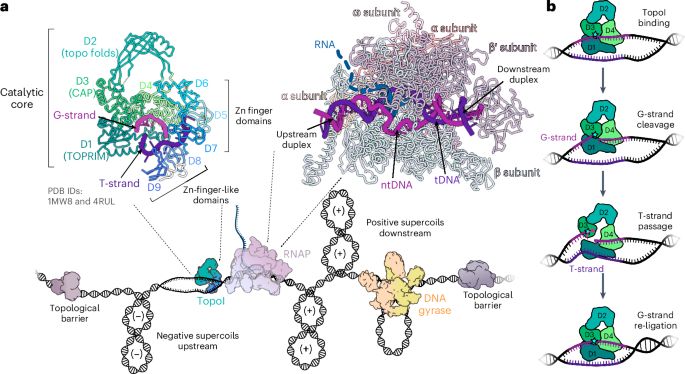
Now online! An archaeal transcription factor bridges prokaryotic and eukaryotic regulatory paradigms

An archaeal transcription factor bridges prokaryotic and eukaryotic regulatory paradigms
Methanogenic archaea use the one-component system AmzR to sense methylamines and regulate the expression of methylamine-metabolizing genes. Unlike other prokaryotic one-component systems, the DNA-binding motif of AmzR resembles a structural fold typically found in eukaryotic transcription factors. This discovery narrows the gap between prokaryotic and eukaryotic regulatory proteins.
dlvr.it
December 1, 2025 at 3:59 PM
Now online! An archaeal transcription factor bridges prokaryotic and eukaryotic regulatory paradigms
Reposted by Andrew Krusenstjerna, Ph.D.
Excited to share my latest postdoctoral work in the Shen Lab at Tufts! In this study, we follow up on an exciting finding by former grad student @shailab.bsky.social that C diff uses its Class A PBP (PBP1) to drive cell division (unlike previously studied bacteria)! journals.plos.org/plosgenetics...

Molecular dissection of Class A PBP function uncovers novel features of the non-canonical Clostridioides difficile divisome complex
Author summary Bacterial cell division is an ancient and essential process, but our molecular understanding of this process is primarily based on studies in a select few model systems. Recent work fou...
journals.plos.org
October 28, 2025 at 1:25 AM
Excited to share my latest postdoctoral work in the Shen Lab at Tufts! In this study, we follow up on an exciting finding by former grad student @shailab.bsky.social that C diff uses its Class A PBP (PBP1) to drive cell division (unlike previously studied bacteria)! journals.plos.org/plosgenetics...
Reposted by Andrew Krusenstjerna, Ph.D.
Nucleoid structure and dynamics influence natural chromosomal transformation in Bacillus subtilis: the role of EbfC url: academic.oup.com/nar/article/...

Nucleoid structure and dynamics influence natural chromosomal transformation in Bacillus subtilis: the role of EbfC
Abstract. Natural chromosomal transformation (NCT) in Bacillus subtilis requires RecA and its accessory proteins including RecX and RecD2. Inactivation of
academic.oup.com
October 25, 2025 at 12:10 PM
Nucleoid structure and dynamics influence natural chromosomal transformation in Bacillus subtilis: the role of EbfC url: academic.oup.com/nar/article/...
New paper from the Voss lab!
RLip, a secreted lipase, helps pathogenic Rickettsia thrive inside host cells. Grateful our work in the Goley lab building a R. parkeri transposon library could support this discovery. 🦠 🔬
journals.plos.org/plosone/arti...
RLip, a secreted lipase, helps pathogenic Rickettsia thrive inside host cells. Grateful our work in the Goley lab building a R. parkeri transposon library could support this discovery. 🦠 🔬
journals.plos.org/plosone/arti...

Pathogenic rickettsiae encode a secreted lipase that facilitates intracytosolic colonization in host cells
Key cellular processes for the rickettsial obligate intracellular lifestyle, including internalization by phagocytosis, regulation of intracellular trafficking, and evasion of lysosomal destruction to...
journals.plos.org
October 11, 2025 at 11:41 PM
New paper from the Voss lab!
RLip, a secreted lipase, helps pathogenic Rickettsia thrive inside host cells. Grateful our work in the Goley lab building a R. parkeri transposon library could support this discovery. 🦠 🔬
journals.plos.org/plosone/arti...
RLip, a secreted lipase, helps pathogenic Rickettsia thrive inside host cells. Grateful our work in the Goley lab building a R. parkeri transposon library could support this discovery. 🦠 🔬
journals.plos.org/plosone/arti...
Reposted by Andrew Krusenstjerna, Ph.D.

New PubPeer comment on "Efficacy of oral folinic acid supplementation in children with autism spectrum disorder: a randomized double-blind, placebo-controlled trial" (Panda et al, 2024). Concerns about significant errors. #folinicacid #leucovorin, #autism
pubpeer.com/publications...
pubpeer.com/publications...
PubPeer - Efficacy of oral folinic acid supplementation in children wi...
There are comments on PubPeer for publication: Efficacy of oral folinic acid supplementation in children with autism spectrum disorder: a randomized double-blind, placebo-controlled trial (2024)
pubpeer.com
September 27, 2025 at 2:20 AM
New PubPeer comment on "Efficacy of oral folinic acid supplementation in children with autism spectrum disorder: a randomized double-blind, placebo-controlled trial" (Panda et al, 2024). Concerns about significant errors. #folinicacid #leucovorin, #autism
pubpeer.com/publications...
pubpeer.com/publications...
Reposted by Andrew Krusenstjerna, Ph.D.
In #mBio, dive into story behind the 1989 discovery of Helicobacter pylori CagA, the first tumorigenic bacterial protein. This article recounts the early steps in the investigative process and relates some of the unexpected discoveries that ensued. asm.social/2C1

September 24, 2025 at 6:13 PM
In #mBio, dive into story behind the 1989 discovery of Helicobacter pylori CagA, the first tumorigenic bacterial protein. This article recounts the early steps in the investigative process and relates some of the unexpected discoveries that ensued. asm.social/2C1
Reposted by Andrew Krusenstjerna, Ph.D.
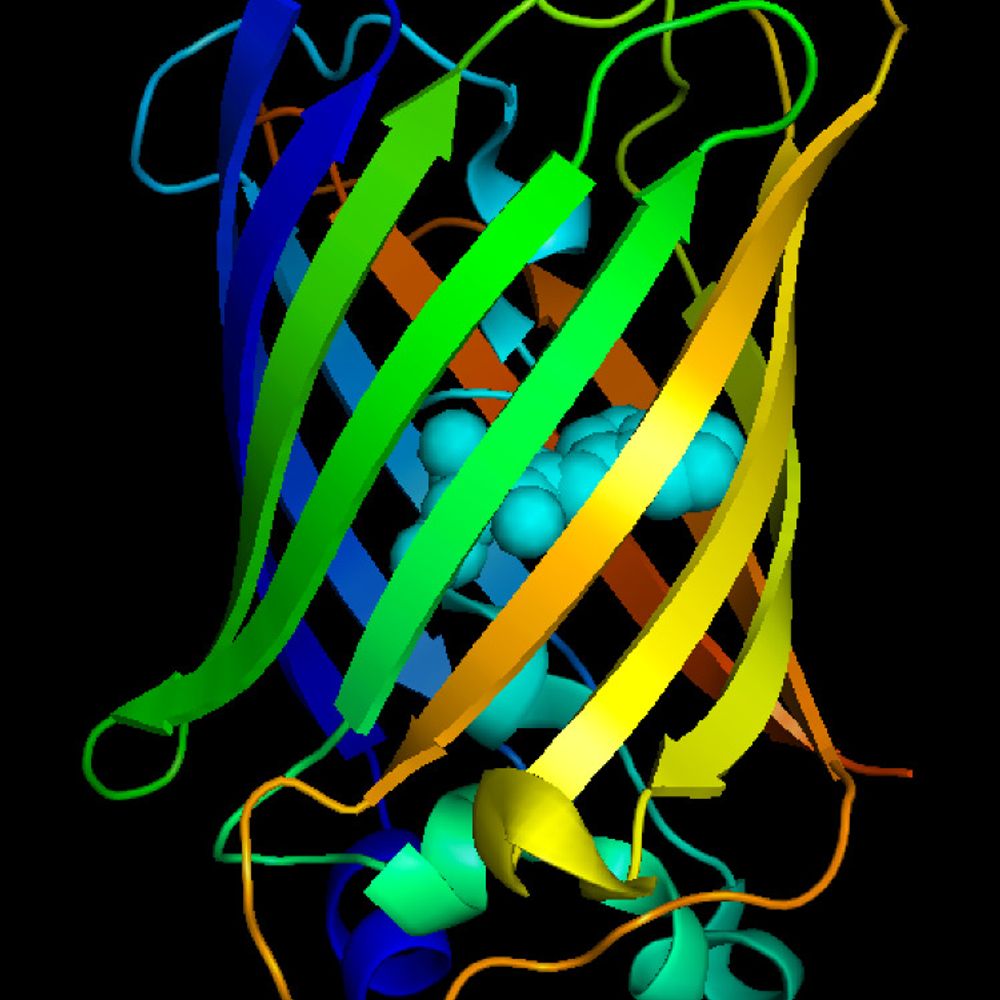
If you want to get started, here's a tutorial that I made:
github.com/JoachimGoedh...
Reach out if you have questions or want advice!!
github.com/JoachimGoedh...
Reach out if you have questions or want advice!!

GitHub - JoachimGoedhart/A_Shiny_start: A beginners tutorial on Shiny apps
A beginners tutorial on Shiny apps. Contribute to JoachimGoedhart/A_Shiny_start development by creating an account on GitHub.
github.com
September 15, 2025 at 5:38 PM
If you want to get started, here's a tutorial that I made:
github.com/JoachimGoedh...
Reach out if you have questions or want advice!!
github.com/JoachimGoedh...
Reach out if you have questions or want advice!!