



Matteo Carandini
@carandinilab.net
Neuroscientist at University College London (www.ucl.ac.uk/cortexlab). Opinions my own.
Pinned

Sequences are everywhere! In every brain region. And are written in stone.
Invariant Activity Sequences Across the Mouse Brain.
Out today, by Célian Bimbard, with @kenneth-harris.bsky.social.
Based on data by Célian and by @intlbrainlab.bsky.social.
www.biorxiv.org/content/10.6...
Invariant Activity Sequences Across the Mouse Brain.
Out today, by Célian Bimbard, with @kenneth-harris.bsky.social.
Based on data by Célian and by @intlbrainlab.bsky.social.
www.biorxiv.org/content/10.6...
I should be proud of being a Fellow of the Royal Society, and yet I'm not. I wonder why.


January 14, 2026 at 8:35 AM
I should be proud of being a Fellow of the Royal Society, and yet I'm not. I wonder why.
I had missed this when it came out, and I think it's great news. Publishing false stuff on *cancer* potentially translates to more people dying, and I'm glad to see it now comes with some accountability for the institutions too.
Dana-Farber Cancer Institute Agrees to Pay $15 Million to Settle Fraud Allegations Related to Scientific Research Grants. The relator [Sholto David] will receive $2,625,000 under today’s settlement.
www.justice.gov/usao-ma/pr/d...
www.justice.gov/usao-ma/pr/d...

Dana-Farber Cancer Institute Agrees to Pay $15 Million to Settle Fraud Allegations Related to Scientific Research Grants
BOSTON – Dana-Farber Cancer Institute, Inc. (Dana-Farber) has agreed to pay $15 million to resolve allegations that, between 2014 and 2024, it made materially false statements and certifications relat...
www.justice.gov
January 11, 2026 at 8:29 PM
I had missed this when it came out, and I think it's great news. Publishing false stuff on *cancer* potentially translates to more people dying, and I'm glad to see it now comes with some accountability for the institutions too.
Reposted by Matteo Carandini

With some trepidation, I'm putting this out into the world:
gershmanlab.com/textbook.html
It's a textbook called Computational Foundations of Cognitive Neuroscience, which I wrote for my class.
My hope is that this will be a living document, continuously improved as I get feedback.
gershmanlab.com/textbook.html
It's a textbook called Computational Foundations of Cognitive Neuroscience, which I wrote for my class.
My hope is that this will be a living document, continuously improved as I get feedback.
January 9, 2026 at 1:27 AM
With some trepidation, I'm putting this out into the world:
gershmanlab.com/textbook.html
It's a textbook called Computational Foundations of Cognitive Neuroscience, which I wrote for my class.
My hope is that this will be a living document, continuously improved as I get feedback.
gershmanlab.com/textbook.html
It's a textbook called Computational Foundations of Cognitive Neuroscience, which I wrote for my class.
My hope is that this will be a living document, continuously improved as I get feedback.
Reposted by Matteo Carandini
If the deal between Putin and Trump indeed was: "You can have Venezuela, if I can have Ukraine", Europe had better focus on the latter.
Although the Trump regime has stopped direct support for Ukraine already, there are still ways it can further harm Ukraine's position.
Although the Trump regime has stopped direct support for Ukraine already, there are still ways it can further harm Ukraine's position.
Fiona Hill was deputy assistant to president Trump during his first term and senior director for European and Russian affairs on the U.S. National Security Council from 2017 to 2019.
The cynics think today's attack on Venezuela is staged and transactional. Maduro is allied with Putin, but in 2019 Putin offered Trump a swap: Russia cedes Venezuela and gets Ukraine. (See Fiona Hill's testimony in Trump's first impeachment trial, h/t @davetroy.com). Even Maduro may be in on it. 2/
January 5, 2026 at 6:33 AM
If the deal between Putin and Trump indeed was: "You can have Venezuela, if I can have Ukraine", Europe had better focus on the latter.
Although the Trump regime has stopped direct support for Ukraine already, there are still ways it can further harm Ukraine's position.
Although the Trump regime has stopped direct support for Ukraine already, there are still ways it can further harm Ukraine's position.
Out today in Journal of Vision:
Mapping the visual cortex with Zebra noise and wavelets
By Sophie Skriabine and Max Shinn, with Samuel Picard and
@kenneth-harris.bsky.social
doi.org/10.1167/jov....
Mapping the visual cortex with Zebra noise and wavelets
By Sophie Skriabine and Max Shinn, with Samuel Picard and
@kenneth-harris.bsky.social
doi.org/10.1167/jov....
January 5, 2026 at 8:09 PM
Out today in Journal of Vision:
Mapping the visual cortex with Zebra noise and wavelets
By Sophie Skriabine and Max Shinn, with Samuel Picard and
@kenneth-harris.bsky.social
doi.org/10.1167/jov....
Mapping the visual cortex with Zebra noise and wavelets
By Sophie Skriabine and Max Shinn, with Samuel Picard and
@kenneth-harris.bsky.social
doi.org/10.1167/jov....
Reposted by Matteo Carandini


Reposted by Matteo Carandini

NYE fireworks < neurons expressing iGluSnFR3!
Developed at our Janelia Research Campus, iGluSnFR3 is a fluorescent sensor designed to rapidly detect & image glutamate — our brains' main chemical messenger — allowing researchers to observe (dazzling) neural communication as it happens. 🎆
Developed at our Janelia Research Campus, iGluSnFR3 is a fluorescent sensor designed to rapidly detect & image glutamate — our brains' main chemical messenger — allowing researchers to observe (dazzling) neural communication as it happens. 🎆
December 31, 2025 at 4:49 PM
NYE fireworks < neurons expressing iGluSnFR3!
Developed at our Janelia Research Campus, iGluSnFR3 is a fluorescent sensor designed to rapidly detect & image glutamate — our brains' main chemical messenger — allowing researchers to observe (dazzling) neural communication as it happens. 🎆
Developed at our Janelia Research Campus, iGluSnFR3 is a fluorescent sensor designed to rapidly detect & image glutamate — our brains' main chemical messenger — allowing researchers to observe (dazzling) neural communication as it happens. 🎆
Reposted by Matteo Carandini

Adam Kampff prioritized spreading knowledge over publishing flashy papers in prestigious journals, but colleagues say his mark on neuroscience was undeniable. The researcher and educator passed away on 9 December.
By Lauren Schneider
www.thetransmitter.org/systems-neur...
By Lauren Schneider
www.thetransmitter.org/systems-neur...

Remembering Adam Kampff, neuroscience educator and researcher
Kampff’s do-it-yourself approach inspired a generation of neuroscientists.
www.thetransmitter.org
December 24, 2025 at 3:15 PM
Adam Kampff prioritized spreading knowledge over publishing flashy papers in prestigious journals, but colleagues say his mark on neuroscience was undeniable. The researcher and educator passed away on 9 December.
By Lauren Schneider
www.thetransmitter.org/systems-neur...
By Lauren Schneider
www.thetransmitter.org/systems-neur...
Reposted by Matteo Carandini
Do direction and orientation preferences form maps in the mouse superior colliculus (SC)?
We examined how motion and orientation tuning are organized in SC neurons and their retinal inputs—and how the retinal topography is transformed by collicular circuits.
tinyurl.com/mr2zt5rm
🧵👇
We examined how motion and orientation tuning are organized in SC neurons and their retinal inputs—and how the retinal topography is transformed by collicular circuits.
tinyurl.com/mr2zt5rm
🧵👇
December 24, 2025 at 1:41 PM
Do direction and orientation preferences form maps in the mouse superior colliculus (SC)?
We examined how motion and orientation tuning are organized in SC neurons and their retinal inputs—and how the retinal topography is transformed by collicular circuits.
tinyurl.com/mr2zt5rm
🧵👇
We examined how motion and orientation tuning are organized in SC neurons and their retinal inputs—and how the retinal topography is transformed by collicular circuits.
tinyurl.com/mr2zt5rm
🧵👇
I found this article really interesting. Especially the list of criteria [apologies, occasionally I stray from neuroscience]

December 24, 2025 at 9:20 AM
I found this article really interesting. Especially the list of criteria [apologies, occasionally I stray from neuroscience]
Reposted by Matteo Carandini

iGluSnFR4 is now available @natmethods.nature.com
www.nature.com/articles/s41...
Glutamate indicators with increased sensitivity and tailored deactivation rates 🧪
www.nature.com/articles/s41...
Glutamate indicators with increased sensitivity and tailored deactivation rates 🧪

Glutamate indicators with increased sensitivity and tailored deactivation rates - Nature Methods
iGluSnFR4f and iGluSnFR4s are the latest generation of genetically encoded glutamate sensors. They are advantageous for detecting rapid dynamics and large population activity, respectively, as demonst...
www.nature.com
December 23, 2025 at 1:21 PM
iGluSnFR4 is now available @natmethods.nature.com
www.nature.com/articles/s41...
Glutamate indicators with increased sensitivity and tailored deactivation rates 🧪
www.nature.com/articles/s41...
Glutamate indicators with increased sensitivity and tailored deactivation rates 🧪
Great work by @sylviaschroeder.bsky.social and team

Direction and orientation preferences in mouse superior colliculus and its retinal inputs exhibit a topography of cardinal biases atop locally mixed tuning https://www.biorxiv.org/content/10.64898/2025.12.21.695778v1
December 24, 2025 at 8:49 AM
Great work by @sylviaschroeder.bsky.social and team
Reposted by Matteo Carandini
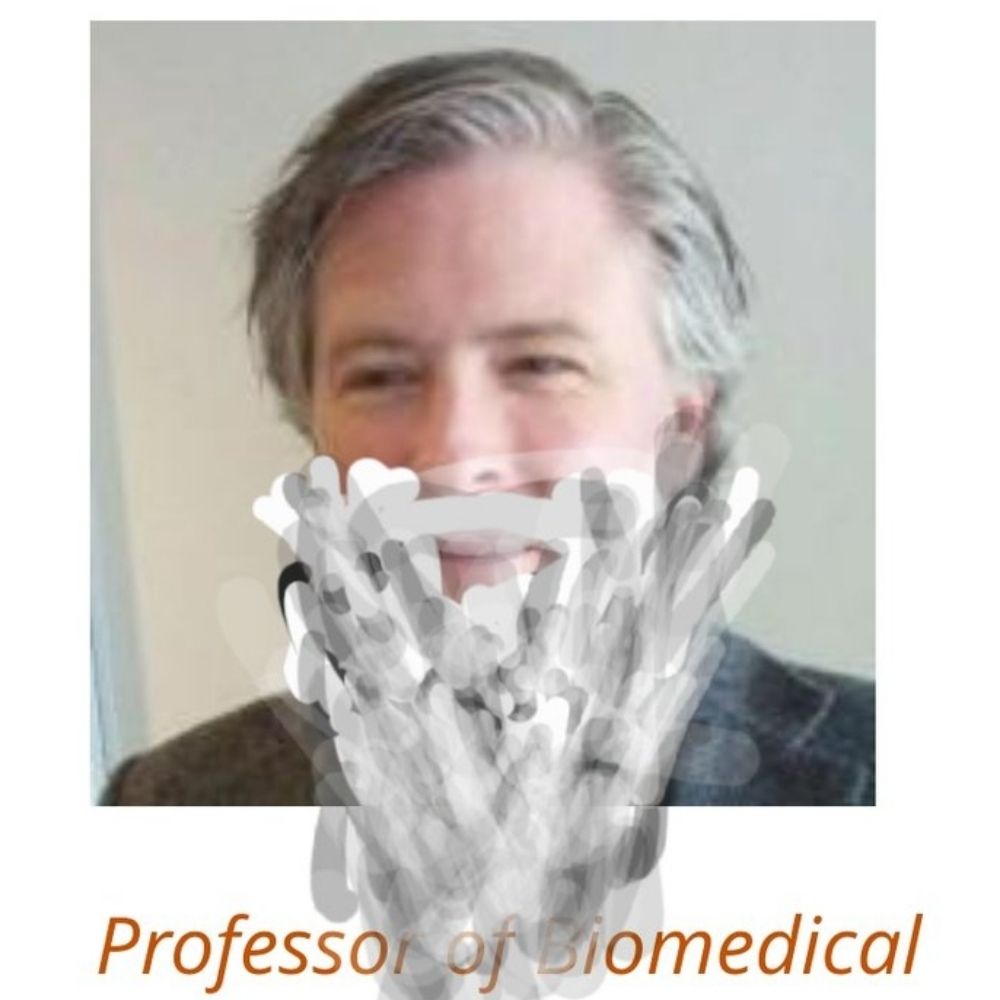
Look who's finally on Bluesky! Welcome Hendrikje (and lab).
@nienborglab.bsky.social
Let's get her follower count up.
🙂
@nienborglab.bsky.social
Let's get her follower count up.
🙂

December 23, 2025 at 12:59 AM
Look who's finally on Bluesky! Welcome Hendrikje (and lab).
@nienborglab.bsky.social
Let's get her follower count up.
🙂
@nienborglab.bsky.social
Let's get her follower count up.
🙂
Reposted by Matteo Carandini
This head is spinning continuously, but we see it rotating back and forth...
...presumably because of our strong prior expectation that faces are convex.
This is a very nice example of the Hollow-Face illusion promoted by Richard Gregory:
www.richardgregory.org/experiments/
...presumably because of our strong prior expectation that faces are convex.
This is a very nice example of the Hollow-Face illusion promoted by Richard Gregory:
www.richardgregory.org/experiments/
December 20, 2025 at 5:59 PM
This head is spinning continuously, but we see it rotating back and forth...
...presumably because of our strong prior expectation that faces are convex.
This is a very nice example of the Hollow-Face illusion promoted by Richard Gregory:
www.richardgregory.org/experiments/
...presumably because of our strong prior expectation that faces are convex.
This is a very nice example of the Hollow-Face illusion promoted by Richard Gregory:
www.richardgregory.org/experiments/
Sequences are everywhere! In every brain region. And are written in stone.
Invariant Activity Sequences Across the Mouse Brain.
Out today, by Célian Bimbard, with @kenneth-harris.bsky.social.
Based on data by Célian and by @intlbrainlab.bsky.social.
www.biorxiv.org/content/10.6...
Invariant Activity Sequences Across the Mouse Brain.
Out today, by Célian Bimbard, with @kenneth-harris.bsky.social.
Based on data by Célian and by @intlbrainlab.bsky.social.
www.biorxiv.org/content/10.6...
December 22, 2025 at 11:59 AM
Sequences are everywhere! In every brain region. And are written in stone.
Invariant Activity Sequences Across the Mouse Brain.
Out today, by Célian Bimbard, with @kenneth-harris.bsky.social.
Based on data by Célian and by @intlbrainlab.bsky.social.
www.biorxiv.org/content/10.6...
Invariant Activity Sequences Across the Mouse Brain.
Out today, by Célian Bimbard, with @kenneth-harris.bsky.social.
Based on data by Célian and by @intlbrainlab.bsky.social.
www.biorxiv.org/content/10.6...
Reposted by Matteo Carandini
Seven feel-good science stories to round up 2025. All too often we forget to celebrate the positives
🧪
#AcademicSky
www.nature.com/articles/d41...
🧪
#AcademicSky
www.nature.com/articles/d41...

Seven feel-good science stories to restore your faith in 2025
Immense progress in gene-editing, drug discovery and conservation are just some of the reasons to be cheerful about 2025.
www.nature.com
December 18, 2025 at 8:15 AM
Seven feel-good science stories to round up 2025. All too often we forget to celebrate the positives
🧪
#AcademicSky
www.nature.com/articles/d41...
🧪
#AcademicSky
www.nature.com/articles/d41...
Reposted by Matteo Carandini
This paper by Ken's group seems like a very important follow up to Stringer + Pachitariu et al (consistent a MSc in the lab found that UMAP could capture their data well):
"High-dimensional neuronal activity from low-dimensional latent dynamics: a solvable model"
www.biorxiv.org/content/10.1...
"High-dimensional neuronal activity from low-dimensional latent dynamics: a solvable model"
www.biorxiv.org/content/10.1...

High-dimensional neuronal activity from low-dimensional latent dynamics: a solvable model
Computation in recurrent networks of neurons has been hypothesized to occur at the level of low-dimensional latent dynamics, both in artificial systems and in the brain. This hypothesis seems at odds ...
www.biorxiv.org
December 16, 2025 at 5:19 PM
This paper by Ken's group seems like a very important follow up to Stringer + Pachitariu et al (consistent a MSc in the lab found that UMAP could capture their data well):
"High-dimensional neuronal activity from low-dimensional latent dynamics: a solvable model"
www.biorxiv.org/content/10.1...
"High-dimensional neuronal activity from low-dimensional latent dynamics: a solvable model"
www.biorxiv.org/content/10.1...
Reposted by Matteo Carandini
Fully-funded International Neuroscience Doctoral Programme🧠 Champalimaud Foundation, Lisbon, Portugal 🇵🇹
Deadline: Jan 31, 2026
fchampalimaud.org/champalimaud...
Research program spans systems/computational/theoretical/clinical/sensory/motor neuroscience, neuroethology, intelligence, and more!!
Deadline: Jan 31, 2026
fchampalimaud.org/champalimaud...
Research program spans systems/computational/theoretical/clinical/sensory/motor neuroscience, neuroethology, intelligence, and more!!

December 16, 2025 at 7:20 PM
Fully-funded International Neuroscience Doctoral Programme🧠 Champalimaud Foundation, Lisbon, Portugal 🇵🇹
Deadline: Jan 31, 2026
fchampalimaud.org/champalimaud...
Research program spans systems/computational/theoretical/clinical/sensory/motor neuroscience, neuroethology, intelligence, and more!!
Deadline: Jan 31, 2026
fchampalimaud.org/champalimaud...
Research program spans systems/computational/theoretical/clinical/sensory/motor neuroscience, neuroethology, intelligence, and more!!
Reposted by Matteo Carandini
Ok, this is nuts. Once you see it you cannot unsee it. Do you see it?
(OP @drgbuckingham.bsky.social )
(OP @drgbuckingham.bsky.social )

December 16, 2025 at 7:39 PM
Ok, this is nuts. Once you see it you cannot unsee it. Do you see it?
(OP @drgbuckingham.bsky.social )
(OP @drgbuckingham.bsky.social )
This is fantastic news

December 16, 2025 at 8:07 PM
This is fantastic news
The European Research Council (@erc.europa.eu) has released the results for this year's Consolidator Grants, and yet again the UK, Germany, and Netherlands receive most of the grants. Interestingly, they contribute fewer awardees. Italy instead stands out for the opposite. (1/2)

December 10, 2025 at 3:43 PM
The European Research Council (@erc.europa.eu) has released the results for this year's Consolidator Grants, and yet again the UK, Germany, and Netherlands receive most of the grants. Interestingly, they contribute fewer awardees. Italy instead stands out for the opposite. (1/2)
Reposted by Matteo Carandini

Today we honour the memory of Adam Kampff, whose passing leaves an immense void in our community.
We are profoundly grateful to Adam. The best way to honour him is to continue innovating, collaborating, and sharing generously, as he taught us. Thank you, Adam Kampff.
We are profoundly grateful to Adam. The best way to honour him is to continue innovating, collaborating, and sharing generously, as he taught us. Thank you, Adam Kampff.

December 9, 2025 at 10:06 PM
Today we honour the memory of Adam Kampff, whose passing leaves an immense void in our community.
We are profoundly grateful to Adam. The best way to honour him is to continue innovating, collaborating, and sharing generously, as he taught us. Thank you, Adam Kampff.
We are profoundly grateful to Adam. The best way to honour him is to continue innovating, collaborating, and sharing generously, as he taught us. Thank you, Adam Kampff.
Reposted by Matteo Carandini
Best part about being a scientist is the people I get to work with. Valentin (@bio-emergent.bsky.social) and I got to give a talk at NeurIPS, bridging a gap between low- and high-dim perspectives of the brain. Thankfully, the audience was (somewhat) more awake than the San Diego desert 🏜️

December 8, 2025 at 7:09 PM
Best part about being a scientist is the people I get to work with. Valentin (@bio-emergent.bsky.social) and I got to give a talk at NeurIPS, bridging a gap between low- and high-dim perspectives of the brain. Thankfully, the audience was (somewhat) more awake than the San Diego desert 🏜️
Reposted by Matteo Carandini
The temperature in central the Netherlands over the past 320 years. Clearly shows that we're already well over 2 degrees of warming here. This year is heading for 11.5°C again.
This coming Monday and Tuesday, we'll even have that average, in December...
This coming Monday and Tuesday, we'll even have that average, in December...

Gemiddelde temperatuur centraal Nederland vanaf 1706, 3, 11 en 30 jaars gemiddelde op maandgemiddelde.

December 6, 2025 at 4:20 PM
The temperature in central the Netherlands over the past 320 years. Clearly shows that we're already well over 2 degrees of warming here. This year is heading for 11.5°C again.
This coming Monday and Tuesday, we'll even have that average, in December...
This coming Monday and Tuesday, we'll even have that average, in December...
Reposted by Matteo Carandini
Excited to share a new article, led by Barnes Jannuzi. Here we tried to pinpoint something about visual familiarity that isn't reflected in visual cortex via something putatively hippocampal. Nope! Per the theme of this era, the brain is not so simple. /1
www.jneurosci.org/content/earl...
www.jneurosci.org/content/earl...

Sharpened visual memory representations are reflected in inferotemporal cortex
Humans and other primates can robustly report whether they've seen specific images before, even when those images are extremely similar to ones they've previously seen. Multiple lines of evidence sugg...
www.jneurosci.org
December 6, 2025 at 4:23 PM
Excited to share a new article, led by Barnes Jannuzi. Here we tried to pinpoint something about visual familiarity that isn't reflected in visual cortex via something putatively hippocampal. Nope! Per the theme of this era, the brain is not so simple. /1
www.jneurosci.org/content/earl...
www.jneurosci.org/content/earl...