




ISER
@iser.bsky.social
ISER provides a unique international platform for the exchange of ideas on contemporary topics in eye and vision research.
http://iser.org
http://iser.org
Reposted by ISER

New paper presenting rather compelling evidence that the stem-vertebrate Haikouichthys had paired lateral and supranumerary medial eyes (!!!), and proposing that the medial eyes may have deep homology with the pineal and parapineal organs.
www.nature.com/articles/s41...
www.nature.com/articles/s41...

Four camera-type eyes in the earliest vertebrates from the Cambrian Period - Nature
Early vertebrates, particularly myllokunmingids, possessed four camera-type eyes (a pair of lateral eyes and pineal and parapineal organs), which indicates that these structures functio...
www.nature.com
January 21, 2026 at 5:47 PM
New paper presenting rather compelling evidence that the stem-vertebrate Haikouichthys had paired lateral and supranumerary medial eyes (!!!), and proposing that the medial eyes may have deep homology with the pineal and parapineal organs.
www.nature.com/articles/s41...
www.nature.com/articles/s41...
Reposted by ISER
Birds have a thick retina devoid of blood vessels - so how do they ensure sufficient oxygen availability?
They don't - neurons rely on glycolysis, metabolizing glucose released from the pecten.
Insane new study that includes comparative data on lizards and crocs.🧪
www.nature.com/articles/s41...
They don't - neurons rely on glycolysis, metabolizing glucose released from the pecten.
Insane new study that includes comparative data on lizards and crocs.🧪
www.nature.com/articles/s41...

Oxygen-free metabolism in the bird inner retina supported by the pecten - Nature
While the photoreceptor outer segments in the bird outer retina have access to oxygen, the inner retina operates under chronic anoxia, supported by anaerobic glycolysis in the retinal neurons.
www.nature.com
January 22, 2026 at 2:14 PM
Birds have a thick retina devoid of blood vessels - so how do they ensure sufficient oxygen availability?
They don't - neurons rely on glycolysis, metabolizing glucose released from the pecten.
Insane new study that includes comparative data on lizards and crocs.🧪
www.nature.com/articles/s41...
They don't - neurons rely on glycolysis, metabolizing glucose released from the pecten.
Insane new study that includes comparative data on lizards and crocs.🧪
www.nature.com/articles/s41...
Reposted by ISER

The amount of truly stunning retinal research in avians coming out of Europe lately is making me jealous.
Such cooooool work.
Such cooooool work.
Birds have a thick retina devoid of blood vessels - so how do they ensure sufficient oxygen availability?
They don't - neurons rely on glycolysis, metabolizing glucose released from the pecten.
Insane new study that includes comparative data on lizards and crocs.🧪
www.nature.com/articles/s41...
They don't - neurons rely on glycolysis, metabolizing glucose released from the pecten.
Insane new study that includes comparative data on lizards and crocs.🧪
www.nature.com/articles/s41...
Oxygen-free metabolism in the bird inner retina supported by the pecten - Nature
While the photoreceptor outer segments in the bird outer retina have access to oxygen, the inner retina operates under chronic anoxia, supported by anaerobic glycolysis in the retinal neurons.
www.nature.com
January 22, 2026 at 4:27 PM
The amount of truly stunning retinal research in avians coming out of Europe lately is making me jealous.
Such cooooool work.
Such cooooool work.
Reposted by ISER

A new paper from my lab. I will have a full description soon. rdcu.be/eX1Ld

ipRGC properties prevent light from shifting the SCN clock during daytime
Nature - The inability of intrinsically photosensitive retinal ganglion cells to shift the circadian clock in the suprachiasmatic nucleus during daytime is caused by light-dependent depolarization...
rdcu.be
January 7, 2026 at 5:17 PM
A new paper from my lab. I will have a full description soon. rdcu.be/eX1Ld
Reposted by ISER

#FluorescenceFriday
A sky of light within ✨
This is the ganglion cell layer of the avian retina. The nerve fiber layer lies beneath like a soft green current, carrying quiet signals forward.
Sometimes to see the universe with its beautiful scattered stars, one only has to look inside.
A sky of light within ✨
This is the ganglion cell layer of the avian retina. The nerve fiber layer lies beneath like a soft green current, carrying quiet signals forward.
Sometimes to see the universe with its beautiful scattered stars, one only has to look inside.
November 6, 2025 at 6:39 PM
#FluorescenceFriday
A sky of light within ✨
This is the ganglion cell layer of the avian retina. The nerve fiber layer lies beneath like a soft green current, carrying quiet signals forward.
Sometimes to see the universe with its beautiful scattered stars, one only has to look inside.
A sky of light within ✨
This is the ganglion cell layer of the avian retina. The nerve fiber layer lies beneath like a soft green current, carrying quiet signals forward.
Sometimes to see the universe with its beautiful scattered stars, one only has to look inside.
Reposted by ISER

I'm so excited that @christ3na.bsky.social 's paper describing temporal control of photoreceptor development in human organoids is out at Genes and Dev and we got the cover!
genesdev.cshlp.org/content/40/1...
genesdev.cshlp.org/content/40/1...
genesdev.cshlp.org/content/40/1...
genesdev.cshlp.org/content/40/1...
Cover Photo — January 1, 2026, 40 (1-2)
A biweekly scientific journal publishing high-quality research in molecular biology and genetics, cancer biology, biochemistry, and related fields
genesdev.cshlp.org
January 5, 2026 at 6:04 PM
I'm so excited that @christ3na.bsky.social 's paper describing temporal control of photoreceptor development in human organoids is out at Genes and Dev and we got the cover!
genesdev.cshlp.org/content/40/1...
genesdev.cshlp.org/content/40/1...
genesdev.cshlp.org/content/40/1...
genesdev.cshlp.org/content/40/1...
Reposted by ISER

Studying vision across light levels? Interested in rod photoreceptors and related (patho)physiology? Matteo Rizzi, Kate Powell and I wrote a review on rod photoreceptor activity at daylight doi.org/10.1016/j.vi... . Free access link here kwnsfk27.r.eu-west-1.awstrack.me/L0/https:%2F...
December 18, 2025 at 9:50 AM
Studying vision across light levels? Interested in rod photoreceptors and related (patho)physiology? Matteo Rizzi, Kate Powell and I wrote a review on rod photoreceptor activity at daylight doi.org/10.1016/j.vi... . Free access link here kwnsfk27.r.eu-west-1.awstrack.me/L0/https:%2F...
Reposted by ISER
Hey, @drdorotask.bsky.social is here on Bsky!
Such cool work.
We think that retinas degenerate with time and that if all of us live long enough, we’ll get AMD or other neurodegenerative diseases.
But Greenland sharks manage to live for hundreds of years and repair their eyes.
How?
Such cool work.
We think that retinas degenerate with time and that if all of us live long enough, we’ll get AMD or other neurodegenerative diseases.
But Greenland sharks manage to live for hundreds of years and repair their eyes.
How?


January 7, 2026 at 4:15 AM
Hey, @drdorotask.bsky.social is here on Bsky!
Such cool work.
We think that retinas degenerate with time and that if all of us live long enough, we’ll get AMD or other neurodegenerative diseases.
But Greenland sharks manage to live for hundreds of years and repair their eyes.
How?
Such cool work.
We think that retinas degenerate with time and that if all of us live long enough, we’ll get AMD or other neurodegenerative diseases.
But Greenland sharks manage to live for hundreds of years and repair their eyes.
How?
Reposted by ISER
Nice summary on our paper on mechanisms controlling development and evolution of the cone-dominant ground squirrel retina, which is now in final form at eLife.
www.lifescienceeditors.com/2026/01/06/h...
www.lifescienceeditors.com/2026/01/06/h...

How ground squirrels enhanced their retinas - Scientific editing and writing experts - Life Science Editors
Scientific editing and writing experts for manuscripts and grants
www.lifescienceeditors.com
January 8, 2026 at 2:02 PM
Nice summary on our paper on mechanisms controlling development and evolution of the cone-dominant ground squirrel retina, which is now in final form at eLife.
www.lifescienceeditors.com/2026/01/06/h...
www.lifescienceeditors.com/2026/01/06/h...
Reposted by ISER
This is a crucial study and moves us forward towards understanding fundamental biological questions about how cells integrate information related to how components within cells are regulated.
These are Nobel worthy questions and the folks who answer them are moving us towards that understanding.
These are Nobel worthy questions and the folks who answer them are moving us towards that understanding.

Thrilled to share our latest study, led by @reikatei.bsky.social, in @natchembio.nature.com! We began by asking a simple question—how do cells know if they have too much of a lipid in a particular membrane, and how do they respond to rectify this imbalance?
www.nature.com/articles/s41...
More info 👇
www.nature.com/articles/s41...
More info 👇

Membrane editing with proximity labeling reveals regulators of lipid homeostasis - Nature Chemical Biology
Coupling an optogenetic lipid-modifying enzyme with proximity labeling reveals protein networks and mechanisms regulating lipid homeostasis in the membranes of target organelles.
www.nature.com
January 8, 2026 at 2:30 PM
This is a crucial study and moves us forward towards understanding fundamental biological questions about how cells integrate information related to how components within cells are regulated.
These are Nobel worthy questions and the folks who answer them are moving us towards that understanding.
These are Nobel worthy questions and the folks who answer them are moving us towards that understanding.
Reposted by ISER
The author of this study, @drdorotask.bsky.social is here on Bsky.

The very, very long-lived Greenland sharks were long thought to be practically blind. But a new study finds that they not only can see but also maintain their vision into old age

These Bizarre, Centuries-Old Sharks May Have a Hidden Longevity Superpower
The very, very long-lived Greenland sharks were long thought to be practically blind. But a new study finds that they not only can see but also maintain their vision into old age
www.scientificamerican.com
January 9, 2026 at 2:14 PM
The author of this study, @drdorotask.bsky.social is here on Bsky.
Reposted by ISER

Finally out! We studied the retinas of the longest-living vertebrate, the Greenland shark, and found that the retinas remain remarkably healthy in animals around 150 years old. What is the mechanism? It may be a highly efficient DNA repair system. Enjoy!
www.nature.com/articles/s41...
www.nature.com/articles/s41...

January 6, 2026 at 1:40 AM
Finally out! We studied the retinas of the longest-living vertebrate, the Greenland shark, and found that the retinas remain remarkably healthy in animals around 150 years old. What is the mechanism? It may be a highly efficient DNA repair system. Enjoy!
www.nature.com/articles/s41...
www.nature.com/articles/s41...
Reposted by ISER

Excited to share our new work on visual information processing in the retinocollicular pathway. We discovered that while luminance responses can predict motion responses in retinal ganglion cells, this prediction does not hold in the superior colliculus cells.
www.cell.com/current-biol...
www.cell.com/current-biol...

Decoupling of visual feature selectivity in the retinocollicular pathway
Schwartz and Matsumoto et al. show that visual feature selectivity for luminance and
motion is coupled in the retina but becomes decoupled in the superior colliculus.
This transformation reorganizes t...
www.cell.com
December 17, 2025 at 3:11 AM
Excited to share our new work on visual information processing in the retinocollicular pathway. We discovered that while luminance responses can predict motion responses in retinal ganglion cells, this prediction does not hold in the superior colliculus cells.
www.cell.com/current-biol...
www.cell.com/current-biol...
Reposted by ISER

Frog eye, frog eye. Can I have a confocal microscope to play on for 12 hrs a day again please? 👉👈🥺 🐸

December 9, 2025 at 7:58 PM
Frog eye, frog eye. Can I have a confocal microscope to play on for 12 hrs a day again please? 👉👈🥺 🐸
Reposted by ISER

Development of the zebrafish retina captured on a light sheet microscope. Credit to @ichajaroslav.bsky.social. #ZebrafishZunday 🧪

November 23, 2025 at 8:37 AM
Development of the zebrafish retina captured on a light sheet microscope. Credit to @ichajaroslav.bsky.social. #ZebrafishZunday 🧪
Reposted by ISER
Had a great visit with @wertlaboratory.bsky.social and her students at UTSW. The students, faculty and staff were delightful in their company and conversations.
Thank you.
Thank you.
December 5, 2025 at 2:10 PM
Had a great visit with @wertlaboratory.bsky.social and her students at UTSW. The students, faculty and staff were delightful in their company and conversations.
Thank you.
Thank you.
Reposted by ISER

Excellent lecture by @bwjones.bsky.social for the UTSW Vision Science Seminar series


December 4, 2025 at 6:10 PM
Excellent lecture by @bwjones.bsky.social for the UTSW Vision Science Seminar series
Reposted by ISER
Another good photo captured by @suprajagv.bsky.social for @bwjones.bsky.social’s talk

December 4, 2025 at 7:25 PM
Another good photo captured by @suprajagv.bsky.social for @bwjones.bsky.social’s talk
Reposted by ISER
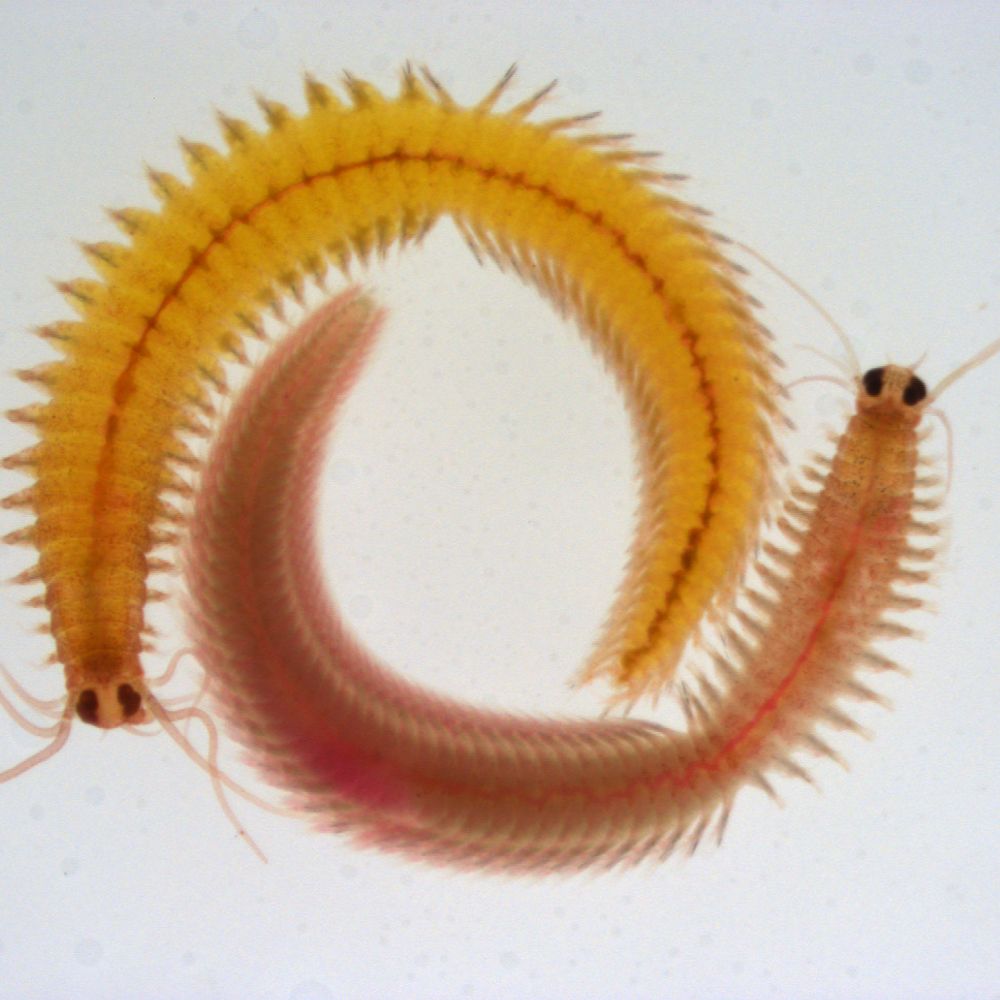
Freshly out at @natcomms.nature.com ! Our @univie.ac.at @awi.de @viennabiocenter.bsky.social @ercgrantees.bsky.social research into neurogenic plasticity of adult worm brains, and similarities in stem cells supporting growth of camera-type eyes. www.nature.com/articles/s41... [1/7]

December 1, 2025 at 10:51 AM
Freshly out at @natcomms.nature.com ! Our @univie.ac.at @awi.de @viennabiocenter.bsky.social @ercgrantees.bsky.social research into neurogenic plasticity of adult worm brains, and similarities in stem cells supporting growth of camera-type eyes. www.nature.com/articles/s41... [1/7]
Reposted by ISER
Trying to find some protocols for cone isolation from frogs that don't involve transgenics or freezing. There is a surprising dearth of information out there for cone isolation? Seems to be mostly rods. Is anyone familiar with any simple-ish protocols? 🧪 👀 #xenopus
December 5, 2025 at 1:43 AM
Trying to find some protocols for cone isolation from frogs that don't involve transgenics or freezing. There is a surprising dearth of information out there for cone isolation? Seems to be mostly rods. Is anyone familiar with any simple-ish protocols? 🧪 👀 #xenopus
Reposted by ISER

Extremely proud to share our publication on S-cone circuitry in the ground squirrel, newly available this week in PNAS. We've been staring at these reconstructions for a long time, and I'm excited for others to see the results. 1/n
www.pnas.org/doi/10.1073/...
www.pnas.org/doi/10.1073/...

S-cone-specific circuitry in the outer plexiform layer of a cone-dominant mammal | PNAS
In the vertebrate retina, short wavelength-sensitive S-cones and their downstream
interneurons play unique roles in both image forming and non-imag...
www.pnas.org
December 3, 2025 at 3:36 PM
Extremely proud to share our publication on S-cone circuitry in the ground squirrel, newly available this week in PNAS. We've been staring at these reconstructions for a long time, and I'm excited for others to see the results. 1/n
www.pnas.org/doi/10.1073/...
www.pnas.org/doi/10.1073/...
Reposted by ISER

Check out my Perspective article “The Retina’s Rhythm” which accompanies an exciting paper by Claude Desplan in Science. I highlight his discovery that waves of calcium are required to finalize the honeycomb-like structure of the Drosophila retina.
www.science.org/doi/epdf/10....
www.science.org/doi/epdf/10....

The retina’s rhythm
Calcium waves facilitate the emergence of sight
www.science.org
November 21, 2025 at 2:00 PM
Check out my Perspective article “The Retina’s Rhythm” which accompanies an exciting paper by Claude Desplan in Science. I highlight his discovery that waves of calcium are required to finalize the honeycomb-like structure of the Drosophila retina.
www.science.org/doi/epdf/10....
www.science.org/doi/epdf/10....
Reposted by ISER

I know because I discovered them.
pubmed.ncbi.nlm.nih.gov/2035024/
They are based on conventional synaptic transmission. And fortunately they stop once the retina has to do something useful, like seeing.
pubmed.ncbi.nlm.nih.gov/2035024/
They are based on conventional synaptic transmission. And fortunately they stop once the retina has to do something useful, like seeing.

Synchronous bursts of action potentials in ganglion cells of the developing mammalian retina - PubMed
The development of orderly connections in the mammalian visual system depends on action potentials in the optic nerve fibers, even before the retina receives visual input. In particular, it has been suggested that correlated firing of retinal ganglion cells in the same eye directs the segregation of …
pubmed.ncbi.nlm.nih.gov
November 24, 2025 at 4:23 PM
I know because I discovered them.
pubmed.ncbi.nlm.nih.gov/2035024/
They are based on conventional synaptic transmission. And fortunately they stop once the retina has to do something useful, like seeing.
pubmed.ncbi.nlm.nih.gov/2035024/
They are based on conventional synaptic transmission. And fortunately they stop once the retina has to do something useful, like seeing.
Reposted by ISER
Hey folks, this is a very cool opportunity for peeps to do an amazing postdoc in Sydney, Australia in translational vision research.

We’re hiring! Join the Sivyer Lab at The University of Sydney as a Postdoctoral Research Fellow in Neurodegeneration within the Snow Vision Accelerator, a $50M initiative tackling glaucoma and optic nerve disease. iPSCs, electrophysiology, drug discovery, and gene therapy.

November 26, 2025 at 12:48 AM
Hey folks, this is a very cool opportunity for peeps to do an amazing postdoc in Sydney, Australia in translational vision research.
Reposted by ISER

Fantastic new paper from @pierre-mattar.bsky.social lab!

Chd4 remodels chromatin to control retinal cell type specification and lineage termination
Read this #LifelongDevSI #OA Research Article by Sujay Shah, Pierre Mattar and colleagues
doi.org/10.1242/dev....
Read this #LifelongDevSI #OA Research Article by Sujay Shah, Pierre Mattar and colleagues
doi.org/10.1242/dev....

October 28, 2025 at 8:22 PM
Fantastic new paper from @pierre-mattar.bsky.social lab!