


Kelly Lepo
@kellylepo.bsky.social
Astronomer | Science communicator | Adult Lisa Simpson
Freelance writer and editor. Former Education and Outreach Scientist at the Space Telescope Science Institute (@stsci.edu) supporting JWST.
Also on Mastodon: @[email protected]
Freelance writer and editor. Former Education and Outreach Scientist at the Space Telescope Science Institute (@stsci.edu) supporting JWST.
Also on Mastodon: @[email protected]
Pinned
Life update:
December 31 was my last day at the Space Telescope Science Institute. The NASA's Universe of Learning grant that paid a large fraction of my salary was not renewed due to NASA budget cuts, so my contract was not renewed.
December 31 was my last day at the Space Telescope Science Institute. The NASA's Universe of Learning grant that paid a large fraction of my salary was not renewed due to NASA budget cuts, so my contract was not renewed.
Working in astronomy outreach, you quickly learn that the average person knows way less than you think.
It's fine! You can live your whole life without knowing if the Sun is a star. I know because it is my job, most people don't have to.
But asking questions is the first step to learning more.
It's fine! You can live your whole life without knowing if the Sun is a star. I know because it is my job, most people don't have to.
But asking questions is the first step to learning more.

January 18, 2026 at 11:21 PM
Working in astronomy outreach, you quickly learn that the average person knows way less than you think.
It's fine! You can live your whole life without knowing if the Sun is a star. I know because it is my job, most people don't have to.
But asking questions is the first step to learning more.
It's fine! You can live your whole life without knowing if the Sun is a star. I know because it is my job, most people don't have to.
But asking questions is the first step to learning more.
Reposted by Kelly Lepo

Few individuals have had such a colossal & deleterious impact on the cultural psyche as the recently-departed Erich von Däniken. While he was not alone in fusing aliens into our conception of the distant human past, he was perhaps the most successful & the most harmful in doing so.
January 12, 2026 at 11:30 PM
Few individuals have had such a colossal & deleterious impact on the cultural psyche as the recently-departed Erich von Däniken. While he was not alone in fusing aliens into our conception of the distant human past, he was perhaps the most successful & the most harmful in doing so.
Reposted by Kelly Lepo

I am once AGAIN asking that everyone use ALT text in their images. I see a lot of good stuff I'd like to repost but I won't if it's not accessible. So please take a moment and do so when you put up a pic. Thank you.
January 11, 2026 at 7:06 PM
I am once AGAIN asking that everyone use ALT text in their images. I see a lot of good stuff I'd like to repost but I won't if it's not accessible. So please take a moment and do so when you put up a pic. Thank you.
Reposted by Kelly Lepo

Sometimes you stumble over to a packed breakout session at your big annual academic conference and learn that some billionaires have decided to build not one, but FOUR, complementary new telescope facilities, and build them fast
Well OK then! Happy new year! From their pockets to our skies! 🔭
Well OK then! Happy new year! From their pockets to our skies! 🔭
Eric and Wendy Schmidt are funding a 3-meter space telescope with a coronagraph, and three ground-based observatories: the Deep Synoptic Array, the Argus Array, and LFAST. Funds have been committed and officials say they hope to be operational by 2029. #aas247 www.astronomy.com/science/eric...

Eric and Wendy Schmidt to fund space telescope, three ground-based observatories
The Schmidts' philanthropic research organization will build a 3-meter space telescope and fund three ground-based facilities.
www.astronomy.com
January 8, 2026 at 5:24 AM
Sometimes you stumble over to a packed breakout session at your big annual academic conference and learn that some billionaires have decided to build not one, but FOUR, complementary new telescope facilities, and build them fast
Well OK then! Happy new year! From their pockets to our skies! 🔭
Well OK then! Happy new year! From their pockets to our skies! 🔭
Life update:
December 31 was my last day at the Space Telescope Science Institute. The NASA's Universe of Learning grant that paid a large fraction of my salary was not renewed due to NASA budget cuts, so my contract was not renewed.
December 31 was my last day at the Space Telescope Science Institute. The NASA's Universe of Learning grant that paid a large fraction of my salary was not renewed due to NASA budget cuts, so my contract was not renewed.
January 5, 2026 at 9:10 PM
Life update:
December 31 was my last day at the Space Telescope Science Institute. The NASA's Universe of Learning grant that paid a large fraction of my salary was not renewed due to NASA budget cuts, so my contract was not renewed.
December 31 was my last day at the Space Telescope Science Institute. The NASA's Universe of Learning grant that paid a large fraction of my salary was not renewed due to NASA budget cuts, so my contract was not renewed.
Reposted by Kelly Lepo
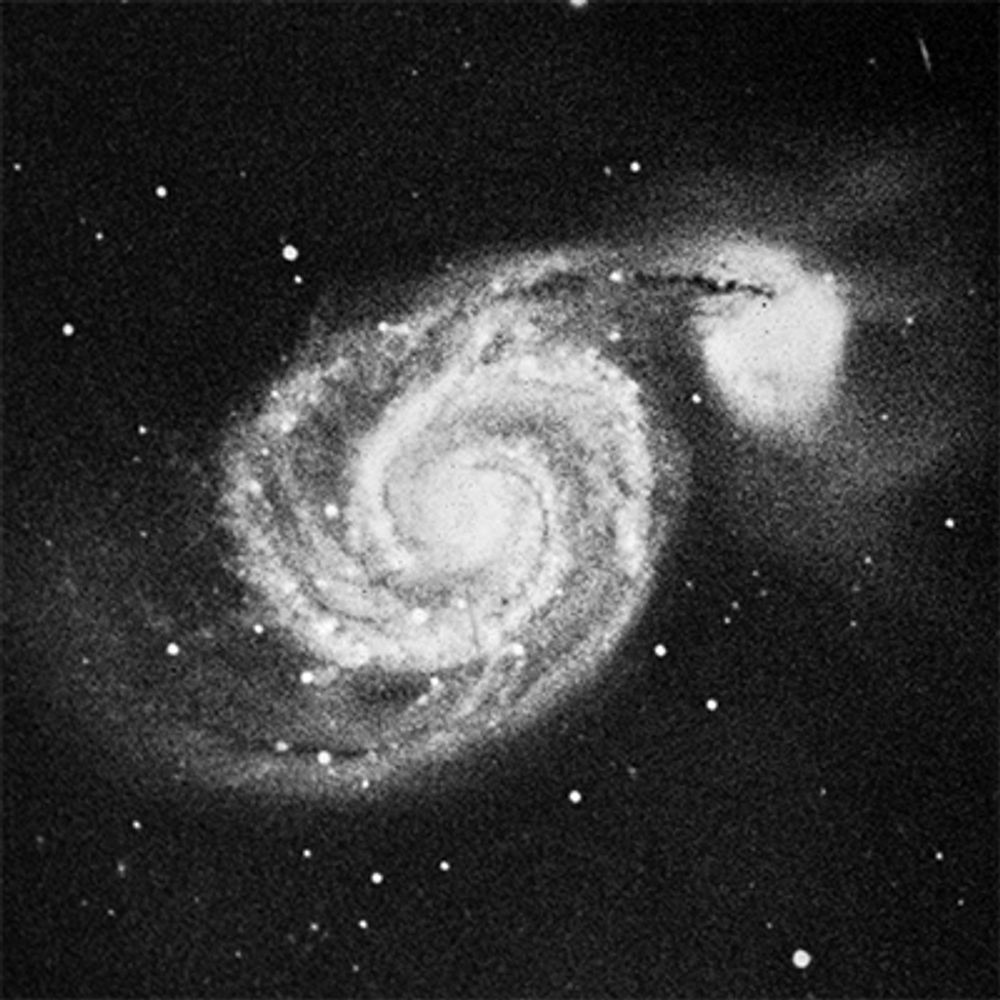
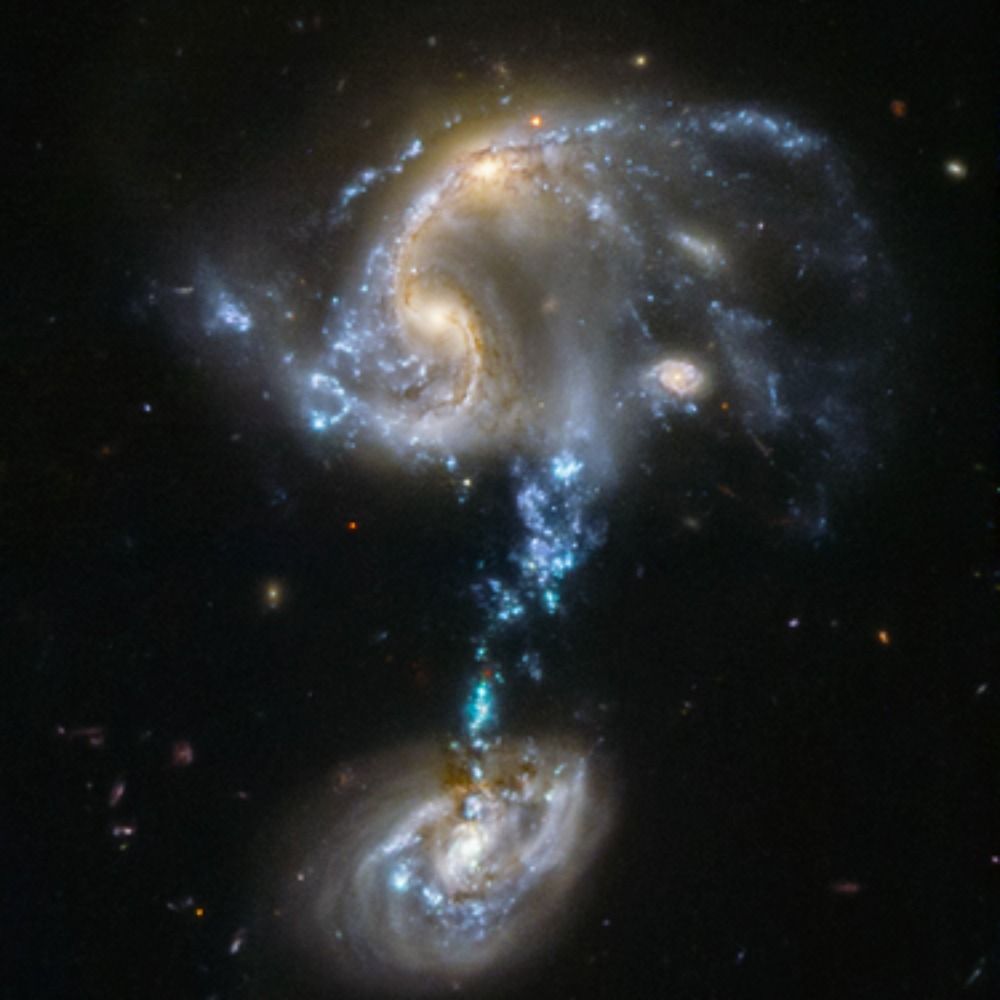
Hubble image of Arp 297, also known as NGC 5754 and NGC 5752.
The pair's interactions created kinked arms in NGC 5754 (the large spiral galaxy) and the blue star clusters in the core of NGC 5752 (the smaller galaxy).
Credit: NASA, ESA, the Hubble Heritage team, W. Keel
Source
The pair's interactions created kinked arms in NGC 5754 (the large spiral galaxy) and the blue star clusters in the core of NGC 5752 (the smaller galaxy).
Credit: NASA, ESA, the Hubble Heritage team, W. Keel
Source

January 2, 2026 at 12:31 AM
Hubble image of Arp 297, also known as NGC 5754 and NGC 5752.
The pair's interactions created kinked arms in NGC 5754 (the large spiral galaxy) and the blue star clusters in the core of NGC 5752 (the smaller galaxy).
Credit: NASA, ESA, the Hubble Heritage team, W. Keel
Source
The pair's interactions created kinked arms in NGC 5754 (the large spiral galaxy) and the blue star clusters in the core of NGC 5752 (the smaller galaxy).
Credit: NASA, ESA, the Hubble Heritage team, W. Keel
Source
🤔 I think the dictionary is telling me I should get back into making sourdough.

January 2, 2026 at 12:35 AM
🤔 I think the dictionary is telling me I should get back into making sourdough.
Reposted by Kelly Lepo
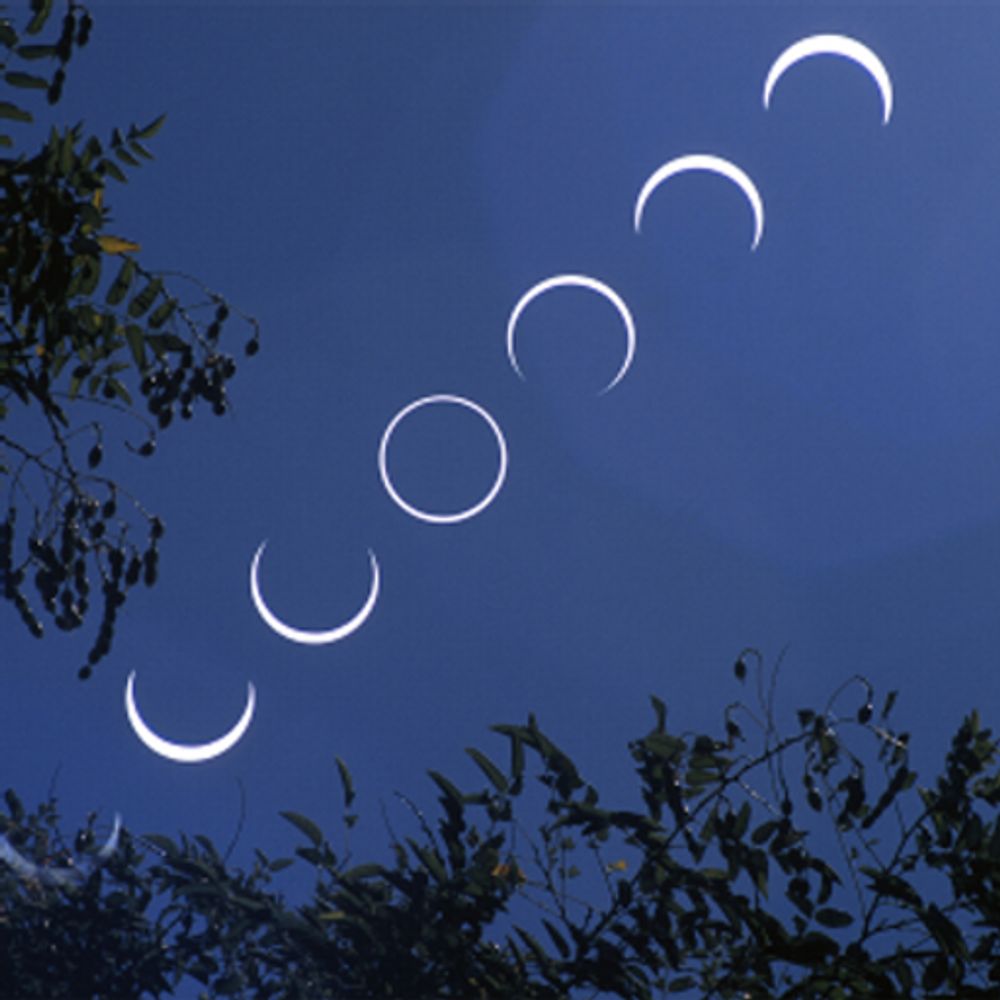
Happy new year! My all sky camera imaged the sky every 15 seconds and this picture shows what happened in the sky in 2025. It shows the length of the night and day with the hourglass shape, the monthly lunar cycle with the diagonal bands, the elevation of the Sun at local noon, and lots of clouds.

January 1, 2026 at 8:54 PM
Happy new year! My all sky camera imaged the sky every 15 seconds and this picture shows what happened in the sky in 2025. It shows the length of the night and day with the hourglass shape, the monthly lunar cycle with the diagonal bands, the elevation of the Sun at local noon, and lots of clouds.
Reposted by Kelly Lepo

And now the MIRI version! 🔭
The observation was made during the night, and just like with NIRCam, the fragments and the tail are beautiful!
HD: flic.kr/p/2rPp5EV
The observation was made during the night, and just like with NIRCam, the fragments and the tail are beautiful!
HD: flic.kr/p/2rPp5EV

December 30, 2025 at 12:29 PM
And now the MIRI version! 🔭
The observation was made during the night, and just like with NIRCam, the fragments and the tail are beautiful!
HD: flic.kr/p/2rPp5EV
The observation was made during the night, and just like with NIRCam, the fragments and the tail are beautiful!
HD: flic.kr/p/2rPp5EV
Reposted by Kelly Lepo

I think people today don't understand just how dramatically the night sky has changed - it looked like it does in super remote areas *everywhere* before the invention of electric lighting, and light pollution that obscures the sky has gotten dramatically worse in the last 25 years.

If you ever have the experience of seeing a night sky out in the deep countryside you can understand this; it really is a fundamentally different experience, and I can't imagine it not being formative to people.
December 27, 2025 at 5:01 AM
I think people today don't understand just how dramatically the night sky has changed - it looked like it does in super remote areas *everywhere* before the invention of electric lighting, and light pollution that obscures the sky has gotten dramatically worse in the last 25 years.
Happy launch anniversary JWST!
The telescope launched on December 25, 2021 on an Ariane 5 rocket from the European Spaceport near Kourou, French Guiana.
Thanks to the hard work of the people at ESA, JWST had a fantastic start to its trip out to its parking spot 1.5 million km away at L2.
The telescope launched on December 25, 2021 on an Ariane 5 rocket from the European Spaceport near Kourou, French Guiana.
Thanks to the hard work of the people at ESA, JWST had a fantastic start to its trip out to its parking spot 1.5 million km away at L2.

James Webb Space Telescope Launch Highlights
YouTube video by Space Telescope Science Institute
www.youtube.com
December 25, 2025 at 10:59 PM
Happy launch anniversary JWST!
The telescope launched on December 25, 2021 on an Ariane 5 rocket from the European Spaceport near Kourou, French Guiana.
Thanks to the hard work of the people at ESA, JWST had a fantastic start to its trip out to its parking spot 1.5 million km away at L2.
The telescope launched on December 25, 2021 on an Ariane 5 rocket from the European Spaceport near Kourou, French Guiana.
Thanks to the hard work of the people at ESA, JWST had a fantastic start to its trip out to its parking spot 1.5 million km away at L2.
Reposted by Kelly Lepo

Hubble has imaged the largest planet-forming disk ever seen! At 400 billion miles wide, it is roughly 40 times the diameter of our solar system. The disk is unexpectedly chaotic and turbulent, offering new insights into how planetary systems form: https://bit.ly/477sQ9b 🔭 🧪

December 23, 2025 at 2:07 PM
Hubble has imaged the largest planet-forming disk ever seen! At 400 billion miles wide, it is roughly 40 times the diameter of our solar system. The disk is unexpectedly chaotic and turbulent, offering new insights into how planetary systems form: https://bit.ly/477sQ9b 🔭 🧪
Reposted by Kelly Lepo

Happy Winter Solstice!
Beer can, pinhole camera photos of the Summer to Winter Solstice (2024) and the Winter to Summer Solstice (2025).
You never know quite what you're going to get with these photos, set the beer can pointing towards the sun at hopefully the correct angle and wait 6 months!
Beer can, pinhole camera photos of the Summer to Winter Solstice (2024) and the Winter to Summer Solstice (2025).
You never know quite what you're going to get with these photos, set the beer can pointing towards the sun at hopefully the correct angle and wait 6 months!


December 21, 2025 at 3:26 PM
Happy Winter Solstice!
Beer can, pinhole camera photos of the Summer to Winter Solstice (2024) and the Winter to Summer Solstice (2025).
You never know quite what you're going to get with these photos, set the beer can pointing towards the sun at hopefully the correct angle and wait 6 months!
Beer can, pinhole camera photos of the Summer to Winter Solstice (2024) and the Winter to Summer Solstice (2025).
You never know quite what you're going to get with these photos, set the beer can pointing towards the sun at hopefully the correct angle and wait 6 months!
Happy Solstice everyone!
December 22, 2025 at 1:11 AM
Happy Solstice everyone!
Reposted by Kelly Lepo
Happy December Solstice! 🌞
It’s summer at NSF–DOE Rubin Observatory in Chile! Wildflowers? Blooming. Skies? Clear. Sun? Vibing. ☀️
Sending warm thoughts to the northern hemisphere! ❄️
It’s summer at NSF–DOE Rubin Observatory in Chile! Wildflowers? Blooming. Skies? Clear. Sun? Vibing. ☀️
Sending warm thoughts to the northern hemisphere! ❄️


December 21, 2025 at 4:10 PM
Happy December Solstice! 🌞
It’s summer at NSF–DOE Rubin Observatory in Chile! Wildflowers? Blooming. Skies? Clear. Sun? Vibing. ☀️
Sending warm thoughts to the northern hemisphere! ❄️
It’s summer at NSF–DOE Rubin Observatory in Chile! Wildflowers? Blooming. Skies? Clear. Sun? Vibing. ☀️
Sending warm thoughts to the northern hemisphere! ❄️
The first data from NASA's SPHEREx mission are out!
Check out this video, showing the entire sky in infrared light. The Milky Way runs as a band across the center. Each frame shows a different infrared wavelength, with light from stars, hot gas, and cosmic dust. 🔭🧪
www.jpl.nasa.gov/news/nasas-s...
Check out this video, showing the entire sky in infrared light. The Milky Way runs as a band across the center. Each frame shows a different infrared wavelength, with light from stars, hot gas, and cosmic dust. 🔭🧪
www.jpl.nasa.gov/news/nasas-s...

SPHEREx First All-Sky Map — Spectrum
YouTube video by JPLraw
youtu.be
December 19, 2025 at 7:11 PM
The first data from NASA's SPHEREx mission are out!
Check out this video, showing the entire sky in infrared light. The Milky Way runs as a band across the center. Each frame shows a different infrared wavelength, with light from stars, hot gas, and cosmic dust. 🔭🧪
www.jpl.nasa.gov/news/nasas-s...
Check out this video, showing the entire sky in infrared light. The Milky Way runs as a band across the center. Each frame shows a different infrared wavelength, with light from stars, hot gas, and cosmic dust. 🔭🧪
www.jpl.nasa.gov/news/nasas-s...
Reposted by Kelly Lepo
I mean, just check out this stunning new image from SPHEREx, the latest NASA space mission. It's mapping the full sky in 102 colors, and choosing the right combinations can reveal different information about the Universe. Here's our galaxy in infrared colors that pick out stars:

December 19, 2025 at 4:11 PM
I mean, just check out this stunning new image from SPHEREx, the latest NASA space mission. It's mapping the full sky in 102 colors, and choosing the right combinations can reveal different information about the Universe. Here's our galaxy in infrared colors that pick out stars:
Reposted by Kelly Lepo
I wanted to do a quick thread about this paper led by a great postdoc here at JPL, Flavio Petricca, which suggests that Titan may not have a global ocean after all. www.nasa.gov/solar-system...

NASA Study Suggests Saturn’s Moon Titan May Not Have Global Ocean - NASA
A key discovery from NASA’s Cassini mission in 2008 was that Saturn’s largest moon Titan may have a vast water ocean below its hydrocarbon-rich surface. But
www.nasa.gov
December 18, 2025 at 4:36 PM
I wanted to do a quick thread about this paper led by a great postdoc here at JPL, Flavio Petricca, which suggests that Titan may not have a global ocean after all. www.nasa.gov/solar-system...
I had a blast walking with the @stsci.edu float for the Mayor’s Christmas Parade in Baltimore on Sunday.
December 15, 2025 at 7:19 PM
I had a blast walking with the @stsci.edu float for the Mayor’s Christmas Parade in Baltimore on Sunday.
Reposted by Kelly Lepo

Vibert Douglas fought against gender discrimination in her field, earned an MBE for her war service, was a celebrated astrophysicist and one of the first individuals to receive the Order of Canada.
This is her remarkable story.
🧵 1/8
This is her remarkable story.
🧵 1/8

December 15, 2025 at 2:01 PM
Vibert Douglas fought against gender discrimination in her field, earned an MBE for her war service, was a celebrated astrophysicist and one of the first individuals to receive the Order of Canada.
This is her remarkable story.
🧵 1/8
This is her remarkable story.
🧵 1/8
One of my favorite recent JWST images, Pismis 24, is now available as a free downloadable poster. Perfect for printing and decorating your walls.
It includes the image on the front and a description in both English and Spanish on the back. 🔭🧪
science.nasa.gov/asset/webb/p...
It includes the image on the front and a description in both English and Spanish on the back. 🔭🧪
science.nasa.gov/asset/webb/p...

December 12, 2025 at 9:49 PM
One of my favorite recent JWST images, Pismis 24, is now available as a free downloadable poster. Perfect for printing and decorating your walls.
It includes the image on the front and a description in both English and Spanish on the back. 🔭🧪
science.nasa.gov/asset/webb/p...
It includes the image on the front and a description in both English and Spanish on the back. 🔭🧪
science.nasa.gov/asset/webb/p...
Reposted by Kelly Lepo
SAVE THE DATE: Dr. Stefanie Milam will discuss how #NASAWebb is revealing details across the Solar System that were not previously known—December 17 at 4 p.m. ET.
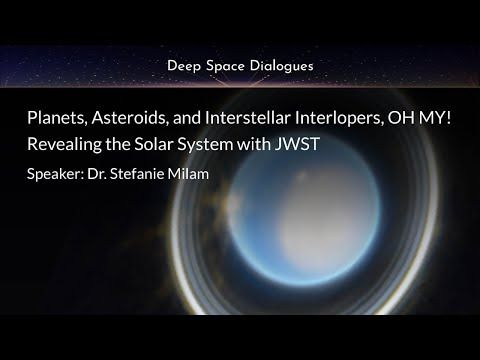
Planets, Asteroids, and Interstellar Interlopers, OH MY! Revealing the Solar System with JWST
YouTube video by Space Telescope Science Institute
www.youtube.com
December 12, 2025 at 7:48 PM
SAVE THE DATE: Dr. Stefanie Milam will discuss how #NASAWebb is revealing details across the Solar System that were not previously known—December 17 at 4 p.m. ET.
Reposted by Kelly Lepo
🔭 Now it's official, the nebula was never in Andromeda!
Our paper has been published and we show that the large 🧪 oxygen nebula is in the Milky Way.
This arc was discovered by amateurs photographing Andromeda with an [O III] filter, and now we have new things to say... ⚛️
Our paper has been published and we show that the large 🧪 oxygen nebula is in the Milky Way.
This arc was discovered by amateurs photographing Andromeda with an [O III] filter, and now we have new things to say... ⚛️
December 11, 2025 at 10:03 PM
🔭 Now it's official, the nebula was never in Andromeda!
Our paper has been published and we show that the large 🧪 oxygen nebula is in the Milky Way.
This arc was discovered by amateurs photographing Andromeda with an [O III] filter, and now we have new things to say... ⚛️
Our paper has been published and we show that the large 🧪 oxygen nebula is in the Milky Way.
This arc was discovered by amateurs photographing Andromeda with an [O III] filter, and now we have new things to say... ⚛️
Space telescopes are way more expensive than ground-based telescopes, for reasons including:
• Launch costs
• No atmosphere means more radiation and more expensive electronics
• Can't fix them if they break, so they need way more testing and better hardware
• Cooling in space is very hard, actually
• Launch costs
• No atmosphere means more radiation and more expensive electronics
• Can't fix them if they break, so they need way more testing and better hardware
• Cooling in space is very hard, actually

Just because it's being passed around a lot: NO, data centers in space do NOT benefit from space being cold. Space is cold in the formal sense we use to define temperature. But it is very bad at cooling. What would you rather have to cool hot metal: a lukewarm water tub or a giant cold atmosphere?
December 10, 2025 at 4:39 PM
Space telescopes are way more expensive than ground-based telescopes, for reasons including:
• Launch costs
• No atmosphere means more radiation and more expensive electronics
• Can't fix them if they break, so they need way more testing and better hardware
• Cooling in space is very hard, actually
• Launch costs
• No atmosphere means more radiation and more expensive electronics
• Can't fix them if they break, so they need way more testing and better hardware
• Cooling in space is very hard, actually
Reposted by Kelly Lepo
Hubble reobserved interstellar comet 3I/ATLAS on November 30. At the time, the comet was about 178 million miles (286 million kilometers) from Earth.
Hubble tracked the comet as it moved across the sky. As a result, background stars appear as streaks of light: https://go.nasa.gov/4iCU2lH 🔭 🧪
Hubble tracked the comet as it moved across the sky. As a result, background stars appear as streaks of light: https://go.nasa.gov/4iCU2lH 🔭 🧪

December 4, 2025 at 3:31 PM
Hubble reobserved interstellar comet 3I/ATLAS on November 30. At the time, the comet was about 178 million miles (286 million kilometers) from Earth.
Hubble tracked the comet as it moved across the sky. As a result, background stars appear as streaks of light: https://go.nasa.gov/4iCU2lH 🔭 🧪
Hubble tracked the comet as it moved across the sky. As a result, background stars appear as streaks of light: https://go.nasa.gov/4iCU2lH 🔭 🧪