



Troy Kervin
@meowmuir.bsky.social
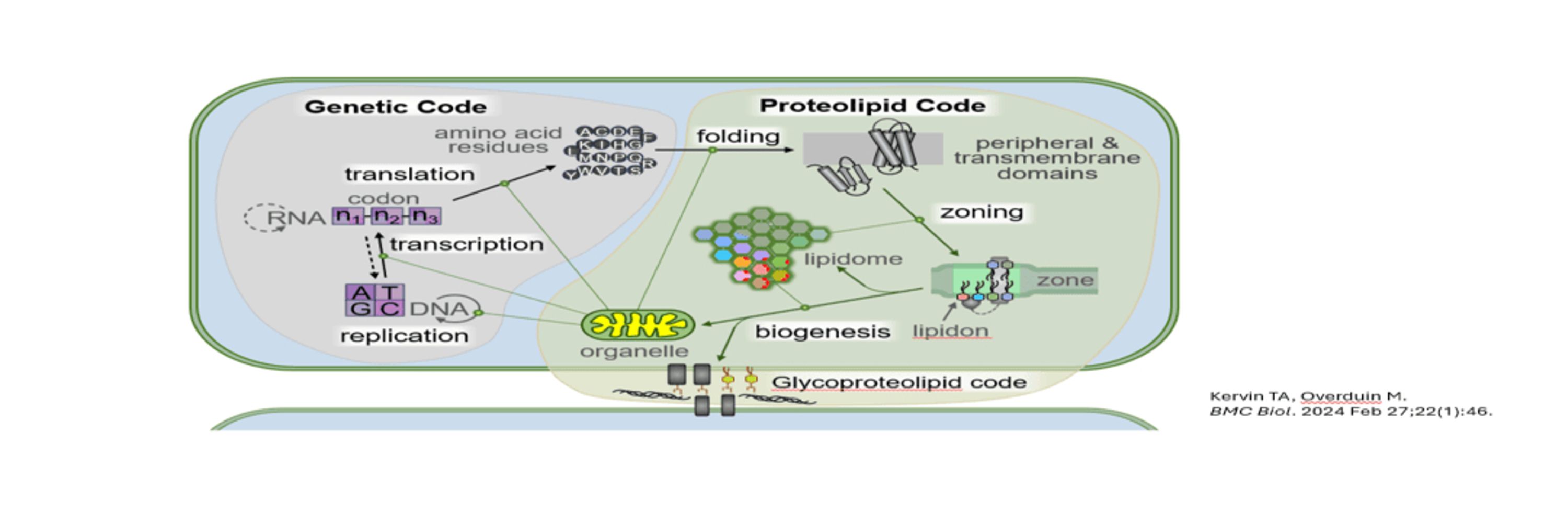
Logician-scientist: membrane protein cryo-EM, proteolipid code, category theory, philosophy of science
proteolipid.org
proteolipid.org

Reposted by Troy Kervin

Give the laurels to the one who earned them.
A thread that aims to attribute credits to the originators of important ‘firsts’
This is on the making. Please contribute to accurate historical records with comments and reading recommendations
🧵👇
A thread that aims to attribute credits to the originators of important ‘firsts’
This is on the making. Please contribute to accurate historical records with comments and reading recommendations
🧵👇
December 4, 2025 at 6:25 AM
Give the laurels to the one who earned them.
A thread that aims to attribute credits to the originators of important ‘firsts’
This is on the making. Please contribute to accurate historical records with comments and reading recommendations
🧵👇
A thread that aims to attribute credits to the originators of important ‘firsts’
This is on the making. Please contribute to accurate historical records with comments and reading recommendations
🧵👇
Reposted by Troy Kervin
Hi everybody, I quickly rebuilt the site (yeah!), and I have also added a few new posts.
This thread contains pointers
🧵👇
This thread contains pointers
🧵👇
December 3, 2025 at 5:02 AM
Hi everybody, I quickly rebuilt the site (yeah!), and I have also added a few new posts.
This thread contains pointers
🧵👇
This thread contains pointers
🧵👇
Reposted by Troy Kervin
Ok, this I need to read. There is now accumulating evidence that quite a bit of the membrane- and lipid handling machinery thought to be typical for eukaryotes was present earlier. Exaptations? But what did the ancestral proteins originally do?
New preprint from the lab!!🎉
We show that Asgard archaea ESCRT-III proteins can trigger membrane fission and reveal its molecular mechanism, offering clues to how these cells may have built internal compartments. But do these organisms even have these compartments?
www.biorxiv.org/content/10.1...
We show that Asgard archaea ESCRT-III proteins can trigger membrane fission and reveal its molecular mechanism, offering clues to how these cells may have built internal compartments. But do these organisms even have these compartments?
www.biorxiv.org/content/10.1...

Molecular basis for cellular compartmentalization by an ancient membrane fission mechanism
The emergence of cell compartmentalization depends on membrane fission to create the endomembrane compartments. In eukaryotes, membrane fission is commonly executed by ESCRT-III, a protein complex con...
www.biorxiv.org
December 1, 2025 at 10:18 AM
Ok, this I need to read. There is now accumulating evidence that quite a bit of the membrane- and lipid handling machinery thought to be typical for eukaryotes was present earlier. Exaptations? But what did the ancestral proteins originally do?
Reposted by Troy Kervin

🎄 𝐂𝐡𝐫𝐢𝐬𝐭𝐦𝐚𝐬 𝐋𝐢𝐩𝐢𝐝 𝐓𝐢𝐦𝐞! 🎄
Thrilled to share a special pre-holiday gift to 𝗟𝗼𝗹𝗶𝗰𝗮𝘁𝗼 & 𝗡𝗶𝗰𝗸𝗲𝗹 𝗟𝗮𝗯𝘀!
𝐏𝐈(𝟒,𝟓)𝐏𝟐 𝐚𝐬𝐲𝐦𝐦𝐞𝐭𝐫𝐲 is essential for the unconventional secretion of 𝐅𝐆𝐅𝟐, driving rapid formation of a lipidic membrane pore, enabling membrane translocation ⏩⏩
🔗 www.nature.com/articles/s41...
Thrilled to share a special pre-holiday gift to 𝗟𝗼𝗹𝗶𝗰𝗮𝘁𝗼 & 𝗡𝗶𝗰𝗸𝗲𝗹 𝗟𝗮𝗯𝘀!
𝐏𝐈(𝟒,𝟓)𝐏𝟐 𝐚𝐬𝐲𝐦𝐦𝐞𝐭𝐫𝐲 is essential for the unconventional secretion of 𝐅𝐆𝐅𝟐, driving rapid formation of a lipidic membrane pore, enabling membrane translocation ⏩⏩
🔗 www.nature.com/articles/s41...
www.nature.com
December 1, 2025 at 7:45 AM
🎄 𝐂𝐡𝐫𝐢𝐬𝐭𝐦𝐚𝐬 𝐋𝐢𝐩𝐢𝐝 𝐓𝐢𝐦𝐞! 🎄
Thrilled to share a special pre-holiday gift to 𝗟𝗼𝗹𝗶𝗰𝗮𝘁𝗼 & 𝗡𝗶𝗰𝗸𝗲𝗹 𝗟𝗮𝗯𝘀!
𝐏𝐈(𝟒,𝟓)𝐏𝟐 𝐚𝐬𝐲𝐦𝐦𝐞𝐭𝐫𝐲 is essential for the unconventional secretion of 𝐅𝐆𝐅𝟐, driving rapid formation of a lipidic membrane pore, enabling membrane translocation ⏩⏩
🔗 www.nature.com/articles/s41...
Thrilled to share a special pre-holiday gift to 𝗟𝗼𝗹𝗶𝗰𝗮𝘁𝗼 & 𝗡𝗶𝗰𝗸𝗲𝗹 𝗟𝗮𝗯𝘀!
𝐏𝐈(𝟒,𝟓)𝐏𝟐 𝐚𝐬𝐲𝐦𝐦𝐞𝐭𝐫𝐲 is essential for the unconventional secretion of 𝐅𝐆𝐅𝟐, driving rapid formation of a lipidic membrane pore, enabling membrane translocation ⏩⏩
🔗 www.nature.com/articles/s41...
Please see this thread, where we are reducing the phase separation problem to philosophy without finding any scientific substance.
December 1, 2025 at 8:05 AM
Please see this thread, where we are reducing the phase separation problem to philosophy without finding any scientific substance.
Reposted by Troy Kervin
just because your salad phase separates doesn't imply biogenesis of membraneless compartments by LLPS. This analogy needs to die. I would wager that the liquid behavior of membraneless compartments is just a spandrel of the underlying multivalent interactions, and in of itself, not so important.
December 1, 2025 at 8:00 AM
just because your salad phase separates doesn't imply biogenesis of membraneless compartments by LLPS. This analogy needs to die. I would wager that the liquid behavior of membraneless compartments is just a spandrel of the underlying multivalent interactions, and in of itself, not so important.
Reposted by Troy Kervin

"We find that the evidence for in vivo LLPS is often phenomenological and inadequate to discriminate between phase separation and other possible mechanisms. Moreover, the causal relationship and functional consequences of LLPS in vivo are even more elusive"
(2019)
pubmed.ncbi.nlm.nih.gov/31594803/
(2019)
pubmed.ncbi.nlm.nih.gov/31594803/

Evaluating phase separation in live cells: diagnosis, caveats, and functional consequences - PubMed
The idea that liquid-liquid phase separation (LLPS) may be a general mechanism by which molecules in the complex cellular milieu may self-organize has generated much excitement and fervor in the cell biology community. While this concept is not new, its rise to preeminence has resulted in renewed in …
pubmed.ncbi.nlm.nih.gov
November 30, 2025 at 12:08 PM
"We find that the evidence for in vivo LLPS is often phenomenological and inadequate to discriminate between phase separation and other possible mechanisms. Moreover, the causal relationship and functional consequences of LLPS in vivo are even more elusive"
(2019)
pubmed.ncbi.nlm.nih.gov/31594803/
(2019)
pubmed.ncbi.nlm.nih.gov/31594803/
Reposted by Troy Kervin
Well that settles it.

November 30, 2025 at 1:32 PM
Well that settles it.
Reposted by Troy Kervin

This is a super interesting thread 🧪
November 30, 2025 at 11:35 AM
This is a super interesting thread 🧪
Reposted by Troy Kervin
There is always pseudoscience out there some of which are excellent at gaining momentum (and people, money, power) because they sound attractive. But pseudoscience is pseudoscience. Time will tell. As a scientist, one should judge what's right/wrong by themselves
November 29, 2025 at 6:12 PM
There is always pseudoscience out there some of which are excellent at gaining momentum (and people, money, power) because they sound attractive. But pseudoscience is pseudoscience. Time will tell. As a scientist, one should judge what's right/wrong by themselves
Reposted by Troy Kervin
Protein model building for intermediate-resolution cryo-EM maps by integrating evolutionary and experimental information pubmed.ncbi.nlm.nih.gov/41314215/ #cryoem
November 29, 2025 at 8:10 PM
Protein model building for intermediate-resolution cryo-EM maps by integrating evolutionary and experimental information pubmed.ncbi.nlm.nih.gov/41314215/ #cryoem
Reposted by Troy Kervin

Super collaboration with @raffaeleieva.bsky.social and @fronzeslab.bsky.social on the LptDEMY complex.
rdcu.be/eRxNf here our new study on the characterization of the lipopolysaccharide holotranslocon, LptDE and the newly identified subunits LptM and LptY. Great collaboration with @fronzeslab.bsky.social @pstansfeld.bsky.social @JulienMarcoux @YvesQuentin
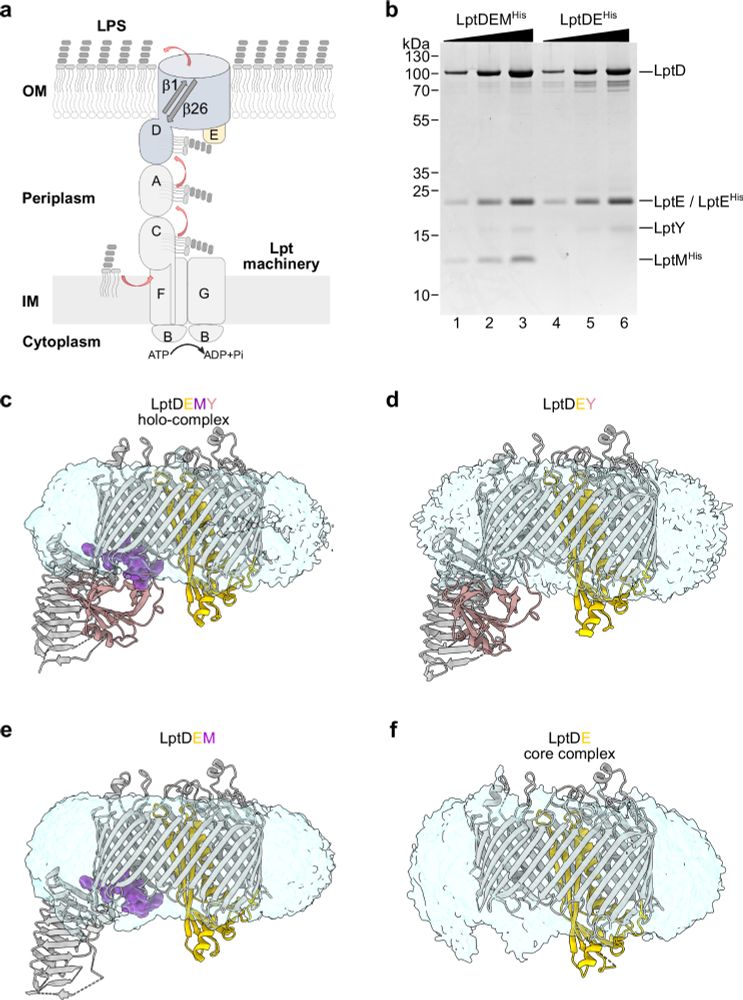
Structural basis of lipopolysaccharide assembly by the outer membrane translocon holo-complex
Nature Communications - The asymmetric distribution of lipopolysaccharide (LPS) on the surface of the bacterial outer membrane is essential and crucial for antibiotic resistance. Here, authors...
rdcu.be
November 24, 2025 at 4:56 PM
Super collaboration with @raffaeleieva.bsky.social and @fronzeslab.bsky.social on the LptDEMY complex.

November 24, 2025 at 12:24 PM
Reposted by Troy Kervin
A long-standing question in cell biology: why are Golgi cisternae flattened? A biophysical model from Jensen group (Manchester) suggests this architecture may directly influence glycosylation.
Morphological determinants of glycosylation efficiency in Golgi cisternae
www.biorxiv.org/content/10.1...
Morphological determinants of glycosylation efficiency in Golgi cisternae
www.biorxiv.org/content/10.1...

Morphological determinants of glycosylation efficiency in Golgi cisternae
The Golgi apparatus has an intricate spatial structure characterized by flattened membrane-bound compartments, known as cisternae. Cisternae house integral membrane enzymes that catalyse glycosylation...
www.biorxiv.org
November 19, 2025 at 7:45 PM
A long-standing question in cell biology: why are Golgi cisternae flattened? A biophysical model from Jensen group (Manchester) suggests this architecture may directly influence glycosylation.
Morphological determinants of glycosylation efficiency in Golgi cisternae
www.biorxiv.org/content/10.1...
Morphological determinants of glycosylation efficiency in Golgi cisternae
www.biorxiv.org/content/10.1...
Reposted by Troy Kervin
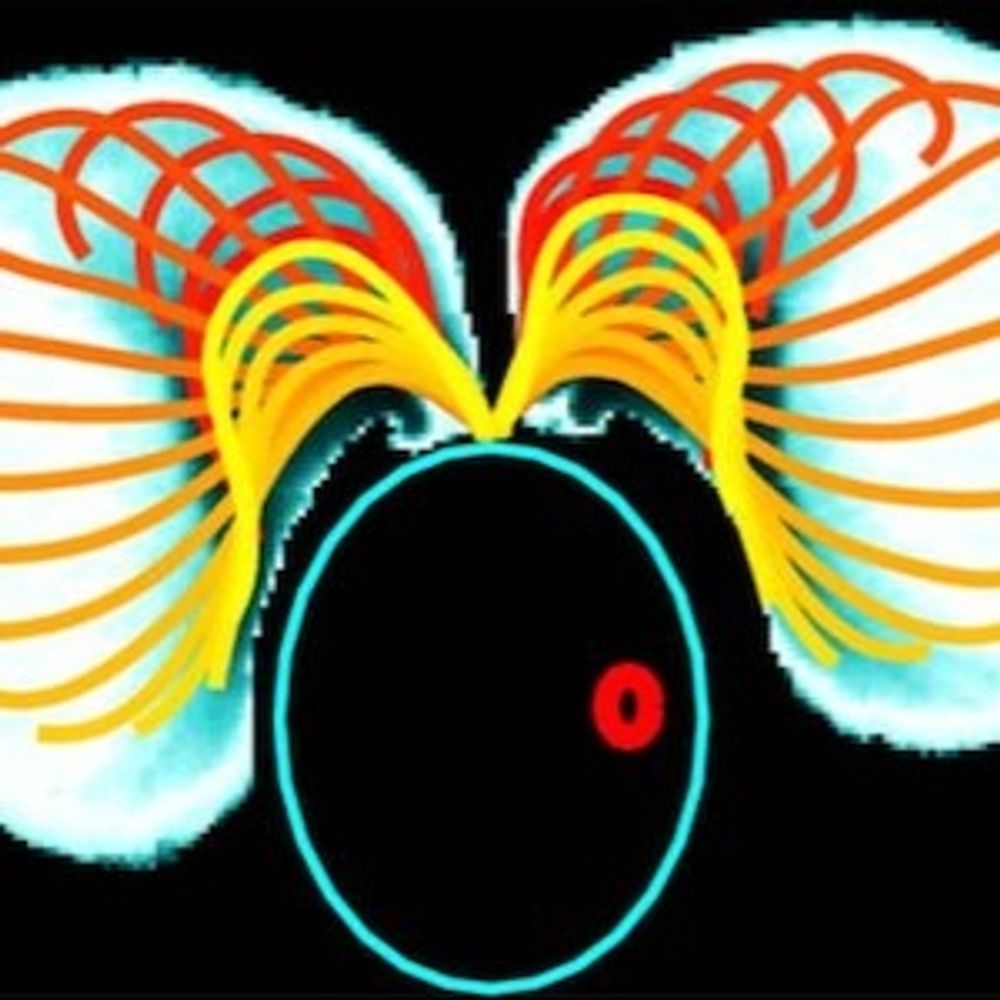
now i've seen everything... 😱
don't care what anybody says but #protists are cognitive
don't care what anybody says but #protists are cognitive
Cellular structure self-organizes through an interplay between internal mechanisms and external cues. The single-celled suctorian P. collini builds a trap structure to capture large prey using microtubule feeding tentacles, creating feedback between cell morphology and prey availability.
November 19, 2025 at 1:46 PM
now i've seen everything... 😱
don't care what anybody says but #protists are cognitive
don't care what anybody says but #protists are cognitive
Reposted by Troy Kervin
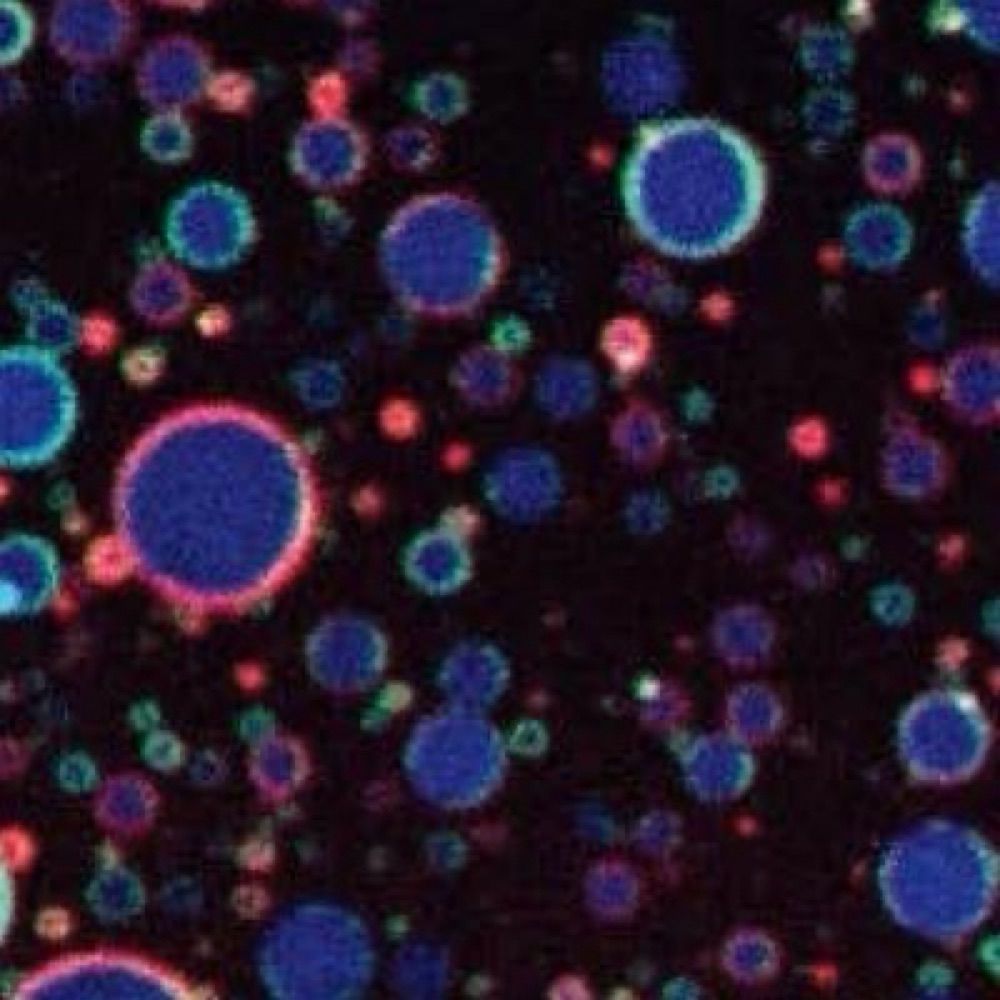
Thrilled to share our latest work showing that the bridge lipid transport protein ATG2A transfers diacylglycerol (DAG), and some TAG/PA, from the ER to LDs, thereby recruiting DGAT2 to drive local TAG synthesis, promoting LD expansion while protecting ER membranes.
www.nature.com/articles/s41...
www.nature.com/articles/s41...

ATG2A-mediated DAG transfer recruits DGAT2 for lipid droplet growth - Nature Structural & Molecular Biology
Elhan et al. show that ATG2A acts with DGAT2, the enzyme producing triacylglycerol (TAG), in lipid droplet growth. By delivering diacylglycerol to lipid droplets, ATG2A not only fuels TAG production b...
www.nature.com
November 17, 2025 at 10:57 PM
Thrilled to share our latest work showing that the bridge lipid transport protein ATG2A transfers diacylglycerol (DAG), and some TAG/PA, from the ER to LDs, thereby recruiting DGAT2 to drive local TAG synthesis, promoting LD expansion while protecting ER membranes.
www.nature.com/articles/s41...
www.nature.com/articles/s41...
Reposted by Troy Kervin
This study claims in vitro seeded assembly in brain homogenate is more disease-relevant than fibril extraction, without providing any evidence thereof. It also ignores ample data that in vitro seeding with aSyn may NOT template the structure of seeds. 😕
www.sciencedirect.com/science/arti...
www.sciencedirect.com/science/arti...
www.sciencedirect.com
November 17, 2025 at 8:21 AM
This study claims in vitro seeded assembly in brain homogenate is more disease-relevant than fibril extraction, without providing any evidence thereof. It also ignores ample data that in vitro seeding with aSyn may NOT template the structure of seeds. 😕
www.sciencedirect.com/science/arti...
www.sciencedirect.com/science/arti...